Saturday, Feb. 21st, 2026

Montana’s Science Olympiad champions will head to nationals


BOZEMAN
– Corvallis Middle School and Hamilton High School will head to nationals after winning the state Science Olympiad tournament held Thursday, Feb. 19, at Montana State University. Both schools are repeat champions and attended nationals last year.

In May, the University of Southern California will host the national event, where students can win awards and cash scholarships. Last year, a team from Hamilton High School took home a gold medal in a building event – the first time a Montana team has ever placed first at nationals.
More than 70 middle and high school teams participated in Montana’s 42nd Science Olympiad, putting their vehicles, helicopters and levers to the test against other schools. They competed in astronomy, meteorology, chemistry and other events while visiting MSU labs and classrooms to learn about topics ranging from honeybee health to microfabrication.   

Nearly 300 medals, ribbons and certificates went to individual event winners, and Science Olympiad team trophies went to:  

Division B: Middle school 
  1. Corvallis Middle School. 
  2. Hamilton Middle School. 
  3. Helena Middle School.
Division B: Middle school, small schools division 
  1. Headwaters Academy, Bozeman. 
  2. Helena Area Christian Home Educators (HACHE).
  3. Choteau Junior High. 
Division C: High school 
  1. Hamilton High School. 
  2. Big Sky High School (Missoula).
  3. Corvallis High School. 
Division C: High school, small schools division 
  1. Choteau High School. 
  2. Ennis High School.
  3. Roundup High School.  
Since 1985, the Montana Science Olympiad state tournament has been hosted at MSU by the Science Math Resource Center in the Department of Education. It is one of the country’s largest science, technology, engineering and math competitions, with more than 6,300 teams participating each year from all 50 states. 

For more information, contact state tournament organizer Suzi Taylor at taylor@montana.edu or 406-994-2336.  

Add a Comment »

Friday, Feb. 20th, 2026

Montana State art historians connect acclaimed sculptor Edmonia Lewis to Bozeman

BOZEMAN — Many mysteries surround the personal life of acclaimed sculptor Edmonia Lewis. But her actions tell a story — one that Montana State University art historians are piecing together with researchers around the world.  

Their findings are included in the catalog for the largest exhibition to date on Lewis and her 19th century artwork, which opened on Feb. 14 at the Peabody Essex Museum in Salem, Massachusetts. Lewis, likely born in 1844 in New York, was the first Black and Indigenous artist to earn international recognitionfor her neoclassical sculptures. She was a descendant of the Mississauga of the Credit nation residing in present-day Ontario, and she died in London in 1907 at about the age of 63.  

Edmonia's history and original artwork will also be displayed in a Museum of the Rockies exhibition titled “Chisel and Razor: Art, Entrepreneurship and the Lewis Family,” which opens Oct. 12 and highlights Edmonia’s familial connection to Bozeman.   

“When we first heard of the Peabody show, I think we were a little daunted for a moment,” said Regina Gee, professor of art history in the College of Arts and Architecture who studies Roman art. “It connected us to a network of scholars interested in similar research questions, but then we began to realize we have something to say that other exhibits don't have.”  

What most other researchers don’t have is Samuel Lewis. Samuel, Edmonia’s older brother, is often a footnote in discussions about the sculptor, but he had a significant impact on her life, and therefore American art history. Melissa Ragain, professor of American and modern art, spent time studying Samuelin MSU’s museum, library and city archives, in addition to connecting with local historians and Eileen Tenney, an owner of Samuel’s house on South Bozeman Avenue. Ragain’s expertise was recently featured in a New York Times article exploring the resurgence of scholarship on Edmonia. 

Samuel settled in Bozeman in 1868 shortly after the Civil War and became a cornerstone of the community with his barbershop and his magic performances for youth, which raised money for local churches, charities and civic projects, Ragain said. His flair for performance art, which he studied in Paris in the 1860s, gave both him and his family a public voice at a time when Black residents had limits placed on their social mobility. 

As he was pursuing popular art in Bozeman, his sister embraced the “fine art” of marble sculpture in Rome. Her move abroad in 1865 was inspired partly by Samuel’s stories of Europe, where he found a thriving arts scene and a place to escape the prejudices of America, Ragain said. Edmonia had faced several instances of racism at Oberlin College in Ohio, which she attended in 1859 with financial help from Samuel, and left before completing her degree.  

“They supported each other,” Ragain said. “Her celebrity helped him to start his businesses in Montana. His money helps support her schooling and then in her later years supported her when market interest in neoclassical sculpture waned. There is no Edmonia without Samuel; no Samuel without Edmonia.” 

Without much money to her name, Edmonia founded a popular studio in Rome alongside other female American artists. There, she created her magnum opus, The Death of Cleopatra, a 3-ton marble piece depicting queen Cleopatra slumped on her throne after death. Gee is studying how 19th century collections of ancient art in Rome may have inspired the piece, and she hopes to visit the Vatican and Capitoline museums in the future to learn more.  

The sculpture lived many lives after its creation. Edmonia first shipped it to Philadelphia for an exhibition, using funds left to her by Lizzie Williams, a formerly enslaved settler who became a restauranteur and hotelier in Bozeman. In later years, it became a grave marker for a racehorse and decoration in aChicago saloon before finally landing in the Smithsonian in Washington, D.C., in 1994 after its rediscovery in a suburban shopping mall. 

Gee and Ragain enlisted Montana Tech mechanical engineering students to help recreate the sculpture using 3D printing technology and detailed scans provided by the Smithsonian. The resulting replica will be displayed in the Museum of the Rockies from Oct. 12, 2026, to Sept. 12, 2027, along with other original artworks and documents from the Lewis siblings that have never been shown before in Montana.  

“A central conceit of the show is our imagining what it would be like for Edmonia to visit her brother, as though she was bringing these pieces back home where they belong,” said Ragain, who will also co-host an academic symposium with Gee that is inspired by Edmonia on Oct. 23-24 at MSU. 

Until recently, Edmonia was thought to have last appeared in archival records in the 1880s, and not much is known about her later years. Researchers, like those at MSU, are scouring letters written by others about Edmonia to learn more, Ragain said. Preliminary research from Quest Dovky, a graduate of MSU’s art history program, helped identify where Edmonia traveled and the locations of her existing artwork, providing insight into her network of fellow artists and American abolitionists.  

Dovky, who grew up in a military family and lived in Belgrade, joined the study as an undergraduate research assistant in 2022. He did so with support from the McNair Scholars Program, which provides research opportunities for exemplary first-generation, low-income and historically underrepresented students. He is now preparing to graduate from MSU in May with a master’s in history, which he was inspired to pursue after presenting his Edmonia research in California and receiving praise for his storytelling ability.  

“The magic of doing history is being able to tell the story that you're seeing, that's being spoken to you by the archives,” said Dovky, who post-graduation will continue working as a curatorial assistant for Tinworks Art in Bozeman on a June exhibition featuring the Lewis siblings. The exhibition is curated by Ragain, MSU professors and contemporary artists.

Add a Comment »

Montana State nursing college alum and Nordic skier Anna Pryce shatters Olympic expectations

BOZEMAN — In her first year of nursing school at Montana State University, student-athlete Anna Pryce struggled. A member of the MSU ski team also pursuing a notoriously difficult degree, Pryce had to miss morning Nordic practices for class, and at times she needed to request extensions on assignments due to traveling for races. 

She felt like she was making sacrifices in both her skiing and academics, and she thought that year might be her last as a ski racer. But the support of her mentors and camaraderie with teammates inspired Pryce to keep competing. That persistence led her all the way to Milano Cortina, Italy, where she competed in three events in the Winter Olympics as a Nordic skier for Team Great Britain.  

“My senior year of school, I had such a fun season. It was just a really good time with my teammates and my coaches,” Pryce said in a recent video interview from Milan. “I was kind of thinking about quitting skiing (after college), but I decided to do one more year. I'm now really enjoying myself and that was all because of skiing at MSU. I really owe it to everyone there for keeping me going.” 

Pryce recalled how advice from MSU clinical instructor Juanita Wade in the Mark and Robyn Jones College of Nursing influenced her path to the Olympics. In trying to figure out how to pursue both skiing and nursing after graduating in May 2025, Wade reminded Pryce that nursing will “always be there for her” as a career. But the time for her to fully pursue ski racing, Wade said, is now.  

“When I knew I was going to the Olympics, I texted her like, ‘I just want you to know that that meant so much to me,’” said Pryce, who was born in Scotland and raised in Calgary, Alberta. She is now based in Canmore.  

Pryce was in good company in Italy. Three other former Bobcats competed in the Winter Olympics as well: Riley Seger (Alpine skier for Canada), Keely Cashman (Alpine for the U.S.) and Johanna Taliharm (biathlon for Estonia), alongside current student Justine Lamontagne (Alpine for Canada).   

Pryce, 24, raced in three Olympic events: the women’s skiathlon on Feb. 7, the women’s sprint classic on Feb. 10, and the women’s 10K interval start freestyle on Feb. 12.  

Pryce delivered impressive results as the sole female Nordic skier for Great Britain, earning the best-ever result by a British woman in the sprint classic with a time of 3:50.88 – just over one second behind qualifying for the quarterfinals. In the 10K freestyle, Pryce finished 24th with a time of 24:55.1, shattering the expectations she had for herself.  

“I was kind of shocked and was like, ‘What the heck is going on?’ It was a really fun day,” Pryce said. “My body felt good and it was a good surprise. I wasn’t expecting to feel that good or do that well.” 

The Olympic experience has been super cool and unique, Pryce said. Because Milan built limited new infrastructure for the games in favor of retrofitting existing structures, the Olympic village was spread across five mini villages, she said. She stayed in a hotel with other Nordic skiers and ski jumpers and enjoyed watching her fellow teammates compete, in addition to indulging in the tasty pizza and pasta that Italy is known for (though the morning of her races, she stuck with rice for breakfast).  

It has also been a full-circle moment to compete alongside athletes who were her role models growing up, Pryce said, notably British Nordic racer Andrew Musgrave. They recreated a photo she had taken with him at a World Cup race a decade prior, she said.  

Pryce’s best friend and boyfriend came to Milan with her. But one person notably missing was her mom, who died during her senior year of college. Pryce said her mom was a big skier, and memories of skiing with her family every weekend as a kid are what got her into the sport.  
"(The Olympics are) one of the bigger things that have happened since she had passed away. It was definitely hard not having her around. But she’d just be really excited for me, I think,” Pryce said. She spoke candidly about her loss in an article published online by Team Great Britain.  
Pryce, who said she first became interested in nursing due to the field’s job security, attended nursing school on MSU’s Bozeman campus and did her clinical shifts overnight in Bozeman Health’s emergency department.  

Rebecca Rassi, a clinical instructor of nursing for the Bozeman campus, taught Pryce early on in college and also watched many of her races for the MSU ski team. She said that the student-athlete approached every challenge with focus and a desire to do her best.  

“Few can fully appreciate the difficulty of balancing demanding nursing coursework, clinicals and the intensity of collegiate Nordic skiing,” Rassi said. “Earning her nursing degree this past May and then now competing at the Olympics on one of the world’s largest stages in Italy is a testament to her incredible work ethic and spirit.” 

MSU Nordic coach Adam St. Pierre recruited Pryce based on her Canadian ski team results in high school. He commended the nursing college for being easy to work with in terms of accommodating Pryce’s schedule.  

“They’re very willing to work with people who have proven their abilities,” St. Pierre said. “Because Anna is such a hard worker, and really just a pleasant person, people wanted to help her.”  

St. Pierre said he woke up early – around 3 a.m. – to watch her races live in Italy. 
“We’re just proud. There’s no other word for it, given what she’s been able to accomplish and how she grew and matured as a person in her time at MSU,” St. Pierre said. “She’s just a great example of the kind of athletes we need. We want every athlete to have a similar maturity to Anna.”  

After her Olympic races, Pryce headed to Norway to continue training for upcoming World Cup events. She recently decided to continue racing this coming year, but she is also interested in finding part-time clinical work to keep her nursing skills sharp. In terms of another Winter Games, four years is a long way off, Pryce said. She’s just trying to take things day by day.  
“It’s great to always know that I’ve got nursing when I’m done,” Pryce said of her future plans. “There’s going to be a job for me somewhere.”  

Add a Comment »

Mumford & Sons + Sierra Ferrell @ Bobcat Stadium June 4

photo courtesy of Mumford & Sons

Mumford & Sons’ anticipated new album, Prizefighter, is out today via Glassnote Records/Gentlemen of the Road. Stream/purchase HERE.

Mumford & Sons Return to Montana @ Bobcat Stadium June 4, 2026!

Long celebrated for their electric live performances, touring has defined Mumford & Sons from the beginning, in shaping their sound, building their global fanbase and fostering their collaborative spirit. Continuing that tradition, the group will kick off their massive North American headline Prizefighter Tour in June, including newly confirmed stops at New York’s Madison Square Garden, Los Angeles’ Kia Forum, Chicago’s Wrigley Field, Boston’s Fenway Park and Boulder’s Folsom Field among many others. Special guests throughout the tour include CAAMP, Lord Huron, Sierra Ferrell, Marcus King Band, Dylan Gossett and Medium Build. See below for complete tour itinerary.

Tickets for the North American tour will be available for pre-sale for AGORA members starting Tuesday, February 24 at 10:00am local time with general on-sale following on Friday, February 27 at 10:00am local time. Full details can be found at www.mumfordandsons.com.

Mumford & Sons will have a limited number of student-priced tickets available for select shows*, expanding access for student fans. These will only be available to purchase in person at the box office on Friday, February 27 while supplies last.

The tour will also offer a variety of different VIP packages and experiences for fans to take their concert experience to the next level. Packages vary but include premium tickets, access to the pre-show Prizefighter club, exclusive VIP merchandise & more. VIP package contents vary based on the offer selected. For more information, visit vipnation.com.

Co-produced and co-written with The National’s Aaron Dessner, Prizefighter features collaborations with Hozier, Gracie Abrams, Chris Stapleton and Gigi Perez and finds Mumford & Sons at their most instinctive and open, capturing the sense of community and connection that has influenced them from the start.

Already receiving widespread attention, the band was recently featured on NPR’s Morning Edition, The Zane Lowe Show, Bert Kreischer’s The Bertcast, And The Writer Is… and Brittany Broski’s Royal Court, while NPR Music praises the album saying, “it’s pretty wonderful…this music is very evolved and intricate and exquisitely produced and performed. They are incredible musicians.”

The official music video for album track, “The Banjo Song,” is also out now, directed and produced by the Bristol based events collective, Streets of Soul, who cast the dancers solely from clubbers they met at their Bristol Northern Soul Club nights. Watch/share HERE.

Less than a year from the arrival of RUSHMERE, the band’s long anticipated #1 album in March 2025, Mumford & Sons take full advantage of a prolific period of songwriting with another full-length record in quick succession. For a band whose unique sound has helped to both influence and inspire countless artists all around the globe, Prizefighter is Mumford & Sons’ finest example of precisely how and why they lead by example.

The album sessions were as much about rediscovery as recording. Days spent writing in Hudson cafés and nights spent around Long Pond’s kitchen table gave rise to songs that feel unpolished in the best sense—alive with first takes and the joy of simply making music together again. Reenergized, rejuvenated and in the form of their lives, Prizefighter embraces and reflects that full-strength energy and enthusiasm with 14 songs of light, shade and everything in-between.

PRIZEFIGHTER TRACK LIST

1. Here (with Chris Stapleton)

2. Rubber Band Man (with Hozier)

3. The Banjo Song

4. Run Together

5. Conversation With My Son

6. Alleycat

7. Prizefighter

8. Begin Again

9. Icarus (with Gigi Perez)

10. Stay

11. Badlands (with Gracie Abrams)

12. Shadow Of A Man

13. I’ll Tell

Mumford & Sons confirmed tour date in Bozeman, MT is June 4 at Bobcat Stadium
 on-sale next Friday, February 27 at 10:00am local time via OutridersPresent.com.

Add a Comment »

Wednesday, Feb. 18th, 2026

Land Board approves FWP habitat conservation leases in eastern Montana

HELENA – The Montana Land Board approved four Habitat Conservation Leases (HCL) proposed by Montana Fish, Wildlife & Parks protecting more than 27,000 acres of rangeland habitats and providing public access for both recreation and hunting.  

The four HCLs were approved by the Fish and Wildlife Commission at their regular meetings in August and December. The Montana Land Board approval was the final step before finalizing the agreements.  

“These leases are proactive tools to help landowners, maintain or improve wildlife habitat and provide public access,” said FWP Director Christy Clark. “We’re grateful for the support of the Land Board and are working hard on more projects like these.” 

All four HCLs are located in eastern Montana. The Dunbar HCL is in Philips County and is 4,049 acres. The IOU Ranch HCL is 9,444 acres and located in Garfield County. The Lone Tree Land & Livestock Ranch HCL is 8,557 acres and located in Garfield County. The Rock Barn Ranch HCL is 5,091 acres and located in McCone County.  

The four easements together will provide a minimum of 312 hunter days and 936 recreation days. They cost of the four easements was about $3.1 million. All four are 40 year leases.  

HCLs are voluntary, incentive-based agreement with private landowners conserving high-priority prairie habitats while providing for traditional agriculture operations. They are typically 30- or 40-year leases. They also include an agreement for public access.  

Add a Comment »

Rare fossil at Montana State’s Museum of the Rockies records Tyrannosaurus attack

A fossil on display at Montana State University’s Museum of the Rockies reveals how dinosaurs in the Tyrannosaurus genus may have subdued prey, and the specimen is the focus of a new collaborative research publication between scientists at MSU and the University of Alberta in Canada. 

The giant carnivorous dinosaur Tyrannosaurus roamed the region that is now Montana at the end of the Age of Dinosaurs, about 66 million years ago. It lived alongside other large dinosaurs, including plant-eaters like Triceratops and the duck-billed Edmontosaurus.

In 2005, a nearly complete Edmontosaurus skull was found in the Hell Creek Formation of eastern Montana on lands managed by the Bureau of Land Management. The skull is now housed in the paleontology collection at Museum of the Rockies, and it contains a telling detail: lodged inside its face is the tooth of a tyrannosaur.

Now on display in the museum’s Hall of Horns and Teeth, the skull became the focus of a collaboration between University of Alberta doctoral student Taia Wyenberg-Henzler and Museum of the Rockies’ Curator of Paleontology John Scannella. The results of their research were published today in the Scientific Journal PeerJ.

“Although bite marks on bones are relatively common, finding an embedded tooth is extremely rare,” said Wyenberg-Henzler. “The great thing about an embedded tooth, particularly in a skull, is it gives you the identity of not only who was bitten but also who did the biting. This allowed us to paint a picture of what happened to this Edmontosaurus, kind of like Cretaceous crime scene investigators.” 

Comparing the embedded tooth to all the carnivorous inhabitants in the Hell Creek Formation revealed that it most closely matched with the teeth of Tyrannosaurus. CT scans of the skull, performed at Advanced Medical Imaging at Bozeman Health Deaconess Hospital, helped provide greater detail.

“A fossil like this is extra exciting because it captures a behavior: a tyrannosaur biting into this duckbill’s face,” said Scannella. “The skull shows no signs of healing around the tyrannosaur tooth, so it may have already been dead when it was bitten, or it may be dead because it was bitten.”

“Looking at the way the tooth is embedded in the nose of the Edmontosaurus suggests that it met its attacker face-to-face, something that usually happens to an animal that was killed by a predator,” said Wyenberg-Henzler. “The amount of force necessary for a tooth to have become broken off in bone also points to the use of deadly force. For me, this paints a terrifying picture of the last moments of this Edmontosaurus.” 

The feeding habits of Tyrannosaurus, one of the largest meat-eating animals to ever walk the Earth, have been the subject of study and debate for decades. The tooth inside this Edmontosaurus skull provides a further glimpse into Tyrannosaurus behavior, Scannella said.

Add a Comment »

Tuesday, Feb. 17th, 2026

Montana PBS purchases three TV stations in eastern Montana, allowing residents access to free public television for first time

BOZEMANMontana PBS has closed a deal to purchase three television stations in eastern Montana that will now provide communities in that part of the state with free, over-the-air public television for the first time.  

In October 2025, Montana PBS finalized purchase of KYUS-TV in Miles City, KXGN-TV in Glendive and K13IG-D (a translator relaying the KXGN signal) in Sidney. The PBS programming on the three stations went live in February. 

The new stations will deliver all five Montana PBS broadcast channels: the primary Montana PBS channel with Montana-made and national PBS programs; Montana PBS kids with 24/7 educational children’s programming; Montana PBS Create, which features lifestyle and how-to programming; Montana PBS World, which includes news and documentaries; and Montana Public Affairs Network for unedited coverage of the Montana Legislature.  

The stations were offered for sale by the Marks Group following the death of owner Stephen Marks in 2022. Aaron Pruitt, Montana PBS director, said commercial television broadcasters had passed on buying the stations because the small market sizes wouldn’t have been sufficiently profitable. Then, in 2023, recognizing that those communities did not have access to free public broadcast television, the Marks Group offered the stations to Montana PBS.  
Pruitt said the conversion of commercial public TV stations to a noncommercial educational license is extremely rare in the broadcasting industry.  

“In this case, it was made possible by a willing seller who recognized the value of educational programs for extremely rural communities that have never received PBS,” Pruitt said.   
The process took years of negotiations, engineering studies, real-estate acquisition, Federal Communications Commission approvals and a supportive vote by the Montana University System Board of Regents to come to fruition, he said.  

Efforts to acquire the eastern Montana stations began years before the current federal funding challenges for public media, Pruitt said. He added that the move reinforces the broadcaster’s mission of bringing free, educational programs to all Americans.  

The new stations will increase resident access to broadcast television in all three rural areas. In Glendive, the loss of KXGN-TV – the only broadcast station in the history of the community – would have meant that residents would no longer have access to any over-the-air TV. Its designated market area is the smallest in the nation, Pruitt said. Dawson Community College also played a key role in helping deliver the MTPBS signal from the campus to the broadcast transmitter in Makoshika State Park near Glendive, he added. In Sidney, viewers have historically had access to TV stations from Williston, North Dakota, but now residents will be able to watch content about their own state, from news to historical documentaries.  

To celebrate the new stations, Montana PBS is planning two days of events to be held in Miles City  on April 24 and 25. There will be a Clifford the Big Red Dog meetup for children at the Miles City Public Library, a PBS pint night at Otium Brewing, a “coffee and conversation” meetup at The Ugly Mug, and a special screening of Montana PBS’s brand-new documentary “Jonnie” at the Montana Theatre.  

Anyone interested in attending can check for more information at montanapbs.org. 
“We’re really looking forward to meeting as many people from Miles City and the surrounding region as possible,” said Kyle Sorenson, director of marketing and communications at Montana PBS. “We want to welcome them to the Montana PBS neighborhood.”  

Add a Comment »

Friday, Feb. 13th, 2026

Montana State students and community artists create skateboards to support local parks


BOZEMAN
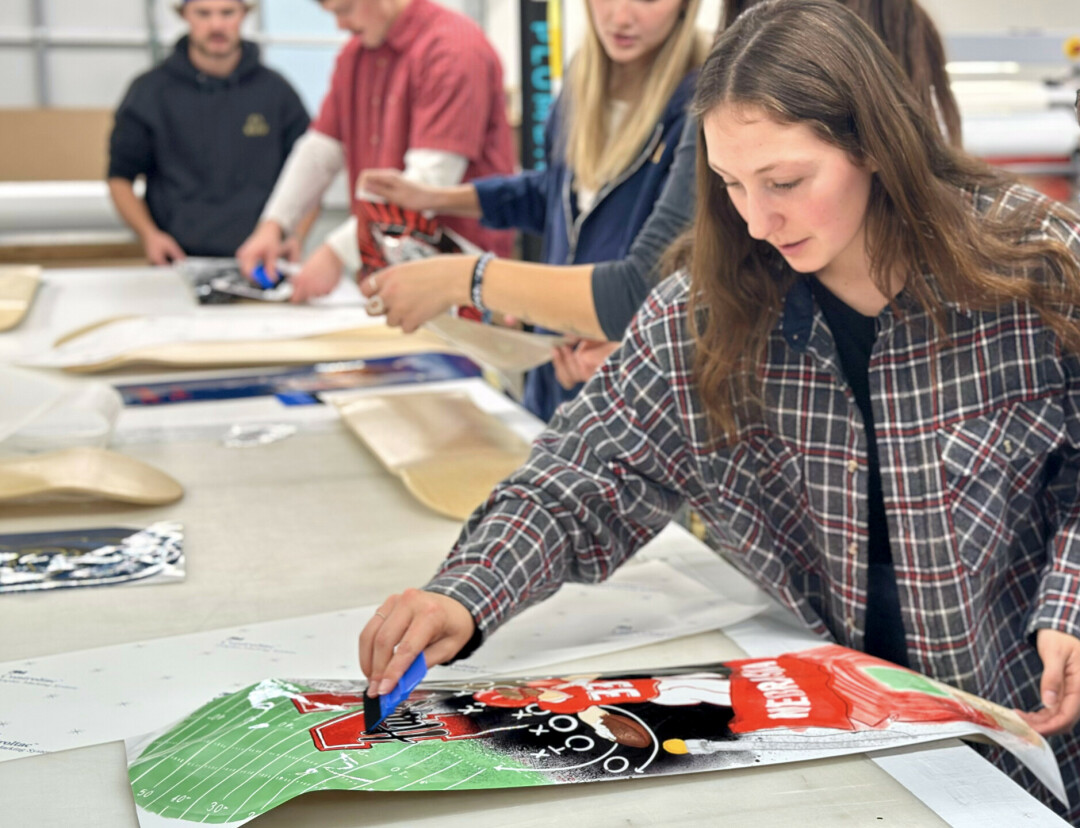
— Twenty Montana State University students presented their skateboard designs in the 2026 Deck Show at Bozeman High School this month, bringing together artists and skateboarders from across Montana to support skatepark projects in Bozeman and Ennis. 
 
The students spent the fall semester designing skate decks, which cover the underside of a skateboard, in a digital visualization class taught by graphic design professor Jeffrey Conger in MSU’s College of Arts and Architecture. Their efforts, alongside that of more than 40 local artists and 10 students each from Bozeman, Gallatin and Ennis high schools, culminated in an online benefit auction that is open through Feb. 26. Proceeds from the 2026 Deck Show will go toward the Ennis Lions Club Skatepark and Skate Alliance of Montana. 

A public reception for the show will be held from 5 to 7 p.m. Thursday, Feb. 26, at Bozeman High School, where the skateboards will be on display until early March in the Robert and Gennie DeWeese Gallery. The gallery is open to the public from 9 a.m. to 4 p.m. on weekdays, with check-in required at the school’s main office. 

“Deck shows have a long tradition in the skateboarding culture as catalysts to raise awareness and garner funding support,” Conger said. “This is a wonderful community opportunity for creatives to come together to support two exciting skatepark projects. The exhibition is the perfect collaboration between MSU students, high school students and community artists.”  

In Ennis, the community hopes to build a 6,000-square-foot skatepark, establishing an engaging space for the skate community to gather and enjoy the sport. High school skaters met Conger during the Fourth of July parade in Ennis while fundraising, sparking a conversation on how to foster community engagement and develop unexpected fundraising opportunities. After an author event held at MSU on Feb. 5 in conjunction with the 2026 Deck Show, the Ennis Lions Club Skatepark announced that it received a $100,000 donation from authors Andy Kemmis and Chris Bacon and the Montana Skatepark Association.  

The nonprofit Skate Alliance of Montana is looking to fund skatepark projects in Bozeman with support from the 2026 Deck Show.  

MSU students brought their designs to life in class with the help of MSU alumni at the Bozeman-based design company SCS Wraps Unlimited. They applied vinyl wraps to the boards, using a hot torch to smooth out air bubbles. Designs ranged from a cow caught in the glowing beam of an alien saucer to swirling Bozeman mountains and a Tyrannosaurus rex roaring “shred.” 

Additional community sponsors and collaborators for the project include Blazing Arrow Productions, Board of Missoula, the Montana Skatepark Association, MSU’s graphic design program and World Boards. Conger and co-curator Patrick Hoffman, the art department head and gallery director for Bozeman High School, also received a $1,000 grant from MSU’s College of Arts and Architecture. 

“This project made me feel like design can make a difference in ways you didn’t expect,” said Skye Horowitz, a junior graphic design major from Whitefish. “When I think of careers that help people, I typically think of doctors and nurses, but it’s pretty cool to know that I’ll be able to use my talent for good in the world.” 

Horowitz said she has always wanted to create art for others rather than herself, which led her to discover graphic design in high school. At the time, she designed a logo and social media graphics to promote a small business, helping it connect with other organizations in Whitefish and grow the next year. Her skate deck for the auction depicts a wolf leaping to catch a gold star in its mouth underneath a prancing deer, both swathed in muted blue tones. 

Caleb Busuttil, a junior studying graphic design, said the project shaped his design process for other classwork that ranges from magazine layouts to motion graphic animation. He created several iterations of his skate deck and received peer feedback before landing on a final draft, learning to work with new file sizes and fewer editing layers in the software Procreate.  

Busuttil’s design resembled his favorite childhood video game, Mario Kart. The skate deck captures Mario racing on Rainbow Road, side-eying a blue shell about to explode above him.  
“Knowing I was able to make this skateboard as good as it was even though I had challenges with Procreate, it made me think I can push through and make something I’m proud of instead of going, ‘This will be good enough,’” said Busuttil, who is from Discovery Bay, California.  
Hoffman said his high school art students painted and drew their designs by hand onto their skate decks, excited to show their work in a gallery space that’s normally dedicated to professional and senior artists only.  

“Having students experience exhibiting their work alongside college students and professional artists in our community is exciting in itself, but I think anytime that students are seeing a fundraising component where art is directly enhancing a community project and lifting everybody else up with it, that kind of exposure can be very exciting to a high school student,” he said. 

Add a Comment »

Thursday, Feb. 12th, 2026

Montana State announces record spring enrollment of 16,373 students

BOZEMAN — When Cedar Stellon O'Donnell was in high school in Fairbanks, Alaska, she visited Montana State University as part of a tour of colleges she was considering. She wasn’t expecting to decide on attending MSU so quickly, but she said the energy of the campus during that visit made a lasting impression.

“Everyone here seemed proud to be an MSU student, and they were so excited about what MSU had to offer,” Stellon O’Donnell said. “The students just seemed to have such excitement about being a Bobcat and being at MSU.”

Now, three years later, Stellon O’Donnell is a junior pre-med student majoring in chemistry and biochemistry. She has taken on multiple roles at MSU, from student ambassador for the College of Letters and Science to peer advocate for Campus Civil Rights to vice president of the MSU chapter of Delta Gamma.

And when life gets challenging, the people she found on campus helped her through.
“Staying at MSU was a matter of the people that I found here. I don’t think I would have found those people if I wasn’t at Montana State and I wasn’t participating in campus life to the extent that I have,” she said.

Stellon O’Donnell is one of the thousands of students who have chosen to enroll – and remain – at Montana State. The university’s spring enrollment has set a new all-time record of 16,373, marking the sixth consecutive year of spring semester enrollment growth at the state’s largest university.

The new headcount, which is recorded after the 15th day of classes each semester, is about 1% larger than this time last year, when spring enrollment was 16,237. Over the past five years, spring headcount at MSU has increased 8.8%.

This spring’s total includes 1,959 graduate students who are pursuing master’s or doctoral degrees and a record 14,414 undergraduate students. The university enrolled 8,467 Montana resident students this spring. That number is 52% of the MSU student body and at least 2,000 more than the Montana student enrollment on any other campus in the state.

“Montana State’s a special place for a lot of reasons, and the biggest reason of all is our students,” said MSU President Brock Tessman. “They have chosen MSU, and in return everyone at MSU is proud to do everything we can to help our students achieve their educational and career goals.”

Of those first-time-in-college students who enrolled for fall — including students seeking bachelor’s degrees, associate degrees and certificates — 91.7% returned to MSU for the spring semester.

“Once students enroll at Montana State University, we work extraordinarily hard to provide resources and support to help them stay in school and graduate on time,” said Steve Swinford, MSU’s vice president of student success.

Those efforts have included streamlining MSU’s registration process, improving communication with students through the NavMSU app, increasing the capacity of key courses that students need to graduate on time and ensuring that students have chances to meet one-on-one with advisers to help them navigate college, said Swinford.

Belgrade resident Debe Honibah Brady started at MSU this spring. As a non-traditional student and single parent, she said she chose to enroll and study business management because an MSU education will help her in her work as an event planner.

She said she appreciates the resources MSU provides.

“I know where I can go for tutoring; all of the information I need to succeed is in one place,” she said. “(MSU is) literally offering me the tools to be successful.”

In addition to setting a headcount enrollment record this spring, MSU also set a new record in full-time equivalent, or FTE, enrollment, at 14,557. FTE is calculated by dividing the total number of credits that all MSU students have enrolled in by the number of credits considered a full-time course load.  Over the past five years, full-time equivalent enrollment at MSU has increased 10.2%

“What FTE enrollment ultimately tells us is that more MSU students are taking more credits per semester and that they’re making progress toward earning their degrees and starting their careers,” Swinford said.

Swinford also noted that taking more credits per semester saves students money over the course of their college years. Students do not pay additional tuition for credits beyond the first 12 they take per semester. Taking 15 or 18 credits per semester can keep students on track to graduate on time — or even early — potentially saving students and their families thousands of dollars.
Instructors in the classrooms, studios and laboratories also contribute crucially to students’ experiences. The university’s executive vice president for academic affairs and provost, Robert Mokwa, praised MSU’s faculty for their commitment to students.

“Our exceptional faculty members mentor, challenge and inspire students every day,” he said. “The strong enrollment and retention numbers we’re seeing this spring reflect the confidence and trust that students (and their families) have in our faculty.”

Among MSU’s spring enrollment highlights: Gallatin College MSU, which offers programs in vocational training and career technical education, saw its headcount increase by 5.9%, setting a record spring enrollment of 1,493. Located in five off-campus locations across the Bozeman area, Gallatin College MSU has been the university's fastest growing college for years.
In September, MSU announced a fall enrollment record of 17,165 students. Fall enrollment is traditionally higher than spring enrollment.

MSU’s spring enrollment by the numbers
  • Headcount: 16,373 (new spring record)
  • Undergraduate headcount: 14,414 (new spring record)
  • Graduate headcount: 1,959
  • Gallatin College MSU headcount: 1,493 (new spring record)
  • Dual enrollment headcount: 865 (new spring record)
  • Montana resident students: 8,467
  • MSU awarded 997 degrees at December’s commencement ceremony, including 778 bachelor’s degrees, 108 master’s degrees and 26 doctorates.
  • Largest three academic colleges: Letters and Science (3,120), Norm Asbjornson College of Engineering (3,098), and Jake Jabs College of Business and Entrepreneurship (2,283).

Add a Comment »

Guide to Choosing High-Performance Windows & Doors for Modern Homes


Why Windows and Doors Define Modern Home Performance

Modern homes are expected to support the way people actually live: consistent comfort, lower energy waste, quieter rooms, and interiors that feel bright without feeling exposed. Windows and doors influence all of that because they sit at the boundary between conditioned indoor spaces and changing outdoor conditions.

When these openings underperform, the symptoms are easy to recognize. Rooms near large windows can feel noticeably colder in winter and hotter in summer. Drafts often occur around frames, and condensation may form when indoor humidity meets cold glass. Over time, small performance gaps can lead to higher heating and cooling costs, less comfortable living spaces, and finishes that age faster.

At the same time, design has raised the stakes. Larger panes, slimmer sightlines, and wide openings to patios and decks are common features in contemporary builds. Those choices can enhance livability and natural light, but they also require better engineering: stronger frames, smarter glazing, and reliable sealing that withstands years of daily use.

Choosing windows and doors today requires balancing style with measurable performance. Understanding how high-performance products work, how materials behave, and how installation affects the final result helps homeowners make choices that deliver comfort and durability instead of surprises.

What Makes Windows and Doors “High-Performance”?

High-performance windows and doors are built to control heat transfer, air leakage, and moisture intrusion while staying durable and easy to operate. Performance comes from the whole system working together rather than any single feature.

Thermal performance is a major piece of the puzzle. Multi-pane glass, insulating gas fills, and warm-edge spacer systems reduce heat transfer through the glass. Frames also matter because poorly designed frames can “bridge” heat, creating cold zones and undermining the benefit of better glass.

Air sealing separates average products from excellent ones. Tight tolerances, effective weatherstripping, and durable gaskets reduce drafts and help maintain a stable indoor temperature. Better sealing can minimize dust and outdoor odors and noticeably improve comfort near the opening.

Moisture management protects both the unit and the surrounding materials. High-performance designs incorporate features that help prevent water infiltration and promote proper drainage. This matters for long-term reliability because moisture issues often develop slowly and lead to the most expensive repairs.

Acoustic performance is another benefit when construction and sealing are strong. Glass selection, frame design, and airtight installation can reduce exterior noise and make living spaces calmer, especially in bedrooms, nurseries, and home offices.

When comparing options, it helps to work with a supplier that can explain performance trade-offs across styles and budgets. A practical starting point is to review the available product options and specifications on the Graber Supply website.

Materials Matter: Choosing the Right Build for Long-Term Value

Frame material choices shape durability, maintenance, stability, and thermal behavior. The “best” choice depends on priorities such as long-term maintenance, aesthetics, and climate exposure.

Wood remains a favorite for its warmth and design flexibility. It insulates well and can be finished to match a wide range of interiors. The tradeoff is maintenance: wood needs protection from moisture and sun exposure, and neglect can lead to swelling, peeling finishes, or deterioration.

Fiberglass is valued for stability and strength. It resists expansion and contraction, which helps seals remain effective through temperature swings. That stability can support consistent operations and reduce long-term air-leakage risks. Fiberglass also works well with modern profiles and painted finishes.

Aluminum offers slim frames and crisp lines that fit contemporary architecture. Its biggest challenge is conductivity, so high-quality units rely on thermal breaks and design details that reduce heat transfer. When engineered well, aluminum can pair a modern look with solid performance.

Composite frames combine materials to improve strength, moisture resistance, and insulation while keeping maintenance lower. Many composites are designed to resist warping and retain finishes well, making them appealing to homeowners who want a balance of durability and efficiency.

Materials affect more than appearance. They influence how well a unit holds alignment, how reliable the seals remain, and how much maintenance is needed over a decade of weather, sun, and daily use.

Energy Efficiency and Everyday Comfort

Energy efficiency is about more than utility bills. It determines whether rooms remain consistently comfortable and whether the home’s heating and cooling systems operate smoothly rather than constantly correcting temperature swings.

Glazing choices are central. Low-emissivity coatings can reduce heat loss in winter and manage solar heat in summer. The right configuration helps keep interiors bright while reducing glare and hotspots. For doors and large window walls, the glazing package often makes the difference between a space that feels inviting and one that feels hard to heat or cool.

Air leakage control supports comfort as much as insulation does. Even strong glass performance can be undermined by poor sealing. Drafts are often felt at floor level and near seating areas, which can make an otherwise beautiful space feel uncomfortable.

Performance metrics help compare options objectively. Ratings like U-factor, solar heat gain, and air infiltration provide a clearer picture than marketing language. If you want a reliable overview of energy performance ratings, this guide on window performance criteria is a useful reference.

Efficient windows and doors also help control condensation by keeping interior glass surfaces warmer and by reducing cold spots. That can protect trim, flooring, and nearby wall finishes while improving the overall feel of the home.

Design Without Compromise: Balancing Style and Function

Design-forward windows and doors can enhance a modern home, but strong performance requires choosing details that support daily use and long-term durability.

Sightlines and proportions shape the visual impact. Slim frames and larger glass areas increase daylight and views. Still, structure matters: larger openings require frames and hardware that resist sagging and maintain alignment, keeping seals intact.

Operation style affects both layout and convenience. Sliding systems can preserve floor space and support wide openings. Hinged doors provide strong compression seals and traditional usability. Lift-and-slide and multi-panel systems can create dramatic openings, but they rely on robust hardware and precise installation to operate smoothly.

Privacy and light control should be addressed early. Clear glass emphasizes openness, while textured or tinted options can soften glare and improve privacy. In bedrooms and bathrooms, privacy solutions can be integrated without sacrificing modern aesthetics.

Hardware and security complete the picture. High-quality locking systems and durable finishes matter because doors are high-touch elements. Smooth, reliable operation is part of performance, especially for everyday entry and patio doors.

Good design choices work best when they are paired with realistic performance goals for comfort, durability, and ease of living.

Sourcing Quality Products for Reliable Results

High-performance results depend on sourcing products that meet the home’s requirements and include clear specifications. It also depends on access to guidance that helps homeowners avoid common mistakes, such as choosing a style that looks right but underperforms for the opening size or exposure.

A strong supply partner can help clarify:

● Which glazing packages fit different comfort goals
● How frame materials compare for maintenance and longevity
● Which configurations support modern sightlines without compromising seals
● What installation details need to be planned before ordering

Sourcing is also about coordination. Windows and doors often affect scheduling because they determine when a building can be enclosed and weather-protected. Fewer specification errors and better lead-time planning reduce delays and prevent costly changes.

Installation, Fit, and Planning Considerations

Installation quality determines whether a window or door performs as intended. Even top-tier units can lose efficiency if they are installed out of square, sealed inconsistently, or flashed improperly.

Measurement and assessment should come first. Openings must be evaluated for squareness, structural support, and compatibility with the chosen unit type. For renovations, existing framing and finishes can create constraints that should be addressed before ordering.

Water management is critical. Proper flashing and drainage protect the building envelope and reduce the risk of hidden moisture damage. This is especially important around doors and large openings where exposure and wear are higher.

Air sealing and insulation must be continuous. Gaps around the perimeter can create drafts and cold spots, undermining comfort and raising energy use. A consistent sealing approach helps preserve the product’s rated performance.

Planning and sequencing matter in both new construction and remodels. Coordinating with siding, trim, interior finishes, and flooring reduces rework and helps ensure the final installation looks clean while functioning well.

Making Informed Choices for the Home You Live In

A smart selection process connects product choices to real-life needs. The best windows and doors for a home office may prioritize quiet and glare control. A kitchen and living area might benefit from wide openings and durable finishes that handle frequent use. Bedrooms often benefit from strong insulation and dependable privacy solutions.

It also helps to define what “value” means for the project. Some homeowners prioritize the lowest maintenance path. Others focus on long-term comfort, quieter interiors, or design impact. Aligning priorities with product choices reduces the risk of regret after installation.

For additional inspiration that connects comfort and aesthetics, exploring how design choices influence a home’s atmosphere can help homeowners better understand how performance-focused decisions shape daily living.

Building for Comfort, Efficiency, and Longevity

High-performance windows and doors influence daily comfort in direct, noticeable ways. They affect temperature stability, noise levels, condensation risk, and the room's perceived invitingness across seasons. They also shape how a home looks, from the amount of daylight to the clarity of views and the flow between indoor and outdoor spaces.

The best outcomes come from understanding what drives performance, choosing materials that align with long-term goals, selecting designs that support real-world use, and ensuring installation is handled with care. When those pieces align, windows and doors become a lasting upgrade that supports comfort, efficiency, and durability for years to come.


Add a Comment »

News Comments