


Monday, Mar. 23rd, 2026

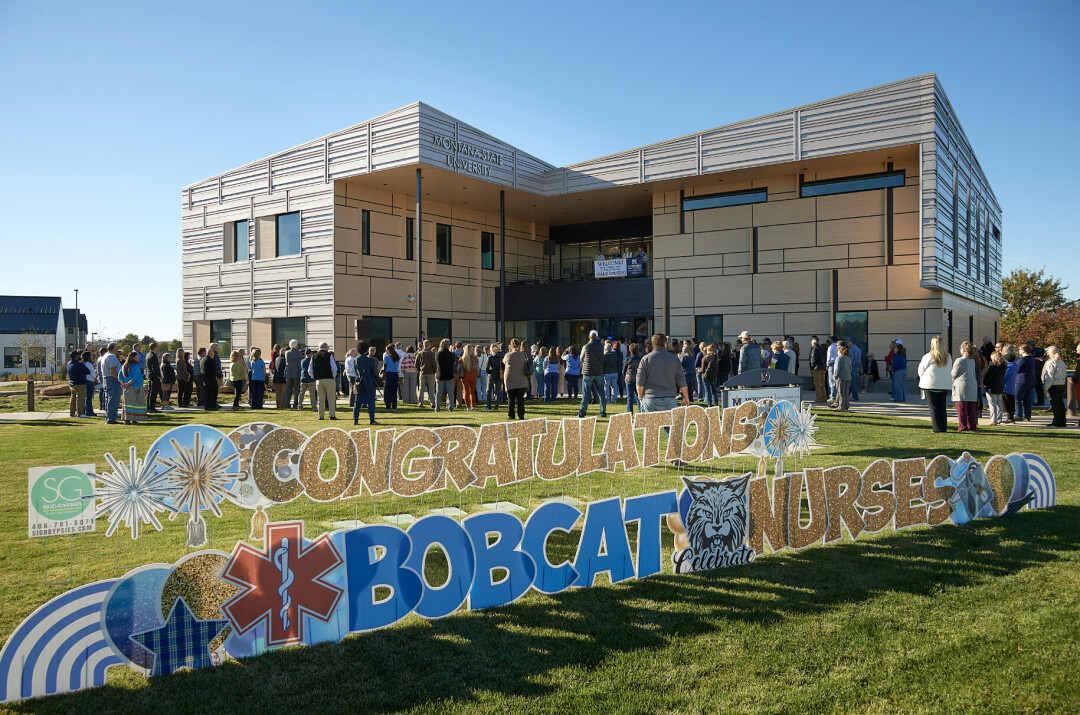
Montana State nursing college sets dates for fall opening of four new buildings

BOZEMAN
— The Mark and Robyn Jones College of Nursing at Montana State University has set dates this fall for the grand openings of four new nursing education buildings, reaching a key milestone just five years after MSU received the largest-ever private donation to a nursing college. 

Founders of Goosehead Insurance, Mark and Robyn Jones, announced their historic and unprecedented $101 million gift in August 2021. The donation allowed the college to construct new nursing buildings on all five of its campuses located in Bozeman, Billings, Great Falls, Kalispell and Missoula. The modern, state-of-the-art facilities were designed, constructed and will be opened to students on an expedited timeline.  

“Our growth as Montana’s premier nursing college is a benefit both for students and all Montanans, who are cared for by the impressive numbers of Bobcat nurses who have chosen to stay in Montana and serve their communities,” said Sarah Shannon, dean of the nursing college. “This additional infrastructure will allow our college to increase enrollment, increase the number of nursing graduates each year and bolster the health care workforce in every corner of the state.” 

Currently, across its five nursing education campuses, MSU graduates around 300 bachelor’s-prepared nurses each year. With the new facilities, that number is expected to increase by 100 students to 400 new registered nurses annually.  

The nursing school’s “five campuses one college” model allows students to take their prerequisite courses in Bozeman and then apply to complete the nursing program in Bozeman, Billings, Great Falls, Kalispell and Missoula.  

The new nursing education building on the Great Falls campus opened to students in fall 2025. Construction is on target for all four of the other nursing education buildings to be ready for students by the start of the fall semester. Thanks to the mild winter, the building openings are ahead of schedule.  

The dates for each grand opening are below, all of which are open to the public. Specific times will be announced closer to the events and listed on www.montana.edu/nursing/.  
  • Bozeman: Friday, Sept. 18, 2026, in the late afternoon  
  • Billings: Wednesday, Sept. 23, 2026, from 10 a.m. to noon  
  • Kalispell: Monday, Oct. 12, 2026, in the afternoon  
  • Missoula: Tuesday, Oct. 13, 2026, in the midday or afternoon  
Each of the new nursing education buildings features large classrooms, a foundational skills room and a state-of-the-art simulation center with three separate rooms for maternal and newborn care, adult care and pediatrics. The design prioritizes student-centered spaces, including private study rooms, study nooks and day-use lockers.  

MSU contracted with the design firms Cushing Terrel and CO Architects to coordinate the projects with MSU’s Planning, Design and Construction team.  Different construction companies were engaged in each community to complete the projects, including Sletten Construction in Great Falls, Martel Construction in Bozeman, Swank Enterprises in Kalispell, Langlas and Associates in Billings, and Jackson Contractor Group in Missoula.  

Add a Comment »

The Systems You Don’t See Are the Ones That Shape Daily Home Comfort

Photo by Hoi An and Da Nang Photographer on Unsplash

When people think about home comfort, they often picture visible features, furniture, lighting, or layout. But the systems that truly define how a home functions are usually hidden. Water, waste management, and sanitation systems operate quietly in the background, supporting everything from morning routines to long-term property health.

These systems rarely draw attention until something goes wrong. A slow drain, an unpleasant odor, or inconsistent water flow can quickly disrupt daily life. Unlike cosmetic issues, these problems affect how the entire home operates.

As more homeowners begin to focus on reliability and long-term performance, there is a growing awareness that these unseen systems are just as important as design choices. Comfort is not only about how a home looks, it is about how smoothly it functions every day.

Waste Systems as a Core Part of Home Functionality
Waste management systems are essential for maintaining a clean and functional home environment. They ensure that wastewater is safely removed and processed without affecting daily living conditions.

When these systems work properly, they go unnoticed. However, even minor issues can create immediate problems. Blockages, leaks, or system overload can lead to unpleasant conditions and require urgent attention.

Homeowners who understand the importance of these systems are more likely to prioritize regular checks and maintenance. This helps prevent disruptions and ensures that the home continues to operate efficiently.

Why Maintenance Matters More Than Most People Expect
Maintenance is often viewed as a reactive task, something to address when a problem appears. In reality, regular maintenance is one of the most effective ways to prevent larger issues from developing.

For waste systems, this includes inspections, cleaning, and ensuring that components are functioning correctly. Small adjustments can prevent more serious complications that may require extensive repairs.

Many homeowners choose to work with providers like septicandsewerboulder.com to keep these systems operating reliably and to address potential issues before they escalate.

Long-Term Home Health Starts Underground
The condition of underground systems has a direct impact on the overall health of a home. Wastewater systems, in particular, must operate efficiently to prevent contamination and structural issues.

Problems below the surface can affect multiple areas at once. Slow drainage, unusual smells, or recurring backups often indicate deeper issues that require attention.

According to the U.S. Environmental Protection Agency (EPA), properly maintained septic systems help protect both household health and the surrounding environment by preventing contamination of groundwater and soil.

Recognizing Early Signs of System Issues
Early detection is key to preventing major disruptions. Many system problems provide warning signs before they become serious.

Common indicators include slow drains, gurgling sounds in pipes, or water pooling in unexpected areas. These signs suggest that the system may not be functioning as efficiently as it should.

Responding to these signals early allows homeowners to address issues before they escalate. This proactive approach reduces both inconvenience and long-term repair costs.

The Connection Between Water Use and System Performance
Water usage patterns have a direct effect on how waste systems perform. Excessive or uneven usage can place additional strain on systems, leading to inefficiencies.

Balancing water use helps maintain system stability. This includes spreading out high-usage activities and avoiding sudden increases in demand that the system may not be able to handle.
Understanding this relationship allows homeowners to make small adjustments that improve overall performance and reduce the likelihood of problems.

Environmental Impact of Proper Waste Management

Photo by Felipe Bastias on Unsplash

Waste management systems play an important role in protecting the environment. When functioning correctly, they safely process wastewater and prevent harmful substances from entering natural ecosystems.

Poorly maintained systems, on the other hand, can lead to contamination of soil and water sources. This can have broader environmental consequences that extend beyond the property itself.

Maintaining these systems is therefore not only a matter of convenience but also a responsibility that contributes to environmental protection.

Designing Homes With System Reliability in Mind
Modern home design is beginning to place greater emphasis on system reliability. Instead of focusing solely on aesthetics, homeowners and builders are considering how systems will perform over time.

This includes planning for easy access to maintenance points, choosing durable materials, and ensuring that systems are sized appropriately for the home’s needs.

By incorporating these considerations into the design process, homeowners can create spaces that are both comfortable and resilient.

Preventing Disruptions Through Consistent Care
Consistent care is one of the most effective ways to maintain system performance. Regular inspections and timely maintenance help ensure that systems continue to function as intended.
This approach reduces the likelihood of unexpected issues and allows homeowners to maintain a stable living environment.

When systems are well-maintained, they support daily routines without interruption, allowing the home to function smoothly and efficiently.

Supporting Comfort Through Reliable Infrastructure
Comfort is often associated with visible features, but it is ultimately supported by infrastructure that works reliably in the background. Waste systems, water supply, and sanitation all contribute to how a home feels and functions.

By paying attention to these systems, homeowners can create environments that are not only visually appealing but also dependable.

Reliable infrastructure supports daily life, reduces stress, and ensures that the home remains a place of comfort rather than a source of unexpected challenges.
 

Add a Comment »

Power Reliability Is Becoming Part of Modern Home Planning

Photo by Matthew Henry on Unsplash

Modern homes are built around systems that rely heavily on consistent electricity. From heating and cooling to communication and security, daily life depends on uninterrupted power. While this dependence often goes unnoticed, it becomes immediately clear when outages occur.
As a result, homeowners are starting to think differently about how their homes function under changing conditions. Reliability is no longer just about convenience, it has become part of everyday planning. Systems that once seemed secondary are now considered essential, particularly in environments where interruptions can affect comfort, safety, and routine.

Instead of treating outages as rare disruptions, more households are exploring ways to maintain stability regardless of external conditions. This shift reflects a broader understanding of how
critical consistent power has become in supporting modern living.

Everyday Systems Depend on Continuous Power
Electricity supports far more than lighting. It powers heating systems, refrigeration, water supply mechanisms, and the devices used for communication and work.

When power is interrupted, multiple systems are affected at once. This can disrupt routines, reduce comfort, and create practical challenges that extend beyond the outage itself.

For households that rely on consistent functionality, even short interruptions can have noticeable effects. Maintaining continuity across these systems has become an important part of managing a modern home environment.

Backup Power as a Practical Upgrade
Backup power solutions are increasingly viewed as practical additions rather than optional upgrades. These systems provide a way to maintain functionality during outages without requiring manual intervention.

Automatic systems, in particular, help ensure that essential appliances and systems continue operating when the main power supply is interrupted. This supports a smoother transition during outages and reduces the impact on daily life.

Homeowners exploring these options often work with providers such as Oregon Generators to install systems that support consistent performance and long-term reliability.

Protecting Home Systems Through Power Stability
Stable power supply plays a direct role in protecting home systems. Many essential components depend on electricity to function correctly, including pumps, heating systems, and security features.

When power is lost, these systems may stop working, increasing the risk of damage or disruption. In some cases, the effects of an outage can extend beyond the initial event, leading to additional maintenance or repair needs.

Ensuring that power remains available helps reduce these risks and supports the overall performance of the home.

Understanding the Impact of Power Interruptions
Power interruptions affect more than just immediate convenience. They can influence safety, system reliability, and overall household stability.

According to the U.S. Department of Energy, outages can significantly impact essential home systems, particularly those related to heating, cooling, and safety.

This highlights the importance of planning for continuity rather than reacting after disruptions occur.

Weather and Infrastructure Variability

Photo by Karsten Würth on Unsplash

Power reliability is influenced by a range of factors, including weather conditions and infrastructure performance. While some interruptions are predictable, others occur without warning, making it difficult to rely solely on external systems.

This variability has led to a growing focus on preparedness. Homeowners are increasingly considering how to maintain stability even when external conditions are less predictable.
By planning for these scenarios, households can reduce the impact of disruptions and maintain a more consistent living environment.

Integrating Backup Systems Into Home Design
Backup power systems are becoming part of home design rather than afterthoughts. Integrating these systems early allows for better placement, improved efficiency, and more seamless operation.

When designed alongside other home systems, backup solutions can operate more effectively and require less manual management. This integration supports a more cohesive approach to home functionality.

It also ensures that systems are ready when needed, rather than requiring adjustments after installation.

Long-Term Value of Reliable Power Systems
Reliable power systems contribute to long-term home value. They support consistent performance, reduce risk, and improve overall usability.

Homes equipped with backup solutions are often better prepared to handle disruptions, making them more attractive in environments where reliability is a priority.

This added stability is not just about comfort, it is about maintaining control over the home’s functionality under a wide range of conditions.

Moving Toward More Self-Sufficient Homes
There is a growing shift toward homes that are designed to operate more independently. This includes systems that reduce reliance on external infrastructure and provide greater control over essential functions.

Backup power is one part of this approach. Alongside other systems, it helps create an environment where households can maintain stability even when external conditions change.
As this shift continues, reliable power solutions are becoming a standard consideration in modern home planning, supporting both everyday functionality and long-term resilience.
 

Add a Comment »

Wednesday, Mar. 18th, 2026

Montana State to award honorary doctorate to couple who served university, state and community for decades


BOZEMAN
– A couple who met and married at Montana State University and each served the institution in public-facing roles for decades will receive a joint honorary doctorate of humane letters degree from MSU during the university’s spring commencement ceremony on Friday, May 8, at the Brick Breeden Fieldhouse.

Today, the Montana Board of Regents approved the honorary degree for Rolf Stigum Groseth, who held prominent administrative positions at three of MSU’s campuses during his 37-year career in Montana higher education, and alumna Jaynee Drange Groseth, whose service to the university included directing the Office of Admissions and serving as the longtime director of the MSU Alumni Association. Honorary doctorates are the university’s highest form of commendation, conferred upon individuals who have excelled and made outstanding contributions to society.

Jaynee Groseth grew up in Billings and came to Bozeman as a freshman at MSU in 1969. After graduating in 1973, she spent two years as a traveling executive for Kappa Delta sorority. She went on to work in the MSU Office of Admissions for 17 years as assistant director and then director. In 1992, she was named executive director of the Alumni Association; she assumed the role of Alumni Association president in 2008 and served in that capacity through the 2012 formation of the MSU Alumni Foundation, retiring in 2013.

Over the course of her career, Jaynee Groseth developed new initiatives, preserved MSU traditions and enticed countless students and alumni to connect with MSU. She is responsible for many innovations that are part of the university fabric today, including developing a new orientation program for students and parents; what is now the MSU Spirit Squad; and the AdvoCats student tour guides that help with student recruitment. She also helped found the Presidential American Indian Alumni Brunch that is held during the annual MSU American Indian Council Powwow.

Rolf Groseth grew up in Hinsdale, Illinois, and graduated from Michigan State University, where he was an All-America swimmer. After serving in the Army in Vietnam, he earned a master’s degree from Iowa State University and then a doctorate in higher education management at the University of Florida, where he was recruited to lead programs assisting Vietnam veterans. He began his career at MSU in 1977, holding many positions over the next 37 years, including dean of students, vice provost, MSU system coordinator, vice president for intercampus affairs, interim chancellor of MSU Northern and chancellor of MSU Billings.
During Chancellor Groseth’s tenure, MSU Billings was awarded $10 million by the Montana Legislature to expand and renovate teaching and research facilities for science and allied health on campus. He also aided in completing the Opportunity Campaign, which raised more than $7 million for student scholarships. Rolf Groseth worked on behalf of Montana’s two-year institutions, culminating in 2012 with the launch of City College at MSU Billings, which provides a wide range of two-year degrees and certificate programs. Though he retired in 2014, he returned to MSU Billings in 2020 to serve one year as interim chancellor.

Throughout their years at MSU, the Groseths supported numerous campus and community organizations, including fraternities and sororities, the Spirit of the West marching band, and Christus Collegium. In addition to their contributions to the university, they actively engaged in civic stewardship to the community and the state of Montana.

Jaynee Groseth founded the Montana Post Secondary Education Opportunities Council, a nonprofit that promotes opportunities in higher education to students, parents and guidance counselors across Montana. She was active in various community groups in Bozeman, including the Chamber of Commerce, New Genesis musical group and Greater Gallatin United Way. Rolf Groseth was involved with the Bozeman Film Festival, church councils, Friends of Montana PBS and Leadership Montana, a statewide leadership development organization.

Together, the Groseths provided leadership to promote community organizations and events including the Sweet Pea Festival of the Arts, Christmas Stroll, Taste of Bozeman, Lutheran ministry and Rotary. The Groseths also established scholarship endowments at both MSU in Bozeman and MSU Billings.

In a letter nominating the couple for the honorary degree, Matt Caires, MSU dean of students, and Dorothy Bradley, former Montana legislator and past director of the Montana Water Center at MSU, characterized the Groseths as “two of the cornerstones that have built the foundation of what Montana State University is today.

“We have known them throughout their careers and have never seen two people – a couple – with greater dedication, lifelong commitment and affection for Montana State University,” the letter states. “Their service to the community and state has been filled with energy, creativity, having an eagle eye for problem solving, and spreading goodwill and inclusiveness everywhere.”
The letter continues, “Together, Jaynee and Rolf have quietly distinguished themselves time after time leading by example, improving the lives of students, parents, faculty and staff, serving and creating organizations and events, and building lasting friendships for MSU along the way.”

Add a Comment »

Gallatin College MSU grant will bridge gaps in cybersecurity education across Montana

BOZEMAN — Gallatin College Montana State University will use a $50,000 Cybersecurity Pathways grant to support Montana educators and help local high school students earn cybersecurity certification. 

Ronda Black, program director of information technology at Gallatin College MSU, received the one-year grant from the Montana’s Future at Work program, which provides two-year colleges with opportunities for career outreach through the Montana University System. Using the grant, Black said she hopes to create a “whoa” moment for students who are unfamiliar with cybersecurity, in addition to meeting the demand for professionals in the field.

“Cybersecurity is not just information technology. It’s not just coding. It’s not just network administration,” Black said. “Cybersecurity is everywhere, and I think this grant is going to help students, teachers and counselors in every area to understand how they can be a part of it.” 
The first prong of Black’s grant begins with a statewide network. On Jan. 29, she launched the 406 CyberSmart Teachers’ Lounge, and she plans to release the 406 CyberSmart Teens Network during the spring semester. Both provide cybersecurity resources and collaborative spaces for users across Montana.  

For teachers wanting to bring cybersecurity education into their classrooms, the online lounge will serve as a one-stop shop for watching trainings, accessing curriculum across several subjects and collaborating with other educators, Black said. In a separate student lounge, teenagers can play cybersecurity games and find career resources, including recordings of Montana industry members discussing their work.  

Black said many students associate cybersecurity with coding, but career paths range from implementing company-wide risk management practices to identifying system vulnerabilities through ethical hacking. More than 1,500 cybersecurity jobs were available in Montana in 2025 and are expected to experience rapid growth by 2034. Information security analyst positions, for example, are forecast to expand by 29%, which is much faster than the average 3% growth of most occupations, according to the Bureau of Labor Statistics. 
 
However, there are more jobs than professionals who can fill them, Black said.  
“Gallatin College can help bridge that gap in providing cybersecurity awareness to students all across Montana, and I think grant work is our best path for doing that,” she said. 

Another component of Black’s grant will take high school students' cybersecurity awareness one step further. This spring, students attending Belgrade High School and Bozeman's Petra Academy will earn cybersecurity certifications for free using the grant.  

About 25 high school students will first take a dual-enrollment cybersecurity course, with the option to earn a CompTIA Security+ certificate and test their knowledge across several cybersecurity topics once they complete the course. Dual enrollment allows students to earn college credit at the high school level for a lower cost: They can apply the credits to Gallatin College MSU’s network security class and get a head start on completing a two-year degree in IT network technology or IT cybersecurity and information assurance at the college. 

The CompTIA Security+ certificate typically costs several hundred dollars, but it is desirable for more than 70,000 employers looking to fill positions nationwide, according to CyberSeek.  

“Out of my small classroom budget, the certification could cost me two grand for a class of 25, and that's just for licensing to use the program,” said Courtney Waliser, computer science and business education teacher at Belgrade High School. “That's not something our students would normally be able to do. Having those certifications opens other doors, and they can go on to some of the internships we're working on setting up.” 

Waliser said Black has been instrumental in making sure the high school curriculum is up to date with current technology trends and skills industry members are looking for. Through the spring dual-enrollment course, students will learn about system vulnerabilities, instant response to threats, identity management and more.  

Black said the lessons demonstrate for students how cybersecurity applies to their personal lives, whether that be adjusting their home router settings to make it less likely to be exploited or assessing how their personal metadata becomes publicly available after posting photos online.  

“I really want to put tools in schools’ hands that teachers can use easily and that students can go home and use right away,” Black said. “It’s giving them that power back in their hands.” 

To literally place learning in students’ hands, Black will also create Cyber Kits for classrooms across the state, funded in part by her grant.  

The kits will include an instructional video for educators and hands-on group activities, which tailor cybersecurity topics to several school subjects beyond computer science. They will be available for checkout this spring from the MSU Library. 

“It’s really about empowering teachers to get their students excited about cybersecurity,” said Charly Malcom, who contributes to the grant's fiscal management and rollout as director of business operations and finance for Gallatin College MSU.

Add a Comment »

Tuesday, Mar. 17th, 2026

The Real Lifespan of Modern Subsurface Drainage Systems

Making the decision to seal a home's lower level is a major commitment with high expectations. Most homeowners want to know their investment will stand up to the test of time. It is frustrating to think about a renovation failing after just a few seasons.

Subterranean construction faces constant pressure from the earth and shifting moisture. Materials must be robust enough to handle soil chemistry and the physical weight of the ground. Choosing a smart approach prevents the need for repetitive and expensive repairs down the road.

Modern engineering has moved beyond the temporary fixes of the past. High quality installations utilize materials designed to survive for several decades. When done correctly, high-quality professional basement waterproofing lasts years while keeping the interior environment dry and safe for the entire family.

How Materials Have Changed Over the Decades

The jump from old clay pipes to modern plastics has changed everything for residential drainage. Clay tiles were brittle and featured open joints that allowed dirt to seep inside. This eventually led to slow clogs and a complete failure of the water management system.

Orangeburg pipes were even worse as they consisted of wood fibers bound with tar. These pipes frequently collapsed under the weight of the soil or were crushed by growing roots. Once these failed, the water had nowhere to go but directly into the foundation.

Today, heavy duty PVC drain tiles provide a level of durability that was once impossible to achieve. These pipes are resistant to chemicals and can handle significant ground movement without cracking. Their smooth surfaces ensure that water moves quickly toward the exit point.

What Keeps a Seal Effective Against the Earth

Exterior membranes serve as the primary skin that protects the concrete from the surrounding environment. These materials must remain flexible enough to bridge small gaps as the house settles. A rigid coating would simply crack and allow water to reach the masonry surface.

Soil acidity is a silent factor that can eat away at low quality tar based coatings. Professional grade membranes use synthetic rubbers and polymers that are chemically inert. This allows them to stay effective even in the most aggressive and damp underground conditions.

The quality of the backfill material also plays a huge role in how long the seal stays intact. Sharp rocks can puncture the membrane during the initial filling process. Using clean gravel ensures the water drains away without putting undue stress on the protective layer.

Keeping the Sump Pump Running Through Any Storm

Sump pumps are mechanical devices with a finite lifespan that depends on how often they run. A pump in a dry area might last for a decade, while one in a high water table works much harder. The motor eventually wears down from friction.

Most failures occur at the switch or the internal float mechanism rather than the motor itself. These small parts are prone to getting stuck or corroded after years of being submerged. Regular testing is the only way to ensure the pump activates.

Battery backup systems are essential because failures happen during the worst storms. A secondary pump provides security when the power goes out or the primary unit reaches its limit. This ensures the drainage system continues to perform flawlessly and keeps the home safe.

Protecting the Pipe Network from Slow Buildup

Many believe that a drainage system is a set and forget installation that never needs attention. While the pipes are hidden underground, they are still susceptible to the environment. Small particles of silt can travel through the soil and enter the pipe network.

Over several years, this fine sediment can build up and create a layer of mud that slows down the flow. If the silt is allowed to harden, it can eventually block the drainage holes. This reduces the effectiveness of the system during heavy saturation.

Annual maintenance involves flushing out the lines with a high pressure hose to remove any accumulated debris. This simple task clears the path for water and ensures the system remains at peak performance. Preventing clogs is the best way to extend the pipe's life.

Why Professional Standards Create Decades of Safety

A well engineered drainage system provides a level of peace of mind that is hard to find elsewhere. By following strict standards and using the best materials, homeowners avoid the stress of a flooded basement. The focus remains on quality from the start.

The long term value of a dry foundation is seen in the stability of the entire building. Protecting the structure from water damage preserves the equity of the home for the future. It allows families to use their lower level for living space safely.

Investing in a professional installation pays off over decades as the system works silently. It is a fundamental part of a healthy household. A dry basement is the result of smart planning and a commitment to high quality construction standards for the long term.

Add a Comment »

Saturday, Mar. 14th, 2026

Artists Invited to Participate in ArtWeek Park County’s Big Bend of the Yellowstone Auction

Shirle Wempner, Golden Hour, From the 2025 auction catalog cover.


Livingston, MT
— Applications are now open for artists to participate in ArtWeek Park County’s end of the season auction, the Big Bend of the Yellowstone Fine Art Auction. Livingston’s annual end-of-summer art festival runs September 21–26, 2026, culminating with the auction on Saturday, September 26.

The ArtWeek Park County arts festival celebrates the region’s vibrant creative community while strengthening Park County’s reputation as an artist destination. The festival brings together artists, residents, and visitors for a series of events culminating in a community art auction showcasing work by regional creatives.

Organizers invite artists from across the area to apply and contribute to this year’s auction. Participation in the auction helps highlight the depth of artistic talent in the region and connect through the arts.

To apply or for more information about participating in this year’s auction, visit artweekpc.com/forartists.

To speak to a human about the auction, contact Storrs Bishop at storrs@the danforth.org or Kathy bekedam at kathy@livingstoncenter.org.

Important auction dates:

April 1st- Application Deadline
May 1st - Notification of Final Selection (via email)
June 10th - Catalog available
September 8th - Silent Auction begins at the Livingston Center for Art and Culture
September 11th - Artist Reception at the Danforth Museum of Art
September 11th to September 25th - Live auction pieces on display at Danforth Museum of Art. Silent auction pieces on display at Livingston Center for Art and Culture.
September 26th - Live and Silent Auction at the Livingston Depot Center

The ArtWeek Park County festival and auction were created and supported through the Park County Fund for the Arts, a program of the Park County Community Foundation and the Park County Arts Council. The Fund for the Arts is made possible by a generous donation from the JAKET Foundation.

Art Week Park County is a partnership between The Danforth Museum of Art, The Livingston Center for Arts and Culture, and The Livingston Depot.

Add a Comment »

Friday, Mar. 13th, 2026

Gallatin Behavioral Health Coalition Marks Transformative Year, Securing $10.9 Million and Expanding Services Across the Region

Coalition partners, funders, and providers cite collaborative model as a strong example of what community-driven behavioral health coordination can achieve

BOZEMAN  — The Gallatin Behavioral Health Coalition (GBHC) today released its 2025 Impact Report, highlighting a landmark year for behavioral health services in Gallatin County and Southwest Montana. Through sustained cross-sector collaboration among 28+ partner organizations, the coalition secured $10.9 million in collaborative funding and launched seven new behavioral health services — all while deepening the trust and coordination that define GBHC’s nationally recognized collective impact model.

Among the coalition’s most historic achievements in 2025 was the September opening of Bozeman Health’s 14-bed adult psychiatric inpatient unit, which supported 119 patients receiving acute psychiatric care close to home last year. The year also saw the launch of Rimrock’s Bozeman office offering addiction treatment services including withdrawal management and intensive outpatient care, the establishment of Gallatin County’s Assisted Outpatient Treatment (AOT) program backed by $1.5 million in SAMHSA funding, and the opening of HRDC’s Homeward Point shelter, which housed 107 people on its second night of operation.

“[QUOTE FROM SCOTT MALLOY, Montana Healthcare Foundation] — The Montana Healthcare Foundation believed from the beginning that Gallatin County had the community will and the right partners to build something lasting. What GBHC has achieved is a testament to what happens when organizations put collective community goals ahead of individual organizational territories and show up to work together year after year.”

— Scott Malloy, Montana Healthcare Foundation

The Montana Healthcare Foundation (MTHF) has been integral to GBHC’s development since 2017, when it funded Bozeman Health to lead the community’s initial behavioral health system assessment. MTHF subsequently funded Gallatin County as the backbone organization for coalition-building from 2019 to 2021, providing the foundational investment that enables today’s ongoing robust collaboration across systems of care.

Partners Drive From Across the State to Participate

The depth of commitment to GBHC is perhaps best illustrated by the dedication of its member organizations. Rimrock, Montana’s largest addiction treatment provider, opened a Bozeman office in 2025 and has been an active coalition partner — with the organization’s CEO making the drive from Billings each month to participate in coalition meetings.

“[QUOTE FROM JEFF KELLER, Rimrock] — I make that drive every month because this coalition is the real thing. The level of trust, the quality of conversation, and the commitment to genuine collaboration here is unlike anything I’ve seen elsewhere in Montana. When you’re in a room where people consistently put the community’s needs above their own organization’s interests, you make it a priority.”

— Jeff Keller, CEO, Rimrock Foundation

Building Toward the Future

Looking ahead, GBHC is actively pursuing crisis receiving and stabilization services, clubhouse model implementation for adults with serious mental illness, and continued buildout of the Lighthouse Ranch youth behavioral health campus — which has raised $5.6 million of its $8.5 million goal through a community fundraising campaign. The coalition is also engaged in Montana’s HB872 process, which will invest $300 million in the state’s behavioral health system, advocating for mobile crisis sustainability, youth crisis services, and adult crisis infrastructure in Gallatin County. Participation is ongoing with Montana’s Department of Public Health and Human Services (DPHHS) as they roll out the federally-funded Rural Health Transformation Program (RHTP). Montana has been allocated $233 million in year-one funding to strengthen rural health systems and improve access to care statewide.

GBHC’s 2025 Impact Report is available at gallatinmt.gov/gallatin-behavioral-health-coalition

About the Gallatin Behavioral Health Coalition

The Gallatin Behavioral Health Coalition is a multi-agency collaborative established in 2021, providing strategic coordination for the region’s behavioral health system. The coalition is facilitated by Kirsten Smith of Bloom Consulting and comprises 28+ partner organizations spanning healthcare, government, nonprofits, education, and recovery services. For more information, visit www.gallatinmt.gov/gallatin-behavioral-health-coalition.

Add a Comment »

Montana State collaborates with local elementary schools to produce Masked Reader events


BOZEMAN
— Hundreds of K-5 students gathered recently in the Emily Dickinson Elementary School gymnasium in Bozeman, sitting in rows on the floor alongside their classmates. They peered toward the front of the gym, craning their necks to get a glimpse of a person wearing a duck mask and a black cloak.

Led by Jules Harris, one of the students’ health enhancement teachers, the kids chanted in unison: “Show us your face! Show us your face! Show us your face!”

The person in disguise complied, peeling off the mask and revealing her identity: It’s Kendra Gault, an Emily Dickinson kindergarten teacher. The kids erupted in cheers.

Gault was one of eight masked readers whose identity was revealed during the assembly at the school on Feb. 27. The assembly and events leading up to it were part of a collaboration between Montana State University and two local elementary schools – Emily Dickinson and Hawthorne – known as the Masked Reader. Those events, organized by MSU health enhancement students enrolled in an elementary methods class and health enhancement teachers at the two elementary schools, were part of an effort to promote literacy and build community, according to Karie Orendorff, associate professor in the MSU Department of Food Systems, Nutrition and Kinesiology, who started the event in 2024.

“As a (health enhancement) teacher, you’re expected to do more at a school than just teach,” Orendorff said. “As a (health enhancement) teacher, you have the ability to affect the entire culture of the school. That’s why we do this.”

In the week leading up to assemblies at Emily Dickinson and Hawthorne, the elementary school students were shown videos where the readers – wearing masks and with their voices disguised – provided a few clues that could help the school’s students identify them. (Clues from one Hawthorne reader were that their favorite food is chicken enchiladas and their favorite Olympic sport is downhill skiing. Another Hawthorne Masked Reader said their favorite weather is the rain and they have a dog with very short legs.) Then, each Masked Reader read a children’s book aloud. Hawthorne and Emily Dickinson students then made their guesses about the identity of each reader.

MSU health enhancement students worked with the participating teachers, administrators and staff members at the two schools to create the videos. They also prepared and delivered movement lessons to students at each of the schools before the assemblies. Approximately 10 MSU undergraduate students participated in the event at Emily Dickinson, while approximately 22 participated in the event at Hawthorne, which was held on March 6. It was Hawthorne’s third annual event, and Emily Dickinson’s second.

“Movement and literacy go hand in hand,” Orendorff said of the decision to pair classroom lessons with the literacy-focused assemblies. “Kids remember a lot more when they’re moving. If they’re learning a concept, it helps to put movement to it. There is research galore on how movement helps fire all neurons in your brain to help you remember things.”

MSU students Ellen Olson and Madylan Osler delivered one of those movement lessons to third grade and first grade students at Emily Dickinson, encouraging the kids to get up and move around by leading rhythm games performed with pieces of foam pool noodles.

Osler noted the lesson provided her with valuable classroom management experience.
“It’s really helpful to be in a classroom and to be interacting with the kids,” Osler said. “I’ve learned a lot from this.”

Olson, who is studying health enhancement K-12, said working with the students validated her academic pursuits.

“It makes me excited,” she said. “Every time I’m in the classroom and interacting with the kids, I love it. It makes me glad I picked this for my major.”

Emily Dickinson’s principal, Chanell Brown, said the school loves the Masked Reader.
“I love the camaraderie that the Masked Reader brings, along with all the communication students and classrooms are participating in,” Brown said. “Jules Harris, one of our health enhancement teachers, brought the idea to me, and I thought that it sounded so fun. Last year was our first year doing it, and it will now become a yearly tradition.”

For her part, Orendorff values the collaboration because it serves local schools. For the MSU students, it’s also an opportunity to experience how to build culture in a school setting.
“A benefit (for the MSU students) is they get to see kids’ reactions, from start to finish,” she said. “It really is a positive thing.”

Plus, she added, the event enables MSU undergraduates to see the practical side of teaching.
“This is not about a lecture and learning theory; it’s about putting theory into action, with real kids,” she said.

Add a Comment »

Thursday, Mar. 12th, 2026

Community Survey to Capture Opinions on Downtown Bozeman Parking

BOZEMAN — The Downtown Bozeman Urban Renewal District (DURD), in partnership with the City of Bozeman, is conducting an online community survey to better understand perspectives about parking in Downtown Bozeman.

The survey responses will be used to build out the vision, mission, core values, and strategy for parking in Downtown Bozeman as well as inform an outreach and education campaign.

Everyone is invited to participate in the survey including anyone who visits downtown, customers, neighborhood residents, downtown area employees, downtown business owners, merchants, downtown property owners, anyone who makes deliveries or pickups, or anyone else who wants to share their opinions about the Downtown Bozeman parking experience. All survey responses will be kept confidential and will not be directly attributed to individual respondents.

The survey will remain open until Monday, March 30, 2026. Everyone who completes the survey will have the option to enter a random drawing for one of five Downtown Bozeman gift packages. Each package will include $100 in Downtown Dollars (a gift certificate redeemable in Downtown Bozeman) and a free 8-hour parking pass at the Bridger Parking Garage (a $6 value).

The survey can be found online: https://www.surveymonkey.com/r/COB2026.

“As we plan for the future, we want to learn what people have to say about parking in Downtown Bozeman,” explains Ellie Staley, Executive Director, Downtown Bozeman Urban Renewal District (DURD).

“The City is interested in understanding as many perspectives as possible, and we’re looking forward to hearing more about the survey results,” notes Cola Rowley, Assistant City Manager, City of Bozeman.


The City of Bozeman is responsible for providing, maintaining, and managing parking in Downtown Bozeman including the Bridger Parking Garage, the surface lots, and the on-street parking. The City of Bozeman also offers an occupancy dashboard on its website, capturing data to better understand parking trends in Downtown Bozeman.

The Downtown Bozeman Urban Renewal District (DURD)’s mission is to foster an economically thriving district that: attracts investment; stabilizes and strengthens the tax base; and supports the vitality and diversity of the Gallatin Valley as its social and cultural center. The DURD is the major funding source for the Bridger Parking Garage, which opened in Downtown Bozeman in April 2009.

“As we look ahead, we want to hear directly from the community about parking in Downtown Bozeman and use that feedback to guide our decisions. We remain committed to keeping our downtown vibrant and accessible for residents, employees, and visitors alike,” states Staley.

About the Downtown Bozeman Urban Renewal District (DURD)
The Downtown Bozeman Urban Renewal District (DURD) was created to fund the implementation of the 1995 Downtown Bozeman Urban Renewal Plan. The DURD board is appointed by the Mayor of Bozeman with City Commission consent. As mandated by the Montana Code, the DURD invests in infrastructure projects that add long-term value to the district, including the Bridger Parking Garage.

Add a Comment »

News Comments