A research collaboration between Blackfeet Community College and Montana State University involving tribal college students that looks at the health effects of stress on Native American communities has been featured in a national journal.
The article, "The Spirit of Our People Runs Deep: How a Program at Blackfeet Community College Offers Students Biomedical Research Experience," was published Oct. 22 in the Tribal College Journal of American Indian Higher Education online. It is the leading scholarly and journalistic publication featuring the achievements of the nation's 38 tribal colleges and universities.
Bill Stadwiser, the program communication specialist for Montana INBRE who wrote the article, said the collaboration shows what can happen when academics and communities discuss problems and solutions on an equal footing.
"The work that the BCC undergraduates are doing on this project is really quite impressive and on par or even more sophisticated than some of the research happening at larger institutions in the state," he said.
Students working on the project investigate the relationship between stress and disease on the Blackfeet Indian Reservation near Glacier National Park and how to reduce stress by building a sense of community, said Betty Henderson-Matthews, chair of the BCC Math and Science Division and INBRE project leader.
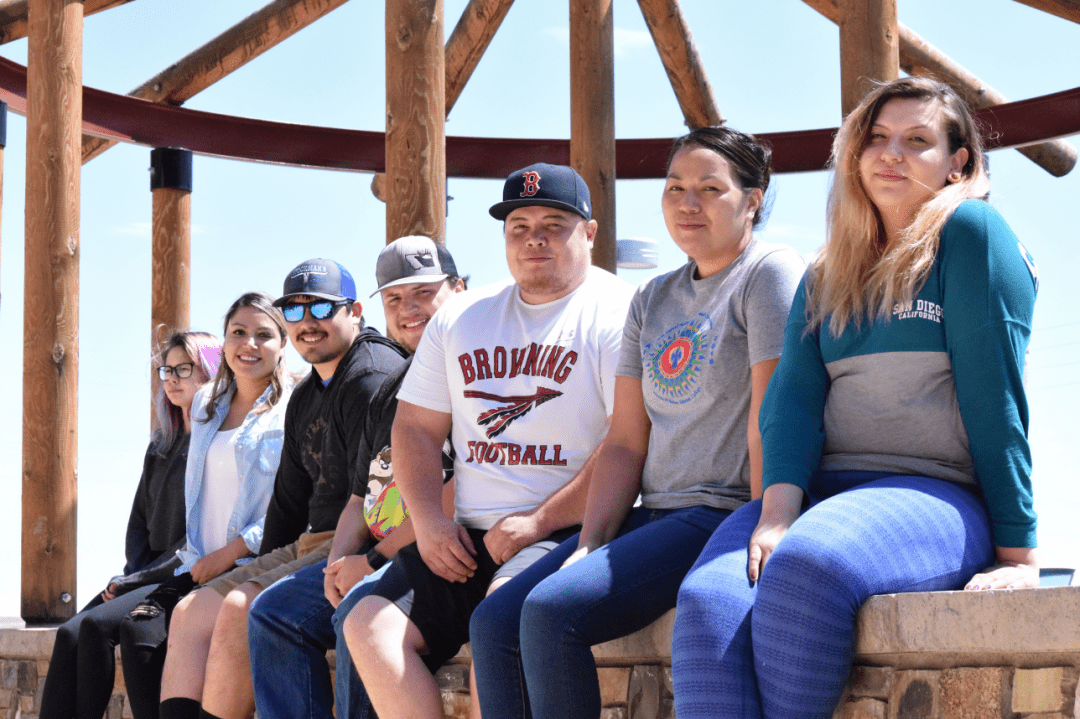
The students have surveyed 350 tribal members on the Blackfeet Indian Reservation between the ages of 18 and 80 since the BCC-MSU collaboration began in 2012. The students also collected saliva and blood samples for testing to reveal more about the connection between stress and disease. More recently, the students expanded their research to look for ways to reduce ongoing stress by building community through hikes and talks about the importance of culture, place and staying active.
The project exemplifies long-term, community-based participatory research, meaning that “it fosters a partnership where communities are equitable collaborators in all phases of research and cultivate an environment for producing mutually beneficial goals,” said Ann Bertagnolli, Montana program coordinator and director of the Community Engagement Core.
"Investments in undergraduate research at tribal colleges are building professional, academic and social bridges between institutions like Montana State University and Blackfeet Community College,” Stadwiser said.
"The significance of the collaboration is that it develops the student pipeline into biomedical research and careers, has developed and works to sustain a relationship focused on community-based participatory research and uses this CBPR approach to collaborate on improved health for the Blackfeet Nation," Bertagnolli said.
Founded in 2001, Montana INBRE is a network of 16 tribal colleges, community colleges and universities focused on building biomedical research capacity and a workforce pipeline in Montana. The research is supported by the National Institute of General Medical Sciences of the National Institutes of Health under Award Number P20GM103474.
When researchers at Montana State University hosted a conference about snow and avalanches in Bozeman during the fall of 1982, they made flyers featuring ski tracks alongside a math equation, planned a field day and after-party at nearby Bridger Bowl ski area, and called the event the International Snow Science Workshop.
Because most of the 220 participants were Americans or Canadians, "the 'international' part was a little bit tongue in cheek," said Ed Adams, one of the event's organizers and a recently retired MSU civil engineering professor. Still, the name gave the event — which has since been held at least every two years — "room to grow," he said.
And grow it has. Last month, Adams and more than a dozen other locals joined roughly 1,000 attendees from 27 countries at the 2018 International Snow Science Workshop in Innsbruck, Austria, a colorful city often referred to as the capital of the Alps.
Billed as the world's largest conference on snow and avalanches, the five-day event featured panel discussions, 140 presentations by world experts and 285 posters in an exhibition where researchers, avalanche forecasters and others discussed their work. MSU faculty and students presented a total of 23 papers, including seven papers with students as lead authors.
With topics ranging from the microscopic properties of snow crystals to satellite imaging to best practices for rescue operations, the ISSW covers "the full gamut of snow science," said MSU earth sciences professor Jordy Hendrikx, who attended with four of his graduate students.
Hendrikx chaired a session in which MSU earth sciences master's student John Sykes presented research he has conducted at Bridger Bowl about how skiers and snowboarders make decisions in avalanche terrain. As a result of the project, Sykes was one of three recipients — out of roughly 50 submissions — of the ISSW's Young Snow Professional Award.
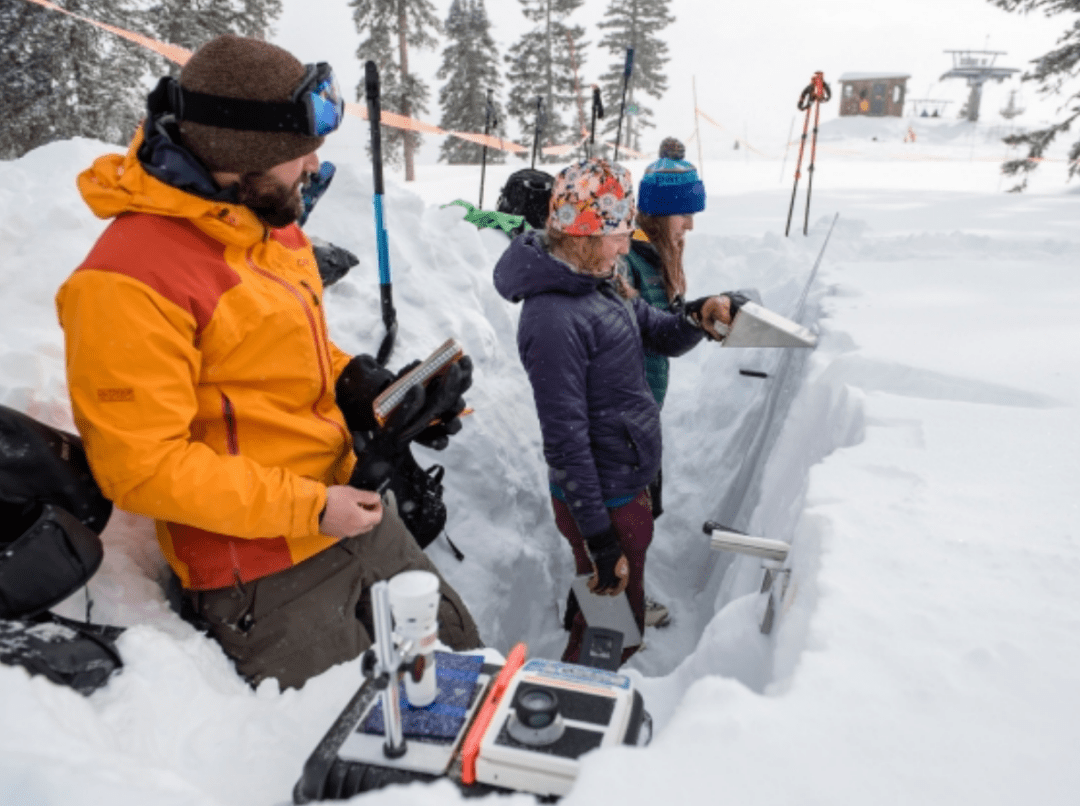
Adams chaired a session about snowpack stability that featured presentations by Benjamin Reuter, a Swiss researcher visiting MSU to conduct studies in the university’s Subzero Research Laboratory, as well as Karl Birkeland, director of the Bozeman-based National Avalanche Center.
"Usually these sorts of things are all scientists ... with a separate meeting for practitioners to talk about problems and solutions," said Birkeland, who chaired a session about how forecasters and others communicate avalanche hazard. "The cool thing about ISSW is that it brings those two together."
Avalanche forecasters from Montana and across the U.S. were among the participants at the event, as were ski patrollers, including from nearby Big Sky Resort, according to Birkeland.
"Listening to people talk about the issues they're dealing with in the field helps spur ideas for research," said MSU assistant professor of civil engineering Kevin Hammonds, director of MSU's Subzero Research Laboratory. Hemmonds presented a study on how naturally occurring chemical impurities affect the bonds between ice and snow grains.
According to Adams, the ISSW has flourished because, as snow science has advanced and winter recreationists increasingly venture into the backcountry, the event fills a need for practitioners to exchange information with researchers. The workshop's practical bent emerged from the milieu of MSU snow science, which was pioneered starting in the 1950s by earth sciences professors Charles Bradley and John Montagne, both of whom were avid skiers involved in the creation of Bridger Bowl.
Montagne was the first director of Bridger Bowl's volunteer ski patrol, and he also taught a popular undergraduate class that emphasized practical skills for assessing avalanche danger. His and Bradley's scientific studies — which became more rigorous and internationally recognized after Bradley recruited MSU engineers — often revolved around predicting and preventing avalanches at the community ski area.
Shortly after Adams came to MSU in the late 1970s to study snow science, Montagne spearheaded the effort to create the ISSW, Adams recalled. Building on a tradition of more informal snow conferences in the U.S. and Canada, MSU's snow scientists coined the ISSW name and gave the event its enduring motto: "A Merging of Theory and Practice."
"The motto really says it all," said American Avalanche Association director Dan Kaveney, who lives in Bozeman and attended the Innsbruck event.
Birkeland first attended the ISSW in 1988 at Whistler, British Columbia, where the MSU contingent endured a week of rain while camping on the outskirts of town, he recalled. At the time, he was earning his master's in snow science in MSU's Department of Earth Sciences after working as a ski patroller at Utah's Snow Basin. He found the conference to be "instantly relatable," he said. At the 1990 ISSW in Bigfork, Montana, he presented his master's thesis, which built on Bradley's early experiments about how snowpack stability varies across mountain slopes.
Now, when he returns from ISSW, Birkeland writes a synopsis of select presentations and sends it to avalanche forecasters around the country, some of whom may not have attended the event. The summary includes links to the full text of the conference proceedings. Since 2012, as a result of an effort led by former earth sciences department head Steve Custer, all ISSW proceedings have been housed in a digital archive maintained by the MSU Library.
"The whole avalanche community is so grateful to MSU for doing this," said Birkeland, who is also an adjunct professor in MSU's earth sciences department. "For people looking for practical, scientific avalanche work, it's probably the first place that most people look."
"Ultimately, bringing people together at the ISSW has advanced our knowledge much more than if it never existed," Birkeland said. "ISSW has made people here, and around the world, safer from avalanches."










News Comments
Definitely not the quality it used to be. Mint cholate chip just has big chunks of chips stuck together not throughout the nearly mint flavored ice cream. Sorry you’ve lost me
Ownership Changes at Wilcoxson’s Ice Cream Celebrate Montana Heritage and Future Growth
Thursday, Jul. 23, 2026
Why didn’t the Kagy and 3rd project get started when college was out? How is the football game traffic at MSU going to be handled? Timing of this project is awful.
Construction Starts on West Kagy to Babcock Sewer Improvements Project
Monday, Jul. 20, 2026
Why couldn't the fish in the hatchery be raised to a marketable size and then sold to grocery stores and restaurants? The danger is only having the snails pass intact through the fish's digestive ...
Drainpipe cause of New Zealand mudsnails at FWP fish hatchery
Sunday, Apr. 12, 2026
Congratulations to Nephew David and Bridger Brewing. It has been so great seeing your vision become a reality. We'll never forget our visit to Bozeman!
Bridger Brewing Named Large Brewery of the Year at 2026 Montana Beer Awards
Tuesday, Apr. 7, 2026