

Tuesday, Mar. 17th, 2026

The Real Lifespan of Modern Subsurface Drainage Systems

Making the decision to seal a home's lower level is a major commitment with high expectations. Most homeowners want to know their investment will stand up to the test of time. It is frustrating to think about a renovation failing after just a few seasons.

Subterranean construction faces constant pressure from the earth and shifting moisture. Materials must be robust enough to handle soil chemistry and the physical weight of the ground. Choosing a smart approach prevents the need for repetitive and expensive repairs down the road.

Modern engineering has moved beyond the temporary fixes of the past. High quality installations utilize materials designed to survive for several decades. When done correctly, high-quality professional basement waterproofing lasts years while keeping the interior environment dry and safe for the entire family.

How Materials Have Changed Over the Decades

The jump from old clay pipes to modern plastics has changed everything for residential drainage. Clay tiles were brittle and featured open joints that allowed dirt to seep inside. This eventually led to slow clogs and a complete failure of the water management system.

Orangeburg pipes were even worse as they consisted of wood fibers bound with tar. These pipes frequently collapsed under the weight of the soil or were crushed by growing roots. Once these failed, the water had nowhere to go but directly into the foundation.

Today, heavy duty PVC drain tiles provide a level of durability that was once impossible to achieve. These pipes are resistant to chemicals and can handle significant ground movement without cracking. Their smooth surfaces ensure that water moves quickly toward the exit point.

What Keeps a Seal Effective Against the Earth

Exterior membranes serve as the primary skin that protects the concrete from the surrounding environment. These materials must remain flexible enough to bridge small gaps as the house settles. A rigid coating would simply crack and allow water to reach the masonry surface.

Soil acidity is a silent factor that can eat away at low quality tar based coatings. Professional grade membranes use synthetic rubbers and polymers that are chemically inert. This allows them to stay effective even in the most aggressive and damp underground conditions.

The quality of the backfill material also plays a huge role in how long the seal stays intact. Sharp rocks can puncture the membrane during the initial filling process. Using clean gravel ensures the water drains away without putting undue stress on the protective layer.

Keeping the Sump Pump Running Through Any Storm

Sump pumps are mechanical devices with a finite lifespan that depends on how often they run. A pump in a dry area might last for a decade, while one in a high water table works much harder. The motor eventually wears down from friction.

Most failures occur at the switch or the internal float mechanism rather than the motor itself. These small parts are prone to getting stuck or corroded after years of being submerged. Regular testing is the only way to ensure the pump activates.

Battery backup systems are essential because failures happen during the worst storms. A secondary pump provides security when the power goes out or the primary unit reaches its limit. This ensures the drainage system continues to perform flawlessly and keeps the home safe.

Protecting the Pipe Network from Slow Buildup

Many believe that a drainage system is a set and forget installation that never needs attention. While the pipes are hidden underground, they are still susceptible to the environment. Small particles of silt can travel through the soil and enter the pipe network.

Over several years, this fine sediment can build up and create a layer of mud that slows down the flow. If the silt is allowed to harden, it can eventually block the drainage holes. This reduces the effectiveness of the system during heavy saturation.

Annual maintenance involves flushing out the lines with a high pressure hose to remove any accumulated debris. This simple task clears the path for water and ensures the system remains at peak performance. Preventing clogs is the best way to extend the pipe's life.

Why Professional Standards Create Decades of Safety

A well engineered drainage system provides a level of peace of mind that is hard to find elsewhere. By following strict standards and using the best materials, homeowners avoid the stress of a flooded basement. The focus remains on quality from the start.

The long term value of a dry foundation is seen in the stability of the entire building. Protecting the structure from water damage preserves the equity of the home for the future. It allows families to use their lower level for living space safely.

Investing in a professional installation pays off over decades as the system works silently. It is a fundamental part of a healthy household. A dry basement is the result of smart planning and a commitment to high quality construction standards for the long term.

Add a Comment »

Saturday, Mar. 14th, 2026

Artists Invited to Participate in ArtWeek Park County’s Big Bend of the Yellowstone Auction

Shirle Wempner, Golden Hour, From the 2025 auction catalog cover.


Livingston, MT
— Applications are now open for artists to participate in ArtWeek Park County’s end of the season auction, the Big Bend of the Yellowstone Fine Art Auction. Livingston’s annual end-of-summer art festival runs September 21–26, 2026, culminating with the auction on Saturday, September 26.

The ArtWeek Park County arts festival celebrates the region’s vibrant creative community while strengthening Park County’s reputation as an artist destination. The festival brings together artists, residents, and visitors for a series of events culminating in a community art auction showcasing work by regional creatives.

Organizers invite artists from across the area to apply and contribute to this year’s auction. Participation in the auction helps highlight the depth of artistic talent in the region and connect through the arts.

To apply or for more information about participating in this year’s auction, visit artweekpc.com/forartists.

To speak to a human about the auction, contact Storrs Bishop at storrs@the danforth.org or Kathy bekedam at kathy@livingstoncenter.org.

Important auction dates:

April 1st- Application Deadline
May 1st - Notification of Final Selection (via email)
June 10th - Catalog available
September 8th - Silent Auction begins at the Livingston Center for Art and Culture
September 11th - Artist Reception at the Danforth Museum of Art
September 11th to September 25th - Live auction pieces on display at Danforth Museum of Art. Silent auction pieces on display at Livingston Center for Art and Culture.
September 26th - Live and Silent Auction at the Livingston Depot Center

The ArtWeek Park County festival and auction were created and supported through the Park County Fund for the Arts, a program of the Park County Community Foundation and the Park County Arts Council. The Fund for the Arts is made possible by a generous donation from the JAKET Foundation.

Art Week Park County is a partnership between The Danforth Museum of Art, The Livingston Center for Arts and Culture, and The Livingston Depot.

Add a Comment »

Friday, Mar. 13th, 2026

Gallatin Behavioral Health Coalition Marks Transformative Year, Securing $10.9 Million and Expanding Services Across the Region

Coalition partners, funders, and providers cite collaborative model as a strong example of what community-driven behavioral health coordination can achieve

BOZEMAN  — The Gallatin Behavioral Health Coalition (GBHC) today released its 2025 Impact Report, highlighting a landmark year for behavioral health services in Gallatin County and Southwest Montana. Through sustained cross-sector collaboration among 28+ partner organizations, the coalition secured $10.9 million in collaborative funding and launched seven new behavioral health services — all while deepening the trust and coordination that define GBHC’s nationally recognized collective impact model.

Among the coalition’s most historic achievements in 2025 was the September opening of Bozeman Health’s 14-bed adult psychiatric inpatient unit, which supported 119 patients receiving acute psychiatric care close to home last year. The year also saw the launch of Rimrock’s Bozeman office offering addiction treatment services including withdrawal management and intensive outpatient care, the establishment of Gallatin County’s Assisted Outpatient Treatment (AOT) program backed by $1.5 million in SAMHSA funding, and the opening of HRDC’s Homeward Point shelter, which housed 107 people on its second night of operation.

“[QUOTE FROM SCOTT MALLOY, Montana Healthcare Foundation] — The Montana Healthcare Foundation believed from the beginning that Gallatin County had the community will and the right partners to build something lasting. What GBHC has achieved is a testament to what happens when organizations put collective community goals ahead of individual organizational territories and show up to work together year after year.”

— Scott Malloy, Montana Healthcare Foundation

The Montana Healthcare Foundation (MTHF) has been integral to GBHC’s development since 2017, when it funded Bozeman Health to lead the community’s initial behavioral health system assessment. MTHF subsequently funded Gallatin County as the backbone organization for coalition-building from 2019 to 2021, providing the foundational investment that enables today’s ongoing robust collaboration across systems of care.

Partners Drive From Across the State to Participate

The depth of commitment to GBHC is perhaps best illustrated by the dedication of its member organizations. Rimrock, Montana’s largest addiction treatment provider, opened a Bozeman office in 2025 and has been an active coalition partner — with the organization’s CEO making the drive from Billings each month to participate in coalition meetings.

“[QUOTE FROM JEFF KELLER, Rimrock] — I make that drive every month because this coalition is the real thing. The level of trust, the quality of conversation, and the commitment to genuine collaboration here is unlike anything I’ve seen elsewhere in Montana. When you’re in a room where people consistently put the community’s needs above their own organization’s interests, you make it a priority.”

— Jeff Keller, CEO, Rimrock Foundation

Building Toward the Future

Looking ahead, GBHC is actively pursuing crisis receiving and stabilization services, clubhouse model implementation for adults with serious mental illness, and continued buildout of the Lighthouse Ranch youth behavioral health campus — which has raised $5.6 million of its $8.5 million goal through a community fundraising campaign. The coalition is also engaged in Montana’s HB872 process, which will invest $300 million in the state’s behavioral health system, advocating for mobile crisis sustainability, youth crisis services, and adult crisis infrastructure in Gallatin County. Participation is ongoing with Montana’s Department of Public Health and Human Services (DPHHS) as they roll out the federally-funded Rural Health Transformation Program (RHTP). Montana has been allocated $233 million in year-one funding to strengthen rural health systems and improve access to care statewide.

GBHC’s 2025 Impact Report is available at gallatinmt.gov/gallatin-behavioral-health-coalition

About the Gallatin Behavioral Health Coalition

The Gallatin Behavioral Health Coalition is a multi-agency collaborative established in 2021, providing strategic coordination for the region’s behavioral health system. The coalition is facilitated by Kirsten Smith of Bloom Consulting and comprises 28+ partner organizations spanning healthcare, government, nonprofits, education, and recovery services. For more information, visit www.gallatinmt.gov/gallatin-behavioral-health-coalition.

Add a Comment »

Montana State collaborates with local elementary schools to produce Masked Reader events


BOZEMAN
— Hundreds of K-5 students gathered recently in the Emily Dickinson Elementary School gymnasium in Bozeman, sitting in rows on the floor alongside their classmates. They peered toward the front of the gym, craning their necks to get a glimpse of a person wearing a duck mask and a black cloak.

Led by Jules Harris, one of the students’ health enhancement teachers, the kids chanted in unison: “Show us your face! Show us your face! Show us your face!”

The person in disguise complied, peeling off the mask and revealing her identity: It’s Kendra Gault, an Emily Dickinson kindergarten teacher. The kids erupted in cheers.

Gault was one of eight masked readers whose identity was revealed during the assembly at the school on Feb. 27. The assembly and events leading up to it were part of a collaboration between Montana State University and two local elementary schools – Emily Dickinson and Hawthorne – known as the Masked Reader. Those events, organized by MSU health enhancement students enrolled in an elementary methods class and health enhancement teachers at the two elementary schools, were part of an effort to promote literacy and build community, according to Karie Orendorff, associate professor in the MSU Department of Food Systems, Nutrition and Kinesiology, who started the event in 2024.

“As a (health enhancement) teacher, you’re expected to do more at a school than just teach,” Orendorff said. “As a (health enhancement) teacher, you have the ability to affect the entire culture of the school. That’s why we do this.”

In the week leading up to assemblies at Emily Dickinson and Hawthorne, the elementary school students were shown videos where the readers – wearing masks and with their voices disguised – provided a few clues that could help the school’s students identify them. (Clues from one Hawthorne reader were that their favorite food is chicken enchiladas and their favorite Olympic sport is downhill skiing. Another Hawthorne Masked Reader said their favorite weather is the rain and they have a dog with very short legs.) Then, each Masked Reader read a children’s book aloud. Hawthorne and Emily Dickinson students then made their guesses about the identity of each reader.

MSU health enhancement students worked with the participating teachers, administrators and staff members at the two schools to create the videos. They also prepared and delivered movement lessons to students at each of the schools before the assemblies. Approximately 10 MSU undergraduate students participated in the event at Emily Dickinson, while approximately 22 participated in the event at Hawthorne, which was held on March 6. It was Hawthorne’s third annual event, and Emily Dickinson’s second.

“Movement and literacy go hand in hand,” Orendorff said of the decision to pair classroom lessons with the literacy-focused assemblies. “Kids remember a lot more when they’re moving. If they’re learning a concept, it helps to put movement to it. There is research galore on how movement helps fire all neurons in your brain to help you remember things.”

MSU students Ellen Olson and Madylan Osler delivered one of those movement lessons to third grade and first grade students at Emily Dickinson, encouraging the kids to get up and move around by leading rhythm games performed with pieces of foam pool noodles.

Osler noted the lesson provided her with valuable classroom management experience.
“It’s really helpful to be in a classroom and to be interacting with the kids,” Osler said. “I’ve learned a lot from this.”

Olson, who is studying health enhancement K-12, said working with the students validated her academic pursuits.

“It makes me excited,” she said. “Every time I’m in the classroom and interacting with the kids, I love it. It makes me glad I picked this for my major.”

Emily Dickinson’s principal, Chanell Brown, said the school loves the Masked Reader.
“I love the camaraderie that the Masked Reader brings, along with all the communication students and classrooms are participating in,” Brown said. “Jules Harris, one of our health enhancement teachers, brought the idea to me, and I thought that it sounded so fun. Last year was our first year doing it, and it will now become a yearly tradition.”

For her part, Orendorff values the collaboration because it serves local schools. For the MSU students, it’s also an opportunity to experience how to build culture in a school setting.
“A benefit (for the MSU students) is they get to see kids’ reactions, from start to finish,” she said. “It really is a positive thing.”

Plus, she added, the event enables MSU undergraduates to see the practical side of teaching.
“This is not about a lecture and learning theory; it’s about putting theory into action, with real kids,” she said.

Add a Comment »

Thursday, Mar. 12th, 2026

Community Survey to Capture Opinions on Downtown Bozeman Parking

BOZEMAN — The Downtown Bozeman Urban Renewal District (DURD), in partnership with the City of Bozeman, is conducting an online community survey to better understand perspectives about parking in Downtown Bozeman.

The survey responses will be used to build out the vision, mission, core values, and strategy for parking in Downtown Bozeman as well as inform an outreach and education campaign.

Everyone is invited to participate in the survey including anyone who visits downtown, customers, neighborhood residents, downtown area employees, downtown business owners, merchants, downtown property owners, anyone who makes deliveries or pickups, or anyone else who wants to share their opinions about the Downtown Bozeman parking experience. All survey responses will be kept confidential and will not be directly attributed to individual respondents.

The survey will remain open until Monday, March 30, 2026. Everyone who completes the survey will have the option to enter a random drawing for one of five Downtown Bozeman gift packages. Each package will include $100 in Downtown Dollars (a gift certificate redeemable in Downtown Bozeman) and a free 8-hour parking pass at the Bridger Parking Garage (a $6 value).

The survey can be found online: https://www.surveymonkey.com/r/COB2026.

“As we plan for the future, we want to learn what people have to say about parking in Downtown Bozeman,” explains Ellie Staley, Executive Director, Downtown Bozeman Urban Renewal District (DURD).

“The City is interested in understanding as many perspectives as possible, and we’re looking forward to hearing more about the survey results,” notes Cola Rowley, Assistant City Manager, City of Bozeman.


The City of Bozeman is responsible for providing, maintaining, and managing parking in Downtown Bozeman including the Bridger Parking Garage, the surface lots, and the on-street parking. The City of Bozeman also offers an occupancy dashboard on its website, capturing data to better understand parking trends in Downtown Bozeman.

The Downtown Bozeman Urban Renewal District (DURD)’s mission is to foster an economically thriving district that: attracts investment; stabilizes and strengthens the tax base; and supports the vitality and diversity of the Gallatin Valley as its social and cultural center. The DURD is the major funding source for the Bridger Parking Garage, which opened in Downtown Bozeman in April 2009.

“As we look ahead, we want to hear directly from the community about parking in Downtown Bozeman and use that feedback to guide our decisions. We remain committed to keeping our downtown vibrant and accessible for residents, employees, and visitors alike,” states Staley.

About the Downtown Bozeman Urban Renewal District (DURD)
The Downtown Bozeman Urban Renewal District (DURD) was created to fund the implementation of the 1995 Downtown Bozeman Urban Renewal Plan. The DURD board is appointed by the Mayor of Bozeman with City Commission consent. As mandated by the Montana Code, the DURD invests in infrastructure projects that add long-term value to the district, including the Bridger Parking Garage.

Add a Comment »

Montana State helps create tailored resources for emergency medical services


BOZEMAN
— According to federal government analysis, Montana and many other U.S. states have faced funding and staffing challenges for emergency medical services for decades. In rural areas, EMS services are often run entirely by volunteers, who spend their free time driving countless miles responding to calls. However, scores of dedicated volunteers are nearing retirement age as the population increases in the areas they serve, meaning that demand for EMS is only growing.  

The firestorm of challenges facing EMS workers is not easy to solve. But in partnership with the state Department of Public Health and Human Services, Montana State University has rolled out resources to help bolster the state’s EMS landscape. 

Housed in MSU’s Mark and Robyn Jones College of Nursing, the Montana Office of Rural Health and Area Health Education Center (MORH/AHEC) has been a leader in creating and disseminating online trainings for Montana’s rural EMS leaders. Now, a recent project, called the “Montana Frontier EMS Leadership Academy,” is creating rural-specific courses for interested EMS workers focused on topics such as recruitment, retention and mentorship. 
A federal award from the Health Resources and Services Administration in 2024 is funding the project for five years, with $250,000 allocated per year. Project leaders hope that after this initial funding, they can secure additional dollars to further distribute the resources. 
EMS leaders from six towns are participating: Lewistown, Ennis, Fort Benton, Hamilton, Glendive and Thompson Falls. The leaders receive a small stipend for participating.  

“Our work seeks to address a critical staffing shortage of emergency medical services, which is a challenge across the U.S. but is felt acutely in rural and frontier areas,” said Kailyn Mock, director of MORH/AHEC at MSU. Frontier areas are the most remote and sparsely populated type of rural area. “Unfortunately, many EMS services are just one or two EMT retirements away from being unable to respond to 911 calls. It is imperative to help our current EMS leaders recruit the next generation of people who are going to pick up the phone and come help in an emergency event.” 

The training topics are borne of requests from the participating sites. The modules are online and structured so that emergency care providers can easily take them at their own pace. Nearly 20 people have completed the training so far, Mock said.  

DPHHS also coordinates a monthly discussion call for the participating sites. Those have been fruitful opportunities for EMS leaders to discuss everything from their preferred billing software to how they use social media to recruit new volunteers, she said. 

“Emergency medical services in Montana face many challenges, from a dwindling workforce for both volunteer and career agencies, increasing emergency call volume, and increasing public expectations, to name a few,” said Shari Graham, EMS system manager for Montana DPHHS. “The Montana Frontier EMS Leadership academy addresses these and many other challenges and serves as a critical resource for the development of current and future EMS leaders.”  

Mary Jo Gehnert, director of the Glendive Ambulance Service, has engaged in several of the leadership trainings. At 64 years old, she has been an emergency medical technician for nearly 28 years.  

The Glendive Ambulance Service is run by a group of about 20 volunteers. Last year, the team responded to 830 calls in Dawson County. 

One of the main challenges Gehnert faces is motivating volunteers and preventing burnout, she said. When a call comes in, she contacts her network of volunteers to respond. But sometimes volunteers will turn down a call, and there’s not much she can do. 

One training session helped Gehnert identify her leadership style and taught her to communicate more effectively with volunteers when her approach isn’t effective. She learned it’s critical to motivate people by reminding them they are part of a larger team, but the approach to those conversations may change from person to person.  

Gehnert also appreciated the training on using digital tools and social media. After completing it, she created a social media page for the Glendive Ambulance Service that another volunteer is helping to run. They post spotlights on each volunteer, which has been both a fun way to recognize people and also connect with the community they serve.  

Overall, the trainings have been a great resource, Gehnert said, because the modules are interesting, specific to EMS in Montana, and they don’t take too much time.  

Another training participant is James McBirnie, the 50-year-old director of Madison Valley Emergency Medical Services. The Madison-area EMS differs from Glendive, because the ambulance service began partnering with the Madison Valley Medical Center in Ennis in 2021. Prior to that, the service was run by volunteers, but it became difficult to maintain an acceptable response time due to the county’s growing population, which led to increased call volume and sometimes traffic.  

Now that the ambulance service is part of the hospital, the EMS staff is paid. But there are only three responders per shift, plus one person on call, and they still share the other challenges facing volunteer-run EMS entities. One example is the sheer size of the service area: McBirnie noted that because Madison County is so geographically large, responders sometimes have to drive 45 minutes to reach a caller.  

In addition to the state’s expansive geography, another challenge, especially in southwest Montana, is finding affordable housing for employees. Several of McBirnie’s employees live hours from Ennis and commute for their shifts.  

Sometimes, people understandably leave for higher-paying jobs, McBirnie said. One thing he has taken away from the trainings so far is the importance of mentorship and helping his employees grow professionally, cultivating a place where they want to stay. For him, that includes conducting one-on-one evaluations and working with employees to establish specific goals to build up their skills.  

McBirnie said he hopes the state allocates more funding for both the EMS Leadership Academy and county EMS offices in the future.  

“It can feel like an uphill battle,” McBirnie said of EMS work. “The need for emergency services in Montana is only growing, and investing in the development of our future EMS leaders is how we will meet that demand.”  

More information about the trainings is available at healthinfo.montana.edu/ems/leadership.html.  

Add a Comment »

Wednesday, Mar. 11th, 2026

Montana New Roof Cost: What Homeowners Need to Know in 2026


Roofing projects vary widely in price depending on materials, roof size, complexity, and local labor rates. 

In Montana, changing weather patterns, snow load requirements, and geographical factors also influence the cost of a new roof.

This guide breaks down typical Montana roof-replacement costs, helps you estimate how much it will cost to replace a roof in different scenarios, and explains the key elements that drive pricing in the state.

Average Montana Roof Replacement Cost in 2026

Roof replacement prices in Montana vary significantly depending on roofing material and roof size. 

According to recent research from a roofing company in Kalispell, MT, the average cost to replace a roof in Montana, especially for an asphalt-shingle roof, is around $16,000–$17,000 for a mid‑sized residential home.

This figure shows common roofing materials, typical roof pitches, and pricing trends based on local roofing cost data.

Cost Breakdown by Roofing Material

The type of roofing material you choose has one of the biggest impacts on the cost of a Montana roof replacement. 

Here’s a look at common options and how they influence price:

Asphalt Shingles
Asphalt remains the most popular choice in Montana due to its affordability and good performance in various weather conditions.

Costs generally run about $4.50–$7.00 per square foot installed, which results in a total replacement cost of roughly $6,300–$20,700 for many homes.

Metal Roofing
Metal roofs are increasingly popular in Montana because they shed snow well and can last 40–70 years. 

While more expensive upfront, they often provide long‑term value. Metal roof installation typically ranges from about $8.96 per square foot to much higher, depending on the profile and finish.

Wood Shake and Premium Materials
Wood shakes and premium materials like clay or slate are on the higher end of the cost spectrum, often ranging from $9.73 to over $14 per square foot due to both material and installation complexity.

How Roof Size Impacts Total Cost

Roof size is a major cost driver because material and labor scale with surface area. Simple estimates break down roughly like this for typical home sizes in Montana:

• 1,000 sq. ft. roof: Around $6,000–$10,000
• 1,500 sq. ft. roof: Around $8,000–$13,000
• 2,000 sq. ft. roof: Around $10,000–$17,000
• 2,500 sq. ft. roof: Around $12,000–$22,000

These ranges vary widely based on material, complexity, roof pitch, and regional pricing differences.

Other Costs That Affect Montana Roof Replacement

Beyond basic materials and labor, several other factors can increase the total price when determining how much to replace a roof:

Tear‑Off and Disposal
Removing an existing roof adds time and disposal fees. Old shingles may need to be dumped at designated facilities, which can incur additional labor and tipping fees.

Underlayment and Deck Repairs
If the roof decking beneath the shingles is damaged, replacing those wood boards adds both material and labor cost, yet is necessary for proper, long‑lasting roofing.

Permits and Inspections
Some cities and counties in Montana require a permit for a full roof replacement, with permit fees ranging from modest to higher inspection costs, depending on local building codes.

Climate and Accessibility
Montana’s cold winters and heavy snowfall can require installation practices or materials suited to colder climates, which may slightly increase the price compared to more temperate regions.

Material vs. Installation: Which Costs More?

While roofing materials are a big piece of the puzzle, labor and installation time often make up a large chunk of the final price. 

Steeper roofs, complex designs, or hard‑to‑access roofs cost more to install because they require extra safety measures and time.

Planning your project during favorable weather months (spring through early fall) can sometimes reduce rates compared to peak winter conditions in Montana when snow and cold may slow work.

Understanding Cost per Square Foot

A common way roofing professionals discuss prices is by cost per “square” (a roofing square equals 100 square feet):

• Asphalt Shingle Roof: Typically between $159 and $260 per square, installed in Montana.
• Metal Roofing: Often runs higher, reflecting material costs and installation requirements.

This per-square-foot measurement helps homeowners estimate their total by multiplying it by the number of squares on their roof.

Planning Your Budget Wisely

Knowing Montana roof replacement costs in advance helps homeowners budget effectively and compare multiple estimates. 

Many materials last for decades with proper installation and maintenance, so considering long‑term value, not just upfront cost, can influence decisions.

If you’re trying to estimate costs for your specific property, tools like roof calculators can provide customized figures based on roof size and chosen materials. 

Additionally, discussing your plans with a local roofing contractor early can clarify regional material availability and labor conditions.

Conclusion

Understanding the cost of a new roof in Montana involves more than a single number—it requires evaluating material choices, roof size, local prices, and the specific characteristics of your home’s roof. 

On average, a full roof replacement in Montana in 2026 can range from roughly $6,000 to $22,000+ for typical residential homes, with variations based on material and complexity.

Roofing is one of the most important systems on your home, and investing time in understanding pricing and scope will help ensure your project meets expectations.

Add a Comment »

Tuesday, Mar. 10th, 2026

Montana State University Extension specialist discusses soil fertilization after warm, dry winter

BOZEMAN —Montana State University Extension’s soil fertility specialist suggests considering how a warm, dry winter might affect farmers’ fertilizer decisions for the upcoming growing season.

According to Clain Jones, MSU Extension soil fertility specialist and a professor in the Department of Land Resources and Environmental Sciences, most of Montana is considered to be abnormally dry or in moderate drought. And, some places in northcentral Montana are in severe or extreme drought, according to the National Weather Service’s drought monitor. Most of the northern part of the state, east of the Continental Divide, has received less than 25% of normal precipitation from Jan. 1, 2026, to Mar. 2, 2026, according to drought.gov. Only a small portion of central Montana has received about normal precipitation. The Montana Climate Office reports temperatures were well above average across the state for most of the winter.
“In general, drier conditions will result in less soil nutrient release and availability, though warmer conditions might have counteracted this to some degree,” Jones said. “The question is how these conditions have affected soil nutrient levels and whether it’s worth re-sampling soil if it was sampled last fall.”

In general, phosphorus, potassium and sulfur levels aren’t expected to change much from last fall, as dry conditions have likely prevented leaching of sulfur and likely slowed any release of these three nutrients from soil organic matter and plant residue, Jones said.

Nitrogen could have a bigger change because it can increase or decrease substantially over winter, according to Jones’ research. Microbes can release substantial amounts of nitrate, the plant-available form of nitrogen, from soil organic matter and plant residue if the soil is warm and moist enough. Even though it has been warmer than normal, Jones said, soil temperatures at 2 to 4 inches are still generally below 40 degrees, which is a temperature where microbial activity is very low, likely minimizing nitrogen release. In addition, low rainfall in most areas has likely prevented nitrate leaching except on very shallow soils. Considering all factors, Jones predicts that spring nitrate levels won’t be substantially different than fall levels, and that re-testing soil this spring for those who sampled in the fall may not be necessary. 

Given relatively high nitrogen fertilizer costs, low commodity prices and below-average soil moisture, Jones suggests applying conservative nitrogen rates this spring. Nitrogen could be applied in-season if spring has average-to-above-average precipitation. In-season nitrogen application can be especially helpful at increasing wheat grain protein, but equipment, time or weather constraints often minimize its use.

A calculator on MSU Extension’s soil fertility website can be used to determine nitrogen rates that maximize profit. Overfertilizing nitrogen can lead to soil acidity problems, water contamination and reduced profit, so it is important to only apply what is necessary, Jones said. Because urea fertilizer can be lost to the air as ammonia, urea should either be applied 2 inches or more below the surface or surface-applied before a predicted large rain event of at least ½ inch.

Recent research by Jones and his colleagues on sulfur fertilizer has found that yellow mustard needs about 2.5 pounds of available sulfur per 100 pounds of grain, canola needs approximately 0.65 pounds of available sulfur per bushel, and wheat and pea need about 0.3 pounds of available sulfur per bushel. Available sulfur equals the amount of sulfur fertilizer plus the amount of plant-available soil sulfur in the top 2 feet of the soil, expressed in pounds per acre. Not all sulfur soil tests produce the same results, so individuals are invited to contact Jones with any questions on sulfur tests.

Minimal phosphorus and potassium fertilization is necessary if a soil test shows that soil phosphorus is above 16 parts per million or that potassium is above 250 parts per million. If phosphorus or potassium levels are below these thresholds, it is recommended that additions of these nutrients be made to the soil. 

Jones noted that fertilizer applied in the seed row can impact seedling emergence more when soils are dry, especially in coarse soils. He recommends contacting a crop adviser, MSU Extension agent or Jones himself to determine seed-safe fertilizer rates.

Jones said producers or crop advisers should scout crops early for signs of nutrient deficiencies, as rescue nutrient applications can be made if deficiencies are spotted early enough.

“Nitrogen deficiency is likely if the older leaves are uniformly light green or yellow. Sulfur deficiency symptoms are similar but show up on the newer leaves first,” Jones added.  
More detailed descriptions and pictures of nutrient deficiency symptoms are available at https://landresources.montana.edu/soilfertility/nutrientdeficiency.html.

Individuals can contact a crop adviser or local MSU Extension agent for help making fertilizer decisions. Questions about soil fertility can also be directed to Jones at clainj@montana.edu or 406-994-6076 or addressed by visiting the MSU Extension soil fertility website at landresources.montana.edu/soilfertility/.

Add a Comment »

Maro Selected for Georgetown University’s Thrive Center Innovation Hub Fellowship

BOZEMAN — Maro is proud to announce that its senior leadership team, along with CEO Kenzie Davis, has been selected as 2026 Fellows of the Innovation Hub at the Thrive Center Georgetown University, a prestigious three-month fellowship designed to help visionary leaders scale impact in child and family mental and developmental health.

Maro exists because most young people wait more than a decade between their first signs of mental health struggle and their first moment of real help. Maro partners with schools and health plans to make sure that gap doesn't exist by delivering mental health screenings that identify students who are struggling early, and connecting them and their families to support before a hard season becomes a lasting crisis. Since its founding, Maro has reached more than 70,000 students nationwide.

Maro is honored to join Georgetown's research fellowship, and to contribute real-world data to the important work of whole-family health. The Innovation Hub Fellowship supports entrepreneurs and nonprofit leaders working to transform outcomes for children, families, and communities. Fellows participate in a three-month intensive program that includes dedicated coaching, expert advisors, tailored programming and a vibrant community of peers and sector leaders.

“I’m honored to be part of this incredible cohort of leaders who are reimagining how we support children and families,” said Davis. “Through the Thrive Center Innovation Hub, I look forward to deepening our work at Maro and expanding our impact through new partnerships and evidence-based innovation.”

The Thrive Center, based at Georgetown University, is a national leader in advancing research, practice, and innovation at the intersection of mental health, child development, and community well-being. The Innovation Hub connects promising changemakers with the tools, mentors, and networks necessary to accelerate their ideas from concept to implementation.

For more information about the Thrive Center Innovation Hub, visit https://thrivecenter.georgetown.edu/.

Reach Kenzie Davis at kenzie@meetmaro.com, or visit www.meetmaro.com.

Add a Comment »

Monday, Mar. 9th, 2026

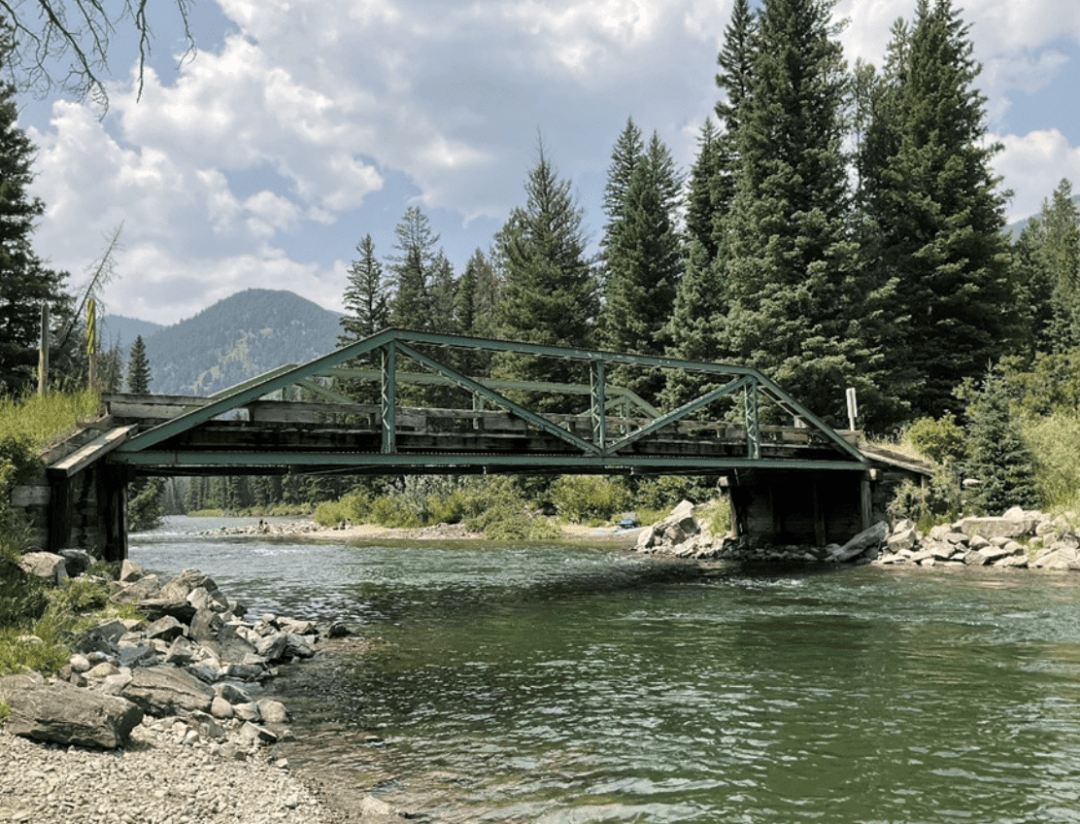
Portion of Gallatin River to close during Markley Bridge replacement

BIG SKY – A portion of the Gallatin River will close to boating starting next week while crews with the U.S. Forest Service begin work to replace Markley Bridge near Big Sky.

The closure will begin March 9 and could last through May 18. This closure will temporarily restrict boating on the Gallatin River from the Upper Deer Creek boat launch—located just above Markley Bridge—to the Portal Creek boat launch. Boaters will still be able to put in at the Portal Creek boat launch and float downstream.

Wade angling and other walk-in use will continue to be allowed, except in the immediate area of bridge construction.

The Montana Fish and Wildlife Commission approved the closure during their Feb. 12 meeting.

Add a Comment »

News Comments