Monday, Jul. 27th, 2026

MSU Gold Rush T-shirts now available


BOZEMAN
— Montana State University Gold Rush T-shirts are now available for purchase. Fans are invited to wear the shirts during the Bobcats’ Sept. 5 home opener football game against Butler University; this marks the 19th year of the T-shirt tradition.  

MSU fans can buy the locally designed, gold-colored shirts to show their love for the ’Cats during this year’s Gold Rush game. This year’s T-shirt design, created by Angus O’Keefe, builds on the excitement of last year’s national championship. It features a Bobcat logo with the words “Champions Wear Gold” and includes the years of MSU’s national championship-winning football teams: 1956, 1976, 1984 and 2025.

Amy Kanuch, MSU's chief marketing officer, said the Gold Rush tradition helps set the tone for the entire football season.

“We can’t wait to see our students, alumni and fans in a sea of gold in Bobcat Stadium,” said Kanuch. “This promises to be another amazing year of Bobcat football, and this tradition showcases the incredible support of Bobcat fans.” 

Supplies of the Gold Rush T-shirts are limited, and sales begin today, July 24. The shirts cost $20 and are available for purchase at the MSU Bookstore on campus and at the MSU Bookstore at Gallatin Crossing, as well as at Universal Athletic stores in Bozeman, Billings, Butte, Great Falls and Kalispell. They are also available online at msubookstore.org and shop.msubobcats.com

For more information, visit montana.edu/goldrush.  

Add a Comment »

Siskin Island Fishing Access Site: FWP acquisition creates unique conservation and access opportunities on upper Yellowstone River

PINE CREEK – Montana Fish, Wildlife & Parks this month accepted the donation of an 82-acre island complex on the upper Yellowstone River for the creation of a new fishing access site.

The island complex, now known as Siskin Island Fishing Access Site, is accessible by watercraft between Mallards Rest and Pine Creek fishing access sites, about 13 miles south of Livingston. The site was held in fee title by Trust for Public Land after they facilitated a donation from the previous landowners.

The donation of this site to FWP protects critical river and riparian habitat, expands lawful public access and reflects strong community partnership and public input.

Gov. Greg Gianforte and FWP Director Christy Clark joined staff from FWP and Trust for Public Land in a tour of the site on Wednesday.

“It’s great to help cut the ribbon on Siskin Island to expand public access along the Yellowstone for Montanans to fish, float, and enjoy the outdoors,” Gov. Gianforte said. “The Yellowstone River is the longest free flowing river in the lower 48 and we are glad to play a part in keeping this river healthy and accessible for future generations.”

“Montana Fish, Wildlife & Parks is proud and excited to be part of this effort to strengthen wildlife habitat and public access on the upper Yellowstone River,” said FWP Director Christy Clark. “We’re grateful to Trust for Public Land and the previous landowners for their foresight and willingness to bring this island complex into public stewardship.”

“Trust for Public Land is proud to work with Governor Gianforte, Montana FWP, and local landowners and community partners to transfer the newly minted, 82-acre Siskin Island to the state of Montana,” said David Weinstein, Northern Rockies Director for Trust for Public Land. “Now that the island is in public hands, adaptive management will benefit the ecological and recreational values of the upper Yellowstone River in perpetuity.”

The float-in site features a rocky shoreline, mature cottonwood forests, willow thickets, marsh wetlands and open meadows that provide excellent habitat for a variety of wildlife. Side channels through the site also support high-quality spawning and rearing habitat for trout.

FWP plans to manage the site for habitat conservation and public access. Primary access to the island is by floating down the Yellowstone River. Rules for the site include allowing day use, float-in camping at a designated campsite by reservation only, as well as hunting under a weapons restriction. Other rules apply for overnight use.

More information on site rules and a campsite reservation web page will be published on FWP’s website in the coming weeks when finalized.

FWP published an environmental assessment soliciting public comments on the proposed acquisition in March, followed by final approval by the Montana Fish and Wildlife Commission on June 12.

Add a Comment »

Saturday, Jul. 25th, 2026

Harmful Algal Blooms Confirmed on Hebgen Reservoir - Advisory Issued


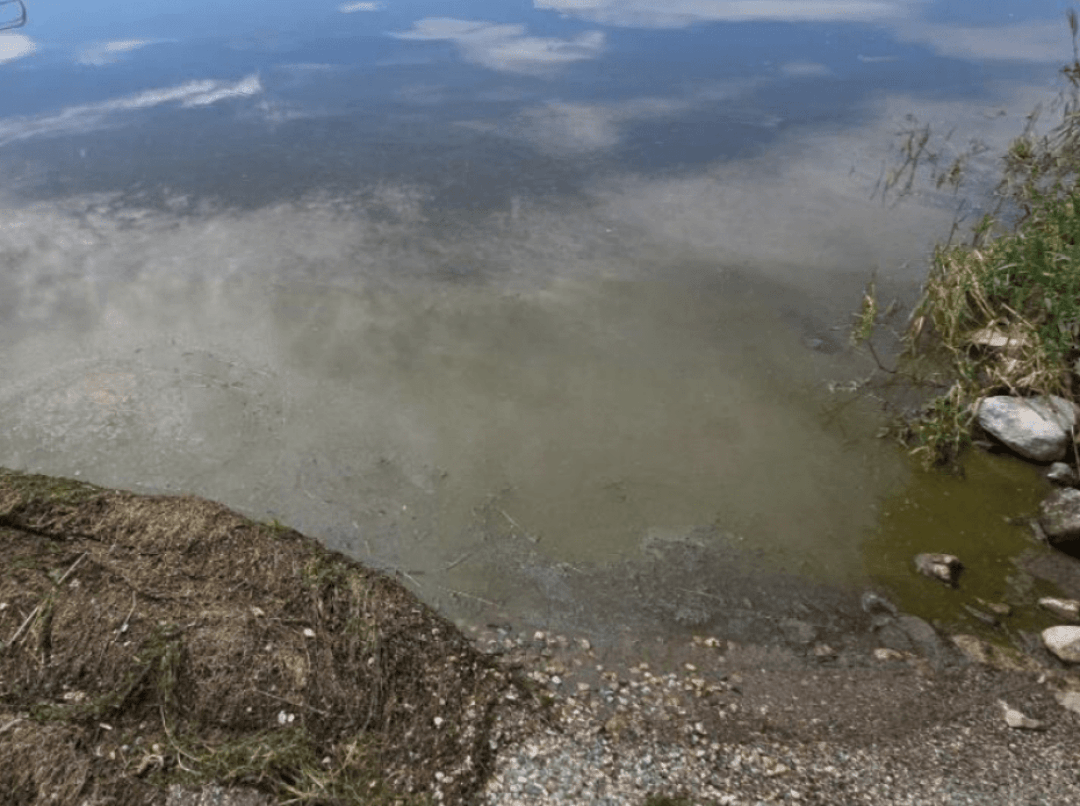
Harmful algal blooms (HABs) are present on Hebgen Reservoir in the Corey Springs area of the Grayling Arm. Routine monitoring of Hebgen has confirmed the presence of anatoxin-a which poses a risk to people, pets, and livestock.

Toxin exposure can occur in humans from recreational activities where water might be ingested such as swimming, wind surfing, jet skiing, and water skiing. Children and pets are more likely to ingest HAB infested water because they spend most of their time wading in the shallow waters where algae can accumulate and they have less control over how much water they ingest. Animals and livestock that drink large amounts of contaminated water, and pets that collect scum on their fur and then ingest it by licking, are at high risk of toxin exposure.

Add a Comment »

Friday, Jul. 24th, 2026

When the Mountain Wins: Getting Orthopedic Care Right in an Active Valley

Image by stefamerpik on Magnific

Everyone who has lived in the Gallatin Valley for a few seasons has a story about the moment their body stopped cooperating. A knee that gave out on the last run at Bridger, a shoulder that separated on a rocky descent, an ankle that rolled on a trail two miles from the car. Living somewhere this active means the odds of an orthopedic injury are simply higher than they are in most places, and yet remarkably few people give any thought to how they would handle one until they are sitting on a couch with ice on something and a growing suspicion that it is not going to sort itself out.

The Cost of an Outdoor Lifestyle

Bozeman's growth has brought a lot of newcomers who came precisely for the skiing, climbing, riding, and running, and the injury pattern here reflects that. Winter brings knee injuries and wrist fractures from falls. Summer brings the overuse problems that come from cramming a season of hiking and biking into a few good months, along with the acute injuries that happen when tired legs meet technical terrain. Add a population that skews toward people unwilling to slow down, and you get a community that puts unusual demands on its musculoskeletal care. The altitude and terrain contribute as well. Trails here gain elevation quickly, descents are rocky rather than forgiving, and a great deal of the recreation happens well outside cell coverage, which means an injury in the backcountry carries consequences beyond the injury itself. None of that is a reason to stay home. It is a reason to think about the whole chain, from how you prepare to how you would actually get evaluated afterward.

Knowing When It Is More Than a Bad Sprain

The most common mistake is waiting too long, generally because nobody wants to be the person who went to a doctor about a tweak. There are reasonably clear signals worth taking seriously: an inability to bear weight, joint instability or a sense that something gives way, significant swelling that arrives quickly, obvious deformity, numbness, or pain that is not improving after a reasonable rest period. Where those are present, an evaluation at a facility such as Occuhealth Private Orthopedic Surgery Center is a more sensible next step than another week of guessing, because some injuries genuinely do heal poorly when they are left unexamined. Getting an accurate picture early tends to expand your options rather than narrow them.

Not Every Orthopedic Problem Needs a Surgeon

It is worth saying plainly that a great many musculoskeletal injuries resolve without an operation. Physical therapy, activity modification, bracing, and time handle a substantial share of what walks through an orthopedic clinic, and a good specialist will tell you when that is the right course. The value of the assessment is not that it leads to surgery. It is that it distinguishes the problems that will improve with conservative treatment from the ones that will quietly get worse while you wait, which is a distinction almost impossible to make from your own couch.

The Rise of Outpatient Surgery Centers

For the injuries that do require a procedure, a good deal has changed in where those procedures happen. Many orthopedic surgeries that once meant a hospital admission are now routinely performed in ambulatory surgery centers, with patients going home the same day. These facilities tend to be built around a narrower range of procedures, which often means more predictable scheduling and a more streamlined experience than a hospital operating room juggling emergencies. Whether that setting is appropriate depends entirely on the procedure and the patient's overall health, which is a conversation to have with the surgeon rather than a preference to arrive with.

Rehabilitation Is Where the Outcome Is Decided

Surgeons will tell you, sometimes wearily, that the operation is the easier half. The National Institute of Arthritis and Musculoskeletal and Skin Diseases, part of the National Institutes of Health, publishes plain-language information on joint injuries and their treatment, and a recurring theme across musculoskeletal care is the role of structured rehabilitation in determining how well someone recovers. That is a difficult message in a place like this, where the instinct after a few weeks of feeling better is to test the repair on something ambitious. Returning to activity before tissue has genuinely healed is one of the more reliable ways to end up back where you started, with a second injury that is harder to fix than the first.

Prevention Is Unglamorous and Effective

The least exciting advice is the advice that keeps people on the mountain. Building strength before the season rather than during it, treating fatigue as a real risk factor rather than a badge of honor, and paying attention to the small nagging complaints that precede most overuse injuries all reduce the odds meaningfully. So does honesty about conditioning after a long stretch away. The valley is full of people who spent a winter recovering from an injury sustained on their first big day out after months of doing very little, and almost all of them saw it coming in retrospect.

Have the Conversation Before You Need It

The practical takeaway is worth acting on while you are healthy. Know which orthopedic providers are available to you, understand what your insurance covers, and have some idea of where you would go for an evaluation, so that the decision is not being made through a haze of pain on a Saturday evening. This article is general information rather than medical advice, and any injury should be assessed by a qualified clinician who can evaluate your specific situation. Living here means accepting a certain amount of physical risk. Handling the consequences well is the part you actually get to control.

Add a Comment »

Wednesday, Jul. 22nd, 2026

Additional fishing restrictions begin July 22 on several Montana rivers

BOZEMAN – Rising river water temperatures are prompting more daily fishing restrictions for several Montana rivers.

These restrictions, commonly known as hoot-owl restrictions, prohibit fishing from 2 p.m. to midnight each day. They are designed to protect fish when environmental stressors and angling pressure are both high. When water temperatures are high and flows are low, the additional stress of angling can lead to issues including disease outbreaks, reduced spawning success, decreased growth rates and increased mortality.

Restrictions will take effect July 22 in the following areas:

  • Big Hole River from the confluence with the North Fork of the Big Hole River to Dickie Bridge
  • Madison River from Eight Mile Ford Fishing Access Site to Ennis Reservoir
  • Shields River from the bridge upstream of Wilsall between Jordan Bench and Pinkerton roads to the confluence with the Yellowstone River
  • Yellowstone River from the Hwy. 89 bridge near Livingston to the Hwy. 212/310 bridge in Laurel
  • Smith River from the confluence of the North and South forks of the Smith River to Eden Bridge
  • Upper Clark Fork from the Clark Fork’s origin at the confluence of Warm Springs Creek and Silver Bow Creek to the mouth of Flint Creek
  • Bitterroot River in its entirety, from the confluence of the East and West forks to the confluence with the Clark Fork River

Fishing restrictions are in effect for additional waterbodies and other sections of some of the rivers listed above. For a full list of current fishing restrictions, click here.

FWP’s drought policy provides for angling restrictions when flows drop below critical levels for fish, when water quality is diminished, or when maximum daily water temperatures reach at least 73 degrees for three consecutive days. In cutthroat trout waters, angling restrictions occur when the temperatures reach at least 66 degrees for three consecutive days. Water temperatures of 77 degrees or more can be lethal to trout.

Catch-and-release anglers can reduce stress on fish by getting them to the net or in hand quickly, keeping them in the water and reviving them prior to releasing them back into the river. As the summer warms, Montana offers many other angling options with better conditions for fish, including larger lakers or reservoirs or higher-elevation lakes and streams.

Along with monitoring stream temperatures, FWP also monitors stream flows and, in some streams, holds instream flow water rights. FWP’s water program can issue a call on junior water users, when appropriate, to contribute to stream flows through the late summer and early fall. For more information on FWP water rights, click here.

Add a Comment »

Tuesday, Jul. 21st, 2026

The Warm-Weather Essentials That Make Montana Summers More Enjoyable

photo by Marina Rangel on pexels

Montana summers invite people outdoors for nearly every activity imaginable. Whether the day includes hiking mountain trails, spending time at nearby lakes, exploring local farmers' markets, or enjoying backyard gatherings with friends, the season offers long daylight hours and comfortable temperatures that encourage an active lifestyle. Making the most of these months often comes down to choosing practical essentials that help people stay comfortable from morning until evening.

Rather than packing excessive gear, experienced outdoor enthusiasts usually focus on versatile clothing, sun protection, hydration, and everyday routines that make spontaneous adventures easier. Small choices often have the biggest impact on enjoying everything Montana's warm-weather season has to offer.

photo by oveth martinez on unsplash

Choose Swimwear That Keeps Up With the Day

Summer outings in Montana frequently include more than one destination. A morning hike may lead to an afternoon at a lake, followed by dinner in town or an evening picnic with friends. Clothing that transitions easily between these activities helps simplify the day.

Many people looking for bust enhancing swimwear prefer supportive designs that combine comfort with confidence for swimming, paddleboarding, or relaxing by the water. Well-designed swimwear makes it easier to stay active without constantly adjusting clothing or planning outfit changes throughout the day.

Adding lightweight cover-ups, breathable shirts, and comfortable sandals creates a flexible wardrobe that suits a variety of outdoor settings while remaining practical during changing summer conditions.

Stay Prepared for Montana's Changing Weather

Although summer days can feel warm, Montana weather is known for changing quickly. Sunny afternoons may be followed by cooler evenings, especially in higher elevations or after sunset.

Packing a lightweight jacket, reusable water bottle, sunscreen, sunglasses, and a small backpack helps people adapt without carrying unnecessary equipment. These simple preparations make it easier to extend outdoor activities instead of cutting them short when conditions change.

Comfort also depends on pacing outdoor adventures. Taking breaks, finding shade during the warmest part of the afternoon, and staying hydrated all contribute to a more enjoyable experience throughout the day.

Everyday Self-Care Supports Active Days Outdoors

Photo by PLANTADEA on Unsplash

Long hours in the sun, dry air, and changing weather can all affect how people feel after spending the day outside. Establishing a simple self-care routine helps maintain comfort throughout the summer season.

Visitors exploring tadbeauty.com will find beauty products centered around innovative DIY lash systems developed with advanced 3D printing technology, reflecting the brand's focus on combining beauty with practical everyday wearability. While beauty routines vary from person to person, taking a few minutes for personal care after outdoor activities can help people feel refreshed before heading out again for evening plans.

Pairing skincare with adequate hydration and rest creates habits that support an active lifestyle throughout Montana's busiest outdoor months.

Make Outdoor Gatherings Simple

One of the best parts of summer is how naturally social activities move outside. Parks, lakes, patios, and backyards become gathering places where friends and families can spend hours together without elaborate planning.

Simple preparations often make these occasions more enjoyable. Comfortable seating, portable speakers, reusable drink containers, and easy-to-share meals help create relaxed environments where everyone can focus on spending time together instead of managing logistics.

Because Montana offers so many scenic locations, even a short evening picnic or sunset walk can become a memorable part of the season.

Build Habits That Help You Enjoy the Season Longer

The people who seem to enjoy summer the most are often those who develop consistent habits rather than waiting for special occasions. Keeping outdoor essentials packed, planning activities during cooler parts of the day, dressing comfortably, and maintaining simple wellness routines all make it easier to spend more time outside.

Montana's warm-weather season passes quickly, making every sunny day worth appreciating. Preparing for changing conditions, choosing versatile clothing, and looking after personal comfort allow outdoor adventures to remain enjoyable from the first morning hike to the final evening around a campfire.

Whether exploring mountain landscapes, spending time on the water, or simply relaxing with family and friends, thoughtful preparation helps make every Montana summer day feel a little more rewarding.


Add a Comment »

Monday, Jul. 20th, 2026

Montana State receives $2.5 million grant for simulation labs in new nursing education buildings


BOZEMAN
— Montana State University’s Mark and Robyn Jones College of Nursing received a $2.5 million grant this summer to help outfit state-of-the-art simulation labs at all five of the college’s locations.

The grant from The Leona M. and Harry B. Helmsley Charitable Trust will cover the cost of simulation equipment, furniture and technology in five new nursing education buildings across Montana.

In 2021, a historic $101 million gift from Mark and Robyn Jones funded five new buildings for MSU nursing college campuses in Billings, Bozeman, Great Falls, Kalispell and Missoula. While the Jones gift fully funded construction, additional philanthropic support was needed to operationalize the buildings, including installing simulation equipment, technology and audiovisual systems.

Simulation is a cornerstone of the MSU nursing college curriculum, which requires students to complete 120 hours of simulated training across the two-year program, or one simulation class a semester. Enabled by the Helmsley Charitable Trust’s grant, the college also plans to significantly expand simulation training to Doctor of Nursing Practice students in its family nurse practitioner, psych-mental health nurse practitioner and nurse-midwifery programs. The simulation labs allow nursing students to learn critical thinking skills in realistic settings – groups of students face an array of patient scenarios and have the chance to make decisions and practice interventions with realistic manikins or actors. Students can learn without the fear of harming a real patient or making a mistake, and learning is enhanced by debriefing the scenarios with their instructors and peers.

Each year in Montana, between 500 and 600 new nurses are licensed, around half of which graduated from MSU. The Mark and Robyn Jones College of Nursing currently graduates more than 300 bachelor’s-prepared nurses each year, with more than 75% of those students remaining in state to serve Montana communities. The college is on target to increase this number by 2030 to 400 new bachelor’s-prepared nurses each year.

“We are deeply grateful for the Helmsley Charitable Trust’s support for the simulation infrastructure in our new nursing education buildings,” said Sarah Shannon, dean of the nursing college. “Their grant will directly advance educational quality at MSU, strengthen the state’s nursing workforce and increase the accessibility of healthcare for all Montanans.”

“Ensuring that rural communities have access to high-quality healthcare begins with investing in the people who provide that care,” said Walter Panzirer, a trustee of the Helmsley Charitable Trust. “These state-of-the-art simulation labs will help prepare more highly skilled nurses to meet the evolving healthcare needs of Montana's communities. By supporting innovative training opportunities at Montana State University, we are helping strengthen the healthcare workforce pipeline and building a healthier future for people across the state.”

The nursing college uses simulation labs to supplement or replace increasingly difficult-to-secure clinical experiences, such as pediatric and obstetric clinical rotations, Shannon added.

She said that the benefits of simulation to students are multifold: the labs are fast paced, eliminating the time a student in a clinical setting may need to wait for a patient to use the bathroom or finish physical therapy, for example. Simulation also allows the college to ensure that every nursing graduate can experience both common and rare emergency situations in healthcare.

Each simulation lab is equipped with four life-size manikins: an adult, a 5-year-old child, a maternal manikin capable of simulating labor and delivery, and a newborn. The spaces also include a control room for faculty and a room where other students can observe in-progress simulations.

Nursing students in Great Falls have been utilizing the new simulation space since fall 2025, when the building opened ahead of schedule. The remaining four nursing buildings and their equipped simulation spaces are expected to be ready for students in Billings, Bozeman, Kalispell and Missoula this fall.

“The Helmsley Charitable Trust’s commitment to rural healthcare is powerfully reflected in this investment,” said Fran Albrecht, CEO and president of the MSU Alumni Foundation. “By supporting advanced simulation training across Montana, this grant directly strengthens the pipeline of highly skilled nurses prepared to serve rural communities. It ensures that students can train for real-world healthcare challenges close to home, ultimately improving access to high-quality care for patients across our state.”

About the Leona M. and Harry B. Helmsley Charitable Trust
The Leona M. and Harry B. Helmsley Charitable Trust aspires to improve lives by supporting exceptional efforts the world in health and select place-based initiatives. Since beginning active grantmaking in 2008, the trust has committed more than $4.6 billion for a wide range of charitable purposes. Helmsley’s Rural Healthcare Program funds innovative projects that use information technologies to connect rural patients to emergency medical care, bring the latest medical therapies to patients in remote areas, and provide state-of-the-art training for rural hospitals and EMS personnel. To date, this program has awarded more than $900 million to organizations and initiatives in multiple U.S. states and territories. For more information, visit www.helmsleytrust.org.

About the Mark and Robyn Jones College of Nursing
The Mark and Robyn Jones College of Nursing is a national leader in rural nursing research and is responsive to the evolving health needs of the people of Montana. Since 1937, the college has ensured that MSU-trained nurses receive cutting-edge knowledge and clinical experiences rooted in Montana’s rural traditions. Its unique one college, five campus model places students in Billings, Bozeman, Great Falls, Kalispell or Missoula.

Add a Comment »

Surplus drawing license opportunities randomized

Successful hunters to be contacted through email 

HELENA – Hunters who registered to be placed on the Surplus List can now check their status on MyFWP: myfwp.mt.gov/fwpExtPortal/myDrawResult_input.action. The list includes licenses left over from the drawing for Deer B and Elk B licenses.

FWP will contact hunters who are at the top of the list via email with instructions to finalize their purchase within a specified time. 

Hunters must finalize the purchase of the license within the timeframe specified in the email; otherwise, the opportunity will be offered to the next hunter on the randomized list. FWP may offer opportunities that have not sold out through the Surplus License List to over-the-counter customers via OLS.

Residents may purchase a maximum of three deer licenses. This may be three Deer B licenses, or two Deer B and one General Deer license. Nonresidents may hold only one Deer B license or two if they hold a Nonresident Combination license.

Nonresidents who hold a Nonresident Native License, a Youth Combo License or a Nonresident College Student Combination License may purchase Deer B and Elk B licenses at half price.

For more information, contact the FWP licensing office at 406-444-2950 or fwplic@mt.gov.

Add a Comment »

Japanese business culture focus of new study abroad offering at MSU


BOZEMAN
— This summer, the inaugural faculty-led trip to Japan was jam-packed with new experiences for Montana State University students, helping instill valuable business and cultural knowledge about a unique country that has strongly rooted itself in global business and trade.

From staying in dorms at Kumamoto Gakuen University and meeting local students, visiting the Atomic Bomb Museum in Nagasaki, and learning about traditional Japanese culture during a formal tea ceremony, the study abroad offering left students with a deeper understanding of life in the world’s fourth largest economy, which will serve as an asset in their future careers.

For 16 days earlier this summer, 15 MSU students ranging from freshmen to seniors traveled to Japan for a business class called JapanX. The course was taught by Thomas Lechner and Maritza Espina, professors in MSU’s Jake Jabs College of Business and Entrepreneurship.

The group spent time doing various activities in Tokyo, Kumamoto and Nagasaki, and also drove through the Japanese countryside visiting smaller towns and scenic areas.

The class was designed specifically to help strengthen entrepreneurship in Japanese markets, equipping students with insights into the country’s economy and culture.

“The idea was kind of, how do small to medium-sized enterprises enter a market like Japan? What are some of the challenges?” Lechner said. “The main theme of the class was how to enter that market – and it's hard to find a culture that's more different from the U.S. than Japan. So really trying to pay attention to both the way products are packaged, the way they're advertised, things like that.”

To hone insight into Japanese markets, the instructors took students to an array of Japanese businesses, including Asaki Glass – a manufacturer of specialty and industrial glass and certain chemicals – a nearly 300-year-old sake brewery and a soy sauce factory.

The group also had several classroom sessions at Kumamoto Gakuen University where they interacted with local students, many of whom spoke English.

Strengthening the relationship between Montana and Japan has been a historic and current priority of the Montana state government and MSU. Montana is a key trading partner of Japan, exporting mostly premium wheat and coal to the island country, and is a sister state with Kumamoto. According to state data, Japan consistently ranks as one of Montana’s top five export destinations, purchasing more than $265 million in goods annually.

One motivator for the trip was reigniting the sister-university relationship that MSU has with Kumamoto Gakuen University, Lechner said. The two institutions have a history of exchanging students for study abroad opportunities, and Lechner still keeps in touch with a Japanese student who came to MSU during his undergraduate experience. He noted that two MSU students in the class expressed interest in returning to live and work and Japan.

Unlike many faculty-led trips that utilize tour groups to create itineraries, Lechner planned the study abroad agenda in its entirety. That’s because he has ample experience in and connections to the country, first initiated by studying abroad there himself when he was an MSU student in the 1980s. He went on to participate in the Japan Exchange and Teaching program and later started a business taking tourists there. Over time he has lived in Japan for a total of 15 years.

On the trip, in between educational tours and learning about Japanese business practices, there was also plenty of time for fun, in the form of activities that strengthened appreciation for the country’s unique culture.

“My objective was also cultural understanding,” Lechner said, “because sometimes the business part is easier than understanding a particular culture that is so different from ours.”

Some highlights were the tea ceremony that also included making traditional Japanese sweets and watching a baseball game in Fukuoka.

“One of the more gratifying things for me on a personal level was the amount of times that students were off their phones, talking to people, playing cards, you know, taking in the scenery,” Lechner added.

Students agreed that the ability to experience a culture so different from life in the U.S. was foundational for their growth and confidence to pursue future opportunities abroad.

Morgan Burr, a sophomore interested in business finance from Bozeman, said the experience prepared him well for a longer study abroad trip to New Zealand that he is currently on through MSU.

“From the people to the food, it is all so mind-opening and very awesome to be a part of. What I learned about myself is that I am a pretty good traveler, and I can handle myself well when I am in a room with people I have never met,” Burr said. “And I think the Japan trip helped me realized what I needed to prepare (for New Zealand).”

Payton Ducey, a junior marketing major from Golden, Colorado, said going to the smaller towns, which many tourists miss, on their road trip inspired her to explore more rural areas in future travels. She recommended studying abroad as a chance to step outside one’s comfort zone, and said that the experience helped her grow in ways she didn’t expect.

“Studying abroad taught me that I am much more independent than I realized. Traveling through Japan can be overwhelming when you don't speak or read the language, and that initially felt intimidating. However, I learned that I was capable of navigating unfamiliar situations on my own and becoming comfortable with the unknown,” Ducey said. “This experience showed me that not knowing exactly what to do or say shouldn't stop you from exploring the world. I know this confidence and independence will help me in both my personal life and future career.”

Lechner said the trip saw such success that he’s already set dates for the class next year, and he hopes to lead additional experiential learning opportunities in Japan.

“The recent faculty-led trip to Japan is an excellent example of how Jabs helps students become truly global citizens, with an understanding and appreciation of the many different cultures and relationships that shape the world,” said Brian Gillespie, dean of the Jake Jabs College of Business and Entrepreneurship. “We are lucky to have our professors share their expertise and inspire so many students to leave their comfort zones, seek out new experiences and learn about the world.”

Add a Comment »

Construction Starts on West Kagy to Babcock Sewer Improvements Project

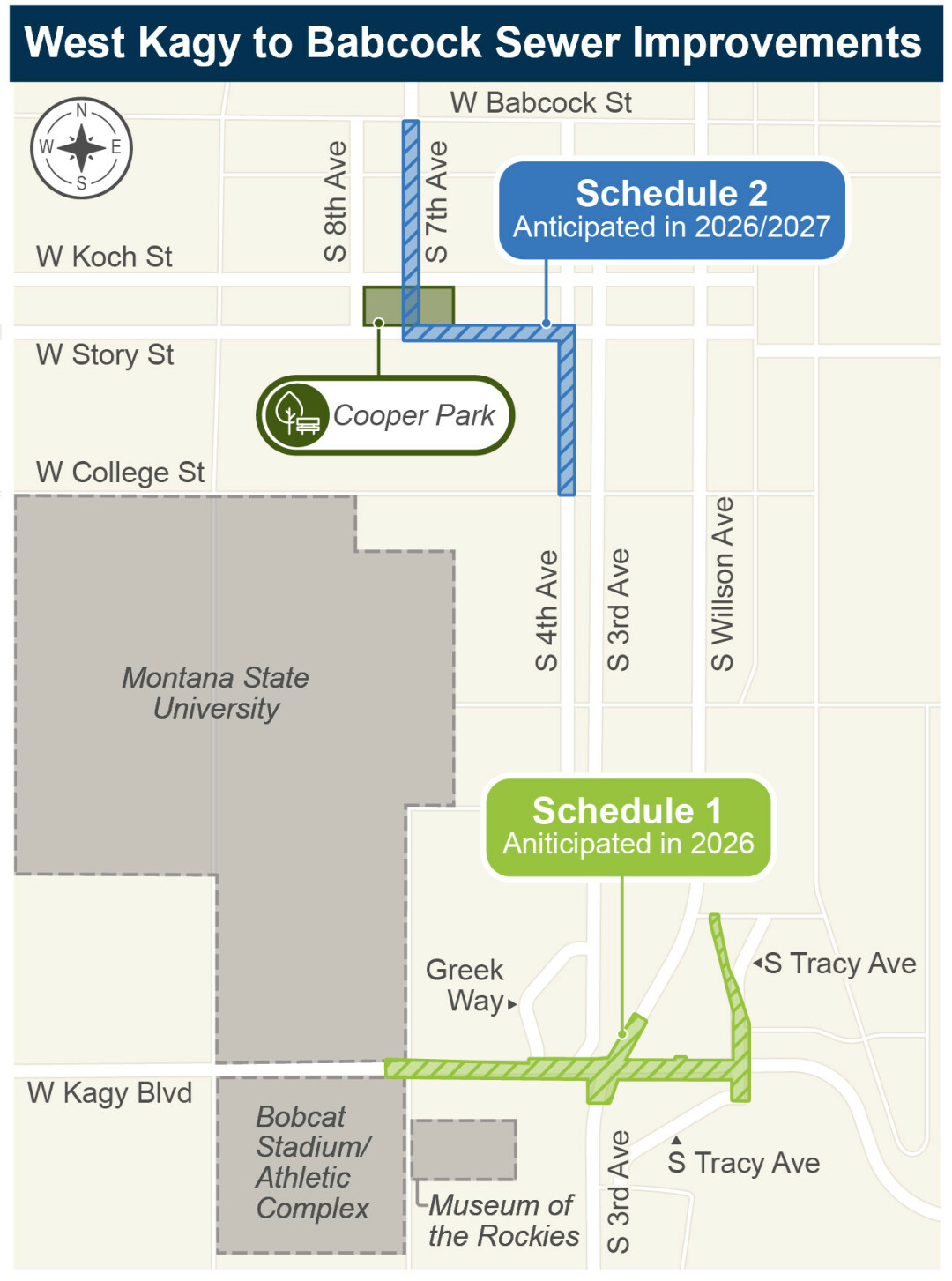
BOZEMAN  – The City of Bozeman, in partnership with Williams Civil Construction and DOWL, will be constructing improvements to the sanitary sewer system along West Kagy Boulevard this summer through the West Kagy to Babcock Sewer Improvements project. Construction is scheduled to begin the week of July 27, weather and other factors permitting.

The purpose of the West Kagy to Babcock Sewer Improvements project is to replace aging sewer pipelines to maintain a resilient and reliable sewer system in southwest Bozeman. The project will be completed in two phases over the next couple of years, beginning with the West Kagy Boulevard upgrades this summer.

“This is a critical project that improves and expands our sewer system in part to better handle the increasing student population we’re seeing at MSU,” said Emiliano Esparza, City of Bozeman Engineer. “We ask drivers to stay patient, safe, find alternate routes, and stay focused on the improvements. This project will improve our sewer system for decades to come.”

Phase 1 of the West Kagy to Babcock Sewer Improvements project includes sewer improvements in two separate neighborhoods, which will be completed over two construction seasons, starting in 2026 and finishing in 2027.

The project will kick off with construction primarily along West Kagy Boulevard between South Tracy Avenue and South 7th Avenue, near Montana State University (MSU). Construction on this part of the project is expected to be completed by November 2026.

The City of Bozeman and its partners aim to minimize and mitigate impacts on the traveling public and local businesses as much as possible, although construction completion may depend on weather and other unforeseen factors.

During construction, the public can expect:

Two-way traffic will be maintained on Kagy Boulevard. Lane restrictions, lane shifts, turning restrictions, and flaggers will be present to maintain public safety.

A full closure of South 3rd Avenue at the intersection with West Kagy Boulevard, as the City’s sewer main is replaced across the intersection. A detour will be in place during this time. This closure will be removed once the sewer improvements are installed and the intersection is repaved.

A full closure of South Tracy Avenue at the intersection with West Kagy Boulevard. This closure will not occur at the same time as the South 3rd Avenue closure and special accommodations for local business access will be provided.
Brief sidewalk closures which may require pedestrians to be redirected.

There will be access to businesses along West Kagy Boulevard during construction, although there may be times when drivers must use an alternate approach.

As the project wraps up for the winter, the roadway will be restored with temporary paving and traffic control measures. Ultimately, permanent pavement restoration and traffic control measures will be completed through the West Kagy Boulevard reconstruction project, which is being coordinated by the Montana Department of Transportation (MDT) and the City of Bozeman. Construction on that project is tentatively scheduled to start in 2027. Furthermore, to minimize traffic impacts related to roadway construction activities, the City of Bozeman has postponed Phase 2 of the West Kagy to Babcock Sewer Improvements project until MDT’s planned Kagy Boulevard improvements are complete. Phase 2 will consist of replacing aging sewer pipelines across the project.


The project team will be reaching out to area businesses leading up to construction to discuss potential impacts and answer questions. Businesses adjacent to the project and members of the public are encouraged to email kagysewer@dowl.com or call 406-281-7604 to learn more about the project and submit questions and comments.


More information about the West Kagy to Babcock Sewer Improvements project can be found at https://bit.ly/kagysewer. To sign up for email or text alerts, click the “eNotifications” link at the top of the page.

Comments 1

News Comments