Friday, Jan. 22nd, 2021

Montana State expands asymptomatic testing for students living on campus

Montana State University announced that it will extend free asymptomatic COVID-19 testing for students living on campus beyond the first two weeks of spring classes. 

The tests are offered by appointment at MSU’s Student Testing Center near Bobcat Stadium. Only students living in the campus residence halls are eligible for asymptomatic testing, though any student showing symptoms of the virus can also receive a free COVID-19 test at the site without an appointment or referral.

The asymptomatic tests were originally offered only for the first two weeks of classes, but supplies of test kits will allow the testing to be offered beyond that period. MSU is encouraging residence hall students to schedule tests regularly, even on a weekly basis. 

Both symptomatic and asymptomatic testing for students complement the other precautions already in place on campus to reduce the risk of COVID-19, including a campus-wide face mask requirement, strict social distancing in MSU’s classroom and laboratories, and the distribution of personal Clean 'Cat Kits to all students, faculty and staff. 

More information about COVID-19 and Montana State University is available at montana.edu/coronavirus.

Add a Comment »

Thursday, Jan. 21st, 2021

“Savage Ancient Seas” exhibit at Museum of the Rockies to open Jan. 23


Massive marine creatures will be the focal point of the new changing exhibit at the Museum of the Rockies. Opening on Saturday, Jan. 23, “Savage Ancient Seas” will feature more than 30 prehistoric casts and real fossils from specimens that lived in North America as far back as 70 million years ago.

The exhibit will be staged as an ancient aquarium, with some fossils and casts suspended from the ceiling. Many of the specimens will be on display in Montana for the first time.

Highlights of the exhibit include:

  • A 45-foot long Bunker Tylosaurus
  • An Archelon, one of the largest sea turtles to have lived, sporting a 17-foot flipper span.
  • Pteranodon, with a wingspan more than 20 feet.
  • Xiphactinus, also called the X-fish, one of the largest bony fish from the Western Interior Sea. The specimen on display exceeds 20 feet.
  • An Elasmosaurus, the largest species of the long-necked plesiosaurs. The specimen in display is over 40 feet long, and its neck, which is 23 feet long, has more than 70 vertebrae.

At educational kiosks around the exhibit, museum visitors can learn how these creatures lived and became extinct. Visitors can also learn how they sank to the bottom of the sea when they died and turned into fossils amongst layers of sediment.

“Savage Ancient Seas” will run until May 2 and is open daily 9 a.m. to 4 p.m. The exhibit is included in admission and children under the age of four are free. The museum has limited daily admission capacity due to COVID-19 restrictions and face masks are required. More information on visitation policies can be found at https://museumoftherockies.org/visit. For more information on the exhibit visit museumoftherockies.org.

Add a Comment »

Monday, Jan. 18th, 2021

Snapology Debuts New Community STEM Program in Helena and Bozeman


A new fun and educational children’s enrichment program debuting in the Helena and Bozeman area is filling the increasing demand for high-caliber STEM education. Snapology, the No. 1 ranked children’s STEAM franchise is opening its newest location in Helena.

Snapology is a kid’s enrichment franchise that encourages social skills and teamwork, by teaching science, technology, engineering, art, math and literacy concepts. The brand uses research-based curriculum, designed to be inclusive to all learning abilities and adaptable to students at any grade level– be that gifted, traditional and special needs students. With a hands-on teaching approach that uses LEGO® Bricks and other building toys, along with coding, video game design and robotics, the company offers kids the perfect mix of play, academic enrichment and social development.

Snapology’s newest Helena location is owned and operated by local entrepreneur Stephanie Scott. Stephanie is also a full time educator who felt the need to expand her impact on children in her community by offering additional play-based learning opportunities.

“I am so excited to bring this amazing resource to kids in our community,” said Ms. Scott. “STEAM education is such an essential part of a child’s development. Whether they want to go into technology or not, we hope to develop critical thinking, creativity and teamwork skills so that our kids can grow up to be whatever they want to be.”

Snapology of Helena will not operate out of a traditional brick and mortar location. Instead, Scott and her team will bring more than 80 enriched and interactive programs directly to the community, traveling to schools, community centers and private events where they will set up your choice of classes or creative play. The company even offers virtual programming for those who are not quite ready to be back in person. Snapology of Helena can accommodate partners by structuring workshops, camps, creative play sessions or private parties.

Snapology was founded in 2010 by sisters Lisa and Laura Coe. The pair ​came up with the idea for their business after seeing the love their children had for creative play using building blocks. As STEM professionals with business expertise, the pair were able to successfully launch the Snapology concept in their home-base of Pittsburgh. Since then, the brand has grown to more than 150 locations across the United States, Canada and the world.

For more information about the Helena Snapology location and its services, please visit snapology.com/location/helena​, their ​Facebook Page​ or call 406-282-8868.

ABOUT SNAPOLOGY​:
Founded in 2010, Snapology is the #1 STEAM franchise in the country, giving children the opportunity to learn through play through more than 80 enriched, interactive STEAM and STEM programs. With nearly 150 locations in the U.S., Canada, Australia, China, Vietnam, Haiti and more. Snapology is quickly growing, offering a best-in-class investment for qualified prospects. For more information about Snapology including franchise opportunities, please visit ​https://www.snapology.com/

Add a Comment »

Montana Science Center partners with Bozeman Health, Food Bank on STEAMkits


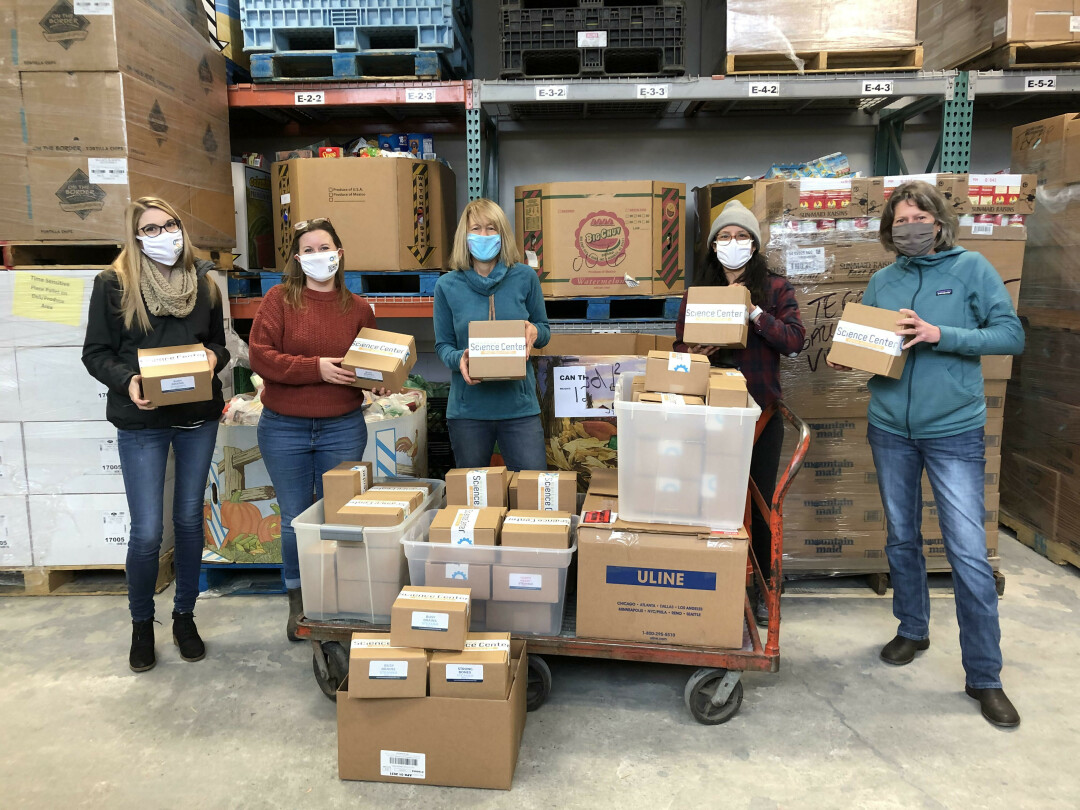
Montana Science Center, in partnership with Bozeman Health and the Gallatin Valley Food Bank has created take-home science kits to be provided to families throughout our community. 75 kits were delivered to the Gallatin Valley Food Bank on Friday, January 15th and will be distributed in January through the Food Bank’s education department. These STEAMkits focus on keeping the body healthy with a different topic for each of the kits. They are designed to encourage children in first through fifth grades to engage in science while at home through a series of hands-on activities.

“The pandemic has made it incredibly hard for families to engage in hands-on activities,” says Abby Turner, Executive Director. “We are fortunate to have the support of Bozeman Health to create STEAMkits that bring hands-on opportunities in STEAM to kids in their own homes.” STEAM stands for Science, Technology, Engineering, Art and Math. STEAMkits focus on the science of the brain, the heart and the skeletal system in three kits, filled with 4 activities each, including all of the materials needed to complete the activities. In the coming days, staff at Montana Science Center will also record videos of each of the activities as supplemental support for the STEAMkits.

“It is the goal of both Bozeman Health and Montana Science Center to lower barriers to access to community education tools,” Turner says. “This partnership allows us to create kits to be distributed to families in Bozeman regardless of their ability to pay. They also bring science information, healthy tips and learning through fun to youth in our community. In our partnership with the Gallatin Valley Food Bank, we are able to support families with school aged children in a meaningful way by providing activities for them to do at home.” Through this partnership, the kits delivered to the Food Bank will be available to youth at no charge. Additional kits are available at the Montana Science Center.

Bozeman Health’s Community Support Grant program provides them an opportunity to respond to requests and partner with eligible organizations, like Montana Science Center, whose work is aligned with Bozeman Health’s Community Benefit priority areas. Specifically, they strive to support programming, education, and access initiatives. These STEAMkits are aimed to bring engaging, healthy learning opportunities to families to connect healthy bodies and science discovery.

Additionally, Gallatin Valley Food Bank’s vision is to create a healthier, more resilient, food-secure community in which all of the members are empowered and have the means to nourish themselves. We will continue to advocate and support our community through our work, partnerships, and commitment to improving food security. Montana Science Center is fortunate to partner with the Food Bank to bring these science kits to youth through their educational programs.

The Montana Science Center is currently offering virtual, take-home and limited onsite programs. During the closure this summer, staff developed extensive COVID protocols and adapted the building for safe, interactive experiences while limiting visitation numbers. “Our goal is to provide purposeful experiences in science while supporting families as they stay healthy, either at home or within our space.”

Please contact the Montana Science Center for additional questions and clarifications. They can be reached at 406-522-9087 or info@MontanaScienceCenter.org

Add a Comment »

Saturday, Jan. 16th, 2021

HRDC Begins Scheduling for Ninth Year of Tax Assistance

HRDC is set to begin their ninth season of providing tax preparation services through their Volunteer Income Tax Assistance (VITA). Individuals and households with incomes of less than $57,000 are eligible for tax assistance through VITA.

HRDC’s VITA service will start on Monday, February 8 and go through Thursday, April 8, 2021. Appointments are required for tax assistance. In an effort to maintain social distancing guidelines and keep everyone safe, services will be a drop-off/pick-up model instead of face-to-face. Customers will get details when they schedule their appointment. In order to verify their identity, VITA customers must bring a photo ID and Social Security Card to their appointment. Customers must also bring all applicable tax documents for the 2020 tax year (Forms W-2, 1099, 1098, 1095-A/B/C, charitable contributions) including Notice-1444 and Notice 1444-B reporting stimulus payments. If individuals are seeking direct deposit for their refund or payment, they will need their bank account number and their bank’s routing number.

“VITA is one of the most effective ways to provide financial opportunity to individuals and families in our community. Of people we served last year, the average refund was around $1,800. That can mean a lot to a household,” says Marc Graham, HRDC Financial Opportunity Coordinator.

Those interested in receiving tax assistance should call the appropriate location for more information. For appointments in Bozeman, Belgrade, Gardiner, White Sulphur Springs, or at the MSU Vet Center, call 406-585-4848. For appointments in Livingston, call 406-223-4479.

For information about HRDC Volunteer Income Tax Assistance (VITA) service, visit https://thehrdc.org/financial-development/tax-assistance/. For more information about any other HRDC service, visit thehrdc.org.

Add a Comment »

Thursday, Jan. 14th, 2021

MSU students build device to help NASA study clogged pipes on space station


When Montana State University researcher Stephan Warnat wanted to help solve a longstanding problem on the International Space Station, he turned to a group of four mechanical engineering majors.

During a recent Montana Biofilm Meeting hosted by MSU's Center for Biofilm Engineering, Warnat learned from NASA scientists that microbial buildup sometimes clogs the space station's water pipes — a demanding challenge for astronauts to fix. A specialist in tiny sensors used to measure, among other things, water quality, Warnat wanted to study how the microbes grow. He just needed a research device that could simulate the microgravity of low Earth orbit.

That's where the students came in. Working as a team over two semesters, they designed and built a working prototype of the device as their "capstone" project, the task that all engineering seniors must complete in order to graduate. The team included four seniors in mechanical engineering: Spencer Ball, Ryan Davis, Haley Ketteler and Connor Tappe. Ball, Davis and Tappe graduated in November.

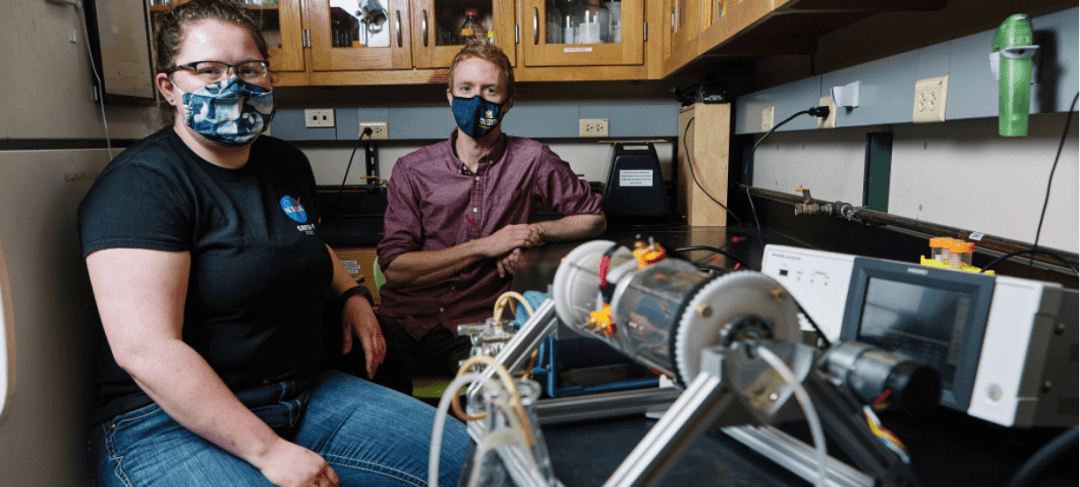
Like a small rock tumbler, the tool they made consists of a section of pipe that slowly rotates to prevent microbes from settling with gravity. Fluid is passed through the pipe, and embedded sensors measure biofilm behavior.

"It's really, really cool," said Warnat, an assistant professor in the Department of Mechanical and Industrial Engineering in MSU's Norm Asbjornson College of Engineering.

The students presented the device to Warnat's collaborators at NASA in the fall. NASA is very pleased with the design and will use the device in future research efforts, Warnat said. In the meantime, NASA issued Warnat's research team a $100,000 grant that will support using the device to develop sensors for detecting biofilm growth in the space station's plumbing. Warnat will lead the project with MSU's Christine Foreman, professor in Department of Chemical and Biological Engineering.

Warnat said he wasn't surprised by the project's success because he had previously worked with MSU engineering students on four other capstone projects. The projects are structured around design challenges posed by private industry, national labs, organized events like the RoboSub competition and by university faculty.

"What I like is getting a group of young engineers who actually have a lot of experience but who have no idea about my research and come with open eyes to develop something new," Warnat said. "I actually had something completely different in mind for this device, but what they made is perfect."

MSU's engineering seniors have the technical expertise to construct things that faculty wouldn't be able to make themselves and that would be prohibitively expensive to purchase, according to Warnat. "Our students are well trained in our machine shop," which includes state-of-the-art, precision tools for cutting and shaping metal and other materials, he said.

For capstone team member Davis, the project was valuable experience with seeing a months-long, intensive design task through to the end.

"It put to work a lot of what we've learned in our classes," said Davis, who machined some of the components on a lathe and now works at a local manufacturing design business. Warnat "did a good job of presenting the project as something that was really worthwhile to him and other people, so we were motivated to work on it," he said.

Ketteler said the project harnessed her passion for space engineering and dovetailed with a virtual summer internship with NASA's Langley Research Center.

"It really challenged our thinking," said Ketteler, who handled all the electronics for the device. Warnat "gave us a starting point with an idea of what he wanted, but said, from then on, we had to design it and make the final decisions."

Working with a capstone team is a great opportunity for MSU faculty to advance a research idea and get it to a point where they can secure grant funding, according to Warnat, an associate faculty member of the Center for Biofilm Engineering. "This was a really good group," he said. "They didn't need a lot from me."

According to Robb Larson, associate professor of mechanical engineering and a coordinator for capstone projects, there's always a need for new capstone sponsors, and anyone interested in sponsoring a project can contact him.

Add a Comment »

Phone Scam Alert: Bozeman's Choice Plaques

PHONE SCAM ALERT


Once again an opportunistic company is attempting to scam Bozeman's Choice winners by CALLING and attempting to sell a plaque to display at your business.

Bozeman Magazine & Bozeman's Choice are in NO way connected to this

opportunistic company, we give away certificates to our advertisers and sell certificates to non-advertisers for $10.

If you are a 2021 winner and would like to order a certificate please do so here by Jan 29: https://bozemanmagazine.wufoo.com/forms/q5fq4kh08zxgnd/

Add a Comment »

Wednesday, Jan. 13th, 2021

5 Ways the Family Can Stay in Touch Right Now


We’re entering the pandemic’s second year at the moment. It’s great to think that vaccines are filtering out right now, but not everyone has had theirs yet. Also, the rollout seems slower than everyone would like, so it will probably be several more months till we return to something like normalcy.

That’s hard on people in many ways. Many individuals report feeling isolated and depressed. It’s a public health crisis that exists at the same time as the coronavirus itself.

Part of what’s happening is that families can’t see each other, and if you’re close with your relatives, that might be the most challenging part about all this. Still, some ways do exist for you to remain in contact. Let’s discuss five of your best options.

The Family Text Chain
Some families have instituted what society is calling the “family text chain.” The general idea is that you can text your mom, dad, sibling, cousin, etc., but you can also include them all on a chat and send messages to keep all of them updated at the same time.

This is a smart idea because you can convey what you’re thinking and feeling to several family members simultaneously. You might feel lonely and want to talk to someone you know, and you can reach out to several people all across the country with only a single message.

The family text chain worked well during the holidays for people who could not see their families over Thanksgiving, Christmas, Hanukkah, etc. There’s no reason not to think people won’t continue to use it for several months to come.

If you do set up a family text chain, though, be sure you only text when it’s appropriate to do so. Don’t ever text and drive. Texting causes 64% of US road accidents right now, so wait till you get home before reaching out via this method.  

Social Media
You can also use social media for family communications. You might use Facebook, Twitter, Instagram, or any other platform on which all your family members are active.

You can access social media on virtually any device. You can use your smartphone if you want to message a family member while you’re on the go, or you can use a laptop, desktop, or tablet instead.

Social media is a fun way for you and the family to stay in touch since you can send not only detailed messages but also videos, memes, emojis, and all kinds of other fun content if you’re feeling playful.

The Old-Fashioned Phone Call
You can also call a family member the old-fashioned way. You can even set up a time for a multiple-person phone call.

The only issue there is that it can be a little chaotic with everyone talking at once. That’s why the one-on-one call is usually better.

You can talk to each family member individually this way. You can tell them about what’s happening at work, any hot gossip in your social circle, or anything else that might make you feel normal so you can forget about the anxiety for a while.

This can be a great thing to do for your sanity. You might talk to a parent or sibling once a week, or more than that if you feel the need.

Facetime or a Similar Service
You can also have a Facetime call if you and the other family member both have iPhones, or you can use a similar communication method, like Zoom. There are multiple platforms now that allow one-on-one, face-to-face interactions.

This is similar to a regular phone call, but sometimes it’s nice to see your family member’s face. Maybe you have not seen them in-person for many months. Just seeing them as you speak to them can make you feel better and not so isolated.

The Socially Distanced Meeting
Meeting in-person is one more thing you can do. However, if you decide to try this option, you have to follow rules to make sure everyone remains safe.

You probably don’t want to drive halfway across the country if your family member lives far away. This is only an option if they live in the same city as you do.

You can both wear masks and meet outside, staying at least six feet away from each other. That’s the safest method. You can do this, but it’s winter right now, and many parts of the country are very cold. Still, a brief outdoor visit might be possible.


Add a Comment »

Tuesday, Jan. 12th, 2021

3 Tips To Help You Find The Right Food For Your Pet


Pets are essential members of the family, so keeping them healthy should also be a priority. Just like people, feeding pets unhealthy food could make them sick. If you have many pets, determining the right food for each one is essential. One type of diet may work for dogs, but it may not be healthy for birds.


If you don't want to risk harming your beloved animals, here are some tips to help when shopping for their food:

1. Consult With Experts

Many food items out there are available for every pet, but it doesn't mean they're the right ones—even if they’re sold in pet shops. If it's your first time taking care of a pet, it's best to consult a veterinarian. That way, you can receive proper guidance on caring for them, especially on what food to feed them.


Since veterinarians have studied different types of animals, they're knowledgeable about animal health. Some can even give you a diet plan for your pet. Especially if your pet is sickly, your vet will help craft the right menu to prevent the further deterioration of your pet's health.

Aside from vets, you can check out many self-help books and online pet enthusiasts for their opinions. Although they may not be licensed veterinarians, their experience and love for pets made them knowledgeable on what food items to feed animals.

When you find reputable sites on pet nutrition, you can read their recommended food list for various animals. For instance, pet nutrition writer Kate Barrington, who owns three cats, has ample experience in this area to recommend specific nutrients for cats to make them happy and healthy.


2. Consider The Ingredients Of The Food Item

After talking to experts, you'll have an idea of what nutrients your pets need. Thus, you should consider their suggestions when buying, especially if the items are commercially manufactured. Feeding your pets the proper balance of nutrients is essential to ensure their healthy growth.

However, if you overfeed them one kind of nutrient and neglect the other nutrients, they might get sick or develop a disease. That's why their diet should contain a balance of water, minerals, vitamins, fats, carbohydrates, and protein. Before giving fresh raw food or cooked items to your pets, always double-check if those food preparations are safe for their species.


If you want ready-made food for your pets, you can buy products from trusted manufacturers with stellar reputations in the market. Ensure that these companies have good reviews about their formula on the pet food they manufacture. That way, you're assured that you’re feeding your pets the proper nutrients they need daily.


3. Be Wary Of Allergic Reactions

Since you know the ingredients you feed your pets, you could also track which ones will give them an allergic reaction. Most pet allergies might be tricky to detect at first, though, but others have telltale signs. Some pets may be unable to digest food properly. Some could develop skin rashes or gastrointestinal issues. When this happens, try to avoid giving them the ingredient that may have caused the reaction, and go to your vet for a check-up immediately.


Conclusion

Feeding your pets may not be as easy as it seems. Don't get the most popular food out there. Always do some research on each food item. Check the ingredients if they contain the right amount of nutrients your pets need. If you're introducing new food items to their diet, better check with your vet first because they can advise whether it will harm your pets. Moreover, you should be observant when they're showing signs of food allergy. By doing these, you can ensure your pets are enjoying their meals while keeping them healthy and happy.

Add a Comment »

Monday, Jan. 11th, 2021

Wilderness Alliance Rings in New Year with Wilderness Proposal


The Gallatin Yellowstone Wilderness Alliance today announced their proposal for new Wilderness designations on the Custer Gallatin National Forest (CGNF) in Southern Montana.

GYWA plans to introduce a Wilderness Bill to the US Congress, tentatively titled the Gallatin-Yellowstone Wilderness Act. The Bill would designate about 800,000 acres of new Wilderness in the northern Greater Yellowstone Ecosystem and nearby federal lands. GYWA has identified Montana’s CGNF as the epicenter of some of the most spectacular unprotected wild lands in the nation.

Phil Knight of GYWA said, “It’s a new year, after a very tough 2020, and we all need positive ideas. How about a fresh start by protecting more Wilderness? What could be better for the people, the wildlife and the land?”

George Wuerthner, author, ecologist and GYWA board member, said, “The Greater Yellowstone Ecosystem is part of the global heritage, and we have a responsibility to do everything we can to preserve it.”

“We are talking about protecting some of the top one or two per cent of wild country in the lower 48” asserted, Phil Knight of the GYWA. These wild lands are some of the best wildlife habitat in the country, providing a home for Grizzly Bear, Lynx, Wolf, Elk, Moose, Mountain Goat, and Bighorn Sheep, and are the source of waters that support genetically pure Yellowstone and West Slope Cutthroat Trout.

Anne Millbrooke, GYWA board member, explained, “Big open spaces are not actually open and certainly not wasted. Nature fills that space and uses it. As byproducts, nature protects our clean air and clean water. It even stores carbon.”

From Cowboys Heaven to the Tongue River Breaks, the Crazy Mountains to the Line Creek Plateau, the Gallatin Crest to Lionhead, the Beartooth Front to the Pryor Mountains, there is no other national forest like it. The CGNF caps Yellowstone National Park like a crown of wild mountains.

GYWA believes that what the CGNF does best is provide for high-quality wild lands. It is not the nation's wood box, nor should it be the nation’s outdoor gymnasium.

Wild lands protection is critical to the quality of life of the region’s communities, and essential to the outdoor economy that draws visitors, as well as contributing to the wellbeing of residents providing clean water, important fish habitat, critical wildlife habitat, scenic beauty, and solace for people in troubled times.

According to Conservation Biology principles, larger protected areas are better than smaller patches of habitat. So it is important to conserve larger unprotected wild lands, especially if they are contiguous to existing protected areas such as Yellowstone Park.

In addition, some wild lands are critical corridors for the movement of wildlife between other protected landscapes. For example, the Bridger Mountain Range can serve as a corridor connecting the Greater Yellowstone Ecosystem to other wild lands further north.

You can view GYWA’s draft wilderness legislation at https://www.gallatinyellowstonewilderness.org/proposal

Add a Comment »

News Comments