

Monday, Feb. 15th, 2021

Getting Ready for the Family Road Trip

                                                                                            Photo by Katie Moum on Unsplash

With pleasant weather not far off, plenty of car owners are planning spring and summer road trips for themselves or their families. This year is already shaping up to be one of the biggest ever for car-cations because of all the pandemic restrictions on air, bus, and train travel. For many vacationers that means loading up the truck, checking tire pressure, and mapping out destinations for warm-weather fun.

Of course, making plans of how to spend free time is part of the excitement. But, don't forget to make sure your vehicle is in top condition before hitting the highway. Fortunately, you can get plenty of help from online blogs and websites that offer how-to guides, discuss all sorts of car-related topics, and even provide resources if you need to buy a new car before your journey. Here are five things to keep in mind before every road trip.

Tire Pressure and Condition
You can get a lot done with one mechanic appointment. Tell them about how many miles you'll be traveling and be sure they check and adjust tire pressure. If any tires show signs of trouble, replace them now. And, don't forget to check the pressure and general condition of the spare, as many people forget this crucial step.

Engine Inspection
For less then $50 in most major cities, you can have a professional mechanic do a complete inspection of your engine, fluid levels, and all electrical systems of the car. If something major shows up, get it repaired or consider using a different vehicle for your trip. Never attempt to travel in an unsafe car. This is an ideal time to have your oil changed if you're close to the due date for service.

Emergency Kits
Have an emergency box of food in the trunk in case you get stranded. Include at least two gallons of drinking water, non-perishable energy bars, and whatever else you prefer. In addition to food, have a working flashlight, extra batteries, all the necessary tire-changing equipment, a blanket, and two road flares. Another must is a basic first-aid kit. You can get stocked, ready-to-use kits at big-box stores or online for less than $30.

Planning for Safety
Don't announce your travel dates or itinerary on social media sites, but be sure that at least one responsible person knows your detailed plans. Arrange for a couple of check-in phone calls at prearranged times so your contact person will know you haven't been in an accident. If you have a trustworthy neighbor or two, have them keep an eye on your house so they can report any suspicious activity to the police.

Locking Up Your House
Whether your living space is large or small, don't forget to run through the standard check-list. That means turning off and unplugging all appliances except the refrigerator, which can be set up a few degrees, closing blinds and window shades, locking all doors and windows, boarding up pet doors, putting AC and heating units to dormant settings, throwing out foods that are apt to spoil, and giving a key to at least one trusted person who can enter if you need them to.


Add a Comment »

Saturday, Feb. 13th, 2021

More than $430,000 raised for MSU programs, causes and groups during second annual Giving Day

More than 1,500 donors raised $438,878 for Montana State University programs, causes and groups during MSU Giving Day, a 29-hour online crowd-fundraising event held Feb. 11-12.

MSU Giving Day, which was designed to raise support and awareness in addition to funds, shined a light on nearly 60 projects at MSU. Organizers of the event said they were deeply grateful to the 1,521 donors who participated in the second annual event.

“What a remarkable outpouring of support from so many,” said Chris Murray, president and CEO of the MSU Alumni Foundation and MSU vice president of advancement. “Even during this time of uncertainty and isolation, over 1,500 donors stepped forward to advance MSU. We are humbled and so very grateful!”

Funds raised during this year’s Giving Day surpassed last year’s total amount raised by more than $100,000, according to Nick Lonardo, vice president of the annual fund at the MSU Alumni Foundation.

“Even in the face of the pandemic and all the disruption it has caused, I was pleasantly surprised to see us exceed our fundraising total over last year,” Lonardo said. “This year donors really stepped up to support Montana State. I’m so thankful for all those who gave.”

As part of Giving Day, all MSU alumni, parents, students, faculty, staff and friends were invited to participate by making a gift during the event through the event’s website at givingday.montana.edu. There, donors could view the groups and projects seeking funds and choose a group or groups to receive their gift. The website also provided up-to-the-minute progress, descriptions of all the projects in need of support, social media tracking, acknowledgment of donors and announcements of challenges and gift matches. Special challenges and gift matching opportunities were announced throughout the 29-hour event to allow donors to magnify the impact of their gifts. The minimum gift amount was $10.

“I really have to hand it to all those who provided matching funds and prize money for the challenges,” Lonardo said. “Their support was absolutely critical to the success of the event, and their leadership inspired others to give. I truly can’t thank them enough.”

One group participating in Giving Day, the African Students Association, sought support for an African culture celebration. The annual event showcases different aspects of African cultures, such as dance, music and fashion from different countries on the continent. 

Bukola Saliu, a graduate student in the industrial systems and management engineering program who serves as president of the African Students Association, said the support exhibited through Giving Day was “overwhelmingly surprising.”

“It blew my mind when we checked an hour ago and we had almost $4,000,” Saliu said.

The funds will help the group promote cultural diversity and expand its annual culture celebration to showcase the cultures of various tribes represented by MSU students.

“I am truly humbled by the people's generosity,” Saliu said. “I think that was the surprising thing for me. Especially during this time of global uncertainty, where people are barely scraping by. They are still selfless and kind enough to donate. There is still kindness in this world, and we hope we can bring great joy to all with all the fun events we will be planning thanks to the generous donations.” 

Michelle Flenniken, associate professor in the MSU Department of Plant Sciences and Plant Pathology and co-director of MSU's Pollinator Health Center, led a Giving Day effort to raise funds to support MSU graduate students who research honeybees.

She said that support for graduate student research in honeybee biology surpassed her expectations.

“I was really heartened to get donations from fellow faculty members, friends, family, community members and beekeepers,” Flenniken said. She added that she was most surprised by numerous donations received from people she has never met or likely interacted with.

“Giving Day is an excellent way to highlight MSU's honeybee research efforts and Montana's beekeepers,” Flenniken said.

The MSU Leadership Institute sought funds through Giving Day to bring world-class leaders to speak at MSU and to expand and support innovation in trainings, workshops and other leadership development opportunities.

MSU student Preston Holmgren, a senior and student associate with the Leadership Institute, said Giving Day support exceeded the organization's expectations.

“We had a goal of $20,000 and were blown away around 4 o’clock today when we reached $30,000,” Holmgren said. “We’re all shaking, it’s so incredible. We’re very grateful for it.”

The Leadership Institute also participated in last year’s inaugural Giving Day. Funds raised last year have been used to book the former president of Ireland for a virtual MSU talk in April.

“This year we hope to do something similar but also increase student mentorship projects and do more one on one with students,” Holmgren said.

MSU Leadership Institute Director Carmen McSpadden said the group truly appreciates each person who contributed.

"There was a dance of joy (in our office) for every donor,” McSpadden said. “I hope all of the MSU Giving Day donors understand the impact that their gift has on the students and their projects."

To view full results from MSU Giving Day, visit givingday.montana.edu.

Add a Comment »

HRDC’s Gallatin Valley Food Bank to Distribute Food Boxes in Belgrade

HRDC’s Gallatin Valley Food Bank will be offering Farmers Feed Families USDA food boxes (25 lbs. each) to anyone who would like one or is in need of one​. These are provided through funding from the Coronavirus Relief Act passed by Congress. The program is intended to help farmers sell products that, due to COVID-19, weren’t being purchased by the intended buyers, and to get the food to those most in need. The 25-pound boxes are filled with dairy products, prepared meats, and fresh produce from farms throughout the country, and shipped to food banks all over Montana.

On Tuesday, February 16, the Gallatin Valley Food Bank will distribute food boxes at the Peace Lutheran Church in Belgrade, starting at 3:30 pm and going until boxes run out. Food boxes are first come, first served and one box per family unit. People may pick up food boxes for individuals/families who are unable to make it. Peace Lutheran Church is located at 203 Jackrabbit Lane, Belgrade, MT 59714.

“We are attempting to reach those who may struggle with transportation or the current hours of distribution,” says Jill Holder, HRDC Food and Nutrition Director. “Outreach continues to be an important part of responding to the need in our community.”

For more information about HRDC’s Gallatin Valley Food Bank, visit gallatinvalleyfoodbank.org. For more information about HRDC, visit thehrdc.org.

Add a Comment »

Friday, Feb. 12th, 2021

The Bozeman Symphony launches its “Ode to Joy” campaign starting on Valentine’s Day


The Bozeman Symphony launches its “Ode to Joy” campaign starting on Valentine’s Day, February 14, 2021. The Symphony Board of Directors has pledged $75,000 to encourage members of this thriving arts community to share the joy of orchestral music by supporting the Bozeman Symphony. For every dollar donated, Board members will match what the organization raises up to $75,000 for a total of a $150,000 goal to continue the success of this long-standing beacon of the arts.

Throughout this global pandemic, one thing is clear to Board of Directors Chair Stephen Schachman, the arts are a powerful healer in dark times. “This past year has been a huge challenge for so many but has forced us to reevaluate what matters and what we take for granted,” said Schachman. “The importance of the arts and the joy they bring to our daily lives has never been clearer to me.”

Despite the challenges of this past year, the Bozeman Symphony continues to keep symphonic music alive in the community. Since his appointment in June 2020, Music Director Norman Huynh has conducted two sold-out Ranch Around concerts, hosted three free livestream concerts, and hired the organization’s first-ever Composer-in-Residence Scott Lee. Altogether, the Bozeman Symphony has brought the joy of music to more than 10,000 households this season with their free livestream concerts and video premieres.

“I am grateful to the team at the Bozeman Symphony Orchestra and Symphonic Choir for their continued creativity to bring live symphonic music virtually to us in the safety of our homes,” said Schachman. ‘“These moments of reflection and connection have brightened the ‘stay-at-home’ experience and bring joy to so many during these difficult times.”’

Looking forward, the Symphony plans to continue its mission to provide high-quality live musical performances to the community featuring the talented musicians of the Bozeman Symphony Orchestra and Symphonic Choir. Music Director Norman Huynh plans to expand the symphony’s season subscription concert offerings, connect to the community through virtual and in-person events, and grow the organization’s Far Afield education outreach program.

“Even if you don’t consider yourself a ‘symphony’ person, the musical programming of the Bozeman Symphony will captivate you and help you connect in its own special way,” said Schachman. “Our incredibly talented musicians will bring joy to your heart and help you take a moment to reflect on the simple pleasures.”

Help keep the joy of symphonic music alive in the community by supporting the Bozeman Symphony’s “Ode to Joy” campaign from February 14 – March 14, 2021, by donating online at bozemansymphony.org/donate. The Symphony wishes to thank David Ross and Risi for their season sponsorship and the season subscribers, donors, and patrons who have provided support this 2020 – 2021 concert season. For more information about the “Ode to Joy” campaign, please contact the Bozeman Symphony at (406) 585-9774 or info@bozemansymphony.org.

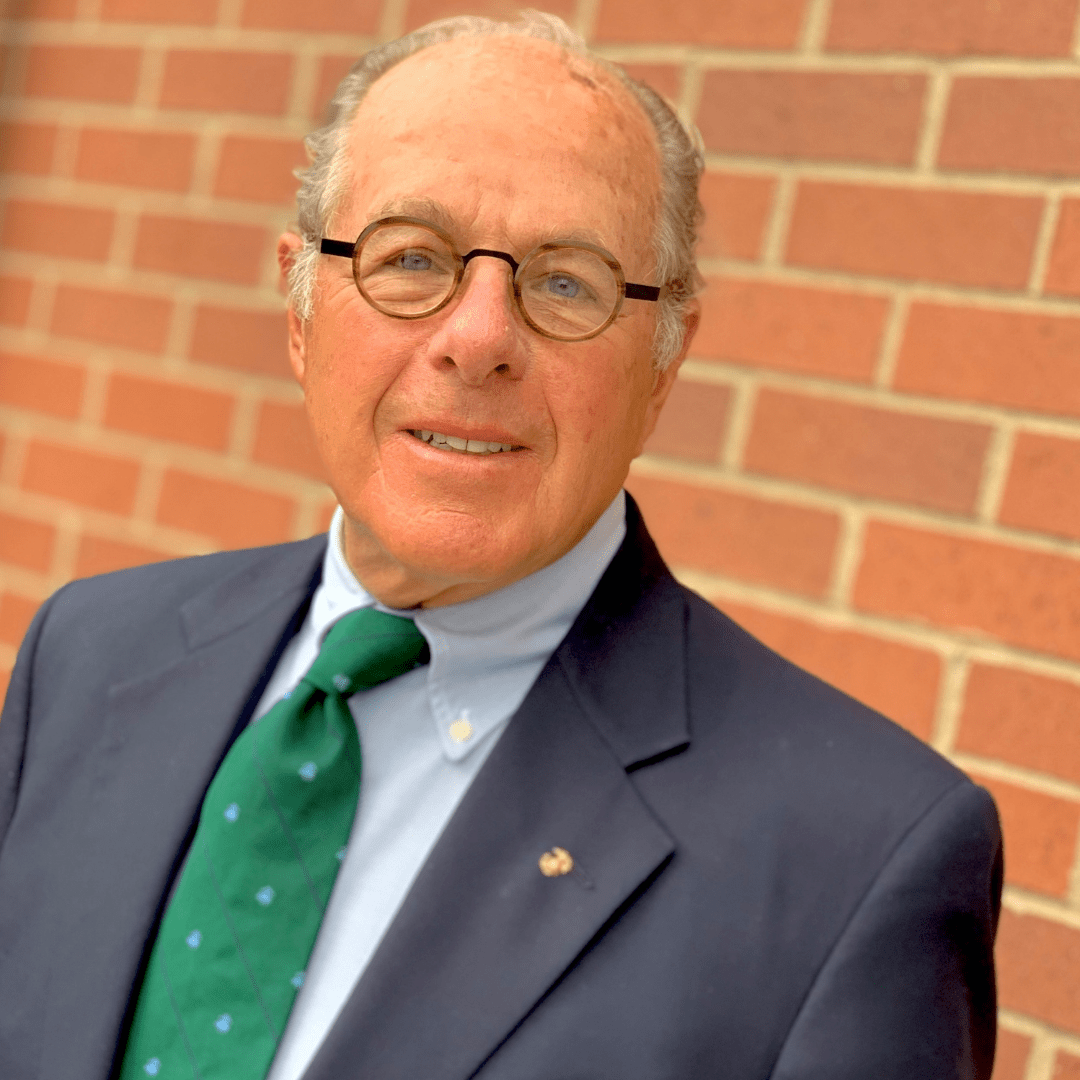
Stephen Schachman is Chair of the Bozeman Symphony Board of Directors. He is a retired senior executive who graduated from the University of Pennsylvania Wharton School of Business, Georgetown University, and Stanford University. Stephen has served as the senior executive of a natural gas distribution company, a cellular company, and wholly owned subsidiary of an international law firm. He was a Captain in the United States Marine Corps and has lived in Bozeman since 2011.


Add a Comment »

Bozeman’s Only Unsolved Homicide BPD requests community's help


The Bozeman Police Department is requesting the community's help in solving the police department’s only unsolved homicide.

In the early morning hours of February 10, 1985, Randal “Randy” Church, was shot and killed while working as a shift supervisor at Pizza Hut on West Main Street in Bozeman. Randy’s homicide has undergone several investigations as fresh leads and new forensic technology became available. We want the public to be aware of this case in the hope that information will come forward to help us identify the person(s) responsible.

Detective Benjamin King is the investigator and his mission is to give a voice to Randy, to provide answers and closure to Randy’s family and loved ones, and to learn who committed Randy’s murder. Randy’s family continues to remain vigilant, as they have for the past 36 years, that Randy’s killer will be brought to justice. We implore anyone with information to help us solve this case.

Please contact the Bozeman Police Department Cold Case Tip Line at 406-582-2025, or coldcasetips@bozeman.net if you have information.

Tipsters can remain anonymous. Tipsters may be eligible for up to $10,000 reward for information that could lead to an arrest in this case.

Comments 2

Thursday, Feb. 11th, 2021

HRDC Sees Increase in Shelter Guests This Season


As frigid temperatures reach Southwest Montana, HRDC continues its efforts to shelter people without homes. Since the onset of the pandemic, the number of people experiencing homelessness has been on the rise. Evidence of this can be seen within the organization’s seasonal emergency shelter service, known as the Warming Center.

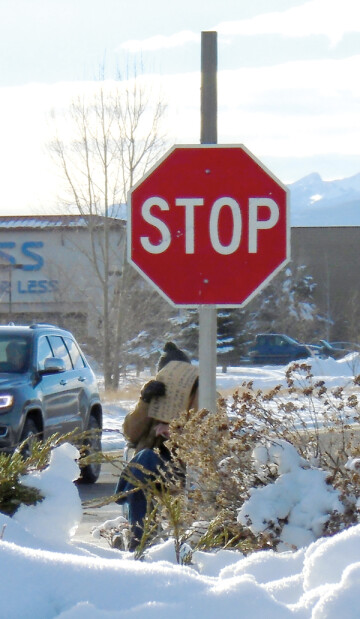
During this cold front, HRDC’s emergency shelters, located in Bozeman and Livingston, have both seen increases with a combined average of 95 individuals per night, which is about double the number the organization saw last year. With severe winter weather hitting Bozeman and much of Montana, the need for a year-round, full day shelter is apparent.

“It is important to note that with these frigid temperatures, most of the resources our community members without housing typically rely on are not there for them right now due to COVID. This ties directly to our community’s need for a year-round, full-day emergency shelter, which Community First Griffin Place will bring,” says HRDC CEO & President Heather Grenier.

“In previous years, our neighbors might have been able to seek warmth during the day at school, work, or in public places. Now, many of these places are at limited capacity or completely closed. COVID-19 has clearly affected more people in our community than might be visible. While some continue to work from home, others have seen their hours cut, lost jobs, or worse, are no longer housed. We know much of our area struggles with an already tough housing market, COVID, and now below zero temperatures, isn’t making it any easier,” says Brian Guyer, HRDC Housing Director.

For more information about HRDC’s response to homelessness or any other HRDC service, visit thehrdc.org.

HRDC’s Griffin Place — part of the organization's new development that will provide food and shelter services for the community — will be located across two parcels of land to the east and west of North 7th Avenue and will include a food resource center and a year-round shelter with onsite housing services and Housing First Village, an innovative approach utilizing tiny homes to address housing for persons whom homelessness has been a chronic situation.

Add a Comment »

MSU education professor receives prestigious National Science Foundation CAREER award


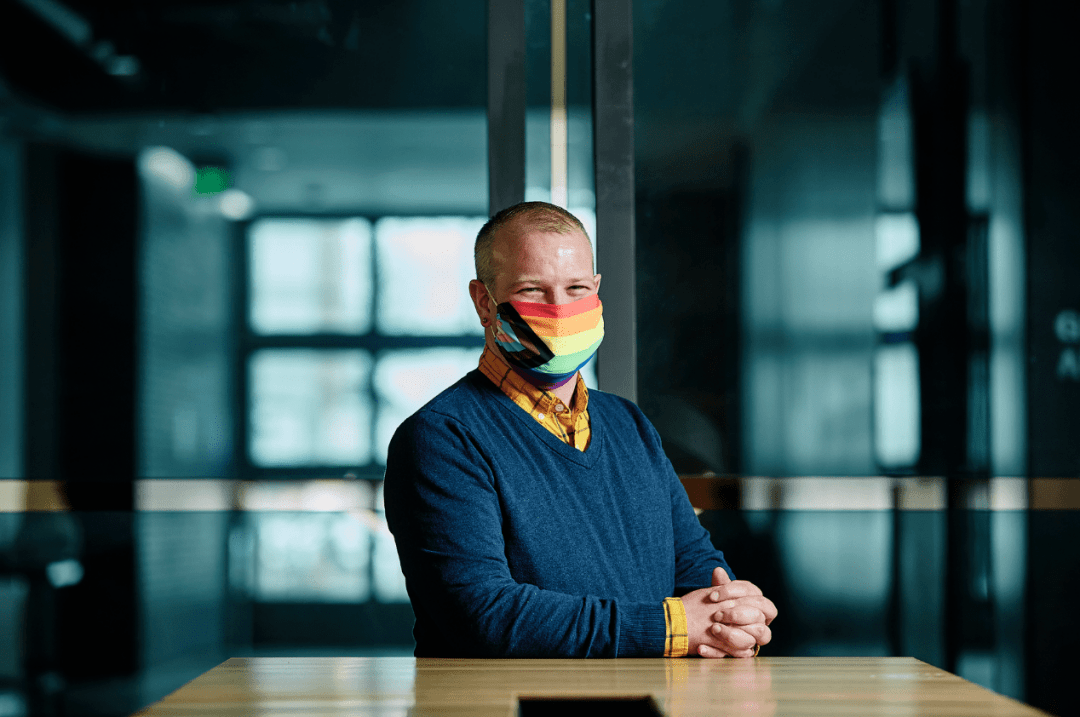
After Montana State University’s Bryce Hughes published research in 2018 showing that undergraduate students who identified as lesbian, gay, bisexual or queer were 7% less likely than their heterosexual peers to complete their STEM degree, he was contacted by someone who expressed their appreciation for the research.

In fact, others in science, technology, engineering and math fields who identify as LGBTQ have told Hughes over the years that they have felt like they were the only person in their field who identified as LGBTQ or that every person they interacted with socially was outside their field.

The comments made Hughes curious.

“I started asking some questions and started talking about differences between the relationships (people in STEM who identify as LGBTQ) have with colleagues, as well as the relationships they have with people outside of their field,” said Hughes, an assistant professor of adult and higher education in MSU’s College of Education, Health and Human Development.

Those questions have morphed into a productive line of research. Now, Hughes will further study the experiences of LGBTQ undergraduates in STEM as the recipient of a five-year, $695,000 National Science Foundation CAREER award. The CAREER grant is considered the premier award given to early-career researchers.

“It’s pretty wild,” Hughes said of receiving the award. “I was quite pleasantly surprised.”

Hughes said his project will explore the experiences of LGBTQ undergraduates in STEM fields to better understand the systemic barriers they face to participation, as well as identity policies, practices and interventions to address those concerns.

To do that, the project will explore three areas. First, Hughes will examine the social networks of LGBTQ STEM students and compare those networks with the networks of heterosexual peers whose gender corresponds with their sex assigned at birth. The study will look at the strength of STEM students’ ties to STEM and non-STEM colleagues, acquaintances and friends to see whether heterosexual, cisgender STEM students generally have stronger STEM networks, as Hughes hypothesizes.

Participating LGTBQ STEM students will also rate the degree to which they disclose information about their sexual orientation and gender identity within their networks. Hughes anticipates the social network study will involve students from a handful of campuses, including MSU.

“My hypothesis is that LGBTQ students in STEM fields may be afraid that if they bring up some aspect of their personal life, people might respond negatively,” Hughes said. “I imagine for heterosexual students revealing similar aspects of their personal lives might not matter as much."

The amount to which students feel they can reveal themselves is important, he noted.

“For LGBTQ students, I think we might find that they have some friends in STEM that welcome them, but I imagine that to a large degree they’re finding their sense of community outside of STEM,” Hughes said. “That could make them feel isolated in STEM, which might draw them to other areas.”

In addition to his work related to students’ social networks, Hughes will compare STEM degree completion rates nationally between undergraduate LGBTQ students and their peers, specifically the rates for completing degrees in four, five and six years. The study will also examine differences in overall college degree completion rates between LGBTQ students and their peers. Hughes will use data from the National Student Clearinghouse, the Higher Education Research Institute and the National Center for Education Statistics.

Finally, Hughes will explore the discipline-based identities of LGBTQ STEM students. For example, he’ll examine if the students describe themselves as a future scientist or future engineer. By exploring their discipline-based identities, as well as how the students describe their vision for their future career in STEM, the study aims to understand not only how students view themselves relative to their discipline but also their expectations for the future.

John Paxton, professor and director of the Gianforte School of Computing, is an adviser to MSU’s chapter of Out in Science, Technology, Engineering and Mathematics, or oSTEM. He said that he has observed a need for work related to the experiences of LGBTQ students in STEM.

“In STEM fields, it is often simpler for an LGBTQ+ student to separate their personal identity from their classroom identity,” Paxton said. “However, studies show that bringing one's full self to the classroom (or to one's professional career) results in greater career success and a happier personal life.” 

Paxton added that Hughes’ work has the potential to bring real benefits to students and others.

“Because the LGBTQ+ identity is one that is historically marginalized, Dr. Hughes' NSF CAREER award is an important step for learning how universities can better support and retain LGBTQ+ students in STEM fields,” Paxton said. “I anticipate that Dr. Hughes' findings will have great benefit to LGBTQ+ students, their universities and society at large.”

MSU has a long line of NSF CAREER award recipients, but Hughes is the first recipient from the MSU College of Education, Health and Human Development, according to records from the NSF and MSU’s Office of Sponsored Programs.

College of Education, Health and Human Development Dean Alison Harmon said she is proud of Hughes’ early career success.

“It is so gratifying to see an example of scholarship that also supports our university’s diversity and inclusion values,” Harmon said. “Dr. Hughes’ preliminary work suggests that having a supportive network and feeling part of a community is important for student success. I suspect his results will help us understand how to support other underrepresented groups in STEM, as well.”

Add a Comment »

Boyne Resorts Moves To 100% Renewable Electric Energy Across North American Operations


Boyne Resorts recently announced a renewable energy purchase commitment with CMS Enterprises, a CMS Energy subsidiary, that entirely offsets electric energy consumption at its resorts and facilities throughout North America as of Jan. 1, 2021.

The purchase is among numerous environmental initiatives and newly established goals that are part of the company’s evolving, long-term sustainability plan, named “ForeverProject”. The plan’s marquee goal is to achieve net zero emissions by 2030 and working with CMS Enterprises accelerated the effort by eliminating approximately 70% of the company’s carbon footprint driven by its electrical usage. Additionally, a 1.7-megawatt solar array will be installed at Boyne Mountain Resort in collaboration with a separate CMS Energy subsidiary.

“Human driven climate change is an urgent issue for the world and most certainly for the snowsports industry. Though we have been a thoughtful steward of our resort properties over the last eight decades, it was clear to our team that we were not doing enough and fast enough if we are to truly help reverse the effects our carbon footprint has on the planet’s climate,“ said Stephen Kircher, Boyne Resorts president and chief executive officer. “Our commitments guiding ForeverProject, starting with moving to 100 percent renewable electric energy, reduce a significant portion of our carbon footprint and give us a huge head start on our efforts to become completely carbon neutral by 2030. We have always tried to take the long-term perspective on our business and this environmental sustainability initiative steps up our efforts to positively affect the lasting implications our resorts, team members and guests have on the planet.”

The new level of urgency was initiated in October 2019, in part facilitated by Boyne Resorts’ sponsorship of and involvement in the Mountain Towns 2030 Net Zero Summit, through collaborative discussions with the ski industry’s largest players who have shown leadership by aggressively embracing sustainability efforts, and the rollout of NSAA’s (National Ski Area Association) Sustainable Slopes initiatives. CMS Energy is a longtime energy provider to Boyne Resorts’ Michigan operations and following the Net Zero Summit, discussions between the two began in earnest, culminating in this significant and impactful clean energy arrangement.

CMS Enterprises develops, owns and operates utility-scale wind, solar and energy projects for large customers. CMS Enterprises will tap its in-house energy marketing group and U.S.-based clean energy portfolio to help Boyne Resorts capture renewable energy credits (RECs). The RECs will help Boyne substantiate renewable energy use claims and maximize value for its renewable energy investment.

Through facilitation of the RECs purchase, sharing baseline and consumption tracking models now utilized companywide and leading additional projects to support the company’s goals, CMS Enterprises is today regarded as a true partner on both a regional scale and to Boyne Resorts globally.

“CMS Enterprises is proud to help Boyne Resorts power its facilities in Michigan and throughout North America with renewable and clean energy,” said DV Rao, Senior Vice President of Strategy for CMS Energy. “Through implementation of energy efficiency programs, the electrification of Boyne’s vehicle fleet, on-site solar generation and other advances on tap in Michigan, Boyne Resorts is poised to become an industry leader in clean and renewable energy and sustainability.”

Preparations are underway for the solar array being installed by a CMS Energy subsidiary at Boyne Mountain Resort. The 1.7-megawatt system stands to power the equivalence of the resort’s 300+ homes and condominiums, and is the first of its size for Boyne Resorts. Solar is a resource of strong interest and this project is to serve as a pilot for potential installations at locations across the resort network.

For information on Boyne Resorts’ 73-year history of sustainability efforts and further steps toward its net zero emissions goal, and for details of and the many resort-based ForeverProject initiatives being led by the company’s passionate and valued resort teams, please visit boyneresorts.com/sustainability.

Add a Comment »

Great Backyard Bird Count at Lewis & Clark Caverns State Park

Lewis & Clark Caverns State Park staff are pleased to start off our 2021 events by participating in the Great Backyard Bird Count. Launched in 1998 by the Cornell Lab of Ornithology and the National Audubon Society, the Great Backyard Bird Count needs people like you to reveal the “big picture” about what is happening to bird population numbers across the globe. It is a feat no team of scientists could hope to accomplish alone.

What began as the first online citizen-science project to collect data on wild birds now attracts more than 265,000 people of all ages and walks of life worldwide to join the four-day count each February. This is the fourth year Lewis & Clark Caverns State Park has participated. Last year the Great Backyard Bird Count had participants in almost 200 countries and counted more than 6,900 species of birds.

Come join us for a series of events in our largest birding event of the season. We will kick off the event with a short zoom talk covering what the Great Backyard Bird Count is, the importance of citizen-science projects, and tools like eBird from the Cornell Lab of Ornithology. In addition, throughout the event we will be encouraging birding within the park and providing guides and data recording methods for anyone that wishes to participate.

 
A maximum of 10 participants can also join park staff on Sunday, Feb. 14, for an approximately four-mile hike along the park road to the upper picnic area and back to see which birds call the park home this winter. Birders will meet at the Main Visitor Center near the park entrance at 10:30 a.m. The walk will last two to three hours, so dress for variable winter conditions, wear solid walking footwear and bring your binoculars. You may also want to bring a snack, water and a camera. Please do not bring dogs.

 
Whether you are an avid birder or a complete novice, your participation in this event will contribute to a global effort to create of an annual snapshot of the distribution and abundance of birds.

For more information call the park visitor center at (406) 287-3541. Or check out our Facebook page: Lewis and Clark Caverns State Park.


What: Great Backyard Bird Count
 
When: Zoom Talk: Thurs. Feb. 11 at 6 p.m.

https://us02web.zoom.us/j/81037877649?pwd=SjVnNTV0NlFVYklOUEZzTUkxVTBCdz09&fbclid=IwAR2kE-l9AlsdK_erjw8eUU4YUnucwRDKav0pg-APryJdcem6cFMY6QwO0Yw#success


Meeting ID: 810 3787 7649
Passcode: L&CC

            Park Supported Birding: Fri. Feb. 12 – Mon. Feb. 15
           
            Guided Birding Walk: Sun. Feb. 14 at 10:30 a.m.
 
Where: Lewis & Clark Caverns State Park, 25 Lewis & Clark Caverns Rd, Whitehall, Mont.
http://stateparks.mt.gov/lewis-and-clark-caverns/
 
From the exit 274 on I-90 we are 13 miles south on Highway 287 and 5 miles west on MT 2.

From the Cardwell exit 256 on I-90 we are 7 miles east along MT 2.

Lewis & Clark Caverns State Park features one of the most decorative limestone caverns in the Northwest filled with spectacular stalactites, stalagmites, columns, and helictites. The park also features camping, trails to hike or bike, a state-of-the-art visitor center, interpretive displays, a gift shop, food and beverage concessions, amphitheater, and interpretive events presented during the summer months.
Visit Montana State Parks (stateparks.mt.gov) and enjoy camping, hiking, fishing, swimming, boating and more and discover some of the greatest natural and cultural treasures on earth.

Add a Comment »

Tuesday, Feb. 9th, 2021

Missoula County, Missoula, Bozeman and Helena Partner in 100% Clean Electricity Effort

Missoula County, the City of Missoula, the City of Bozeman, and the City of Helena this week entered into an interlocal agreement pledging to pursue a green tariff to advance their shared clean energy goals. Over the past two years, all four local governments have adopted resolutions committing to 100% clean electricity by 2030.

The interlocal agreement authorizes the four local governments to jointly hire a consultant with technical expertise in green tariffs and utility rate design to work collaboratively with NorthWestern Energy and inform the development of a green tariff that most effectively advances the local governments’ 100% clean electricity goals. All four local governments had previously allocated funds in their FY21 budgets to support this effort.

A green tariff is not a tax. Rather, it is a mechanism by which customers of regulated utilities have the option to buy power from newly developed renewable energy sources through a special rate (or “tariff”) on their utility bills. In 2019, the Montana Public Service Commission directed NorthWestern Energy to initiate a stakeholder process to explore the development of a green tariff. This stakeholder process is currently underway, and Missoula County and the cities of Missoula, Bozeman and Helena are participating in it.

The Missoula City Council approved the interlocal agreement on Feb. 1; the Bozeman City Commission on Feb. 2; the Missoula Board of County Commissioners on Feb. 4; and the Helena City Commission on Feb. 8.
 
Elected officials from all four local governments expressed enthusiasm for the partnership.

Missoula County Commissioner Dave Strohmaier: “We’re so pleased to be partnering with the cities of Missoula, Bozeman and Helena. The green tariff is an important step in the right direction, but it’s only the first step. I look forward to our partnership continuing beyond this interlocal agreement as we continue to pursue our shared 100% clean electricity goals.”

Missoula City Council President Bryan von Lossberg: “It is eminently clear that Montanans value clean energy. And anyone looking forward sees we have the innovative expertise and resources to meet that vision. We invite other communities to join our collaborative effort to build the statewide energy portfolio Montana’s future demands.”

Bozeman City Commissioner Terry Cunningham: “Bozeman’s ability to meet its stated goals is dependent upon a rapid transition to renewable energy sources by the utility. Together, our communities represent about a quarter of NorthWestern’s customers, and this partnership is our best chance to exert the collective influence that will be required to facilitate this transition.”

Helena City Commissioner Sean Logan: “This agreement represents a novel and promising approach to advancing clean energy in Montana. We are optimistic that this historic collaboration between the communities and NorthWestern Energy will deliver important environmental and economic benefits to the citizens of our state.”

Comments 1

News Comments