Monday, Jan. 11th, 2021

Tentacles, Wings, Sparkle & Shine, Purple Fuzz, Flying Bears, Slimy Slugs - Oh MY! Pop Up Sculpture Park “Menagerie of the Imaginary” Opening at Story Mill Park

Starting on Saturday, January 16th, the Great Lawn of Story Mill Community Park will play host to an assortment of life-size sculptures of Imaginary Friends created by 14 Bozeman artists.

The creatures are whimsical, silly, colorful creations straight from the minds of Bozeman creatives including: Mimi Matsuda, Sarah Angst, Kaetlyn Able, Dan Haywood, Jon Lamb, Noah Massey, Cindy Owings, Anna Visscher, Sharon Glick, Cristina Marian, Nick Mask, Claire Kleese, Kirsten Kainz, Adair Peck and Vicki Fish.

Notably, many of these accomplished artists took a leap away from their traditional mediums to create 3D sculptures for this exhibit. Painter Claire Kleese created “Baldor” from foam, chicken wire, paper mache, joint compound, and fabric:

"Baldor, a Norwegian name meaning ‘he who lives in two worlds’ was created merging a few creatures I love the most - bears, wolverines, badgers, and bees! He is a Bumble Bearadgerine! I tried to bring to life all that an imaginary friend should be - a strong creature meant to inspire one to be brave, to have your back in the darkness, to be lighthearted and bring about laughter and whimsy.”

Whimsy, delight, and joy are the main goals of the artists and sponsors of the exhibit! Jamie Saitta is the Recreation Manager for the Bozeman Parks Department, a sponsor of the show.

“When we heard the vision for this project, we knew right away we wanted to be a part of it!  We hope it will bring tremendous joy to people of all ages when they need it the most and will spark a sense of wonder and excitement in everyone who visits.” 

The Bozeman Parks and Recreation Department introduced their new Rec2Go kits this month and January’s kit will include “Menagerie of the Imaginary” inspired activities and crafts for children and families to enjoy in the comfort of their own home! Visit www.bozeman.net/recreation for more information and to purchase your kit. 

Details

Open Saturday January 16 - Sunday January 31

Location: Great Lawn, Story Mill Community Park

This is an outdoor, self guided exhibit - available for visitation anytime during the park’s hours of 5 am - 11pm. *

Follow Random Acts of Silliness & the Bozeman Parks & Recreation Department on social media for more information.

*Social distancing is requested and masks are required if social distancing is not possible.

--

Random Acts of Silliness: Inspiring Laughter & Play in the Gallatin Valley

Add a Comment »

Friday, Jan. 8th, 2021

4 Family Activities You Can Do Together Right Now


2021 will perhaps prove to be the year we eradicate the pandemic. For the moment, though, it’s still around. Until we have as many vaccines as we need for everyone who wants one, life is not going to return to normal.

As Covid-19 continues to impact many of our lives, you might not be sure what family activities are safe right now. You know you can’t take your family to a restaurant at the moment, and many movie theatres remain closed.

We’re here to give you a few fun ideas as to what you and your family can do together. Having a family activity at least once a week is a great way to stay close and connected.

You Can Go for a Family Bike Ride
If all your family members have bikes, you can go for a ride together. That’s assuming you live in a part of the country that snow doesn’t bury during the winter. Bike riding is great because:

• You can explore places you haven’t been before
• The whole family can get some exercise
• It doesn’t cost anything

Once you all have your bikes, you don’t need to pay any additional fee to bike around the neighborhood. That might be ideal if you don’t have a lot of extra money right now.

Traffic is the one thing for which you should watch out when you go on your family bike ride. There are some states where bike fatalities are quite high, and if you happen to live in one of them, you should be doubly careful. For instance, in 2015, in Florida, 7.4% of fatal US bike accidents occurred. That’s the most of any state.

You Can Go to a Drive-In Movie Theater
Since so many movie theaters have had to shut down, drive-in movie theaters have made a comeback. You can check to see if there are any in your area. That’s a fun thing to do because:

• It’s inexpensive
• You can get the children out of the house for a while

Your kids might need some time out of the house, and this is an activity you can drive them to easily enough. The tickets shouldn’t be costly, and you might be able to show the kids a classic film from your childhood. Hollywood is not putting out many new movies now, at least not in theaters, so most drive-ins are showing older releases.

You Can Have Family Game Night
You might decide to have a family game night. Maybe you have some board games, like Sorry, Monopoly, Clue, or Jenga. These are all classics, and if you don’t have them, you should be able to buy them.

If money is tight, you may locate some of them at Goodwill or another secondhand store. This is a fun way to entertain the kids, and it also costs nothing if you own these games already.
If your kids don’t like the board game idea, you might have a video game tournament if you own a PlayStation 5, Nintendo Switch, or some other game system. You might take turns playing Mario Cart or some other game that’s not scary or violent. That’s ideal if you have younger children.

You Can Have a Family Cooking Project
You might figure out a family cooking project in which everyone can take part. Maybe you can select some options from a cookbook or find them online.

Check out what you have in the freezer or pantry, and plan out the meal. You might make several courses and put different family members in charge of each one.

This can be a fantastic thing to do because you’re teaching your kids some cooking skills. They can take those newfound skills with them and use them when they become adults.

You can explain to your kids how cooking is like an art project, but they get to eat the finished product. They’ll probably feel proud if what they cooked comes out well and everyone enjoys it.

There are some other possibilities you might want to consider as well. You might all read the same book, then get together to talk about it. You might have a streaming movie night if you have Netflix or a similar streaming service. You can take turns letting each family member select a movie to watch.

The point is that you’re spending an evening together. Now is a tough time for so many, and it helps to stay one tightly-knit unit.

Add a Comment »

Thursday, Jan. 7th, 2021

MontanaPBS to offer new weekly series about Montana’s legislative session


MontanaPBS is broadcasting and livestreaming a new weekly series, “The Rundown: Capitol Report,” each Sunday at 5 p.m. through the end of the 2021 Montana legislative session.

The program will offer an in-depth look at Montana’s 67th Legislature with weekly updates, analysis and interviews. The series began Jan. 3 and is expected to cover a range of issues, including COVID-19, public lands, education and energy development. The series is hosted by Jackie Coffin.

“The Rundown: Capitol Report” will rely on remote footage and media partnerships to maintain best practices in preventing the spread of COVID-19, Coffin said.

“I’m looking forward to providing timely updates on this legislative session for all Montanans,” Coffin said. “In the midst of so much political change, I believe that these weekly reports from the Legislature will be of immense value to our viewers and help them connect directly with local government.”

Viewers can watch “The Rundown: Capitol Report” on-air, online at montanapbs.org/live or on Facebook Live by following MontanaPBS at facebook.com/MontanaPBS. To view a full list of viewing options, visit montanapbs.org/watch.

To view more information, including new and previous episodes of “The Rundown: Capitol Report,” visit montanapbs.org/rundown.

Add a Comment »

Wednesday, Jan. 6th, 2021

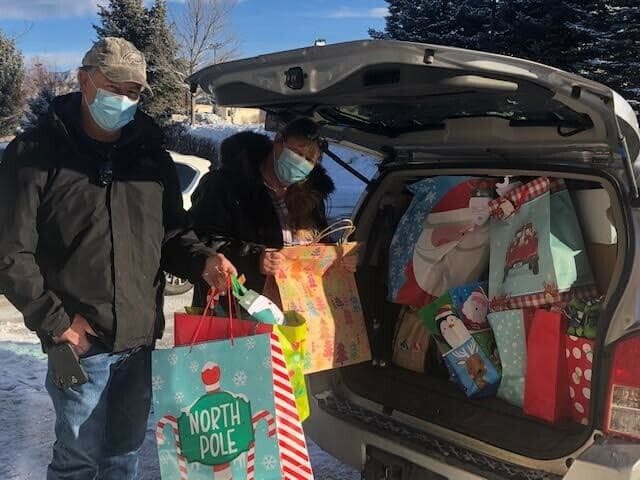
Community Members Helped HRDC Give Gifts to 227 People this Holiday Season


Thanks to generous community members, HRDC was able to make sure many neighbors in the Bozeman area had a gift to open over the holidays. Donors expressed their wishes to spread happiness and help families impacted by COVID-19.

During the 2020 holiday season HRDC provided holiday assistance for 28 Families (112 people in the families), 60 individuals, 45 Head Start students, and 10 foster youth/blueprint youth. In total, HRDC’s informal “Holiday Giving Program” assisted 227 people in the community.

Gifts included everything from a brand new bike for a young boy whose family is experiencing homelessness, a refurbished laptop for someone wanting to start some online education courses, a car seat for a young mom who couldn’t afford one, holiday treats and handwritten notes for a homebound senior who misses his family.

While delivering Christmas Eve gifts provided by Holy Rosary Church a resident of one of HRDC’s subsidized housing units told a staff member, “I am close to 77 now. No parents, children, brothers, sisters, or even pets. It is a warm, fuzzy feeling that some people in the world have good feelings towards me.”

After experiencing multiple critical health issues this year, a single father was faced with the choice of paying his medical bills or getting holiday gifts for his son. HRDC provided some much needed stress relief by getting the family ‘adopted’ for the holidays. The single father said in response to the holiday support, “I am in tears. I’ve never in my lifetime had such genuine help. I will never forget this Christmas, thank you all from the depths of my heart. First time my boy saw me cry.”

“We are so grateful to the many families and community partners that helped make this holiday a happy one for many families. During a time where many have lost jobs or aren’t making as much, having the ability to open gifts makes such an impact and provides some sense of normalcy in a stressful situation,” said Emma Hamburg, HRDC’s Resource Development Assistant who coordinated the gifts.

HRDC would like to thank the following donors and community partners for their support this year:

  • ●  Billion

  • ●  Delta Airlines

  • ●  Little Tree Montisori

  • ●  Kasting Kauffman & Mersen

  • ●  Gallatin Valley Pediatric Dentistry

  • ●  Wayfare Health Foods

  • ●  Forest Service

  • ●  D.A. Davidson

  • ●  Northwestern Energy

  • ●  Banfield Pet Hospital

  • ●  Crossfit Bozeman

  • ●  Holy Rosary Church

  • ●  Many local families and community members

    For more information about HRDC, visit thehrdc.org.

Add a Comment »

Montana State to provide asymptomatic COVID-19 testing for students living in its residence halls

Montana State University will begin providing COVID-19 tests to asymptomatic students this week and for the first two weeks of classes, which start Monday, Jan. 11.

Asymptomatic testing will be available for students living on campus through the university’s Student Testing Center, which has been operating since last fall to test students who show symptoms of the coronavirus. The center is on the east side of Bobcat Stadium. Symptomatic and asymptomatic students will be kept apart from each other at the testing center.

“We have been working since November to find ways expand asymptomatic testing specifically targeted at our students living in on-campus residence halls across the campuses of the Montana University System,” said Brock Tessman, deputy commissioner of academic, research and student affairs with the Office of the Commissioner of Higher Education in Helena.

“We have come up with a solution that uses existing state resources and can be used across the system,” Tessman said. “It is one more tool the campuses can use to help reduce the risk of virus transmission. It is not a silver bullet, but it adds to the steps we continue to take which include requiring masks on all our campuses, social distancing in classrooms and providing symptomatic testing as well as quarantine and isolation housing.”

The testing is being targeted to students living in on-campus residence halls because of the density of their housing.

“As much as we would like to be able to test every student, our resources are limited, particularly our human staffing resources. Targeting students living in residence halls is the best use of these tests,” Tessman said.
 
Tessman noted that, on MSU’s campus, the testing will be carried out by the same health care staff that has been testing students with symptoms and who are now preparing for the distribution of vaccines.

“Our campus health care staffs have been bearing a heavy load. What we’re doing this spring is adding to things to their work: asymptomatic testing and vaccine preparations — it’s a heavy lift,” Tessman said.  

“We’re incredibly grateful to our university medical staff for taking this on,” said Waded Cruzado, MSU president. “They have had our student’s best interests in their hearts through this whole pandemic, and they continue to amaze me with their commitment.”

The Montana Department of Public Health and Human Services and has approved the use of the rapid test kits for the state’s campuses, which provide results in 15 to 30 minutes.

Montana was provided the tests by the federal government, which purchased more than 150 million for use nationwide. DPHHS is providing the campuses the tests from its supply.  

At MSU, the tests will be used for the first two weeks of classes to identify the presence of COVID-19 among asymptomatic students. Those who test positive will then be quarantined for 10 days so they do not spread the virus to others.

“We’re very grateful for our partnership with DPHHS and other statewide leaders for assisting the system with this option for re-entry testing at the start of the spring semester,” Tessman said. “By working together with the state, we’ve been able to bring a lot of resources to bear at our campuses.”

Add a Comment »

MSU continues preparations for vaccine distribution

Preparations to distribute COVID-19 vaccines at Montana State University are continuing, with the first doses administered to frontline health care workers on campus last week.

With its initial 44 doses, MSU has provided vaccinations to most of its clinical workers at University Health Partners, the campus student health clinic, according to Jim Mitchell, associate vice president for student wellness.

Additionally, the state’s Department of Public Health and Human Services has authorized the university to provide doses for students who are in clinical programs where they have contact with patients.

This includes approximately 215 students in the College of Nursing, the WWAMI Regional Medical Education Program, the Regional Initiatives in Dental Education, and Gallatin College’s programs in phlebotomy and surgical and medical assistants. Vaccines for those students could be provided as early as next week, depending on the supplies available.
In December, MSU was approved by the Centers for Disease Control and Prevention to be a COVID-19 vaccine provider. As part of that approval, the university prepared the freezers needed to store the various vaccines, including units that can reach at least 80 degrees below zero Fahrenheit, as required for the Pfizer vaccine and freezers to store the Moderna vaccine at temperatures between minus-13 and 5 degrees Fahrenheit.

A number of freezers are already in place at University Health Partners, and MSU expects another ultra-cold freezer to be installed this month, Mitchell said. All the UHP freezers are also hooked to emergency backup generators.

Planning at MSU is still ongoing for wider vaccine availability for students. Currently, the timeline for distribution and the quantities of doses that will be available are still being finalized at the state and federal levels.

Add a Comment »

Tuesday, Jan. 5th, 2021

Bozeman-Headquartered Wild Sheep Foundation Responds to Pandemic with First-ever Virtual Convention and Expo


The Wild Sheep Foundation (WSF), with world headquarters in Bozeman, Mont., has announced the launch of its first-ever virtual convention to raise millions of dollars for the betterment of wild sheep populations throughout the western US, western Canada, and northern Mexico, and beyond. For over 45 years, WSF has held its annual fundraising convention and associated events live in major metropolitan venues, primarily Reno, Nev., where over 10,000 typically attend over three days. Because of the Covid-19 outbreak, WSF’s board and staff in summer 2020 began planning to take the January event virtual to comply with health mandates and to protect the health and safety of its members, vendors, and supporters.

“The WSF board of directors and staff actions over the last ten months have reinvented and retooled WSF business units while keeping our eyes on our mission to put and keep wild sheep on the mountain,” says WSF president and CEO Gray N. Thornton. “An exciting manifestation of this reinvent and retool mandate has been the recent launch of our online/hybrid January 11-16, 2021, v-convention that we have named Sheep Week® The Experience at www.sheepweek.org.”

Even though WSF began a “dual path” pivot mid-summer of planning both a virtual event as well as its typical in-person convention, Thornton says that the groundwork of researching, evaluating, contracting and building out a completely new v-convention has been a heavy lift. WSF staff and contractors have had new platforms to learn, build and release, then remarket this novel concept to its exhibitors, membership, and broader global audience.

“Frankly, it has been a complete re-do of a huge annual event in less than three months,” Thornton says.

For the January 2021 virtual event, WSF has expanded its traditional four-night, three-day show into a six-day and -night immersive experience. In recent decades, WSF has consistently raised upwards of $6 million for wild sheep conservation work. These funds are generated by various convention-based activities, such as auctions, raffles, and ticket sales. Auction items have included highly coveted permits to hunt the world’s most sought-after Rocky Mountain bighorn, desert sheep, Dall’s and Stone’s sheep rams, and more exotic wild sheep and goat species in Central Asia. Money raised is directed to programs to enhance wild sheep and wildlife health, disease research, herd monitoring, habitat enhancements, and other initiatives.

For the past eight years, WSF has been offering its auctions online during live stage events each day at the convention so that bidders not in attendance can still participate and win prizes, from hunts and travel to artworks and jewelry. “Our platform is tried and true, but over the summer, we worked with our vendor to improve and expand the product with more visual functionality,” Thornton says. “WSF debuted timed auctions starting this December, which will close on Monday, Tuesday, and Wednesday nights of Sheep Week® in January. Then, we go hybrid. From our remote auction stage and studio in Reno, we will feed live auctions to anyone who registers and logs in online during the Thursday, Friday, and Saturday nights of the virtual convention.”

Each evening auction will include 20 to 25 items, the most anticipated of which are sales of state, provincial, territorial and tribal/First Nation permits and other premier offerings. Thornton adds. “These live auctions feature our familiar auctioneers and ring-men to encourage and take your bids.”

The general public and all WSF members can register to bid online at www.bid.wildsheepfoundation.org.

Meanwhile, one of the highlights of past Sheep Weeks® is the highly popular raffles, which will be hybrid live and online at www.wildsheepraffle.org. The drawings will feature sheep hunting adventures and outdoor gear prizes. The Saturday, January 16, raffle winners will be drawn and streamed live from WSF’s Cody, Wyo., raffle command center.

Educational outreach and recognition of conservation leadership are a mainstay of WSF conventions. The Sheep Week® virtual platform will feature educational seminars, live presentations, conservation awards, webinars, featured films and global “live” forums. These will be streamed online from two virtual auditoriums. All this is available to Sheep Week® registrants inside WSF’s virtual platform at www.sheepweek.org.

“No one wants to be online for hours and hours on end. You don’t have to,” Thornton says. “Sheep Week® presentations, both live and taped, will be provided in easy, pithy, and fun-to-view segments. Being a virtual event also allows us to keep it accessible online much longer than a three-days or week-long show. The platform will be available for a total of five weeks, until February 16.”

Thornton says WSF’s most daunting challenge was to create and market a virtual expo hall to showcase the world’s foremost outdoor adventure outfitters, clothing, gear, and services.

“We found a mature platform used internationally for large agricultural expos, giant tech conferences, and career fairs. It is a tried, true, and tested platform in use for a decade,” Thornton says. “The WSF virtual expo hall has a Sheep Shop store and other amenities. When you enter the Exhibits Hall, you can visit and shop with exhibitors in five sub-halls. We have daily and weeklong games to encourage engagement within the hall. You can live chat either individually or as a group with an exhibitor or just set an appointment for a later call or Zoom visit.”

“And you can experience this hall with zero travel costs, zero hotel, and food costs, and zero health risk,” Thornton adds.

All-inclusive registration is available for $50 at www.sheepweek.org. All registrants will be entered into a drawing for a 2021-2022 free-range desert bighorn sheep hunt in Sonora, Mexico, valued at $65,000, a Gunwerks rifle package valued at $10,690 and you can enter to win a 10-day Yukon Stone’s sheep hunt valued at $60,000!

###

The Wild Sheep Foundation (WSF), based in Bozeman, Mont., was founded in 1977 by wild sheep conservationists and enthusiasts. With a membership of more than 8,500 worldwide, WSF is the premier advocate for wild sheep and other mountain wildlife and their habitats. WSF has raised and expended more than $135 million on wild sheep habitat and population enhancements, education, and conservation advocacy programs in North America, Europe, and Asia to “Put and Keep Wild Sheep On the Mountain”®. These and other efforts have increased bighorn sheep populations in North America from historic lows in the 1950-60s of 25,000 to more than 85,000 today. www.wildsheepfoundation.org.


Add a Comment »

Thursday, Dec. 31st, 2020

Results Are In For 2021 Bozeman's Choice Poll

The results are in, January 1!

For the 6th year in a row, we asked our readers to vote for all-things-Bozeman in the Bozeman's Choice Reader Poll. Over 200 choices range from arts & entertainment to chomping & chugging to media & info, it's all voted on here. The top 3 vote-getters are listed here and in a print annual guide available at key locations in the greater Bozeman area.

How it works: Each October we ask our readers to vote in the Bozeman's Choice Reader Poll. Start by creating an account on our website, log in, and choose a category to begin voting. You can vote for as many options as you'd like, but not more than once for each. If you don't see what you came to vote for you can add it.

Congratulations to all the 2021 winners! If you would like a 2021 certificate order one here. *2021 Guide advertisers will receive certificates for FREE. 

Add a Comment »

Monday, Dec. 28th, 2020

Alternative Futures for Soroptomist Park


The Downtown Bozeman Partnership entered a partnership with Montana State University as part of the Community-engaged And Transformational Scholarship (CATS) Program to develop future alternatives for Soroptomist Park. The 2019 Downtown Bozeman Improvement Plan calls for the park to be transformed into an urban plaza that could offer space for a variety of uses. The Downtown Plan also mentions to revitalize Bozeman Creek for the community to engage with this natural resource that runs right under Main Street and through downtown.

The two MSU courses matched for the project were Stream Restoration Ecology and Advanced Landscape Design Studio. The project kicked off at the beginning of the Fall 2020 semester with a site visit with students, professors and professional mentors from Confluence Consulting Inc., Design 5 Landscape Architecture, and Intrinsik Architecture. In September the students held a design workshop attended by the professional mentors to brainstorm ideas for their designs and provide feedback on initial research findings. Throughout the semester the students received feedback and recommendations from their peers, professors and professional mentors. The student groups presented their final projects virtually on November 10th.

“This was one of the most rewarding service-learning partnerships I have been a part of over my nine years at MSU. Instead of a one-way model where the University provides a community service, Downtown Partnership and the professional mentors engaged with students throughout the semester as co-teachers at six formalized activities as well as other communication points. On top of that, students gained experience in interdisciplinary collaboration working across two courses, which is very rare at MSU. I am so grateful for having the chance to work with Dr. Poole, the Downtown Partnership, and the CATS program – this project proved to be a silver lining during an otherwise challenging time.”
-Rebekah VanWieren, Associate Professor of Landscape Design

“We could not have asked for a better first experience with the CATS Program. I was thoroughly impressed with the level of work that was completed by the students throughout the semester, the engagement from the professors, and the willingness of the professional mentors to provide feedback and guidance throughout the project.”

-Emily Cope, District Manager of Downtown Bozeman Partnership

"Working with my peers on creating a restoration plan for Bozeman Creek allowed a hands on experience you just don't get in a classroom. This program is great for students who learn better by not just retaining, but applying knowledge gained over the semester." - Sylvie Coston, Stream Restoration Ecology student

“Working with the professional mentors, this project was a truly amazing learning experience. As an undergraduate student close to finishing my education, this opportunity to apply what I've learned from the last few 3.5 years has not only been incredibly valuable but has allowed me to grow as a person professionally. Furthermore, collaborating and building these professional relationships within the Bozeman community, I really appreciate those practicing in the public and private sector who have come together to work on this important project. I'm more inspired now than ever to continue my landscape design and planning dreams thanks to this CATS program partnership.” -Tara Caplis, Advanced Landscape Design student

“I find that students respond well to class projects that have real-world significance. The work becomes more than a paper exercise that will be graded and forgotten. Student step up their game and become accountable to the client, to their peers, and to themselves, rather than feeling accountable to their professor. Such a shift in focus is an important part of professional maturation for students. It’s a shift from viewing oneself as a consumer of information and expertise to a producer of the same. I’m grateful that the Downtown Bozeman Partnership provided this opportunity for our classes and pleased that the community might benefit from their work.” -Geoffrey Poole, Professor of Stream Restoration Ecology

For more information and view the final report. https://downtownbozeman.org/uploads/MSU_SoroptimistBozemanCreek_Report_sm.pdf

Add a Comment »

9 Tips On How To Store Your Wine


Wine is very delicate and needs to be stored in a certain manner to ensure it doesn’t get destroyed. Overlooking these storage guidelines is usually the main reason behind wine spoilage. If you have over three or more wine bottles on your rack, this is the last thing you’d want to happen.

If you’re a wine enthusiast, you need to learn how to store your wine correctly. By observing the correct storage measures, you’ll be able to preserve the wine’s quality and value. Read through the tips below to ensure your wine is stored properly.

1. Store Your Wine At The Ideal Temperature
One of the most crucial factors to consider when storing wine is the temperature in the storage room. This is usually the case because wine tends to be very sensitive to very warm or cold temperatures. Because of this, you should always store your bottles, including any single-serve wine, at a temperature of between 12 to 19ºC. This is also true for any wine you’ve placed into decanters.

You should also avoid constant temperature fluctuations or risk destroying your collection. Avoid taking bottles in and out of the wine cooler to ensure the temperatures don’t fluctuate greatly. Otherwise, the cork’s continuous expansion and contraction might let in the air inside and destroy the wine.

2. Ensure Proper Humidity
You should always store your bottle of wine in the right humidity levels. Ideally, your storage area’s humidity should be around 70 percent. Remember, dry air will cause the corks to dry out over time, leading to the entry of air into the bottle. As a result, your wine might get destroyed due to the effects of oxygen.

Wine bottles shouldn’t be stored in highly humid environments since this makes the labels come off from the bottles. If you’re looking to sell your wine in the future, issues like this would make it harder to sell. Likewise, extremely humid conditions promote the growth of molds due to the excessive moisture. To address this issue, you should invest in a dehumidifier.

3. Invest In A Wine Refrigerator
For long-term storage of your wine, a wine refrigerator, also popularly referred to as a wine cooler, is the ideal storage option. Compared to a regular fridge, a cooler is the ideal storage space for your wine because:

• It guarantees proper humidity and optimal temperatures since its temperatures range between 10 to 15ºC. In contrast, the fridge is very dry and cold, and this can severely degrade or spoil your wine.

• It prevents cross-contamination from food and other beverage odors, which might destroy the wine’s quality.

• It prevents the wine from freezing, pushing out the cork, and exposing it to oxygen.

4. Store Your Wine In A Convenient Location
While it’s vital to ensure that your wine is stored in a safe and conducive environment, you also need to make sure that it’s easy to access. Wine is typically a great conversation starter, so it’s a good idea to store where it’s easily visible and accessible. Find an area where you can quickly and effortlessly access your wine and enjoy your favorite drink.

5. Assess The Wine You’re Planning To Place In Storage
Before you even store your wine, there are several things you need to consider, including:
• The type of wine you’re looking to place in the storage.
• Are you planning to store the wine in a wine cellar or a wine cooler?
• How long do you looking to store the wine?
• What quantity of wine are you looking to store?
• It’s important to ask yourself these questions to understand which storage option is more suitable.


6. Store The Wine Bottles Horizontally
If you have unopened wine bottles, the best way to store them would be to place them horizontally. This long-term storage method is advised since it prevents the cork from becoming dry. Storing your wine bottle horizontally is more space-efficient, making it an excellent choice if you only have limited space. This method also makes it easy to access your bottles.

7. Store Your Wine Far From Direct Sunlight
You should always store your bottle of wine in a dry and dark place to protect its superb taste. Doing this is crucial because direct exposure to fluorescent lights and sunlight leads to the oxidation of sulfur-causing amino acids. This leads to the wine having a weird odor.

Storing your wine away from direct sunlight is especially vital for white wine. This is because they come in bottles that aren’t dark; hence, they’re more exposed to incandescent light which can ruin the wine’s integrity. To ensure your wine is protected from light exposure, make sure to store it inside a cabinet with UV-resistant doors. You can also choose to wrap it with a cloth or place it inside a box.

8. Protect Your Wine Bottles From Vibration
When considering the perfect storage area for your wine, make sure to opt for a place that’s not near vibration sources such as a stereo system, a washer, or dryer. This is because even the slightest vibration causes sounds and movements that can affect your wine’s aging process and ruin it. It’s best to store your wine in a cellar since this area is usually safe from vibrations.

However, if you live close to a highway or subway, the cellar doesn’t completely prevent vibration. In such scenarios, you should get a bubble wrap or Styrofoam to cover your wine before you place it in the cellar.

9. Storing Opened Wine Bottles
If you want to store a bottle of wine that’s already been corked, make sure to recork it immediately. Before doing this, place a wax paper around the cork. This wax paper helps prevent external things from falling into the wine and allows the cork to slide into its original position effortlessly. A rubber with a stopper is also a viable option if the cork is already destroyed and can’t be reused.

Takeaway
Properly storing wine is something that many people often struggle with and, due to this, end up ruining or spoiling their collection. If you don’t want to experience a similar issue, make sure to follow the tips above on storing your wine safely. With proper storage, you never have to ever worry about compromising the integrity and quality of your wine.

Add a Comment »

News Comments