

Monday, Dec. 2nd, 2024

Defining Your Style in the Great Outdoors: A Guide to Practical Accessories

Montana’s vast landscapes, from rugged mountain peaks to serene rivers, aren’t just a backdrop—they’re a way of life. Whether you’re hiking a trail, casting a line into a crystal-clear stream, or simply enjoying a sunny afternoon in downtown Bozeman, the right gear can make all the difference. But outdoor living isn’t just about utility; it’s about blending function with personal style.

Accessories play a crucial role in this balance, offering both practicality and a way to express your individuality. From reliable sun protection to the perfect finishing touch for your outfit, these essentials are a reflection of who you are. In this guide, we’ll explore how to define your style in the great outdoors with accessories that are as functional as they are personal—because in Montana, where adventure meets craftsmanship, what you wear is as important as where you go.

The Role of Accessories in Outdoor Living

When it comes to outdoor adventures, the little things often make the biggest difference. Accessories are more than just add-ons; they’re essential tools that enhance your experience and help you adapt to Montana’s ever-changing conditions.

Function Meets Fashion

Imagine a sunny day on a mountain trail. A well-made hat provides crucial sun protection, shielding your face and neck from harsh UV rays. Similarly, a patch sewn onto your favorite backpack can mark the miles you’ve conquered or symbolize a cause close to your heart. Accessories like these not only serve practical purposes but also add a layer of personality to your outdoor gear.

Expressing Your Identity

For many, outdoor accessories are a way to tell a story. A thoughtfully chosen item, like a custom patch or a vintage-inspired cap, can communicate your values, interests, or accomplishments. Whether it’s a nod to your love for the outdoors or a celebration of American craftsmanship, these details help create a look that’s uniquely yours.

By combining utility with a touch of individuality, accessories become an integral part of outdoor living—ready to adapt, protect, and represent you, no matter where the trail leads.

Choosing the Right Outdoor Accessories

When preparing for outdoor adventures in Montana, selecting the right accessories can significantly enhance both your comfort and your style. Whether you’re gearing up for a weekend hike or a casual day outdoors, here’s what to consider:

Prioritize Durability and Craftsmanship

Montana’s rugged terrain demands accessories that can withstand the elements. Look for items made from high-quality, durable materials designed to endure wear and tear. American-made products often stand out for their superior craftsmanship, offering a combination of functionality and timeless appeal. Whether it’s a reliable hat or a custom patch to personalize your gear, investing in well-crafted accessories ensures they’ll last through all your adventures.

Embrace Practicality

Practicality should always guide your choices. Accessories like hats are indispensable, offering protection from sun, wind, and rain while keeping you comfortable during extended outdoor activities. Adding custom patches to your gear not only personalizes your items but can also make it easier to identify them during group trips.

Blend Style with Function

Outdoor gear doesn’t have to sacrifice style for utility. Choose accessories that balance both, such as a hat that complements your outfit while providing shade or a patch that adds a unique touch to your backpack. Accessories with thoughtful design details can make you look just as good on a trail as you do in town.

By considering durability, practicality, and style, you can curate a collection of outdoor accessories that not only meet your needs but also help define your unique approach to life in the great outdoors.

Embracing American-Made Options

American-made products stand out for their exceptional quality, combining craftsmanship with durability to meet the demands of outdoor enthusiasts. Items like hats and patches are excellent examples of this commitment to quality. A sturdy, American-made hat can protect you from the elements, while a well-designed patch lets you personalize your gear and showcase your individuality. These products aren’t just practical; they reflect the care and dedication of local artisans.

By choosing American-made gear, you’re not just equipping yourself with reliable accessories—you’re also supporting a tradition of sustainability, authenticity, and community-driven craftsmanship. With items crafted to last, your gear can keep up with all your Montana adventures and beyond.

Style Meets Functionality: Must-Have Accessories for the Outdoors

Outdoor accessories are more than just useful add-ons—they’re essential tools that enhance both your performance and experience. Whether you’re heading out for a rugged hike or enjoying a leisurely day exploring Montana’s natural beauty, the right accessories can make all the difference.

Essential Accessories for Every Adventure

When gearing up for the outdoors, a few key items stand out:

● Hats: A reliable hat provides protection from the sun and changing weather while adding a stylish element to your outdoor look.
● Patches: Custom patches allow you to personalize your gear, celebrate milestones, or show off your values.
● Durable Backpacks: Choose rugged packs that offer ample storage while withstanding the wear and tear of outdoor activities.

Why Quality Matters

Montana’s wilderness puts outdoor gear to the test. High-quality accessories made with durable materials are essential for keeping up with tough conditions. Investing in American-made products ensures you’re getting both functionality and craftsmanship that lasts. For a curated look at some of the best American-crafted outdoor gear, check out this guide to the greatest all-American outdoor kit. It’s a helpful resource for finding gear that combines style and durability, tailored to the needs of adventurers.

Blending Practicality and Style

The best outdoor accessories don’t just meet your practical needs—they also reflect your personal style. A thoughtfully chosen hat or a distinctive patch can tie your entire look together while keeping you prepared for any adventure. With the right accessories, you can define your style while staying ready for everything Montana’s great outdoors has to offer.

Bringing It All Together: Style That Works for Montana Living

Montana offers a lifestyle where adventure and craftsmanship go hand in hand. The right accessories not only make your outdoor experiences more enjoyable but also let you express your personal style, whether on a rugged hiking trail or strolling through Bozeman’s vibrant downtown.

Accessories like hats, patches, and durable gear are more than functional—they’re part of your story, reflecting your values and individuality. Choosing items made with care and built to last ensures your gear keeps up with Montana’s demanding landscapes while looking great along the way.

As you explore your next outdoor adventure, remember that accessories are a small yet impactful way to connect with Montana’s unique blend of practicality and creativity. For more inspiration on living the Montana lifestyle, check out this guide to Bozeman’s top autumn outdoor activities.



Add a Comment »

Sunday, Dec. 1st, 2024

Gallatin County Sheriff's Office Seeks Assistance in Locating Missing Hiker

The Gallatin County Sheriff's Office, and family of 63-year-old, David Butzin (Boot-Zeen) are seeking the public’s assistance in locating Mr. Butzin.  He was last seen in person on November 10, 2024, and reported missing on November 25, 2024.  

It is common for Mr. Butzin to have negligible contact with family or friends for extended periods of time.  Mr. Butzin has been known to hike without notifying family or friends of his whereabouts and enjoys adventuring off-trail.  Mr. Butzin’s vehicle was located on November 26, 2024, at the New World Gulch/Bear Canyon area.  

The Gallatin County Sheriff’s Office – Search & Rescue continues to search this area.  If you have any information regarding Mr. Butzin’s whereabouts, please contact Gallatin County Communications (non-emergency) at 406.582.2100.

Add a Comment »

Five Facts About Pelvic Organ Prolapse Every Woman Needs to Hear


Pelvic organ prolapse (POP) is a familiar yet often misinterpreted disorder that affects millions of females worldwide. It appears when pelvic organs, like the bladder, rectum, or uterus, drop from their normal situation due to tired pelvic muscles. Despite its preponderance, many females are clueless about its indications, causes, and treatment options.

Yale Medicine says that one in every four women will suffer from pelvic floor disorder but won’t tell a doctor out of embarrassment. Most of them think it’s a normal aspect of aging.

In this article, we will examine five essential facts to empower women with knowledge and encourage proactive care for pelvic health.

Pelvic Organ Prolapse is More Prevalent Than You Think
Pelvic organ prolapse (POP) is far more common than most women realize, affecting nearly half of women who have given birth. Pregnancy, childbirth, and menopause are leading contributors, as they deplete the pelvic bottom muscles and connective tissues over time. Chronic conditions like obesity, constipation, and heavy lifting can also strain this area, increasing the risk.

The National Library of Medicine reported that 40% of women across the world will experience pelvic organ prolapse. This condition will increase with increasing age of the population. POP remains one of the major health issues in the world, especially in underdeveloped nations.
Additionally, cultural stigma and lack of awareness often prevent women from seeking help, leading to unreported cases. With aging populations and lifestyle factors compounding risks, understanding POP is crucial to promoting early intervention around this widespread yet manageable condition.

Why is POP often overlooked or misdiagnosed by healthcare providers?
Pelvic organ prolapse is often overlooked or misdiagnosed due to its subtle symptoms, which can mimic other conditions like UTIs or digestive issues. Additionally, the stigma around discussing pelvic health may lead women to underreport symptoms. Time constraints in clinical settings can result in insufficient evaluation by healthcare providers.

There Are Numerous Causes and Dangerous Factors for POP
Pelvic organ prolapse (POP) can result from various causes and risk factors that weaken pelvic base muscles and connective tissues. Childbirth, particularly vaginal deliveries, is a leading cause, as the strain damages supportive structures. Hormonal modifications during menopause also play a major part in reducing tissue elasticity. Chronic conditions like obesity, persistent constipation, or chronic coughing add stress to the pelvic area, increasing the risk.

As per the Continence Foundation of Australia, POP can run within families. Although it occurs in around 50% of women who had childbirth symptoms, only 20% would seek medical help. Even after surgery, there are chances that POP might relapse.

Lifestyle factors, such as heavy lifting or high-impact activities, can exacerbate weakness. Genetics, aging, and previous pelvic surgeries are additional contributors. Understanding these risk factors empowers women to take preventive steps and seek timely medical help for POP.

How can physical activities like weightlifting or certain sports affect pelvic health?
Physical activities like weightlifting or high-impact sports can strain the pelvic floor, especially if performed without proper technique or core support. Repeated stress may weaken pelvic muscles and raise the risk of pelvic organ prolapse over time. Incorporating pelvic floor exercises and using the correct form can help protect pelvic health.

Treatment Options Vary Based on Severity
Treatment options for pelvic organ prolapse (POP) depend on its harshness and impact on everyday life. Mild cases may improve with pelvic floor exercises, lifestyle changes, or pessaries, which provide internal support.

Severe cases often require surgery, including vaginal mesh implants designed to reinforce weakened tissues. However, according to TruLaw, vaginal mesh implants face criticism for complications like chronic pain, infections, and mesh erosion. The FDA has also raised worries about the safety of these implants.

These issues have compelled victims to file the vaginal mesh lawsuit, highlighting the need for informed decision-making. Those women who received these implants were unaware of the side effects of it. Women should consult experienced specialists to weigh the advantages and risks of all therapy options.

Are there new or alternative surgical treatments for POP without the use of mesh?
Yes, alternative surgical treatments for POP without mesh include native tissue repair, where the patient’s ligaments and tissues are used for support. Sacrospinous fixation and uterosacral ligament suspension are also effective techniques. These options reduce the risk of complications associated with vaginal mesh implants.

Early Diagnosis Can Prevent Long-Term Issues
Prompt diagnosis of pelvic organ prolapse (POP) prevents long-term difficulties and improves quality of life. Identifying POP in its initial stages allows for non-surgical options, like pelvic floor exercises and lifestyle adjustments. Pessaries can also be used to manage symptoms effectively and halt progression.

Delayed diagnosis, however, can lead to worsening prolapse, chronic pain, urinary incontinence, and sexual dysfunction, often requiring more invasive treatments.
Regular check-ups and open conversations with healthcare professionals can help detect early signs, enabling timely intervention. Empowering women with awareness and encouraging proactive care are key to mitigating the long-term consequences of POP.
Advocacy and Education Are Key to Managing POP
Advocacy involves speaking out to reduce stigma and ensuring women feel empowered to discuss symptoms openly and seek help. It also pushes for improved healthcare policies and research funding for better treatments. Education equips women with knowledge about POP’s causes, prevention, and treatment options, fostering informed decisions and early intervention.

According to DrugWatch, lawyers all over the country are still accepting the vaginal mesh lawsuits. As of October 2024, the original seven MDLs have closed, but women can still file a case as there are a few pending lawsuits. The New York Times reported in 2019 that the settlements and verdicts awarded $8 billion to injured plaintiffs in the same year. Women must be aware of these ongoing cases to claim eligible compensation for them.

Advocacy and education play pivotal roles in managing pelvic organ prolapse (POP) by raising awareness and promoting access to care. Together, advocacy and education combat misinformation, encourage dialogue and promote pelvic health as an integral part of overall well-being. It ultimately improves outcomes for women affected by this common but often overlooked condition.

Empowering Women to Prioritize Pelvic Health
Pelvic organ prolapse (POP) is a manageable condition when addressed early and with the right care. By fostering awareness, advocating for better treatment options, and educating women about risk factors, we can reduce stigma and improve outcomes. Empower yourself with knowledge, seek support, and take proactive steps to protect your pelvic health for a better quality of life.

Add a Comment »

Designing User Experience: Best Practices for Open Source Scheduler Interfaces


Exploring the realm of open-source scheduling apps presents unique opportunities for innovation and customization that proprietary software often lacks. These platforms allow businesses to modify and improve their scheduling systems in line with specific operational needs. The open-source model fosters a collaborative environment where developers and users collectively enhance the software’s functionality and usability. By leveraging open-source software for appointments, companies can implement scalable scheduling solutions that adapt to their growing needs while maintaining control over their technological tools and data.

Principles of UX Design for Open-Source Schedulers

Creating Intuitive Navigation
In designing open-source scheduling software, a paramount goal is to facilitate intuitive navigation. Users of any technical level must find it straightforward to locate features, from setting up appointments to managing recurring events. Intuitive navigation not only enhances the user experience but also reduces the learning curve associated with new software. Designers should focus on clear labeling, logical flow of features, and minimal clicks to achieve a task.

Optimizing Layouts for Efficiency and Speed
The layout of the best scheduler apps greatly impacts their efficiency and speed, critical aspects for any business environment where time is a valuable asset. An optimal layout is not only visually appealing but also organized in a manner that promotes fast interaction times.
Elements like date pickers, time slots, and information fields should be positioned to reduce eye movement and mouse travel distance. Additionally, incorporating asynchronous data loading can enhance the responsiveness of open-source tools, making them more appealing for businesses that handle high volumes of scheduling data.

Ensuring Accessibility Across Devices
Ensuring that open-source scheduling apps are accessible across various devices and platforms is essential for reaching a broader user base. Responsive design practices allow the scheduler interface to adjust seamlessly to different screen sizes and orientations, from desktop monitors to smartphones. Moreover, adopting accessibility standards ensures that individuals with disabilities can also use the software effectively. Inclusivity not only broadens the market reach but also aligns with the ethical standards of open-source software development.

Balancing Simplicity with Advanced Features
While simplicity in design is crucial for usability, incorporating advanced features is necessary to meet diverse business needs. The challenge in UX design for schedulers lies in balancing these elements without overwhelming the user. Features like customizable views, advanced filtering, and integration with other business tools should be accessible without cluttering the interface. This balance can be achieved by using collapsible menus, tooltips, and user-driven customization options, allowing for a simple interface with the option to access more complex features as needed.

Top Open-Source Platforms and Scheduling Apps

Highlighting Best Scheduling Tools for Businesses
The best open-source calendar often offers extensive support for multiple calendar views, such as daily, weekly, and monthly, which are crucial for planning and tracking business activities. These calendars frequently support third-party integrations with other business tools, enhancing productivity. The key to a successful open-source calendar lies in its ability to sync across all user devices and interfaces seamlessly, ensuring that updates are reflected in real time across all points of access.

How Community Feedback Shapes Scheduling Apps
In the open-source model, developers and users form a collaborative environment where suggestions, bug reports, and feature requests are openly discussed and rapidly integrated. They benefit from their community in several ways:

Rapid Bug Identification and Fixes: Users encountering real-world scenarios often discover issues that developers might miss during internal testing. When these bugs are promptly reported, the troubleshooting process is accelerated, leading to quicker fixes. The open-source community thrives on this real-time collaboration, as developers can analyze detailed user reports to isolate and resolve problems efficiently. A proactive approach minimizes downtime and ensures users access a stable and reliable application. It cultivates trust between the developers and the community, as users feel heard and valued for their contributions.

Feature Enhancement Suggestions: These insights are invaluable for suggesting enhancements that developers might not have considered. For example, users might recommend features like color-coded schedules, advanced analytics, or specific integrations that align with their daily tasks. By incorporating such suggestions, the app evolves to include more relevant and innovative tools, making it indispensable to a broader audience. Open dialogue between users and developers fosters creativity, with community discussions often leading to ideas that reshape the app’s capabilities.

Localization and Customization: Community contributions play a significant role in this process, as volunteers translate interfaces, documentation, and notifications into different languages. Beyond translations, these users also customize the app to suit cultural preferences or regional requirements, ensuring its functionality aligns with diverse contexts. This grassroots effort enhances the app’s global reach, making it more inclusive and appealing. Such contributions empower users to create personalized versions of the app, tailoring features and aesthetics to their specific needs.

Security Improvements: A wide range of developers scrutinize the code, significantly enhancing its security. Community-driven security audits identify vulnerabilities that could be exploited, enabling developers to address potential risks swiftly. Users may suggest new protocols or encryption methods to safeguard sensitive scheduling data, such as personal events or corporate meetings. This collective vigilance strengthens the app’s defenses against cyber threats, ensuring it remains a trustworthy choice for users.

This interaction ensures that business scheduling solutions remain relevant, secure, and highly functional, adapting to the complex and varying needs of modern businesses. Such a dynamic exchange not only keeps the software at the cutting edge of technology trends but also fosters a sense of ownership and community among its users, which is invaluable for sustained development and growth.

Best Practices for Open-Source Scheduler Design

Maintaining Scalability
Scalability can be achieved through modular designs that allow for the expansion of functionalities as needed. Efficient database management and the use of scalable cloud services can also play a crucial role in supporting the growth of business operations without requiring significant changes to the software architecture.

Incorporating Visual Hierarchies for Easy Navigation
This design strategy enhances user experience by simplifying complex data and functionalities into digestible sections, making navigation intuitive and the learning curve less steep. A robust visual hierarchy should consider the following elements:

Consistency: Ensuring consistent design elements such as fonts, colors, and layout structures across all pages improves usability and reduces confusion.
Contrast and Size: Utilizing contrast and size to highlight key features helps users quickly identify the most important functions, like creating a new event or altering an existing one.
Spatial Organization: Arranging components in a spatially logical manner ensures that users can naturally flow from one task to another without unnecessary interruptions.
Interactive Elements: Designing buttons and interactive elements to be easily recognizable and accessible aids in creating a user-friendly interface that encourages engagement.
By integrating these principles, developers can create an interface that not only looks appealing but is also functional and straightforward to use. This approach minimizes user frustration and maximizes efficiency, which is especially vital in environments where time management is critical.

Testing for Cross-Platform Compatibility
This cross-platform compatibility ensures that users have a consistent experience regardless of the hardware or operating system. Regular testing on different devices and operating systems helps identify and resolve issues that could impair functionality or user experience. Emphasizing responsiveness in design also ensures that the scheduler remains usable and aesthetically pleasing on both large desktop displays and smaller mobile screens, thus catering to the diverse needs of all users.

Adopting a Mobile-First Design Approach
In today’s mobile-dominated world, adopting a mobile-first design approach is crucial for the success of any new scheduling software. This design strategy prioritizes optimizing the application for mobile devices, ensuring that users have a seamless experience on smartphones and tablets. The mobile-first approach addresses the increasing trend of on-the-go business management, allowing users to access and interact with their scheduling tools effortlessly from anywhere. Accessibility is key to increasing user engagement and satisfaction with the scheduling application.

The scheduling app development presents a unique opportunity to blend community-driven insights with strong UX principles to create powerful, adaptable, and cost-effective tools for businesses and individuals alike. By adhering to the benefits of community-supported software, developers can craft applications that stand the test of time and continue to serve users' evolving needs efficiently and effectively.

Add a Comment »

Respect for landowners can continue even after hunting season wraps up

HELENA – With less than a week to go before the final day of the general season, hunters can help ensure the future of public access for generations to come. During these final days, remember “It’s Up to Us. Respect access. Protect the hunt.” This is a message from FWP and partners to encourage hunters to always practice conscientious behavior and show respect for private land and the access landowners provide.   

There are five actions hunters can take to show respect for landowners to ensure the hunting tradition continues: 

  • Plan ahead for access
  • Respect private property
  • Practice safe hunting behavior
  • Turn in poachers – visit tipmont.mt.gov
  • Gratitude goes a long way

Hunters can also show their commitment to developing and maintaining good relationships with landowners by going through the the Hunter-Landowner Stewardship Program. Through the online program, hunters learn more about safety, access programs and tools, personal responsibility and special considerations for hunting on private land. Those who complete the program and take the multiple-choice test by Feb. 15, 2025, will have the opportunity to win a pair of Leupold binoculars, donated by Capital Sports in Helena. 

Hunters are also encouraged to participate in the #ItsUpToUsChallengeFWP on Instagram. Follow @MontanaFWP on Instagram and post a photo demonstrating “It’s Up to Us” hunting behavior. Use the hashtags #ItsUpToUs, #ProtectTheHunt, #RespectAccess and #ItsUpToUsChallengeFWP. You could win an “It’s up to us” T-shirt. 

For more information on hunting ethics, working with landowners and to link to all the partners involved, go to fwp.mt.gov/ItsUpToUs.  

Add a Comment »

Reminders as trapping season gets underway in much of the state

HELENA – Trapping season gets into full swing on Dec. 1 with the opening of bobcat, marten, and fisher seasons. Trapping for water-based species, like beaver, mink, muskrat and otters opened Nov. 1.  

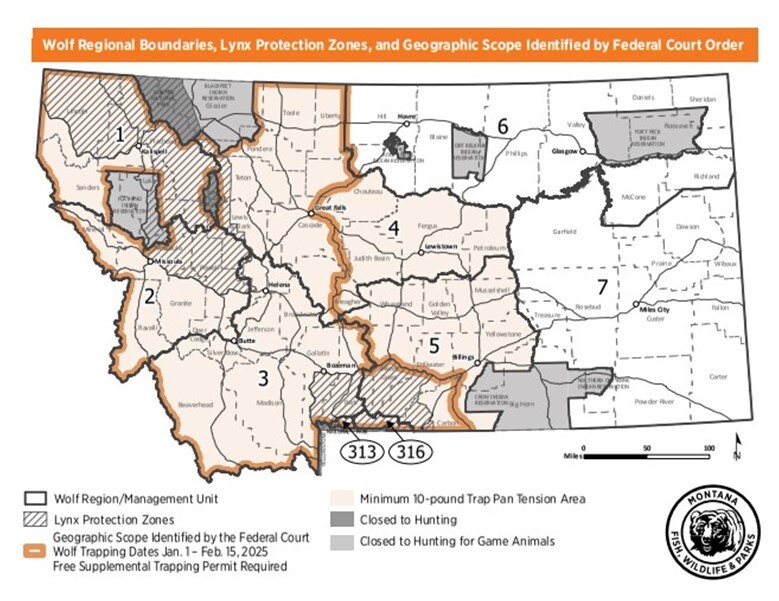
Map


Wolf trapping also opens in part of Montana Dec. 2, except in areas where the harvest quotas have been met for the season. However, within a geographic area defined by a federal court order (see map), which covers all of western Montana, wolf trapping will be open Jan. 1 through Feb. 15, although quotas will also influence closures in these areas. Please see the 2024 Wolf and Furbearer Regulations for specific details.  


Trapping in the geographic area defined by a federal court order 

Within this geographic area defined by a court order, trappers who are targeting nongame species, (raccoon, badger, red fox) and predators (coyotes, skunks, weasels) must have a Free Supplemental Trapping Permit, even if you already have a trapping license.  

Trappers who are targeting predators and nongame species for the purposes of livestock protection within this geographic area defined by a court order must have the Free Supplemental Trapping Permit and a completed and signed declaration which states the producer’s name, that the producer has provided permission for the trapping and the county where the trapping is occurring. This declaration form can be downloaded when you get your Free Supplemental Trapping Permit. This declaration is not needed for producers that are trapping for livestock protection on their own lands or lands that they have leased. 

If you're interested in trapping wolves in Montana, please take time to understand the maps, regulation requirements and season structure.  


Changes in Ravalli County 

The final wolf trapping dates were approved by the Fish and Wildlife Commission at their Nov. 12 meeting. During that meeting the commission also proposed and approved changes to trapping setbacks in Ravalli County on closed roads.  

A commission amendment to the trapping regulations removes setback requirements (or the minimum distance a ground set trap or snare must be placed from a road to be a legal set) from most roads in Ravalli County that are seasonally closed to motor vehicles, including off-highway vehicles, during the trapping season. Some of these roads may be open to snowmobiles but are included in the amendment because they are seasonally closed to all other motorized use. 

Previously in Ravalli County, all roads and hiking trails designated by administrative signs or numbers and open to vehicle use for all or part of the year were subject to a 50-foot setback for ground set traps and snares for furbearers, predators and nongame and 150 feet for wolves. This is the standard trap setback regulation throughout most of state, although there are other exceptions. For details, see the Montana Wolf, Furbearer and Trapping Regulations

There are a few places in Ravalli County where the standard setbacks of 50 feet from a numbered or signed road or trail for furbearers and 150 feet for wolves will be retained:  

  • Forest Service Road 429 (Lost Horse Creek) 

  • Forest Service Road 468 (Nez Perce Pass Road) 

  • State Highway 38 (Skalkaho Pass) 

  • Forest Service Road 75 (Skalkaho/Rye) 

Note: To learn more about how to remove your dog from a trap if it is accidentally caught, please visit Pet First Aid CPR Training - Montana K9 SAFETY.  

Add a Comment »

Results of the Gallatin County Local Government Review Commission Race Recount

A recount of the Gallatin County local government study review commission race has affirmed the original election results while slightly narrowing the margin between the seventh- and eighth-place candidates. 

On Monday, Nov. 25, the Gallatin County Elections Office conducted a hand recount of all 71,027 ballots counted in the Nov. 5 federal election. The recount focused on the local government study commission race, where 22 candidates competed for seven seats on the nonpartisan commission. This commission is tasked with reviewing the county’s structure, powers, and service delivery and recommending potential changes. 

The recount was requested by candidate Rene Flynn, who finished eighth in the initial tally, trailing the seventh-place candidate, EJ Porth, by just 77 votes. Under Montana law, a recount is permitted for this race for when the margin of victory is within one-quarter of 1% of 1/7 of total votes cast for this race. 

After the recount, Porth’s final vote total stood at 15,029, while Flynn received 14,980 votes—a 49-vote difference. This outcome confirmed Porth’s election to the commission. 

Differences in votes counted by hand as compared to votes counted by tabulator machines can occur for a variety of reasons including a recount clerk’s interpretation of a voter’s intent, difference in resolution of questionable ballot or miscounting in the hand count.  

The recount was conducted at the Gallatin County Fairgrounds and involved over 140 paid staff and temporary election workers. The process, which lasted nine hours and 15 minutes, was overseen by the Gallatin County Commissioners, serving as the recount board. 

“This recount demonstrates the integrity and transparency of our election process,” said Gallatin County Elections Administrator Eric Semerad. “It’s crucial that voters have confidence in how their votes are counted and that candidates have the ability to verify results when the margins are so close.” 

Upcoming Recount for Montana House District 57

The Gallatin County Elections Office is preparing for another recount, this time for the Montana House District 57 race. That district overlaps with Park County, which will also conduct a recount of ballots cast in their portion of the district. Unofficial final results showed Democratic candidate Scott Rosenweig with a 20-vote lead over Republican candidate Marty Malone. 

Gallatin County’s recount of approximately 3,000 ballots is scheduled for Monday, Dec. 2, at 1 p.m. in the Gallatin County Courthouse Community Room (311 W. Main St., Bozeman). Park County’s recount is being held on Wednesday, Nov. 27.  

For more information on recount procedures or upcoming election activities, please contact the Gallatin County Elections Office at gallatin.elections@gallatin.mt.gov or 406-582-3060. 

Add a Comment »

Saturday, Nov. 23rd, 2024

3 suspects charged in 2023 poaching case

TOWNSEND – Three people were charged this month in Broadwater County courts following an almost year-long investigation by game wardens into several animals killed in 2023. 

The investigation began with a tip to Montana Fish, Wildlife & Parks from a concerned citizen. During the investigation, FWP game wardens uncovered evidence indicating three elk and three deer were killed unlawfully on public and private land in Broadwater County. This led to three people facing a mix of felony and misdemeanor charges. 

All three individuals have made initial appearances in court and pleaded not guilty to the charges. Every person accused of a crime is presumed to be innocent until and until his or her guilt is established beyond a reasonable doubt. 

Montana Highway Patrol, the Broadwater County Sheriff’s Office, and the Lewis & Clark County Sheriff’s Office assisted in the investigation.  

No further details about the investigation are available at this time. 

Montana game wardens rely heavily on tips from the public. Anyone with information about crimes against wildlife or state lands is encouraged to visit tipmont.mt.gov to provide details. You may be eligible for a cash reward of up to $1,000.  

Add a Comment »

Wednesday, Nov. 20th, 2024

Local Ice Cream Shop Earns National Honors in Prestigious Competition

BOZEMAN – The North American Ice Cream Association has announced the winners of its 2024 National Ice Cream Awards, and Genuine Ice Cream, a beloved local business, has achieved remarkable success. This recognition places Bozeman firmly on the map as a hub for exceptional frozen treats.

Each year, hundreds of ice cream professionals and aspiring dessert entrepreneurs from across the nation gather for the industry’s largest event in the U.S., hosted this year at The Savannah Convention Center, Savannah GA, from November 12-15th, 2024. A highlight of the event is the association’s ice cream flavor and quality competitions, which draw entries from the finest ice cream makers nationwide.

In this year’s competition, Genuine Ice Cream earned:

  • Blue Ribbons for their Dark Chocolate ice Cream

The rigorous sensory judging process was overseen by Dr. Sam Alcaine of Cornell University, a highly respected dairy scientist. Judging panels included seasoned ice cream business owners, making this recognition a true honor from peers within the industry.

A Celebration of Craftsmanship

Being recognized on a national stage is a testament to the hard work and creativity of Genuine Ice Cream's team. Their dedication to creating exceptional ice cream delights continues to inspire both the industry and their loyal customers.

About the North American Ice Cream Association

Founded in 1933, the North American Ice Cream Association supports retail ice cream and frozen dessert businesses with training, resources, and networking opportunities. The organization’s annual convention is a marquee event for the industry, drawing attendees from the United States, Canada, and beyond. Member businesses employ thousands and serve millions of customers annually

Add a Comment »

Bozeman Symphony Celebrates the Season with Holiday Spectacular Concert

The Bozeman Symphony rings in the holiday season with its annual Holiday Spectacular concerts from December 13 to 15 at the Willson Auditorium in downtown Bozeman. The annual tradition promises a festive celebration filled with timeless classics, jazzy holiday favorites, and a joyful sing-along, guaranteed to delight audiences of all ages.
 
Under the direction of Maestro Norman Huynh, the Symphony will be joined by guest vocalist Paige Rasmussen, an acclaimed musician and Bozeman native, along with the Bozeman Symphonic Choir. Together they will present an unforgettable holiday experience that captures the warmth and wonder of the season.
 
Rasmussen, a multi-talented musician, songwriter, producer, and filmmaker, has performed across the United States in major musical hubs like Los Angeles, San Francisco, Las Vegas, and Nashville. The lead singer and manager of Paige & The People's Band, she’s shared the stage with renowned artists such as Mike McCready, Brandi Carlile, Taylor Hawkins, Pat Benatar, The Doobie Brothers, and many more. Her unique vocal style--described as a blend of Aretha Franklin and Bruce Springsteen—adds a soulful touch to the concert’s festivities.
 

“There’s no finer way to get into the holiday spirit than gathering together to experience the joy of live symphonic music,” said Huynh. “Our Holiday Spectacular promises to bring you everything you love about the season—music, memories, and a sense of community.”
 
The program will feature a delightful mix of holiday favorites, including Rudolph the Red-Nosed Reindeer, Selections from the Nutcracker Suite, Chanukah Suite, The Polar Express Suite, and Auld Lang Syne. Rasmussen will enchant with Mary Did You Know, Carol of the Bells, Joy to the World, and Sleigh Ride. The Bozeman Symphonic Choir will captivate with O Come, O Come, Emmanuel , and the whimsical Twelve Days After Christmas.
 
To meet the popular demand for this annual tradition, the Bozeman Symphony will offer four Holiday Spectacular performances to experience the joy of the season. Performances are Friday, Dec. 13, at 7:30 p.m.; Saturday, Dec. 14, at 2:30 and 7:30 p.m.; and Sunday, Dec. 15, at 2:30 p.m. at the Willson, 404 West Main Street. Tickets start at $30 for adults, with discounted rates available for students, at https://www.bozemansymphony.org/holiday-spectacular or by calling 406-585-9774.

These festive concerts are made possible thanks to the generous support of sponsors Cal & Tricia DeSouza, Gary Kunis & Connie Wong, Paul & Jillian Bertelli, Mike & Cyndi Huempfner – Five Points Foundation, Carol G. & Sal Lalani, Sheehy Family Foundation - Denise & Richard Sheehy, and Zsa-Zsa’s.

Add a Comment »

News Comments