

Friday, Jul. 18th, 2025

Smart Shopping Tips for Eco-Friendly Humidifiers Online

Shopping for green humidifiers can be confusing with the number of choices that boast being green, ecological, and energy-efficient. But with some savvy shopping, you could find the perfect humidifier that meets your performance needs and environmental values. The trick is to focus on gadgetry that has been engineered from the ground up to be built using safe materials, reduce waste, and conserve energy without sacrificing convenience or air quality. This article will give you easy-to-understand, simple tips for shopping online that you can trust, buy responsibly, and purchase the highest quality items, and more, useful information like this.

Find certified energy-efficient models

First, check to see if your humidifier uses less energy. Nowadays, many eco-friendly appliances come with certifications to let you know they can use less power without sacrificing performance. An energy-saving humidifier reduces your carbon footprint and will reduce your electricity consumption to help you save money on your next electricity bill.

On the whole, ultrasonic models are more energy-efficient than traditional warm mist versions, so make sure to seek out devices that use this technology. You can also check for programmable timers and auto shut-off options to decrease excess usage. Choosing a humidifier amazon shoppers often prefer—especially those with certified energy-efficient features—is a smart first step toward a greener home.

Choose humidifiers made of non-toxic or eco-friendly materials

Environmental responsibility is not just about saving energy, but also about buying products made with safe, sustainable materials. Check that the humidifier uses biodegradable packaging or is free from plastics when you’re shopping online. These units reduce the impact on the environment during and after the life cycle of the product.

Avoid any humidifier that does not divulge the source of its materials or is partially made out of plastic. Also, select companies that are transparent about their policies and production. Selecting eco-friendly materials like this is a lot more than just simply improving your air quality because you’ll be certain that you’re making a green purchase in the long term, too.

Real-user insights and check product reviews

Product descriptions may be helpful, but the user reviews basically reveal how eco-friendly a humidifier is daily. Read the reviews on how durable they are, with easy-to-clean options and power usage. The longer-lasting, the more effective that bottle of lotion is, which means you’ll need fewer replacements and therefore less waste.

In verified reviews, frequently detailed information on a noisy or silent machine, cleaning period, and whether the kind of filters used are reusable or disposable. All these factors play a role in how sustainable your purchase will be holistically. You can make an educated decision and steer clear of greenwashing after you can trust user experiences.

Check the Repair and Warranty

A key aspect of being eco-friendly is being long-lasting. A durable humidifier minimizes the requirement for purchasing a new unit and the waste of new technology usage. Lean toward ones with glowing reputations for quality manufacturing and long warranties if choosing a brand online. Promoting sustained use by supporting long-term use; a company that backs a product prolongs the life of appliances.

Also, see if the product is a breeze to clean or take apart; as such, maintenance can do wonders for the life of the machine. You’re bound to pay a bit more out of the gate for a solid product, but it will ultimately pay you back by reducing your carbon footprint and offering better performance.

Support Brands with Open Sustainability Practices

Choosing sustainable humidifiers based on brands that attain sustainability in every aspect of their business is indeed the wise thing to do. Seek out companies that follow environmental objectives; they could be utilizing recycled packaging, reducing carbon emissions from manufacturing, or promoting eco-conscious production practices. Brands like Everlasting Comfort are gaining recognition not only for product quality but also for supporting greener choices in home living.

Companies that promote carbon-neutral shipping, engage in eco-certification, or donate a portion of their profits to a greener future stand out. An honest and transparent discussion regarding a company's values or approach is true accountability, not merely marketing. There are so many complicated factors to consider when purchasing an eco-friendly humidifier.

By concentrating on these fundamental issues, you can make a choice that benefits both the environment and the inhabitants of your house. You will see all our great picks to assist you in smarter shopping toward a healthier, more sustainable lifestyle, right from your home.


 

Add a Comment »

Thursday, Jul. 17th, 2025

City of Bozeman Gives Special Presentation on Camping in the Right-of-Way July 22

BOZEMAN, Montana (July 17, 2025) – Bozeman City Commission is set to have a special presentation where city staff will provide an update on the state of urban camping in Bozeman on Tuesday, July 22 at City Hall (121 N Rouse Ave) at 6 p.m. This presentation will include the current conditions of Ordinance 2172, which prohibits camping but provides for a limited permit system, and how it is going.

“Our approach has always been to treat all involved in this situation, from the unhoused to neighbors to business owners, with compassion and empathy,” City Manager Chuck Winn explained. “We are on a first-name basis with everyone living on the street and work hard to connect them with services and get them on their feet. This is a hard topic for many in our community to grapple with and talk about, and we continue to encourage people to get involved and provide their thoughts.”

Ordinance 2172 makes it illegal for people to live in vehicles on city rights-of-way without a permit and establishes misdemeanor penalties for those who violate the ordinance. Permits are granted for a 30-day stay, at which point someone must reapply to continue living in the right-of-way. Those who are granted a permit must also follow place and manner restrictions, which determine where it is ok to camp and the expectations around cleanliness and sanitation. The permit system is set to sunset in October 2025.

The City has had an evolving approach to people living in vehicles, in large part due to shifts in the legal landscape during recent years.

In June 2024, the US Supreme Court overturned the 9th Circuit Court’s decision in Johnson vs. Grants Pass and determined that cities have a right to enforce anti-camping laws should they so choose, including with misdemeanor penalties. This led the City to enact Ordinance 2172 to prohibit camping but allow a temporary permit system to allow those living in vehicles time to transition off the street before returning to the original ban on camping.

At its height, city staff counted nearly 250 vehicles in the right-of-way. That number is now down to approximately 30. Many of those who have lived in the right-of-way have remained local, moving into housing in the area or lots where they can permanently park their vehicles.

Public comment is encouraged ahead of the meeting and can be provided by emailing comments@bozeman.net, or submitted in person during the meeting or online via Zoom.
For more information on the current regulations, visit https://www.bozeman.net/our-city/city-projects/unhoused-in-public-rights-of-way.

Comments 1

Wednesday, Jul. 16th, 2025

What Does It Take to Stay Licensed as a Lawyer in Montana?


Staying licensed as a lawyer in upbeat states like Montana isn’t just about keeping up—it’s about staying sharp, credible, and ready for any practice challenges along the way. If you want to avoid missteps, missed deadlines, or malpractice risk, you need clear strategies to back you up.

Here’s a responsive guide to help you break down exactly what’s required—and how online tools and learning can help you stay compliant with resilience and confidence.

What Keeps You Licensed in Montana
In this jurisdiction, you may need to earn and report 15 continuing legal education (CLE) credit hours every reporting year (usually April 1–March 31), per the Montana Supreme Court’s CLE Commission, with:

  • At least 10 hours must come from live, interactive formats (including live webinars)
  • Up to 5 hours may be “other” methods—like self‑study, audio/video programs, in‑house or on‑demand courses
  • You also need 2 hours of Professional Fitness & Integrity (ethics, ABA Rule familiarity, bias elimination)—part of the essential 15 credits.

These rules can help the court make sure you’re not just checking a box—you’re sharpening courtroom skills, ethics, and wellness throughout your career service. Also, if you miss the March 31 deadline, you may have until May 15 to file—after that, you’ll bear a fifty-dollar late fee charge. Still behind by July 1, and you're automatically moved to inactive status, unable to practice until you complete CLE, pay fees, and file for reinstatement (including a $200 fee).

What Makes Montana Unique—and What You Gain
You’re not really that helpless in this state; you have Montana laws, some tweaks, and gains you can max, like:

Deep-Dive Into Formats and Carry-Over

  • 60-minute credit unit—no fudging. It’s one credit per 60 minutes—breaks, as can be expected, don’t really count
  • Earn partial credit for mid-session attendance (a minimum of 30 minutes)—rounded to the nearest quarter‑hour
  • You may carry over up to 30 live credits over two years—but “other” credits don’t roll over

Recent Trends & Hard Data
Nationwide, lawyers increasingly prefer live webinars for interaction as of late. According to experts, over 70% of CLE is now delivered online, and states like Montana have followed suit—five hours of self-study credit proves the shift you’ve taken.

Also, carrying over live hours can provide you with more strategic flexibility now, in case you want to front‑load next year’s credits during a low season.

Plugging In: online CLE courses
This is where you get tactical—so you can talk sense to clients or supervising attorneys by honing yourself, especially online CLE courses, giving you effective interactive live webinars eligible under the 10‑hour live‑credit rule, and:

  • On-demand modules gated to a 5‑hour “other” credit limit
  • Specialized ethics/bias/focus content used to meet your 2‑hour Professional Fitness & Integrity requirement

You can mix live some slots, like responsive webinars for most credits, backed by on-demand ethics courses to fill the rest—streamlining what used to take classroom days into more focused, remote learning. Plus, it’s easier to track, self‑report, download certificates, and rattle off your compliance status to anyone who may question it. Credibility? Check. Convenience? Check.

Legal Ethics & Community Context
Today, especially with recent reports citing Montana as one of the states whose immigrants face significant resistance, you’ve every need to keep up, especially in how local legal services intersect with immigration, housing justice, and cultural sensitivity.

That’s why, when completing your Professional Fitness & Integrity requirement, remember: ethics also involve understanding the communities you serve and the people you may need to represent and protect.

Step-by-Step: Your Montana CLE Game Plan

Mark key dates

  • Reporting cycle: April 1 – March 31
  • Last safe date: May 15
  • Risk zone: July 1 → inactive status

Split your credits early

  • Block 10 interactive hours via live webinars (local seminars, Axiom live events).
  • Slot in 5 “other” hours—e.g., Axiom on-demand, article writing, internal training

Zero in on ethics

  • Reserve 2 hours toward Professional Fitness & Integrity.
  • Choose courses that double as ethics AND bias/diversity training.

Track as you go

  • Report credits in your Montana Bar dashboard ASAP.
  • Use provider certificates (Axiom keeps them digital and accessible).

Account for carry-over

  • If you exceed 10 live hours this year, you can carry up to 30 into the next.

Stay ahead

  • New to the legal service? You’re excused for your first partial year—but credits from that period still count forward.

Final Takeaways
With all the updates or upgrades in your chosen arena, you may need to use online CLE courses as your central tool: they satisfy rules, boost credibility, and reduce friction. Also, carry extra live hours forward so you always stay ahead.

With a smart, structured approach like this, you don’t just stay licensed—you stay sharp, confident, and in control, especially as you mount up in the “Land of Shining Mountains.”

Add a Comment »

Fishing restrictions take effect Thursday on several rivers in southwest Montana

HELENA – Hoot-owl restrictions take effect Thursday at 2 p.m. on the following rivers: 

  • Big Hole River on the entire river downstream of Saginaw Bridge on Skinner Meadows Road. This restriction expands the hoot-owl to the entire length of the Big Hole.  
  • East Gallatin River from Penwell Bridge Road to the confluence with the West Gallatin River at Nixon Bridge near Manhattan. 
  • Gallatin River from Amsterdam Road to the confluence with the Missouri River. 
  • Lower Shields River from Brackett Creek Road to the confluence with the Yellowstone River. 

Hoot-owl restrictions prohibit fishing from 2 p.m. to midnight each day. These restrictions will stay in effect until conditions improve.     

A full angling closure takes effect at 12 a.m. Thursday on the Madison River near West Yellowstone: 

  • Madison River upstream of Hebgen Reservoir. This angling closure replaces an existing hoot-owl angling restriction to align with a similar closure on the Madison River within Yellowstone National Park due to exceptionally high water temperatures and low flows.  

To check for other restrictions, click here.    

FWP's drought policy provides for angling restrictions when flows drop below critical levels for fish, when water quality is diminished or when maximum daily water temperatures reach at least 73 degrees for three consecutive days. Water temperatures of 77 degrees or more can be lethal to trout.     

These restrictions are designed to protect fish that become more susceptible to disease and mortality when water temperatures warm. Restricting angling to only cool morning hours can help reduce catch-and-release mortality.     

Catch-and-release anglers can reduce stress on fish by getting them to the net or in hand quickly, keeping them in the water and reviving them prior to releasing them back into the river.      

As the summer warms, Montana offers many other angling options with better conditions for fish, including larger lakes or reservoirs, or higher elevation lakes and streams.    

Along with monitoring stream temperatures, FWP also monitors stream flows and in some streams holds instream flow water rights. FWP’s water program can issue a call on junior water users, when appropriate, to contribute to stream flows through the late summer and early fall. For more information on FWP water rights, click here.    

Add a Comment »

With new online option and grant funding, Montana State aims to help rural Montanans access school counseling program


BOZEMAN
— Montana State University will soon be offering a version of its graduate-level school counseling program online, while a grant from the U.S. Department of Education will help individuals in rural parts of Montana access that program.

The efforts are part of the MSU Department of Counseling’s ongoing work to train professionals to serve people in communities across Montana, said Rebecca Koltz, professor and head of the counseling department.

“There is a real need for what we call ‘place-committed’ individuals who would like to do good work in those rural areas but can’t leave for a two-year training,” Koltz said. “We heard from people who said they would love to go back to school, but they can’t leave their jobs. That led us to start thinking about this online component a few years ago, and we ended up creating this online training to meet the needs of those individuals.”

MSU’s online master’s program was approved by the Montana Board of Regents in May, and the first group of students will begin in summer 2026. Importantly, Koltz said, the online program will not replace MSU’s in-person master’s program in school counseling, which will continue unchanged. She noted that both versions of the 60-credit program, housed in the College of Education, Health and Human Development, are accredited by the Council for Accreditation of Counseling and Related Educational Programs, or CACREP.

Students enrolled in the online program will take three to four classes per summer. The classes will be delivered in an asynchronous format, meaning that students can choose when to complete the work within a certain timeframe. Several other classes will be offered asynchronously throughout the academic year, and students will also complete their required practicums and internships during the academic year, when public schools are in session.

In addition, students must complete two short-term residencies on the MSU campus in Bozeman – likely long weekends, Koltz said. There will also be opportunities to participate in other professional development and community-building events throughout the program, such as a learning institute in April prior to the Montana School Counseling Association conference for students participating in a grant-funded program.

Koltz said MSU’s online school counseling program will take three years to complete, while the in-person version takes two years.

A $3 million, five-year Mental Health Service Professional Demonstration grant from the U.S. Department of Education will provide funds to help cover the tuition costs of up to eight students from rural Montana communities who are enrolled in MSU’s online program, Koltz said, as well as a similar online program at the University of Montana. MSU’s portion of the grant, known as “Rural School Mental Health Prepare in Place,” or RSMHP2, is $1.2 million. Students from communities that are not considered rural but who are interested in MSU’s online program are still eligible to apply but will not be eligible for tuition support.

The new online school counseling program builds off another grant-funded program, Rural Mental Health Preparation/Practice Pathway, that was a collaboration between MSU, UM and the Montana Office of Public Instruction. That program, funded in 2023 by a five-year, $2.3 million U.S. Department of Education grant, was also designed to prepare counselors to provide services for Montana’s rural schools and communities.

Many counseling positions remain unfilled in Montana each year, and the need for educational and training opportunities is great, Koltz said.

“A lot of those unfilled positions are in small, rural schools,” Koltz said. “That’s where we started to think about how what we really need is someone who is perhaps already living in that area who is already established who would be interested in getting training to do the school counseling program.

“We’re doing this program because we care about Montana, and we care about rural communities, and we care about the people who are going to be working in those rural communities. We want to make sure they feel supported as best as we can.”

Tricia Seifert, dean of the College of Education, Health and Human Development, said the program will make a “tremendous” difference in rural communities.

“The online school counseling program is another example of MSU realizing the land-grant mission to serve the people of Montana,” she said. “The faculty in the Department of Counseling are increasing access to a degree in school counseling for those who are committed to seeing their local school and community thrive.”

The preferred application deadline for MSU’s school counseling program is Feb. 1, 2026. To learn more, visit https://www.montana.edu/counselingdepartment/.

Add a Comment »

Essential Qualities Needed for a Leadership Role in the Health Science Field

Leadership in health sciences demands a unique combination of technical expertise, interpersonal skills, and unwavering commitment to patient welfare. As healthcare systems become increasingly complex and interdisciplinary, effective leaders must possess distinct qualities that enable them to navigate challenges while maintaining the highest standards of care.

Clinical Competence and Continuous Learning

Healthcare leaders with a doctor of health science degree must maintain strong clinical foundations, even as administrative responsibilities grow. This credibility allows them to make informed decisions about patient care protocols, resource allocation, and staff development. Successful health science leaders demonstrate commitment to lifelong learning, staying current with medical advances, emerging technologies, and evolving best practices. They understand that healthcare knowledge expands rapidly, requiring leaders to model intellectual curiosity and professional development for their teams.

Emotional Intelligence and Communication Skills

The ability to connect with diverse stakeholders—patients, families, healthcare professionals, and administrators—is fundamental to effective healthcare leadership. Leaders must demonstrate empathy while making difficult decisions that affect human lives. They need exceptional communication skills to translate complex medical information for various audiences, facilitate difficult conversations about prognosis or treatment options, and build consensus among multidisciplinary teams with different perspectives and priorities.

Decision-Making Under Pressure

Healthcare environments often require rapid, high-stakes decision-making with incomplete information. Effective leaders must balance analytical thinking with intuitive judgment, weighing clinical evidence against resource constraints and ethical considerations. They must remain calm during crises, providing clear direction when teams face emergency situations or unexpected challenges. This quality extends to strategic planning, where leaders must anticipate future needs while managing current demands.

Team Building and Collaboration

Modern healthcare delivery requires seamless collaboration among physicians, nurses, technicians, administrators, and support staff. Leaders must create environments where diverse professionals feel valued and empowered to contribute their expertise. This involves understanding different professional cultures within healthcare, mediating conflicts between disciplines, and fostering shared accountability for patient outcomes. Successful leaders recognize that patient care quality depends on effective teamwork rather than individual excellence alone.

Ethical Leadership and Integrity

Healthcare leaders face complex ethical dilemmas involving resource allocation, end-of-life care, patient autonomy, and competing interests between individual patients and population health. They must demonstrate unwavering integrity while navigating these challenges, establishing clear ethical frameworks for decision-making. This includes maintaining transparency in communication, acknowledging uncertainties and limitations, and prioritizing patient welfare over organizational or personal interests.

Systems Thinking and Innovation

Healthcare leaders must understand how individual components interact within larger healthcare systems. This perspective enables them to identify inefficiencies, implement process improvements, and anticipate how changes in one area might affect others. They need to balance innovation with proven practices, evaluating new technologies and treatment approaches while maintaining safety and quality standards. Effective leaders also understand healthcare economics, regulatory requirements, and quality metrics that influence organizational performance.

Resilience and Self-Care

The demanding nature of healthcare leadership requires exceptional resilience and commitment to personal well-being. Leaders who model healthy work-life integration and stress management create sustainable environments for their teams. They must acknowledge the emotional toll of healthcare work while maintaining optimism and motivation necessary to inspire others.

Leadership in health sciences ultimately requires individuals who can balance scientific rigor with human compassion, combining technical expertise with the interpersonal skills necessary to guide teams through complex challenges while never losing sight of their fundamental mission: improving human health and well-being.

Add a Comment »

Tuesday, Jul. 15th, 2025

Gallatin County Seeks Input on Draft Engineering Report for Intersection Improvements

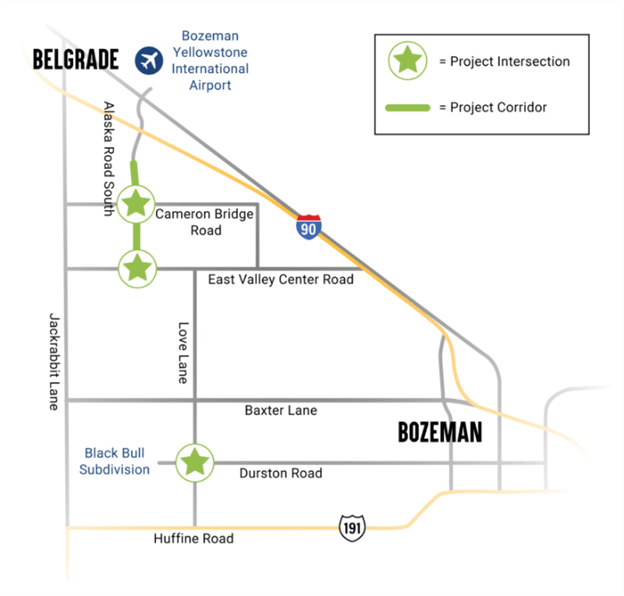
Gallatin County has released the Draft Preliminary Engineering Report for the Gallatin County Intersection Improvements Project, which evaluates potential improvements at three critical intersections on County roads between Belgrade and Bozeman:

Alaska Road South / Cameron Bridge Road
Alaska Road South / East Valley Center Road
Love Lane / Durston Road

These intersections are located within the rapidly growing triangle area between Belgrade and Bozeman, where increased traffic volumes and suburban development have heightened safety and operational concerns. The report provides a detailed evaluation of existing conditions, identifies key safety and congestion issues, and presents improvement alternatives for each intersection. A tiered approach was undertaken to evaluate potential alternatives and determine a preferred configuration for each intersection.

KEY FINDINGS AND OUTCOMES

Love Lane / Durston Road: A roundabout is recommended as the preferred alternative, offering substantial long-term safety benefits, operational efficiency, and strong community support.

Alaska Road South Corridor: Roundabouts are recommended at the Cameron Bridge Road and East Valley Center Road intersections to improve safety, ensure consistent design, enhance operational performance, and promote cost-effectiveness through economies of scale.

Preliminary Design: To position Gallatin County for upcoming discretionary grant funding opportunities, preliminary design efforts were advanced for the Alaska Road South corridor and associated intersections.

PUBLIC REVIEW PERIOD

Gallatin County invites the public to review the draft report and submit comments during the 30-day public review period ending August 13, 2025. After reviewing and addressing all comments, the final report will be presented to the County Commission for approval.

The Draft Preliminary Engineering Report can be reviewed online at: https://rpa-eng.com/gallatin-intersections/.

HOW TO SUBMIT COMMENTS

Comments can be submitted at any time to the project manager, Scott Randall, via email at srandall@rpa-eng.com, by phone at 406-447-5005, or by mail at 3147 Saddle Drive, Helena, MT 59601. 

FUNDING

While no funding has yet been identified to design and construct the improvements recommended in the report, Gallatin County is actively seeking grant funding and remains committed to pursuing opportunities to advance these critical safety improvements. Last month, the County Commission adopted its first Safe Streets for All (SS4A) Action Plan, focused on reducing traffic deaths and serious injuries and improving safety for all roadway users across the County. The data and preliminary designs developed through the Gallatin County Intersection Improvements Project helped strengthen and support a more competitive application to the SS4A implementation grant program, where the County is seeking funding to implement priority safety improvements, including a roundabout at Alaska Road South / Cameron Bridge Road.

Add a Comment »

4 Essential Tips for Planning a Successful Relocation


Shifting homes represents an exciting new chapter in life. However, it can quickly become overwhelming if you are not strategic about it. Whether you are moving across town or to a different country, you must be strategic to successfully relocate without stress.

By going through this guide, you will be able to ensure that you are in control of a potentially stressful event and make it a successful transition. Read on to learn some practical measures to help you relocate successfully.

1. Pre-Move Preparation
Start your moving process by creating a timeline of two to three months far enough ahead to ensure things go smoothly, setting key milestones like booking movers early and changing utilities late in the process. Additionally, set aside time for decluttering. Assess your belongings, deciding about what to keep, give to charity, or sell. You could organize a garage sale or simply donate clothes. You must declutter at least one room every week.

Put together a detailed checklist to keep note of everything, such as packing fragile items, notifying your employer, changing your address with the utility services, and canceling a local gym membership.

Storing and transporting are tricky. In this case, it is worth considering renting excellent container storage units in order to store additional items such as seasonal decorations, so that there is one pickup point for movers.

2. Moving and Transition Planning
Be sure to select a mover that fits your needs. Do your homework and look at the best options with a solid reputation. Ensure that the movers are licensed, and request an in-person meeting to discuss your specific needs. Start the packing process early by collecting boxes, tape, and protective materials like bubble wrap ahead of time. You must also be smart when packing by carefully putting some objects inside others to save money on boxes.

If you want to sell your old house, ensure that you do it promptly so that you can move into your new one without conflicting schedules. Additionally, prepare your new home by arranging for utilities like electricity, internet, and water to be active on moving day.

Lastly, for added smoothness during moving, you can also measure your key furniture pieces and confirm that they fit through doorways. You can also draw a rough map of how you want the place to be set to save time.

3. Administrative and Legal Steps
Get done with the administrative tasks early, around a month ahead of moving day. Address change with the post office, banks, subscriptions, government agencies such as DMV, and then look into local rules, such as parking permits, waste-disposal guidelines, if you are in a city.

Plan for moving day by waking up early, confirming with movers the night before, packing a separate bag with essentials like toiletries, a phone charger, important documents, and a small first-aid kit, and preparing a simple breakfast to keep energy levels up.

4. Post-Move Settlement
To achieve a sense of normalcy, unpack the kitchen and bathroom first on arrival day, because it is easier to unpack labeled boxes to locate the items quickly. Do the bedroom next so you can sleep well, and the living room later on during the next weekend.

Check out places around your new neighborhood, go to stores, parks, or libraries during the first week. Additionally, go to community events to meet neighbors, and sign up with local institutions such as a doctor or school as necessary. You can also host gatherings in your backyard to build connections. This will help you get closer to your community and get rid of any feelings of alienation, allowing you to settle in quicker.

Endnote
Even though moving places can be stressful, these tips can help you confidently handle the process. With each step, you will build more momentum, making the whole process smooth and seamless. Follow the steps above and start preparing for it today so that you can move according to your needs.

Add a Comment »

Monday, Jul. 14th, 2025

Workplace Evolution: Balancing Flexibility with Digital Responsibility


The usual office working hours from nine to five is no longer the standard timing for work. There has been a great change in the working environment over the last ten years, which has been worsened by global events. Workers demand flexibility as a right and not just an extra today. However, there is an inconspicuous challenge behind this apparent freedom known as digital responsibility.

Many companies hurriedly adopted flexible working arrangements while overlooking the potential risks associated with compromised cybersecurity measures and inconsistent digital privacy protocols.

Flexibility Isn’t Just a Policy—It’s a Paradigm Shift

Work now happens everywhere and anywhere; employees check their email on the beach in Bali, finish reports at a coworking space, and dial into meetings from their kitchen tables in Brooklyn. Though this new flexibility is great for business, it's not so great for security teams tasked with protecting company data: If your employees are everywhere, your risk surface just got a lot bigger.

Each environment introduces different digital threats: insecure Wi-Fi networks, shared devices, ambient surveillance, even careless digital habits. Employees now co-author security outcomes, often unknowingly, and trusted resource Moonlock often explores how day-to-day habits play a decisive role in the broader threat landscape. The enterprise is no longer a walled garden — it’s a fragmented network of endpoints, each requiring conscious care.

The Rise of ‘Digital Citizenship’ at Work

With blurred lines between personal and professional digital identities, a new concept is gaining traction: digital citizenship in the workplace. This isn’t just about using strong passwords or avoiding phishing emails. It’s about cultivating a culture where employees understand their role in protecting not just company data but also its digital reputation.

Examples include:
● Not using AI tools on confidential client data without proper vetting.
● Recognizing when to flag suspicious internal messages—even if they appear to come from a colleague.
● Understanding the ripple effect of poor cloud-sharing practices.
Companies that treat employees as stewards of security—rather than liabilities to be controlled—tend to see higher compliance and fewer breaches.

The New Digital Trust Contract

Historically, companies assumed digital control: you worked on company devices, in office networks, behind enterprise-grade firewalls. Now, that control has morphed into a trust contract. You trust employees to configure their own routers, install updates, and make real-time decisions about digital threats. In return, they expect respect for privacy and autonomy.

But trust without guidance is fragility disguised as freedom. Leading organizations are rethinking onboarding—not as a checklist of IT do’s and don’ts—but as a soft-skill development program that includes situational decision-making, platform ethics, and emotional resilience when facing digital pressure (e.g., social engineering attacks).

Invisible Burnout: The Mental Load of Digital Vigilance

An overlooked dimension of remote work is the cognitive load of constant digital vigilance. In flexible environments, workers are often expected to:

● Recognize cyber threats without formal training.
● Multitask across unsecured devices.
● Manage conflicting instructions across multiple communication channels.

This invisible stress is a cybersecurity liability in disguise. When vigilance turns into fatigue, mistakes spike. A culture that rewards rapid responsiveness without teaching discernment breeds susceptibility to manipulation—especially in social engineering attacks that play on urgency.

Creating psychological safety is part of digital safety. Leaders must normalize pauses, second opinions, and even mistakes—because fear-driven digital decisions are rarely smart ones.

Reimagining Metrics: From Output to Integrity

Traditional performance metrics still focus on visible outputs—emails sent, hours clocked, deliverables completed. But what if companies began tracking and rewarding digital integrity? Imagine KPIs like:

● Peer-reported instances of responsible data handling.
● Participation in digital ethics workshops.
● Proactive reporting of suspicious incidents.

Such metrics don’t replace output—they enhance it. They signal that what matters isn’t just what you achieve, but how you protect others while doing it.
Security by Design, Not by Discipline

One of the most overlooked strategic shifts is embedding security not just in training, but in tools. The most responsible digital behavior happens when the system nudges it—by default.

This means:
● Default encryption in file-sharing platforms.
● Context-aware access controls based on location or device health.
● Collaboration platforms that warn when sensitive data is shared externally.

Responsibility should be scaffolded, not solely expected. Employees are only as responsible as the design of their ecosystem allows.

Designing for Trust and Tenacity

The evolution of work is less about changing our surroundings and more about changing what we expect from work. The shift towards flexibility isn’t just about being able to do your job from anywhere, at any time – it’s also about making sure that both employees and companies can be their best selves while still getting the job done.

Building trust is key to making this work well: if people are going to have more control over how they do their jobs, they need an environment where they feel supported and connected. And that takes more than just a bean bag chair in the corner of the office; it requires a real shift in how we think about responsibility.

Add a Comment »

FWP releases Grizzly Bear Conflict Dashboard

HELENA – In Montana, grizzly bear populations have expanded in both number and in distribution along both sides of the Continental Divide and in the Greater Yellowstone area. In many instances, grizzly bears are expanding into areas they haven’t been in more than a century.  

With this expansion comes an increased focus by Montana Fish, Wildlife & Parks to help people and communities stay safe and avoid conflicts. Across Montana’s bear country, FWP staff are working hard to respond to conflicts, provide tools to landowners and communities to prevent conflicts, and to educate people on how to stay safe.  

As part of that effort, FWP unveiled a new Grizzly Bear Conflict Dashboard as a resource for information on where FWP staff are helping landowners and communities with conflicts and the types of conflicts people are experiencing.  

“Managing grizzly bear conflicts continues to be a priority for our staff and the workload is increasing every year,” said FWP Director Christy Clark. “This dashboard will help inform the public about just what kinds of conflicts Montanans are dealing with and where they’re happening.” 

Public interest in FWP’s grizzly bear management remains high. To meet this interest and to increase public awareness, FWP released a Grizzly Bear Mortality dashboard last year. FWP is working on a relocation dashboard as well, which will be released later this summer and show grizzly and black bear relocation information. Until then, the relocation information can be found on the FWP website.  

Conflict information on the dashboard is updated regularly, but not until after the conclusion of a conflict. This could take several days depending on what the conflict is and what response is taken. The dashboard displays conflict data from starting in mid-June. Conflict information prior to that will be entered by FWP staff as time allows.   

Grizzly bears remain federally protected in the Lower 48 under the Endangered Species Act. This protection remains despite populations in the Greater Yellowstone Ecosystem (GYE) and the Northern Continental Divide Ecosystem (NCDE) growing well past recovery goals. Montana, Idaho and Wyoming petitioned the U.S. Fish & Wildlife Service to delist grizzly bears. 

For more information on grizzly bear management, FWP has many web-based resources for communities, landowners and recreationists. A link to the Grizzly Bear Conflict Dashboard can be found on the grizzly bear management webpage.  

If you are dealing with grizzly bear conflicts, please reach out to one of FWP bear management specialists. Their contact information can be found through the FWP website.  

Add a Comment »

News Comments