Thursday, Sep. 10th, 2020

Calling all fans of purple-haired fairies, pizza-loving dragons, and ticklish-aliens: The Gallatin Valley has a new Children’s Theater Company

BOZEMAN, Mont. —  The Gallatin Valley is home to a new children’s theater company called “Random Acts of Silliness” (RAOS). RAOS is a troupe of performers committed to creating magical theater experiences with and for children,  filled with rich storytelling, bold characters, and silliness to spare.

Random Acts of Silliness grew out of Verge Theater’s improv program, where RAOS founder Danielle Thomsen performs with the Bozeman Improverts and directs the “Silly Moose: Improv Show for Kids.” While public spaces were closed this summer the RAOS troupe performed socially-distanced pop-up driveway shows for small groups of children.

“We were so happy to make children laugh and provide a taste of live-theater for local families,” Thomsen said. “It doesn’t matter if we’re only able to perform for five people at a time, we are committed to providing fun, safe, theater experiences for Gallatin Valley kids.”

Rooted in improvisation, most performances are highly interactive, and feature characters and plots inspired by audience members. The unique shows are created entirely on the spot, based on suggestions from the audience. Kids naturally have funny, original ideas, and performers are excited to bring those ideas to life.

The company has several events scheduled for September in partnership with the Gallatin Valley Land Trust: two outdoor improv shows and a self-guided fairy village experience.

“Now, more than ever, parents are looking for creative ways to keep their kids engaged and active in the Gallatin Valley,” said GVLT Associate Director EJ Porth. “We are thrilled to partner with RAOS to bring fun, safe, socially-distanced activities for children to our parks and trails that will get the creative juices flowing again. Right now, everyone could use a little magic.”

Visit randomactsofsilliness.com or our social media channels for more information about upcoming events.

Details of Upcoming Events

Random Acts of Silliness in the Park* (in Partnership with Gallatin Valley Land Trust)

Saturday September 12 10:30-12 Lindley Park

Saturday September 19 10:30 -12 Dino Park


*Social distancing will be enforced and mask required for anyone age 5 or older.


Fairy Village Adventure (in Partnership with Gallatin Valley Land Trust)

(See RAOS or GVLT Website for Location Details)

Ten Bozeman artists have collaborated to create a magical fairy village on the Gallagator Trail. This is a self-guided experience, visit between September 22 and October 5.

--

Random Acts of Silliness: Inspiring Laughter & Play in the Gallatin Valley

Add a Comment »

Wednesday, Sep. 9th, 2020

Drainpipe cause of New Zealand mudsnails at FWP fish hatchery

Since New Zealand mudsnails were detected at Montana Fish, Wildlife & Parks’ Bluewater Fish Hatchery Tuesday, Aug. 18, the department continues to look at whether infected fish were stocked at lakes or reservoirs and what led to the infestation.  

The Bluewater Fish Hatchery, located near Bridger in southcentral Montana, is a trout hatchery and is the third largest production facility in the state. This is the first time New Zealand Mudnsails (NZM) have been found at an FWP hatchery.

The likely cause of the infestation is a drainpipe from the hatchery that drains into neighboring Bluewater Creek, which is positive for NZM. The operating procedures for the hatchery call for the pipe to be elevated above the creek, but over the years, the pipe has become submerged. NZM were likely able to make their way up the pipe and into the hatchery.

New Zealand mudsnails are an aquatic invasive species. It was first discovered in Montana in 1995 in the Madison River above Hebgen Lake Reservoir. Since then, New Zealand mudsnails have been detected in multiple locations across the state.  NZM can be eaten by fish and other animals, like birds, but unlike native snails, they are undigestible and can be spread by fish and wildlife into other waterbodies.

In a confined facility, like a fish hatchery, NZM can be quickly eradicated and the facility decontaminated. However, due to the detection, the fish at the hatchery – about 20,000 pounds – were euthanized and disposed of. FWP had about $85,000 into rearing the fish. FWP staff are working on a containment and mitigation strategy.

The plan is to make up the losses from Bluewater with surplus fish from FWP hatcheries. 

Prior to this detection the Bluewater hatchery had contributed to relatively few releases in 2020, all of them into state/public waters.  Monitoring for New Zealand mudsnails and other invasive species will continue in these waters and others. 

All hatcheries in Montana are inspected annually for AIS and fish pathogens. The mudsnails at Bluewater Fish Hatchery were detected during the hatchery’s annual inspection.

To help prevent the spread of AIS, people working and recreating in and around our waterways must practice clean, drain, dry. For more information on AIS, please go online to CleanDrainDryMT.com.

Comments 1

Tuesday, Sep. 8th, 2020

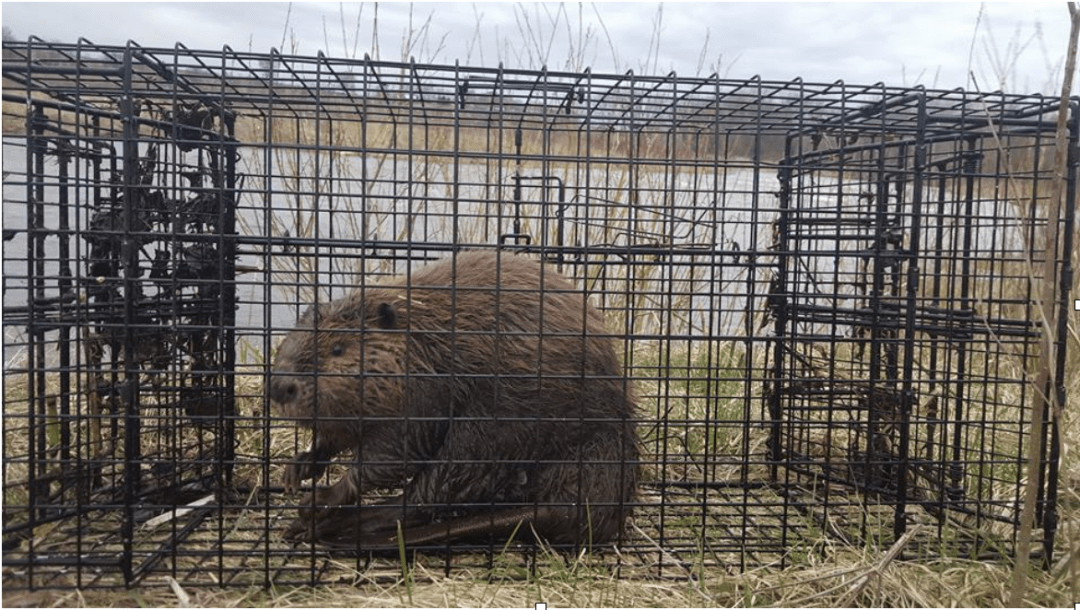
Beaver Populations on the Rise in Montana

Most home and farm owners perceive beavers as threats because of their digging and tree-eating habits. Beavers create dams and redirect waterways for their use. They have become common sights in suburban areas as a result of the deforestation habits of man. Human activities force beavers to co-exist with humans, and the beaver population has been on the rise in Montana in recent years.

BEAVER APPEARANCE, BIOLOGY, AND BEHAVIOR
Beavers are the second largest rodent in the world and can be 45 inches long and weigh up to 70 pounds. They have sharp incisions for chewing and felling trees and strong paws for digging tunnels and dams.

Beavers mate for life and do so during winter. They give birth to their young after winter, with their eyes open and the young can swim after the first 24 hours of life. The young reach maturity, become independent after about two years and leave their parents to create their families.

Beavers in a family colony mark their territory with urine in the puddles that surround their homes. They are primarily nocturnal animals, and so they sleep during the day and are active at night.
They feed on the bark of soft trees and store twigs and tree branches in their burrows for the winter. They are good at making interlacing tunnels and rarely use one exit out of the burrow. This helps them to escape from danger and reduce the traffic when bringing in food.

They alert the other beavers when there is danger by slapping their tails against the water to create some noise. The other beavers quickly take cover or escape from the exits in the tunnel. The maze of the tunnels shows that beavers are highly intelligent animals that display great engineering skills.

Beaver dams help many animal species that come to live in them, as well as farmers that benefit from the redirection of water.

BEAVER REMOVAL
Beavers feed on trees, and when their population is large, they can fell countless numbers of trees within a short period. Their burrowing activities destroy properties, damage, and weaken patios, structures, and roads. Therefore, many landowners choose to remove these critters from their yard and homes.
For tips on how to remove beavers visit howtogetridofbeaver.com and continue reading below:

Damage Beaver Dams: When you constantly destroy beaver dams and damage their lodges, they give up and leave your property.

Use Live Traps: Buy appropriate live traps, place them at the exits and lodge entrance. Beavers can be difficult and tricky to catch, so you must be creative and patient to get rid of the beavers. Another challenge is that they are nocturnal animals and eat trees and so baiting might be counterproductive.

Build Fences: Beavers move through underground tunnels, so ensure that the fence is deep under the ground and can effectively keep out the beavers.

Call Wildlife Control Services: It is best to call the wildlife control service in your state to handle a beaver infestation because they have skills and knowledge for beaver removal and relocation. They can also give you professional tips on how to prevent future beaver infestations.

The Montana Department of Fish, Wildlife and Parks are proposing a project that will re-introduce six species of beavers into the Reservoir Creek, where the beavers will remodel the land and restore the landscape. Beavers are the best natural engineers, and their activities will create a new habitat for many animal species while expressing their innate behavior.

This development is welcome in Montana, as it will have a positive impact on the land and a new habitat for the rising population of beavers in Montana rather than them encroaching on homeowner’s properties.

Add a Comment »

Thursday, Sep. 3rd, 2020

HRDC’s Streamline to Host Public Meetings about Route Redesign

In August 2020, Transportation Management and Design, Inc. released the initial service recommendation report for HRDC’s Streamline Redesign 2020 project. Streamline is now looking for the public’s input on the proposed routes.

Streamline’s public meetings will give community members an important opportunity to ask questions, give feedback, and suggest changes. Community members can access a summary map of the proposed short-term routes and leave public comments at https://streamlinebus.com/about/redesign-streamline-2020/.

Streamline invites community members to join them for one of the following meetings:

  • ●  September 9 at 12 pm: Redesign Streamline 2020 Public Meeting via Zoom

  • ●  September 14 at 12 pm: Redesign Streamline 2020 Public Meeting via Zoom (This

    meeting is targeted at community stakeholders, but the general public is welcome to listen in).

    For more information about Streamline, visit StreamlineBus.com. For more information on HRDC, visit thehrdc.org.

    ###

  • ●  September 14 at 5 pm: Redesign Streamline 2020 Public Meeting at the Emerson. Masks are required.

  • ●  September 17 at 3 pm: Redesign Streamline 2020 Public Meeting via Zoom

All Zoom meetings can be accessed here: https://zoom.us/j/6215759599 or you can call 1-669- 900-6833 and enter the access code 6215759599# to listen in.

Add a Comment »

Wednesday, Sep. 2nd, 2020

Mountain whitefish mortality observed on Yellowstone River

Montana Fish, Wildlife & Parks has observed recent mortality of mountain whitefish in several sections of the Yellowstone River.

The cause of the mortality is still unconfirmed. However, these circumstances appear to be consistent with what has been observed in fish that die due to proliferative kidney disease, or PKD — a condition caused by a parasite affecting salmonids, such as mountain whitefish and trout. PKD has affected fish in the Yellowstone River in recent years, the most significant outbreak happening in 2016.

FWP has worked with other agencies to submit samples for testing to determine whether PKD is a factor in this most recent whitefish mortality.

FWP began receiving reports of dead whitefish last week. Since then, biologists have surveyed several sections of the Yellowstone River to gather more information.

  • On Wednesday, biologists observed seven dead whitefish over about 9 miles from the Springdale Bridge Fishing Access Site to the Grey Bear Fishing Access Site, upstream from Big Timber.
  • On Thursday, biologists counted 149 dead whitefish over almost 9 miles between the Pig Farm Fishing Access Site and the Springdale Bridge Fishing Access Site, downstream of Livingston.
  • On Friday, they counted 38 dead whitefish over 20 miles between the Pine Creek Fishing Access Site and the Highway 89 Bridge Fishing Access Site, upstream from Livingston.

No trout mortality was observed during last week’s monitoring efforts.

FWP will continue to monitor conditions on the Yellowstone River. At this time, no closures or restrictions are expected for the Yellowstone River or its tributaries.

Anglers can help reduce stress for fish by following these practices when catching and releasing fish: ​

  • Land the fish quickly.
  • Wet your hands before handling the fish.
  • Keep the fish in water as much as possible.
  • Remove the hook gently. Using artificial lures with single and barbless hooks can make hook removal faster and easier. If the fish is hooked deeply, you may have to snip the line at the fish's mouth or consider keeping it if regulations allow.
  • Let the fish recover before releasing it.

Add a Comment »

Monday, Aug. 31st, 2020

Montana State Elks Association Drug Awareness Program presented the "Enrique Camarena-What Heroes Do!" Coin to Susie & Gary Larson

On August 26, 2020, the Montana State Elks Association Drug Awareness Program presented the "Enrique Camarena-What Heroes Do!" Coin to Susie & Gary Larson.


Susie and Gary are being recognized for all their work to prevent the abuse of prescription drugs.

Through their efforts, Prescription Drug Take-Back Boxes have been placed at locations throughout Gallatin County in Southwest Montana.
  • Belgrade City Hall
  • Big Sky Sheriff’s Office
  • Bozeman Police Substation
  • Manhattan Police Department
  • Montana State University Police Department
  • Three Forks City Hall
  • West Yellowstone Police Department
Placing these drug take-back boxes has helped prevent the negative and toxic effects on our environment that can take place if the drugs are not disposed of correctly and prevented them from getting into the hands of people who shouldn’t have them.

Add a Comment »

Thursday, Aug. 27th, 2020

Montana Science Center will reopen on September 12th with new hours

On Saturday, September 12th, Montana Science Center, will reopen doors to the public at 2744 W. Main St. after temporarily closing the doors due to COVID-19 on March 16, 2020. Montana Science Center relocated to the Main Street location on January 20, 2020. The staff at MSC is excited to announce that the Center is ready for families and community members to visit safely again. Located across from the Gallatin Valley Mall, the new location is nearly double in size of their old location and features new exhibits, a new Science Station, expanded STEAMlab and a larger meeting space for programs and events. Current Members of the Science Center will be welcomed back starting Monday, September 7th, 2020. Montana Science Center has been working with the state, Gallatin County Health Department and all guidelines to reopen safely with limited capacity for a safe community.

Since the closure, MSC staff has been working full time to make necessary adjustments to the physical space, exhibits and safety protocols to reopen in the best possible way for community families. Adaptations to the Center include new exhibit pieces that focus on “hands-off” but “brains-on” exhibits, decreased materials for increased cleaning viability, and pre-registration programs to enhance attendance. Additionally, enhancements to the building’s HVAC system ensure hospital-grade filtering of the air. “It has been an incredible project,” says Executive Director, Abby Turner, “the staff’s efforts have taken shape with building upgrades, program additions and design enhancements that promote engagement with STEAM topics while keeping our patrons safe. We are looking forward to inviting the community to become engaged in interactive STEM experiences, classes again.”

In addition to new programs for students at home during the school year, the high-tech makerspace, STEAMlab will offer expanded opportunities. Programs include a weekly Science Class, daily STEAMlab Open Labs and coding clubs, STEM in the Park, and program partnerships with other area organizations. “We have been working collectively with all childcare providers in the Valley to create meaningful experiences for children of all ages as we navigate the waters during these times,” says Turner, “we hope to provide these experiences while meeting the needs of students no matter what mode of education they are learning by.” All programs will be registration-required via the website at MontanaScienceCenter.org.

As the community adapts to a flexible school schedule, MSC will flex STEM education offerings to meet the needs of parents, families, teachers and rural communities through programming. Additionally, MSC will be introducing two new exhibits for engagement this fall - a NISE Network exhibit entitled Sun, Earth, Universe and one developed by the MSC team called Dangerous Nature. Though the closure has left a gap this summer for activities for families with children, MSC looks forward to welcoming patrons back, safely, into the Science Center. New hours will include a “cleaning break” from 12 - 2pm, daily, and MSC will be closed on Wednesdays for field trips and cleaning each week.

Please contact the Montana Science Center for additional questions and clarifications. They can be reached at 406-522-9087 or info@MontanaScienceCenter.org

Add a Comment »

Montana State opens easy-to-use testing site offering free COVID-19 tests for students with symptoms


Montana State University will begin offering free drive-through and walk-through COVID-19 testing at a facility near Bobcat Stadium for students who are showing symptoms of the virus. The site opens today at noon.

The MSU Symptomatic Student Testing Center is located near the stadium's northeast corner and is accessed from South Seventh Avenue. Free testing at the site is available only to students who have COVID-19 symptoms. No referral or appointment is needed.  

The new testing site is in addition to testing already available by appointment at MSU’s University Health Partners in the Swingle Health Center on campus. Students can call 406-994-2311 for an appointment at UHP.

"The MSU Symptomatic Student Testing Center is designed to provide convenient and safe testing for symptomatic students," said Sam Mitchell, director of medical services at MSU's University Health Partners.

Mitchell reiterated that the stadium testing site is only for students with COVID-19 symptoms. Those without symptoms should not come to the site. At this time, the state of Montana does not have the testing capacity to process widespread tests of asymptomatic people, and the priority is on testing those with symptoms, he said.

"The safety and health of MSU’s students is our priority," said MSU President Waded Cruzado. "This easy-to-use, drive-through and walk-through sample collection gives us yet another advantage as we work together as a Bobcat community to slow the spread of this virus.”

The MSU Symptomatic Student Testing Center is possible due to $20 million in federal CARES Act funding that Montana Gov. Steve Bullock provided to the Montana University System on Aug. 6. MSU will receive approximately $6.5 million of that funding and, in addition to the MSU Symptomatic Student Center, will hire contact tracers and case managers who will work cooperatively with the Gallatin City-County Health Department to help students.

Add a Comment »

Wednesday, Aug. 26th, 2020

How is CBD Oil Different From Marijuana?

With many consumers looking for ways to stay calm, reduce anxiety, and improve sleep, CBD or Cannabidiol oil, has become an increasingly useful tool for individuals looking to promote a sense of relaxation and equanimity. However, much confusion still surrounds CBD’s legal status and how it’s different from Marijuana.

One of the primary and most important differences between CBD and Marijuana is that CBD does not have the same psychoactive effects on users. Although CBD does have calming and anxiety-reducing properties, it does not contain THC. To be more precise, CBD oil contains such small, trace amounts of THC that it will not get a user high.

Both CBD and Marijuana interact with the endocannabinoid system of the user. However, they do so in very different ways. Due to its chemical structure, CBD does not get the user high, nor does it produce the typical feelings of euphoria or sedation associated with Marijuana. However, there is some evidence to suggest that CBD can be helpful for pain relief and to help alleviate anxiety.

While CBD can be extracted from a Marijuana plant, it can be extracted from other sources, such as industrial hemp as well. While CBD can be produced from industrial hemp, it should not be confused with hemp seed oil. Hemp seed oil is produced by cold-pressing hemp seeds, while CBD oil is produced using the Cannabis or Hemp plant itself.

The process by which CBD is produced can vary, but it involves extracting the terpenes, a substance similar to essential oil, from the plant, and then distilling the terpenes.

The legal status of CBD, Marijuana, and hemp seed oil are all separate and distinct issues. Marijuana remains federally illegal but has been legalized by some states in the US. Federal US law forbids CBD oil that contains more than 0.3 percent THC, which is the compound in Marijuana that induces the psychoactive effects associated with users “getting high.” However, the CBD extracted from hemp often contains less than 0.3 percent THC and is therefore legal.

Finally, hemp seed oil has never been illegal in the US and remains completely legal to this day. Because the legal status of the hemp seed oil is so much clearer and easier to understand than that of CBD oil or Marijuana, many consumers have begun consuming it instead.

Because CBD is legal in the US and Marijuana is still federally illegal, CBD products are regulated and tracked by the government. Some experts predict that CBD sales could approach $3.8 billion in 2023. Since CBD products are federally regulated, government institutions and market experts will continue to track its sales metrics and other data.

As this article by the Washington Post explains, there is every reason to believe that CBD sales will continue to grow in the coming years.

Marijuana sales, on the other hand, are not reported to the government and are therefore much more difficult to keep track of. The increased ability of the government to collect relevant data when a substance is made legal has long been an argument opponents of the war on drugs have used to suggest that Marijuana should be made legal.

For people interested in learning more about the legal status of both CBD and Marijuana in their area, it can sometimes be helpful to attend local events to speak to CBD enthusiasts and experts. Keeping up with a good source of local events can be useful for this purpose.

Hemp seed oil provides its own set of beneficial properties to users, but it should not be confused with CBD oil or Marijuana. The hemp seed oil contains healthy polyunsaturated fats and essential fatty acids. It boasts its own set of restorative, nutritional, and antioxidant properties that are quite distinct from Marijuana and CBD oil.

Unlike hemp seed oil, CBD oil has a calming effect on the user’s mental state, and there is some reason to believe that it can help relieve some of the symptoms of a variety of different conditions as a result. Although more studies and research must be conducted before CBD oil can be assumed to cure any singular medical condition, early research suggests that it could help users struggling from anxiety-induced insomnia get to sleep.

Other studies suggest there could be a reason to suspect that it could help deal more effectively with stress caused by external factors. Proponents of CBD claim that it could have positive effects when taken by users suffering from conditions ranging from Autism, to Alzheimer’s to Cancer, to Multiple Sclerosis, as this Daily CBD Mag article notes.

Some users have derived benefits from microdosing CBD oil. Microdosing refers to the practice of taking extremely small doses of CBD over an extended period. While some users looking to tap into CBD’s pain-relieving properties prefer larger doses, microdosing could well be an effective way for users to enjoy some of its other beneficial qualities.

Some of these other benefits could include everything from enhancing users’ mood, to boosting cognitive performance, to reducing inflammation. This is another factor that differentiates CBD oil from Marijuana. While administering CBD through microdosing is quite common, doing so with Marijuana is a less popular practice among Marijuana users.

For people interested in learning more about some of the health claims and the very real benefits of CBD, this article by the New York Times could be a good resource.

There are also some differences in which parts of a Cannabis plant are used when consuming CBD versus Marijuana. CBD oil is produced by processing a hemp or Marijuana plant into an oil. Marijuana, on the other hand, when used recreationally or medically typically involves using the whole of the plant or part of it in some form directly, whether it’s dehydrated, or processed in some other way.

Many hemp farmers look at CBD oil as a byproduct of growing hemp for other purposes or produce different kinds of hemp products that are unrelated to CBD. Some of these farmers sell leftover hemp biomass to other companies that use it to extract CBD oil, as this Kyro article notes.

To sum up, there are many differences between CBD and Marijuana. Included among these differences are their effects on the users, how they are produced, and their legal status  It’s important to be aware of these differences and to avoid confusing the two substances.

Add a Comment »

5 Tips for Local Business Websites

As we continue to move ever more rapidly into the digital age, local businesses are under more pressure than ever to make sure their online presence is up to snuff. Recent world events, which include widespread lockdowns and the forcible closing of many local businesses, have many business owners thinking hard about how they can use digital technologies effectively to stand out. It’s a more important time than ever for local businesses to find a competitive edge online to safeguard their survival and continued growth in these economically uncertain times.

Moreover, many local businesses, and even established corporations, that have failed to adapt to rapid technological advancements have met a bitter end. Such companies are often left behind by their leaner and more adaptive competitors.

Even corporations so big that they once appeared almost monolithic and indestructible surprised shareholders by how quickly they could crumble when faced with an inability to adapt to changing times. For example, we need to look no further than Blockbuster laughing off an offer to buy Netflix in 2000 for a measly 50 million dollars. Or, we can look to Kodak, which ignored trends towards digital photography even when they had every chance to capitalize on it.

But, aside from these larger-than-life examples, our economy is littered with millions of smaller examples of local mom-and-pop businesses having to close up shop after being unwilling or unable to adapt to technological shifts. The internet is perhaps the most powerful tool local businesses can use to differentiate themselves from their competitors. And, let’s face it: in these times of economic uncertainty, business owners ignore it at their peril.


So, let’s explore 5 tips local business owners can use to improve their websites and maybe even kickstart their digital transformation.

Have a Clear Vision

Many business owners make the mistake of not knowing exactly what they want when they set out to get their website built. Getting clear on the exact features and functions of a website is the first step to building one because it provides direction as to which tools to employ, or what kind of team to work with.

Knowing what kind of website a business owner wants is what will allow him or her to answer other fundamental questions regarding how to get it built. It will determine which website builder, programming language, framework, or other tools must be employed. It will also inform what kind of employee or agency to hire, or if the business owner is capable of building the site himself.

As this piece by the LA Times explains, there are many new ways that business owners can limit their web design costs if they know what they’re looking for.

That is not to say that a business owner should necessarily create this vision for their website on their own. On the contrary, speaking with customers, confidants, consultants, and web developers is often an important step in crafting a vision for the website. Some web development agencies even offer suggestions of possible versions of the website, with approximate pricing for each version, so that a business owner can determine what makes sense for his budget.

Regardless of what forms this preliminary market research takes, the point is that a business owner should arrive at a clear understanding of what he wants his site to be and what he wants it to do before he goes about building it. Neglecting to do so can result in a lot of wasted time and money.

Prioritize Website Design 

After a business owner decides what he wants his website to do and which features he wants it to include, he should make sure that it is designed in a way that is intuitive, mobile-friendly, and impactful. Speaking with a web designer is often helpful to establish the aesthetic of the website’s brand identity. Artistically inclined business owners might even be able to create some mockups that illustrate the look and feel of the website of their dreams.

Depending on the goals of the business owner, he or she can also consider using a prebuilt design template that is offered by many different website builders on the market today. If a business owner decides on a web builder like WordPress, Wix, Squarespace, or another option, it’s worth it for them to spend a few minutes browsing through the design templates of their web builder of choice.

Most web builders on the market today, including the ones mentioned above, feature free or paid templates that can be customized as needed to suit a business owner’s needs. Using a pre-made template can often save time and money, but it’s important to make sure the design template includes the functionality that is needed for the website.

As this piece by the Washington Post explains, the design is crucially important for local businesses like restaurants. Why shouldn’t a restaurant or local business’s website be as well designed as its physical location or interior?

Ensure Mobile Responsiveness

A website’s responsiveness refers to its ability to be viewed on mobile devices such as smartphones. This is a critically important part of modern websites, given the continuous rise in mobile device usage.

Business owners should make certain that the design template they use, or a website built from scratch by a web designer can be viewed seamlessly and easily on mobile phones as well as tablets.

If business owners work with a web developer to build a site from scratch, they should ensure that any code that the web developer uses or writes will allow the design of the site to look great on any device.

Optimize the Website for Search Engines 

When building a website, business owners should ensure that Search Engine Optimization (SEO) best practices are being followed. Doing so will make the website more discoverable by Google and other search engines so that customers can find the site when searching for relevant keywords online.

Internal SEO, or on-site SEO, refers to work done on a website that optimizes its visibility on search engines, and it’s an important part of website development. As part of this process, developers will register the site with Google through a tool called Google Search Console, as well as include metadata on each page of the site. This metadata that is included as part of the code that comprises each web page indicates to Google what keywords the site is relevant to.

Business owners should also consider registering their website with Google My Business, Yelp, Trip Advisor, and other directories to make it more discoverable. Linking it to their social media profiles is also a good step to take.

Consider a Blog and a Content Marketing Strategy

After the website is built, business owners should consider populating the blog page on their site. A blog can be a great way to connect with potential or existing customers.

Creating content that relates to nearby events can be a great way to grow a business’s audience. Keeping up with a good source for local events can be helpful for this purpose.


Publishing relevant content on a website’s blog can also be part of a broader SEO or content marketing strategy that is designed to increase organic traffic to the website. Business owners should consider making the content they publish on their website optimized for search engines by making it part of a larger backlinking or PR effort.

Content that is part of a comprehensive SEO strategy can drive large amounts of traffic to a website, and it is a tactic used by some of the largest media companies in the world.

Hopefully, these five tips will be a good starting point for business owners to build the website of their dreams and keep up with these unpredictable times.

Marina Turea works as content manager at Digital Authority.

Add a Comment »

News Comments