Tuesday, Jun. 29th, 2021

City of Bozeman sees unseasonably dry start to summer, prepares for drought

Bozeman, MT—The City of Bozeman Public Works Department and Water Conservation Division are carefully monitoring drought conditions in Bozeman and preparing for the possibility of a declared drought stage. The City has an established Drought Management Plan which outlines four “stages” of drought that can be declared by the City. No official drought stage has been declared at this time.

 
Bozeman is considered a semi-arid climate and relies on Hyalite Creek, Sourdough Creek, and Lyman Spring for its water supply.  The City’s Water Conservation Division monitors for drought by tracking local data such as stream flow, reservoir volume, and snowpack, as well as national climate data.  Snowpack and streamflow levels in Bozeman’s municipal watershed are currently below normal.

 
Water Conservation Program Manager Jessica Ahlstrom says, “It should come as no surprise to residents that hot temperatures and low precipitation have made us concerned about water usage and water supply levels going into the summer. Drier than normal conditions means we are more likely to experience drought this year.” 

 
Ahlstrom adds, “Now is the time to start proactively conserving water. Every drop we save now is a drop available for tomorrow.”
 
In order to ensure a healthy water supply throughout the summer, the City asks all residents to do their part. The single biggest thing that residents can do is decrease outdoor water use by reducing watering days and/or watering times on your sprinkler system, and avoiding watering during the middle of the day.  Watering between 4am and 8am is the most efficient time of day to water. Residents can also install high efficiency toilets, clothes washers, showerheads, and faucet aerators in their homes. To learn more about ways you can decrease water usage at home visit: https://www.bozeman.net/government/water-conservation.

 
The City is monitoring conditions and will continue to update the City’s website and social media with the latest information.

Add a Comment »

Warm water, low flows prompt fishing restrictions on several rivers

HELENA - Angling restriction on several rivers go into effect today due to warming water temperatures and low flows.

The restrictions include what are commonly known as “hoot owl” closures, which means fishing is closed from 2 p.m. to midnight, and some full fishing closures. The closures and restrictions will stay in effect until conditions improve.

The closures and hoot owl restrictions include:

  • Beaverhead River hoot owl restrictions from the mouth to Laknar Lane Bridge;
  • Smith River hoot owl restrictions from the confluence of the North and South Fork of the Smith River to Eden Bridge south of Great Falls;
  • Shields River full fishing closure from the mouth to Rock Creek;
  • Lower Big Hole River hoot owl restrictions from the confluence with the Beaverhead River to Notch Bottom FAS;
  • Upper Big Hole River full fishing closure from Saginaw Bridge on Skinner Meadow Road to the North Fork Big Hole River;
  • Jefferson River entire river hoot owl restrictions;
  • Sun River hoot owl restrictions from the mouth of Muddy Creek to the Highway 287 Bridge.

Montana Fish, Wildlife & Parks’ drought policy provides for angling closures when flows drop below critical levels for fish, when water quality is diminished, or when maximum daily water temperatures reach at least 73 degrees for three consecutive days. The current forecasts for hot daily temperatures and existing low flows prompt implementing restrictions now.

These closures are designed to protect fish that become more susceptible to disease and mortality when drought and warm water conditions exist.

All stress to fish at this time of year is cumulative, and anglers should consider fishing in cooler waters during times of low flows and high water temperatures in rivers. Anglers can help reduce stress for fish by following these practices when catching and releasing fish, though fish mortality may still occur: 

  • Fish during the coolest times of day, where permitted. 
  • Land the fish quickly. 
  • Keep the fish in water as much as possible.  
  • Remove the hook gently. Using artificial lures with single and barbless hooks can make hook removal faster and easier.  
  • Let the fish recover before releasing it. 

If high temperatures and extremely low flows persist anglers may want to consider fishing areas with less stressful temperatures and conditions, such as larger lakes or reservoirs, or higher elevation waterbodies.

Add a Comment »

Monday, Jun. 28th, 2021

Bozeman urges residents to forgo fireworks and take precautions amidst hot and dry summer weather

Bozeman, MT – The City of Bozeman and the Bozeman Fire Department are asking residents to take precautions this summer and the Fourth of July holiday. The Bozeman area continues to experience continued dry and hot weather and the City is urging the community to consider not using fireworks at all this year.  Though this one of the few times a year, when Bozeman residents are legally allowed to use fireworks within city limits, celebrating unwisely, could lead to the loss of life or property.


Bozeman Fire Chief Josh Waldo says, “According the National Interagency Fire Center, in 2020 there were 53,563 human caused wildfires in the United States.  With a record setting heatwave forecasted for next week and heading into the 4th of July amidst seasonal drought conditions across Montana, we’re urging people to celebrate and recreate responsibly this year. While we encourage everyone to have a great 4th of July, we are asking that we all do so safely and take necessary precautions to reduce the risk of fire.”

 
Additional information about Bozeman’s fireworks restrictions can be found in the City of Bozeman Municipal Code and on the City of Bozeman website.
 
Additionally, during this time of year our area 911 dispatch center gets hundreds of calls to report complaints of non-compliance with fireworks restrictions. If they are non-emergency calls they should be directed to 406-582-2000. If emergency assistance is needed, call 911.

Add a Comment »

Game wardens seek information on pelicans killed on Jefferson River

WHITEHALL – Game wardens with Montana Fish, Wildlife & Parks are seeking information on two pelicans that were recently shot and killed illegally on the Jefferson River. The pelicans were found near the Limespur Fishing Access Site, about a mile upstream from the entrance to Lewis & Clark Caverns State Park. Wardens believe the birds were shot sometime between the afternoon of Saturday, June 19, and the morning of Sunday, June 20. Anyone with possible information is encouraged to call the FWP violation reporting hot line at 1-800-TIP-MONT. Callers can remain anonymous and could be eligible for a cash reward of up to $1,000.  

Add a Comment »

5 Situations Where Borrowing Makes Perfect Sense


There are many myths about money. One of the most dangerous ones is that borrowing is never a good idea. In fact, the entire global economy is based on the concept of borrowing and repaying. Unfortunately, it is possible for people, and corporations and governments, to let things get out of control. But the basic idea of borrowing should not be viewed in a negative light. There are at least five times in the average person's life when it's not only a good idea but the only way to deal with a particular situation. Provided you take out loans in good faith, repay them on time, and don't pay excessive interest, the whole process can be to your advantage. When does it make sense to take out a loan? Here are common examples.

Buying a Home
Few working adults have the cash to buy a home outright. That's why nearly every homeowner starts out with a mortgage loan to obtain their first residence. Of course, contracts vary greatly in terms of interest rates, amount owed, down payment percentages, closing costs, and other components. Repaying a home mortgage on time is one of the best ways to improve personal credit scores.

Paying For a College Degree
What's true for acquiring a house applies to getting a college degree as well. Many prospective students borrow from private lenders in order to get competitive rates and flexible financing agreements. Each year, first-time and returning degree candidates turn to Earnest private student loans to cover all their school-related expenses. Four-year degrees, master's programs, and doctoral studies can call for ongoing access to sensible student loans.

Purchasing a Car
Car loans are one of the most common consumer forms of indebtedness. Even older teens are familiar with the basics of these financial arrangements. You pay a certain amount down, perhaps get credit for a trade-in, agree to make regular payments for several years at a fixed rate of interest, and you own the car when it's paid off. People do buy cars for cash, but for young couples and professionals, the standard way to purchase a vehicle is to pay it off over a period of years.

Acquiring a Business
Even wealthy individuals tend to finance the purchase of a business, whether the entity is an independent company or a franchise. The main reason so few people pay cash to buy a business is that the prices are so high. Even a small company might sell for millions of dollars. The solution? Going into debt to acquire ownership and operate the organization your way, on your terms. Some banks specialize in providing the financial wherewithal for people who buy and sell businesses, just as some financial institutions concentrate on mortgages or vehicle financing.

Covering Emergency Expenses
What happens if you face a financial emergency that you don't have cash ready to cover? Unless selling your car or taking out a second mortgage is an option, you'll probably consider an unsecured loan. The better your credit scores, the better deal you'll get, of course. The point is that when unexpected medical bills arrive or a similar emergency rears its head, borrowing is often the wisest option.

Add a Comment »

Keep bird feeders clean or put them away for the summer

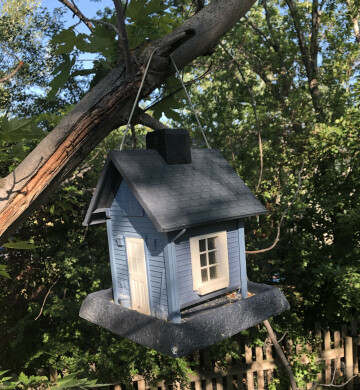
HELENA – To prevent the spread of disease, such as salmonella, bird enthusiasts should consider either removing their bird feeders for the summer or cleaning the feeder regularly. Montana Fish, Wildlife & Parks has received several phone calls recently about dead birds around feeders and birds with crusty eyes.

Birds don’t need supplementary food in the summer. They typically eat naturally occurring food, such as insects, during this time of year when they are nesting and rearing their young. 

If you suspect that you are seeing sick birds, or find dead birds around your feeders, please contact your local FWP office. Bird feeders should be removed in the event illness is observed. The ground under feeders should also be cleaned as droppings will contain the salmonella bacteria.

Even when there is no sign of disease, feeders should be cleaned and disinfected at least every other week, or even weekly. Prevent overcrowding by spreading feeders out or using feeders that only allow a few birds to visit at one time.

Cleaning feeders

  • Clean your feeders with warm, soapy water. Disinfect with a 10 percent bleach solution to kill bacteria. Rinse the feeder and allow it to dry completely before using it again. Disinfect your birdbaths as well.
  • Clean your bird feeding area by washing all structures holding your feeders and raking the ground surrounding the feeders.
  • If you have observed sick or dead birds, do not reinstall your feeders for a few weeks. As birds begin to migrate and cease traveling in flocks, it will be okay to put feeders back up.

If you find a dead bird, place it in a double plastic bag. Please keep the bird in a cool location (such as a cooler) until you’ve contacted FWP.  FWP may want samples for testing. Wear gloves and wash hands thoroughly afterwards. 

If you live in bear country, please consider placing feeders greater than 10 feet high, and more than 4 feet from nearby trees and bring them in at night or keep your feeders down for the active bear season.  If bear activity is observed in the general vicinity of the feeder or your home, the feeder should be removed permanently.

Add a Comment »

BSCO Opens Len Hill Park

photo courtesy of Arts Council of Big Sky

Celebrating our community’s newest park and green space

The Big Sky Community Organization (BSCO) is excited to announce the opening of Len Hill Park in Town Center on Saturday, July 3rd. Thanks to the generosity of The Leonard Hill Charitable Trust, Patricia Gordon, MD, in-kind support from the Simkins family and 15 additional donors, BSCO was able to secure 3.3 acres in heart of Big Sky on behalf of the community in the winter of 2018.

The Len Hill Park, formally known as the Town Center Park, and home to the Arts Council of Big Sky’s Music in the Mountains concert series, has been a treasured open space for all in Big Sky. Improvements to the park began in May 2020 which includes: re-grading the park to help with drainage issues and improve seating with an amphitheater style layout; planters installed on Ousel Falls Drive to help protect park goers from traffic; permanent bike racks; additional trash receptacles; and added gravel in front of the stage to reduce damage to the grass.

“As Big Sky reopens after the pandemic, the Len Hill Park will be a much-utilized open space!” said Whitney Montgomery, BSCO CEO. “It will be fabulous to have the park available for concerts, picnics, and general use. We are grateful to the Leonard Hill Charitable Trust and Dr. Patricia Gordon, the Simkins Family along with many others, for their generosity in bringing this park to our community.”

We look forward to celebrating with the community as we enjoy our newest park and green space on Saturday, July 3rd from 4-5 PM.

Construction on BASE continues to move forward with an anticipated early 2022 opening. BSCO is working hard with our program partners, including the Arts Council of Big Sky, to offer more year- round enrichment opportunities for all, as well as provide passholders the opportunity to access the climbing gym, gymnasium, fitness room, an unsupervised child play area and community rooms.

About Big Sky Community Organization:

The Big Sky Community Organization creates recreational and enrichment opportunities for people through the thoughtful development of partnerships, programs, and places. To find out more about the Big Sky Community Organization visit www.bscomt.org

Add a Comment »

Forest Service Protections Sought for Wolves in Idaho, Montana Wilderness Areas

New policies could eradicate gray wolf populations in Northern Rockies states

BOZEMAN, Montana – A coalition of wildlife advocates and hunters, represented by the non-profit environmental law firm Earthjustice, today asked the U.S. Forest Service to issue new protections for wolves in designated wilderness areas following Idaho and Montana’s enactment of a rash of aggressive anti-wolf laws.

The petition, submitted to Agriculture Secretary Tom Vilsack and top Forest Service officials, asks the Service for protection of wolves in national forest wilderness areas from new Idaho and Montana laws allowing professional contractors and private reimbursement programs--resembling 19th-century wolf bounties--to dramatically reduce wolf populations in the two states.

During their 2021 sessions, the Montana and Idaho legislatures enacted harsh anti-wolf laws that target up to 1,800 wolves. One goal of the laws is to artificially inflate elk populations – which are currently at or above population objectives in most management units – to levels last seen in the mid-1990s, before wolves were reintroduced to their historical range in the Northern Rockies. Wolves are being targeted even though scientific studies show that drought and excessive hunting quotas, not predation, caused some elk populations to decline.

“A wilderness is supposed to be a wild place governed by natural conditions, not an elk farm,” said Earthjustice attorney Timothy Preso. “We are calling on the Forest Service to prevent Montana and Idaho from taking the wild out of wilderness through their aggressive wolf-removal campaigns.”

The petition asks the Forest Service to issue new regulations and closure orders to prevent wolf killing by professional and subsidized hunters and trappers across nearly 8 million acres of designated wilderness in Idaho and Montana, including such flagship areas as the Bob Marshall Wilderness in northwest Montana and the Frank Church-River of No Return and Selway-Bitterroot Wildernesses in central Idaho. These proposed measures include:

• Initiating a new rulemaking to safeguard the wilderness character of these protected places

• Imposing restrictions on bounty hunting of wolves to prevent wilderness degradation
• Prohibiting wolf hunting and trapping activities by private contractors in congressionally designated wilderness areas

The groups’ petition focuses on a guarantee in the 1964 Wilderness Act that the • • • Forest Service must manage designated wilderness as “an area where the earth and its community of life are untrammeled by man, … retaining its primeval character and influence, … which is protected and managed so as to preserve its natural conditions.” New laws that authorize professional contractors and subsidized trappers to drive down wolf populations threaten to degrade wilderness conditions by upsetting the balance of predator and prey and eliminating a keystone wildlife species that is an icon of the wilderness landscape.

The petitioner groups include the Center for Biological Diversity, Defenders of Wildlife, Friends of the Clearwater, Humane Society of the United States, Humane Society Legislative Fund, International Wildlife Coexistence Network, Montana Wildlife Federation, Sierra Club, Western Watersheds Project, Wilderness Watch, and Wolves of the Rockies.

The following are statements from the petitioner groups:

“Wolves need wildernesses to serve as a refuge where they can be safe from the slaughter they face across Idaho and Montana,” said Andrea Zaccardi, a senior attorney with the Center for Biological Diversity. “Protecting wilderness requires the Forest Service to also protect wolves, which are so ecologically important to our national forests.”

“The state-sanctioned killing of wolves in Idaho and Montana threatens to needlessly damage the natural balance within our wilderness areas in these states for years to come,” said McCrystie Adams, managing attorney at Defenders of Wildlife. “We urge the U.S. Forest Service to abide by its duty and take immediate action to safeguard the unique character of our wilderness areas against these states’ wolf-killing measures.”

“The wild Clearwater region is the northern half of the largest relatively intact ecosystem in the lower 48 states,” said Gary Macfarlane, Ecosystem Defense Director for Friends of the Clearwater. “Wolves and other species make places like the Selway-Bitterroot Wilderness truly wild. This petition seeks to keep it that way.”

“Dispatching trappers and private contractors to cruelly and ruthlessly kill wolves on public lands threatens both the survival of the species and the character of the wilderness areas where they range,” said Nicholas Arrivo, managing attorney for the Humane Society of the United States. “The Forest Service must take action to mitigate the damage that Idaho and Montana’s reckless wolf-killing legislation will cause.”

“The Forest Service has long recognized that the presence of the Northern Rockies' treasured wolves on the landscape enhances and preserves congressionally designated wilderness areas," said Keisha Sedlacek, director of regulatory affairs for the Humane Society Legislative Fund. “The agency must carry out Congress’ intent to protect wolves from commercially driven slaughter.”

“The Montana Wildlife Federation supports ethical, fair chase hunting of wolves, but this is anything but ethical or fair chase,” said Nick Gevock, conservation director of Montana Wildlife Federation. “Paying contractors to go into wilderness areas and kill wolves amounts to an all-out eradication effort that harkens back to the 19th Century. These are wild areas that offer some of the best hunting in the country for all species, and these moves degrade that. It’s disgraceful and it needs to be stopped.”

“Wolves are essential to the overall health of ecosystems, but Montana and Idaho’s new laws aim to decimate their populations in the Northern Rockies. We cannot allow the modern equivalent of a bounty system for wolf killing to operate in wilderness areas— the very places meant to provide refuge for wildlife to thrive,” said Dan Ritzman, Director of Lands, Water and Wildlife at the Sierra Club. “With the extinction crisis bearing down, we need wilderness areas to remain intact and in support of life-sustaining biodiversity more than ever.”

“Wilderness is a place where natural processes should prevail, and the howl of the wolf should echo from peak to vale,“ said Erik Molvar, Executive Director of Western Watersheds Project. “Healthy populations should be allowed to thrive throughout the range of the gray wolf, and their ability to flourish should not be impeded by commercially-driven killing, especially in Wilderness.”

“Montana and Idaho have declared a despicable war on wolves and on the very idea of Wilderness itself,” said George Nickas, Executive Director of Wilderness Watch. “The Forest Service has the authority and mandate to protect these special places and their wildlife. It needs to put a stop to this ugly slaughter.”

“Americans need to know that wolves can exist unmolested by man in our few remaining wildernesses,” said Marc Cooke, representative of Wolves of the Rockies.


Comments 1

Friday, Jun. 25th, 2021

Fires banned at FWP properties in Park County 

Stage-1 fire restrictions in effect until further notice 


LIVINGSTON – Campfires will be banned until further notice at Montana Fish, Wildlife & Parks properties in Park County beginning at 12:01 a.m. on Friday, June 25, due to high fire danger.  

This is consistent with Stage-1 fire restrictions being implemented by Park County, the Custer Gallatin National Forest and the Bureau of Land Management in this area due to warm, dry conditions. 

Stage-1 restrictions ban campfires except where specifically exempted and allow smoking only in vehicles and areas 3 feet in diameter that are cleared of flammable materials. No exemptions are in place for campfires or charcoal grills on FWP properties in Park County. Gas or propane stoves that can be turned on and off are still allowed. 

Fireworks are always prohibited at FWP sites. 

Affected fishing access sites in Park County include Brogan’s Landing, Carter’s Bridge, Chicory, Crystal Cross, Dailey Lake, Dan Bailey, Emigrant, Emigrant West, Free River, Grannis, Grey Owl, Highway 89 Bridge, Loch Leven, Mallard’s Rest, Mayor’s Landing, Pine Creek, Point of Rocks, Point of Rocks East, Queen of the Waters, Sheep Mountain, Slip & Slide, Springdale Bridge and Sunny Brook Springs.  

These restrictions are also in place for the Dome Mountain Wildlife Management Area.  

Add a Comment »

Thursday, Jun. 24th, 2021

MSU team publishes coronavirus vaccine and antibody research


A team of scientists from Montana State University’s Department of Microbiology and Cell Biology published research earlier this month evaluating the effectiveness of COVID-19 vaccines and seeking to learn more about how long the resulting antibody protection may last.

The study, “Titers, Prevalence and Duration of SARS-CoV-2 Antibodies in a Local COVID-19 Outbreak and Following Vaccination” published in the journal Vaccines, was conducted using volunteer subjects and data collected in Gallatin County beginning in March 2020, shortly after the first COVID-19 cases were reported in Montana. Around 170 volunteers had their blood drawn — many on a monthly basis — to assess whether there were antibodies present and, if so, how the titer, or concentration of antibodies in the blood, changed over time.

For associate research professor Jodi Hedges, the study provided an opportunity to conduct real-time research on a public health issue in her community. As more Montanans and Americans receive vaccines, she said the study was a way to engage the public in critical science.

“I loved the fact that the volunteers were up for coming back to give samples every month for a year,” she said. “The enthusiasm for the project and encouragement of the participants was great. It was fun to be able to tell them their antibody status in a time of such uncertainty. This whole project was really gratifying.”

The research team also included Deann Snyder, instructional lab manager for the Department of Microbiology and Cell Biology, research associate Amanda Robison, associate professor Matt Taylor and Regents professor Mark Jutila.

Antibodies are an immune response triggered by exposure to something foreign, like a virus, said Hedges, who led the study. Humans produce antibodies both in response to natural infection and after vaccination. The higher the concentration of antibodies, the more an individual is protected from future infection. But a major question was whether a symptom-less case of COVID-19 triggered a measurable antibody response.

“We wanted to measure the extent of asymptomatic infection by measuring antibodies in people,” Hedges said. “What if a bunch of us already had antibodies?”

As it turned out, asymptomatic infection in the community was less prevalent than initially thought, especially when a person hadn’t been in close contact with someone diagnosed with COVID-19. But Hedges and her team found that asymptomatic infection still led to an antibody response, so they sought to learn more about those antibodies.

“We were interested from a diagnostic standpoint, to see how long after infection we could see if someone had had it, as well as to see how long that protection lasted,” said Hedges.

For most study participants, antibody levels began to wane after five or six months, the team found. For those with the highest starting levels of antibodies, the time before antibody levels dropped could be as long as a year.

Hedges noted that the human antibody response triggered by a vaccine is much stronger. For maximum protection, she said, even those who have already had and recovered from the virus should be vaccinated.

“It’s an important takeaway from this that there’s a lot of variability. Just because you had it, it doesn’t mean you have a strong antibody response,” she said.

Part of the reason that immunity lasts longer after vaccination is because of memory B cells, said Hedges. A type of blood cell, memory B cells retain a genetic blueprint for the antibodies they create, meaning they can continue to create those same antibodies in the future. Memory B cells can be maintained in the body for decades, well after antibody levels have waned.

Hedges explained that these cells are why many modern vaccines administered to young children can provide protection for their entire lifetime. Memory B cells are created after natural infection, but in a lower concentration than is triggered by a vaccine, meaning the immune response is stronger after vaccination.

 “Groups have measured memory B cells in people in their 90s and 100s who have memory B cells from the 1918 flu pandemic,” she said. “If you made antibodies once, you have the memory B cells to make them again.” 

Add a Comment »

News Comments