

Friday, Mar. 29th, 2024

Journal publishes Montana State scientists' paper on pollinators in roadside habitats
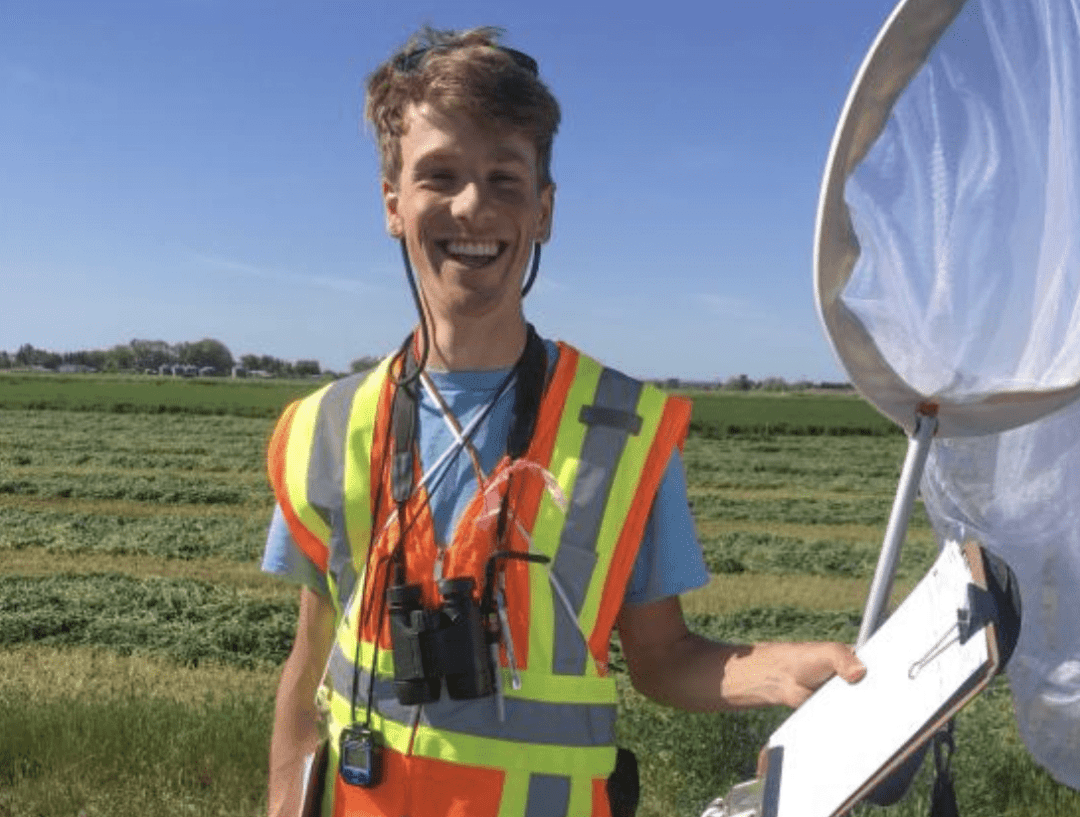
Montana State University ecology graduate Thomas Meinzen is pictured in Idaho conducting research on insects in roadside habitats. His review paper on the risks and benefits of such habitats to insect populaitons  was published recently by the journal BioScience. Photo by Diane Debinski

BOZEMAN
– Spring is here, and soon the insects we notice all around us during Montana’s temperate seasons will reappear in yards, fields, outdoor recreation areas and along roadsides. With them will be the pollinators, such as bees and butterflies, that are frequently found living, nesting and foraging amid roadside flora.

But are such habitats helpful or harmful to the species that use them? The question has been the subject of study for years, and a review article by a Montana State University graduate detailing the research of hundreds of scientists was published recently in the journal BioScience.

“The BioScience paper was essentially an introduction to my thesis,” said lead author Thomas Meinzen, who in 2023 earned his master’s degree in biological sciences in MSU’s Department of Ecology in the College of Letters and Science. “I felt like this was the most important part because it’s really addressing questions about the overall impact of roadsides on (insect) population levels.”

Building on his lifelong enthusiasm for biology and natural history, Meinzen’s interest in these questions grew when he took an applied population ecology class during his MSU coursework.

“I learned that vital rates—birth, death and emigration—are so important in understanding how habitats can benefit or harm species,” he said.

Numerous studies highlight the floral resources and connectivity pathways provided by road verges, while others explore the attendant risks, including traffic collisions, pollutants, herbicides and mowing activities. Yet scientists don’t know how these benefits and risks balance out, and whether roadside habitats are more harmful or helpful to insect populations.

“A lot of these questions are unanswered – not because no one’s thinking about them, but because there’s so much we still don’t know about insects,” Meinzen said.

While at MSU, Meinzen set out to fill a portion of that knowledge gap by conducting a study on enhancing roadside habitat for pollinator conservation funded by the Idaho Transportation Department. The study became the bulk of his master’s thesis, for which he spent two summers conducting fieldwork at 63 different road verges in southeastern Idaho, including along state, U.S. and interstate highways.

Meinzen surveyed plants, bees and butterflies at each of the 63 sites twice each summer, as well as at a subset of the verges each August. He said the data provided a sense of how plant and flower communities relate to butterfly and bee diversity and how the highway type influenced diversity at each site.

“We found the overall result was that smaller, state highways had greater bee diversity. Bee diversity was also higher in less green areas, which was not what we anticipated,” he said. “We found, at least in southern Idaho, that the bright green areas tend to be dominated by non-native, invasive plants, while the drier, browner areas had native plants like sagebrush and tended to be better for bees.”

Results of the butterfly surveys were less conclusive, he said, probably because butterflies are more likely than bees to be generalists with wider habitats and less specific floral preferences. The survey results helped the MSU team formulate recommendations for Idaho’s roadside managers to prioritize plantings for pollinators along smaller highways and to protect sagebrush ecosystems.

“Sagebrush habitats might not look as showy, but they seemed to provide what bees needed – open ground for nesting and a variety of different blooms throughout the growing season, which is better than a lot of flowers one time of year,” Meinzen said.

Because his work in Idaho answered only some of the myriad questions ecologists have about roadside habitats, Meinzen said, he wrote the review of many additional studies to synthesize the wealth of information available for those creating roadside management plans.

The article was selected as the Editor’s Choice for the January edition of BioScience. And Meinzen – along with co-authors Diane Debinski, head of MSU’s ecology department, and MSU ecology professor Laura Burkle – were interviewed about roadside habitats and pollinators for the BioScience Talks podcast last month.

“It’s exciting as a young scientist to have a paper selected for that award and podcast, so I could share these ideas in a way that’s hopefully more accessible to people,” said Meinzen, who now works as an urban forester in Portland, Oregon.

His advice to anyone wishing to help native pollinators is to avoid using herbicides and pesticides when possible and to prioritize native flowers and ground cover when choosing plants.

“It’s important for people to know pollinators are declining really rapidly, and that it’s a big concern,” he said. “Trying to promote a diverse, native ecosystem without pesticides is the best way we can help native pollinators.”

Add a Comment »

Thursday, Mar. 28th, 2024

Montana State Sustainability Summit speaker stresses power of acting locally

Montana State University Plant Growth Center manager David Baumbauer hosts a tour of the facility, pictured in the background, during the third annual Sustainability Summit on Tuesday, March 26, 2024, in Bozeman, Montana. The event highlights elements of sustainable campus infrastructure, such as new energy-efficient lighting in the Plant Growth Center. MSU photo by Colter Peterson

BOZEMAN
– The keynote speaker at Montana State University’s 2024 Sustainability Summit on Tuesday urged students to make choices with the knowledge that, while their individual power may be limited, their collective actions over time can affect everything on Earth.

Hunkpapa Lakota backcountry freestyle skier and activist Connor Ryan delivered that message during the annual summit hosted by MSU’s Office of Sustainability. The summit showcases campus-wide research, highlights efforts to make the university’s operations more sustainable, and updates the campus community on progress toward MSU’s long-term carbon-neutrality and zero-waste goals.

During his lunchtime speech, Ryan stressed that the actions of individuals in their own communities will contribute to significant, wide-reaching change in the long run, even if those actions don’t seem tremendously powerful in the short-term.

“The power of a wave isn’t in the mist that precedes it but in the power of the big wave that comes behind it,” he said.

The keynote address drew a crowd to MSU’s Strand Union Building, where posters displayed informational charts and architectural renderings of current and planned campus buildings and their energy-efficient design elements. Other highlights from the summit included sustainability-focused tours of MSU’s utility, research and landscape infrastructure; workshops on teaching sustainability; and presentations on related research being conducted by MSU students.

In his keynote address, Ryan offered his perspective as an athlete who views backcountry skiing in the Rockies as more than just a sport. For him, he said, it’s a dance, a prayer and a way to ceremonially reconnect with his Indigenous heritage and the places he came from. That connection is a major theme of the award-winning documentary film he co-directed, “Spirit of the Peaks,” which features his work and athleticism and which was shown on campus Monday evening to kick off the summit.

Ryan said that though he grew up on Colorado’s Rocky Mountain Front, it wasn’t until his adulthood, when he began exploring his heritage, that he began to understand his connection to the natural world. That understanding dawned during a sweat lodge ceremony, he said. After collecting creek water for the ceremony within view of the mountains where he skis, he was told that the water, in the form of steam, would become part of his body when he inhaled it, just as water from snow would become his blood after melting in the spring.

“I had the realization that this water I was carrying into the lodge was the water I’d been skiing on,” he said. “It was the first time I realized I was connected to this snowpack.”

Ryan told his audience that an Indigenous understanding of the interconnectedness of all things in nature is useful in informing environmental choices.

“Nothing in nature lives for itself,” said Ryan. “It’s up to us not to always do what’s profitable or what will bring us pride or glory or success, but instead for us to reapply those rules to everything that grew beside us on this planet.”

Ryan said actions taken at the grassroots level are more powerful than people realize, and he urged students to find ways they can work for sustainability while maintaining faith that those efforts matter.

“We as human beings can never leave nature – we are nature,” he said. “Everywhere we are is because of a decision made before us. If we want things to be different, we have to make different decisions.”

Add a Comment »

Wednesday, Mar. 27th, 2024

Montana State University Extension Mobile Memory Café Program delivers dementia awareness

BOZEMANMontana State University Extension will offer a program that brings social engagement and dementia awareness to communities across Montana in April, May and June.

The Mobile Memory Café offers free, research-informed resources to caregivers and individuals with early-onset Alzheimer's disease or dementia. Registration is not required to participate in the Mobile Memory Café. The program was developed by Dan Koltz, MSU assistant professor and Extension gerontology specialist.

“Living well with dementia is a challenge,” Koltz said. “The Mobile Memory Café seeks to provide social engagement for caregivers and individuals in communities across Montana.”

Topics covered by the Mobile Memory Café include prevention, brain health, nutrition, sleep, social activity and physical health. The program is supported by the Montana Geriatric Education Center, County and Statewide Area Agencies on Aging and the Alzheimer's Association Montana Chapter.

“We are fortunate to have several partners working alongside us to provide critical healthy aging resources,” Koltz said. “We invite anyone interested in learning more about living well with dementia to visit the Mobile Memory Café this spring.”

Stops are scheduled in April, May and June in Anaconda, Butte, Darby, Drummond, Hamilton, Helena, Kalispell, Libby, Polson, Ronan and Roundup. A full list of dates, locations and additional details can be found at montana.edu/extension/health/healthy_aging/index.html.

Add a Comment »

Bozeman City Commissioner Christopher Coburn Announces Resignation

BOZEMAN – Christopher Coburn announced his resignation from the Bozeman City Commission during last night’s Commission meeting. Citing personal reasons as the driving factor behind his decision, Coburn described the decision as being bittersweet, and expressed a desire to stay engaged with city happenings even after he transitions out of his role and moves out of Bozeman.

“I have not stopped and will not stop caring about the future of Bozeman – the people who live here now and the people who might live here in the years to come,” Coburn stated during his announcement. “I’m fully committed to spending my remaining time in community with you, continuing to work just as hard as I have for the past three years I have been in this role. It has been and continues to be such an honor.”

Coburn was appointed to the Commission in April 2021. By November of that year, he won his race for the open Commission seat and started his elected four-year term.

Coburn’s resignation goes into effect May 7. From there, the City Commission is required by state law to appoint someone to fill the seat within 30 days. The appointed Commission member will serve until the next municipal election, which is to be held in November 2025.

More information on the Commission Vacancy and how it will be filled will become available in the coming weeks at www.bozeman.net.

Add a Comment »

3-26-24: Death Investigation Follow-Up

The Gallatin County Sheriff’s Office continues to investigate the death of 26-year-old Jakob Michael Page, whose body was found at the Knife River gravel pit near Belgrade on the morning of Monday, March 25. An autopsy is scheduled to take place this week and toxicology results will be available in six to eight weeks.

We reiterate that foul play is not suspected at this time. Upon a thorough initial investigation, our investigators found that the body showed clear indications of exposure, but no trauma. Mr. Page’s clothing was found nearby, which also indicated to us that the death was related to hypothermia. This well-known phenomenon, called “paradoxical undressing,” is frequently seen in hypothermia cases where disoriented patients strip their clothing when they are near death. It occurs in over 25% of hypothermia cases.

The Gallatin County Sheriff’s Office has excellent investigators who do exceptional work, day in and day out, to ensure they come to the correct conclusions in all of our investigations. Our experienced and well-trained professionals base their decisions on evidence and not conjecture. We will continue to further investigate this tragedy.

We send our deepest sympathies to Mr. Page’s family and friends during this difficult time.

Add a Comment »

Grizzly bear euthanized due to cattle depredation in Teton County

GREAT FALLS – A grizzly bear was euthanized Monday after a cattle depredation on private land along the Rocky Mountain Front.

Montana Fish, Wildlife & Parks had previously captured and radio collared the young adult male bear weighing 375 pounds near Simms earlier this month, and it was relocated at that time by the U.S. Fish & Wildlife Service (USFWS). Considering this, and in consultation with the USFWS, the bear was euthanized by U.S.D.A. Wildlife Services on March 25.

Grizzly bears in the lower 48 states are listed as threatened under the Endangered Species Act. Management authority for grizzlies rests with the USFWS, working closely in Montana with FWP, the Forest Service, the National Park Service, the Bureau of Land Management, the U.S. Geological Survey, U.S.D.A. Wildlife Services and Native American tribes. This collaboration happens through the Interagency Grizzly Bear Committee.

For more information and resources on bear safety, visit fwp.mt.gov/conservation/wildlife-management/bear.


Here are some general tips to stay bear aware:

  • Travel in groups whenever possible and plan to be out in the daylight hours.

  • Avoid carcass sites and concentrations of ravens and other scavengers.

  • Watch for signs of bears such as bear scat, diggings, torn-up logs and turned over rocks, and partly consumed animal carcasses.

  • Make noise, especially near streams or in thick forest where hearing and visibility is impaired. This can be the key to avoiding encounters. Most bears will avoid humans when they know humans are present.

  • Don't approach a bear.

Camping in bear country:

  • Keep food and anything with a scent out of tents. 

  • Dispose of garbage in bear-resistant containers; otherwise, take it with you and dispose of it properly elsewhere. Do not bury or burn garbage. 

  • Properly store unattended food and anything else with a scent. Food storage options are:

    • Bear boxes 

    • Hard-sided vehicles (car, truck, RV). Avoid leaving attractants in vehicles for extended periods of time (backcountry trips) 

    • Certified bear-resistant containers 

    • Electric fencing 

Fishing in bear country:

  • Make noise when approaching streams or rivers where visibility is poor and/or rushing water makes it difficult for bears to hear you approaching. 

  • Carry bear spray on you, especially if you are wading or shore fishing. 

  • When possible, clean fish at a designated fish-cleaning station, or at home. 

  • If you live in bear country, place entrails and fish waste into the freezer until the morning of garbage day. Do not leave fish waste outside in garbage cans for multiple days, as bears will be attracted to the smell. 

  • Cut filleted fish carcasses into smaller pieces that can be easily carried away in the current. 

  • Toss all fish waste into deep, fast-moving currents. Do not leave entrails or other fish waste on the bank or in shallow water. 

  • Store fish on ice in a certified bear-proof container. Coolers are not bear proof. If you use a cooler, keep it near you and closely attend it. 

Biking and running in bear country:

  • Anyone traveling quickly on trails is at higher risk of surprising a bear. 

  • Traveling fast around corners can increase the chance of an encounter. 

  • Watch for signs of bear activity and avoid riding in these areas. 

  • Avoid being on trails at night or at dusk or dawn. 

  • Avoid riding fast on trails that feature seasonal food sources for bears, such as berries. 

  • Do not run or ride while intentionally impacting your ability to hear natural noises (i.e. wearing ear buds or headphones). 

  • Make noise when line of sight is poor. 

  • When possible, ride in groups and stay together. 

  • If you encounter a bear, stop, get off your bike, and follow bear encounter recommendations. 

  • Never try to outrun or outride a bear. 

  • Carry bear spray on your person not on your bicycle or backpack.

Add a Comment »

High Cost of Living Unfairly Burdens Fixed Income Seniors Across Southwest Montana


HRDC is seeking to raise $50,000 to help offset its senior programs budget gap.

Several troubling economic pressures continue to hit the wallets of seniors living in Gallatin, Park and Meagher Counties. Sky high rents, a crisis-level lack of affordable housing, inflation, high medical costs, and the state’s recent Medicaid unwinding challenges are causing many more community members who are nearing retirement — or who have already retired — to seek help from HRDC.

“So many of our customers are at their financial breaking points where there is no possible way to stretch their fixed incomes to cover basic household expenses. We step up and help with monthly groceries, energy assistance, public transportation options, Medicare counseling, and more. Yet, with next to no reasonably priced places to live, our previously self-sufficient customers in their 60s, 70s, and 80s are finding themselves in very precarious circumstances,” said Margaret Mason, Associate Director and Senior Programs Manager at HRDC.

Mason continued to express the direness of the situation, “Over the course of the last year alone, we provided a full range of supportive services to 1,848 individuals while witnessing an all-time high number of seniors — 145 — who experienced homelessness. As a community, it’s imperative that we continue to work together to deploy long-term solutions to reduce these numbers. In the meantime, anyone who shares our concerns, can help change the trajectory of someone’s life by donating to our senior programs. Truly, any amount helps.”

HRDC is shining a light on the plight of seniors who are living in or near poverty in Bozeman and beyond. A focus on the agency’s senior programs kicked off in the middle of March and includes a variety of community education and outreach efforts. To help offset the $50,000 budget deficit facing HRDC’s senior programs, a bingo fundraising event is taking place at The Armory Hotel, on March 28th, at 6:00 pm. Tickets are available at thehrdc.org.

According to AARP, “Seniors over the age of 55 are likely the fastest-growing group of peopleexperiencing homelessness ... and for many of them, it is first-time homelessness.”

HRDC is a private, not-for-profit Community Action Organization focused on building a better community through its nearly 50 initiatives aimed at combatting poverty in Southwest Montana. Donors, volunteers, and community members can learn more at thehrdc.org.

Add a Comment »

Tuesday, Mar. 26th, 2024

Montana State music students perform with regional honors choir


BOZEMAN
— Four Montana State University students performed with the Collegiate Honor Choir at the American Choral Directors Northwest Division Conference in Spokane, Washington, earlier this semester. 

Joseph Barrett, Rosalyn Black, Piper Butler and Jared Rosgaard were selected to perform with students from six other universities at the conference for choral music professionals, which ran Jan. 24–27. They applied for the choir last fall and were accepted as a quartet. 

The four MSU students joined about 200 other college students at the conference to perform “Chichester Psalms” by Leonard Bernstein, who was portrayed by Bradley Cooper in the 2023 film “Maestro.” 

Butler, a junior in the School of Music’s music education program, said the piece is about 20-minutes long, includes three movements and is rather difficult to sing. 

“Being a smaller group and a smaller college than the rest ... we knew we had to show up and perform really well,” Butler said. 

She said the four MSU students met to practice for about 90 minutes each week after their rehearsals with MSU’s Montanans choir, in which they serve in leadership roles. Kirk Aamot, Director of Choral Activities at MSU, helped the students prepare the music and accompanied them to the conference.  

"It's a great opportunity for these students to learn this important work and sing with university students from around the Northwest Region," Aamot said. 

However, getting to the conference proved difficult. Due to a flight delay, the MSU group missed the conference’s first day of rehearsals — a five-hour session. 

“The next day there was another rehearsal,” Butler said. “Since we put all that practice time in beforehand, we were still caught up.” 

A highlight for Butler and the other MSU participants was working under the direction of André Thomas, a world-renowned conductor and composer. Butler also attended Thomas’s master class on conducting. 

“I’m in the middle of all my conducting learning, so getting to add that on to what I am already learning was really beneficial,” said Butler, who plans to go into teaching after graduation. 

While in Spokane, the MSU students were able to walk around the city in their free time, explore the University of Gonzaga and meet with other students and industry professionals. 

Rosgaard, a sophomore majoring in music education, hopes to pursue a performance-based graduate degree and perform with an opera after graduating from MSU. He said he enjoyed talking with students from all over the region about different programs. 

“Being able to work with students all across the Northwest was a great experience — to see how they work and how their directors work,” he said. “It was a really good experience to be around talented singers and make connections.”

Add a Comment »

Bozeman Health Dietitian Shares Nutrition and Healthy Eating Advice

BOZEMAN  — The month of March is recognized as National Nutrition Month, promoting the importance of making informed food choices while developing healthier eating and physical activity habits.

“When talking about nutrition, instead of focusing on what you shouldn’t do or what’s bad for you, I try and focus on what you should do and make actionable recommendations,” says Morgan Rhinard, registered dietitian (RD), board-certified diabetes education specialist, and supervisor of inpatient clinical nutrition at Bozeman Health.

Rhinard says a few simple tips to keep in mind include choosing rotisserie chicken or canned tuna for something quick and convenient over heavily processed meats; eating 25-30 grams of fiber per day from food, not supplements; and focusing on unsaturated fats like fish, nuts and olive oil. Implementing small, feasible changes can make a big difference over time.

“And good news for coffee drinkers,” Rhinard shares, “when it comes to antioxidants, most people think of fruits and vegetables, but coffee is actually considered a good source as well!”
In the hospital setting, RDs can be found providing inpatient and outpatient care and working with hospital food services. Rhinard says National Nutrition Month also serves as an opportunity to highlight her profession, “For hospitalized patients, we most frequently provide services related to nutrition support, malnutrition treatment and diabetes care / education. We also provide medical nutrition therapy and education for any relevant medical diagnoses.”

Inpatient RDs must have extensive knowledge of all disease states and understand how to optimize nutrition status for high-acuity patients who have complex metabolic needs due to acute illness or injury.

“We monitor, assess and optimize nutrition status based on the patient’s current medical condition and nutritional needs. Meeting nutrition needs for critical care patients is significantly different compared to a healthy adult and involves adjusting the nutrition plan of care in response to changes in medications that have an impact on food and nutrition,” Rhinard continues.

RDs are an integral part of the interdisciplinary inpatient care team at Bozeman Health, and in general, hospitals who include RDs in their care teams have improved patient outcomes.
Rhinard shares that if she could give one piece of advice to those interested in making a positive change it would be, “Be honest about your motivation for making the change and then write it down to revisit when things get tough. People are far more successful with behavioral change when they set their own goals, and an RD can provide expert guidance to help you reach those goals.”

To reach the Bozeman Health Diabetes & Nutrition Center, call 406-414-5331.

Add a Comment »

Monday, Mar. 25th, 2024

Applications open for Montana State’s $100K Venture Competition to be held on April 24


BOZEMAN
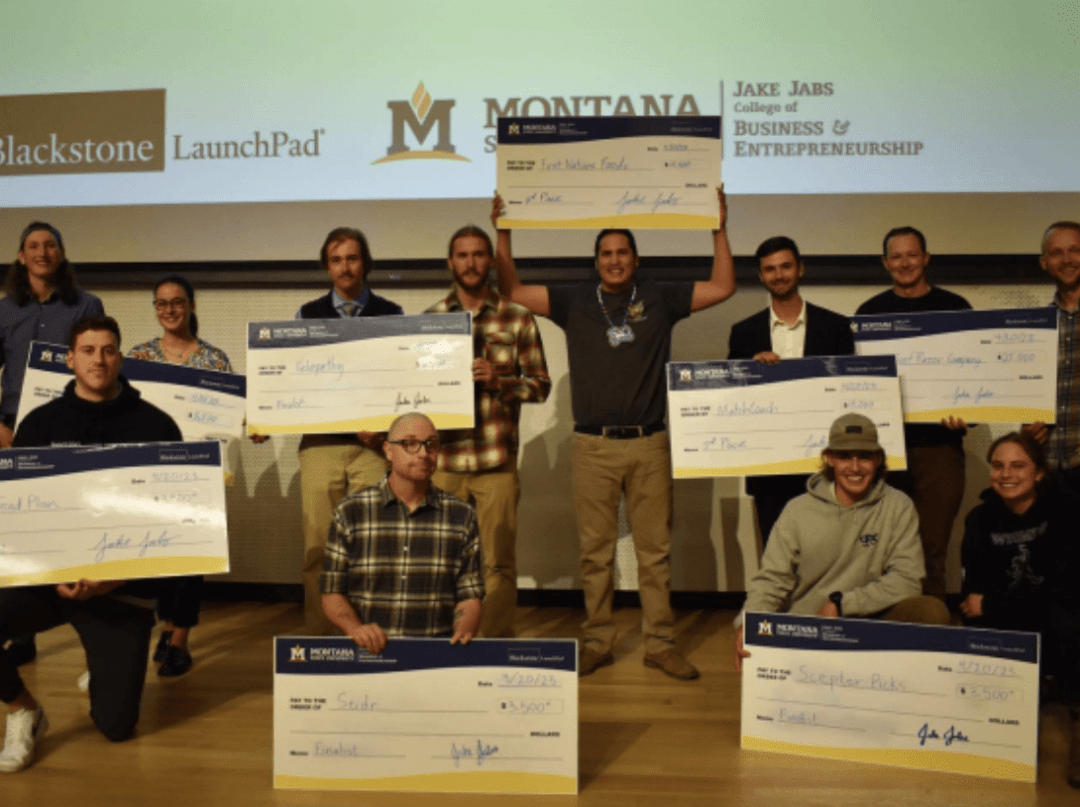
— Applications are being accepted for the $100K Venture Competition hosted by Montana State University’s Jake Jabs College of Business and Entrepreneurship and the MSU Blackstone LaunchPad.

The competition provides entrepreneurs an opportunity to present their business ventures, receive feedback and compete for startup funding. The deadline for applications is Sunday, April 7.

The annual event is open to all undergraduate and graduate students from Montana University System-affiliated campuses, as well as MUS faculty and staff and alumni who graduated within the past 10 years from an MUS campus. The final round of the competition, where competitors present their business plans to a panel of judges, will start at 5 p.m. Wednesday, April 24, in Inspiration Hall in Norm Asbjornson Hall on the Montana State campus. The event is free and open to the public.

Ventures that received first, second or third place prizes in previous MSU $50K or $75K Venture Competitions are not eligible to participate. In addition, ventures that have received venture capital or angel funding are not eligible, but ventures that have received funding from an MUS institution or the Small Business Innovation Research and Small Business Technology Transfer programs or similar grants may participate.

The event’s purse grew to $100,000 this year, up from $75,000. In addition to the monetary support for the top performers, all participants gain access to and receive feedback from entrepreneurs, investors, mentors and a panel of judges with extensive entrepreneurial experience.

Applications and competition information can be found at montana.edu/business/venture-competition/.

Questions about the MSU $100K Venture Competition may be directed to 406-994-4383 or info@msulaunchpad.org.

The Jake Jabs College of Business and Entrepreneurship offers four undergraduate options of study – accounting,finance, management and marketing – as well as five minors - accounting; business administration; entrepreneurship and small business management; finance; and international business. It also offers a master of professional accountancy degree, master of science in innovation and management, a business certificate and an entrepreneurship certificate.

MSU’s Blackstone LaunchPad helps MSU students succeed in entrepreneurship and in their careers. Open to students, faculty and alumni in all majors, the campus-based LaunchPad provides mentoring, opportunities for participants to grow their networks and resources to help their businesses succeed. For more information, visit montana.edu/launchpad/.

Add a Comment »

News Comments