

Wednesday, Jul. 23rd, 2025

Visit Big Sky Expands Role to Destination Management with Resident-Focused Investments

BIG SKY — Visit Big Sky (VBS), known for promoting Big Sky as a world-class tourism destination, has recently completed a series of community-centered projects that reflect its evolving role as a Destination Marketing and Management Organization (DMMO). These initiatives mark a shift toward tourism management, investing in infrastructure and partnerships that benefit both visitors and residents alike.

“After the 2023 Resident Tourism Sentiment Survey, we made a conscious effort to ensure that our strategies reflect the values and needs of our local community,” said Brad Niva, Executive Director of Visit Big Sky. “This is smart marketing. It’s about creating a great experience for visitors and the people who call Big Sky home.”

Among the recent projects completed:

Len Hill Park Public Restrooms – New, modern restrooms were installed at Len Hill Park, a high-traffic area for both residents and tourists. The project was funded through a partnership between the Big Sky Resort Area District (BSRAD) and Lone Mountain Land Company, with project oversight by Visit Big Sky.

Big Sky Wayfinding Project – In response to local feedback and visitor confusion, Visit Big Sky utilized lodging tax dollars allocated by the State of Montana to design and install 20 new directional and informational signs throughout the community, improving navigation and enhancing the sense of place.

Community Calendar Launch – Visit Big Sky launched a new, user-friendly community calendar on www.visitbigsky.com, powered by AI that scans and aggregates events from dozens of local organizations. This tool helps both residents and visitors easily discover what’s happening in Big Sky at any given time.

Collaborative Support for Local Nonprofits – VBS partnered with Grow Wild and the Big Sky Community Food Bank to produce educational and outreach graphics. These materials help residents and visitors alike better understand local conservation efforts and community support programs.

These projects demonstrate Visit Big Sky’s strategic pivot to a DMMO, balancing tourism promotion with stewardship and sustainable development.

“As Big Sky continues to grow, we’re committed to thoughtful, inclusive investments that support the long-term health of our tourism economy and our community,” Niva added.

About Visit Big Sky
Visit Big Sky is the official destination marketing and management organization (DMO) for Big Sky, Montana. Dedicated to balancing tourism promotion with community stewardship, Visit Big Sky works to elevate the visitor experience while protecting the region’s natural beauty, supporting local businesses, and enhancing the quality of life for residents. Through strategic marketing, sustainable tourism initiatives, and collaborative partnerships, Visit Big Sky helps position the destination as a year-round hub for outdoor adventure, cultural discovery, and responsible travel. For more information about Visit Big Sky and its current initiatives, visit www.visitbigsky.com.

Add a Comment »

How Small Towns Can Lead the Way in Elder Care and Community Wellbeing

In big cities, a sense of collaboration and togetherness is hard to find. Everyone needs to get somewhere ASAP, chores are piling up, and there is no time, or very little time, to build relationships outside the home. Small towns are a totally different story. In small towns, you can feel like a part of the community faster than expected.

Neighbors love to make connections with other neighbors, and they nurture friendships and help each other out. Also, these connections don’t thrive only between young people or middle-aged people. Seniors also need support from their environment. That is why the main goal in one community's wellbeing is to create space for seniors to feel accepted, appreciated, and supported.

Small towns like Bozeman, Montana, are the ones who should set an example and lead the way in nurturing compassionate care in innovative communities.

Supporting seniors isn’t the only goal; strong connections in the community help build better local life, creating ripple effects that are good for everyone.

Community in Elder Care

It’s almost a natural thing to create personal connections and reciprocal support in smaller communities. That also helps in creating programs for elder care to help senior neighbors.

Small towns already excel in:

1. Local Engagement – Seeing neighbors and volunteers bring food or medication for their elderly neighbors in cities like New York is probably so strange that it is news material. In small towns, that’s a normal, everyday scene on the streets.
2. Adaptable Solutions – Less bureaucracy in small towns helps organizations adapt quickly to changing elder care needs.
3. Cultural Appreciation– Local traditions give senior people a sense of belonging, which helps them to feel that home vibe.

Small towns usually have all these qualities, but they need to nurture them to be able to build lasting and enduring support networks.

Elder Care Challenges in Bozeman vs Charleston

Bozeman and Charleston are great opposite examples because of their difference in size and culture. Yes, they are very different, but they have one thing in common.

They’re doing everything they can to make sure seniors get good care.

As you can see in the comparison table, Bozeman and Charleston have similar costs for senior care. On the other hand, their challenges are very different. In Bozeman, there is a problem with caregiver shortages. Also, specialized facilities are distant, while public transportation is limited. Charleston is struggling with different issues like overcrowding, impersonal care, and limited budget.

Where all these issues are present, neglect or abuse may happen. Families in both areas should seek legal help in this case. Consulting a nursing home abuse lawyer can help them know their rights and hold facilities accountable. Plus, they may be eligible to get compensated.

Seniors must be treated with dignity and care, no matter where they live.

5 Ways Small Towns Can Improve Elder Care

To improve elder care and overall community well-being, small towns can:

● Local Volunteer Networks – When people get together for a good cause, this often leads to positive things. Checking on older people and assisting them with their daily needs is an important service for anyone who’s willing to help.

● Training Programs – Caregivers need training to take better care of seniors at home.
● Accessible Health Services – Local healthcare systems need help and solutions to reach isolated seniors.
● Multi-Generational Programs – Young people can learn from seniors, and seniors can benefit from young people's energy. They can connect through schools, community centers, and cultural events.
● Policy Changes – Push for state and federal support for rural elder care. Facilities in small towns need more funding.

The Ripple Effects We Create When Supporting Seniors

Helping seniors with their needs is a beautiful thing to do, and it has a ripple effect across the entire community.

Healthy seniors can be engaged in society and give back by:

● Volunteering at schools, libraries, and community groups
● Mentoring younger community members and sharing life skills
● Preserving local culture through storytelling and art
Why Elder Care Is Central to Community Wellbeing

Many communities today lack a sense of shared responsibility.

If elder care becomes one of the main priorities, it is going to make social connections stronger and give that feeling of mutual responsibility back. It sends a powerful message that all citizens are valuable, regardless of age.

In the Bozeman area, a focus on culture and connections is the perfect soil to nurture this kind of approach and relationship building. Families who want to live in caring environments usually choose to settle where there are communities that honor their elderly – a continuous cycle of community growth.

Conclusion

Small towns already have so many benefits and a sense of real values in society. That’s why they should lead the way in elder care and community wellbeing.

They cherish close neighbors, friendly, family connections, local culture, and compassion, which are great foundations to create a support network for seniors.

Add a Comment »

Bozeman Health Pediatrics Now Offering Sports Physicals for Student Athletes

BOZEMAN – As the excitement builds for another season of Friday night lights, Bozeman Health Pediatrics is here to help young athletes prepare for a safe and successful year in sports.

The Montana High School Association requires all student athletes to have a current sports physical on file to participate in school-sponsored sports. These physicals ensure young athletes are healthy and cleared for physical activity, laying the foundation for a fun and injury-free season.

Your child’s pediatrician is the ideal provider for this evaluation. Pediatricians offer a whole- person approach and are familiar with your child’s health history, chronic conditions and developmental needs. Unlike walk-in clinics or urgent care centers, your pediatrician provides care in the context of your child’s ongoing health and medical history. This continuity of care results in a more personalized experience and better outcomes.

In line with the American Academy of Pediatrics guidelines, sports physicals can be completed during your child’s annual well-child visit, offering both convenience and potential cost savings for families.

With the busy back-to-school season approaching, now is the perfect time to schedule. Ideally, sports physicals should be completed six to eight weeks before the season begins, allowing time for follow-up if needed.

Bozeman Health Pediatrics offers sports physicals at all locations, including:

Add a Comment »

Gallatin College MSU launches hospitality program to meet demand in service industry


BOZEMAN
— Nearly 14 million people visited Montana in 2024. They spent $5 billion exploring national parks, riding through dude ranches and sampling menus at mountaintop resorts.

Starting in August, Gallatin College Montana State University will train students to house, guide and feed the state’s tourists and other travelers with a one-year hospitality certificate. The certificate provides baseline knowledge of business communication, culinary arts, hotel management and more, said program manager Meredith Allen.

The program received $1 million in funding from the Arthur M. Blank Family Foundation, which also supported plans to construct a new Gallatin College MSU building on the MSU campus.

“In partnership with the Arthur M. Blank Family Foundation, we are proud to support one of the largest industries in our state by offering education and training, as well as a stepping stone to four-year hospitality programs at MSU,” said Stephanie Gray, dean of the college.

The hospitality program is a collaborative effort between Gallatin College MSU, the Jake Jabs College of Business and Entrepreneurship and the College of Education, Health and Human Development. Gallatin College MSU students in hospitality or culinary arts programs will take classes alongside MSU students and can count their credits toward a four-year hospitality management degree, with options in hospitality business and sustainable hospitality.

“We all have the same goal, and that’s creating and being a part of a thriving hospitality industry in Montana that’s led by Montanans,” said Allen, who has worked for ranches, hotels and restaurants across the U.S. for more than 20 years.

Students can work for Montana organizations through the program’s internship requirement, which is completed as a semester-long course. Allen said it will be much easier for students to integrate with a team after graduation “if they’re speaking the same language from day one.”

Communication between staff members and upper management is a central component of the program’s courses, such as the hospitality supervision and customer service class taught by Celeste Carducci, an adjunct professor in the College of Education, Health and Human Development. She has instructed the class for two years at MSU and said she is excited to share her love of the industry with incoming Gallatin College and MSU students.

“The hospitality industry has all these different forms of communication, and we try to fine-tune students’ skills so they can discover what type of learners they really are,” she said.

Carducci spent more than 35 years in the hospitality field, including working with the hotel chain Marriott in Washington, D.C., and starting her own bed and breakfast in Napa Valley, California.

In her hospitality course, students’ experiences run the gamut as well. They will tackle case studies about solving conflicts between staff members, calculating labor costs for a hotel and planning a holiday dinner menu.

“We’re encouraging students to explore a world beyond the front desk, and we’re shaping employees who industry members will be proud to work alongside,” Allen said.

Add a Comment »

Tuesday, Jul. 22nd, 2025

Full fishing closure takes effect Wednesday on section of Big Hole River

HELENA – A full fishing closure will take effect Wednesday, July 23, on the lower Big Hole River from the Tony Schoonen Fishing Access Site (Notch) to the confluence with the Beaverhead River. A full fishing closure is already in effect from Saginaw Bridge on Skinner Meadows Road to the confluence with North Fork of the Big Hole River. A hoot-owl restriction remains in place from the confluence with the North Fork of the Big Hole River to Tony Schoonen Fishing Access Site.   

A full fishing closure prohibits any fishing on the stretch of water specified. Hoot-owl restrictions prohibit fishing from 2 p.m. to midnight each day. These restrictions will stay in effect until conditions improve.      

To check for other restrictions, click here.     

FWP's drought policy provides for angling restrictions when flows drop below critical levels for fish, when water quality is diminished or when maximum daily water temperatures reach at least 73 degrees for three consecutive days. Water temperatures of 77 degrees or more can be lethal to trout.      

These restrictions are designed to protect fish that become more susceptible to disease and mortality when water temperatures warm. Restricting angling to only cool morning hours can help reduce catch-and-release mortality.      

Catch-and-release anglers can reduce stress on fish by getting them to the net or in hand quickly, keeping them in the water and reviving them prior to releasing them back into the river.       

As the summer warms, Montana offers many other angling options with better conditions for fish, including larger lakes or reservoirs, or higher elevation lakes and streams.     

Along with monitoring stream temperatures, FWP also monitors stream flows and in some streams holds instream flow water rights. FWP’s water program can issue a call on junior water users, when appropriate, to contribute to stream flows through the late summer and early fall. For more information on FWP water rights, click here.  

Add a Comment »

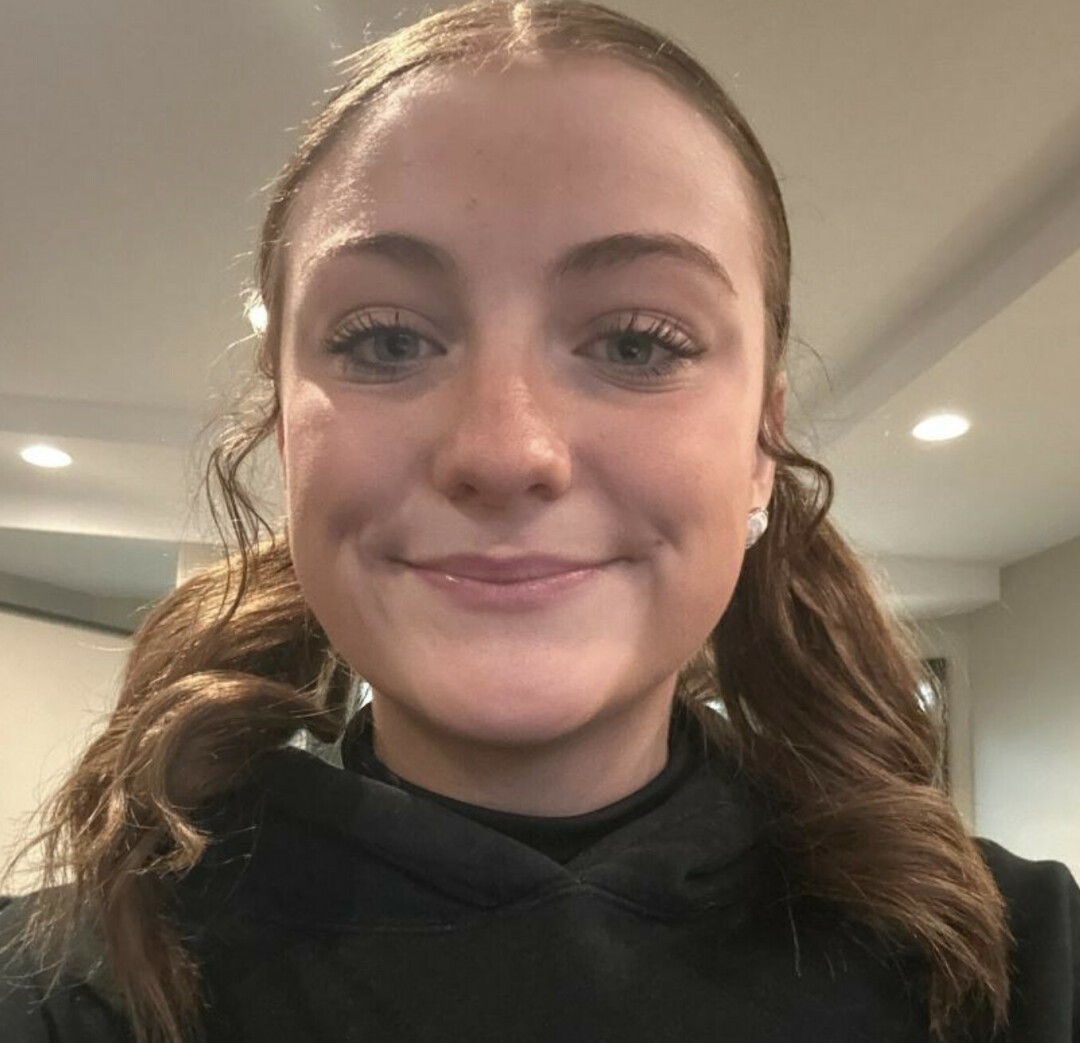
FOUND SAFE * Sheriff’s Office Assisting Manhattan Police in Search for Missing Teen

***UPDATE: 7/22/2025 @ 2355 HOURS.***

Elizabeth has been located and is okay. We would like to send a huge thank you out to all the people and organizations who shared the post and supplied tips and information.

An additional thank you to all our law enforcement partners who assisted us on this case; Gallatin County Sheriff's Office, Gallatin County 911, Lewis and Clark County Sheriff's Office, Helena Police Department, Lewis and Clark County Juvenile Probation, FBI.

An additional thank you to Elizabeth's family and friends, you went through a lot today. Great teamwork everyone.

Chief Austin Owens
Manhattan Police Department

The Gallatin County Sheriff’s Office is assisting the Manhattan Police Department in a missing/endangered child investigation.

Elizabeth Dundas was last seen on the evening of Monday July 21, 2025 around 10:30 P.M. in the area of east Manhattan, Montana.

She is believed to be driving a 2019 black Nissan Rouge with Montana license plate # 6-07467D and damage to the rear passenger bumper.

Please report any sightings or information on her whereabouts to the Manhattan Police Department (406-284-6630) or the Gallatin County Sheriff’s Office (406-582-2100) if you or anyone you know has had contact with Elizabeth.

Please help find Elizabeth.

Add a Comment »

Yellowstone Fiber Announces New CEO & Subscriber Growth


BOZEMAN - Yellowstone Fiber announced today that Sid Boswell has been appointed chief executive officer, succeeding the previous CEO who retired in 2024. Over the past year, the local nonprofit more than doubled its subscriber take rate in Bozeman, connecting thousands of homes and businesses. Nearly 90% of residential customers choose 1 Gig service, triple the typical industry adoption of 30%, and well above even the most competitive fiber markets at 50% to 60%.


“Bringing fiber broadband to Bozeman is essential,” said Sid Boswell, CEO of Yellowstone Fiber. “Our open access network offers more choice, reliable dedicated connections, and competitive pricing with speeds up to 10 Gig for homes and 100 Gig for businesses. Even with Montana’s tough winters and rocky soil, our team is meeting projections and delivering future-proof infrastructure that fosters competition and helps keep prices low for the community.”


Boswell said that construction on the Yellowstone Fiber network has ramped up to full speed for the summer. The network secured more funding to improve access to high-speed fiber internet in Bozeman at no cost or risk to local taxpayers. The investment focuses on neighborhoods still lacking fast, reliable internet, offering symmetrical upload and download speeds with low latency to reduce lag, and no buffering or throttling. Yellowstone Fiber provides residents and businesses with more choice while supporting the community with infrastructure that enables economic development, telemedicine, public safety, and education.


“Maintaining build momentum for community needs is critical, and Sid Boswell’s leadership comes at an important time for Yellowstone Fiber,” said Jeff Erwin, COO of UTOPIA Fiber and Yellowstone Fiber board member. “The strong subscriber growth over the past year shows Bozeman’s continuing demand for reliable, high-speed internet and real choice. As a community-focused nonprofit, Yellowstone Fiber is dedicated to serving local needs. As Yellowstone Fiber’s operational partner, UTOPIA Fiber supports that mission by managing the network and delivering seamless operations and responsive customer service.”


Fiber Construction: Schedule and Service Options

While Montana’s construction season is short, Yellowstone Fiber typically builds from May through October. During colder months, the team continues with aerial installations where available and offers promotions for residents to reserve their spot when full construction resumes in the spring. The Yellowstone Fiber network is expected to serve approximately 22,000 homes, businesses, and public buildings in Bozeman. Businesses can access symmetrical speeds of 100 Gigabits per second (Gbps). Residential customers can choose plans with symmetrical speeds up to 10 Gbps delivered over a direct fiber-to-the-home connection. Plans start at $65 per month with no required contract.


Open Access Fiber: More Choice for Bozeman

Yellowstone Fiber uses an open-access infrastructure model in which it owns and builds the fiber network while UTOPIA Fiber manages its operations and customer service. Yellowstone does not sell internet service directly. Instead, it partners with multiple private-sector internet service providers (ISPs) who use the network to offer a variety of service packages and pricing options. This approach fosters customer-benefitting competition and gives Bozeman residents the freedom to choose the provider and plan that fits their needs. Yellowstone Fiber customers can also switch ISPs easily from month-to-month without penalties, service calls, or equipment changes.


Built for Bozeman: Sponsoring Music on Main 2025

Yellowstone Fiber is a nonprofit built by and for the Bozeman community, with investment that stays right here in Gallatin County. As the “hometown internet” option, Yellowstone Fiber is proud to support local events and is a sponsor of Music on Main 2025. Residents are invited to visit the Yellowstone Fiber booth on August 7 to learn more about the open access network, sign up for service, and receive a $25 Amazon gift card after installation as part of a special in-person event promotion.


About Yellowstone Fiber
Yellowstone Fiber, a 501(c)(3) nonprofit founded in 2015, is a community-focused, open access network providing future-proof, high-speed fiber internet in Bozeman, Montana. As an open access infrastructure provider, Yellowstone Fiber allows multiple internet service providers (ISPs) to compete on its network, offering residents and businesses a variety of service packages and pricing choices. By enabling competition among providers, Yellowstone Fiber improves connectivity, supports economic development, and facilitates access to services such as telemedicine, public safety, and education. Anchor operations began in fall 2016, with commercial operations launching in February 2017. In 2021, Yellowstone Fiber formed an operational partnership with UTOPIA Fiber, the nation’s largest and most successful open-access fiber network, to bring fiber-to-the-home services in Bozeman. For more information, visit yellowstonefiber.com

Add a Comment »

Gallatin County Sheriff's Office Search and Rescue Respond to West Yellowstone Plane Crash

At approximately 1:41 p.m. on July 18, 2025, West Yellowstone Dispatch received a call regarding a possible airplane crash. The U.S. Department of Transportation Aero Division reported that an aircraft that had departed the West Yellowstone Airport with three people on board just before midnight on the night of July 17 could not be located. Utilizing the last location of an occupants’ smart watch, two search planes were sent to search for the missing aircraft. At 2:13 p.m. the search planes confirmed the plane had been located crashed in dense timber just south of the town of West Yellowstone near South Plateau Rd.

Gallatin County Search and Rescue (SAR) deployed personnel to respond to the crash site. SAR teams including the West Yellowstone Section, Big Sky Section, Heli Team, and Comms team responded to the scene. SAR members located the downed airplane and confirmed all three occupants were deceased. The decedents were extricated from the plane and transported by helicopter where their remains were turned over to a Gallatin County Sheriff’s Office deputy coroner.

The cause of the crash is being investigated by the Federal Aviation Administration and National Transportation Safety Board.

The decedents have been identified as Tennessee residents, 60-year-old Rodney Conover and 23-year-old Madison Conover, and 55-year-old Kurt Enoch Robey of Utah. Next of kin notifications have been made to the respective families.

Sheriff Dan Springer would like to thank all the agencies who participated in the location and recovery of the decedents and the continued investigation into the cause of the crash. Assisting agencies include the Hebgen Basin Rural Fire District, U.S. Forest Service, Federal Aviation Administration, and National Transportation Safety Board.

Sheriff Springer would like to extend his deepest condolences to the Conover and Robey families for their respective losses.

Add a Comment »

Monday, Jul. 21st, 2025

Single Tickets Now on Sale for Bozeman Symphony’s 2025-26 Season

BOZEMAN – Individual tickets for the Bozeman Symphony’s 2025-26 Classical Series, Bozeman Symphony Presents Series, and Bozeman Symphonic Choir concerts are now available.
 
The Symphony’s 58th season—Music that Moves Us . . . to Join Together—kicks off in mid-September withSounds of America I: Marsalis & Rachmaninoff, the first of three special programs honoring America’s 250th anniversary. Throughout the season, the Symphony will celebrate the heart and soul of American music with itsSounds of America concert series, featuring iconic works, contemporary voices, and world-class musicians.
 
This exhilarating season offers a rich blend of beloved classical masterworks, a vibrant new commission, and dazzling guest artists. A highlight will be the world premiere of Carnival of the Nearly Extinct Animals, a whimsical and poignant new work by acclaimed American composer Stephanie Ann Boyd, co-commissioned by the Bozeman Symphony.
 
The season welcomes a roster of internationally renowned guest artists, including violinist Hannah Ji, cellist Jonathan Swensen, pianist Michelle Cann, baritone Lester Lynch, and tenor Terrence Chin-Loy. Audiences will also enjoy performances by some of the Symphony’s own outstanding musicians: horn players Madeleine Folkerts and Elizabeth Schmidt, and clarinetist Wendy Bickford.
 
Classical Series concerts include:
  • September 20 & 21, 2025: Sounds of America I: Marsalis & Rachmaninoff
  • October 11 & 12, 2025: Nature's Wonders: Beethoven’s Pastoral Symphony
  • January 24 & 25, 2026: Masters of Melody: Mozart, Copland, & Haydn
  • March 21 & 22, 2026: Romantic Splendor: Schumann & Schubert
  • April 25 & 26, 2026: Lyrical Landscapes: Mahler, Walton, & Clair de lune
  • May 15, 16 & 17, 2026: Sounds of America II: Rhapsody in Blue & West Side Story
  • June 13 & 14, 2026: Sounds of America III: Appalachian Spring 
Bozeman Symphony Presents Series concerts include:
  • December 12-14, 2025: Holiday Spectacular
  • February 13-15, 2026: Cinematic Legends: The Music of Hans Zimmer & Ennio Morricone
Bozeman Symphonic Choir Series concert:
  • November 13-15, 2025: Night & Light: The Music of Lauridsen & Shaw

Tickets, subscriptions, full program details, and artist bios are available at bozemansymphony.org or by calling 406-585-9774.

Add a Comment »

Saturday, Jul. 19th, 2025

Where Private Flyers Land When Visiting Montana’s Wilderness

There’s something about Montana that transports you to a place of calm. It’s so remote and expansive that the desolation stretches forever, begging you to explore it. That endlessness brings unlimited possibilities, like trout-fishing, hiking, climbing, or relaxing in a luxury retreat. But how do you get somewhere so remote? Commercial flights are an option, but flying privately is much easier because you can access airstrips and private runways.

So, let’s look at the best airports and airstrips to fly into on your next wilderness adventure in Montana.


Bozeman Yellowstone International (BZN)
If we’re being honest, Bozeman’s BZN has become the gateway for private flyers hitting Montana. It’s not just because it’s the busiest airport in the state (though that helps). This place strikes a rare balance: polished and efficient, but still grounded in Montana charm.

Private terminals here are well-equipped, and you’ll find everyone passing through, from tech founders to fly-fishing guides. It’s that kind of mix. You land, and you’re less than an hour from Yellowstone’s northern entrance, Big Sky’s powdery slopes, or a handful of high-end ranches. And wherever you are, the views are incredible. Even the tarmac is flanked by peaks.


Glacier Park International (FCA)
Let’s say you’re not heading south to geysers and bison, but north to Glacier National Park. That’s where Glacier Park International comes in. Just outside Kalispell, this airport puts you within striking distance of some of the region’s most beautiful lakes. The type that you could stare at for hours without getting tired. You’re also not far from the Canadian border up here.

Private jet flyers love FCA for a couple of reasons. It’s calm. There’s less hustle, more hospitality. Fixed-base operators (FBOs) here are used to catering to well-heeled adventurers. They’ll arrange your SUV, prep your ski gear, and have someone waiting with a thermos of local coffee if you like that sort of thing.

It’s also a strong starting point for luxury lodges tucked into the wilderness like The Resort at Paws Up or The Green O.


Ennis-Big Sky Airport (EKS)
This one’s a bit under the radar. And that’s precisely why it’s on the list.

Ennis-Big Sky Airport isn’t some sprawling international terminal. It’s a small, nimble airfield just 40 minutes from Big Sky and mere minutes from world-class trout streams. You don’t land here for convenience. You land here for precision. Because when you’re trying to make a tight weekend trip to Moonlight Basin or one of those boutique fly-fishing lodges that feels like a secret, there’s no time for traffic.

There’s something deeply satisfying about stepping off a sleek jet onto a gravel road in five minutes flat. It’s like cutting out the middleman between you and the wilderness.

Smaller Airstrips with Big Appeal
Montana’s one of those places that the further you stray from typical tourist routes, the more you’ll be rewarded. If you know the terrain, you’ll skip the bigger airports and head for the remote airstrips that get you closer to the hidden lakes, the backcountry cabins, the awe-inspiring mountains. We’ve even picked out a few of our favorites for you:

● Bigfork (S27): A gem near Flathead Lake, perfect for summer cabin retreats or lake adventures.
● Whitefish Airport (58S): Small, scenic, and practically hugs the ski slopes.
● Mission Field (LVM) in Livingston: Ideal if your Yellowstone adventure starts with horseback rides and wine pairings on a luxury ranch nearby.
There’s nothing five-star about these spots, but that’s not why you’re heading here. They’re about access to the wilderness.


So Who’s Flying In?
Good question. The simple answer: Everyone. Well, everyone who can afford it. There are the celebrities and the business owners, but there’s also the intergenerational groups who need time together. There are also the families looking for space to reconnect. Then there are the adventurers, the hikers, the climbers, the kayakers. There’s a Montana for everyone, and you don’t need to look hard to find it.

Summer sees the highest surge in private flyers, especially from cities like Denver, Seattle, LA, and Dallas. When Fall comes around, the hunting lodges start buzzing. Then in Winter, it’s Big Sky and Bridger Bowl’s season to shine, especially for skiers who want powder without lines.

It’s Not Just About Getting There
Let’s pause here for a second. Because while private aviation is, by nature, about efficiency and comfort, it’s also about the feeling. Landing in Bozeman or Kalispell is like landing on another planet for those who live in cities. There’s a quietude that seems almost disconcerting at first, but feels entirely natural within hours, maybe even minutes.

It’s no overstatement to say that the descent into Montana feels like time travel, to a place in history without the complications of modernity. There’s just so much space.

A Few Parting Thoughts
Time is important. There’s no getting around this simple fact. However, it’s not the only consideration when booking a private jet. It’s also about crafting a bespoke experience that gives you total luxury and privacy from the moment you board. Heading into the wilderness for a spot of fly fishing or hiking gives you that total seclusion that we all crave now and again, and flying privately extends this.

You might head for the stillness of the Bob Marshall Wilderness, or the grandeur of Glacier, but the runway you pick can shape the tone of your whole trip. So take a minute. Look at the map. Ask yourself how you want to feel when you get to where you’re going.

Add a Comment »

News Comments