Friday, Jun. 24th, 2016

Legendary Locals of Bozeman


From its inception as a supply town during Montana’s gold rush in the 1860s, Bozeman has attracted visionaries, leaders, and pioneering thinkers. Bozeman’s first mayor, John V. Bogert, established a precedent for keeping the city clean, safe, and orderly. City commissioner and tireless worker Mary Vant Hull spearheaded efforts to build a new library and to expand local parks and trails, and early physician Dr. Henry Foster successfully performed one of the first caesarean sections in Montana. Incredibly talented outdoor advocates and athletes like mountain climber Alex Lowe and long-distance runner Ed Anacker have complemented Bozeman’s outdoor lifestyle. An emphasis on art, music, and culture began in the 1860s with piano and voice sensation Emma Weeks Willson. Today, artist Jim Dolan’s sculptures are enjoyed all over town, and illusionist Jay Owenhouse wows children and adults with his live shows. Inspiring individuals like Cody Dieruf, who passed away from cystic fibrosis at the age of 23, and dedicated streetcar driver Larry O’Brien have added kindness and courage to local life.

Look for Rachel Phillips book on stands July 2016.

Add a Comment »

Wednesday, Jun. 22nd, 2016

Livingston Depot Festival of the Arts - enjoy food, pies, art, and company

Fine art, creative crafts, and homemade pies define an unforgettable summer day.
 
The Livingston Depot Festival of the Arts will make a Saturday through Monday appearance on July 2nd, 3rd, and 4th, 2016, from 10 to 6.
 
Over a hundred fine artists and crafters from Montana and a wide range of western states region, usually with two dozen new presenters each year, will present fine arts and craftworks including oil paintings, fine pottery, blacksmithing, woodcrafts, decorative repurposed antiques, stained glass, vintage curios, inlaid furniture, photography, herbal soaps, gifts, attractive jewelry, and more.  

A central hallmark of the event each year is the Depot Foundation’s homemade pie booth with a tasty range of homemade pie offerings.
 
Plenty of main course options are lined up too.  The Livingston Sister City program raises money for students’ trips to Japan by serving up barbecue burgers, hot dogs, and sides.  Other vendors will offer fresh-popped kettle corn, chocolates, handcrafted lemonades, and more.
 
Visitors can also enjoy the adjacent Depot Museum’s historic rail and Yellowstone exhibits, as well as this year’s special exhibit, “The Railroads of Ron Nixon,” a selection of striking early- and mid-20th century train photography, as well as “Getting There: From Livingston to Yellowstone,” a look at the final leg of early Yellowstone rail travel.

This always popular event is a great chance to stroll in the fresh air and enjoy food, pies, art, and company -- a perfect finishing touch for a memorable Fourth of July weekend.
 
The Depot Museum exhibits are open seven days a week, Monday through Saturday from 10 to 5, and Sunday from 1 to 5 with a modest admission. Group tours are also welcome, and more information is available through the Depot office at (406) 222-2300 or its website, www.livingstondepot.org.

Add a Comment »

Monday, Jun. 20th, 2016

MSU professor to be recognized for renewable and alternative energy power generation work

A veteran Montana State University engineering professor will be recognized this summer for his years of researching and teaching renewable and alternative energy power generation — a field he didn’t even approach until the second half of his 45-year career.

Hashem Nehrir, a professor in the Electrical and Computer Engineering Department in MSU’s College of Engineering, will receive the Ramakumar Family Renewable Energy Excellence Award from the IEEE Power and Energy Society next month in Boston. (IEEE stands for Institute of Electrical and Electronics Engineers). The annual award recognizes a researcher’s contributions to incorporating renewable energy sources into the national power grid and is meant to spur utilization of renewable technologies for power generation, and further research and teaching in the field.

“This was not at all my formal academic training,” Nehrir said. “So this is really a great reward for me, because I found the opportunity to work in areas the whole world is interested in.”

Nehrir earned his bachelor’s, master’s and doctorate in electrical engineering from Oregon State University in 1969, 1971 and 1978, respectively. He came to MSU in 1987, where he taught courses and did research on traditional electrical power systems.

But in the early 1990s, the opportunity arose to work with the U.S. Department of Energy on hybrid wind-power generation technologies. Nehrir jumped at it.

“Since then, I’ve learned to use my background knowledge and experience to apply to these systems,” he said.

Nehrir’s work focuses on designing intelligent systems to manage hybrid, renewable-based energy systems. Think of the national power grid, the interconnected power lines and stations that move electricity to where it’s needed around the country. As more and more alternative sources of power are connected to the grid, such as solar panels and wind turbines, managing all those varied sources of power to keep the grid stable and safe becomes a priority.

“My work is modeling basically for better operation of emission-free systems that could ultimately save the planet,” Nehrir said.

For nearly a decade, from 2001-2010, he continued researching alternative energy sources in the form of fuel cells, modeling them for use in distributed power generation applications — where electricity is generated not at one central location but at many different spots. The models he developed are used around the world, along with the textbook he co-authored on the subject in 2009 with a former graduate student, Caisheng Wang.

Nehrir’s work has also pioneered the notion of using electric hot water heaters to absorb excess wind-generated power in the wind farms in the form of heat. The technology, which has already been prototyped by a major utility, keeps wind farms from having to shut down turbines, hence avoiding the curtailment of this emission-free power, at times when wind-generated power is high and power demand from the grid is low, for example in the middle of night, he said.

“This is important because everybody wants to see more renewable energy used, but our current grid in the U.S. and most of the world isn’t designed to have these intermittent sources like wind and solar,” said Robert Maher, head of the Electrical and Computer Engineering Department. “So there’s going to be a need to redesign the whole grid to use these sources, and Professor Nehrir’s research is really at the forefront of how that can be done.”

Over the years, Nehrir’s research has been funded by the National Science Foundation, the Department of Energy, Pacific Northwest National Laboratory, Montana Power Company (now NorthWestern Energy) and more.

In addition to three textbooks he’s authored and many lectures he has given around the world, he was a 2010 recipient of MSU's Wiley Faculty Award for Meritorious Research and was named a Life Fellow of IEEE in 2013.

Based on his work, he developed a senior/graduate-level course on alternative energy distributed power generation and has been teaching it at MSU since 2003. And though he says he’s trying to reduce his workload, every year students come up with a list of people interested in taking the course and turn it in to the department.

He continues to teach it, he said, because “I enjoy working with the students.”

Maher said Nehrir has been a constant in the department, especially through the 1990s when Montana’s power companies were deregulated, hiring slowed in the industry and fewer students sought such degrees.

“Hashem kept the spark alive through those years, and now we're back in the mode where everybody is looking to hire power engineers and he’s struggling to keep up with the demand,” Maher said.

"This is the kind of award he deserves."

Add a Comment »

2016 Heart of the West North Star Award winner

The organizers and jury of the inaugural Heart of the West Art Show and Auction in Bozeman, MT have selected the 2016 North Star Award Winner: Michael Ome Untiedt.  The North Star Award was established in 2011 and recognizes an artist who has influenced their peers with a willingness to explore new realms of creativity and expression. In mentoring and inspiring other artists through their unparalleled vision, the artist has provided guidance, as the “North Star” guides fellow travelers.  Past recipients include lauded painters Charles Fritz, Donna Howell-Sickles and Tom Gilleon.

Untiedt will travel from his home in Denver, CO to exhibit alongside 60+ premier Western artists at the Best Western Plus Grantree Inn August 11-13, 2016 and will lead an Art Chat discussion of his life’s work Saturday, August 13 from 10 a.m. – 12 p.m.   Additional events include Quick Finish artist demonstrations on Friday Aug. 12 from 5 - 7 p.m. and Saturday 2 – 3:30 p.m. and a live art auction with over 100 lots at 4 p.m.  

Untiedt has been a professional painter for decades and has achieved national recognition in the last 10 years with dramatic landscapes, nocturnes and ranching scenes.  The titles of his paintings are sentences-long and often poetical, rooted in his fascination with the history of the Old West and backed up by a lifetime of research, writing and learning.  He also mentors young artists, drawing on his vast experience in marketing and selling his work, and will be demonstrating his skill in the Saturday Quick Finish.

As Untiedt writes on his website, “I paint ideas...things that come to me during the course of my life.  Be it an Irish castle or a Kiowa teepee, I attempt to portray the humanity behind the image, not the object itself.   This can be a challenge, a noble one worth pursuing.”  

Heart of the West Bozeman is proudly sponsored by Zoot Art Gallery of Four Corners, MT and media sponsor Western Art Collector magazine.

Add a Comment »

GVLT Needs 10,000 Miles Logged to Hit Goal in Bozeman Trails Challenge


Since 1990, GVLT has collaborated with the City of Bozeman and dozens of public and private organizations to expand the Main Street to the Mountains system to over 80 miles of trails. These trails are used by commuters, runners, bikers, birdwatchers, dog walkers, and stargazers, and help make the Gallatin Valley the best place to live under the Big Sky!  To celebrate this work and help provide critical funds to continue it, GVLT is excited to be hosting the first annual Bozeman Trails Challenge.

Since June 4th, community members have been recording how far they walk, hike, or bike on area trails. They’ve been logging their miles on the GVLT website, www.gvlt.org/events/challenge.

For every mile reported, GVLT receives $1 from the Trails Challenge Fund, supported by dozens of community businesses.  With $20,000 pledged, our goal is to log 20,000 miles by June 21st.  $1 for 1 mile.  It is that easy.  


Participants who log miles are invited to attend a celebration BBQ at the GVLT office on completion of the challenge at 6:00 pm on Tuesday, June 21.
Here’s how to log miles:
    •    Hike, bike, or walk on area trails.
    •    Log onto www.gvlt.org/events/challenge and record your miles.  
    •    Earn money for GVLT.

For more information, call EJ Porth, 406-587-8404 ext. 8 or email ej@gvlt.org.

Add a Comment »

MSU Alumni Foundation unveils new ‘Bushels for Bobcats’ grain donation program

The Montana State University Alumni Foundation has developed a new way for farmers to support Montana State University: through donations of grain.


The new program, called Bushels for Bobcats, allows Montana farmers to donate a portion of their grain harvest to support MSU. Funds generated by this program will be counted toward MSU’s comprehensive fundraising campaign, What it Takes, and will fund MSU’s people, places and programs. Farmers who donate to MSU through the Bushels for Bobcats program can direct their gift of grain to support any area within MSU, including student scholarships and research programs, such as the Montana Plant Sciences Chair.

The new initiative provides farmers the opportunity to directly invest their crops to fund students and research that directly benefits them, said Charles Boyer, MSU vice president of agriculture and dean of the College of Agriculture.

“Our university and college serve Montana through students, research and outreach,” Boyer said. “Montana’s agricultural family has always been a transformative supporter of MSU, and Bushels for Bobcats shines a light on our farmers’ contributions to feeding the world.”  

When producers donate a portion of their crop to the MSU Alumni Foundation, the foundation will sell the gifted grain for its full value and direct those funds to the area determined by the donor. The grain donor is not required to include the gifted grain in his or her income for the year, and therefore doesn’t pay taxes on it.

“Bushels for Bobcats provides a unique opportunity for farmers to invest in MSU’s future,” said MSU Alumni Foundation President and CEO Chris Murray. “It provides a tax-savvy way for donors to impact their land-grant university.”

For more information, or to learn how to donate, visit msuaf.org/bushels or contact Samantha Beebout at samantha.beebout@msuaf.org or 994-7099.

Add a Comment »

Emerson Cultural Center Art Exhibits in July


Weaver Room

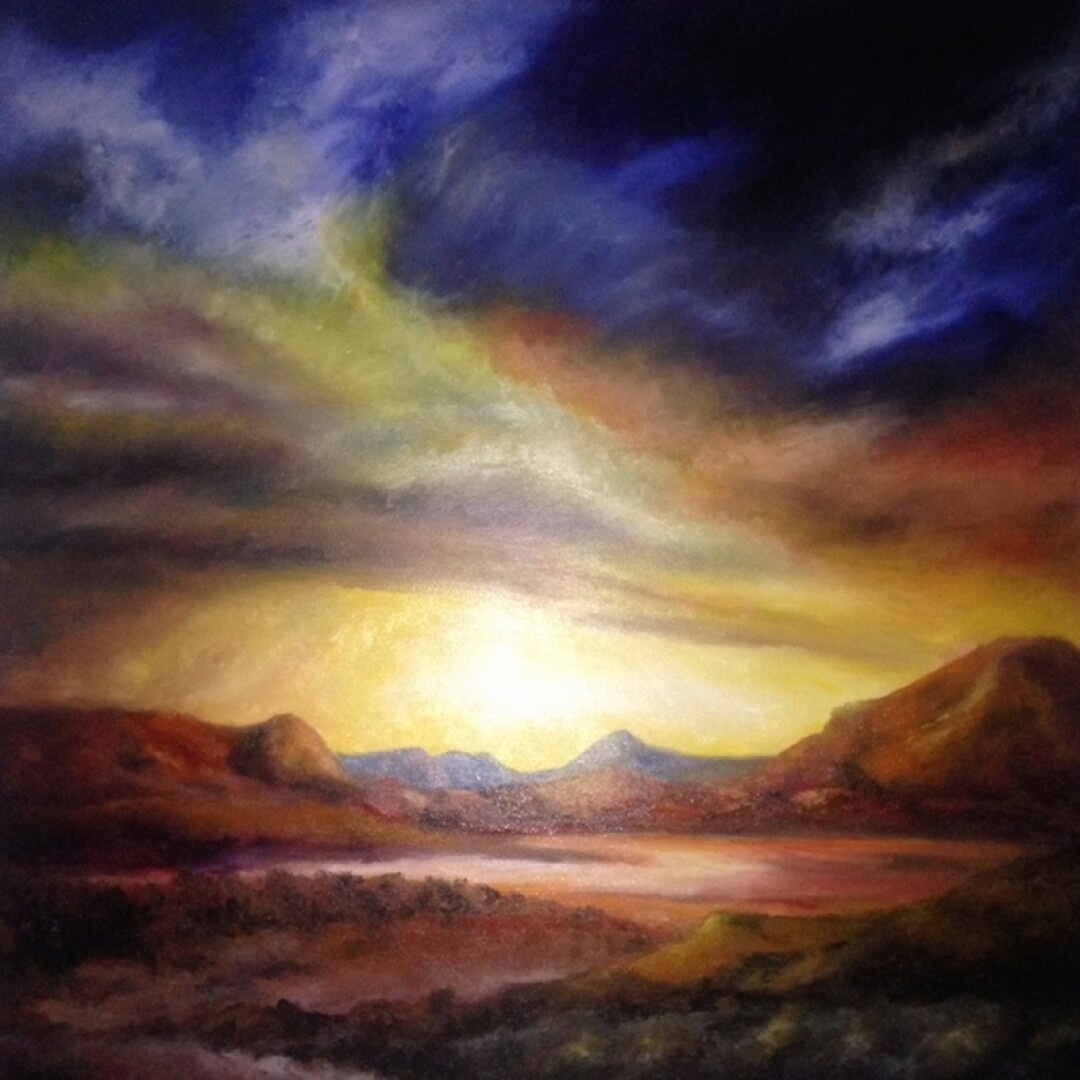
Carol Hartman’s, Challenges will be featured in the Weaver Room Gallery from
July 1 - August 26, 2016. A Montana native, Hartman creates large square colorful oil landscape paintings on cradled Royal Birch panels. She finger paints instead of using brushes, which allows her a significantly closer relationship with her art. Carol creates this art to honor the history and incredibly beautiful landscape of Montana.

Jessie Wilber Gallery
The Jessie Wilber Gallery will feature Gordon McConnell, a Colorado Native who first visited Montana in the 1960’s and was inspired by the historically haunted and wildly romantic places from the Little Bighorn to Yellowstone. Like early twentieth century illustrators, McConnell derives much of his imagery from photographic sources and is particularly drawn to classic black and white. He interprets these still images with animated brushwork, variegated paint handling and modulation of values for a graphic, expressive effect. The show entitled Outdoor Adventure will be on display from

July 8 - September 2, 2016

Lobby Gallery
The Lobby Gallery will showcase an Emerson Tenant Exhibit featuring the work of: Dana Aaberg, Bille Rose Agee, Susan Dabney, Loretta Domaszewski, David Hutchison, Duncan Kippen, Mike O’Connell, Jessica Palmer, Angela Prond, Robert Royhl, Kelly Sullivan, Kara Tripp, Cherlyn Wilcox and Rod Zullo. The Emerson is proud to build community while promoting arts and culture. The exhibit will run from July 8- September 2, 2016.

Reception: These shows will have an opening reception on July 8, 2016 from 5-8pm with an Art Walk Reception on August 12, 2016 from 5-8pm.

Add a Comment »

Monday, Jun. 13th, 2016

Gallatin Valley YMCA Reminds Parents Learning is Part of Having the Best. Summer. Ever

Summer slide may sound like an exciting activity, but in reality it’s no fun. The term refers to the learning loss many children experience over the summer. Research shows that without access to learning activities throughout the summer, kids fall behind academically. For students who are already behind in school, summer learning loss pushes them even farther behind their peers. Repeat this year after year, and major consequences develop, as one in six children who do not read proficiently by third grade fail to graduate high school in time—four times the rate for third graders with proficient skills.

“We want children to have the best summer ever, and of course that means time for play, but it’s also important that children continue to engage and learn,” said Sarah Lutiger, Youth Development Director, Gallatin Valley YMCA. “A child’s development is never on vacation, and organizations like the Y offer opportunities to exercise the body as well as the mind.”

In the Gallatin Valley the YMCA helps prevent the summer slide by providing learning loss prevention camps in partnership with both the Bozeman and Belgrade School Districts. This is the 3rd year Y Achievers has been offered to incoming 1st, 2nd and 3rd graders in Bozeman and the 2nd year for 2nd and 3rd graders in Belgrade.  During the past summers, Y-Achievers has demonstrated significant success with a majority of students gaining six months or more of reading literacy in the 6-week summer program. “We are thankful for our partnership with both the Bozeman and Belgrade School District allowing us to utilize space at Saddle Peak Elementary in Belgrade and Whittier Elementary in Bozeman”, said Andrea Stevenson, CEO, Gallatin Valley YMCA. “It takes many partners to help us provide this critical reading program for our community. Not only are we thankful for our school partners, but also U.S. Bank, Mtn. Sky Guest Ranch, Y-USA and the Greater Gallatin United Way that helped provide funding in order that no child would be turned away due to inability to pay”, said Stevenson.

Parents and caregivers can help by keeping their children reading and engaged in learning throughout the summer. Here are a few tips from the Y to help parents get started:

Foster an Early and Ongoing Passion for Books—Read to and with your kids. Start a book series together and read each night as a family. Reading at night keeps the brain buzzing and young minds active!
Visit Your Local Library—Explore new books you and your kids may have missed to keep your mind sharp during the summer. Be sure to check out special programming while you’re there; many libraries offer classes, storytime or programs throughout the summer.

Cut Screen Time—With smartphones, tablets, video games, television and movies there are more options than ever for your child to entertain themselves with screens, but children should spend no more than two hours per day in front of a screen.

Enroll Your Kids in Camp—Camps like those offered at the Y provide well-rounded programming, make learning fun and provide a social outlet for your children throughout the summer.

To learn more about camps offered at the Gallatin Valley YMCA visit www.gallatinvalleyymca.org or call 994-9622.

Add a Comment »

Friday, Jun. 3rd, 2016

Bozeman Symphony and Gallatin Empire Lions Club Present Festival of the Fourth

The Bozeman Symphony and Gallatin Empire Lions Club present the Festival of the Fourth at the Gallatin County Fairgrounds in Bozeman, Montana on July 4, 2016.  The Bozeman Symphony Orchestra under the direction of Maestro Matthew Savery will perform a program of patriotic and pops favorites at 9:00 PM, leading into the traditional fireworks display at 10:30 PM.  The concert and fireworks are FREE and open to the public.


For 20 years the Gallatin Empire Lions Club has presented the Festival of the Fourth, providing both entertainment and fireworks, free of charge, to the greater Bozeman community.  This is the fifth year the Symphony and Lions Club have collaborated presenting the community event, attracting over 7,000 attendees from Southwest Montana.

 
Here’s what people in the community have said about the event:
"People were just blown away by the wonderful concert, and the fireworks.  We heard a guy say "I'm getting here earlier next year so that I can be in the front row."  People just floated out of the fairgrounds after the event last evening saying that they had never seen anything like it.  We felt exactly the same way; we went out for a drink afterwards and just marveled at the evening we had just experienced.  Congratulations!"

            -Denis Prager, Clyde Park MT
 
"Congratulations on the excellent execution of a superior evening of music.  I just can't compliment you enough.  Everything was great----the selections played, the setup, lighting, special effects, sound, and of course the tent!  I was so thrilled to discover that it is now owned by the Symphony, and that is where it belongs!  Maestro always appreciated the acoustics it affords, and he rightfully deserves to make it his own. In fact, you all deserve the best.  I've never heard a better sound coming from under that structure than the one I heard on July 4, 2012!  (And that includes the Utah Symphony.)  Simply spectacular!   The collaboration with the Lions' Club was brilliant---a magical combination.  All the work and planning came to a perfect conclusion.  Thank you so much for all of your efforts, and congratulations!  May you proceed to even greater heights in the future!  Thanks for enriching my life with the music."

            -Marilyn Hill, Big Sky MT
 
“The concert put on by the Bozeman Symphony this year was outstanding and contributed greatly to the celebration of our Nation’s birthday here in Bozeman.  Both, during the show and since the show, we have received overwhelming amounts of support and gratitude from many members of the community thanking us for being involved and helping with the event.  The message from the Bozeman Community has been loud and clear; they loved the show and hope that it continues into the future.”

            -Tim Ford, Bozeman, MT
 
“I want to pass on a comment I heard today at the Gallatin Newcomers Club luncheon.  A young woman from Arizona, arriving with her husband and family for a new job here in Bozeman a few months ago, brought the family to the July 4th celebration.  She was amazed to find her kids totally mesmerized by the symphony!  His job is in Billings and the spouse is telecommuting.  They chose Bozeman over Billings for their hometown in part due to the very pleasant July 4th experience for their kids.  The conversation came about because I was bragging about our Symphony only to find her already well informed.”

            -Fran Shellenberger, Bozeman MT
 
Support for the Festival of the Fourth comes from Gilhousen Family Foundation, Gianforte Family Foundation, American Bank, First Interstate Bank, and the Gallatin Empire Lions Club.  Please join the Symphony and Lions Club in thanking these businesses and individuals.
 
For more information or general inquiries please contact the Bozeman Symphony at (406)585-9774 or info@bozemansymphony.org.

Add a Comment »

MSU physicist develops new model for speed and motion of solar flares

A Montana State University physicist who has developed a new model that predicts the speed of solar plasma during solar flares, likening it to the path traveled by a thrown baseball, will present his findings at the Solar Physics Division of the American Astronomical Society conference being held this week in Boulder, Colorado.

Sean Brannon, a postdoctoral researcher in the MSU Department of Physics within the College of Letters and Science, developed the model that might help to define how solar flares evolve and provide better ways to predict them. His work could have applications on how to protect power grids and communication technology and aeronautics from the energy released by the flares.

Brannon used data from the NASA Interface Region Imaging Spectrograph satellite, also known as IRIS, which monitors a specific layer of the sun known as the transition region. The transition region is thin, but complex, and separates the sun's outermost layer, the corona, from an inner layer, the chromosphere. The corona, the chromosphere and the transition region are of great interest and mystery to scientists.

Temperatures in the corona can reach several million degrees Kelvin, far hotter - often by more than a factor of 100 - than any other layer of the sun's atmosphere. A solar flare arcing through the corona can be more than 10 million degrees Kelvin. This is puzzling and seems counterintuitive since the corona is the furthest layer from the sun and, therefore, should arguably be the coolest.

IRIS spectrograms are made by a process similar to what happens when you shine light through a prism, breaking it into different colors. Each color is formed by a different kind of atom in the solar atmosphere and we can extract all kinds of interesting information about what the plasma is doing based on that spectrum. For example, if the light is more red or blue than we'd expect, then we know that the plasma is moving either away from or toward us," Brannon said.

Brannon used IRIS's data to look at the sun's solar flare process. During a solar flare, plasma from the sun can heat up to millions of degrees Kelvin and evaporate into the corona. There it fills or is funneled into powerful magnetic fields that give it an arcing, loop-like shape, Brannon said.

"We then expect that this hot plasma will cool off over the next several minutes to hours. As it cools, models predict that it should start to drain back out of the loops, resulting in spectral signatures that should be detectable," Brannon said.

"Up until now, however, there haven't been any published papers analyzing an observation of the entire filling, cooling, and draining process, nor have there been any papers that attempt to model a spectral observation as a signature of the draining," Brannon said. "The cooling and draining is important to look at, since we'd like to be sure that the plasma we're measuring is evaporated plasma draining back, and not some other source of plasma."

Brannon devised a simple model to describe the speed at which a blob of plasma falls from the top of an oval-shaped flare loop and how it would appear on an IRIS spectrograph. His results indicate that plasma is draining from the loops at free-fall speeds - similar to the path a baseball follows when thrown. Additionally, the location and timing of the draining plasma matches that which was observed evaporating.

The prediction of large solar flares is important because they can emit vast amounts of energy that can disrupt power grids, satellites, communication technology and aeronautics. For example, in March 1989, a powerful solar flare left millions of Canadians without electricity for about 12 hours, according to NASA.

"The sun really dominates Earth's environment, climate and space in which Earth lives," Brannon said. "What the sun does can have very profound impacts on life here on Earth. So, understanding the sun's processes can help us determine how to protect technology and people."

MSU Physics Professor Dana Longcope was Brannon's academic adviser and is national chairman for the Solar Physics Division. Longcope said that while solar flares are unpredictable making it difficult to find one to observe, Brannon was able to identify a specific IRIS observation, enabling him to make his analysis.

"He came up with a very different interpretation of what happens during a solar flare," Longcope said. "It is one of the most compelling quantitative observations I've seen as to what we'd expect to see during a solar flare. It's a credit to a scientist when they look at the data and they aren't blinded by what they expect to see, but rather keep an open mind and observe what is actually happening."

Add a Comment »

News Comments