Monday, Jun. 20th, 2016

Emerson Cultural Center Art Exhibits in July


Weaver Room

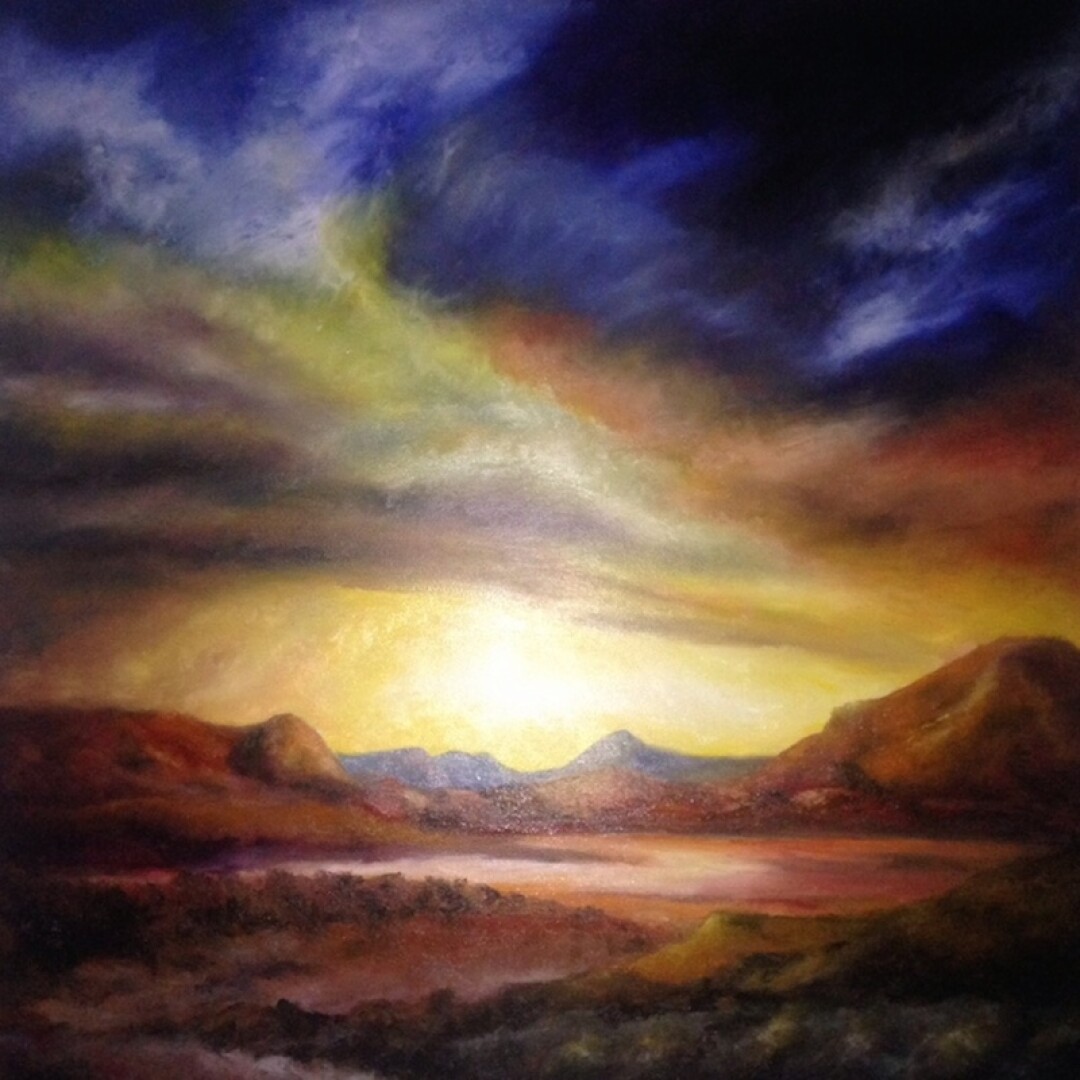
Carol Hartman’s, Challenges will be featured in the Weaver Room Gallery from
July 1 - August 26, 2016. A Montana native, Hartman creates large square colorful oil landscape paintings on cradled Royal Birch panels. She finger paints instead of using brushes, which allows her a significantly closer relationship with her art. Carol creates this art to honor the history and incredibly beautiful landscape of Montana.

Jessie Wilber Gallery
The Jessie Wilber Gallery will feature Gordon McConnell, a Colorado Native who first visited Montana in the 1960’s and was inspired by the historically haunted and wildly romantic places from the Little Bighorn to Yellowstone. Like early twentieth century illustrators, McConnell derives much of his imagery from photographic sources and is particularly drawn to classic black and white. He interprets these still images with animated brushwork, variegated paint handling and modulation of values for a graphic, expressive effect. The show entitled Outdoor Adventure will be on display from

July 8 - September 2, 2016

Lobby Gallery
The Lobby Gallery will showcase an Emerson Tenant Exhibit featuring the work of: Dana Aaberg, Bille Rose Agee, Susan Dabney, Loretta Domaszewski, David Hutchison, Duncan Kippen, Mike O’Connell, Jessica Palmer, Angela Prond, Robert Royhl, Kelly Sullivan, Kara Tripp, Cherlyn Wilcox and Rod Zullo. The Emerson is proud to build community while promoting arts and culture. The exhibit will run from July 8- September 2, 2016.

Reception: These shows will have an opening reception on July 8, 2016 from 5-8pm with an Art Walk Reception on August 12, 2016 from 5-8pm.

Add a Comment »

Monday, Jun. 13th, 2016

Gallatin Valley YMCA Reminds Parents Learning is Part of Having the Best. Summer. Ever

Summer slide may sound like an exciting activity, but in reality it’s no fun. The term refers to the learning loss many children experience over the summer. Research shows that without access to learning activities throughout the summer, kids fall behind academically. For students who are already behind in school, summer learning loss pushes them even farther behind their peers. Repeat this year after year, and major consequences develop, as one in six children who do not read proficiently by third grade fail to graduate high school in time—four times the rate for third graders with proficient skills.

“We want children to have the best summer ever, and of course that means time for play, but it’s also important that children continue to engage and learn,” said Sarah Lutiger, Youth Development Director, Gallatin Valley YMCA. “A child’s development is never on vacation, and organizations like the Y offer opportunities to exercise the body as well as the mind.”

In the Gallatin Valley the YMCA helps prevent the summer slide by providing learning loss prevention camps in partnership with both the Bozeman and Belgrade School Districts. This is the 3rd year Y Achievers has been offered to incoming 1st, 2nd and 3rd graders in Bozeman and the 2nd year for 2nd and 3rd graders in Belgrade.  During the past summers, Y-Achievers has demonstrated significant success with a majority of students gaining six months or more of reading literacy in the 6-week summer program. “We are thankful for our partnership with both the Bozeman and Belgrade School District allowing us to utilize space at Saddle Peak Elementary in Belgrade and Whittier Elementary in Bozeman”, said Andrea Stevenson, CEO, Gallatin Valley YMCA. “It takes many partners to help us provide this critical reading program for our community. Not only are we thankful for our school partners, but also U.S. Bank, Mtn. Sky Guest Ranch, Y-USA and the Greater Gallatin United Way that helped provide funding in order that no child would be turned away due to inability to pay”, said Stevenson.

Parents and caregivers can help by keeping their children reading and engaged in learning throughout the summer. Here are a few tips from the Y to help parents get started:

Foster an Early and Ongoing Passion for Books—Read to and with your kids. Start a book series together and read each night as a family. Reading at night keeps the brain buzzing and young minds active!
Visit Your Local Library—Explore new books you and your kids may have missed to keep your mind sharp during the summer. Be sure to check out special programming while you’re there; many libraries offer classes, storytime or programs throughout the summer.

Cut Screen Time—With smartphones, tablets, video games, television and movies there are more options than ever for your child to entertain themselves with screens, but children should spend no more than two hours per day in front of a screen.

Enroll Your Kids in Camp—Camps like those offered at the Y provide well-rounded programming, make learning fun and provide a social outlet for your children throughout the summer.

To learn more about camps offered at the Gallatin Valley YMCA visit www.gallatinvalleyymca.org or call 994-9622.

Add a Comment »

Friday, Jun. 3rd, 2016

Bozeman Symphony and Gallatin Empire Lions Club Present Festival of the Fourth

The Bozeman Symphony and Gallatin Empire Lions Club present the Festival of the Fourth at the Gallatin County Fairgrounds in Bozeman, Montana on July 4, 2016.  The Bozeman Symphony Orchestra under the direction of Maestro Matthew Savery will perform a program of patriotic and pops favorites at 9:00 PM, leading into the traditional fireworks display at 10:30 PM.  The concert and fireworks are FREE and open to the public.


For 20 years the Gallatin Empire Lions Club has presented the Festival of the Fourth, providing both entertainment and fireworks, free of charge, to the greater Bozeman community.  This is the fifth year the Symphony and Lions Club have collaborated presenting the community event, attracting over 7,000 attendees from Southwest Montana.

 
Here’s what people in the community have said about the event:
"People were just blown away by the wonderful concert, and the fireworks.  We heard a guy say "I'm getting here earlier next year so that I can be in the front row."  People just floated out of the fairgrounds after the event last evening saying that they had never seen anything like it.  We felt exactly the same way; we went out for a drink afterwards and just marveled at the evening we had just experienced.  Congratulations!"

            -Denis Prager, Clyde Park MT
 
"Congratulations on the excellent execution of a superior evening of music.  I just can't compliment you enough.  Everything was great----the selections played, the setup, lighting, special effects, sound, and of course the tent!  I was so thrilled to discover that it is now owned by the Symphony, and that is where it belongs!  Maestro always appreciated the acoustics it affords, and he rightfully deserves to make it his own. In fact, you all deserve the best.  I've never heard a better sound coming from under that structure than the one I heard on July 4, 2012!  (And that includes the Utah Symphony.)  Simply spectacular!   The collaboration with the Lions' Club was brilliant---a magical combination.  All the work and planning came to a perfect conclusion.  Thank you so much for all of your efforts, and congratulations!  May you proceed to even greater heights in the future!  Thanks for enriching my life with the music."

            -Marilyn Hill, Big Sky MT
 
“The concert put on by the Bozeman Symphony this year was outstanding and contributed greatly to the celebration of our Nation’s birthday here in Bozeman.  Both, during the show and since the show, we have received overwhelming amounts of support and gratitude from many members of the community thanking us for being involved and helping with the event.  The message from the Bozeman Community has been loud and clear; they loved the show and hope that it continues into the future.”

            -Tim Ford, Bozeman, MT
 
“I want to pass on a comment I heard today at the Gallatin Newcomers Club luncheon.  A young woman from Arizona, arriving with her husband and family for a new job here in Bozeman a few months ago, brought the family to the July 4th celebration.  She was amazed to find her kids totally mesmerized by the symphony!  His job is in Billings and the spouse is telecommuting.  They chose Bozeman over Billings for their hometown in part due to the very pleasant July 4th experience for their kids.  The conversation came about because I was bragging about our Symphony only to find her already well informed.”

            -Fran Shellenberger, Bozeman MT
 
Support for the Festival of the Fourth comes from Gilhousen Family Foundation, Gianforte Family Foundation, American Bank, First Interstate Bank, and the Gallatin Empire Lions Club.  Please join the Symphony and Lions Club in thanking these businesses and individuals.
 
For more information or general inquiries please contact the Bozeman Symphony at (406)585-9774 or info@bozemansymphony.org.

Add a Comment »

MSU physicist develops new model for speed and motion of solar flares

A Montana State University physicist who has developed a new model that predicts the speed of solar plasma during solar flares, likening it to the path traveled by a thrown baseball, will present his findings at the Solar Physics Division of the American Astronomical Society conference being held this week in Boulder, Colorado.
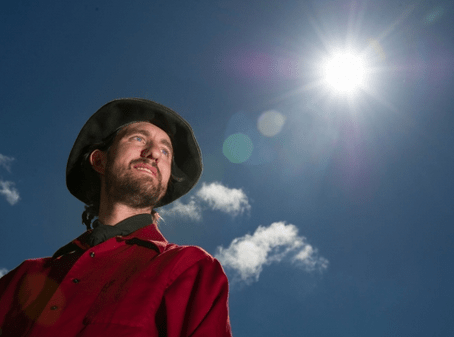
Sean Brannon, a postdoctoral researcher in the MSU Department of Physics within the College of Letters and Science, developed the model that might help to define how solar flares evolve and provide better ways to predict them. His work could have applications on how to protect power grids and communication technology and aeronautics from the energy released by the flares.

Brannon used data from the NASA Interface Region Imaging Spectrograph satellite, also known as IRIS, which monitors a specific layer of the sun known as the transition region. The transition region is thin, but complex, and separates the sun's outermost layer, the corona, from an inner layer, the chromosphere. The corona, the chromosphere and the transition region are of great interest and mystery to scientists.

Temperatures in the corona can reach several million degrees Kelvin, far hotter - often by more than a factor of 100 - than any other layer of the sun's atmosphere. A solar flare arcing through the corona can be more than 10 million degrees Kelvin. This is puzzling and seems counterintuitive since the corona is the furthest layer from the sun and, therefore, should arguably be the coolest.

IRIS spectrograms are made by a process similar to what happens when you shine light through a prism, breaking it into different colors. Each color is formed by a different kind of atom in the solar atmosphere and we can extract all kinds of interesting information about what the plasma is doing based on that spectrum. For example, if the light is more red or blue than we'd expect, then we know that the plasma is moving either away from or toward us," Brannon said.

Brannon used IRIS's data to look at the sun's solar flare process. During a solar flare, plasma from the sun can heat up to millions of degrees Kelvin and evaporate into the corona. There it fills or is funneled into powerful magnetic fields that give it an arcing, loop-like shape, Brannon said.

"We then expect that this hot plasma will cool off over the next several minutes to hours. As it cools, models predict that it should start to drain back out of the loops, resulting in spectral signatures that should be detectable," Brannon said.

"Up until now, however, there haven't been any published papers analyzing an observation of the entire filling, cooling, and draining process, nor have there been any papers that attempt to model a spectral observation as a signature of the draining," Brannon said. "The cooling and draining is important to look at, since we'd like to be sure that the plasma we're measuring is evaporated plasma draining back, and not some other source of plasma."

Brannon devised a simple model to describe the speed at which a blob of plasma falls from the top of an oval-shaped flare loop and how it would appear on an IRIS spectrograph. His results indicate that plasma is draining from the loops at free-fall speeds - similar to the path a baseball follows when thrown. Additionally, the location and timing of the draining plasma matches that which was observed evaporating.

The prediction of large solar flares is important because they can emit vast amounts of energy that can disrupt power grids, satellites, communication technology and aeronautics. For example, in March 1989, a powerful solar flare left millions of Canadians without electricity for about 12 hours, according to NASA.

"The sun really dominates Earth's environment, climate and space in which Earth lives," Brannon said. "What the sun does can have very profound impacts on life here on Earth. So, understanding the sun's processes can help us determine how to protect technology and people."

MSU Physics Professor Dana Longcope was Brannon's academic adviser and is national chairman for the Solar Physics Division. Longcope said that while solar flares are unpredictable making it difficult to find one to observe, Brannon was able to identify a specific IRIS observation, enabling him to make his analysis.

"He came up with a very different interpretation of what happens during a solar flare," Longcope said. "It is one of the most compelling quantitative observations I've seen as to what we'd expect to see during a solar flare. It's a credit to a scientist when they look at the data and they aren't blinded by what they expect to see, but rather keep an open mind and observe what is actually happening."


Add a Comment »

YNP Launches Camping Cylinder Recycling Program

The Yellowstone Park Foundation and Bernzomatic, the industry leader in handheld torches and fuel cylinders, today announced the launch of a camping fuel cylinder recycling program for Yellowstone and Grand Teton National Parks. This sustainability initiative includes the rollout of a new state-of-the-art recycling vehicle as well as ongoing education for park visitors.

This program aims to solve an environmental challenge facing Yellowstone: many of the park’s millions of annual visitors use propane cylinders to light camping stoves and grills during their stay, but often don’t know how to properly dispose of the cylinders. Visitors tend to leave them near campsites or in the incorrect recycling containers, rather than properly disposing them in designated propane recycling bins.

“Proper recycling of all camping materials – including the fuel cylinders used each season – has always been a focus at Yellowstone; however, the park’s original infrastructure could not keep up with the number of cylinders used,” said Karen Kress, president of the Yellowstone Park Foundation. “We are grateful for Bernzomatic’s partnership in uncovering a long-term cylinder recycling solution that also makes the process simpler for park visitors.”

As part of the program, Bernzomatic invested significant resources to overhaul Yellowstone’s existing cylinder reclaim vehicle. The company’s engineering, product development, safety and regulatory teams collaborated to create this first-of-its-kind design with enhanced safety features. The new vehicle now removes residual propane from discarded fuel cylinders and processes them for recycling 20 times faster than the original vehicle.

“We are proud to partner with the Yellowstone Park Foundation on a sustainability initiative that not only educates park visitors on safe cylinder disposal, but also enhances the beauty of this iconic national park,” said Mike Verne, general manager of consumer products for Worthington Industries, parent company to Bernzomatic. “This partnership is a natural extension of our Bernzomatic CylinderSafeTM program, the first and only public education program on non-refillable fuel cylinder safety. Through this initiative with Yellowstone, we want to make it as simple as possible for park visitors to access important cylinder safety and disposal information and reduce waste in the parks.”

To make the recycling process simpler, Yellowstone and Bernzomatic are also renovating the park’s propane recycling bin infrastructure by making the bins more easily identifiable, distinguishable and uniform in color. The recycling bins will have updated signage which clearly communicates the type of cylinders that are acceptable to discard in the bins. The organizations are also working to educate park visitors about cylinder recycling by sharing program information on their websites and social channels and across park lodges, visitor centers and local convenience stores.

About Bernzomatic
Bernzomatic, a Worthington Industries brand, has been the leader in the blowtorch category since 1876. With a passion for craftsmanship and creation, Bernzomatic believes in providing the right tools and inspiration to take on projects and redefine what you can achieve. Bernzomatic products set the standard in safety, durability and performance, and include handheld torches, fuel cylinders, butane lighters and project accessories that can be used on the job site, in the home and in the hands of those with a desire to create. Find your fire at www.bernzomatic.com.

About the Yellowstone Park Foundation
The Yellowstone Park Foundation (YPF) has served as Yellowstone National Park's official fundraising partner since 1996. Its mission is to fund projects and programs that protect, preserve, and enhance the natural and cultural resources, and the visitor experience of the Park. YPF has raised more than $100 million, and funded more than 325 important projects and initiatives since 1996 that include wildlife research, cutthroat trout restoration, trail maintenance, and youth education. For more information, please go to www.ypf.org.

- See more at: http://www.ypf.org/site/PageServer?pagename=NEWS_PressRelease_060216#sthash.LfHxeTvb.dpuf

Add a Comment »

Wednesday, Jun. 1st, 2016

At 82, Henrietta Mann remains busy promoting American Indian education

She has been called the Native American Maya Angelou, and at a time when most people who are decades younger have retired or cut back on their activities, Henrietta Mann is still crisscrossing the United States teaching, speaking and advocating for Native American education.
 
Even though Mann left Bozeman eight years ago for a job with her Southern Cheyenne Tribe in Oklahoma, she still refers to Montana as home and remains affiliated with Montana State University in several ways.
 
“I continue to do the work that (MSU) President Cruzado wants me to do,” Mann said. The founding recipient of the Endowed Chair in Native American Studies at MSU, Mann is MSU professor emeritus of Native American Studies and remains a founding and active member of MSU’s Council of Elders.
 
Mann said she now lives close to the town in Oklahoma where she grew up. Family lore has it that when Mann was born there, deep into the era of the Oklahoma Dust Bowl and the poverty of the Great Depression, her family formed a tight circle outside. Her great-grandmother White Buffalo Woman, a Cheyenne prayer woman, held Mann as she would a sacred pipe, holding her up in the four directions while praying for Mann’s long life and successful future.

 
It appears White Buffalo Woman’s prayers were heard because Mann, now 82, has become an influential Native American academic. Mann has also become a Cheyenne prayer women as well as a spiritual mentor. That responsibility has taken her around the world offering prayers. For instance, she has prayed on the grounds of the World Trade Center shortly after 9/11. She has also prayed at Stonehenge and New Zealand and Cape Canaveral at the launch of the first Native American astronaut. And, she has prayed many times at MSU, where she taught for eight years until she left in 2008 to become the founding president of the Cheyenne Arapaho Tribal College. The school was located on the campus of Mann’s alma mater, Southwestern Oklahoma State University in Weatherford, Oklahoma. The fledgling college became a victim to the recent recession, Mann said, but she remains active in tribal activities.

 
Recently, Mann represented MSU as well as her tribe as the 2016 Elder in Residence at the University of North Carolina, Chapel Hill, American Indian Center. During the week-long residency, Mann taught, spoke, and advised the administration on building an Indian student center, boosting Native enrollment and advising about curriculum, among other things.

“MSU has increased its Native student enrollment and has a great reputation in that area, so (UNC) was interested in how we have done that,” Mann said.
 
Mann said she loved the days filled with mentoring, meeting and advising. But, as someone who has been involved in education for nearly more than 46 years, she particularly loved being back in the classroom.
 
“I love teaching. It was like riding a bicycle,” said Mann, who in 1991 was chosen as one of the country’s 10 best professors by Rolling Stone magazine. Mann added that at UNC she lectured “to the very last second” of each 60-minute class.
 
She said UNC, like MSU, is working to find funding to build an Indian student center on campus. She said she believes the effort to build a center at MSU may become a reality soon.
 
“(The MSU Indian student center) is still a priority, and I think we’re getting closer in terms of funding it,” Mann said. “We need it. Even though there are more Indian students at MSU, the Indian student center in the basement of Wilson Hall has remained the same size, which means that it seems like it is actually getting smaller.

 
“The MSU Indian students love the center, but they are crowded like sardines in the can. And, young Indian people need an academic home and a place to go to study.”
 
Still a powerful speaker, Mann received a standing ovation for her keynote speech in Chapel Hill. Following her week in residence, Mann then got on a plane and flew to Arcata, California, where she was elected by consensus as chair of the board of the Seven Generations Fund, a non-profit for indigenous peoples.

 
Last week, Mann spoke to a meeting of the United Methodist Church in Portland, Oregon, about the Sand Creek massacre of 1864. Mann told the group that there was still “healing work to be done” as a result of the historic massacre of Cheyenne and Arapahoe Indians near what is now eastern Colorado, by a militia under the direction of Colonel John Chivington, who was a Methodist minister at the time. Mann said both of her great-grandmothers survived the massacre.

 
In March, Mann became one of the first American Indian educators to be inducted into the National Academy of Education. The Native American Student Advocacy Institutes offers a leadership award named for Mann.
 
And, she remains an active scholar. Mann recently put the finishing touches on the foreword to a scholarly anthology on the blood quantum issue to be released 2017. The American Indian blood quantum is the percentage of tribal blood required to be an enrolled member of an American Indian tribe. The blood quantum varies from tribe to tribe, Mann said, and is often a sensitive issue. Mann is a member of her own tribe’s enrollment committee where the issue is discussed. She was recently inducted into the National Academy of Education.

 
MSU President Waded Cruzado said that Mann’s ability to stand easily in both the Native and the academic worlds have allowed Mann an unprecedented impact in promoting respect and understanding across the world of Native American culture, history and spirituality.
 
“I once heard her called the ‘Native Maya Angelou,’ and for good reason,” Cruzado said. “To hear Dr. Mann speak is to never forget her grace and power.”
 
Mann said she is pleased that her calendar continues to be busy. And, she is looking forward to a return trip to Bozeman in October for the twice-yearly meetings of MSU’s Council of Elders. She has served on the council for 10 years.
 
“I continue to do the work,” Mann said of her connection with MSU. “I’m still one of MSU’s best ambassadors. And, that’s nice.”

Add a Comment »

Wednesday, May. 25th, 2016

Three Story Houses Art Series at Wild Joes this June

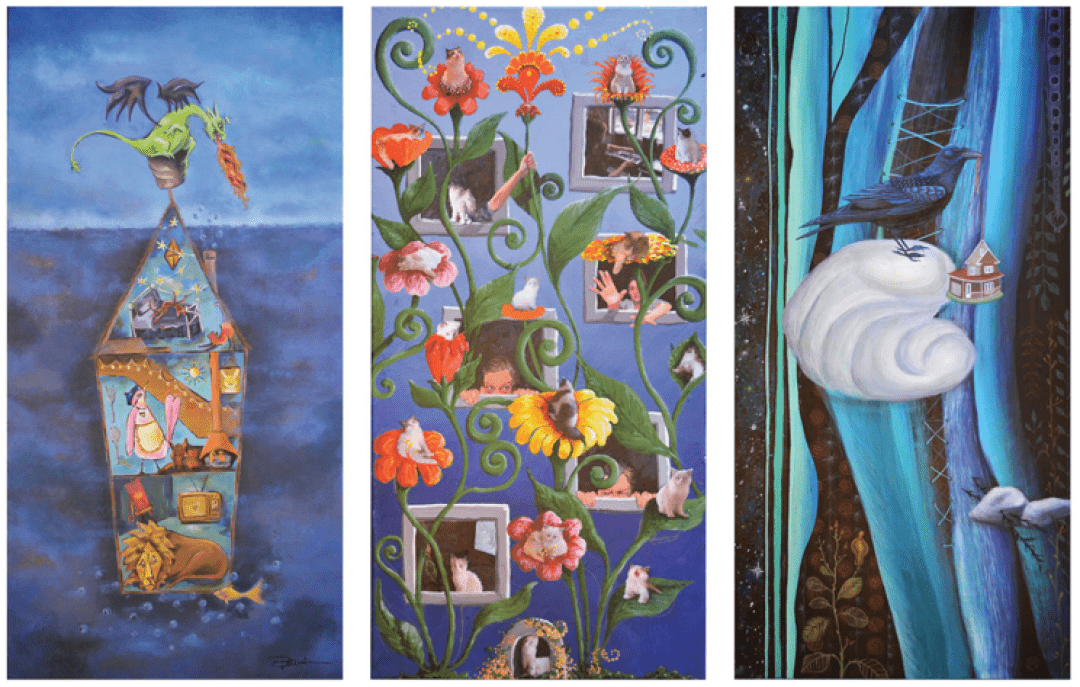
Three Story Houses, a collaborative project that brought art to non-traditional venues this April and May, will make its final stop at Wild Joe’s Coffee in June. The show features works by 30 local artists inspired by the theme, “Three Story Houses.” The idea of storytelling as a thread that connects people was the impetus behind the theme.

This show is the culmination of a grass roots art outreach project that challenged the status quo by bringing original art to a variety of non-traditional display venues including assisted living communities, classrooms, low-income serving entities, and even a bowling alley. The Wild Joe’s event is the final opportunity for the public to see the series.

The works will be on display June 1-30, with a reception during the first Bozeman Art Walk 6-8 pm on Friday, June 10. Some of the works are for sale, with many artists donating all or part of proceeds to local community causes.

The artists include Kelly Bellcour, Duncan Bullock, Tina DeWeese, Tara Gallagher, Anne Garner, Max Giles, Sharon Glick, Marla Goodman, Birdie Hall, Alvin Huntsman, Terry Karson, Kate Lyndsay, Cristina Marian, Kenda Minter, Stephanie Newman, Shawn and Bella Raecke, Robert Rath, Selisa Rausch, Tina Rodriguez, Raina Rowberry, Jack Schwem, Joe Schwem,  Jocelyn Stoody, Cameron Taylor, Tom Thornton, Tyson Vick, Mike Weix, Carmel Wood and Angela Yonke.

For more information or to inquire about submitting your own “Three Story Houses” inspired work to a community wall in the show, find Community Art Bozeman on facebook or visit https://communityartbozeman.wordpress.com/

Add a Comment »

Thursday, May. 19th, 2016

MSU Veteran Services awards more than $15,000 in scholarships to veterans and spouses

Montana State University’s Veteran Services office recently awarded scholarships totaling more than $15,000 to veterans  and their spouses at the annual veteran appreciation dinner, held April 29 in Bozeman.

The students and the awards they received are listed below by scholarship name, scholarship recipient and hometown.


The Veterans Family Freedom Scholarship was established for veterans of the United States Armed Forces and their spouses to show support for their protection of our freedom. The Harold T. Mellang Memorial Scholarship wasestablished by David and Janyce Hoyt in memory of Janyce’s father, Harold, a veteran himself. The Robert M. Hoyt Memorial Scholarship also established by David and Janyce Hoyt in memory of David’s father, Robert, who was also a veteran. The winners received all three scholarships for a combined award of $2,380 to each.

Amanda Spring, a resident of Great Falls, is a nursing student due to graduate in December 2017. She is the spouse of Air National Guardsman Jason Spring.
Joshua Healy, a Marine Corps veteran from Kalispell, is studying sustainable food and bioenergy systems. He is due to graduate in May 2017.
Justin Elias, from Sahuarita, Arizona, is a Marine Corps veteran studying computer engineering. He is due to graduate in May 2019.

The Wade Christiansen Purple Heart Scholarship is given in memory of Army Paratrooper Wade Christiansen, who received a Purple Heart from his service in Afghanistan. Christiansen was an MSU student studying photography when he died in 2013. The scholarship was established to honor his service and sacrifice to the country. The scholarship is a $1,000 award.

Shane Heiser, a retired Air Force Veteran from Ferndale, Washington, is studying agriculture business. He is due to graduate in May 2018.

The Henderson Family Scholarship was established by William and Marilyn Henderson to help make higher education attainable for servicemen and women, as well as their spouses. The scholarship is a $3,500 award.

Jacob Corpron, an Air Force veteran from Kalispell, is studying cell biology and neuroscience. He is due to graduate in May 2017.

The Carol Clarke Smith Scholarship for Veteran’s Spouses. This scholarship was established by Carol Clarke Smith, who believes in broadening access to higher education for those families who sacrifice to support the country. This award is for $4,000.

Hannah Pettis, of Billings, is the wife of Marine Corps veteran Ryan Pettis. She is studying nursing and is due to graduate in May 2018.

For more information on the scholarship program or on Veteran Services, visit http://www.montana.edu/veteran/.

Add a Comment »

Wednesday, May. 18th, 2016

3,000+ signatures on petition to corporate partners of filmmakers that illegally went off trail in YNP

Over 3,000 sign petition demanding corporate sponsors pull future funding to filmmakers

Filmmakers were criminally charged on Tuesday

Montana Mint calls on Bud Light and Red Bull to take action

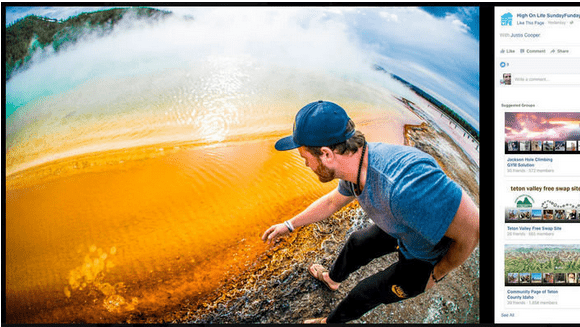
National Park lovers were upset when video emerged online this week of four men from the Canadian film making  group SundayFundayz leaving the designated area in Yellowstone to “capture the perfect picture.” On Tuesday, criminal charges were filed and federal arrest warrants were issued.

Also on Tuesday, the Montana Mint established a petition on change.org calling on the group’s corporate partners to pull future funding.  As of this afternoon, the petition had collected over 3,000 signatures. The petition can be found here: https://www.change.org/p/bud-light-pull-corporate-sponsorship-for-the-guys-who-left-the-path-at-yellowstone-national-park

In a since deleted webpage, SundayFundayz claimed to have the backing of corporate sponsors Bud Light and Red Bull, among others.  An archived version of the corporate partnership page can be found here.

Social media and Reddit have helped build momentum behind the Montana Mint petition. The Bud Light and Yellowstone National Park Facebook pages are littered with hundreds of comments regarding the petition.  The petition was the top story for a time on both the r/Montana and r/Wyoming Reddit pages.  

On why they started the petition, a representative from the Montana Mint said, “Like all Montanans, we were shocked when we saw the video of these guys running around in the restricted areas of Yellowstone.  It somehow made it worse to find out their trip was funded through corporate sponsors.  Bud Light, Red Bull, and all of their other sponsors need to take action to demonstrate this type of behavior will not be tolerated.”

On the importance of preserving national parks, a representative from the Montana Mint said, “Our national parks are not amusement parks.  Our ability to enjoy these parks comes with a responsibility to protect them.  Purposely entering a restricted area to get a better picture is selfish behavior that risks damaging these special places for future generations.”

Background

The Montana Mint has a simple mission: bring the best of Montana to the internet. The Montana Mint is a creative outlet for Montana-inspired stories, photos, and original content that highlight the unique beauty of the people, businesses, and places that make up the Treasure State.

For all media inquiries and availability, please email: montanamintfb@gmail.com or drop us a message on our Facebook Page.

Add a Comment »

Monday, May. 16th, 2016

MSU professor creates online photobook of regional insects

A Montana State University professor has created a way for people across the state of Montana and beyond to access photos of an often unseen world.

Robert Peterson, professor in MSU’s Department of Land Resources and Environmental Sciences in the College of Agriculture, has created an online collection of his photos showcasing the insect world of the Greater Yellowstone Ecosystem (GYE). Peterson hopes the online photobook – which includes more than 120 images taken over a period of 14 years – will be used and appreciated by the public.

“There’s an entire, hidden world beneath our feet that’s not well understood or appreciated,” Peterson said. “Insects are the most abundant and diverse multicellular organisms in the GYE, and they play a vital role in how ecosystems function, but because they are small and people rarely see them close up, they’re overlooked in regard to their importance. This project is an effort to hopefully enhance public appreciation of, and education about, the incredible diversity and beauty of insects in the GYE.”

The website, Insects of the Greater Yellowstone Ecosystem, currently features close-up images showcasing the bright colors, delicate features and habitats of regional butterflies and moths, beetles, flies, bees, wasps, ants, sawflies, grasshoppers and other types of insects. Scientific names of the insects are listed, as is brief information about the insects’ anatomy, behavior and habitat.

The GYE includes Yellowstone National Park, comprises 34,375 square miles, and is one of the largest nearly intact temperate-zone ecosystems on Earth, according to the U.S. National Park Service. Peterson said at least two out of every three species in an insect within this ecosystem.

“Their diversity and abundance is staggering,” he said. “Insects aren’t viewed as charismatic as some of the large mammals in the region, but they are critical to any healthy ecosystem because they serve as pollinators that stimulate plant diversity, they’re an important food source for other organisms, they recycle nutrients, and are an crucial foundation for watershed health.”

The project includes a Facebook and Twitter page as well, where Peterson posts pictures and descriptions of insects. Photographs of insects can be added indefinitely because there are thousands of species in the GYE, giving scientists plenty of insects to photograph, according to Peterson. Eventually, he hopes to incorporate images from other photographers and encourage novice entomologists to explore, identify and share findings.

“The ultimate goal is to develop an appreciation, support education and spur an awareness of this hidden world,” he said. “You don’t have to go to far-flung places to study insects; there’s a jungle right outside your backdoor. I want people to explore and – if they’re inclined – to contribute to the science of discovery.”

Add a Comment »

News Comments