Monday, Jan. 23rd, 2017

MBC presents the Bozeman Premiere of Winthrop Corey’s Snow White

Montana Ballet Company (MBC), under the direction of Elizabeth DeFanti, announces the Bozeman premiere of Winthrop Corey’s original Snow White on Saturday, February 25 and Sunday, February 26 at the Willson Auditorium. This production is generously underwritten by: Tim and Mary Barnard, the Gilhousen Family Foundation, the Montana Arts Council’s Public Value Partnership, and the Steinmuller Family Charitable Fund.

Montana Ballet Company is thrilled to welcome Winthrop Corey, world renowned master choreographer and teacher, and former principal dancer with the Royal Winnipeg Ballet and National Ballet of Canada. Mr. Corey will collaborate with MBC to produce his original, full length Snow White for the very first time in Bozeman. Snow White has received critical acclaim and has been performed by numerous ballet companies across the country. Mr. Corey’s Snow White is an enchanting treat for the entire family and will feature not only his exquisite choreography, but also his fine, hand crafted costumes.

As a special highlight, joining our own MBC dancers will be guest artist Victoria Barker in the leading role. Bozeman audiences will recognize Ms. Barker who recently danced the coveted role of Clara in MBC’s 33rd Annual Nutcracker. The talented Raul Peinado will perform the role of the Prince.

MBC’s Music Director, Stefan Stern, will lead an outstanding orchestra of esteemed local musicians who will play the beautiful Snow White score.

For Snow White tickets contact the Montana Ballet Company at 406.582.8702 or online at www.montanaballet.org All seating is reserved. Ticket prices range from $15 – $55. There will be a $2.00 service fee added for “day of show” sales.

Add a Comment »

2016-2017 U.S. Geological Survey Winter Count of Northern Yellowstone Elk

The Northern Yellowstone Cooperative Wildlife Working Group conducted its annual winter survey of the northern Yellowstone elk population on January 15, 2017. The survey, using three airplanes, was conducted by staff from the Montana Department of Fish, Wildlife & Parks and the National Park Service.

Staff counted 5,349 elk, including 573 elk (11%) inside Yellowstone National Park and 4,776 elk (89%) north of the park. Survey conditions were favorable across the region.

The 2017 count was 9% higher than the 2016 survey results of 4,912 elk, and was 37% higher than the lowest count of 3,915 elk in 2013. This year’s count of 5,349 was the highest since 6,037 elk were counted in 2010.

The purpose of this survey was to estimate overall elk numbers and population trends. A separate survey occurs in March with the objective of estimating calf recruitment and bull ratios.

The Working Group will continue to monitor trends of the northern Yellowstone elk population and evaluate the relative contribution of various components of mortality, including predation, environmental factors, and hunting. The Working Group was formed in 1974 to cooperatively preserve and protect the long-term integrity of the northern Yellowstone winter range for wildlife species by increasing our scientific knowledge of the species and their habitats, promoting prudent land management activities, and encouraging an interagency approach to answering questions and solving problems. The Working Group is comprised of resource managers and biologists from the Montana Fish, Wildlife, & Parks, National Park Service (Yellowstone National Park), U.S. Forest Service (Custer Gallatin National Forest), and U.S. Geological Survey-Northern Rocky Mountain Science Center, Bozeman.

Add a Comment »

Bozeman Firefighters Complete International Professional Designation Process

The Center for Public Safety Excellence Commission on Professional Credentialing has notified four members of the Bozeman Fire Department of their confirmation for the prestigious Fire Officer Designation. The successful members are

Captain Chris Dubay
Captain Matt Norby
Battalion Chief Jason Kolman
Battalion Chief Mark Criner

The Fire Officer Designation is awarded to fire service professionals who have shown competency and knowledge in their education, experience, professional development, technical competencies, contributions to the profession, and community involvement during their career. As of today there are only 372 Fire Officers Designations worldwide and only 12 in the State of Montana of which 9 are members of the Bozeman Fire Department. The awarded members must continue to work to further their knowledge, experience, and involvement over the next three years as the Fire Officer Designation has a three year renewal process that ensures fire service professionals are continue to grow and contribute in their career.

The Center for Public Safety Excellence Commission on Professional Credentialing has also notified Deputy Fire Chief Trisha Wolford of her confirmation for the prestigious Chief Fire Officer Designation. As of today there are only 1,213 Chief Fire Officers Designations worldwide and only 3 in the State of Montana of which 2 are members of the Bozeman Fire Department. Similar to the Fire Officer Designation the Chief Fire Officer Designation requires members to continue to work to further their knowledge, experience, and involvement over the next three years as the Fire Officer Designation has a three year renewal process that ensures fire service professionals are continue to grow and contribute in their career.

Chief Josh Waldo states “I am extremely proud of these members who have worked to show they meet the international standards required to obtain this third party credential which is one of the elite accomplishments for fire service professionals. Third party credentials are an important piece in the validation process of the professional development of these members. It is truly astonishing what the members of the BFD are doing in terms of leading and set the bar in the State”.

All of these members will be recognized Monday night January 23rd at the City Commission meeting and formally recognized by the Center for Public Safety Excellence March 22nd in Anaheim, California at the CPSE annual award banquet. The banquet is held in conjunction with the CPSE Excellence conference.

For additional information you may contact Fire Chief Josh Waldo @ 582-2351 or visit the CPSE website at www.cpse.org

Add a Comment »

Friday, Jan. 13th, 2017

MSU-produced planetarium show to premiere at MOR's Taylor Planetarium Jan. 14

A new planetarium show created at Montana State University aims to bring a dynamic and multidimensional experience of Einstein’s theory of gravity and last year’s discovery of gravitational waves to the public.

The production, “Einstein’s Gravity Playlist,” will be shown three times a day in the Taylor Planetarium at MSU’s Museum of the Rockies from Jan. 14 to Feb. 24, and daily from Feb. 25 to May 26. It will also be offered to planetariums worldwide, with future showings already set for Seattle, Texas and Germany.

Two years in the making, the 23-minute show is a collaboration between MSU’s School of Film and Photography and School of Music in the College of Arts and Architecture, Taylor Planetarium and the eXtreme Gravity Institute. Work began on the show before the announcement of the first detection of gravitational waves in February 2016, a discovery in which the eXtreme Gravity Institute played a crucial role.                                                                             

“The show tells the story of Einstein’s theory of gravity, the story of gravitational waves and the big news related to their discovery,” said Nicolas Yunes, associate professor in the MSU Department of Physics in the College of Letters and Science and co-founder of MSU’s eXtreme Gravity Institute.

The institute was established in 2016 with the goal of deepening Montana’s involvement in extreme gravity research, education and public outreach, Yunes said.

“The show is a perfect example of what the eXtreme Gravity Institute is all about,” he said.

During the show, Yunes said, audiences will see what it looks like when black holes collide and neutron stars merge.

“They’ll also see stars exploding in supernova, an explanation of Einstein’s theory of gravity and the experiments performed to prove that the theory is correct,” he said. “And, they’ll experience the vibrations of space and time accompanied by a really cool soundtrack.”

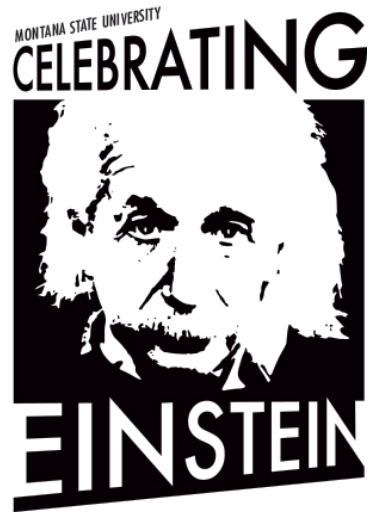
Yunes said the idea for a planetarium show grew from two outreach events he organized at MSU: “Celebrating Einstein” in 2013 and “Rhythms of the Universe: Words and Worlds in Motion” in 2014. Both events combined science and the arts to capture the attention of the public while demonstrating the artistry and wonder that can be found in science.

“I thought it would be interesting and challenging to create a planetarium show, but I didn’t have the expertise to do so,” he said. “Fortunately, MSU is full of highly talented and enthusiastic collaborators who could join me in this endeavor.”

Theo Lipfert, director of MSU’s School of Film and Photography, directed the film, saying it was a “huge creative and technical challenge.”

“We were making visible a science that can’t be seen,” he said.

Lipfert worked with a team of 15 MSU students, staff and alumni, including graduates of MSU’s Science and Natural History Filmmaking program who work as filmmakers at NASA’s Goddard Space Center.

“We used every tool we could think of to tell this incredible story: 360-degree cinematography, live action, and 3-D animation,” Lipfert said. “The combination of those images with amazing music and sound helped us communicate the beauty of this science.”

Jason Bolte, assistant professor in MSU’s School of Music, worked with Music Technology program graduates Luke Scheeler and Jaimie Hensley to compose and realize the show’s musical soundtrack.

“We wanted the show to appeal to middle- and high-school students,” Bolte said. “So, we tapped two young composers to interpret this story musically. The score combines the actual sounds of gravitational waves with our electronic compositions.”

Eric Loberg, director of the Taylor Planetarium, oversaw the technical production, using his expertise to address the technical challenges of creating a planetarium show.

“Eric has a deep understanding of how to use this technology to put compelling content on the ‘dome,’” Lipfert said.

During the show, Alisa Amador, who plays the role of “Lucia,” a doctoral student in extreme gravitational physics, leads the audience through an exploration of how gravitational waves are formed, how they move through the universe and how scientists, like herself, work to hear them.

The planetarium team developed the script with the goal of breaking down the complicated science, making it more understandable for a wide audience. Yunes said he expects viewers will take away different things from the show.

“Some will get science out of it, some will get a better understanding of what gravitational waves are and how important they are,” he said. “Some will figure out why we do the science that we do and the many benefits that science has to society.”

Production of “Einstein’s Gravity Playlist” was funded by NASA’s Montana Space Grant Consortium, the American Physical Society, the Montana State University Office of the President, Office of the Provost, Office of Research and Development, the College of Letters and Science and the Department of Physics.

For show times and more information about “Einstein’s Gravity Playlist,” go to: https://museumoftherockies.org/taylor-planetarium/current-shows-and-showtimes/

Add a Comment »

Wednesday, Jan. 11th, 2017

Statement from City of Bozeman Mayor Carson Taylor

In light of recent events both here in Bozeman and Whitefish, as well as other parts of our state and nation, Mayor Carson Taylor would like to release the following statement:

“The City of Bozeman is a successful and growing community. We thrive, in part, because we welcome all people to live and participate in our community life. We believe that our success is connected to the ability of our diverse population to work together with mutual respect for our differences and appreciation for what we share in common.

The people of Bozeman stand together in opposition to any person or group that attempts to intimidate or otherwise curtail the rights of all to practice their faith and to exercise all of their rights in peace.”

                                                                                                                    Photo KBZK


Add a Comment »

American West, a collection of sterling silver belt buckles and fine jewelry available in Big Sky

As a creative urban dweller and bike racing, mountain explorer, Ellie Thompson’s designs are influenced by worlds both natural and modern. Comprised of sterling silver belt buckles, and fine jewelry in multicolor gemstones and precious metals, Thompson’s latest collection, American West, is an organic exploration of the balance between soft and strong, fierce and finessed, wild and precious. A departure from the geometric and linear designs of her urban inspired works, the natural motifs combine with a sense of magical realism to create a complex show of form, space and movement.  Feminine curves play against the edges of sharp, aggressive details. The designs are at once familiar and other worldly.

"The spirit of the American West is fierce and finessed. And the collector who epitomizes this idea, creates a personal style that shows strength and a sense of adventure”, says Thompson.

The Double Bison sterling silver belt buckle made its debut in the 2016 C.M. Russell Museum Exhibit and Auction in Great Falls, Montana. Her Wild Roses sterling silver belt buckle won an award at The Western Design Conference in Jackson, Wyoming and will be featured in the 2017 C.M. Russell Museum Exhibit and Auction.

Thompson has won numerous awards for her innovative use of rare colored gemstones and precious metals. She has earned the prestigious Spectrum Award three times and the American Vision Award twice as well as accolades from World Gold Council and Platinum Guild International.  In 2000, she was awarded First Prize in the American Jewelry Design Council's New Talent Competition, an award that launched her into the national spotlight

Her work is available through selected galleries and stores across the country including Creighton Block in Big Sky, Montana, Atomic 79 in Dillon, Montana, Rare Gallery in Jackson, Wyoming and Eat Gallery in Maysville, Kentucky. The collections can be viewed at www.ellieco.com.

Add a Comment »

Monday, Jan. 9th, 2017

White House reappoints MSU’s Cruzado to post

President Barack Obama has announced his intent to reappoint Montana State University President Waded Cruzado to the Board for International Food and Agricultural Development.

Cruzado is among 11 individuals the White House appointed to various posts.

“I am pleased to announce that these experienced and committed individuals have decided to serve our country. I know they will serve the American people well,” Obama said in a Jan. 6 White House press release.

The Board for International Food and Agricultural Development, BIFAD, is a seven-member advisory council that advises USAID on agriculture and higher education issues pertinent to food insecurity in developing countries. The president appoints members, who primarily represent the academic community. BIFAD was established by Title XII of the Foreign Assistance Act. The Board and Title XII recognize the critical role of U.S. land-grant institutions in agricultural development, domestically and abroad, and support their representation in USAID development programs.

Cruzado will serve on the BIFAD board while continuing in her position as MSU president. She first was appointed to the BIFAD board in 2012.

“I am pleased to continue to serve on the Board for International Food and Agricultural Development,” Cruzado said. “As a representative of a land-grant university, it is my honor to work to help USAID achieve its goals for agricultural development, with an ultimate goal of eradicating hunger from the world.”

Cruzado has served as the 12th MSU president since January 2010. An articulate and inspirational speaker on the role of the public university, Cruzado has become well-known for her understanding of the Morrill Act, which created the land-grant university system more than 150 years ago. She is a passionate champion of the land-grant's tripartite mission of education, research and public outreach, and the important role higher education plays in the development of individuals and the prosperity of the nation.

Add a Comment »

Art.Write.Now.Tour – National Scholastic Exhibition - February 10 – March 17, 2016


This February we are honored to host the Scholastic Art & Writing Awards’ Art.Write.Now.Tour. This exhibit will feature work of student artists, grades 7 – 12, from around the nation who has been awarded for their excellence in fine art and writing. In 2016 nearly 320,000 public, private and home school students submitted original works to the program’s 29 categories for their chance to earn scholarships and have works exhibited or published. Of these submissions, 50 fine art and writing works were chosen to travel along with the exhibit tour. The Emerson is proud to host this inspiring and innovative collection of creative work by teens from across the country.

This is the first time the state of Montana has housed the Tour sponsored by the New York based non- profit, the Alliance for Young Artists and Writers. The Emerson Center for the Arts & Culture is among four tour stops in the 2016/ 17 season including the Kendall College of Art & Design in Grand Rapids, MI, the Museum of Fine Arts in Houston, TX and the Mississippi Museum of Art in Jackson, MS.

Of the 320,000 student submissions to the Scholastic Art and Writing Awards this year, zero came from the state of Montana. To introduce this program to the public and increase participation from our state, the Emerson has put out a Call For Art exclusively for High School students. The show, titled Our Perspectives: Art Right Now, will jury student submissions into a month long exhibit immediately following the Art.Write.Now.Tour. We are accepting works in ALL medias from any public, private or home school student grade 9 – 12. We are excited to continue to engage the youth of Montana in the arts and give recognition to the next generation of working artists.

For more information on these exhibits or to receive the Call for Art and Application please contact the Emerson’s Education Curator. Education@theEmerson.org, 406-587-9797 x 104.

Add a Comment »

STEM role models, sponsors needed for MSU conference

Organizers of a conference at Montana State University are seeking female professionals who can offer workshops and serve as role models for junior high-aged girls interested in science, technology, engineering and mathematics careers.
 
The annual conference, Expanding Your Horizons, takes place Saturday, April 22, on the MSU campus. The event is designed to expose young women to exciting STEM careers and encourage them to pursue STEM courses in high school and college.
 
More than 200 girls from throughout Montana will participate in engaging STEM activities ranging from robots to fossils to personal finance.
 
Volunteers who would like to share their expertise and enthusiasm on a STEM topic will develop a 40-minute workshop and hands-on activity. Training is offered for new presenters.
 
Businesses and organizations that are interested in financial or in-kind sponsorships are also encouraged to participate.
 
EYH is a national program that, since 1992, is hosted locally by MSU’s Extended University outreach program.
 
The deadline for applying to be a presenter is Jan. 22.
 
Volunteers should contact Nicole Soll with MSU Extended University at (406) 994-6633 or Nicole.soll1@montana.edu or visit http://eu.montana.edu/ContinuingEd/youth/ or http://bit.ly/MSUEYH

Add a Comment »

Tuesday, Jan. 3rd, 2017

MSU faculty and graduate student document first-ever Montana bumble bee species record, publish paper

The first time a bumble bee was recorded in Montana was in the journals of the Lewis and Clark expedition in 1805. More than 200 years later, Montana State University faculty and a former graduate student say they now have compiled the state’s first inventory of bumble bees known to live in Montana, and their research reveals the largest number of bumble bee species known from any state in the nation.

The group’s research is detailed in a paper, “Bumble Bees of Montana,” which was published this week in the Annals of the Entomological Society of America (AESA), the country’s flagship entomology journal. The paper’s co-authors were Michael Ivie, associate professor of entomology in the MSU Department of Plant Sciences and Plant Pathology, Kevin O’Neill, professor of entomology in the MSU Department of Land Resources and Environmental Sciences, Casey Delphia, MSU research scientist, and Amelia Dolan, former MSU entomology graduate student, all within the MSU College of Agriculture.

“Because of Montana’s size, landscape diversity and regional junction of eastern and western geographies, when it comes to bumble bees, Montana hosts a diverse, large and globally relevant community of species,” Ivie said. “Our research shows 28 different species of Bombus, with four more expected to make the list. That’s the largest number of bumble bee species recorded for a state in the entire country."

Ivie added that the research project greatly expanded the known distribution of the bumble bee species within Montana, with at least four species now documented from each of Montana’s 56 counties.

To get to that number, a research group that included Dolan, Delphia, Ivie and O’Neill used existing specimens in the Montana Agricultural Experiment Station’s Montana Entomology Collection, those from a variety of existing MSU faculty projects and material in other museums. Then, they enlisted a host of MSU faculty, staff, students and alumni from across the campus and around the state to collect and contribute specimens from under-sampled areas. Collaborators from the Montana Agricultural Experiment Stations (located at seven different research centers across the state), statewide MSU Extension agents and specialists, Montana Master Gardeners, hobby entomologists, hikers, and U.S. Geological Survey researchers all pitched in, greatly expanding the areas represented in the database.

“The specimen gathering was a large effort,” Dolan said. “We reached out to (a) wide group of people who have an interest in entomology (and gave them directions for catching specimens), who would be out and about in Montana for the summer for potential specimen collection. The turnout of people willing to collect specimens and send them in was exciting.

“It was amazing because we had people collecting specimens across the state, in varying elevations and diverse ecosystems – areas we alone wouldn’t have had access to in the time that we had to complete the project,” Dolan said. “The number of species is representative of Montana’s wild spaces and diverse landscapes that host these bees.”

Once the MSU researchers cleaned, examined and identified the specimens, Dolan and Delphia pored over bumble bee research records spanning 125 years and 25 natural history collections. They consulted with national bee labs and compared data sets so they could accurately identify and document specimens.

Because so little is known about bumble bees in Montana, much of the species identification was tedious, and it look a lot of comparing and contrasting with other collections, Delphia said. Especially difficult specimens were sent to a world expert at University of California, Davis, for verification.

“Montana is a bit of a black hole when it comes to bee species records and information, so you’re working with very little documentation to begin with,” Delphia said. “Our taxonomic work for the bumble bees had to be referenced with other museums and collections because there isn’t a baseline summary of what’s already here.”

Delphia said the bumble bees of Montana collection is an important beginning in understanding and identifying the rest of the state’s native bee species.

“It’s an exciting time to work in pollinator research, especially in Montana, because we still don’t have an accurate idea of what native bee species are here,” she said. “Many people ask if Montana bees reflect a national bee decline, but we can’t answer that without first knowing what’s already here. This is a first step to understanding and documenting what other bee species might be here, so we can start looking at bigger questions.”

That Montana has the largest number of bumble bee species of any state in the country is of scientific importance, Ivie said.

“Having a baseline record of bumble bee populations in a state that reflects both western and eastern geographies has major global impacts when it comes to pollinator research,” Ivie said. “Nationally, bees in general, and bumble bees specifically, are in decline, and they serve as critical pollinators for the world’s food supply. The first step towards understanding measures to protect them is to understand what their species numbers look like so that we can build on monitoring efforts.”

Dolan said the idea to document Montana’s bumble bee communities stemmed from a project during her time as a graduate student in MSU’s entomology program. Funded in part by a Montana Department of Agriculture Specialty Crop Block Grant and the Montana Agricultural Experiment Station, Dolan was researching insects associated with Montana’s economically and culturally valuable native huckleberry plant.

While observing species in various Montana hillside huckleberry patches, Dolan noticed a high number of bumble bees visiting huckleberry plants. Around that same time, Dolan said a new book, Bumble Bees of North America, was published that provided a reference guide for bumble bee identification.

“We started seeing that the book’s species’ maps didn’t quite match what I was seeing in the field,” Dolan said. “We started to wonder if the bumble bee specimen data I was collecting for my huckleberry research might be applied to larger-scale, statewide faunal inventory.”

In fact, the AESA paper largely stemmed from Dolan’s master’s thesis on pollinators associated with the huckleberry plant and industry as a graduate student at MSU, according to Ivie. Dolan now works at Athlos Academies, a charter school management company, in Boise, Idaho.

“Anytime we have graduate students doing meaningful work, and they get that work published in the top national journal of their field on a globally relevant topic, that means we’re doing good work,” he said.

The Bumble Bees of Montana reference collection is currently housed in the Montana Entomology Collection at MSU. MSU computer science graduate student James Beck created an interactive web-based map showing bumble bee species by county in Montana, which can be found online.

“The new bumble bee collections are a wonderful addition to the already-large specimen collection here, and we hope students of all levels and other research programs relevant to pollinators take advantage,” Ivie said.

MSU is home to a new Center for Pollinator Research, a research group of faculty from different disciplines focused on improving pollinator health and mitigating pollinator losses through research, education and outreach. The documentation of Montana’s pollinator diversity, with projects like this one, are a baseline foundation for such work.


Add a Comment »

News Comments