Friday, Jun. 30th, 2017

No Fireworks on FWP Lands

Visiting a Montana fishing access site on the July 4th is a great idea – just leave the fireworks at home.

Fire season in Montana is already underway in many parts of the state. This means it’s all our responsibility to be careful with fire and any potential sources of ignition. It’s been a long-standing policy with Montana Fish, Wildlife and Parks to keep fireworks off our sites to ensure the safety of our public and to protect our recreation and habitat resources.

Fireworks are illegal on all state and federal land in Montana, including all FWP fishing access sites, wildlife management areas, State Parks and other sites.

“The recent high temperatures and dry conditions is elevating the wildfire danger across the state, particularly in the east and northeast parts of the state; where conditions are extremely dry. These conditions coupled with fireworks and increasing summer recreation have put firefighters on heightened alert,” said FWP director Martha Williams. “One careless spark could ignite the next wildfire.”

Anyone using fireworks on FWP lands may be charged with a misdemeanor that can result in a fine up to $500.

Add a Comment »

Thursday, Jun. 29th, 2017

Sweet Pea Festival 2017 Poster Contest Winner

First Place: Micha Rott
Second Place: Valerie Chai – Fayetteville, NY
Third Place: Olivia Rose Langan – Bozeman, MT


Growing up in Nebraska, Micha Holle Rott always had a great love for art and animals—especially rabbits. There are many drawings from as young as 4 years old that have bunnies baking, etc. She either wanted to be a veterinarian or an artist and college chemistry confirmed what she already knew in her heart. While her family resided in Lincoln, Nebraska, her father had a dream of a place he referred to as "God's Country"—Montana. They made many vacation trips to Bozeman, where her parents picked out property for "some day." After she graduated from college and set out to conquer the world in graphic design Micah focused her sites on Bozeman but fell in love and married Jeremy Rott, a Kansas man, and settled there, while her parents, Larry and Rachel Holle, moved to Bozeman permanently. Today, Micah works as a freelance graphic designer and has three children, Silas-15 and twins Corinne and Jonas-12. She still loves animals and illustrating and dreams of one day setting aside time for a children's book. They visit her parents in Bozeman often to be where her son Silas has referred to as "the most perfect place."

When asked about her creative process, Micah says she brainstorms, sketches some options until she likes what she sees and then, "COLOR," beams Micah, "It's foundational, so I spend some time creating a color scheme before I execute a design." "Winning the Sweet Pea Festival poster contest, is such a high honor. I've been following this festival for over 20 years," says Micah, "I feel I'm in the company of some wonderful artists." Micah will be in town for the festival and hopes to sign posters on August 4th, 5th and 6th.

You can purchase this commemorative poster beginning in early July at select pre-sale outlets, the Sweet Pea Festival office and at the Sweet Pea Festival August 4-6th. For more information please visit: http://sweetpeafestival.org/buy-wristands-and-merchandise/.

About the Sweet Pea Festival
The Sweet Pea Festival is a festival of the arts that has been held in Bozeman, MT since 1978. The 2017 Sweet Pea Festival will be held August 4th, 5th and 6th with pre-festival Sweet Pea events The Art Show, Chalk on the Walk and Sweet Pea’s Bite of Bozeman beginning on July 30th. Sweet Pea is dedicated to our mission of "promoting and cultivating the arts" and brings music, an art show, flower show, children's activities and a beer and wine garden that features Montana brews to Bozeman during the three day festival. Pre-Festival events include Sweet Pea's Art Show, Chalk on the Walk and Bite of Bozeman.

The Sweet Pea Festival is a registered 501(c)(3) non-profit organization. All money raised in excess of what is needed to operate the Festival is given back to the community in the form of grants for the arts, art education, and special projects in the Bozeman area.

Add a Comment »

"Can Do" Attitude About Preventing Drug Abuse

The most pressing public health concern facing America today is alcohol and drug misuse, substance use disorders, and addiction.

In a recent Bozeman Daily Chronicle story, it was reported that alcohol continues to be the main factor in deadly car crashes and that drug-related seizures on Montana roads are on the rise.

Over the next two years, Montana Attorney General Tim Fox has stated that his office will be spearheading an effort to develop a strategic plan that aims to combat the effects of dangerous drugs and that the Department of Justice will be working with a broad coalition of stakeholders.

Here in Gallatin County the Community-Coalition On Drug Awareness, Elks Drug Awareness Program, and Gallatin County DUI Task Force will continue their efforts to address drug issues in partnership with law enforcements agencies who are on the front line.


The Community Coalition On Drug Awareness is a community-based program that provides resources and evidence-based strategies to reduce underage drinking, excessive drinking, tobacco use, impaired driving, and illegal drug use throughout Southwest Montana.

The Gallatin County DUI Task Force is a citizens group appointed by the Gallatin County Commissioners to develop and/or fund public education, awareness, and enforcement projects to reduce the number of alcohol and drug related crashes and deaths in Gallatin County.

With a “can do” approach our communities can have success in implementing strategies and programs to prevent alcohol and drug misuse.

That can do attitude was demonstrated a few weeks ago when community partners brought the Bitter Pill Art Exhibit to Bozeman with the aim to show the human side of prescription drug abuse and recovery.  The exhibition at the Elks Lodge showcased works from more than 30 amateur and professional artists from across Montana whose pieces examine the state’s prescription drug abuse epidemic.   

Add a Comment »

Monday, Jun. 26th, 2017

MSU doctoral student seeking a cure for her son’s rare disorder wins fellowship

A Montana State University doctoral student who is seeking a cure for her son’s rare genetic disorder has won a fellowship that will allow her to quit the predawn paper route she took to make ends meet and concentrate fully on her research.

Elizabeth “Tess” Corbin, a doctoral student from Bozeman in the Department of Chemistry and Biochemistry in MSU’s College of Letters and Science, has won a Ford Foundation Dissertation Fellowship that will give her $25,000 over the next nine months and connect her with a network of other Ford Fellows and mentors. Corbin is one of 38 recipients of the fellowship, which supports the final year of dissertation writing and defense for individuals working toward a doctorate in science or philosophy.

Corbin said the fellowship came at a time when she didn’t think she would be able to swing the money needed to complete her dissertation. The award, in addition to a tuition waiver from the MSU Graduate School, has also made it possible for her to quit the paper route that provided some financial relief but left her exhausted by midday.

“Getting up at four in the morning, six days a week, was hard, but I did it gratefully knowing it was what I had to do,” said the single mother of two boys, ages 17 and 13. “But, to write and defend my dissertation I need to be able to focus.”

Corbin earned her bachelor’s degree in chemistry from MSU in 2009, but because her older son, Sean, has a rare genetic disorder called homocystinuria, she decided to pursue her doctorate in biochemistry and delve into stem cell research, despite having little academic background in either.

Homocystinuria affects one in 335,000 people, and is so rare because each parent has to carry the genetic mutation for it to occur, according to the National Institutes of Health. People with the disorder are unable to properly process methionine, one of 20 essential amino acids – the small molecules that make up proteins – which leads to build up of toxic products in the body and causes serious health problems.

Since his diagnosis, Sean has had several major surgeries, including brain surgery to stop seizures and lens replacement on his eyes to correct his blindness. And, he needs another surgery soon.

Not finding any effective treatments for the disorder because of its rarity, Corbin decided to work on the problem herself after she determined stem cell research was the most promising avenue to a cure.

“I went back to school and I’ve concentrated on this because of Sean’s problem,” she said, “There wasn’t any help for it, so what’s a mom to do?”

Corbin conducts her research under the guidance of Edward Dratz, professor of biochemistry. In the Dratz Lab, she is working to produce fatty acid supplements that can be added to the media that is used to grow stem cells. She hopes to develop two supplements – one for stem cell maintenance and another that can be used to aid in reprogramming the stem cells.

The goal, Corbin said, is to make stem cells a more reliable testing agent for research, which could potentially lead to a cure for homocystinuria and other enzyme disorders by way of taking a person’s own stem cells and genetically correcting them to produce the right enzymes.

“Personalized medicine is the future, and induced stem cell production and culture is the bedrock it is going to stand on,” Corbin said. “This is right round the corner – being able to take a person’s blood and reprogram their own blood cells into stem cells so there won’t be any allergy issues and they won’t be rejected. They can then be genetically corrected to produce the correct enzyme and be reintroduced into the body. If you can do that a couple of times on somebody, it’s personalized medicine.”

Corbin has worked on this project for the past six years – the first two were spent on coursework -- but it wasn’t until the arrival ofRenee Reijo Pera, MSU Vice President of Research and Economic Development, that Corbin made significant strides. An internationally recognized stem cell scientist, Reijo Pera, along with geneticists Ninuo Xia and Benjamin Angulo, both researchers in Reijo Pera’s lab in MSU’s Department of Cell Biology and Neuroscience, were able to teach Corbin the molecular biology techniques she needed for her research so she could concentrate on her hypotheses and experiments.

“For a while there, I didn’t even know what questions to ask, so I was making some errors and really struggling before they came along,” Corbin said. “Since then, I’ve moved forward and we have gotten some results with adding my fatty acids to stem cells.”

The next step, she said, is to quantify those results through cell counts, which is difficult because stem cells tend to clump and colonize making them hard to count without killing them.

“They are experts,” Corbin said of Reijo Pera, Xia and Angulo. “They’re helping me get those processes down and we’ll get there.”

“It has been an honor for us to have a role in development of Tess’s research project,” said Reijo Pera. “She is very determined to make a difference via science.”

Corbin’s journey into the world of biochemistry came in a roundabout way. While studying finance and opera at the University of Washington, she experienced some life-altering personal setbacks and left school. She then spent many years in the music business, playing in a band, belting out Pat Benatar songs as a professional karaoke singer, and running various businesses.

She was 41 and newly divorced with a young son when she moved back to Bozeman and enrolled at MSU to complete her finance degree. Needing a physical science course to graduate, she signed up for chemistry.

“I got an A-plus and fell in love with chemistry, so instead of finishing up, I changed my major,” she said, not realizing the impact this choice would have on her and her son’s life.


It was during the time Corbin was working in MSU Associate Professor Robert Szilagyi’s physical chemistry lab that Sean began having seizures that doctors couldn’t explain. Szilagyi noticed Corbin crying in the lab one day and asked her what was wrong. After she told him about the many brain scans and tests Sean had been through with no answers, Szilagyi referred her to an imaging center that performs magnetic resonance imaging at double the strength of a regular MRI and at 200 times the resolution.

When the scan revealed three potential areas of the brain that could be causing her son’s problems, Corbin turned to the University of California, San Francisco to perform the brain surgery that stopped his seizures.

“If I hadn’t been in Dr. Szilagyi’s lab when Sean was having problems, I believe he would be dead today,” Corbin said.

While pursuing her chemistry degree at MSU, Corbin worked as a program officer at the county jail, offering educational opportunities and encouragement to inmates. Her second year at MSU, she became a chemistry student-teacher and a tutor.

In 2009, Corbin and her sons spent four months in Australia teaching at a small school where many of the students were African refugees. She drew upon her own personal hardships to encourage the students to not let their past define their future.

In 2011, Corbin worked with Bill McLaughlin, professor of chemistry, when he started the Science Horizons Initiative, which helps teachers of Native American high school students develop curriculum that incorporates Native culture into science to better engage Native students. In 2015, McLaughlin received the Provost’s “Excellence in Outreach” award on behalf of the initiative and Corbin was named its co-director.

She shared her experiences of educating others from diverse backgrounds -- along with her own story of being a single mother who is persevering despite many setbacks -- in her Ford Foundation Fellowship application.

“The vision I apply to teaching is a belief that our commonalities outweigh our differences, our weaknesses can become strengths, our failures are valuable lessons, and our differences make us interesting, useful and special,” Corbin wrote in her application.

Corbin said she is grateful for the opportunity Dratz gave her to conduct her research in his lab, despite her lack of a biochemistry background.

“Dr. Dratz gave me the opportunity to walk into the field cold and start eating it up and getting involved in it,” she said. “He is amazing.”

Dratz calls Corbin a “highly motivated student” and says she receives invaluable support from Reijo Pera’s group and world-class lab, which is making significant advances in stem cell technology.

“Tess is determined to improve human adult stem cell technology with the goal of advancing cures for human genetic disease,” Dratz said.

As she spends the next nine months on her dissertation, Corbin is hopeful that her work will help to create better, more viable stem cells that can be used to develop therapies and cures for people who, like Sean, suffer from devastating disorders.

“I think that in the future I could be a part of making that happen and when the therapies are ready, I’ll know,” she said.


Add a Comment »

Friday, Jun. 23rd, 2017

MSU research resets timeline for evolution of complex life forms in North America

A Montana State University doctoral graduate discovered fossilized microorganisms in western Montana that predate by 200 million years fossils previously believed to be the oldest complex life forms in North America.

Zach Adam’s research of the fossilized remains of a eukaryote called Tappania shows that Earth’s first complex life forms reflect an actively growing state, rather than a dormant one as scientists previously suspected. A eukaryote is an organism with complex cellular anatomy and many are capable of changing their cellular shapes into complex structures.

The findings offer clues about the development of life on Earth and may contribute to the search for lifeforms on other planets.

Adam, who received his Ph.D. from MSU in 2014 and is now a postdoctoral fellow at Harvard University, published his findings in the May 2017 edition of the scientific journal Geology. His research was primarily funded through a National Science Foundation Graduate Research Fellowship award that he received in 2011 while at MSU.

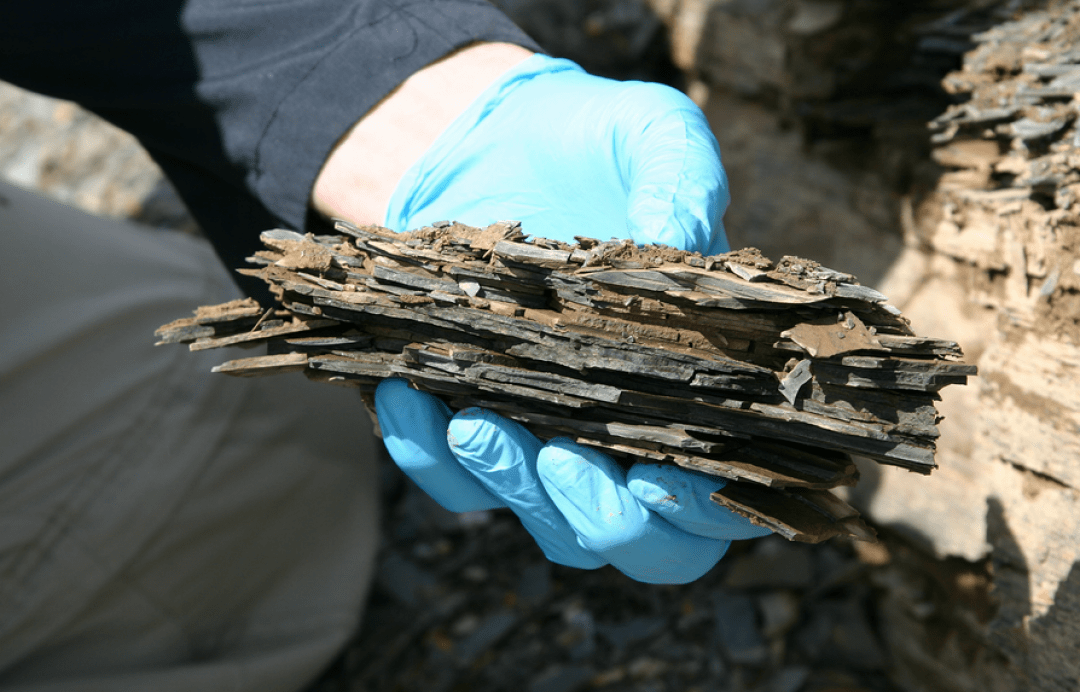
Adam discovered the fossilized remains of Tappania, a shape-shifting organism barely larger than the thickness of a human fingernail, in a clay outcrop near White Sulphur Springs. The site is part of a collection of rocks known as the Belt Supergroup that extends throughout much of Western Montana.

The relatively sudden appearance of eukaryotes around 1.6 billion years ago marked an important turning point in the evolutionary timeline, said Adam, who conducted his research in MSU’s Department of Earth Sciences in the College of Letters and Science, under advisers Mark Skidmore, associate professor of geology, and David Mogk, professor of geology.

For the 2 billion or so years prior to that, life on Earth consisted solely of simple microscopic organisms, Adam said.

“Microbial life dominated our planet for 2 billion years,” he said. “Then, seemingly overnight, we had organisms show up that are complex. The appearance of eukaryotes showing up on our planet was a significant event. They eventually evolved into forms of life that dominate the planet today, from plants to trees, and from fungi to people. In other words, as far as we can tell, every organism that is complex today came from these organisms.”

In addition to marking a critical step in the evolution of life on Earth, Adam said, eukaryotes are unique in having the remarkable ability to change their shape significantly, and seemingly at will, to include bulbs and trumpet-like protuberances extending from their otherwise spherical bodies. Adam explained that having dozens of intact fossils demonstrating this variability suggests to scientists that they were in an active state of their lifecycle, rather than a dormant one, when they died.

“What we found was that it was not only capable of changing its shape, but also independently directing the growth of multiple protuberances to do so,” Adam said. “It would have an outer wall that could take on a shape while an inner wall could take on a different shape. What’s remarkable is that we’d be hard pressed today to find many organisms that could do the same, in terms of taking on these shapes simultaneously.”

Mogk and Skidmore are co-authors of Adam’s paper, “A Laurentian record of the earliest fossil eukaryotes,” along with Nick Butterfield, a professor of palaeobiology from the University of Cambridge, U.K., with whom Adam developed a research collaboration while a Ph.D. student at MSU.

The scientists theorize the protuberances possibly helped the organisms in reproduction and/or nutrient absorption.

The published findings are based on the extensive sample set collected near White Sulphur Springs, Skidmore said.

“Rather than having three quality samples, we have 40 or 50 quality samples,” he said. “This adds depth to the research and is important to the impact of its findings.”

Adam said that MSU’s proximity to the fossil-bearing rocks helped progress his research because he was able to easily travel between the research site and the lab.

“I could go into the field, look for samples with the right kind of texture and grain size, and dissolve them back in the lab at MSU and travel back to White Sulphur Springs the next day and resample as needed,” he said.

He added that there are only four or five other known sites on Earth where the ancient organisms can be found and they are located in sparsely populated and very remote areas.

“So, if you want to study this intriguing organism, you previously had to travel to faraway places,” Adam said. “It’s helpful to find them really well preserved and to make this kind of investigation accessible to researchers in North America.”

Adam said there is application for his research to inform the upcoming Mars 2020 rover mission, which is specifically designed to look for evidence of past Martian habitability.

“Answering questions about the evolution of life on Earth can inform what to look for on Mars,” Adam said. “The people in charge of Mars 2020 have said information regarding where and how to find fossils is directly relevant to their mission decisions.”

Before coming to MSU, Adam, who is from Cashmere, Washington, earned his bachelor's degree in Earth and space sciences, and another in aeronautics and astronautics engineering from the University of Washington. He also earned a master's degree in aeronautics and astronautics engineering from UW. He then worked for two years as a launch vehicle inspector for the U.S. Department of Transportation in Washington, D.C., where he was part of the regulatory division that oversaw rocket technologies and designs developed by private enterprise.

Other funding for Adam’s research came from the Lewis and Clark Fund for Exploration Research (NASA Astrobiology Institute and American Philosophical Society), the Tobacco Root Geological Society, the Belt Association, the D.L. Smith Fund, NSF-IGERT 0654336, the MSU Library Author Fund and a Geobiology Postdoctoral Fellowship from the Agouron Institute.

Add a Comment »

Friday, Jun. 16th, 2017

MSU Troops to Teachers regional program receives federal grant to reinstate services

A Montana State University program that for more than 10 years has assisted veterans who are interested in becoming certified teachers has received a federal grant to continue its services.

The U.S. Department of Defense awarded $716,000 to MSU’s regional Lewis and Clark Troops to Teachers program, making it one of only a handful of regional Troops to Teachers offices in the nation that was recently reinstated following a restructuring of the program at the national level. The grant, awarded through the Montana Office of Public Instruction, will enable MSU's program to continue serving veterans in eight states -- Montana, Idaho, Minnesota, North Dakota, South Dakota, Wisconsin, Wyoming and Washington – who are interested in attaining certification to teach kindergarten through 12th grade. The total veteran population of the region is 1.8 million.

Based in MSU's College of Education, Health and Human Development, Troops to Teachers does not provide education for would-be teachers, but rather helps them determine what classes they need for certification, guides them through the process and assists them with job placement and career development. The program also emphasizes placing veterans in rural schools, on and near American Indian reservations, schools with higher poverty levels, and in high-need urban areas, offering teachers small teaching bonuses for those placements.

Retired Army Col. LeRoy Gaub, Troops to Teachers program manager, said that teaching the country’s future leaders gives veterans who served the nation a way to continue serving, which for many is their life’s focus.

“They are proud to serve again, educating and teaching our youth to be good citizens,” Gaub said.

The military is interested in what happens to veterans after their service and in helping them make a smooth transition to civilian life, said Robert Carson, MSU education professor and Troops to Teachers program director.

“We bring the experience of how teacher preparation works,” Carson said. “And, it tends to work better if it's a well-lit path.”

By factoring a veteran’s knowledge and experience into civilian employment opportunities, the program ensures that the veteran’s prior education and experience are credited, which may reduce the number of courses required for licensure, Carson said.

For example, retired U.S. Air Force Lt. Col. Jim Tweet teaches math, aeronautics and life-skills electives at Belgrade Middle School.

Tweet attended MSU on an ROTC scholarship, graduating with a degree in electrical engineering. After a 20-year Air Force career, he retired in 2008 having already received a temporary teaching certificate by taking classes online through the now-discontinued Northern Plains Transition to Teaching program.

Troops to Teachers was the catalyst to his finding a teaching job and, he said, it's one that suits him well.

“I became a teacher so that I could have an influence on the next generation of American adults,” Tweet said.

Retired U.S. Marine Corps Cpl. Matthew Bakken joined the Marines early in his college career to “get some direction,” he said. After serving four years, primarily in Iraq, he worked in construction while taking classes at MSU and earned his degree in technology education in 2012.

While finishing up his degree, Bakken learned about a teaching position in the Big Sky School District through Troops to Teachers and landed the job two weeks before graduating. He will leave the Big Sky School District, where he also coached football, for a similar position in Three Forks next year.

Both Tweet and Bakken say they enjoyed being instructors in the military and that their experience gained while serving prepared them to be successful teachers.

“I'm able to be a positive role model, leading by example, while also holding students accountable for their behavior,” Bakken said.

Tweet said he doesn't think he would have been a good teacher right out of college. He learned discipline, flexibility, communication and other skills in the military.

“Teaching middle school is all about relationships,” Tweet said. “Every kid in middle school is ‘too something’ – too fat, too skinny, too pimply. It's gratifying helping them transition from little kids to adults. They need boundaries, but the boundaries don't have to be absolute.”

Since 2003, MSU's regional Lewis and Clark Troops to Teachers program has served around 4,000 participants, nearly a quarter of whom have been hired for new teaching jobs, according to national data.

To be eligible for the program, participants must have been honorably discharged from the military on or after Oct. 1, 1990. Participants must also submit a copy of their certification of release or discharge from active duty, as well as a copy of their Troops to Teachers acceptance letter.

For more information about Troops to Teachers, contact Gaub at (406) 994-4436 or lgaub@montana.edu.

Add a Comment »

Thursday, Jun. 15th, 2017

Revering the Vital Element: Water Works Launching mid-June

Water has always been central to Gallatin County and Montana as a state. Our livelihoods and seasons depend upon its vitality; our history, like the rock of canyons, was carved by it. Water and its environmental impact and presence is taking an increasingly central role statewide. This summer, it will be celebrated for its essentiality in our lives via Mountain Time Arts in a series of events holistically titled “Water Works.”

Mountain Time Arts is a public art organization of Gallatin County generously funded by the ArtPlace America Creative Placemaking Fund. MTA was one of twenty-nine projects selected out of 1,400 applicants for funding. It is spearheaded by artist, curator, and producer Mary Ellen Strom; artist, architect, and conservationist Jim Madden; and art and cultural historian Dede Taylor.


Residents are likely familiar with Mountain Time Arts’ debut of July 2016, in which it produced FLOW, an evening exhibition by Mary Ellen Strom that projected video about the role of water in the county onto Story Mill grain elevators. FLOW’s intention was to unite residents and locals in discussion and celebration of freshwater sources and heighten awareness of how these sources require continual conservation and care.

“Water Works” will continue in this vein on an even larger scale via art installments, tours, discussion, and performances ongoing throughout the summer in Bozeman. It will involve the input, reflections, and support of those culturally, artistically, and conservationally concerned with the Gallatin Watershed, including artists, historians, farmers, naturalists, Native Americans, elected leaders, agriculturalists, designers, and conservationists.

Historically, native residents of Montana flocked to Gallatin County, revering it for its abundance of food and water: “everything you needed for a good, fat life,” language and cultural historian Caroline Old Coyote states. The city of Bozeman, located in the Headwaters of the Upper Missouri Basin, relies now on a finite water supply, which is projected to decline over time due to Gallatin County population growth--presently at three percent--, changes in precipitation, and increasing drought cycles. “Water Works” aims to cultivate awareness of such a decline, beyond agricultural and conservationist communities.

“We’re inspiring new strategies for working together, despite the challenges posed by population growth and drought,” Mountain Time Arts states on its website. “[In Water Works, we will] follow our water as it flows from the mountains through the City of Bozeman and on to the wetlands and ranches of the Gallatin Watershed.”

“We believe art can move people and open people’s minds in a way that maybe those facts and figures can’t always do,” Dede Taylor said in an article featured on Yellowstone Public Radio’s website. “Our goal is to encourage people to conserve water and preserve the quality as well as the quantity of water so that we can be good stewards and send it off to other users.”

The event begins on June 16th with “Upstream,” which entails window exhibitions on Main Street of artwork by regional artists and local, informative tours of Bozeman Creek. The window exhibitions are meant to inspire pedestrians to meditate on their relationship to water. Featured artists will include Isabel Beavers, Andy Behrle, Dalton Brink, Alexander Clinthorne, Jenny Hale, Gesine Jansen, Brian Petersen, Kathleen Rabel, Wendy Red Star, Kelsie Rudolph, Caroline and Michael Running Wolf.

On June 23-24, Joanna Haigood & Zaccho Dance Theater will present Spring Thirst at Bogert Pavilion.

“Water Works” will next produce “Cattail,” a series of tours of wetlands adjacent to Dry Creek School in Belgrade from July 21-30. It will culminate with “Gabriel Canal,” which will consist of artist Mary Ellen Strom’s Illuminating Ditches and tours of local irrigation systems that will seek to honor work of local ranchers and irrigators.

“Water Works” arrives at a time when convergent concerns about heritage, conservation, and funding of the arts are especially urgent. State-specific as it is, the exhibition resonates on a national and global scale. While FLOW introduced residents to the sway and importance of water in Gallatin and Montana lives, “Water Works” demonstrates that water is art and element, both undeniably crucial to existence on earth.

All Water Works events are free, open to the public, and suitable for all families. Readers can find more information online at http://mountaintimearts.org/projects/waterworks-2017/

Add a Comment »

Monday, Jun. 12th, 2017

MSU’s Hyyppa honored by Northwest Chapter of National Academy of Television Arts and Sciences

Jack Hyyppa, who helped create MontanaPBS in more than three decades at Montana State University, was inducted into the Silver Circle recently by the board of governors of the Northwest Chapter of the National Academy of Television Arts and Sciences.

Hyyppa was among eight veteran media professionals from throughout the Pacific Northwest to be inducted at the regional Emmy ceremony held in Seattle on June 3. The Silver Circle honors media professionals who’ve served the industry for at least 25 years, either in a performing, creative, technical or administrative roles, or in an area related to television such as TV journalism education, advertising, promotion and public relations. They must also have made a significant contribution to the Northwest Chapter for at least part of their 25-year career. The Northwest Chapter of NATAS has honored and celebrated Silver Circle members since 1991.

A native of Whitehall, Hyyppa is an MSU graduate who worked for a short time at Northern Illinois University before returning to his alma mater in 1973 to join the faculty of what was then the MSU Film and Television Department.

He brought Montana’s first public broadcasting station on the air in 1984, motivated by a group of local mothers who lobbied to have the national educational children’s show, “Sesame Street,” available for their children. At the time, Montana was one of just a few states that did not have a local public broadcasting service. Montana’s station launched with assistance from KUED in Salt Lake City and a low-power transmitter donated to the young station by Joe Sample, the renowned pioneering Billings broadcaster. Hyyppa slowly grew the station, raising support from the community, the university, and the Montana Legislature. Eventually, its reach was extended beyond Gallatin Valley with support from cable systems across the state and a number of translators.

In 1997, Hyyppa helped forge KUFM-TV, a partnership between MSU and the University of Montana, expanding over-the-air public television into western Montana. In subsequent years, that partnership grew to include stations in Billings, Great Falls and Kalispell. Today, MontanaPBS serves more than 400 Montana communities and nearly every Montana home.

A longtime member of the MBA board of directors, Hyyppa retired in 2006 from more than three decades of teaching and 22 years of managing MontanaPBS. This is the second major award for Hyyppa in as many years. Last year he was inducted into the Montana Broadcasters Association Hall of Fame.

Add a Comment »

Thursday, Jun. 8th, 2017

Data Reveals Longer-Term Effects of Fish Kill

Montana Fish, Wildlife and Parks’ Fisheries staff has completed its spring monitoring of the Yellowstone River and its preliminary analysis of the data.

Crews focused their efforts on stretches of the Yellowstone that had been closed late last summer in the wake of the unprecedented fish kill.

In addition to understanding the impact of that complex event on trout and whitefish populations, biologists wanted to get a better overall picture of what’s happening in the river system and establish the best techniques for monitoring these populations going forward.

At the time of the fish kill, the Yellowstone was experiencing low river flows and warm water temperatures for an extended period, making the conditions prime for the outbreak of the parasite Tetracapsuloides bryosalmonae (PKD).

Also at play at the time of the kill, and over the winter period since, were other factors which can influence population numbers (i.e. extreme ice gorging).

Therefore, biologists urge caution in attributing direct cause in all Yellowstone fish population changes with so many factors at play in the river system.

Those changes vary by species and location.

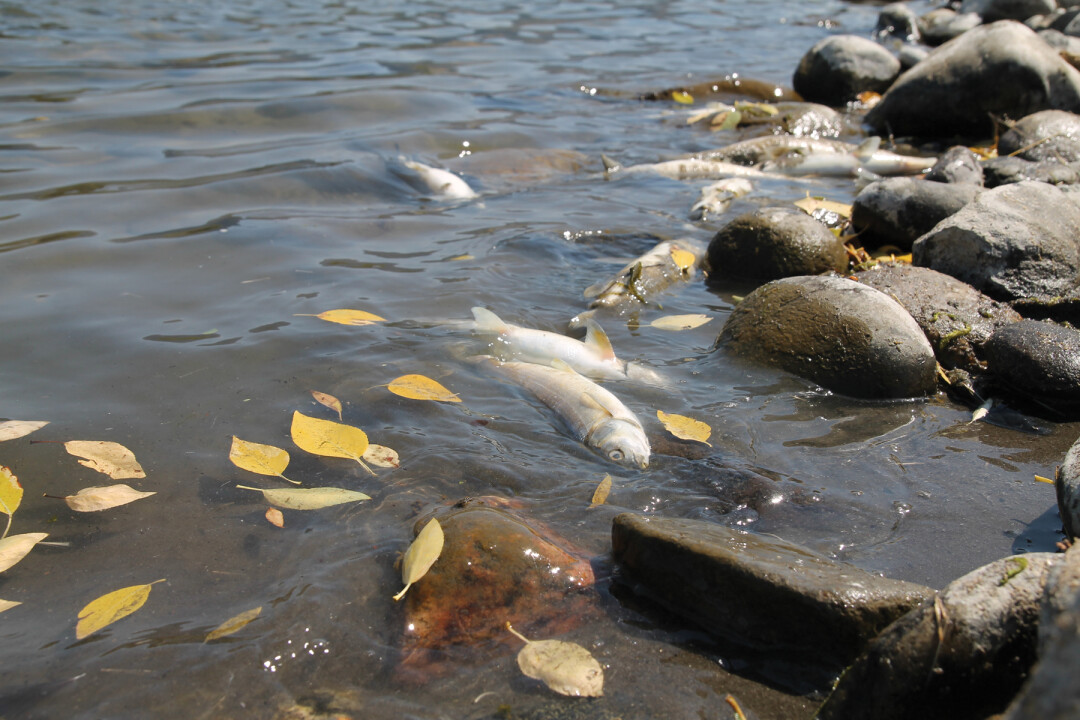
Mortality of Mountain Whitefish was significant in the Mallard’s Rest section where thousands of dead Whitefish were observed lining the Yellowstone’s banks in August of 2016.


This spring’s data corroborated those observations.

In monitoring trout populations, data collected shows the greatest change in the reach from the Mill Creek Bridge to the Loch Leven fishing access site.

While FWP did not observe many Brown Trout in the 2016 fish kill, it appears this stretch experienced a decline of about half its larger (13 inches and above) fish, and nearly 30 percent of Rainbow Trout in that same size category since the spring of 2016.

These same data show an encouraging trend – higher numbers of younger trout (13 inches and under) – in the Mill Creek section.

In the upper Yellowstone River near Corwin Springs, densities (number of fish per mile) of Rainbow and Brown trout are relatively stable, and like the densities noted in recent years.

However, Brown Trout in this section experienced a similar decline in larger fish as did the Mill Creek section.

Downstream, monitoring was also completed near Big Timber, Columbus and Laurel where trout populations are showing the longer-term effects of changing river conditions.

Trout populations in the Laurel section, the most downstream trout habitat, have trended downward since 2014, which biologists suspect is a result of a decade of changes in stream flows, timing and duration of snow melt, and higher water temperatures, rather than the acute effect of the conditions in 2016.

For example, at Columbus, Rainbow Trout numbers are down significantly over time, but stable in the last couple of years.

Despite the general trend of warmer summer temperatures, and declining peak stream flows and the change to the timing and duration of snow melt, this spring presents the likely possibility for good river conditions, prolonged cooler temperatures and more normal stream flows for trout and Whitefish.
Region 3 Fisheries Manager Travis Horton says snowpack and scouring (river flushing in strong runoff) events look positive.

“It’s especially important to see what happens in terms of runoff in the next few weeks, combined with summer temperatures and precipitation. That will be what sets the stage. But, it looks unlikely that we’ll see the same low flows that we did last year.”

Better flows and scouring may help stave off another parasite-induced event as seen late last summer.
The parasite blamed for the Yellowstone Whitefish kill relied on tiny aquatic invertebrates called bryozoans as host in the river.

Warmer water and lower flows allow bryozoans to thrive and stress fish making them more susceptible to infection.

Horton says, “It’s an encouraging thing to see these high flows. The high scouring flows this spring should have reduced the densities of bryozoans, the primary host of PKD. That’s a good thing.”

Add a Comment »

Wednesday, Jun. 7th, 2017

Bridge NOW is a U-Harvest Yourself Garden

Bridge NOW! Come & U-HARVEST YOURSELF & DELIVERY PROGRAMS (Belgrade & Bozeman) June to October 2017 $1 Belgrade, MT

Who wants or needs fresh flowers this summer? I have a Come & U-HARVEST YOURSELF & DELIVERY PROGRAMS (Belgrade & Bozeman) June to October 2017.

You come to Bridge NOW! Art & Exploration Garden & PICK YOUR FAVORITE FLOWERS YOU SEE in my garden. June to October Or check out & follow my Facebook page Bridge NOW! https://www.facebook.com/BridgeNOW/ to see what's blooming? in my garden series. You can see pictures & videos of fresh flowers & you can order your flowers & I will deliver them for you. No delivery charge for over $30 orders. PM me if you are interested to these programs.

Since you are picking & harvesting the flowers yourself. I charge less so you can save money. In addition, you can get free ideas, exploration & entertainment with wild animals in my garden. (Birds, rabbits, insects, etc.) If you get lucky, you can see an amazing hummingbirds & beautiful butterflies! Then, you can use your extra money on your other wedding or party expenses. Because you saved, explored nature & got your vitamin D. You will become a happier, healthier & prosperous person!

Finally, see you at the farmers' market or if you want, I can deliver the fresh flowers just for you this summer. Thank you! Love, Bridgette Novotny

Add a Comment »

News Comments