

Thursday, Jun. 15th, 2017

Revering the Vital Element: Water Works Launching mid-June

Water has always been central to Gallatin County and Montana as a state. Our livelihoods and seasons depend upon its vitality; our history, like the rock of canyons, was carved by it. Water and its environmental impact and presence is taking an increasingly central role statewide. This summer, it will be celebrated for its essentiality in our lives via Mountain Time Arts in a series of events holistically titled “Water Works.”

Mountain Time Arts is a public art organization of Gallatin County generously funded by the ArtPlace America Creative Placemaking Fund. MTA was one of twenty-nine projects selected out of 1,400 applicants for funding. It is spearheaded by artist, curator, and producer Mary Ellen Strom; artist, architect, and conservationist Jim Madden; and art and cultural historian Dede Taylor.


Residents are likely familiar with Mountain Time Arts’ debut of July 2016, in which it produced FLOW, an evening exhibition by Mary Ellen Strom that projected video about the role of water in the county onto Story Mill grain elevators. FLOW’s intention was to unite residents and locals in discussion and celebration of freshwater sources and heighten awareness of how these sources require continual conservation and care.

“Water Works” will continue in this vein on an even larger scale via art installments, tours, discussion, and performances ongoing throughout the summer in Bozeman. It will involve the input, reflections, and support of those culturally, artistically, and conservationally concerned with the Gallatin Watershed, including artists, historians, farmers, naturalists, Native Americans, elected leaders, agriculturalists, designers, and conservationists.

Historically, native residents of Montana flocked to Gallatin County, revering it for its abundance of food and water: “everything you needed for a good, fat life,” language and cultural historian Caroline Old Coyote states. The city of Bozeman, located in the Headwaters of the Upper Missouri Basin, relies now on a finite water supply, which is projected to decline over time due to Gallatin County population growth--presently at three percent--, changes in precipitation, and increasing drought cycles. “Water Works” aims to cultivate awareness of such a decline, beyond agricultural and conservationist communities.

“We’re inspiring new strategies for working together, despite the challenges posed by population growth and drought,” Mountain Time Arts states on its website. “[In Water Works, we will] follow our water as it flows from the mountains through the City of Bozeman and on to the wetlands and ranches of the Gallatin Watershed.”

“We believe art can move people and open people’s minds in a way that maybe those facts and figures can’t always do,” Dede Taylor said in an article featured on Yellowstone Public Radio’s website. “Our goal is to encourage people to conserve water and preserve the quality as well as the quantity of water so that we can be good stewards and send it off to other users.”

The event begins on June 16th with “Upstream,” which entails window exhibitions on Main Street of artwork by regional artists and local, informative tours of Bozeman Creek. The window exhibitions are meant to inspire pedestrians to meditate on their relationship to water. Featured artists will include Isabel Beavers, Andy Behrle, Dalton Brink, Alexander Clinthorne, Jenny Hale, Gesine Jansen, Brian Petersen, Kathleen Rabel, Wendy Red Star, Kelsie Rudolph, Caroline and Michael Running Wolf.

On June 23-24, Joanna Haigood & Zaccho Dance Theater will present Spring Thirst at Bogert Pavilion.

“Water Works” will next produce “Cattail,” a series of tours of wetlands adjacent to Dry Creek School in Belgrade from July 21-30. It will culminate with “Gabriel Canal,” which will consist of artist Mary Ellen Strom’s Illuminating Ditches and tours of local irrigation systems that will seek to honor work of local ranchers and irrigators.

“Water Works” arrives at a time when convergent concerns about heritage, conservation, and funding of the arts are especially urgent. State-specific as it is, the exhibition resonates on a national and global scale. While FLOW introduced residents to the sway and importance of water in Gallatin and Montana lives, “Water Works” demonstrates that water is art and element, both undeniably crucial to existence on earth.

All Water Works events are free, open to the public, and suitable for all families. Readers can find more information online at http://mountaintimearts.org/projects/waterworks-2017/
Add a Comment »

Monday, Jun. 12th, 2017

MSU’s Hyyppa honored by Northwest Chapter of National Academy of Television Arts and Sciences

Jack Hyyppa, who helped create MontanaPBS in more than three decades at Montana State University, was inducted into the Silver Circle recently by the board of governors of the Northwest Chapter of the National Academy of Television Arts and Sciences.

Hyyppa was among eight veteran media professionals from throughout the Pacific Northwest to be inducted at the regional Emmy ceremony held in Seattle on June 3. The Silver Circle honors media professionals who’ve served the industry for at least 25 years, either in a performing, creative, technical or administrative roles, or in an area related to television such as TV journalism education, advertising, promotion and public relations. They must also have made a significant contribution to the Northwest Chapter for at least part of their 25-year career. The Northwest Chapter of NATAS has honored and celebrated Silver Circle members since 1991.

A native of Whitehall, Hyyppa is an MSU graduate who worked for a short time at Northern Illinois University before returning to his alma mater in 1973 to join the faculty of what was then the MSU Film and Television Department.

He brought Montana’s first public broadcasting station on the air in 1984, motivated by a group of local mothers who lobbied to have the national educational children’s show, “Sesame Street,” available for their children. At the time, Montana was one of just a few states that did not have a local public broadcasting service. Montana’s station launched with assistance from KUED in Salt Lake City and a low-power transmitter donated to the young station by Joe Sample, the renowned pioneering Billings broadcaster. Hyyppa slowly grew the station, raising support from the community, the university, and the Montana Legislature. Eventually, its reach was extended beyond Gallatin Valley with support from cable systems across the state and a number of translators.

In 1997, Hyyppa helped forge KUFM-TV, a partnership between MSU and the University of Montana, expanding over-the-air public television into western Montana. In subsequent years, that partnership grew to include stations in Billings, Great Falls and Kalispell. Today, MontanaPBS serves more than 400 Montana communities and nearly every Montana home.

A longtime member of the MBA board of directors, Hyyppa retired in 2006 from more than three decades of teaching and 22 years of managing MontanaPBS. This is the second major award for Hyyppa in as many years. Last year he was inducted into the Montana Broadcasters Association Hall of Fame.

Add a Comment »

Thursday, Jun. 8th, 2017

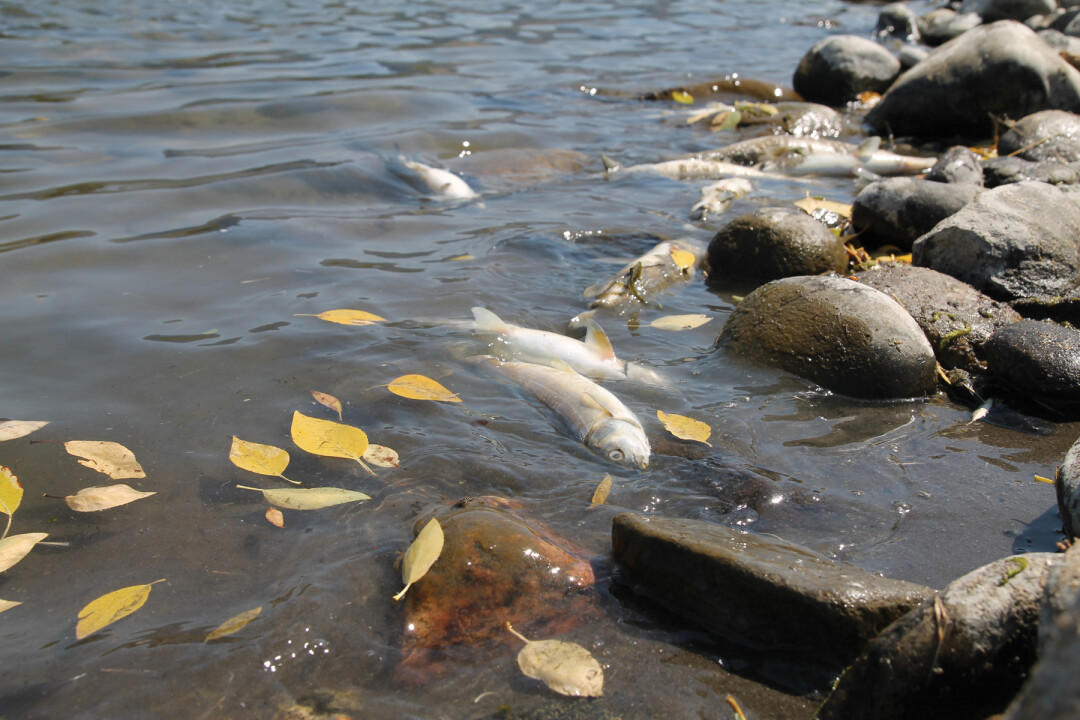
Data Reveals Longer-Term Effects of Fish Kill

Montana Fish, Wildlife and Parks’ Fisheries staff has completed its spring monitoring of the Yellowstone River and its preliminary analysis of the data.

Crews focused their efforts on stretches of the Yellowstone that had been closed late last summer in the wake of the unprecedented fish kill.

In addition to understanding the impact of that complex event on trout and whitefish populations, biologists wanted to get a better overall picture of what’s happening in the river system and establish the best techniques for monitoring these populations going forward.

At the time of the fish kill, the Yellowstone was experiencing low river flows and warm water temperatures for an extended period, making the conditions prime for the outbreak of the parasite Tetracapsuloides bryosalmonae (PKD).

Also at play at the time of the kill, and over the winter period since, were other factors which can influence population numbers (i.e. extreme ice gorging).

Therefore, biologists urge caution in attributing direct cause in all Yellowstone fish population changes with so many factors at play in the river system.

Those changes vary by species and location.

Mortality of Mountain Whitefish was significant in the Mallard’s Rest section where thousands of dead Whitefish were observed lining the Yellowstone’s banks in August of 2016.


This spring’s data corroborated those observations.

In monitoring trout populations, data collected shows the greatest change in the reach from the Mill Creek Bridge to the Loch Leven fishing access site.

While FWP did not observe many Brown Trout in the 2016 fish kill, it appears this stretch experienced a decline of about half its larger (13 inches and above) fish, and nearly 30 percent of Rainbow Trout in that same size category since the spring of 2016.

These same data show an encouraging trend – higher numbers of younger trout (13 inches and under) – in the Mill Creek section.

In the upper Yellowstone River near Corwin Springs, densities (number of fish per mile) of Rainbow and Brown trout are relatively stable, and like the densities noted in recent years.

However, Brown Trout in this section experienced a similar decline in larger fish as did the Mill Creek section.

Downstream, monitoring was also completed near Big Timber, Columbus and Laurel where trout populations are showing the longer-term effects of changing river conditions.

Trout populations in the Laurel section, the most downstream trout habitat, have trended downward since 2014, which biologists suspect is a result of a decade of changes in stream flows, timing and duration of snow melt, and higher water temperatures, rather than the acute effect of the conditions in 2016.

For example, at Columbus, Rainbow Trout numbers are down significantly over time, but stable in the last couple of years.

Despite the general trend of warmer summer temperatures, and declining peak stream flows and the change to the timing and duration of snow melt, this spring presents the likely possibility for good river conditions, prolonged cooler temperatures and more normal stream flows for trout and Whitefish.
Region 3 Fisheries Manager Travis Horton says snowpack and scouring (river flushing in strong runoff) events look positive.

“It’s especially important to see what happens in terms of runoff in the next few weeks, combined with summer temperatures and precipitation. That will be what sets the stage. But, it looks unlikely that we’ll see the same low flows that we did last year.”

Better flows and scouring may help stave off another parasite-induced event as seen late last summer.
The parasite blamed for the Yellowstone Whitefish kill relied on tiny aquatic invertebrates called bryozoans as host in the river.

Warmer water and lower flows allow bryozoans to thrive and stress fish making them more susceptible to infection.

Horton says, “It’s an encouraging thing to see these high flows. The high scouring flows this spring should have reduced the densities of bryozoans, the primary host of PKD. That’s a good thing.”

Add a Comment »

Wednesday, Jun. 7th, 2017

Bridge NOW is a U-Harvest Yourself Garden

Bridge NOW! Come & U-HARVEST YOURSELF & DELIVERY PROGRAMS (Belgrade & Bozeman) June to October 2017 $1 Belgrade, MT

Who wants or needs fresh flowers this summer? I have a Come & U-HARVEST YOURSELF & DELIVERY PROGRAMS (Belgrade & Bozeman) June to October 2017.

You come to Bridge NOW! Art & Exploration Garden & PICK YOUR FAVORITE FLOWERS YOU SEE in my garden. June to October Or check out & follow my Facebook page Bridge NOW! https://www.facebook.com/BridgeNOW/ to see what's blooming? in my garden series. You can see pictures & videos of fresh flowers & you can order your flowers & I will deliver them for you. No delivery charge for over $30 orders. PM me if you are interested to these programs.

Since you are picking & harvesting the flowers yourself. I charge less so you can save money. In addition, you can get free ideas, exploration & entertainment with wild animals in my garden. (Birds, rabbits, insects, etc.) If you get lucky, you can see an amazing hummingbirds & beautiful butterflies! Then, you can use your extra money on your other wedding or party expenses. Because you saved, explored nature & got your vitamin D. You will become a happier, healthier & prosperous person!

Finally, see you at the farmers' market or if you want, I can deliver the fresh flowers just for you this summer. Thank you! Love, Bridgette Novotny

Add a Comment »

Grizzly Bear Trapping Announcement: Public Must Heed Warnings

As part of ongoing efforts required under the Endangered Species Act to monitor the population of grizzly bears in the Yellowstone Ecosystem, the U.S. Geological Survey, in conjunction with Montana Department of Fish, Wildlife, and Parks, is working to inform the public that pre-baiting and scientific trapping operations are about to begin within the Gravelly and Madison Ranges of Montana.  Biologists, with the Interagency Grizzly Bear Study Team (IGBST), will begin work in southwest Montana beginning June 13th and will continue through July 31st.  Trapping operations can include a variety of activities, but all areas where work is being conducted will have major access points marked with warning signs.  It is critical that all members of the public heed these signs.

Monitoring of grizzly bear distribution and other activities are vital to ongoing recovery of grizzlies in the Yellowstone Ecosystem.  In order to attract bears, biologists utilize natural food sources such as fresh road–killed deer and elk.  Potential trapping sites are baited with these natural foods and if indications are that grizzly bears are in the area, culvert traps or foot snares will be used to capture the bears.  Once trapped, the bears are handled in accordance with strict protocols developed by the IGBST.

Whenever bear trapping activities are being conducted for scientific purposes, the area around the site will be posted with bright warning signs to inform the public of the activities occurring.  These signs are posted along the major access points to the trapping site.  It is important that the public heed these signs and do not venture into an area that has been posted.  For more information regarding grizzly bear trapping efforts call the IGBST hotline at 406-994-6675.

Add a Comment »

Monday, Jun. 5th, 2017

Scannella named John R. Horner Curator of Paleontology for Museum of the Rockies

The Museum of the Rockies at Montana State University announced today that John Scannella has been named the John R. Horner Curator of Paleontology.  Scannella has been on staff at MOR since 2013 when he was named paleontology collections manager and following Horner's retirement in 2016 he was named interim curator of paleontology.

Scannella's research focuses on vertebrate evolution and ontogeny, ceratopsian dinosaurs, and Mesozoic ecosystems of North America. He earned his doctorate in earth sciences from Montana State University and bachelor's in geology from Rutgers University


"I am very excited to be the John R. Horner Curator of Paleontology at Museum of the Rockies," Scannella said. "Building on the incredible foundation that was created by Jack Horner and the museum's paleontology department the future of paleontology at MOR is going to be very exciting."

In his new role at the Museum of the Rockies, Scannella will have responsibility for setting the paleontology department's research agenda that includes conducting field research, curating the paleontology collection, developing exhibits and participating in education and outreach activities. His first original exhibition, Dinosaur Dynasties: The Evolution of Montana's Dinosaurs, will open at the Mifune Dinosaur Museum in Kumamoto, Japan, in July, and he will be returning to his Triceratops research site in Makoshika State Park later this summer. 

Sheldon McKamey, MOR's executive director, explained that Scannella was selected following an international search that started in March.

"We were searching for a paleontologist who would continue the caliber of research for which we've become known, who has the ability to inspire people of all ages to learn both formally and informally and generate support for the program," McKamey said.

A native of Queens, New York, Scannella, 38, met former curator of paleontology Jack Horner at a lecture in Trenton, New Jersey, in 2005 and came to MSU as a graduate student in 2006. His graduate research focused on the horned dinosaur Triceratops and its relatives. He has spent several field seasons as a MOR paleontology field crew chief working in the Hell Creek Formation of eastern Montana, where he collected specimens of some of the last non-avian dinosaurs that roamed western North America.

In 2010, Scannella and Horner proposed that the horned dinosaur Torosaurus is actually a fully mature Triceratops rather than a different genus of dinosaur. In 2014, he and his colleagues published the results of an extensive study "Evolutionary Trends in Triceratops from the Hell Creek Formation, Montana" in the journal Proceedings of the National Academy of Sciences. By examining Triceratops from different stratigraphic rock layers, the team discovered that Triceratops changed in appearance over time. This discovery was highlighted in Scannella's presentation at TEDxBozeman in the spring of 2015. 

"I remember being a child and hoping to one day visit the Museum of the Rockies to see its amazing dinosaurs and other fossils," Scannella said. "I can't wait to get started."

About Museum of the Rockies 
The Museum of the Rockies is a college-level division of Montana State University, a Smithsonian Affiliate, a repository for federal fossils, and an independent 501(c)(3) nonprofit institution. It is recognized as one of the world's finest research and history museums and is renowned for displaying an extensive collection of dinosaur fossils, including a full-scale T. rex skeleton.

MOR offers changing exhibits from around the world, permanent indoor and outdoor regional history exhibits, planetarium shows, educational programs, insightful lectures, benefit events and a museum store.

Accredited by the American Alliance of Museums, MOR is one of just 1,081 museums to hold this distinction from the more than 30,000 museums nationwide. The museum is a member of the Association of Science-Technology Centers Travel Passport Program and a participant in the Montana Dinosaur Trail Passport Program.

Add a Comment »

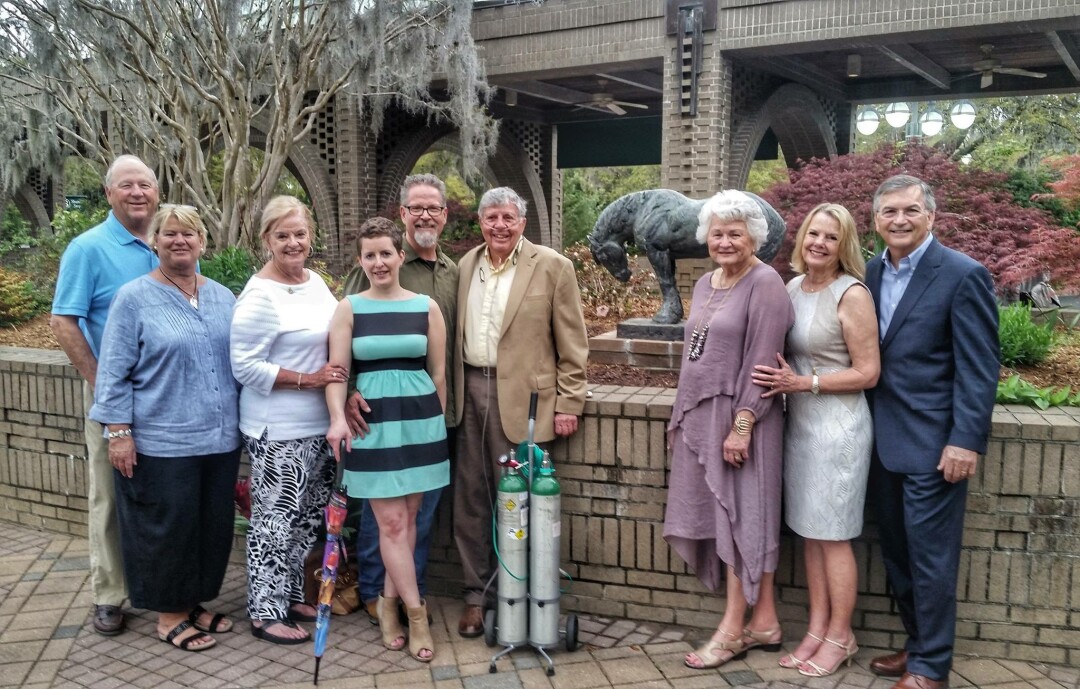
Rod Zullo, Bozeman Montana Sculptor, Honored at Nationally Acclaimed Sculpture Gardens


Rod Zullo has taught sculpture workshops at Brookgreen Gardens annually in Pawleys Island, SC for sometime and has recently had the honor of having his garden size bronze, Ode to the West Wind II installed in the new Welcome Center.  The piece was purchased by The Friends of Brookgreen, and placed in honor of retiring president Robert Jewel.

Brookgeen Gardens is a National Historic Landmark, Wildlife Preserve, and Sculpture Gardens.  Exhibited within the gardens is the largest and most comprehensive collection of American figurative sculpture in the country, by sculptors who worked from the early nineteenth century to the present. The collection contains over 2,000 works by 425 artists and in the words of Wayne Craven, author of the book, Sculpture in America, it is "unequaled in its size, focus on figurative works, visibility of the sculpture to the visitor, and integration within a garden setting."

Rod Zullo shows at multiple galleries across the country, has been honored as a Fellow of the National Sculpture Society, and is happy to partner with Legacy Gallery in his hometown of Bozeman, Montana.

Add a Comment »

New Exhibition at the Bair Museum is High Flyer Kites by Bozeman Artist Showcased

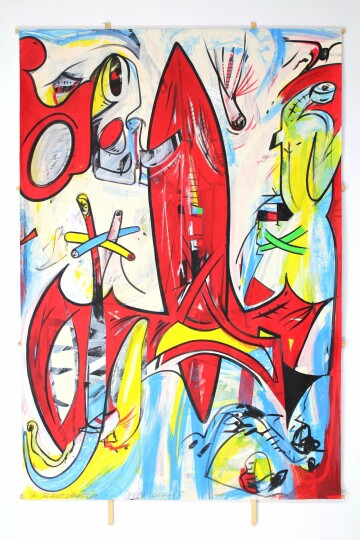
The Bair Museum in Martinsdale is displaying a selection of paintings up in the air starting May 26, 2017. Above and Beyond- Paintings as Kites showcases selected works by Bozeman painter (and MSU Art Professor Emeritus) Harold Schlotzhauer influenced by the history of Japanese kites and time the artist has spent in Japan with his family. Japan’s kites are among the most spectacular in the world, treasured as much for their aesthetics as for the pleasure they give as toys.

The history of kites is long and multi-cultural. The exact date and origin of the kite is not known but it is believed   they were flown in China more than two thousand years ago. Kites were first introduced into Japanese culture by Buddhist missionaries who travelled from China in the Nara Period, 649-794 AD, and they were used in Japan at that time in various ceremonies. In some of the earliest written histories kites were used in military operations, in fishing, and in scientific research in addition to being flown for recreation and in intensely competitive kite-combat between villages. Kites pre-date the first lighter-than-air balloon (1783) and the first powered aircraft (1903).

Schlotzhauer’s kite paintings are presented in a variety of shapes and sizes including some traditional shapes and some invented, but like most kites his original imagery is bold and colorful. Their brilliant patterns, bold motifs, and electric, linear energy are reminiscent of Japan’s spectacular Edo period kites, still considered today to be some of the most beautiful kites ever created.

To see Scholtzhauer’s kites this summer enter the Bair Museum and look up!

The Bair Museum, located in Martinsdale, is open 10am to 5pm seven days a week through Labor Day, Labor Day through October – Wednesday to Sunday, 10am to 5pm.

The museum is located at 2751 Montana Hwy 294 in Martinsdale, Montana, between White Sulphur Springs and Harlowton. For more information visit www.bairfamilymuseum.org

  
Harold Schlotzhauer, Pipe Dream, 1997, Acrylic on Tyvek

Add a Comment »

Tuesday, May. 30th, 2017

Depot Museum Seeks Volunteers


Come and share your talents with visitors and neighbors alike! The Livingston Depot Museum is seeking volunteers to welcome visitors this museum season.  The Depot is often the first place visitors stop when touring our region. Help welcome them and share a piece of railroad history! Historical or railroad knowledge is not required, so come learn about your town and help others have fun.

Volunteering at the Depot is a great opportunity. Volunteering looks good on a resume and can be the perfect way to develop workplace confidence following a career break. Volunteering is also a great way to stay connected with our vibrant community during retirement.  Don’t forget, we also have opportunities for Park High School students to earn their required community service hours—why not have fun while you fulfill your requirements?

“There’s a kind of camaraderie in helping as a volunteer,” said Museum Director Diana Seider.  “It’s fun to share the experience of local history with visitors. It’s a good chance to make new friends and meet people visiting from far and wide. ”   

Seider said volunteers help out at the front desk greeting visitors and answering general questions, as well as in the gift shop.  Schedules can be flexible but usually involve just one 3.5-hour morning or afternoon shift a week.  Openings are currently available for both weekdays and weekends. 

Volunteers can also help with other occasions such as the Depot Foundation’s summer and winter events including the Festival of the Arts pie booth, Roundhouse Roundup outdoor barbecue, and Movies on the Lawn which features the 25th anniversary showing of “A River Runs Through It” this year.”  

General information is available on the Depot’s website at www.livingstondepot.org, and anyone interested in signing up is invited to reach the Depot at  (406) 222-2300.  

Add a Comment »

The Heart of the West Art Show & Auction returns to the Bozeman August 10-12, 2017

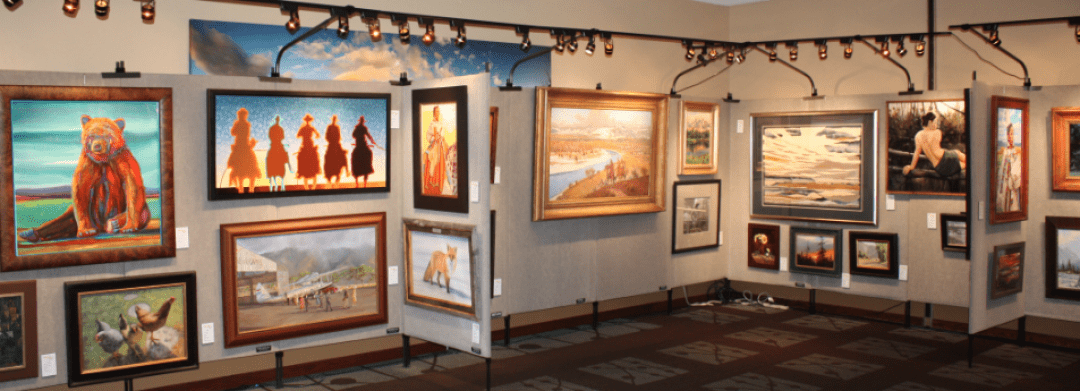
The Heart of the West Art Show & Auction returns to the Best Western Plus GranTree Inn August 10-12, 2017 with over 50 premier artists from all over the country exhibiting new paintings and sculptures in booths throughout the venue’s convention space.  Zoot Art Gallery, located at the Zoot Enterprises campus in Four Corners, will renew its major sponsorship of the show.  Live artist demonstration “Quick Finishes” on the Friday and Saturday of the show will benefit the Museum of the Rockies, followed by an exciting live auction of more than 100 lots of fine art of the American West.  In 2016 the auction had a 87% sale rate with total sales of about $147,000, most of which went to living, working artists.

“As artists ourselves, my mom and I have always found these in-person shows are essential to getting our work exposed to new areas and communities, and I felt that Bozeman was overdue for a major fine art show of this kind.  The community response to the August 2016 show was super encouraging,” says show director Morgan Cawdrey.  Cawdrey runs this family business with guidance from his father Steve Cawdrey and artist mother Nancy Dunlop Cawdrey.

Part of Zoot’s sponsorship will include displaying a preview of the juried auction artwork from June 29 – Aug. 8, open to public viewing from 9 a.m. – 5 p.m. Monday-Friday with an opening reception from 5 – 7 p.m. June 29 and major closing reception Aug. 8, 5 – 7 p.m. with live music, hors d’oeuvres and artist demonstrations.  "The Zoot Art Gallery is honored to be a sponsor of the Heart of the West for the second year,” says Darcy Barry, Marketing Operations Manager at Zoot.  “The show and auction bring together an incredible pool of talented Western artists and give attendees the chance to see all of the works of art in one place. For art collectors and enthusiasts, this event is not to be missed."

EVENTS:
    •    June 29 – Auction Artwork Preview Show Opening Reception 5-7 p.m.
    •    August 8 – Auction Artwork Preview Closing Reception 5-7 p.m.
    •    August 10 – Show open from noon – 9 p.m.
    •    August 11 – Show open from 10 a.m. – 9 p.m.  Quick Finish event 4 – 6 p.m.; come before the downtown Art Walk!
    •    August 12 – Show open from 10 a.m. – 9 p.m.  Quick Finish event 1:30-3:30 p.m.  Live Auction starting at 4 p.m.
    •    Featured exhibiting artists and schedule available at: www.HeartoftheWestArt.com

“A fantastic arts organization. A premier source for quality Western Art in America.”
– Kim Mackey, artist

“The Heart of the West Auctions, both online and in person, are my favorite art shows of the year!”
– David W. Mayer, artist

Add a Comment »

News Comments