

Wednesday, Jul. 12th, 2017

Red Ants Pants Music Festival Continues to Fuel Investments in Rural Montana

The Red Ants Pants Foundation announced more than $19,000 in grants to projects that support women’s leadership, working family farms and ranches, and rural communities. Fueled by ticket sales and donations from the 2016 Red Ants Pants Music Festival, the foundation has now given more than $85,000 in grants to date.

 
“Everyone who enjoys the Red Ants Pants Music Festival is having a lasting impact on rural communities and our working family farms and ranches while helping to move the dial on women’s leadership. It’s a genuine way for people to come together, enjoy our rural landscapes and leave knowing that they’re contributing in a meaningful way,” said Sarah Calhoun, Executive Director of the Red Ants Pants Foundation and Producer of the Red Ants Pants Music Festival. “Our 2017 grantees are doing phenomenal work ranging from empowering young girls to explore careers in the trades to a small town pooling their resources to revive a local grocery store."
 
The 2017 Red Ants Pants Foundation Community Grants include a diversity of funding to support projects that include reopening a local grocery store in Turner, Montana; a grant to support the Sweet Grass Beef to School program in Big Timber; funding to support Farm Hands – Nourish the Flathead which benefits the Blackfeet Nourish Project as well as investments to support science and learning throughout rural communities in Montana.
 
Grant applications are considered based on how they best help fulfill the Foundation's mission of developing and expanding leadership roles for women, preserving and supporting working family farms and ranches, and enriching rural communities.
 
The 7th Red Ants Pants Music Festival will take place on the Jackson Ranch, a working cattle ranch, outside of White Sulphur Springs July 27th – 30th. The 2017 festival will support the 2018 Red Ants Pants Foundation Community Grant Cycle.
 

2017 Red Ants Pants Foundation Grantees

 
Big Flat Grocery
Location: Turner, MT
Grant Awarded: $1,500
Big Flat Grocery is a cooperative that was formed by approximately 75 local shareholders in Turner, Montana (pop. 61), in the attempt to reopen their grocery store.  Their cooperative model has proven to be successful thus far, but the building in which the grocery store is located is in dire need of maintenance and a facelift.
 
The Carter County Museum
Location: Ekalaka, MT
Grant Awarded: $4,300
Founded by the Carter County Geological Society, the Museum is a community institution that engages audiences in exploring 90 million years of history including dinosaurs, American Indian ways of life, and the ranching traditions of today. This grant will be used to purchase a microscope and viewing system for the Hell Creek Amber Citizen Science Project. This project supports their mission to increase knowledge and appreciation of science by enabling participants to discover new species of beetles, wasps, flies, and ants - all while contributing to the understanding of the Cretaceous extinction 66 million years ago. 
 
The C.M. Russell Museum
Location: Great Falls, MT
Grant Awarded: $2,250
The Russell is developing a new humanities curriculum centered on the life and artwork of Charles Marion Russell (1864–1926). The curriculum is designed to build students’ critical thinking skills, enhance creative problem-solving, and instill a sense of personal agency in middle school students. Underpinning the Russell for Learning (R4L) curriculum is the humanities theme, "Sense of Place," aimed at empowering students to think critically about their cultural, geographic, historic, and artistic "place" in order to become engaged citizens who make thoughtful, informed decisions for their lives and communities. One teacher in Meagher County, Montana will be trained to offer this curriculum to middle school students.
 
The Crazy Peak Cattle Women
Location: Melville, MT
Grant Awarded: $704
The grant supports the Sweet Grass Beef to School program in 2017 to provide wholesome, nutritious, local beef to the students at the Big Timber Grade School and Sweet Grass County High School.  This grant will be used to create informational brochures about the program and a school cafeteria display board featuring local producers.  Funds will also be used to host the inaugural farm to school day and beef brat designing contest where 4th grade students will learn about food production and the importance of agriculture to the local community. 
 
Farm Hands - Nourish the Flathead
Location: Whitefish, MT
Grant Awarded: $2,000
Farm Hands – Nourish the Flathead is a grassroots non-profit that is dedicated to connecting communities to local food and those who produce it through education, outreach, and market support.  They work to create a just food system that is accessible to everyone, regardless of age or ability to pay.  The grant from the Reds Ant Pants Foundation will provide much needed funds for their Food for All Programs that benefit seniors, SNAP recipients, and school children, as well as providing support to their Blackfeet Nourish Project.
 
The Friends of the Meagher County City Library
Location: White Sulphur Springs, MT
Grant Awarded: $600
The Friends support the Library in a number of ways, including bringing in speakers to the community to present on a variety of topics. Grant funding from the Red Ants Pants Foundation will be used to purchase a projector system that will be used for these programs, as well as be available for other library programs.
 
Glacier County Healthy Food Project
Location: Cut Bank, MT
Grant Awarded: $500
This project brings fresh, healthy fruits and vegetables to food deserts and food distribution centers in Glacier County through donations and volunteer work.  During May 2017, the project successfully completed delivery of 100 Gaines Produce mini-boxes to families in Heart Butte and Cut Bank.  This grant will allow for a second delivery of 100 boxes for the 2017-2018 year and will help to bring attention to donating healthy foods.
 
The Golden Valley Community Foundation
Location: Ryegate, MT
Grant Awarded: $1,690
The Community Foundation is dedicated to creating more opportunities in the towns of Ryegate and Lavina.  They are in the process of purchasing the recently closed bank building for use as a bank branch and senior citizen health clinic.  With the money awarded by the Red Ants Pants Foundation, they will be able to reconnect the water and sewer, insure the building, and fix other problems that arise in the revitalization process.
 
Meagher County 4-H
Location: White Sulphur Springs, MT
Grant Awarded: $1,500
The 4-H program has deep, historic roots in Meagher County.  Grandparents of current 4-H members showed in the same two barns that are being used today.  The Meagher County 4-H Council will use this grant toward putting up a new multi-purpose barn at the fairgrounds.  This will allow the 4-H Fair activities to be under a roof for the first time.  The barn will host the annual livestock show and sale, exhibit the indoor fair items, accommodate the 4-H horse program during inclement weather, and house many other 4-H activities.
 
Meagher County Chamber of Commerce Art and Cultural Trail
Location: White Sulphur Springs, MT
Grant Awarded: $1,000
The Art and Cultural Trail will feature barn square quilts and historical site interpretation to celebrate the past and present people within Meagher County. By defining a trail along the highways circling the Castle Mountains, they will connect and showcase the working rural communities in the region by telling their stories to visitors and younger generations. This grant will fund the purchase of paint and supplies for these barn art quilts that will be installed along the trail.
 
The Meagher County City Library
Location: White Sulphur Springs, MT
Grant Awarded: $1,000
The Library has just reached their goal of fundraising for a completely new facility! This will be the first time they have ever had a building that will be able to fit their more specific needs - no more retrofitted spaces.  The construction of a new, larger building will provide the space and versatility the growing community needs for decades to come.
 
The Monarch/Neihart Community and Senior Center
Location: Neihart, MT
Grant Awarded: $1,000
The Monarch/Neihart Community and Senior Center was built using logs from the King’s Hill area.  Its original function was a school that operated from 1941 to 1980.  Since that time, it has been used as the center for Monarch's and Neihart's community functions ranging from weekly dinners, health and exercise classes, quilting, town hall meetings, anniversary and birthday parties, funerals, and just about anything for which there is a need. This grant funding will be used to help defray the cost of lead abatement and window replacement in the historical old school house.
 
YWCA Missoula’s GUTS!
Location: Missoula, MT
Grant Awarded: $1,000
The Girls Using Their Strengths (GUTS!) program encourages girls and young women to explore their own personal values and discover their strengths through wilderness adventures in the summer and after-school groups and community service projects during the academic year. GUTS! has developed a new way of empowering girls to explore non-traditional careers through GRIT (Girls Representing In Trades.)  GRIT aims to engage, educate, and encourage young girls to explore trade- and skill-based work as attainable and feasible careers – anything from construction to auto mechanics to welding.
 
For more information, visit www.RedAntsPantsFoundation.org.

Add a Comment »

Tuesday, Jul. 11th, 2017

You’re Weird: A Creative Journal for Misfits, Oddballs, and Anyone Else Who’s Uniquely Awesome


According to the National Center for Education Statistics, more than one out of every five students report being bullied. The top reported reasons include looks (55%), body shape (37%), and race (16%). In such a diverse world, young kids, teens, and even adults are pressured day in and day out to fit into a mold.

In Kate Peterson’s quirky and refreshing interactive book, YOU’RE WEIRD: A Creative Journal for Misfits, Oddballs, and Anyone Else Who’s Uniquely Awesome, we’re free to explore the eccentric sides of ourselves in a no judgement zone. A successful, self-taught illustrator who creates under the name of The Dapper Jackalope, Kate Peterson gives readers an animated, fun-loving guided journal for self- expression. Featuring Kate’s own strange creatures, colorable quotes, silly prompts, and twists on popular idioms, YOU’RE WEIRD celebrates what makes each of us extraordinary human beings.

Whether you are a young kid, an old soul, or a parent advocating originality in your child’s life, YOU’RE WEIRD will leave you doodling and creating with a smile on your face! YOU’RE WEIRD is on sale now.


About the Author:
 Kate Peterson is a Bozeman native and self-taught illustrator who sells her prints, cards and illustrations under the name The Dapper Jackalope. Her illustrations have been featured in Apartment Therapy, Buzzfeed, and The Frisky. She is based in Boise, Idaho. To learn more about Kate, visit her website www.thedapperjackapole.com.

Add a Comment »

Thursday, Jul. 6th, 2017

Cenex Zip Trip to Partner with The Salvation Army for Backpacks for Kids

Throughout the month of July, Cenex Zip Trip will raise money to help prepare local kids for the new school year. Cenex Zip Trip is partnering with The Salvation Army for the annual Backpacks for Kids campaign. Backpacks for Kids is an annual Salvation Army family services program providing backpacks full of school supplies to local families in need. The goal is to provide school supplies for children, so they’re ready to learn when they report for the first day of school this fall.

Cenex Zip Trip customers are encouraged to make a donation at the convenience stores. Everyone who donates can add their name to a special flyer that will be displayed in the store. As a thank you for their donation, contributors will receive a coupon for a free 20 oz. fountain soda or 16 oz. coffee.

Over the last six years, Cenex Zip Trip has raised more than $250,000 for Backpacks for Kids. In 2016, Cenex Zip Trip raised more than $77,000 through the Spokane, Coeur d’ Alene, Bozeman, Livingston and Billings communities. For the 2017 campaign, the reach will be expanded to also include Kalispell, Butte, Helena, Great Falls, and Havre.

“Cenex Zip Trip is excited to be continuing this tradition of partnership with The Salvation Army, and expanding the program to help prepare even more kids for the new school year. When kids are prepared for the school year, their performance in the classroom improves,” said Steve Haase, General Manager of Cenex Zip Trip.

Several Cenex Zip Trip convenience stores are participating in this campaign throughout Washington, Idaho and Montana. The campaign is taking place at the following Bozeman location:

1210 E Main St, Bozeman, MT 59715

Add a Comment »

Saturday, Jul. 1st, 2017

Gallatin Valley Guide/Surviving Bozeman Section in August Issue

Instead of creating a separate Gallatin Valley Guide publication this year we are offering guide customers a great deal on advertising in our August issue in the Surviving Bozeman Section.

10,500 copies of the August issue will be distributed to our nearly 200 locations in the Bozeman area, as well as several thousand copies to MSU at Catapalooza, the SUB & dorms.
As in every issue of Bozeman Magazine this issue will include a local artist on the cover, great local articles about events before they happen & local features, and our massive user friendly events calendar.
Contact Angie before July 17 for details and to reserve your space - five79-5657 or angie @ bozemanmagazine.com

Add a Comment »

Friday, Jun. 30th, 2017

No Fireworks on FWP Lands

Visiting a Montana fishing access site on the July 4th is a great idea – just leave the fireworks at home.

Fire season in Montana is already underway in many parts of the state. This means it’s all our responsibility to be careful with fire and any potential sources of ignition. It’s been a long-standing policy with Montana Fish, Wildlife and Parks to keep fireworks off our sites to ensure the safety of our public and to protect our recreation and habitat resources.

Fireworks are illegal on all state and federal land in Montana, including all FWP fishing access sites, wildlife management areas, State Parks and other sites.

“The recent high temperatures and dry conditions is elevating the wildfire danger across the state, particularly in the east and northeast parts of the state; where conditions are extremely dry. These conditions coupled with fireworks and increasing summer recreation have put firefighters on heightened alert,” said FWP director Martha Williams. “One careless spark could ignite the next wildfire.”

Anyone using fireworks on FWP lands may be charged with a misdemeanor that can result in a fine up to $500.

Add a Comment »

Thursday, Jun. 29th, 2017

Sweet Pea Festival 2017 Poster Contest Winner

First Place: Micha Rott
Second Place: Valerie Chai – Fayetteville, NY
Third Place: Olivia Rose Langan – Bozeman, MT


Growing up in Nebraska, Micha Holle Rott always had a great love for art and animals—especially rabbits. There are many drawings from as young as 4 years old that have bunnies baking, etc. She either wanted to be a veterinarian or an artist and college chemistry confirmed what she already knew in her heart. While her family resided in Lincoln, Nebraska, her father had a dream of a place he referred to as "God's Country"—Montana. They made many vacation trips to Bozeman, where her parents picked out property for "some day." After she graduated from college and set out to conquer the world in graphic design Micah focused her sites on Bozeman but fell in love and married Jeremy Rott, a Kansas man, and settled there, while her parents, Larry and Rachel Holle, moved to Bozeman permanently. Today, Micah works as a freelance graphic designer and has three children, Silas-15 and twins Corinne and Jonas-12. She still loves animals and illustrating and dreams of one day setting aside time for a children's book. They visit her parents in Bozeman often to be where her son Silas has referred to as "the most perfect place."

When asked about her creative process, Micah says she brainstorms, sketches some options until she likes what she sees and then, "COLOR," beams Micah, "It's foundational, so I spend some time creating a color scheme before I execute a design." "Winning the Sweet Pea Festival poster contest, is such a high honor. I've been following this festival for over 20 years," says Micah, "I feel I'm in the company of some wonderful artists." Micah will be in town for the festival and hopes to sign posters on August 4th, 5th and 6th.

You can purchase this commemorative poster beginning in early July at select pre-sale outlets, the Sweet Pea Festival office and at the Sweet Pea Festival August 4-6th. For more information please visit: http://sweetpeafestival.org/buy-wristands-and-merchandise/.

About the Sweet Pea Festival
The Sweet Pea Festival is a festival of the arts that has been held in Bozeman, MT since 1978. The 2017 Sweet Pea Festival will be held August 4th, 5th and 6th with pre-festival Sweet Pea events The Art Show, Chalk on the Walk and Sweet Pea’s Bite of Bozeman beginning on July 30th. Sweet Pea is dedicated to our mission of "promoting and cultivating the arts" and brings music, an art show, flower show, children's activities and a beer and wine garden that features Montana brews to Bozeman during the three day festival. Pre-Festival events include Sweet Pea's Art Show, Chalk on the Walk and Bite of Bozeman.

The Sweet Pea Festival is a registered 501(c)(3) non-profit organization. All money raised in excess of what is needed to operate the Festival is given back to the community in the form of grants for the arts, art education, and special projects in the Bozeman area.

Add a Comment »

"Can Do" Attitude About Preventing Drug Abuse

The most pressing public health concern facing America today is alcohol and drug misuse, substance use disorders, and addiction.

In a recent Bozeman Daily Chronicle story, it was reported that alcohol continues to be the main factor in deadly car crashes and that drug-related seizures on Montana roads are on the rise.

Over the next two years, Montana Attorney General Tim Fox has stated that his office will be spearheading an effort to develop a strategic plan that aims to combat the effects of dangerous drugs and that the Department of Justice will be working with a broad coalition of stakeholders.

Here in Gallatin County the Community-Coalition On Drug Awareness, Elks Drug Awareness Program, and Gallatin County DUI Task Force will continue their efforts to address drug issues in partnership with law enforcements agencies who are on the front line.


The Community Coalition On Drug Awareness is a community-based program that provides resources and evidence-based strategies to reduce underage drinking, excessive drinking, tobacco use, impaired driving, and illegal drug use throughout Southwest Montana.

The Gallatin County DUI Task Force is a citizens group appointed by the Gallatin County Commissioners to develop and/or fund public education, awareness, and enforcement projects to reduce the number of alcohol and drug related crashes and deaths in Gallatin County.

With a “can do” approach our communities can have success in implementing strategies and programs to prevent alcohol and drug misuse.

That can do attitude was demonstrated a few weeks ago when community partners brought the Bitter Pill Art Exhibit to Bozeman with the aim to show the human side of prescription drug abuse and recovery.  The exhibition at the Elks Lodge showcased works from more than 30 amateur and professional artists from across Montana whose pieces examine the state’s prescription drug abuse epidemic.   

Add a Comment »

Monday, Jun. 26th, 2017

MSU doctoral student seeking a cure for her son’s rare disorder wins fellowship

A Montana State University doctoral student who is seeking a cure for her son’s rare genetic disorder has won a fellowship that will allow her to quit the predawn paper route she took to make ends meet and concentrate fully on her research.

Elizabeth “Tess” Corbin, a doctoral student from Bozeman in the Department of Chemistry and Biochemistry in MSU’s College of Letters and Science, has won a Ford Foundation Dissertation Fellowship that will give her $25,000 over the next nine months and connect her with a network of other Ford Fellows and mentors. Corbin is one of 38 recipients of the fellowship, which supports the final year of dissertation writing and defense for individuals working toward a doctorate in science or philosophy.

Corbin said the fellowship came at a time when she didn’t think she would be able to swing the money needed to complete her dissertation. The award, in addition to a tuition waiver from the MSU Graduate School, has also made it possible for her to quit the paper route that provided some financial relief but left her exhausted by midday.

“Getting up at four in the morning, six days a week, was hard, but I did it gratefully knowing it was what I had to do,” said the single mother of two boys, ages 17 and 13. “But, to write and defend my dissertation I need to be able to focus.”

Corbin earned her bachelor’s degree in chemistry from MSU in 2009, but because her older son, Sean, has a rare genetic disorder called homocystinuria, she decided to pursue her doctorate in biochemistry and delve into stem cell research, despite having little academic background in either.

Homocystinuria affects one in 335,000 people, and is so rare because each parent has to carry the genetic mutation for it to occur, according to the National Institutes of Health. People with the disorder are unable to properly process methionine, one of 20 essential amino acids – the small molecules that make up proteins – which leads to build up of toxic products in the body and causes serious health problems.

Since his diagnosis, Sean has had several major surgeries, including brain surgery to stop seizures and lens replacement on his eyes to correct his blindness. And, he needs another surgery soon.

Not finding any effective treatments for the disorder because of its rarity, Corbin decided to work on the problem herself after she determined stem cell research was the most promising avenue to a cure.

“I went back to school and I’ve concentrated on this because of Sean’s problem,” she said, “There wasn’t any help for it, so what’s a mom to do?”

Corbin conducts her research under the guidance of Edward Dratz, professor of biochemistry. In the Dratz Lab, she is working to produce fatty acid supplements that can be added to the media that is used to grow stem cells. She hopes to develop two supplements – one for stem cell maintenance and another that can be used to aid in reprogramming the stem cells.

The goal, Corbin said, is to make stem cells a more reliable testing agent for research, which could potentially lead to a cure for homocystinuria and other enzyme disorders by way of taking a person’s own stem cells and genetically correcting them to produce the right enzymes.

“Personalized medicine is the future, and induced stem cell production and culture is the bedrock it is going to stand on,” Corbin said. “This is right round the corner – being able to take a person’s blood and reprogram their own blood cells into stem cells so there won’t be any allergy issues and they won’t be rejected. They can then be genetically corrected to produce the correct enzyme and be reintroduced into the body. If you can do that a couple of times on somebody, it’s personalized medicine.”

Corbin has worked on this project for the past six years – the first two were spent on coursework -- but it wasn’t until the arrival ofRenee Reijo Pera, MSU Vice President of Research and Economic Development, that Corbin made significant strides. An internationally recognized stem cell scientist, Reijo Pera, along with geneticists Ninuo Xia and Benjamin Angulo, both researchers in Reijo Pera’s lab in MSU’s Department of Cell Biology and Neuroscience, were able to teach Corbin the molecular biology techniques she needed for her research so she could concentrate on her hypotheses and experiments.

“For a while there, I didn’t even know what questions to ask, so I was making some errors and really struggling before they came along,” Corbin said. “Since then, I’ve moved forward and we have gotten some results with adding my fatty acids to stem cells.”

The next step, she said, is to quantify those results through cell counts, which is difficult because stem cells tend to clump and colonize making them hard to count without killing them.

“They are experts,” Corbin said of Reijo Pera, Xia and Angulo. “They’re helping me get those processes down and we’ll get there.”

“It has been an honor for us to have a role in development of Tess’s research project,” said Reijo Pera. “She is very determined to make a difference via science.”

Corbin’s journey into the world of biochemistry came in a roundabout way. While studying finance and opera at the University of Washington, she experienced some life-altering personal setbacks and left school. She then spent many years in the music business, playing in a band, belting out Pat Benatar songs as a professional karaoke singer, and running various businesses.

She was 41 and newly divorced with a young son when she moved back to Bozeman and enrolled at MSU to complete her finance degree. Needing a physical science course to graduate, she signed up for chemistry.

“I got an A-plus and fell in love with chemistry, so instead of finishing up, I changed my major,” she said, not realizing the impact this choice would have on her and her son’s life.


It was during the time Corbin was working in MSU Associate Professor Robert Szilagyi’s physical chemistry lab that Sean began having seizures that doctors couldn’t explain. Szilagyi noticed Corbin crying in the lab one day and asked her what was wrong. After she told him about the many brain scans and tests Sean had been through with no answers, Szilagyi referred her to an imaging center that performs magnetic resonance imaging at double the strength of a regular MRI and at 200 times the resolution.

When the scan revealed three potential areas of the brain that could be causing her son’s problems, Corbin turned to the University of California, San Francisco to perform the brain surgery that stopped his seizures.

“If I hadn’t been in Dr. Szilagyi’s lab when Sean was having problems, I believe he would be dead today,” Corbin said.

While pursuing her chemistry degree at MSU, Corbin worked as a program officer at the county jail, offering educational opportunities and encouragement to inmates. Her second year at MSU, she became a chemistry student-teacher and a tutor.

In 2009, Corbin and her sons spent four months in Australia teaching at a small school where many of the students were African refugees. She drew upon her own personal hardships to encourage the students to not let their past define their future.

In 2011, Corbin worked with Bill McLaughlin, professor of chemistry, when he started the Science Horizons Initiative, which helps teachers of Native American high school students develop curriculum that incorporates Native culture into science to better engage Native students. In 2015, McLaughlin received the Provost’s “Excellence in Outreach” award on behalf of the initiative and Corbin was named its co-director.

She shared her experiences of educating others from diverse backgrounds -- along with her own story of being a single mother who is persevering despite many setbacks -- in her Ford Foundation Fellowship application.

“The vision I apply to teaching is a belief that our commonalities outweigh our differences, our weaknesses can become strengths, our failures are valuable lessons, and our differences make us interesting, useful and special,” Corbin wrote in her application.

Corbin said she is grateful for the opportunity Dratz gave her to conduct her research in his lab, despite her lack of a biochemistry background.

“Dr. Dratz gave me the opportunity to walk into the field cold and start eating it up and getting involved in it,” she said. “He is amazing.”

Dratz calls Corbin a “highly motivated student” and says she receives invaluable support from Reijo Pera’s group and world-class lab, which is making significant advances in stem cell technology.

“Tess is determined to improve human adult stem cell technology with the goal of advancing cures for human genetic disease,” Dratz said.

As she spends the next nine months on her dissertation, Corbin is hopeful that her work will help to create better, more viable stem cells that can be used to develop therapies and cures for people who, like Sean, suffer from devastating disorders.

“I think that in the future I could be a part of making that happen and when the therapies are ready, I’ll know,” she said.

Add a Comment »

Friday, Jun. 23rd, 2017

MSU research resets timeline for evolution of complex life forms in North America

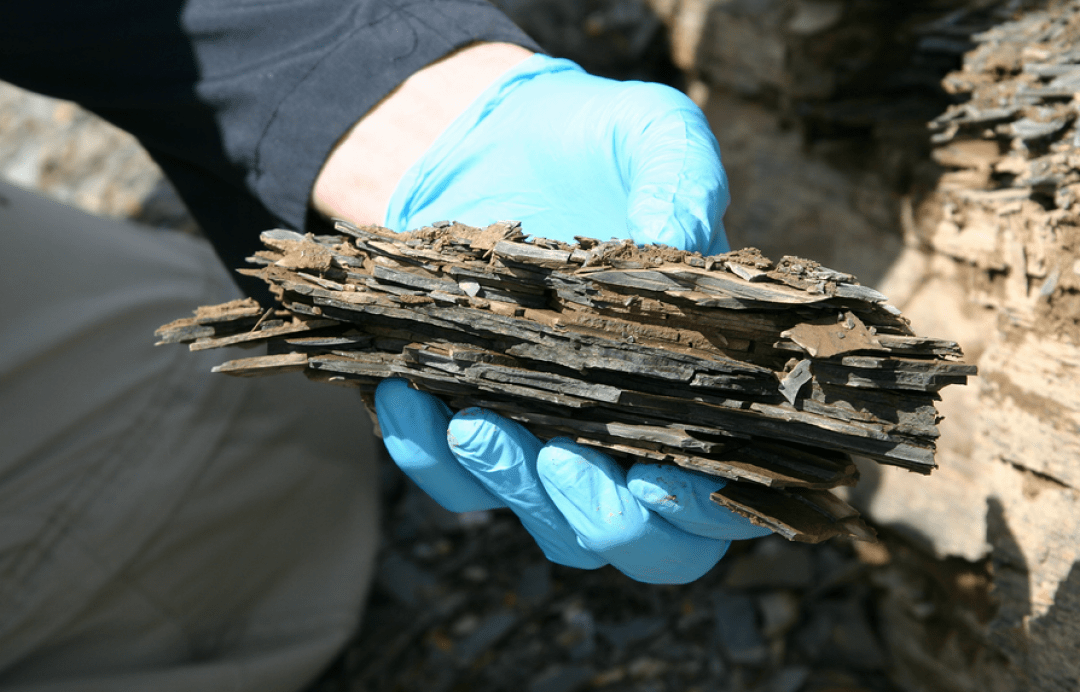
A Montana State University doctoral graduate discovered fossilized microorganisms in western Montana that predate by 200 million years fossils previously believed to be the oldest complex life forms in North America.

Zach Adam’s research of the fossilized remains of a eukaryote called Tappania shows that Earth’s first complex life forms reflect an actively growing state, rather than a dormant one as scientists previously suspected. A eukaryote is an organism with complex cellular anatomy and many are capable of changing their cellular shapes into complex structures.

The findings offer clues about the development of life on Earth and may contribute to the search for lifeforms on other planets.

Adam, who received his Ph.D. from MSU in 2014 and is now a postdoctoral fellow at Harvard University, published his findings in the May 2017 edition of the scientific journal Geology. His research was primarily funded through a National Science Foundation Graduate Research Fellowship award that he received in 2011 while at MSU.

Adam discovered the fossilized remains of Tappania, a shape-shifting organism barely larger than the thickness of a human fingernail, in a clay outcrop near White Sulphur Springs. The site is part of a collection of rocks known as the Belt Supergroup that extends throughout much of Western Montana.

The relatively sudden appearance of eukaryotes around 1.6 billion years ago marked an important turning point in the evolutionary timeline, said Adam, who conducted his research in MSU’s Department of Earth Sciences in the College of Letters and Science, under advisers Mark Skidmore, associate professor of geology, and David Mogk, professor of geology.

For the 2 billion or so years prior to that, life on Earth consisted solely of simple microscopic organisms, Adam said.

“Microbial life dominated our planet for 2 billion years,” he said. “Then, seemingly overnight, we had organisms show up that are complex. The appearance of eukaryotes showing up on our planet was a significant event. They eventually evolved into forms of life that dominate the planet today, from plants to trees, and from fungi to people. In other words, as far as we can tell, every organism that is complex today came from these organisms.”

In addition to marking a critical step in the evolution of life on Earth, Adam said, eukaryotes are unique in having the remarkable ability to change their shape significantly, and seemingly at will, to include bulbs and trumpet-like protuberances extending from their otherwise spherical bodies. Adam explained that having dozens of intact fossils demonstrating this variability suggests to scientists that they were in an active state of their lifecycle, rather than a dormant one, when they died.

“What we found was that it was not only capable of changing its shape, but also independently directing the growth of multiple protuberances to do so,” Adam said. “It would have an outer wall that could take on a shape while an inner wall could take on a different shape. What’s remarkable is that we’d be hard pressed today to find many organisms that could do the same, in terms of taking on these shapes simultaneously.”

Mogk and Skidmore are co-authors of Adam’s paper, “A Laurentian record of the earliest fossil eukaryotes,” along with Nick Butterfield, a professor of palaeobiology from the University of Cambridge, U.K., with whom Adam developed a research collaboration while a Ph.D. student at MSU.

The scientists theorize the protuberances possibly helped the organisms in reproduction and/or nutrient absorption.

The published findings are based on the extensive sample set collected near White Sulphur Springs, Skidmore said.

“Rather than having three quality samples, we have 40 or 50 quality samples,” he said. “This adds depth to the research and is important to the impact of its findings.”

Adam said that MSU’s proximity to the fossil-bearing rocks helped progress his research because he was able to easily travel between the research site and the lab.

“I could go into the field, look for samples with the right kind of texture and grain size, and dissolve them back in the lab at MSU and travel back to White Sulphur Springs the next day and resample as needed,” he said.

He added that there are only four or five other known sites on Earth where the ancient organisms can be found and they are located in sparsely populated and very remote areas.

“So, if you want to study this intriguing organism, you previously had to travel to faraway places,” Adam said. “It’s helpful to find them really well preserved and to make this kind of investigation accessible to researchers in North America.”

Adam said there is application for his research to inform the upcoming Mars 2020 rover mission, which is specifically designed to look for evidence of past Martian habitability.

“Answering questions about the evolution of life on Earth can inform what to look for on Mars,” Adam said. “The people in charge of Mars 2020 have said information regarding where and how to find fossils is directly relevant to their mission decisions.”

Before coming to MSU, Adam, who is from Cashmere, Washington, earned his bachelor's degree in Earth and space sciences, and another in aeronautics and astronautics engineering from the University of Washington. He also earned a master's degree in aeronautics and astronautics engineering from UW. He then worked for two years as a launch vehicle inspector for the U.S. Department of Transportation in Washington, D.C., where he was part of the regulatory division that oversaw rocket technologies and designs developed by private enterprise.

Other funding for Adam’s research came from the Lewis and Clark Fund for Exploration Research (NASA Astrobiology Institute and American Philosophical Society), the Tobacco Root Geological Society, the Belt Association, the D.L. Smith Fund, NSF-IGERT 0654336, the MSU Library Author Fund and a Geobiology Postdoctoral Fellowship from the Agouron Institute.

Add a Comment »

Friday, Jun. 16th, 2017

MSU Troops to Teachers regional program receives federal grant to reinstate services

A Montana State University program that for more than 10 years has assisted veterans who are interested in becoming certified teachers has received a federal grant to continue its services.

The U.S. Department of Defense awarded $716,000 to MSU’s regional Lewis and Clark Troops to Teachers program, making it one of only a handful of regional Troops to Teachers offices in the nation that was recently reinstated following a restructuring of the program at the national level. The grant, awarded through the Montana Office of Public Instruction, will enable MSU's program to continue serving veterans in eight states -- Montana, Idaho, Minnesota, North Dakota, South Dakota, Wisconsin, Wyoming and Washington – who are interested in attaining certification to teach kindergarten through 12th grade. The total veteran population of the region is 1.8 million.

Based in MSU's College of Education, Health and Human Development, Troops to Teachers does not provide education for would-be teachers, but rather helps them determine what classes they need for certification, guides them through the process and assists them with job placement and career development. The program also emphasizes placing veterans in rural schools, on and near American Indian reservations, schools with higher poverty levels, and in high-need urban areas, offering teachers small teaching bonuses for those placements.

Retired Army Col. LeRoy Gaub, Troops to Teachers program manager, said that teaching the country’s future leaders gives veterans who served the nation a way to continue serving, which for many is their life’s focus.

“They are proud to serve again, educating and teaching our youth to be good citizens,” Gaub said.

The military is interested in what happens to veterans after their service and in helping them make a smooth transition to civilian life, said Robert Carson, MSU education professor and Troops to Teachers program director.

“We bring the experience of how teacher preparation works,” Carson said. “And, it tends to work better if it's a well-lit path.”

By factoring a veteran’s knowledge and experience into civilian employment opportunities, the program ensures that the veteran’s prior education and experience are credited, which may reduce the number of courses required for licensure, Carson said.

For example, retired U.S. Air Force Lt. Col. Jim Tweet teaches math, aeronautics and life-skills electives at Belgrade Middle School.

Tweet attended MSU on an ROTC scholarship, graduating with a degree in electrical engineering. After a 20-year Air Force career, he retired in 2008 having already received a temporary teaching certificate by taking classes online through the now-discontinued Northern Plains Transition to Teaching program.

Troops to Teachers was the catalyst to his finding a teaching job and, he said, it's one that suits him well.

“I became a teacher so that I could have an influence on the next generation of American adults,” Tweet said.

Retired U.S. Marine Corps Cpl. Matthew Bakken joined the Marines early in his college career to “get some direction,” he said. After serving four years, primarily in Iraq, he worked in construction while taking classes at MSU and earned his degree in technology education in 2012.

While finishing up his degree, Bakken learned about a teaching position in the Big Sky School District through Troops to Teachers and landed the job two weeks before graduating. He will leave the Big Sky School District, where he also coached football, for a similar position in Three Forks next year.

Both Tweet and Bakken say they enjoyed being instructors in the military and that their experience gained while serving prepared them to be successful teachers.

“I'm able to be a positive role model, leading by example, while also holding students accountable for their behavior,” Bakken said.

Tweet said he doesn't think he would have been a good teacher right out of college. He learned discipline, flexibility, communication and other skills in the military.

“Teaching middle school is all about relationships,” Tweet said. “Every kid in middle school is ‘too something’ – too fat, too skinny, too pimply. It's gratifying helping them transition from little kids to adults. They need boundaries, but the boundaries don't have to be absolute.”

Since 2003, MSU's regional Lewis and Clark Troops to Teachers program has served around 4,000 participants, nearly a quarter of whom have been hired for new teaching jobs, according to national data.

To be eligible for the program, participants must have been honorably discharged from the military on or after Oct. 1, 1990. Participants must also submit a copy of their certification of release or discharge from active duty, as well as a copy of their Troops to Teachers acceptance letter.

For more information about Troops to Teachers, contact Gaub at (406) 994-4436 or lgaub@montana.edu.

Add a Comment »

News Comments