

Friday, Aug. 11th, 2017

High School Students Get Real-World Look into Hospitality Industry at 4th Annual Vine & Dine

In an effort to give back to the community, Big Sky Resort and its partners are boosting educational opportunities at this year’s 4th Annual Vine & Dine wine and food festival by offering an entry-level Sommeliers class and inviting high school students interested in the hospitality industry to learn from the best in the business. 

Eight Montana high school students from across the state will learn side-by-side with local and special-guest chefs. These students are members of ProStart, a collaboration between schools and the foodservice industry to provide real-world skills in culinary arts and restaurant management.  
Vine & Dine, which is Aug. 17 – 20, will feature Google’s culinary team, American Chef and TV Personality John Besh, Big Sky Resort’s culinary team and Buck’s T4’s Food and Beverage Director Chuck Schommer. These chefs and their sous chefs will pair up with a student and give them a collaborative look at what it takes to execute a major culinary and wine event.

“I am thrilled to work with ProStart’s Montana students at this year’s Vine & Dine,” said Google’s Global Program Chef Scott Giambastiani. “As chefs and hospitality leaders, it’s not only our obligation to mentor tomorrow’s talent, but it’s one of the most rewarding parts of the job. The responsibility we have as leading professionals to inspire and engage tomorrow’s talent is huge.”

Twelve Montana high schools participate in the Montana ProStart program. The students selected to participate at Vine & Dine include Bozeman High School’s Erika Carrol, Mackenzie Pistor, Hunter Bermeister; Whitefish High School’s Kyiah Ingraham, Alysha Wigner, Baileigh Krause, Robert Bertelsen; and Drummond High School’s Kolter Clute.

“Having worked with ProStart for the last 8 years, it is always exciting to host these young future culinarians in my kitchen,” said Todd Christensen, Big Sky Resort executive chef. “This year is very exciting to have not only the Big Sky Chefs working with ProStart but also them having the opportunity to work with Chef Scott Giambastiani and his Google team of chefs.”

The goal is to inspire and excite the students about working in the hospitality industry by giving them a real-world, behind-the-scenes look. 

“Growing up in the hospitality industry, I have always had chefs and mentors that I looked up to,” said Chuck Schommer, Buck’s T4 Food and Beverage Director. “Now as a chef and restaurateur, ProStart is the natural fit to give back to an industry that has taken such good care of me. I am honored to be part of the Vine and Dine and bringing 8 Montana students to Big Sky Resort for this weekend event.” 

The students will take part in the festival’s grand opening, “Back to our Roots: The Power of Plants,” on Thursday evening on Big Sky Resort’s Summit Hotel Terrace. On Friday evening, there is a ProStart fundraising dinner at Buck’s T4.

Montana ProStart is under the national ProStart umbrella, which is a program developed by the National Restaurant Association Education Foundation in conjunction with the industry. ProStart reaches nearly 140,000 students annually in all 50 states.

“It’s ProStart’s unique approach of partnering industry with education that is the programs’ foundation and strength,” said Brad Griffin, executive director of the Montana Restaurant Association, “and this joint venture with the Google Global Program chefs and ProStart is a perfect example.”

In addition, Vine & Dine is also offering an introductory Sommeliers class for professionals working in the hospitality industry in Montana. Master Sommeliers will teach this two-day intensive course, which begins Wednesday, Aug. 16. The introductory course is a prerequisite for the Certified Sommeliers Examination. Registrants will learn about wine and spirits, proper wine service and deductive tasting. 

To register for the introductory Sommeliers class, or for tickets and information about the wine and food festival, please visit bigskyresort.com/vine.

Add a Comment »

Monday, Aug. 7th, 2017

MSU agriculture staff feel weight of Lodgepole fires, donate water to firefighters

Some say Montana is a small town with long streets, and in the Big Sky State, the word “neighbor” is a verb.  That notion may ring true, even at Montana universities.
 
When the nation’s largest fire erupted in late July in eastern Montana’s Garfield and Petroleum counties, the weight of the devastation reached two young men who work and manage MSU’s Red Bluff Ranch, just three counties west of the Lodgepole Fire Complex fire camp in Sand Springs.
 
JT Saunders, Red Bluff Ranch manager in the Department of Animal and Range Sciences in the College of Agriculture, was sitting in a baler, wondering what could possibly be done to help hundreds firefighters and the eastern Montana ranchers who were seeing their land, jobs and — in some harrowing cases — even livestock go up in flames.

After all, Saunders and his MSU ranch colleague Jace Solf, MSU research assistant and Winnett native, grew up in central Montana and personally know many Jordan, Mosby and Winnett families and ranches, either through summer work or high school sports.
 
“Central Montana is a whole beast of its own in terms of community, and it really hits home when you know the folks personally,” Saunders said. “The hardest part is wanting to do something but knowing there’s such a thing as being in the way. We wondered what could be helpful other than more people.”

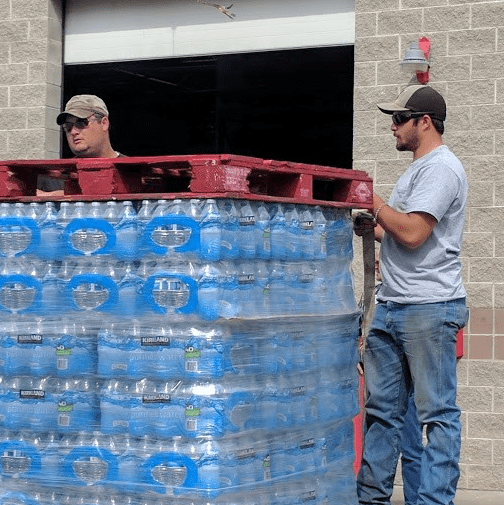
A former rural volunteer firefighter himself, Saunders immediately thought of water. After phone calls to friends and fire relief efforts and a handful of emails to college administrators, Saunders and Solf secured modest university funds to purchase 9,000 bottles of water at a discounted rate of 7 cents apiece from the Bozeman Costco.


After a full day of work at the ranch, in the middle of the university’s haying season, Saunders and Solf loaded up five pallets — 11,000 pounds — of water at Costco, then drove 300 miles in five hours through the night, spent 40 minutes unloading at the Winnett Volunteer Rural Fire Department, turned around and drove back in time for work the next morning at MSU.

“It was a long night but nothing compared to what firefighters, producers and community members in central Montana are going through,” Saunders said.

Saunders knows first-hand what a community response to fire means. In 2006, when a wildlife enflamed Bear Trap Canyon near Red Bluff Ranch, one of several fires that affected MSU ranch land and livestock, neighbors and fellow MSU staff came to help, without needing a phone call.

“It’s all hands on deck during fire, you don’t wait for a call. You just show up,” Saunders said. “What I think most people don’t understand about rural ranch life is that fire just doesn’t take someone’s house, like in cities; people can still go back to a job the next day,” he said. “For a rancher, fire takes everything; their house, job, animals and, in some cases, generations of genetics and family history. They spend the whole year trying to keep these animals alive, and then you’re just humbled by the vulnerability to Mother Nature.”

The Lodgepole Fire Complex, according to the Bureau of Land Management’s Miles City Office, started on July 19 as four lightning-caused fires. Though livestock and property loss reports and data from the fires are still filing in, the BLM estimated the fire burned 270,723 acres and was 93 percent contained. The fires consumed mostly grazing land, with 80 percent to 100 percent of those lands experiencing a complete loss of grass, according to MSU Extension. BLM data also said 16 homes, numerous secondary structures, a significant amount of fencing and haystacks and 120 power poles were destroyed.

The fire prompted a statewide and national response from community organizations, nonprofits, banks, agribusinesses and corporations in the forms of money and supply donations, including animal feed, hay, labor, clothes, food, fencing supplies and land for grazing. The relief effort generated a popular hashtag on social media, #MontanaStrong.

“Our relationship with Montana’s agricultural community extends beyond research,” said Patrick Hatfield, Animal and Range Sciences department head. “As a land-grant, our connection with farmers and ranchers is personal, and their loss is our loss. Our hearts and empathy are with our friends in eastern Montana and I’m glad we were able to make a small donation that hopefully provided a bit of relief.”

While the long-term economic losses of the fires are still being evaluated, the ripple effect of the fire will have severe financial setbacks for years to come, Hatfield said. Gallatin County’s Farm Service Agency estimates the fencing repair across 1,400 miles at $15 million alone, and livestock respiratory damage from smoke inhalation creates serious risk of infection. Many ranchers will likely have to sell their livestock early; many of them are still searching for lost livestock, according to Hatfield.

Wildfire continues to be one of the nation’s largest and most devastating natural resource threats, especially for agricultural communities, Hatfield said.
 
“There’s likely no larger threat to our agricultural industry than fire caused by drought,” Hatfield said. “Wildfire is and will continue to be one of our largest challenges in states that are sustained by agricultural economies, like Montana, because devastation extends beyond the surface: Fire affects vegetation, food production, ecosystems, property loss and people’s lives.”

Hatfield added that a portion of the department’s research efforts are dedicated to effective fuel management and looking at fire as tool to manage ecosystems and stabilizing and reclaiming rangeland following fire devastation.
 
MSU Extension has compiled wildfire and drought resources, and the Northern Ag Network has organized a Web-based Montana Wildfire Relief page. The Montana Agriculture Fire and Drought Assistance Hotline is 1-844-515-1571.

Add a Comment »

Thursday, Aug. 3rd, 2017

Fire Restrictions To Go Into Place Saturday 8/5

Montana Fish, Wildlife and Parks’ properties in many southwest Montana counties are set to enter Stage 1 Fire Restrictions Saturday. This includes Fishing Access Sites, State Parks, and Wildlife Management areas.The restrictions apply specifically to properties in Beaverhead, Butte-Silver Bow, Deer Lodge, Madison, Broadwater, Jefferson, Lewis and Clark, and Meagher counties.
FWP follows the counties in entering fire restrictions. 

In those areas mentioned above, the following acts are prohibited until further notice:
Building maintaining, attending, or using a fire or campfire. (Note exemptions below)
Smoking, except within an enclosed vehicle or building, a developed recreation site or while stopped in an area at least three feet in diameter that is barren or cleared of all flammable materials.

Exemptions:
Persons with a written permit that specifically authorizes the otherwise prohibited act.Persons using a device fueled solely by liquid petroleum or LPG fuels that can be turned on and off.

Persons conducting activities in those designated areas where the activity is specifically authorized by written posted notice.

Any Federal, State, or local officer, or member of an organized rescue or firefighting force in the performance of an official duty.

All land within a city boundary is exempted.At Bannack, Lewis and Clark Caverns, and Spring Meadow State Parks, fires are allowed within established fire rings or grills, but prohibited elsewhere within the parks.

Individuals may be fined up to $5,000 or imprisoned up to 6 months for violating the noted fire restrictions. 

For updates on restrictions and closures around the state, go to: http://fwp.mt.gov/news/restrictions/droughtDetails.html

Add a Comment »

Friday, Jul. 28th, 2017

Student Organization Works to Assist Expecting and Current Parents Enrolled at MSU

Students for Life at MSU is passionate about making campus more accommodating to expecting and current parenting students at Montana State University and Gallatin College. In the past, this student organization has raised money to install two new diaper changing stations on campus, promoted local pregnancy centers, compiled available resources for pregnant and parenting students into an online database and so much more.

Currently this student-lead organization is working to raise money to endow a scholarship for pregnant and parenting students. To do this, the club plans to raise $25,000 and invest it through the Montana State University Alumni Foundation. The interest from this investment will provide a $1,000 scholarship every year, perpetually. To date, the group has raised more than $6,400 toward their goal of $25,000.

You can help make a lasting impact by donating online at www.grouprev.com/msuendowment. Contact Lindsay Langhals (419-890-9302) to arrange a cash or check donation or to find other ways you can be involved with making campus more accommodating for these students.


The mission of Students for Life at MSU is to peacefully promote and protect the dignity of human life from conception to natural death through education and events on campus and in the community, and by providing support for the mother, the father, and the child in an unplanned pregnancy.

Add a Comment »

Saturday, Jul. 22nd, 2017

MSU researcher offers recommendations for viewing Aug. 21 solar eclipse

As the Aug. 21 total solar eclipse draws near, Montana State University researcher Angela Des Jardins has some advice for viewing the rare and awe-inspiring celestial event.
 
“It’s really a once-in-a-lifetime opportunity,” said Des Jardins, who has been preparing for the eclipse for more than three years. To make the most of it, people should be prepared and plan one or more ways of viewing the eclipse, she said.
 
The last total solar eclipse that was visible from the contiguous U.S. occurred in 1979; the next ones won’t take place until 2024 and 2045. During a total solar eclipse, the moon aligns perfectly with the sun and obscures it entirely.
 
First, Des Jardins said, be safe. Even during an eclipse, looking at the sun can cause permanent eye damage. In the Bozeman area, where viewers will see a partial eclipse in which the moon will obscure 95 percent of the sun, it will be necessary to wear protective glasses the entire time.
 
Glasses are inexpensive and are available online. It’s important to purchase glasses that comply with international safety standard ISO 12312-2, Des Jardins said. Information about obtaining free glasses at MSU can be found at www.coe.montana.edu/eclipse/viewing.html.
 
Starting at 10 a.m. on Aug. 21 in front of the MSU Library, members of the MSU Physics Department will distribute glasses and will also have solar telescopes and other special viewing equipment. In Bozeman, the partial eclipse will begin at roughly 10 a.m. and will peak at 11:36 a.m.
 
Second recommendation: If at all possible, Des Jardins said, go to the path of totality - the roughly 70-mile-wide area stretching from Oregon to South Carolina where viewers will experience the total eclipse. There, the moon will completely block the sun for about two minutes, producing the most dramatic effect.

“If you don’t do it, you might really regret it later,” Des Jardins said.
 
Although she hasn’t witnessed a total solar eclipse in person, Des Jardins, an assistant research professor in the Department of Physics in MSU’s College of Letters and Science and director of the Montana Space Grant Consortium at MSU, has studied the phenomenon enough to know that experiencing it is profound.

“It’s kind of a deep twilight, with basically a 360-degree sunset,” she said. “Some of the brightest stars will come out.” The sun’s violent atmosphere, called the corona, will become visible as a ring around the moon, “which is an amazing thing to be able to see.”
 
During the period of totality, viewers can safely look at the eclipse without glasses.
 
The path of totality includes a tiny and remote corner of southwestern Montana, as well as Idaho Falls and Rexburg in Idaho and Jackson, Thermopolis and Casper in Wyoming. If you go, be prepared for crowds and traffic and bring plenty of water and food, Des Jardins said. Cellphone service may be temporarily unavailable due to high demand.

Third: Watch the aerial video that an MSU team and 54 other teams will livestream using high-altitude balloons as part of the MSU-led Eclipse Ballooning Project. A team of MSU students, mostly undergraduates, has spent countless hours designing and building a system that project teams across the country will use to provide a unique perspective on the eclipse.

“It’s a space-like perspective,” said Des Jardins, who initiated the project in 2014. Helium-filled balloons will carry cameras to an altitude of more than 80,000 feet to capture the video. “From that height you can see the curvature of the Earth and the blackness of space.”
 
“You’ll get to feel like you’re looking down on planet Earth,” she said. “It will invoke wonder and curiosity about what’s happening, the special alignment that has to happen for the shadow to move across the Earth.”
 
The video from all the teams will be livestreamed to NASA’s website. During the eclipse, the MSU homepage will link to a livestream transmitted from one of the MSU team’s three balloons, which the team will launch from the Rexburg area.
 
The livestream is meant to complement viewing the eclipse directly, not replace the experience, Des Jardins said. She recommends viewing the livestream during the hour before or after the local peak of the eclipse. Teams will be livestreaming from more than a dozen balloons in Oregon and Idaho before the eclipse peaks in Bozeman.

The Museum of the Rockies will show the Eclipse Ballooning Project livestream at the Taylor Planetarium. Doors open at 10 a.m. and normal admission charges apply. Eclipse glasses will also be available for purchase.

Regardless of how or where people view the eclipse, Des Jardins is encouraging everyone to take time to experience the extraordinary happening.
 
“There will be something special about seeing it with your own two eyes,” she said, “but there will also something pretty profound about seeing those images looking down on the planet.”

Add a Comment »

Tuesday, Jul. 18th, 2017

Sections of rivers will be closed to fishing daily from 2 p.m. to midnight until conditions improve effective Wednesday

High water temperatures and low stream flows have prompted Montana Fish, Wildlife and Parks to implement “hoot owl” restrictions on several rivers in Southwest Montana starting Wednesday.

The following sections of rivers will be closed to fishing daily from 2 p.m. to midnight until conditions improve effective Wednesday:

Big Hole River from Saginaw Bridge on Skinner Meadows Road to the Mouth of the North Fork Big Hole River;
Big Hole River from Notch Bottom Fishing Access Site to the confluence with the Beaverhead River;
Lower Beaverhead River from Anderson Lane to confluence with Big Hole River;
Lower Madison River from Ennis Dam to the mouth;
Lower Gallatin River from the confluence with the Madison River at Three Forks to Sheds Bridge (Hwy 84) near Four Corners;
East Gallatin River from Spring Hill Road Bridge (Hwy 411) to the confluence with the Gallatin River;
The entire Jefferson River 

These restrictions come two weeks later in the year than the first restrictions seen in 2015 and 2016. Regional Fisheries Manager Travis Horton said, “We’ve been fairly fortunate so far this year with flows in general, but temperatures are high and could stay that way for a while.” Additional restrictions are possible on other stretches of these or other southwest Montana rivers in the coming weeks.For up-to-date information on restrictions related to drought, visit http://fwp.mt.gov/news/restrictions/.

Add a Comment »

Monday, Jul. 17th, 2017

Skyline Ridership Growth Continues, but Funding Constraints Remain

Over 200,000 Rides in Fiscal Year 2017, Breaking Previous Record.

The Big Sky Transportation District is pleased to announce a record-breaking year for Skyline transportation services, providing over 200,000 rides between July 1, 2016 and June 30, 2017. Representing an 8.6% increase in ridership from the previous year’s record, Skyline’s Link Express (Big Sky to Bozeman) and local services continue to grow as a vital solution to the changing transportation needs of greater Gallatin County.

“With local ridership growing by 7 percent and Link Express up by more than 13 percent, it’s clear that residents of southwest Montana are responding to increased economic and population growth throughout the area by exploring alternative means of transportation,” said David Kack, Skyline Coordinator. “Despite these increases year over year, the District continues to struggle to receive proper funding to e ectively expand services and improve rider experience.”

According to District Board Chairman Ennion Williams, Skyline’s popularity and growing importance to the area has been recognized with increased nancial support from the Big Sky Resort Tax Board and Madison County, but Gallatin County has decided not to fund the service.

Last year, an on-board survey showed that 76 percent of those utilizing the bus service reside in Gallatin County, with 59 percent of those respondents stating they use the service for work-related purposes.

Williams noted that only once has Gallatin County provided funding in the last 10-years of Skyline operations. “This year, we once again requested funding from Gallatin County to improve Skyline services for the Bozeman area and access to Big Sky for visitors and residents alike, but the initial vote is against providing funding.” Williams went on to say, “We hope we can convince the Commissioners that they need to invest in this vital service before they analyze the budget.”

The Big Sky Transportation District Board will meet this summer and fall to discuss its budget and will continue to explore additional sources of funding to meet the increased demand for services. Current sources of ongoing funding include the Federal Transit Administration (administered by the Montana Department of Transportation), Big Sky Resort Area District, Big Sky Owners Association, Big Sky Resort, Madison County, Moonlight Basin, Spanish Peaks Resort, and the Yellowstone Club.

Add a Comment »

Bozeman Entrepreneur Wins MSU Blackstone LaunchPad’s InnovateHER Competition for Flexible Preschool Startup

Jessica Dehn, a Montana State University alumna and founder of Dino Drop-In, a modern, no-screen preschool with the flexibility of drop-in care, advanced to the semifinals of the U.S. Small Business Administration’s InnovateHER competition by winning a local business plan competition hosted online by co-sponsor Blackstone LaunchPad at MSU on June 3, 2017.

Ten finalists, to be announced July 31, will be invited to pitch live at the national competition this fall to vie for $70,000 in prizes sponsored by the Sara Blakely Foundation.
 
“There are so many opportunities for entrepreneurs to improve the lives of women and families, so no two submissions were alike and competition was fierce,” said Tiphani Lynn, a Montana Campus Compact AmeriCorps VISTA, who organized the local competition.
 
“Ultimately, the decision was made based on magnitude of impact on the lives of women and families, demonstrated success in commercialization, and clarity of market need. Dehn’s solution was strongest in all three categories,” Lynn said.

In rural communities with high growth rates and increasing rates of entrepreneurship and non-traditional work schedules, the lack of flexible child care is one of the key factors affecting career advancement for women. Demand is also increasing for affordable preschool offerings. The Dino Drop-In model is an elegant solution to both of these needs. It has already proven successful in Bozeman and Belgrade and is poised to scale to other similar communities.

Of the win, Dehn said, “I am thrilled to be involved in revolutionizing child care in our community. Even better, I get to be a resource for other entrepreneurs to enter the market. By providing flexible child care, I get to empower women and families striving to have an impact on their community. The tremendous support we have received from Bozeman and Belgrade has given us the opportunity to expand our offering to other communities, in and out of Montana.”

For more information about Dino Drop-In, visit http://www.dinodropin.com/.
 
About the Blackstone LaunchPad: The Blackstone LaunchPad at Montana State University, a partner of the Jake Jabs College of Business and Entrepreneurship, is an entrepreneur resource for students, alumni and faculty across the university and community that offers coaching, ideation and venture creation support.

 
About InnovateHER: The Innovating for Women Business Challenge (InnovateHER) is a cross-cutting prize competition to unearth innovative products and services that help impact and empower the lives of women and families. It’s sponsored by the U.S. Small Business Administration (SBA). The Blackstone LaunchPad at Montana State University is a co-sponsor for the national SBA competition, serving as a local competition host for eligible entrepreneurs, under co-sponsorship authorization #17-6050-38. SBA's participation in this co-sponsored activity is not an endorsement of the views, opinions, products or services of any co-sponsor or other person or entity. All SBA programs and services are extended to the public on a nondiscriminatory basis.

Add a Comment »

Friday, Jul. 14th, 2017

MSU Gold Rush T-shirt design revealed

The 2017 Gold Rush T-shirt features a design that represents both the Gold Rush football tradition as well as the mountainous view from the Montana State campus and Bobcat Stadium. This year’s Gold Rush game against South Dakota State University is set for Saturday, Sept.9, in Bobcat Stadium.

Now in its 11th year, this Bobcat tradition kicks off the home football season and is designed to inspire fans to showcase their Bobcat spirit by filling the stadium in a sea of gold.

Jooahn Kwon of New Jersey created this year’s winning T-shirt design after stumbling upon the contest online.

“For my design, I wanted to merge the environment of the university along with the football tradition,” Kwon said. “The mountains extend out from the football shape with the Bobcats logo placed on top. I stuck to the colors that can be found within the original Bobcat logo that was provided. Overall, the design is clean and, in my opinion, represents both the region of Montana and the tradition of the Gold Rush game.”

Koon will receive a $500 cash prize for the winning design.

The limited-edition Gold Rush T-shirts go on sale July 14. T-shirts are $12 and may be purchased at the MSU Bookstore and at Universal Athletic stores in Bozeman, Billings, Butte, Great Falls, Helena, Kalispell and Missoula. Gold Rush shirts are also available online at www.msubookstore.org and at http://www.universalathletic.com/.

For more information, contact Julie Kipfer at 994-5737 or visit http://www.montana.edu/goldrush.

Add a Comment »

Thursday, Jul. 13th, 2017

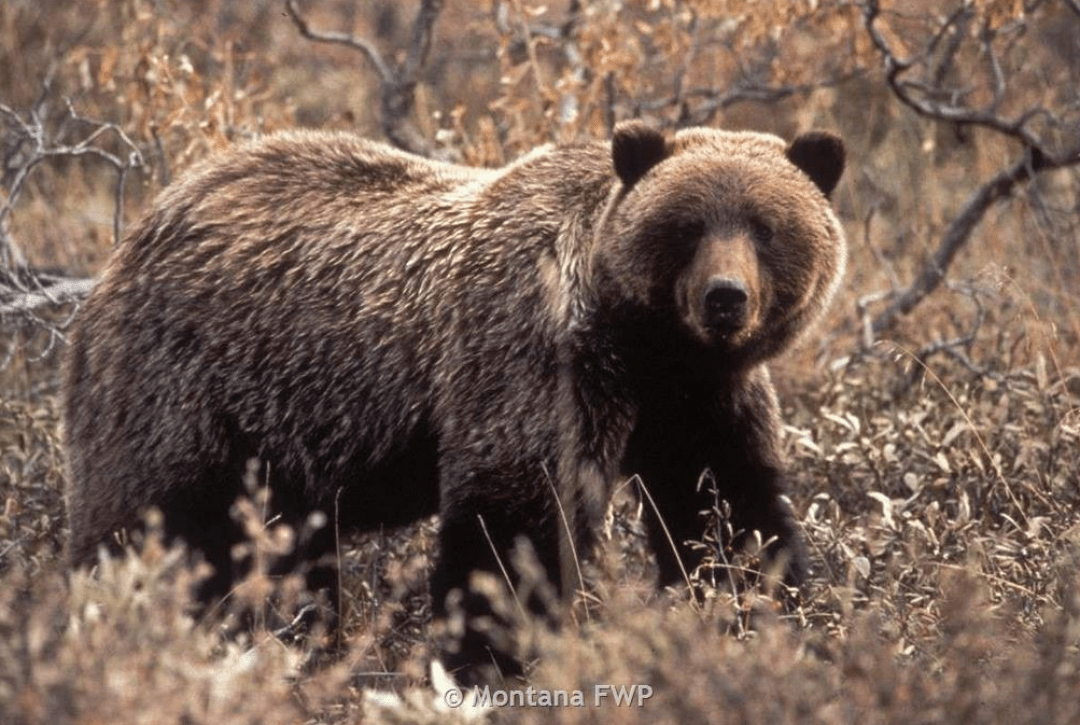
Biologists set to trap Grizzly bears in our area: Public reminded to heed all warning signs

As part of ongoing efforts required under the Endangered Species Act to monitor the population of grizzly bears in the Yellowstone Ecosystem, the U.S. Geological Survey is working to inform the public that pre-baiting and scientific trapping operations are about to begin within the Hebgen Lake drainage basin in the Hebgen Lake Ranger District of the Custer Gallatin National Forest, Montana.  Biologists, with the Interagency Grizzly Bear Study Team (IGBST), will begin work in the area beginning July 15th and will continue through August 31st.  Trapping operations can include a variety of activities, but all areas where work is being conducted will have major access points marked with warning signs.  It is critical that all members of the public heed these signs. 


Monitoring of grizzly bear distribution and other activities are vital to ongoing recovery of grizzlies in the Yellowstone Ecosystem.  In order to attract bears, biologists utilize natural food sources such as fresh road–killed deer and elk.  Potential trapping sites are baited with these natural foods and if indications are that grizzly bears are in the area, culvert traps or foot snares will be used to capture the bears.  Once trapped, the bears are handled in accordance with strict protocols developed by the IGBST. 

Whenever bear trapping activities are being conducted for scientific purposes, the area around the site will be posted with bright warning signs to inform the public of the activities occurring.  These signs are posted along the major access points to the trapping site.  It is important that the public heed these signs and do not venture into an area that has been posted.  For more information regarding grizzly bear trapping efforts call the IGBST hotline at 406-994-6675.

Add a Comment »

News Comments