

Friday, Mar. 30th, 2018

MSU seeks nominations for list of 125 women who have contributed to university’s history

Organizers of a celebration planned for this fall to recognize important women in Montana State University’s history are seeking nominations from the public.
 
The MSU President’s Commission on the Status of University Women is seeking candidates for its list of “Extraordinary Ordinary Women of Montana State University.” As part of the university’s yearlong quasquicentennial celebration, the commission will recognize 125 women who have been pivotal to MSU’s past, present or future at a reception Nov. 2.


“We want to shine a light of recognition and appreciation on the many women who have had essential roles in the university, from its formation more than 125 years ago, through time,” said MSU President Waded Cruzado. “We would like members of MSU’s community who have been inspired by women in the university to let us know who these women are, whether they worked outside of the spotlight or in it.”

Chatanika Stoop, a member of the PCOSUW committee organizing the event, said women have been central to the university’s development. After all, she said, it was prominent women in the Bozeman community who helped bring Montana’s land-grant college to Bozeman, and for 125 years MSU women have worked to improve the status of women at the institution, around Montana and across the country.

Stoop said that the names of some of those pivotal women are well-known, such as Una Herrick, MSU’s first dean of women, who taught women skills to promote their financial independence in the 1920s, or Cruzado, the university’s first female president. Stoop said that the committee wants to acknowledge the dozens more women who have worked, and continue to work, toward discovering and eliminating institutional barriers to the success of women.

“In this year of celebrating MSU’s 125th anniversary, the PCOSUW is honoring women leaders, problem solvers and innovators from today and throughout MSU’s history,” Stoop said.
 
Nominations should include a name, affiliation with MSU, how she had an impact on the status of women and inspired others by her example. For more information or to submit a nomination, visit montana.edu/125women. Nominations will be accepted until May 15, and living honorees will be notified in June.

“We invite everyone to celebrate a woman in his or her life by nominating them as an ‘Extraordinary Ordinary Woman’ of Montana State University,” Stoop said.
 

Add a Comment »

Thursday, Mar. 29th, 2018

Bozeman Receives $10,000 and Technical Assistance to Meet Resiliency Goals

The National League of Cities (NLC) announced seven new cities for the Leadership in Community Resilience program. Each city will receive $10,000 in direct financial support as well as technical assistance and professional development opportunities to help them meet community-specific resiliency goals.

The seven cities selected for the 2018 Leadership in Community Resilience Program are: Birmingham, AL; Bozeman, MT; Durango, CO; Indianapolis, IN; Kingston, NY; Nashua, NH; and San Leandro, CA.

“Resiliency is a key value embraced by strong, economically vibrant communities,” said Clarence E. Anthony, CEO and executive director of the National League of Cities (NLC). "We are excited to work with these seven cities through the Leadership in Community Resilience program to help them achieve their unique goals. While each project will be different, we know the value that cities have in sharing and learning from one another.”

Now in its second year, the Leadership in Community Resilience program is generously supported by the National Fish and Wildlife Foundation and Wells Fargo. To apply for this program, officials from each city submitted a proposal detailing a specific resiliency challenge in their community and a proposed event or implementation project designed that could address it.

NLC also announced that the program had established technical assistance partnerships with the Thriving Earth Exchange and ecoAmerica, who will provide additional tools and resources to support the cohort of cities.
“The interest in this program from cities was overwhelming and illustrates the serious challenges cities face when balancing growth and development alongside pollution, water quality, climate change and more,” said Cooper Martin, program director for the Sustainable Cities Institute at the NLC. “Aside from welcoming the 7 cities, we’re thrilled to have such valuable partners in place to help meet these challenges.”

In addition to providing direct assistance to cities, the program gathers new insights related to the challenges and opportunities associated with local resilience initiatives. In the years ahead, lessons learned through this process will be shared with cities throughout the United States.

About the National League of Cities
The National League of Cities (NLC) is dedicated to helping city leaders build better communities. NLC is a resource and advocate for 19,000 cities, towns and villages, representing more than 218 million Americans. www.nlc.org

Add a Comment »

New Native American artists’ gallery transforms MSU student union building into something ‘pretty special’

Butch Damberger said a new set of Native American paintings that line the hallway to meeting rooms in the Montana State University Strand Union Building often have an unexpected and powerful effect on people.
 
“A couple of months ago I came across a young man who was moved to tears by the art,” said Damberger, director of the SUB. “That was our goal – to create something (all people) can be proud of.”
 
The Indigenous Art in Time Gallery is a set of large-scale pieces of art by Native American artists saluting Montana’s tribes. The multimedia gallery was installed on Indigenous Peoples Day in October and still catches people expecting a plain hallway by surprise.
 
The gallery features mural-sized pieces by five artists. They include: Ben Pease, a member of the Apsaalooke (Crow) and Tsitsistas (Northern Cheyenne) nations and former MSU art student who is now successfully selling his multimedia pieces around the world; John Isaiah Pepion, Piikani (Blackfeet), who is also a prominent artist known for his ledger-style art; Carlin Bear Don’t Walk, a member of the Tsitsistas sand Apsaalooke nations who now lives in Billings and whose painting also graces this year’s American Indian Council powwow poster; Casey Figueroa, a Flathead-area artist and educator of Apache, Tohono O'Odham, Yaqui, Mexican and Irish heritage who is pursuing dual master’s degrees in Native American studies and an MFA from MSU; and Alisha Fisher, Tsitsistas and Apsaalooke, a graduating senior art student at MSU. The gallery was coordinated by Marsha Small, Tsitsistas, an earth science doctoral student and Native American studies lecturer who is passionate about seeing a collection of gallery-quality art by Native American artists installed on the MSU campus.

“This is a salute to our Homelands, because this is what this place here is – Homeland for many Montana tribes,” Small said.
 
Damberger said while he had the idea of hanging Native American art in the formerly empty hallway for some time, the project didn’t get off the ground for a couple of  years until efforts by Small and Pease located artists. The resulting paintings exceeded all of his expectations.

“I had thought for the longest time that we should do something with these walls and I thought I’d like to have a few pieces of Native art in that hallway, but didn’t know how to make it happen,” Damberger said.
 
Small calls the creation of the gallery over several months last year “one of the greatest family efforts that I have ever been a part of.”

“We all got together and decided the progression on the walls and who would be where,” she said. “All of the artists are really busy, but they made it happen.”
 
Small said the progression begins on the northwestern wall with a large painting by Fisher of Pretty Woman, a Cheyenne woman. The painting is called “Respect” because “we are a matriarchal society and this is where life begins for us,” Small said. A mural full of Native American symbols and two multimedia pieces by Figueroa follow. The mural merges into Bear Don’t Walk’s neon-colored scene of a white buffalo, called “The Journey Continues.” The art rounds a corner to Pease and Pepion’s “Stories of Our Peoples.” The Pease-Pepion piece, which extends across most of the southern wall, is a vinyl wrap created by SCS Wraps, and it includes symbols from all of Montana’s tribes. The gallery ends with two paintings by Fisher called “Resilience” – one of the historic male Northern Cheyenne leader Red Armed Panther. The last painting is of Fisher’s baby girl.

“It’s the circle of life for us,” Small said of the full presentation.
 
Two motion-activated monitors in front of the Pease-Pepion piece loop short videos about Montana’s tribes created by Montana’s Office of Tourism. Damberger said the tourism office allowed MSU to download the videos, and Jonathan Dove, the SUB’s technical director, figured out how to make them work with the motion detectors.

Small said the pieces of art are so detailed, and so rich in Native American symbolism “that every time I look at them I see something new.”

Damberger said in addition to the gallery, the SUB also purchased two original paintings from Pease -- one is the original used for last year’s American Indian Council’s powwow poster  -- that now hang outside the SUB ballrooms. While those paintings are beautiful and also add much to the building, he’s grateful for the impact of the larger gallery.

“What I love about (the gallery), what I think is cool, is I now see classes coming up and walking through and looking at it,” Damberger said.  “We’re really proud of how it turned out. It really is pretty special.”

Add a Comment »

2018 High Plains Book Award Nomination Process is Complete- Community Readers will Review 207 Books

The 12th annual High Plains Book Awards will take place on October 19-20, 2018 in Billings, MT.  This event recognizes writers and their work from the states of MT, CO, ND, SD,WY, NE and KA  as well as the provinces of Alberta, Manitoba and Saskatchewan in Canada.  A total of 207 nominations have been received, twenty-two more than in 2017.  Of these entries, an amazing 42% come from Canadian authors.

The twelve book award categories range from Indigenous Writer to Arts and Photography.  This year’s entries include: 9 entries in Arts and Photography, 19 in Children’s Books, 25 Creative non-fiction, 33 fiction, 14 First Book, 9 Indigenous Writer, 10 Medicine/Science, 27 nonfiction, 22 Poetry, 6 Short Stories, 20 Woman Author and 13 Young Adult.

Each of the 207 entries will be read and evaluated by four different community volunteers.  Based on the evaluations, the top three books in each category will become finalists.  At that point, the finalists are forwarded to judges who will choose the winner in each category.  The judges include past winners and published writers with a connection to the High Plains in the US and Canada.

All of the High Plains Book Awards are sponsored by local organization and individuals.  Winners will be announced at the High Plains Book Awards Banquet scheduled for Saturday October 20, 2018 at the Yellowstone Art Museum.
 
For more information about the High Plains Book Awards visit the web-site www.highplainsbookawards.org or contact Shari Nault, High Plains Book Awards President at 406-672-6223 or via email at shari2redlodge@gmail.com.

Add a Comment »

Tuesday, Mar. 27th, 2018

TRIM & TAILOR Designer Announces New Store in Bozeman

When Bridget Trimble Simonson and her husband Ryan Simonson started TRIM & TAILOR in 2016, Bridget realized a lifelong goal of designing and owning her own fashion line. TRIM & TAILOR’s classic, contemporary apparel has since gained a following through its Gallatin Valley store, as well as its wholesale and online sales. Having outgrown their current location, the Simonsons are moving to a new storefront in Bozeman that will allow them to increase wholesale operations and maintain a storefront for local shoppers. TRIM & TAILOR will open at 875 Bridger Drive – just north of the Cannery District, across the street from Story Mill Park – in mid-May.

At a young age, Bridget had dreams of owning and designing her own clothing line. She studied fashion design at the Art Institute of Colorado and has worked in the industry since 2009. Her professional experience includes work in retail buying, styling, pattern making, fabric and trim sourcing, overseas purchasing and apparel product development for companies such as Von Maur Department Store and Allen Co. She also helped Bozeman-based Simms Fishing relaunch its women’s collection.

The Simonsons started TRIM & TAILOR after moving to the Gallatin Valley in 2016, with Bridget running the design side of the business and Ryan managing the financial side. Less than a year after they opened a retail storefront in Belgrade, TRIM & TAILOR’s operations outgrew the space. The Simonsons decided to move to a new location in Bozeman, where they could maintain a retail storefront and more efficiently meet wholesale demand. The new location will feature TRIM & TAILOR’s contemporary apparel and jewelry, with every clothing item priced below $100.

“We are so excited to open our doors in Bozeman and become part of this vibrant and creative retail community,” said Bridget. “We’re also grateful the Montana & Idaho Community Development Corporation was there to help when we decided we needed to move and expand.”
 
Like many startups, TRIM & TAILOR was challenged to obtain traditional bank financing despite its strong initial growth. Bridget and Ryan turned to the Montana & Idaho Community Development Corporation, a financing company that specializes in helping businesses at a key moment when they aren’t able to qualify for a bank loan. Montana & Idaho CDC provided nearly 100 loans to small businesses in 2017, almost 40% of them startups.

“It’s amazing to see all that Bridget and Ryan have accomplished in less than two years,” said Montana & Idaho CDC President Dave Glaser.  “It’s a testament to the high-quality designs, but also the way they’ve built their business to be successful across retail, online and wholesale channels. We’re thrilled to provide the financing they need to take their business even further.”

Montana & Idaho CDC loans range from $1,000 to $2,000,000 and can be used for purposes such as purchase of real estate, equipment, inventory, business purchase, remodeling or working capital. Loan clients also receive one-on-one technical assistance in financial management, marketing, sales and other areas of business management.

For more information about Trim & Tailor, visit https://www.trimandtailor.com

Add a Comment »

Wednesday, Mar. 21st, 2018

MSU Library acquires collection of letters written to and from ‘Zen and the Art of Motorcycle Maintenance’ author

The Montana State University Library has acquired a collection of letters written to and from one of the university’s most famous employees, the author Robert Pirsig.

Pirsig was an author and former Montana State English instructor who inspired a generation to look inward to the "high country of the mind" with his book "Zen and the Art of Motorcycle Maintenance." Published in 1974 to wide acclaim, “Zen” was inspired in part by events that started between 1959 and 1961, when Pirsig was an English professor at what was then Montana State College.

The collection, which is available to the public to view in MSU Library’s Special Collection and Archives, includes correspondence between Pirsig and a graduate student with whom Pirsig corresponded for more than a year. The collection also includes two signed and inscribed copies of “Zen and the Art of Motorcycle Maintenance,” monographs, audio cassettes and CD-ROMs.

The student, Anthony M. McWatt, began to correspond with Pirsig in 1993 after sending Pirsig a copy of his master’s thesis, which drew heavily on Pirsig’s work. McWatt earned a master’s degree from the University of Sheffield in 1990 and a doctorate from the University of Liverpool in 2005.

The letters between Pirsig and McWatt provide insight into the philosophy Pirsig wrote about in “Zen and the Art of Motorcycle Maintenance,” including how he developed that philosophy, according to Heather Hultman, curator in MSU Library’s Special Collections.

“Dr. McWatt would ask about something from the book, and then (McWatt and Pirsig) would have a lengthy discussion about it,” Hultman said. “It gives a unique insight into Pirsig’s creative process.”

Individuals interested in Pirsig and late 20th century American thought will likely find the collection interesting, said MSU University Archivist Kim Scott.

“Pirsig’s book appears on (many lists) of the most influential books of the 20th century,” Scott said. “Anyone interested in pursuing what goes into that philosophy and how he explained those ideas to others will be interested in this collection.”

The book is, on the simplest level, a narration of a father and son's summer motorcycle trip across America's Northwest, including a stop in Bozeman and Cottonwood Canyon outside the city to visit Pirsig’s friends, the late MSU art professor Bob DeWeese and his wife, Gennie.

On another level, however, "Zen" is a blend of philosophy, literature and religion that is still taught in classes throughout the world. More than 5 million copies have been sold since it was published.

Scott also noted that visitors from throughout the world – informally nicknamed “Pirsig’s Pilgrims” – still come to MSU every summer to see the office Pirsig once occupied in Montana Hall as well as other places Pirsig mentions in the book.

The new collection complements a collection of correspondence the MSU Library holds between Pirsig and Bob and Gennie DeWeese, Scott said. Both were close friends with Pirsig and mentioned often in “Zen.”

“The DeWeese collection shows a friendship developed here in Bozeman,” Scott said. “The (McWatt) collection then shows a friendship based on a correspondence that came years afterwards. In other words, you see Pirsig grow. He was writing to the DeWeeses because they were old friends. With Dr. McWatt, he was essentially making friends with somebody who was studying him. It’s a different perspective to understanding who he was.”

Add a Comment »

Friday, Mar. 16th, 2018

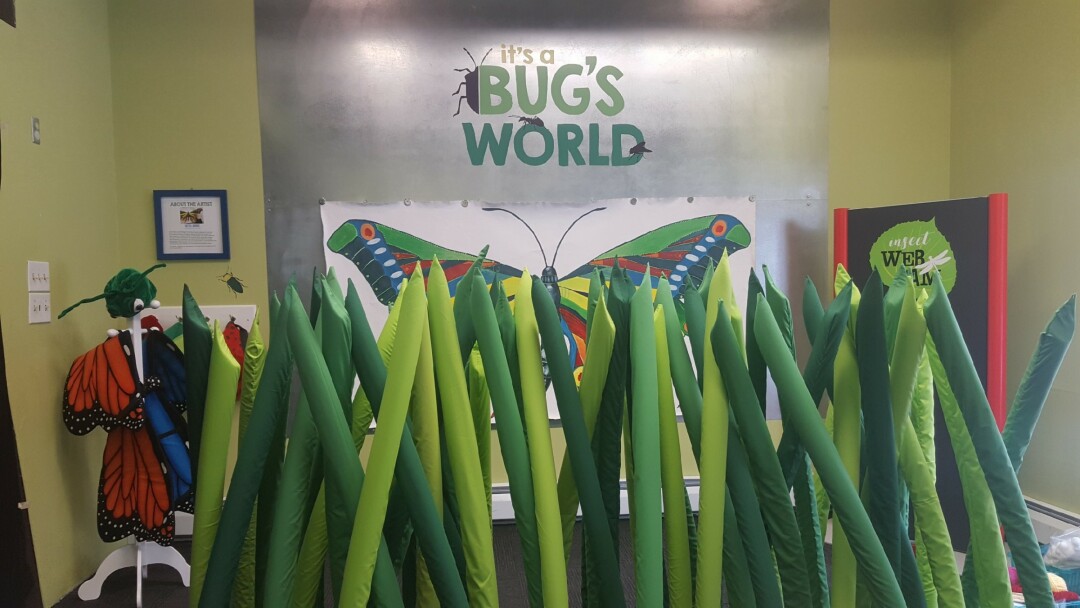
Children’s Museum of Bozeman (CMB) announces opening of It’s A Bug’s World on Saturday, March 24th, 2018

The Children’s Museum of Bozeman (CMB) announces the opening of their newest exhibit, It’s A Bug’s World on Saturday, March 24th, 2018.

It’s A Bug’s World was developed to encourage visitors to learn together, exploring what makes an insect unique. The goal of this exhibit is to encourage children and families to creatively and critically think about the world of insects, learning about the anatomy of bugs, their distinct differences, and the ways in which we interact with bugs on a daily basis. For some age groups, it will be an introduction to insects and for others it will provide an in depth lesson on habitats, anatomy and characteristics of bugs.

Additionally, CMB blends technology with entomology by incorporating an insect web cam, a hex bug maze, and a “bug wall” where visitors can use their senses to understand insects. The different parts of the exhibit speak to children of all ages; the youngest visitors will be able to dress up and walk through the grass forest while the oldest will explore the live species and explore entomophagy (edible insects). CMB encourages parents to explore the exhibit with their children, as they do with all parts of the museum, in order to create a collaborative learning space. CMB looks forward to welcoming local classrooms into the space for educational field trips this Spring and next Fall.

CMB’s Executive Director, Abby Turner, states, “Bugs are fascinating to children and adults alike, yet they are misunderstood on the simplest levels. Because there is no end to discovering new insects, scientists continue to study and examine them as a critical part of the world around us. Additionally, as bugs become a more viable food source, introducing entomophagy to children early is an essential step to increasing awareness. We have teamed up with a number of local entomologists and insect experts to create this fascinating exhibit. We are grateful to James Rollin, Miles Maxcer, Bob Peterson and Adrian Massey for their expertise. Also, to John Allwine and Greta Moore, who provided critical parts of the exhibit to make it engaging and interactive. This was a community effort to expand the exhibit excellence of CMB.” CMB’s exhibits are designed and manufactured in house by Pamela Jacques, Director of Exhibits and Design, for CMB. Her experience in this field has brought a stunning display of fun, engaging activities to the Museum.

The Children’s Museum of Bozeman is open Monday through Saturday from 10am – 5pm. This exhibit is part of the general admission and is open to the public during regular open times.

The Children’s Museum is located at 202 S. Willson Ave. For more information, please contact Abby Turner at (406)522-9087, or see our website at www.cmbozeman.org.

Add a Comment »

Gallatin Refugee Connections is hosting or co-sponsoring between now and the end of March

Local nonprofit Gallatin Refugee Connections is pairing up with community partners to host three open-to-the-public events during March 2018. Each event presents the tribulations experienced by various communities abroad, as well as celebrates the rich cultures and histories of these communities, including their presence in Bozeman and Montana!

Event 1

New Neighbors Project: Celebrate the Perseverance and Rich Culture of Montana’s Refugees through Film and Music

A Community Event at Bozeman’s Rialto Theater!

Who better to tell the story of America in 2018 than those who seek to live the American dream? What better antidote might there be to divisive politics and “alternative facts” stoking anti-immigrant hostility than visual documentation and music from displaced peoples

productively embracing their fresh start, building memories, enriching our communities and culture, and renewing the foundational American narrative?

Our media landscape is rife with accounts about and on behalf of refugees, but there are few opportunities for self-representation and community dialogue. Enter the New Neighbor’s Project, a community film and media project out of Missoula, Montana whose films Never Give Up While You Are Still Alive, Kuwezesha Wanakate, and Renga For The West are hitting the road in March with a screening at the Rialto Theatre in Bozeman on March 17th.

On this St. Patrick's Day, join our friends from Missoula - recently arrived refugees from Africa, to reflect on what immigrants mean to our country and how they've woven traditions into the fabric of our diverse society. These brave individuals will share their stories with us of what assimilation has been like for them into our dear home state. After a series of short films followed by a Q&A with the refugee filmmakers, steady yourself for the wonderfully worldly sounds from Joel Makeci, a true and mysterious musical gift from way across the waters, now at home in Missoula.

This St. Patrick's Day let us celebrate what makes this country unique by welcoming new voices, styles, and music into our lives. Come meet our new neighbors.

Doors at 6:30PM. Show at 7:30PM.
This event is all ages. Tickets are available online at rialtobozeman.com or at Cactus Records, 29 W. Main St., Bozeman, MT. Tickets are $10 (plus service fee).

Event 2

Fork & Spoon Homestyle Kitchen Joins Community Partners to Host Pay-What-You-Can Colombian Meal and Presentation

Featuring Guest Chef Claudia Krevat of Claudia’s Mesa, BoZambique and
Photographer Steve Cagan

Colombian culture makes its way to Bozeman! Fork & Spoon Homestyle Kitchen, Gallatin Refugee Connections, and the Public History Workshop of MSU’s Department of History & Philosophy are pairing up to host an evening of food, photography and music to explore and honor Colombian culture - both here in Bozeman and deep in the Amazonian rainforest.

The event will feature Bozeman-based guests, including chef Claudia Krevat of Claudia’s Mesa who will prepare an authentic Colombian meal, local music group BoZambique who will play world infused, Latin American rhythm and blues, and photographer Steve Cagan will share his photos and stories of the rich and challenged history of the human and environmental cultures of Colombia’s El Choco rainforest region. Steve’s discussion will focus on the consequences of violence perpetuated by civil conflict and economic projects in the region, especially mechanized gold mining, resulting in physical damage and cultural displacement.

LOCATION: Fork & Spoon Homestyle Kitchen | 302 N. 7th Ave | Bozeman, MT 59715 DATE: Tuesday, March 20, 2018
TIME: Dinner available from 5-7 PM. Presentation begins at 7:15 PM.
COST: The photography show, discussion and music are free, and the dinner is pay what you can, with a suggested price of $8.

WHO: The event is open to the public. We encourage all in our community to join, including families.

This event is made possible by Steve Cagan Photography; Public History Workshop, MSU Dept. of History & Philosophy; MSU College of Letters and Science; Humanities Montana; Fork & Spoon Homestyle Kitchen.

Event 3

“Who is a Refugee?” Photography Exhibit Opening Reception and Refugees & Displacement Panel Discussion

Join the Public History Workshop of MSU’s Department of History & Philosophy on Wednesday, March 21 for the opening reception of “Who is a Refugee?,” a documentary photography exhibit exploring the idea of population displacement in Latin America. The Exhibit and Reception will be held in the Exit Gallery, located in MSU’s Strand Union Building. The Reception will be followed by a panel discussion titled “Refugees & Displacement,” which will reflect on the historical and contemporary phenomena of the global refugee crisis. Panelists include Shahid Haque, a Helena-based attorney who specializes in immigration and refugee law and policy, Bozeman's Dr. Katie Woods, who recently returned from working with the Rohingya in Bangladesh, and documentary photographer Steve Cagan.

This event is free and open to the public. The Opening Reception will be held from 4:30-6:30 PM in the Exit Gallery, located in MSU’s Strand Union Building. The Panel Discussion will be held from 7:30-8:30 PM in the Procrastinator Theater, also located in MSU’s Strand Union Building.

The exhibit will be on display from March 20 through April 6, 2018. This event is made possible by the Public History Workshop, MSU Dept. of History & Philosophy; MSU College of Letters and Science; Humanities Montana; Gallatin Refugee Connections.

###

GALLATIN REFUGEE CONNECTIONS is a group of local Bozeman residents committed to creating and sustaining a welcoming environment for refugees. These events aim to fulfill GRC’s mission by lifting up the tribulations of communities abroad and celebrating the presence of these rich cultures here in Bozeman.

For more information contact us at gallatinrefugees@gmail.com or visit us at facebook.com/gallatinrefugeeconnections .

Add a Comment »

WTI proposal wins Big Sky $10.3 million for road improvements

A proposal written by researchers at Montana State University’s Western Transportation Institute has resulted in a $10.3 million federal grant for improving safety and traffic flow on the road leading to the Big Sky community.
 
The funding comes from one of the most highly coveted and competitive sources of federal transportation dollars: the Transportation Investment Generating Economic Recovery program, known as TIGER.
 
“I think everyone in Big Sky is thrilled, because everyone knows the issues on that road and the need for improvements,” said David Kack, a program manager at WTI who played a leading role in drafting the grant proposal.
 
The TIGER grant will be used for a variety of roadway improvements as well as expanded public transportation, all with an aim to alleviate the stresses that have been placed on Montana Highway 64 — also called Lone Mountain Trail — as Big Sky has grown around the major mountain resort, Kack said. The funding, which will be awarded to Gallatin County, lasts until 2025 but it is anticipated that the project will be completed as quickly as possible, he said.

 
The project will install seven left-turn lanes, expand the existing pedestrian trail system, build a pedestrian underpass and add four buses and six vans to the existing Skyline public transportation system that runs within Big Sky and between Big Sky and the greater Bozeman area.
 
Without the grant, Kack said, it would be difficult to fund such an ambitious package of improvements because the 9-mile-long stretch of Highway 64 straddles two counties and primarily serves Big Sky, which is an unincorporated community that can’t levy taxes.

“This is a great way to get all these things done and not have to figure out which county or other entity is going to pony up the money,” Kack said.
 
Fewer than 6 percent of applicants receive TIGER funding, Kack noted. He said WTI’s proposal was an outgrowth of a long partnership with the Big Sky community.
 
In 2002, the Big Sky Transportation District asked Kack and other WTI researchers to provide guidance about operating and expanding public transportation. That grew into regular consultations. In 2015, the Big Sky Chamber of Commerce hired WTI to conduct a series of listening sessions about the community’s transportation needs and draft a report, which outlined some of the improvements in the TIGER project.

 
That report became the basis for a more detailed study conducted by Sanderson Stewart, a major engineering firm founded by MSU alumnus Robert Sanderson. Kack collaborated with Sanderson Stewart and had hard numbers to back up his recommendations in the grant proposal, which Gallatin County submitted on behalf of the Big Sky community, he said.

 
“It was kind of a perfect timing, getting these things done in succession and ultimately getting the funding,” Kack said.
 
There is no direct gain to WTI or himself for getting the grant, Kack said. When he read the call for grant applications, his and WTI’s longtime work with Big Sky seemed like a natural fit, he said.
 
“We think this really highlights that part of the land-grant mission at MSU — to improve the community and the state that we work in,” Kack said.

Add a Comment »

Wednesday, Mar. 14th, 2018

Park County Men Plead Guilty to Bison Poaching

Three Park County men were sentenced Tuesday in Justice Court for the illegal hunting and wasting of three bull bison in the Gardiner area on February 28.

Jesse Darr, Ryley Heidt, and Peyton Simmons pled guilty to unlawful possession, waste, and hunting during a closed season.
The dead bison were discovered March 2 by agency personnel in Beattie Gulch, an area of U.S. Forest Service land near the border of Yellowstone National Park. All three bison had their heads removed and all usable meat was left to waste. The bison skulls had been skinned and hidden nearby.

Solving the case was a matter of a collaborative enforcement effort. U.S. Forest Service (USFS) and National Park Service (NPS) officers aided FWP game wardens in the identification of the suspects.

“We’re thankful for the help of our enforcement partners,” said Warden Sgt. Coy Kline. “The value of extra sets of eyes and ears on the ground can’t be overstated.”

Also significant in this case, was the use of FWP canine, Kikka, who was integral in the discovery of evidence linking the men responsible to the case.

The FWP enforcement division is currently engaged in a research and trial period using trained canines in very limited applications. FWP currently only has two canine teams as part of this statewide trial program.

Enforcement Chief Dave Loewen said using canines to detect critical evidence at wildlife crime scenes is an incredible tool that can greatly reduce staff time and increase the chances of locating evidence.

“It is doubtful the evidence in this case would have been detected and located without the canine.”

The judge in this case ordered each of the men to pay $2,605 in fines and restitution with a 18-month suspended jail sentence. The men also lost their fishing, hunting and trapping privileges for 54 months with the added restriction of not being able to apply for permits for an additional five years after their privileges are reinstated. Remedial hunter education was also ordered.   


Add a Comment »

News Comments