

Thursday, Nov. 12th, 2020

Rural EMS Agencies to Receive Mobile Simulation Training
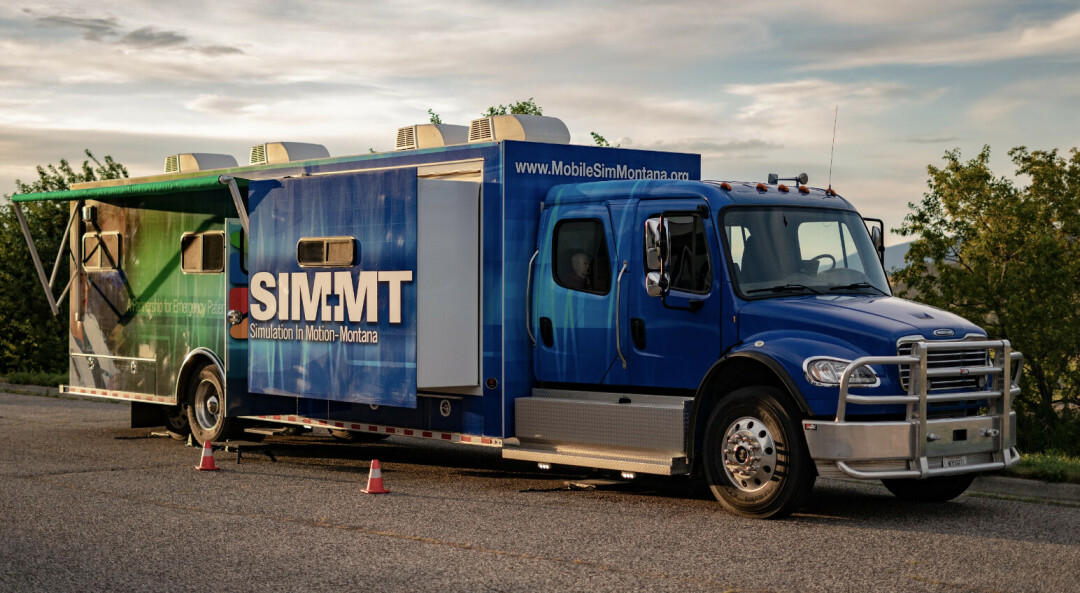

Simulation in Motion Montana (SIM-MT) has received a $20,000 award from the Sibanye-Stillwater Community Giving program. This award will allow for simulation training services for up to eight EMS/fire agencies in the catchment area of south central Montana Sibanye-Stillwater operations.

The rural agencies who will benefit from SIM-MT’s world-class simulation training are the primary 911 response for more than 7,000 square miles of south central Montana, including response for mine employees. As a result of this grant, the eligible first responders will receive sophisticated, high-fidelity simulation training to prepare them to more effectively respond to injuries. “Sibanye-Stillwater is so grateful for its local emergency responders, many of whom are graciously donating their time and skills as volunteers, and believes this training will enable these emergency responders to give back even more to our local communities,” says Marlena Ferguson of Sibanye-Stillwater.

Beneficiaries of this training are not just first responders. In fact, the primary benefit will be for patients needing critical care in these rural communities. High fidelity simulation training improves first responders’ abilities to provide effective immediate treatment at the site of an accident and/or in transit to a hospital, which is crucial to improving positive outcomes for all patients. SIM-MT brings that level of training to EMS agencies’ front doors. 

The Helmsley Charitable Trust will match this gift dollar for dollar, which will support SIM-MT in reaching additional facilities and responders across the state. “SIM-MT, along with its project partner, Best Practice Medicine, is excited for the opportunity to provide training to first responder agencies in south central Montana and grateful for the support of Sibanye Stillwater in our efforts to do so,” said Sara Kaull, Interim Executive Director of SIM-MT. “This grant from Sibanye-Stillwater, and the match provided by the Helmsley Charitable Trust, are critical to our ability to bring this caliber of high fidelity simulation training directly to underserved first responder agencies in Montana.”

For more information on SIM-MT’s mobile simulation services, visit our website: www.simmt.org

Add a Comment »

Southwest Montana hunters see varied success over third weekend of general hunt


BOZEMAN – Hunter numbers and success continue to vary in southwest Montana as recent snowfall facilitated some harvest opportunity while creating challenges for travel and access.
 
Wildlife biologists with Montana Fish, Wildlife & Parks operated several check stations during all or part of the third weekend of the season — Nov. 7 and 8. In total, biologists met with close to 600 hunters at check stations in Alder, Cameron, Gallatin and Divide.
 
Biologists use check stations to collect data on hunter participation and success, as well as the species, sex and age class of the animals harvested. This supplements data collected through hunter harvest phone surveys.
 
The Alder check station saw 233 hunters, 14 percent of whom harvested an animal. This was the highest success rate for hunters at this check station so far this year. The Cameron check station saw 206 hunters, with a success rate of 6.4 percent, slightly lower than the long-term average of 7.8 percent. The Gallatin check station, which operated only on Nov. 7, saw 57 hunters, 7 percent of whom were successful. 

In a preliminary total, biologists checked about 28 elk, 18 mule deer and 7 white-tailed deer, among other species.
 
These figures do not account for different hunting season regulations over the years, which have varied from liberal to restrictive for elk and mule deer, depending on population status.
 

Add a Comment »

Wednesday, Nov. 11th, 2020

How to convert Mp4 to Mp3 Easily Using Evano Software Online

Convert Mp4 to Mp3 on Evano easily! Extract audio files in high 320kbps quality from online Mp4 videos, concerts, music clips. Best free Mp4 to Mp3 converter! Convert to Mp3 audio file ready for car sound system, phone, tablet, or music player. Convert dozens of Mp4 files to Mp3 at once. Evano the only freeware which can convert Mp4 to Mp3 files swift & keeps its original audio quality! 100mb limits and super simple!

One of the primary uses of this tool is to try and convert a music video to an Mp3 file. Which generally means a shorter, 3-5 minute video that will have a relatively small file size. If you do not want the video anymore and want to split the audio and video from each other and just keep the video, this tool will allow you to do this very quickly. You will need to have the video file on your device to do this. Taking the video from YouTube or any other website is not possible using Evano. You must download the video first. Since these videos are already the correct format, it will be easy to convert mp4 to mp3 without any troubles.

While modern smartphones and desktops can handle all kinds of high-quality audio formats, Mp3 is still one of the most popular audio formats used by average users. If you are one of those users who prefer to listen to their music than watch it, you can use an Mp4 to Mp3 converter app to convert your favorite video tracks into Mp3 format. Using an Mp4 to Mp3 converter, you can save a video file into an audio file. There are several Mp4 to Mp3 converters online and offline that can help you to change the media file into an audio.

Mp4 is a short form of MPEG-4 which stores audio, video, image, and other data like text. Mp4 came into existence in 2001 based on MOV, and the current version of Mp4 was released in 2003.

Mp3 is a short form for MPEG-1 Audio Layer 3. Mp3 is always smaller than the Mp4 file. According, if you are saving music audio for use on portable players, or your audio player, a smartphone is getting full, you should convert Mp4 to Mp3.

There are a variety of free file converters you can use directly in your browser or download to your desktop. Read on to learn about Evano and follow instructions on how to convert your Mp4 using the Evano converter.

Step 1: Navigate to Evano
The Evano homepage is the best place to start. Evano is an intuitive, online-based service that provides a stand-alone option that requires little more than an internet connection and your file. It’s entirely free, requires no additional software to run, and supports quick conversion between more than 20 formats — most importantly in our case, Mp4 to Mp3.

While the resulting audio quality is great, as is the conversion speed, a free account can only handle files less than 100MB in size.

Step 2: Click the Select File button in the middle of the page and select the video files you wish to convert to Mp3. A pop-up window will appear where you can locate or search for the desired files on your computer. You can also choose a file from a URL or your Dropbox, Google Drive, or OneDrive to download video with Evano. Once your data are selected, click the Open button in the lower-right corner to add the file to the conversion queue.

Step 3: Click the drop-down arrow button that appears after uploading your Mp4 file, then select audio followed by Mp3 from the drop-down list. Click the wrench icon located directly beside the data if you wish to fine-tune the audio bit rate (up to 320kbps), channels, frequency, normalization, or trim the new file to a specified length. The latter is an incredibly handy tool if your video has an introduction or ending with undesired audio. When finished, click the okay button. It may take some time, but Evano Converter will notify you when your conversion completes. Then click the green Download button and select a save destination for the file. Now that you ripped your audio, you need a decent Mp3 player to play it on.

Add a Comment »

Tuesday, Nov. 10th, 2020

MSU to lead study examining COVID-19's effect on U.S. nursing workforce

Montana State University has been selected to lead a two-year study about the effects of the COVID-19 pandemic on nurses, the largest group of U.S. health care workers, focusing on changes in employment, earnings and the supply of nurses. The study is being funded by grants totaling $430,000 from the Robert Wood Johnson FoundationThe John A. Hartford Foundation, the Johnson & Johnson Foundation in partnership with the Johnson & Johnson Center for Health Worker Innovation and UnitedHealth Group.  

The study is being led by Peter Buerhaus, professor in the MSU College of Nursing and director of the MSU Center for Interdisciplinary Health Workforce Studies, along with co-researchers Douglas Staiger, professor of economics at Dartmouth College, and David Auerbach, senior director of research and cost trends at the Massachusetts Health Policy Commission.

“Over the last century, nurses have faced many shocks, including world wars and economic recessions, but they have not experienced a pandemic in modern times,” Buerhaus said. “For the country’s well-being, it is critical to track and understand the effects of COVID-19 on the nursing workforce.”

There are approximately four million registered nurses and 200,000 nurse practitioners across the nation, and they are supported by more than 600,000 licensed practical nurses and hundreds of thousands of nursing assistants working in countless care delivery settings.

The study will research whether employment in certain settings grew during the pandemic, assess regional differences and seek to better understand if the pandemic has had a disproportionate impact on earnings and employment by race, ethnicity, gender and age.

“Through this research we want to understand whether nurses are leaving the workforce and whether large numbers of baby boomer nurses are retiring earlier than they had planned,” Buerhaus said. “If the pandemic is causing nurses to leave the workforce or retire early, then health care delivery organizations could be in trouble.”

“It is imperative that our workforce research include an analysis of the pandemic’s impact on nursing assistants, licensed vocational nurses and professional registered nurses, especially those working in nursing homes,” said Terry Fulmer, president of The John A. Hartford Foundation who recently served on the independent Coronavirus Commission on Safety and Quality in Nursing Homes. “The illness and deaths in these settings have taken a terrible toll on residents and families, and on these essential staff who are the backbone of care for our most frail older adults and people with disabilities.”

Finally, the researchers will forecast the number of registered nurses through 2030. Prior to the pandemic, forecasts indicated that the number of registered nurses would increase by at least one million. Now, experts say, that number is unclear.

Over the past 20 years, Buerhaus, Staiger and Auerbach have conducted numerous of studies of the nursing workforce. Regardless of the pandemic’s effects on the nursing workforce, Buerhaus said, one thing is clear: nurses will continue to be as crucial as they always have been.

The report will be completed by 2022, but throughout the project, key results will be shared in quarterly reports and peer-reviewed journals, as well as through webinars and interactions with government workforce organizations, professional associations, researchers and others.

“Nurses serve as critical links between patients and other members of the care team, especially during a health crisis,” said Mary Jo Jerde, a nurse and senior vice president, UnitedHealth Group Center for Clinician Advancement. “Understanding the impact of the pandemic on the workforce will help policymakers, health care delivery organizations, academic institutions, payors and the public work together to better support nurses now and into the future.”

“Nurses are the most admired, trusted and respected of all professions in the United States,” said Susan Hassmiller of the Robert Wood Johnson Foundation. “They keep people safe, they assure quality, and they advise people and comfort them. We need to know the impact this pandemic is having on nurses of all races, genders, regions and settings. We cannot let this pandemic deflate the culture of this vibrant profession.”

Add a Comment »

Monday, Nov. 9th, 2020

Gallatin Valley Mall Prepares For a Safe and Joyful Holiday Shopping Season

Gallatin Valley Mall has been closed the last four years on Thanksgiving; a decision that will be repeated this year after receiving overwhelming support from retailers and customers. The mall will be open 8:00 AM – 8:00 PM on Black Friday, with select retailers opening at 6:00 AM.

Until then, Gallatin Valley Mall’s business hours will be 10:00 AM – 7:00 PM Monday through Saturday, with select retailers open until 8:00 PM, and 11:00 AM – 5:00 PM Sundays. Individual store hours may vary and can be found at the “COVID-19 Updates” tab at gallatinvalleymall.com, or, just call first!

Many retailers are offering “Black Friday” deals the entire month of November to take the pressure off the day after Thanksgiving and promote social distancing. GVM encourages everyone to shop safe and shop early- take advantage of great deals and avoid last- minute shopping to prevent crowding and long lines.

GVM is committed to continuing to diligently keep the shopping center clean and sanitary and have increased the frequency and extent of those cleanings, especially on high-touch surfaces. As a service to customers, the mall has also installed additional hand sanitizing stations and is providing complimentary face masks available at Guest Services.

Gallatin Valley Mall Assistant Manager, Erin Brester, states: “This year more than ever, an enjoyable holiday will be inseparable from a safe and healthy one, and we’re continuing to adjust our plans to deliver safety, convenience, and the joy of the season”.

For more information, visit gallatinvalleymall.com.

Add a Comment »

MSU Extension examines transfer planning for next generation of Montana farmers, ranchers

According to Montana State University Extension, an important goal for many Montana family farm and ranch enterprises is to transfer land and businesses to the next generation, but the process can be challenging.

According to Marsha Goetting, MSU Extension family economics specialist, some families may avoid the process completely because of its economic, legal and family decision complexities. Others may start the process but abandon it to avoid conflicts that can arise from differences in goals, values and perceptions of fairness among family members.

The MSU Extension MontGuide “Transferring Your Farm/Ranch to the Next Generation” has worksheets and information for each member of a family to help focus their thoughts and feelings about succession planning issues.

Because of the strong bonds inherent with the heritage and lifestyles, generation transfers are more frequent in agriculture than any other business, Goetting said. Unresolved conflicts can have major impacts on the long-term success and viability of the operation as well as the transfer plan itself.

Goetting said the first question families should address in this process is whether the business is profitable enough to transfer to the next generation. Because emotions can get involved, families may need to consult with an accountant or farm management consultant to assist in this evaluation.

“During my estate planning meetings across Montana before COVID-19, members of the younger generations found it difficult to initiate a discussion about the farm and ranch transfer and succession processes,” Goetting said. “They fear older generations may perceive them as being overly interested in their inheritances. On the other hand, when members of the older generations bring up the topic, younger generations may not be responsive. They do not want to think about their grandparents or parents dying.”

Families who have been through the transfer and succession planning process suggest starting at an individual level, Goetting said. Then, families should discuss issues in a larger group. For example, if a father feels it important for the farm or ranch to remain in the family’s possession but his wife is ambivalent, they need to come to an agreement before they begin succession planning with their children. Afterward the two generations can meet to share thoughts on the process.

Reaching a family agreement about goals before a business discussion helps negotiations run smoothly, Goetting added. While there still may be times of tension or conflict about values and roles in the family business, communication is key in keeping the process moving.

“Preparing farm and ranch family business members for transfer and succession planning is a part of the older generation’s responsibility to the younger generation,” Goetting said. “The legal and economic aspects of the transfer plan are important. Connectedness among the family business members and the working out of future management strategies, or succession planning, is also absolutely critical to the success of any transfer plan.”

“Transferring Your Farm/Ranch to the Next Generation” can be found at http://msuextension.org/publications/FamilyFinancialManagement/EB0149.pdf. Printed copies are available from county or reservation Extension offices or by contacting Goetting at Montana State University, P.O. Box 172800, Bozeman, MT 59717.

Add a Comment »

BSSHA & BSCO Announce Rink Schedule & Programming for Winter Season

[BIG SKY, MT, Nov 6, 2020]—The Big Sky Skating & Hockey Association (BSSHA) and Big Sky Community Organization (BSCO) have announced the schedule and programming for the ice rink this winter. The rink will be open from December 1 - March 21, 2021 with a variety of programs for kids and adults. The rink will be located in the same area as in the past, but access will now be through the north side while construction continues on BASE. Parking will be in the lot behind the Lone Peak Movie Theater.  

Schedule

Monday
12pm - 5:00pm Open Skating
5:30pm - 7:00pm Kids Hockey Clinic (12/7 - 3/18)
7:00pm - 11:00pm Open Skate

Tuesday
12:00pm - 5:00pm Open Skate
5:30pm - 9:00pm 3 on 3 Hockey League (12/8 - 3/9)
9:00pm - 11:00pm Open Skate

Wednesday
12:00pm - 5:00pm Open Skate
5:30pm - 6:30pm Kids Hockey Clinic (12/9 - 3/17)
6:30pm - 11:00pm Open Skate

Thursday
12:00pm - 5:00pm Open Skate
5:30pm - 7:00pm Kids Hockey Clinic (12/7 - 3/18)
7:30pm - 9:00pm Drop in Hockey
9:00pm - 11:00pm Open Skate

Friday
12:00pm - 4:00pm Open Skate
5:30pm - 11:00pm Curling (1/8 – 3/20)

Saturday
12:00pm - 11:00pm Open Skating

Sunday
12:00pm - 5:30pm Open Skating
6:00pm - 9:30 pm Broomball (12/13 - 3/21)

Get Your Team Together
Anyone interested in the kids hockey league, or getting a team together for the 3 on 3 hockey, curling or broomball leagues, please email bigskyice@gmail.com  Spots are filling up, act soon.
 
Support BSSHA
Interested in supporting the ice rink and wide array of programming BSSHA provides for youth and adults in Big Sky? Board sponsorships are currently available for $500 for the season. November 15th is the last day to purchase a board and show your company or family’s support for the rink. There is also a big need for volunteers to help set the rink up for the season. On Nov. 14th & 15th, parents, players, those who enjoy skating and anyone who would like to volunteer is asked to meet at the rink at 9am. To sign up to volunteer or to sponsor a board, please email bigskyice@gmail.com. 

About the Big Sky Skating & Hockey Association
Big Sky Skating and Hockey Association is a Montana non-profit corporation in Big Sky, MT dedicated to bringing hockey, ice skating, and programs to the Big Sky community. The Big Sky Ice Rink is located outdoors in the Town Center.

About the Big Sky Community Organization
For more than 20 years, the Big Sky Community Organization has been serving Big Sky by creating exceptional facilities, trails, public spaces and experiences through community collaborations and recreational opportunities. Its mission—to engage and lead people to recreational and enrichment opportunities through thoughtful development of partnerships, programs and places—has come to fruition through multiple successful initiatives including: the successful fundraising campaign to create BASE, a place for all of Big Sky; Ousel Falls Open Space Park & Trailhead; Big Sky Community Park; Camp Big Sky and more. Each project started as an idea, realized through community leadership, collaboration and philanthropy. To learn more about BSCO and how you can get involved, please visit bscomt.org.

Add a Comment »

MSU receives nearly $300,000 from EPA for study to help divert food waste from landfills

Montana State University has received nearly $300,000 from the U.S. Environmental Protection Agency for a study that aims to help reduce food waste and divert it from landfills.

With the funds, MSU researchers will partner with the city of Bozeman to study household food waste and explore the potential to use anaerobic digestion for processing household food waste in the city, applying a decentralized approach to organic waste management. Anaerobic digestion is a process through which microorganisms break down organic materials, such as food scraps, without oxygen. The process produces biogas, which can be captured and used for energy production, and digestate, a nutrient-rich fertilizer.

Roland Ebel, the grant’s project director and a postdoctoral research associate in MSU’s sustainable food and bioenergy systems program, said the process involves putting accumulated food scraps in a prepared, airtight container. Specific bacteria, called inoculants, then transform the scraps into a nutrient-dense biofertilizer over a period of about four to six weeks.

“We are excited about this community-centered project,” Ebel said. “Anaerobic digestion of household food scraps is an efficient and sustainable approach for recycling organic waste for cities where no municipal organic waste management is available. We see the potential for expanding this model to other cities and states. However, first we have to make this work in our pilot study.”

Roland said anaerobic digestion sounds similar to composting, but there are important differences. Composting is an excellent way of recycling organic waste such as lawn clippings, he said, but it requires more space and isn’t as efficient for processing energy- and nutrient-dense food residues. Also, not every household has a garden available for composting. Finally, anaerobic digestion generates two products, biogas and a fertilizer, while composting only produces one.

The MSU project will focus on studying the effectiveness and usability of two different anaerobic digesters in 12 Bozeman households to break down food waste into biofertilizer. During the two-year study that is expected to begin in January 2021, MSU researchers, in cooperation with the city of Bozeman, will analyze the food waste generated by the households, develop mixes of food waste that can be anaerobically digested and assess the two types of containers to learn their effectiveness and household usability. After the study, researchers and students will produce outreach materials and conduct a workshop on expanding anaerobic digestion to more households.

In addition to Ebel, members of the MSU research team include Selena Ahmed, associate professor in the Department of Health and Human Development; Jed Eberly, assistant professor with MSU’s Central Agricultural Research Center; Irene Grimberg,

research associate professor and deputy coordinator for the Western Sustainable Agriculture Research and Education program; Fabian Menalled, professor in the Department of Land Resources and Environmental Sciences; and Tim Seipel, assistant research professor in the Department of Land Resources and Environmental Sciences. Ebel said there would also be one graduate student and two undergraduate students participating.

“This is an exciting project for MSU in that it advances researcher and student interest in diverting food waste from landfills while also exemplifying our land-grant mission of integrating research, teaching and service to communities,” said Alison Harmon, dean of the College of Education, Health and Human Development, which houses the university’s sustainable food and bioenergy systems program along with the College of Agriculture.

Montana State was one of 12 organizations to receive a total of $3 million in funding from the EPA for anaerobic digestion projects across the country. The EPA notes that anaerobic digestion is preferable to landfilling and incineration because it reclaims valuable resources and can save money and reduce environmental impacts.

“At EPA, we think about the entire life cycle of materials, not just what to do with them at the end of life,” Greg Sopkin, the EPA regional administrator, said in a statement. “MSU’s project has great potential to feed soils and conserve moisture, reduce greenhouse gas emissions and reduce food waste — all while working with and customizing solutions for the community.”

The anaerobic digestion funding opportunity is a part of EPA’s efforts and contributions to the Winning on Reducing Food Waste Initiative, a partnership among EPA, the U.S. Department of Agriculture and the U.S. Food and Drug Administration to reduce food loss and waste through individual and combined federal action.

More information on anaerobic digestion is available at https://www.epa.gov/anaerobic-digestion.

Add a Comment »

Thursday, Nov. 5th, 2020

4 Tips to Choose the Best Winter Jacket


If you live somewhere more northerly and you experience cold, snowy winters each year, then you know how important it is to have a good winter jacket. And if you're a particularly outdoorsy individual, no doubt you'll need a jacket that can handle the challenges of intense outdoor winter activity. Today, we want to give you a few tips to help to figure out exactly what kind of jacket you'll need to help you get through the winter comfortably.

1. Choose the Type of Jacket for Your Needs

In general, there are three basic types of winter jackets that are available. Each type is designed to be suitable for certain conditions and certain activities, so make sure that whatever jacket you buy is going to work in the conditions you intend to wear it in. You wouldn't want to bring a casual parka on a winter camping expedition, for example. With that in mind, let's go over the three different types of winter jackets and see how they differ.

Technical Jackets
If you're looking for a jacket that's best suited for outdoor winter activities, then a technical jacket is best for you. Technical jackets are lightweight and designed to be much less bulky when compared to more standard winter jackets. Because technical jackets aren't very bulky, they allow you to move freely in them, unlike some heavily stuffed jackets that can potentially restrict your movement. This makes them excellent for activities like cross-country skiing, mountaineering, and rock/ice climbing. Technical jackets also tend to have features that make them more versatile for people who love getting out in the great outdoors during the cold times of the year. Some technical jackets come with pit zips, giving your body a little bit of extra airflow without making you too cold, or hoods designed to fit over climbing helmets.

Casual Jackets and Parkas
Casual winter jackets don't need to compromise on comfort or warmth in favor of size since they're just meant to be worn around town during regular day-to-day activity. It means that if you're just looking for something that's as warm as possible, then a casual jacket is probably your best option. Casual jackets and parkas are also designed more with style in mind, so you'll find these jackets in a range of styles. These jackets will also have features designed to help you keep warm and comfortable even in bad conditions, like oversized hoods and pockets for warming your hands in. You can find casual jackets in styles for both men and women, and there are plenty of options for each.

Do-It-All Jackets
If you want a jacket versatile enough to be decent in any situation, then you've still got a lot of options. There are plenty of jackets out there that look nice enough to wear around town but are also practical and functional enough for a variety of outdoor activities. Some jackets in this category come in two separate pieces that you can wear in layers or individually. These usually come with a puffy inner jacket and a rain-proof windbreaker. Combining the two gives you a solid all-around winter jacket, and the two individual jackets are suitable for a variety of milder weather conditions.

2. Consider Down vs. Synthetic Insulation

Down insulation works best in dry environments. The main drawback of down insulation is that if it gets wet, it loses most of its insulating capabilities, and down jackets also tend to be a bit more expensive than jackets with synthetic insulation. The upside, however, is that down is pretty lightweight and can be easily compressed, making it easier to fold up and store a down jacket. Jackets using synthetic insulation are bulkier in comparison, but they have the advantage of being much more effective in damp conditions.

3. Look for Solid Weatherproofing

No matter what type of winter jacket you get, it has to be able to hold up to the elements. To that end, you should look for a jacket with an outer shell that has been weatherproofed. You'll want to look for something with a GORE-TEX shell if you live in an area that is milder in the winter. If you live in a colder area where the winters aren't as moist, then a jacket with a more standard DWR (Durable Water Repellent) coating will probably be fine.

4. The More Pockets, The Better

Having a jacket with plenty of pockets is always essential. A good winter jacket can help you keep any essentials you need within easy reach. Lots of winter jackets also have pockets on the interior to help you keep particularly important items like your phone or wallet extra secure. Technical jackets may also have pockets that are placed to make them as easy as possible to reach. A good technical jacket will also have plenty of pocket space so you can keep a lot of useful gear right at hand. 

You're All Set for Winter!

Having the right jacket for your needs is one of the most important things when it comes to making it through the winter safely and comfortably. Now that you have these tips, you should be ready to choose the perfect jacket for you.      

Add a Comment »

Wednesday, Nov. 4th, 2020

HRDC Streamline to Showcase New Routes with Colorful Community Challenge

Bozeman, MONT. – The landscape in Bozeman is about to get more colorful thanks to a Quick Action Community Challenge Grant from AARP. Using this grant funding, HRDC’s Streamline will place fifteen colorful doors around Bozeman to showcase their new transit stops. Each door represents a new opportunity that will be available to the community starting next fall because of the Redesign Streamline 2020 project.

To encourage the public to go out and look for the doors, Streamline is hosting a Doors to Transit Community Challenge Day on Saturday, November 7, 2020. Fifteen people who successfully complete the challenge will receive a $100 gift card to a local store. For details on how to participate, visit StreamlineBus.com/about/doorstotransit.

For special clues about the challenge, follow Streamline on Instagram @streamline_bozeman or on Twitter @ridestreamline.

Add a Comment »

News Comments