

Thursday, Jan. 28th, 2021

HRDC, Thrive and Erin Goff, Sales Associate at Berkshire Hathaway of Bozeman, Partner to Spread the Love

HRDC and Thrive are proud to partner with Erin Goff, Sales Associate, Berkshire Hathaway HomeServices Montana Properties for the Spread the Love community spirit-raiser.

Community members are encouraged to pay what they can for signs and put them in the yards of friends as a surprise or place one in the yard of a neighbor as a gesture of kindness. Included with the sign is a door hanger that can be personalized to recognize the recipient. To learn more or purchase a sign, visit https://give.classy.org/STL.

Pop-up locations to purchase signs will occur at the following times and locations in Bozeman:

  • ●  Friday, January 29, 4:30 pm to 6:00 pm at 2001 Stadium Drive, Berkshire Building (Drive thru)

  • ●  Saturday, January 30, 10:00 am to 2:00 pm at Wild Crumb, 600 N Wallace Ave

  • ●  Friday, February 5, 5:00 pm to 7:00 pm at the Berkshire Hathaway Downtown Office, 37 S   
         Wilson

  • ●  Saturday, February 13, 2:30-5:30 pm at the Bozeman Public Library parking lot (Drive thru)

    Community members may also pick up signs at the north side door of HRDC, 32 S Tracy Ave, from Monday, February 1 through Friday, February 12 from 10:00 am to 2:00 pm. Signs are also available at HRDC’s Livingston Office at 111 S 2nd St on Tuesday, February 2 through Friday, February 5, and Tuesday, February 9 through Friday, February 12 from 10:00 am to 2:00 pm.

    “It’s a sweet, simple, and safe way to brighten someone’s day and all proceeds benefit HRDC and Thrive, organizations that connect people in our community with needed resources and support,” says Robin Mayer, HRDC Special Events and Marketing Manager.

    “We are thrilled to be a part of this special campaign and know that after everything the past year has brought, we could all use a boost,” says Brittany Eilers, Thrive Business Partnerships Officer.

"I am grateful we have such phenomenal resources in Bozeman such as Thrive and HRDC, to support the needs of our community. The Spread the Love Campaign is a simple way to create connection and bring joy to everyone in these uncertain times in which so many of us have felt isolated and alone. I invite everyone to join in spreading the love," says Erin Goff, Sales Associate, Berkshire Hathaway HomeServices Montana Properties.

For information about HRDC, visit thehrdc.org. For information about Thrive, visit allthrive.org/. For information about Berkshire Hathaway HomeServices, visit bhhsmt.com/.


Add a Comment »

An expert on the effects of war, MSU’s Wilmer now studies those who work for peace


Montana State University political science professor Franke Wilmer had spent many years studying war and its effects on human rights until a chance meeting in Bozeman turned her research toward those who effectively work for peace.
 
Wilmer will speak about successful efforts to build peace in the West Bank, one of the planet’s most war-torn locations, during the next MSU Provost’s Distinguished Lecturer Series. Her free lecture, “Breaking Cycles of Violence in Israel and Palestine: Empathy and Peacemaking in the Middle East,” will be available online beginning at 7 p.m. Feb. 9.

Provost Bob Mokwa said Wilmer was invited to deliver the lecture because her work is emblematic of the tripartite principles of the university’s land-grant mission.
 
“She brings to the classroom the same attributes that have made her an internationally recognized scholar,” Mokwa said. “Dr. Wilmer emboldens our students to think critically, to be inquisitive and to consider local impacts of global issues and what it means to be an engaged, informed citizen.”
 
Wilmer, a professor in the Department of Political Science in the College of Letters and Science, has long studied war criminals in Bosnia as well as women’s and Indigenous rights around the globe, writing several books on those topics. However, a reception at her rabbi’s Bozeman home in 2016 for Israeli peace negotiator Gershon Baskin led Wilmer to turn from the study of the causes of violence to think about the causes of peacemaking. Baskin is a mediator and the founder of the Institute for Education for Jewish Arab Coexistence. He was a key negotiator between Hamas and the Israeli government for the release of Israeli soldier Gilad Shalit, who was held by Palestinians for five years.

 
Meeting Baskin prompted Wilmer to wonder: If some people were drawn to violence, why are others drawn to peace, even in the most complex situations? And how do they achieve it?
 
“I had been interested in why people do bad things, but these people made me think about people who resist violence and political conflict,” she said. “It got me curious.”
 
That question led Wilmer to make five research trips to Israel in four years where she spent considerable time in the West Bank. During one of those visits to Tel Aviv, machine gun fire rang out as she was having dinner at a nearby restaurant. Yet, despite the strife, she found the people there to be universally generous, kind and caring and hospitable.

Baskin suggested that Wilmer contact the Parents Circle Family Forum, a group of parents and families of both Israeli and Palestinian children killed in the conflict who work for peace rather than revenge. Despite their extreme personal loss, group members were willing to work together across ethnic groups to work for a lasting peace.

 
Wilmer’s book on the topic, “Breaking Cycles of Violence in Israel and Palestine: Empathy and Peacemaking in the Middle East,” was published this month by Lexington, Rowman and Littlefield. Wilmer said her work has made her believe that empathy and moderation on both sides is one of the keys to solving the conflict.

“I don’t think people know how empathic these peace activists on both sides are,” Wilmer said. She said three chapters of her book are their personal stories. “Their stories can bring tears to your eyes.”
 
She said that in talking to the peace activists, who have all experienced great loss, she realized that nonviolent solutions really can work.
 
“Empathy is central to this work,” she said. She said that even though we live in a society of insults and injuries, for peace to be made, both sides must be empathetic to the lives of those on the other side.
“You have to realize you can never really walk in someone else’s shoes, but …making the effort is what touches another person.”
 
Wilmer said that while the book is an academic resource, she also hopes that it inspires students, scholars and activists working for peace. And while the work is based in the war-torn Middle East, Wilmer said she thinks it has universal application, including to the divisions in contemporary American society. She hopes that it may provide guidance for people who are identified with a group ethnically and culturally to overcome victimization and transform their thinking about themselves, as the nonviolent peace activists from the Middle East have done.

 
To that end, last fall Wilmer worked to bring her work to MSU when she partnered with the MSU Leadership Institute to livestream from the West Bank the webinar Enemies to Allies: A Rabbi and a Palestinian Activist.”
“Breaking Cycles of Violence in Israel and Palestine” is Wilmer’s fourth book. Her previous books are: “The Indigenous Voice in World Politics,” “The Social Construction of Man, the State and War: Identity, Conflict and Violence in Former Yugoslavia” and “Human Rights in International Politics.”
 
In addition to her academic work, Wilmer previously served in the Montana House of Representatives, and she is a past chair of the Montana Human Rights Commission. She also was a co-founder of the Gallatin Valley Human Rights Task Force.
 
A graduate of the University of Maryland, where she received her doctorate in political science, Wilmer has taught at MSU since 1991 and travels extensively internationally speaking about human rights.
 
For more information about Wilmer’s upcoming lecture or the Provost Distinguished Lecture Series, go to: montana.edu/pdl/.

Add a Comment »

Friday, Jan. 22nd, 2021

What Are the Most Common Pests Found in Bozeman?

Bozeman, Montana is a unique American city in that it is a large urban area bordered by vast, barren wilderness. This has the unique effect of forcing many types of nuisance animals into the city of Bozeman to look for food, shelter, and warmth. Since this city in the American West is so unique, there might be some surprising pests located there. Continue reading to find out more about what the most common pests found in Bozeman are.

Ticks
Obviously, ticks were going to make the list. These arachnids are found in many locations in the United States. Ticks are capable of spreading a wide variety of diseases to humans. Some of these diseases include Lyme disease and Rocky Mountain spotted fever.

Rats and Mice
Rats and mice are found throughout the urban areas of America and Bozeman is no different. These rodents spread many diseases through direct bites, their droppings, and food contamination. Some of the diseases they spread can potentially kill humans. In addition to their health risks, rats and mice also cause a lot of damage within buildings. They will chew on wires, creating fire hazards, chew up insulation which causes decreased energy efficiency, and they will even chew through wood, weakening structures.

Raccoons
No city would be complete without having a raccoon population running around. Bozeman has many raccoons around town, due to the wide variety of easy food sources commonly found by restaurants and homes. Raccoons have the potential to cause a real mess and serious damage to your property, due to their nature of getting into virtually anywhere to find food. In addition, raccoons carry several different diseases including rabies and raccoon roundworm.

Opossums
The opossum is best-known for its ability to “play dead”, but there is actually far more to understand about this creature. They often wander around urban areas in search of some kind of food they can scavenge. In addition, they may be looking for a warm place to stay during the cold months. Opossums carry diseases that can be harmful to humans and their pets, so people should definitely be cautious around these critters.

Birds
There are all kinds of pest birds that can be found in Bozeman. These birds primarily spread diseases through the droppings that they leave everywhere. In fact, birds have been found to carry roughly 70 different viruses and bacteria in their droppings, most of them very dangerous to human health. In addition to the diseases they carry, their droppings can cause corrosion of metals and potentially cause the catastrophic failure of any weight-bearing metal structures.

Fox
Since Bozeman is located in Montana, it is no surprise that foxes are often seen in town. Foxes generally stay close to humans so that they are not pursued by larger predators, such as coyotes and mountain lions. Foxes generally do not present harm to humans, although they could be aggressive if they have rabies or if you have small children or pets.

Coyotes
The coyote is seen less often than the fox, but it happens once in a while in Bozeman. Coyotes often come near urban areas in the search of food. If you have any chickens or small livestock, they may present a direct threat to them. In addition, any small children or pets should also be kept away from coyotes. Coyotes can sometimes have rabies, making them more aggressive, which can be serious to humans.

Snakes
Snakes commonly make their way into Bozeman, due to the abundance of prey for them to eat. While rare, the prairie rattlesnake is Montana’s only venomous snake, so there should be great caution exercised around any snakes that look remotely close to the rattlesnake. Every other snake presents little harm, as even if they bite a human, the worst thing that could happen would be an infection that should be easily treatable with antibiotics.

Comments 3

Montana State expands asymptomatic testing for students living on campus

Montana State University announced that it will extend free asymptomatic COVID-19 testing for students living on campus beyond the first two weeks of spring classes. 

The tests are offered by appointment at MSU’s Student Testing Center near Bobcat Stadium. Only students living in the campus residence halls are eligible for asymptomatic testing, though any student showing symptoms of the virus can also receive a free COVID-19 test at the site without an appointment or referral.

The asymptomatic tests were originally offered only for the first two weeks of classes, but supplies of test kits will allow the testing to be offered beyond that period. MSU is encouraging residence hall students to schedule tests regularly, even on a weekly basis. 

Both symptomatic and asymptomatic testing for students complement the other precautions already in place on campus to reduce the risk of COVID-19, including a campus-wide face mask requirement, strict social distancing in MSU’s classroom and laboratories, and the distribution of personal Clean 'Cat Kits to all students, faculty and staff. 

More information about COVID-19 and Montana State University is available at montana.edu/coronavirus.

Add a Comment »

Thursday, Jan. 21st, 2021

“Savage Ancient Seas” exhibit at Museum of the Rockies to open Jan. 23


Massive marine creatures will be the focal point of the new changing exhibit at the Museum of the Rockies. Opening on Saturday, Jan. 23, “Savage Ancient Seas” will feature more than 30 prehistoric casts and real fossils from specimens that lived in North America as far back as 70 million years ago.

The exhibit will be staged as an ancient aquarium, with some fossils and casts suspended from the ceiling. Many of the specimens will be on display in Montana for the first time.

Highlights of the exhibit include:

  • A 45-foot long Bunker Tylosaurus
  • An Archelon, one of the largest sea turtles to have lived, sporting a 17-foot flipper span.
  • A Pteranodon, with a wingspan more than 20 feet.
  • A Xiphactinus, also called the X-fish, one of the largest bony fish from the Western Interior Sea. The specimen on display exceeds 20 feet.
  • An Elasmosaurus, the largest species of the long-necked plesiosaurs. The specimen in display is over 40 feet long, and its neck, which is 23 feet long, has more than 70 vertebrae.

At educational kiosks around the exhibit, museum visitors can learn how these creatures lived and became extinct. Visitors can also learn how they sank to the bottom of the sea when they died and turned into fossils amongst layers of sediment.

“Savage Ancient Seas” will run until May 2 and is open daily 9 a.m. to 4 p.m. The exhibit is included in admission and children under the age of four are free. The museum has limited daily admission capacity due to COVID-19 restrictions and face masks are required. More information on visitation policies can be found at https://museumoftherockies.org/visit. For more information on the exhibit visit museumoftherockies.org.

Add a Comment »

Monday, Jan. 18th, 2021

Snapology Debuts New Community STEM Program in Helena and Bozeman


A new fun and educational children’s enrichment program debuting in the Helena and Bozeman area is filling the increasing demand for high-caliber STEM education. Snapology, the No. 1 ranked children’s STEAM franchise is opening its newest location in Helena.

Snapology is a kid’s enrichment franchise that encourages social skills and teamwork, by teaching science, technology, engineering, art, math and literacy concepts. The brand uses research-based curriculum, designed to be inclusive to all learning abilities and adaptable to students at any grade level– be that gifted, traditional and special needs students. With a hands-on teaching approach that uses LEGO® Bricks and other building toys, along with coding, video game design and robotics, the company offers kids the perfect mix of play, academic enrichment and social development.

Snapology’s newest Helena location is owned and operated by local entrepreneur Stephanie Scott. Stephanie is also a full time educator who felt the need to expand her impact on children in her community by offering additional play-based learning opportunities.

“I am so excited to bring this amazing resource to kids in our community,” said Ms. Scott. “STEAM education is such an essential part of a child’s development. Whether they want to go into technology or not, we hope to develop critical thinking, creativity and teamwork skills so that our kids can grow up to be whatever they want to be.”

Snapology of Helena will not operate out of a traditional brick and mortar location. Instead, Scott and her team will bring more than 80 enriched and interactive programs directly to the community, traveling to schools, community centers and private events where they will set up your choice of classes or creative play. The company even offers virtual programming for those who are not quite ready to be back in person. Snapology of Helena can accommodate partners by structuring workshops, camps, creative play sessions or private parties.

Snapology was founded in 2010 by sisters Lisa and Laura Coe. The pair ​came up with the idea for their business after seeing the love their children had for creative play using building blocks. As STEM professionals with business expertise, the pair were able to successfully launch the Snapology concept in their home-base of Pittsburgh. Since then, the brand has grown to more than 150 locations across the United States, Canada and the world.

For more information about the Helena Snapology location and its services, please visit snapology.com/location/helena​, their ​Facebook Page​ or call 406-282-8868.

ABOUT SNAPOLOGY​:
Founded in 2010, Snapology is the #1 STEAM franchise in the country, giving children the opportunity to learn through play through more than 80 enriched, interactive STEAM and STEM programs. With nearly 150 locations in the U.S., Canada, Australia, China, Vietnam, Haiti and more. Snapology is quickly growing, offering a best-in-class investment for qualified prospects. For more information about Snapology including franchise opportunities, please visit ​https://www.snapology.com/

Add a Comment »

Montana Science Center partners with Bozeman Health, Food Bank on STEAMkits


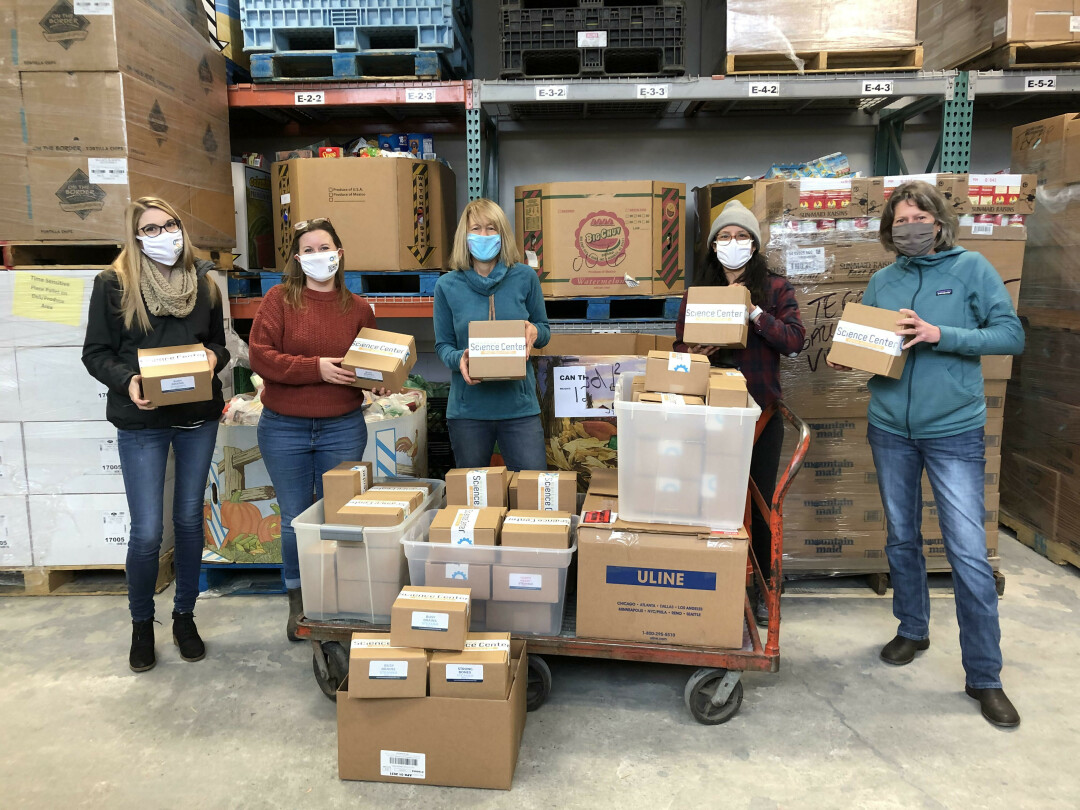
Montana Science Center, in partnership with Bozeman Health and the Gallatin Valley Food Bank has created take-home science kits to be provided to families throughout our community. 75 kits were delivered to the Gallatin Valley Food Bank on Friday, January 15th and will be distributed in January through the Food Bank’s education department. These STEAMkits focus on keeping the body healthy with a different topic for each of the kits. They are designed to encourage children in first through fifth grades to engage in science while at home through a series of hands-on activities.

“The pandemic has made it incredibly hard for families to engage in hands-on activities,” says Abby Turner, Executive Director. “We are fortunate to have the support of Bozeman Health to create STEAMkits that bring hands-on opportunities in STEAM to kids in their own homes.” STEAM stands for Science, Technology, Engineering, Art and Math. STEAMkits focus on the science of the brain, the heart and the skeletal system in three kits, filled with 4 activities each, including all of the materials needed to complete the activities. In the coming days, staff at Montana Science Center will also record videos of each of the activities as supplemental support for the STEAMkits.

“It is the goal of both Bozeman Health and Montana Science Center to lower barriers to access to community education tools,” Turner says. “This partnership allows us to create kits to be distributed to families in Bozeman regardless of their ability to pay. They also bring science information, healthy tips and learning through fun to youth in our community. In our partnership with the Gallatin Valley Food Bank, we are able to support families with school aged children in a meaningful way by providing activities for them to do at home.” Through this partnership, the kits delivered to the Food Bank will be available to youth at no charge. Additional kits are available at the Montana Science Center.

Bozeman Health’s Community Support Grant program provides them an opportunity to respond to requests and partner with eligible organizations, like Montana Science Center, whose work is aligned with Bozeman Health’s Community Benefit priority areas. Specifically, they strive to support programming, education, and access initiatives. These STEAMkits are aimed to bring engaging, healthy learning opportunities to families to connect healthy bodies and science discovery.

Additionally, Gallatin Valley Food Bank’s vision is to create a healthier, more resilient, food-secure community in which all of the members are empowered and have the means to nourish themselves. We will continue to advocate and support our community through our work, partnerships, and commitment to improving food security. Montana Science Center is fortunate to partner with the Food Bank to bring these science kits to youth through their educational programs.

The Montana Science Center is currently offering virtual, take-home and limited onsite programs. During the closure this summer, staff developed extensive COVID protocols and adapted the building for safe, interactive experiences while limiting visitation numbers. “Our goal is to provide purposeful experiences in science while supporting families as they stay healthy, either at home or within our space.”

Please contact the Montana Science Center for additional questions and clarifications. They can be reached at 406-522-9087 or info@MontanaScienceCenter.org

Add a Comment »

Saturday, Jan. 16th, 2021

HRDC Begins Scheduling for Ninth Year of Tax Assistance

HRDC is set to begin their ninth season of providing tax preparation services through their Volunteer Income Tax Assistance (VITA). Individuals and households with incomes of less than $57,000 are eligible for tax assistance through VITA.

HRDC’s VITA service will start on Monday, February 8 and go through Thursday, April 8, 2021. Appointments are required for tax assistance. In an effort to maintain social distancing guidelines and keep everyone safe, services will be a drop-off/pick-up model instead of face-to-face. Customers will get details when they schedule their appointment. In order to verify their identity, VITA customers must bring a photo ID and Social Security Card to their appointment. Customers must also bring all applicable tax documents for the 2020 tax year (Forms W-2, 1099, 1098, 1095-A/B/C, charitable contributions) including Notice-1444 and Notice 1444-B reporting stimulus payments. If individuals are seeking direct deposit for their refund or payment, they will need their bank account number and their bank’s routing number.

“VITA is one of the most effective ways to provide financial opportunity to individuals and families in our community. Of people we served last year, the average refund was around $1,800. That can mean a lot to a household,” says Marc Graham, HRDC Financial Opportunity Coordinator.

Those interested in receiving tax assistance should call the appropriate location for more information. For appointments in Bozeman, Belgrade, Gardiner, White Sulphur Springs, or at the MSU Vet Center, call 406-585-4848. For appointments in Livingston, call 406-223-4479.

For information about HRDC Volunteer Income Tax Assistance (VITA) service, visit https://thehrdc.org/financial-development/tax-assistance/. For more information about any other HRDC service, visit thehrdc.org.

Add a Comment »

Thursday, Jan. 14th, 2021

MSU students build device to help NASA study clogged pipes on space station


When Montana State University researcher Stephan Warnat wanted to help solve a longstanding problem on the International Space Station, he turned to a group of four mechanical engineering majors.

During a recent Montana Biofilm Meeting hosted by MSU's Center for Biofilm Engineering, Warnat learned from NASA scientists that microbial buildup sometimes clogs the space station's water pipes — a demanding challenge for astronauts to fix. A specialist in tiny sensors used to measure, among other things, water quality, Warnat wanted to study how the microbes grow. He just needed a research device that could simulate the microgravity of low Earth orbit.

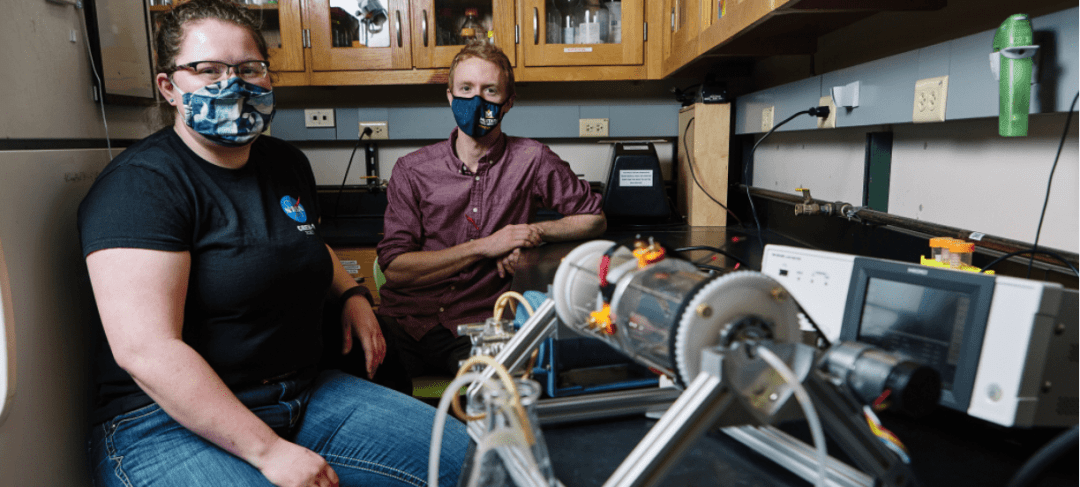
That's where the students came in. Working as a team over two semesters, they designed and built a working prototype of the device as their "capstone" project, the task that all engineering seniors must complete in order to graduate. The team included four seniors in mechanical engineering: Spencer Ball, Ryan Davis, Haley Ketteler and Connor Tappe. Ball, Davis and Tappe graduated in November.

Like a small rock tumbler, the tool they made consists of a section of pipe that slowly rotates to prevent microbes from settling with gravity. Fluid is passed through the pipe, and embedded sensors measure biofilm behavior.

"It's really, really cool," said Warnat, an assistant professor in the Department of Mechanical and Industrial Engineering in MSU's Norm Asbjornson College of Engineering.

The students presented the device to Warnat's collaborators at NASA in the fall. NASA is very pleased with the design and will use the device in future research efforts, Warnat said. In the meantime, NASA issued Warnat's research team a $100,000 grant that will support using the device to develop sensors for detecting biofilm growth in the space station's plumbing. Warnat will lead the project with MSU's Christine Foreman, professor in Department of Chemical and Biological Engineering.

Warnat said he wasn't surprised by the project's success because he had previously worked with MSU engineering students on four other capstone projects. The projects are structured around design challenges posed by private industry, national labs, organized events like the RoboSub competition and by university faculty.

"What I like is getting a group of young engineers who actually have a lot of experience but who have no idea about my research and come with open eyes to develop something new," Warnat said. "I actually had something completely different in mind for this device, but what they made is perfect."

MSU's engineering seniors have the technical expertise to construct things that faculty wouldn't be able to make themselves and that would be prohibitively expensive to purchase, according to Warnat. "Our students are well trained in our machine shop," which includes state-of-the-art, precision tools for cutting and shaping metal and other materials, he said.

For capstone team member Davis, the project was valuable experience with seeing a months-long, intensive design task through to the end.

"It put to work a lot of what we've learned in our classes," said Davis, who machined some of the components on a lathe and now works at a local manufacturing design business. Warnat "did a good job of presenting the project as something that was really worthwhile to him and other people, so we were motivated to work on it," he said.

Ketteler said the project harnessed her passion for space engineering and dovetailed with a virtual summer internship with NASA's Langley Research Center.

"It really challenged our thinking," said Ketteler, who handled all the electronics for the device. Warnat "gave us a starting point with an idea of what he wanted, but said, from then on, we had to design it and make the final decisions."

Working with a capstone team is a great opportunity for MSU faculty to advance a research idea and get it to a point where they can secure grant funding, according to Warnat, an associate faculty member of the Center for Biofilm Engineering. "This was a really good group," he said. "They didn't need a lot from me."

According to Robb Larson, associate professor of mechanical engineering and a coordinator for capstone projects, there's always a need for new capstone sponsors, and anyone interested in sponsoring a project can contact him.

Add a Comment »

Phone Scam Alert: Bozeman's Choice Plaques

PHONE SCAM ALERT


Once again an opportunistic company is attempting to scam Bozeman's Choice winners by CALLING and attempting to sell a plaque to display at your business.

Bozeman Magazine & Bozeman's Choice are in NO way connected to this

opportunistic company, we give away certificates to our advertisers and sell certificates to non-advertisers for $10.

If you are a 2021 winner and would like to order a certificate please do so here by Jan 29: https://bozemanmagazine.wufoo.com/forms/q5fq4kh08zxgnd/

Add a Comment »

News Comments