

Thursday, Jan. 28th, 2021

The Bozeman Symphony presents its first-ever Composer-in-Residence, Scott Lee

The Bozeman Symphony presents its first-ever Composer-in-Residence, Scott Lee, a dynamic composer who combines classical form with the more visceral rhythmic language of contemporary popular music. During his residency starting in May 2021, Lee has been commissioned by the Bozeman Symphony to write a piece inspired by the unique spirit and energy of Bozeman that will open the much-anticipated 2021 – 2022 concert season. In addition to this world premiere piece, Lee will engage with the community through multiple virtual events in February 2021.   

  
Never before, in the Bozeman Symphony’s 53-year-history, has the organization hosted a Composer-in-Residence to create a piece to premiere for the community. Music Director Norman Huynh is honored to introduce composer Scott Lee to the Bozeman community through a number of events during the remainder of the 2020 – 2021 concert season, including a virtual composers forum, an online composition masterclass, and a new contemporary music series, Current Commotion.  

  
“I’m thrilled to have the opportunity to come be a part of a flourishing musical community, which includes the Bozeman Symphony musicians, audience members, and patrons as well as the students and faculty at Montana State University,” said Lee. “As a composer with an outsider’s perspective on Bozeman, I hope to write a piece that will bring some fresh energy and new ideas that will invigorate the orchestra.”  

  
Lee will first be introduced to the Bozeman community during one of two virtual events via Zoom on February 11 and 12, 2021. Huynh will moderate the first online event, “Composers Forum: Turning Ideas into Music,” featuring Scott Lee and local composer Eric Funk. Together, they will discuss how composers take people, places, and ideas, and represent them through music. The following day, Lee will host the Bozeman Symphony’s Composition Masterclass at Montana State University for student composers to hone their craft and showcase their pieces of written music.  

  
Following the virtual events, Lee will start his residency in Bozeman on May 24 through May 31, 2021. During this time, Scott will experience everything the community has to offer – from the spectacular landscape to the incredible live arts scene – where he will derive inspiration to write his commissioned piece presented during the first concert of the 2021 – 2022 season.  

  
“I enjoy the outdoors, and it seems to me that Bozeman offers unparalleled access to all of the kinds of activities I love, like hiking, skiing, and fishing,” said Lee. “At the same time, it appears that there’s quite a thriving arts and culture scene in Bozeman, which I’m very excited to engage with and participate in.”   

  
On May 27, 2021, Lee will participate in the arts scene first-hand during the Bozeman Symphony’s new contemporary music series, Current Commotion, for the orchestra’s inaugural performance at a downtown music venue. Music Director Huynh and Lee curated the program in a cabaret-style format featuring musicians of the Bozeman Symphony.   

Lee will return to Bozeman for the world premiere of his piece during the first concert of the 2021 – 2022 season. 
  
For more information about the Bozeman Symphony’s Composer-in-Residence Scott Lee, season updates and events, please visit bozemansymphony.org, or contact the symphony office at (406) 585-9774 or info@bozemansymphony.org. The Symphony wishes to thank David Ross and Risi for their season sponsorship and the season subscribers, donors, and patrons who have provided support this 2020 – 2021 concert season. 
  
Scott Lee, Composer: Praised as “colorful” and “engaging” (The Philadelphia Inquirer), Scott Lee's music often takes inspiration from popular genres, exploring odd-meter grooves and interlocking hockets while featuring pointillistic orchestration and extended performance techniques. His music marries the traditional intricacy of classical form with the more body-centered and visceral language of contemporary popular music, creating complex music of the present with broad appeal. The Berkshire Edge described the world premiere of his Slack Tide at Tanglewood Music Center as having “moments both of calm and maximum tension...we’ve never heard anything like it.”  

 
Lee has worked with the Baltimore Symphony Orchestra, the North Carolina Symphony, the Portland Symphony Orchestra, Symphony in C, the JACK Quartet, yMusic, the Da Capo Chamber Players, and pop artist Ben Folds. Recent commissioners include the Tanglewood Music Center, Aspen Music Festival, Atlanta Symphony Youth Orchestra, loadbang, and the Raleigh Civic Symphony. Notable honors include a Charles Ives Scholarship from the American Academy of Arts and Letters and two ASCAP Morton Gould Young Composer Awards.  

 
Lee is currently Assistant Professor of Composition at the University of Florida School of Music. Lee earned a PhD in Composition at Duke University, and also holds degrees from the Peabody Institute and Vanderbilt University. Learn more at scottleemusic.net. 
 
  
Eric Funk, Composer: A former student of Tomas Svoboda, Sandor Veress, and Krzysztof Penderecki in the 1970s, Mr. Funk has composed numerous works, including nine symphonies, four operas, six ballet scores, three large works for chorus and orchestra, nineteen concertos, several orchestral tone poems, and numerous works for chamber ensembles, solo instruments, and vocal works. Eric Funk just completed a new solo violin work entitled "Melisma, Op 147," homage and farewell to our dear friend Andre Melief, the recording by Vilmos Olah can be heard on the works/recording page of this site.  Prominent premieres of his works include “From the Dreams of Montana Children” [Carnegie Hall, NY]; his one-act solo opera-ballet for contralto and ballet troupe, "Akhmatova," based on key texts from the Russian poet's life; his solo concerto "Vili: Concerto for the Violin Alone, Op 109" (now an award winning PBS-TV documentary "The Violin Alone,"  was awarded six 2018 Emmy Awards: "Music Composition," Best Documentary-Cultural, Director, Photography, Editing, Audio; "Best Documentary" 2017 Chicago Amarcord Arthouse Television Awards,) triple string quartet (The Old Masters,) commissioned by New Music USA for the Cassatt String Quartet, and "Variations on a Theme by Jan Hanus, Op. 127" for violin and string orchestra which was awarded The American Prize in Composition Special Judges' Citation as "Best Concerto of the Year" 2017.  His newest commissioned score, a piano trio "Les Soeurs, Op. 142" was written for the renowned Ahn Trio and the James Sewell Ballet Company and premiered in Minneapolis in 2017. Funk most recently created a transcription for piano trio for the Ahn Trio of his 3 BeBop tunes: Flyswatter, Raid, and Deet. Learn more at ericfunk.com 
Add a Comment »

City of Bozeman set to distribute over 2.1 million dollars in Coronavirus Relief grants to local non-profits

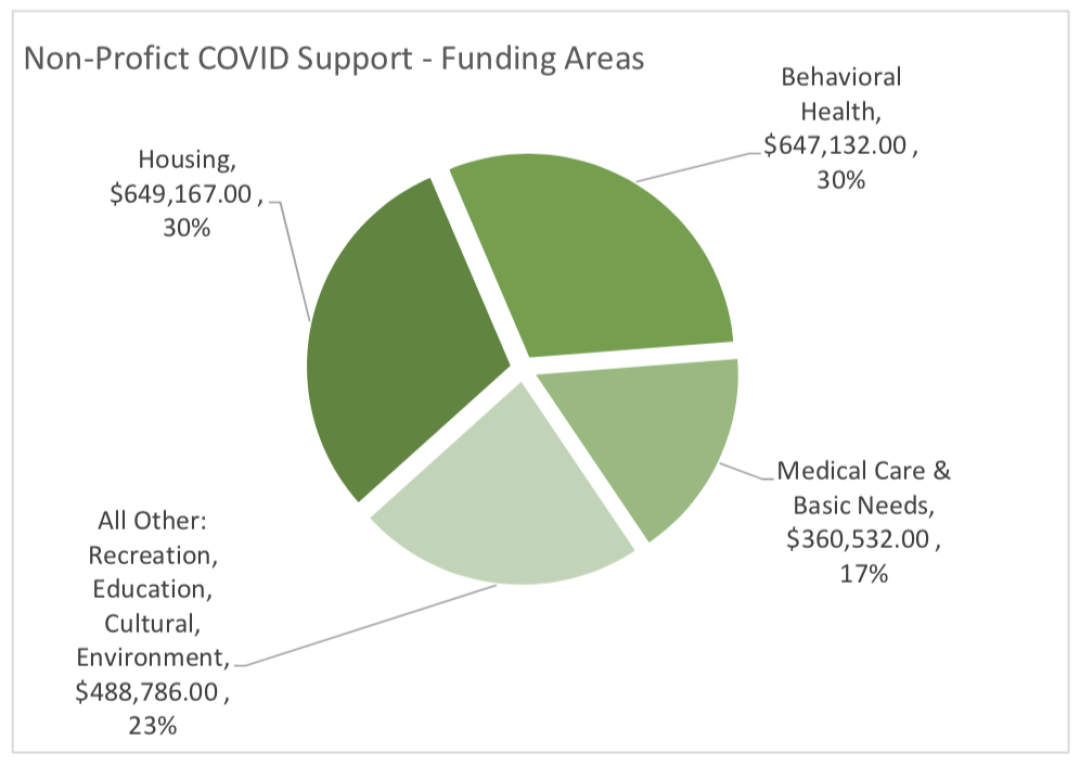
The City of Bozeman City Commission is expected to review $2,145,167 dollars in total grant awards to Bozeman non-profits on Tuesday, February 2nd at their regular meeting. If approved, the recommended grant awards would distribute Coronavirus Relief funding to 48 different grants.  Of the grant dollars being allocated more than three-quarters of the total funds are expected to be allocated toward housing, medical/basic needs, and behavioral health service providers and programs.

 
In November 2020 the City Commission approved Resolution 5230 which allowed for the funding of grants to non-profit entities. The funds used for the grants are from the State of Montana’s reimbursement program from the Coronavirus Relief Fund. Currently, the $2,145,167 recommended grant amount will distribute the entire amount of funding made available to the City by the State. 

 
City Manager Jeff Mihelich says, “The Bozeman community is still hurting from the effects of this pandemic. We know that it’s critical to get money to those needing it most. Our choice as a City is to get support directly to those folks most impacted by intentionally and strategically getting money to our non-profits.”

 
Assistant City Manager Anna Rosenberry adds, “We are proud to recommend grant distributions in support some of our most critical sectors like housing and health care. Funding grants that provide things like new behavioral health emergency rooms, assistance for those experiencing housing challenges, and even supporting additional affordable housing projects – these dollars will go a long way.”

Applications for the grant dollars were accepted in December and were open-ended for non-profits impacted by the pandemic. Grant applicants were evaluated primarily on how their services impact Bozeman residents. Application materials can be found online. A full breakdown of the primary categories receiving funding is below.
 
If approved the City will move forward to engage all applicants in a grant agreement. Applicants will be required to adhere to non-discrimination in service delivery under the City’s non-discrimination code, acknowledge equal pay requirements, commit to operate within accordance with local, state and federal health rules for COVID-19, and report back to the City on use of funds.

Add a Comment »

Need a COVID-19 test for travel?


Need a COVID-19 test for travel? If you must travel, we encourage you to TRAVEL SAFE, TRAVEL SMART. Call the Bozeman Health COVID-19 Hotline at 406-414-2619 to get an order for a travel test. Travel testing is available at the efficient and convenient Bozeman Health Deaconess Hospital drive-thru testing site from 8:30 a.m. to 1:30 p.m. Monday - Friday. For the most up-to-date information CLICK HERE.

Add a Comment »

Montana State’s Dana Longcope wins Arctowski Medal for contributions to solar physics


Montana State University physicist Dana Longcope was awarded the National Academy of Science’s Arctowski Medal on Thursday. The medal, given every other year, is a recognition of significant contributions to the study of solar physics. Awardees are nominated by peers in the field.

“What I really love is doing the work,” Longcope said. “But to know my colleagues all around the world, all around the country find it worthwhile, it’s very humbling that they found my work to be of that caliber,” Longcope said.

Longcope, who is the head of the Department of Physics in the College of Letters and Science, conducts theoretical research into the storage and release of magnetic energy around the sun. It is same the type of energy that leads to solar flares and the solar winds that cause the northern lights.

A nomination letter from Department of Physics colleagues Charles Kankelborg, Jiong Qiu and Neil Cornish describes Longcope as a “creative and prolific physicist” whose work has had widespread impact.

“It’s bringing order to the chaos,” Cornish said. “He is able to come up with these elegant models to describe the essential physics of the sun.”

Longcope helped define the nature of the sun’s magnetism by creating a framework for the rope-like bundles of magnetic field lines known as thin flux tubes that permeate the sun. By outlining the basic structure of the system and developing fundamental equations of motion for the flux tubes, Longcope’s work explained how the tubes move and store magnetic energy around the corona, the outermost part of the sun’s atmosphere.

Kankelborg pictures this topology as a sort of wiring diagram, or “a map made out of spaghetti.”

“If you know where everything is connected and if you know whether this magnetic field wraps around that one on the way to the other pole where it’s anchored, then you know the overall configuration and it tells you something about the storage of energy,” he said.

This framework led to a three-dimensional, unified picture of a phenomenon called magnetic reconnection, wherein Longcope describes how the movement of these flux tubes — and breaking and rejoining of the magnetic fields inside — releases massive amounts of energy and predicts how energy could be released in a solar flare based on the magnetic fields on the surface.

“He brought the theory and the observations together, which is a tremendous achievement,” Kankelborg said. “Every theoretical physicist wants to not have just a pretty theory but to be able to make predictions about things you can actually measure.”

This research has research helped hone solar flare forecasting. Right now, scientists can calculate when high-energy particles from solar eruptions may reach Earth, but not their trajectory. While effects like the aurora are celebrated, these solar events may interfere with technology like wireless communication and GPS. Geomagnetic storms can also impact air travel and the electrical grid. In his former role as head of the American Academy of Sciences Solar Physics Division, Longcope briefed congressional offices on the importance of space weather.

Longcope, who has always loved puzzles, sees physics as the fundamental explanation for how the world works. Looking out the window of his office on campus, he can see the clouds moving over the Spanish Peaks and knows the various forces that control their movement. He contemplates the physics of the mundane – such as water flowing though a faucet – and keeps asking questions.

“It’s wonderful to be able to pose a question for yourself and then figure out the answer and realize you’re the first person to have ever answered that question,” Longcope said.

Longcope received his bachelor’s degree from Cornell University in 1986, where he started studying the physics of plasma, a fourth state of matter where gases become so hot their atoms are torn apart. He stayed at Cornell for graduate school, receiving a doctorate in applied physics in 1993 and parlaying an interest in plasma to researching its most dramatic example: the sun’s atmosphere. Aside from the inherent drama of solar flares, Longcope said he is drawn to the counter-intuitive nature of their energy release.

“You wouldn’t think that suddenly the sun would be producing 50 million Kelvin plasmas when the surface is only 5,700 Kelvin,” he said, referring to the unit of temperature measurement used by solar physicists.

After post-doctoral research at the Courant Institute of Mathematical Sciences at New York University and the University of California, Berkeley, Longcope was recruited to MSU’s budding solar physics group by Loren Acton, who is now a professor emeritus. Longcope joined the faculty in 1996, drawn, he said, by a desire to pass on knowledge to younger scientists while conducting research amidst an esteemed group of colleagues.

Even now, a solar physics group is a rarity in American academia, Longcope said. In his time at MSU, Longcope has taught a wide variety of physics courses, from quantum and classical mechanics to mathematical physics and electricity and magnetism. He also currently co-leads NASA’s Heliophysics Summer School in Boulder, Colorado, and is helping the school go virtual for this year’s students.

“Dana is such a broad and profound physicist, but he’s motivational too,” said Qiu, who has been a member of the solar physics group since 2005. “He’s really very modest and always promoting others. I’m really impressed by that. It makes MSU such a good place.”

As a young professor and researcher, Longcope merited a National Science Foundation Faculty Early Career Development (CAREER) grant in 1997. In 2000, it was the Presidential Early Career Award for Scientists and Engineers (PECASE), and in 2003, he earned the Karen Harvey Prize from the Solar Physics Division of the American Astronomical. In contrast, the Arctowski Medal honors his body of work.

The Arctowski Medal was established in 1958 to honor Polish-American meteorologist and Antarctic explorer Henryk Arctowski and recognizes “outstanding contributions to the study of solar physics and solar terrestrial relationships,” according to the National Academy of Sciences. The medal is now given every two years, along with an award of $100,000 plus a $100,000 grant to support research.

Longcope and other award winners will be honored in a virtual ceremony during the National Academy of Sciences' 158th annual meeting April 24-26. The National Academy of Sciences is a private, nonprofit institution established under a congressional charter signed by President Abraham Lincoln in 1863. It recognizes achievement in science by election to membership, and provides advice to the federal government and other organizations.

Add a Comment »

HRDC, Thrive and Erin Goff, Sales Associate at Berkshire Hathaway of Bozeman, Partner to Spread the Love

HRDC and Thrive are proud to partner with Erin Goff, Sales Associate, Berkshire Hathaway HomeServices Montana Properties for the Spread the Love community spirit-raiser.

Community members are encouraged to pay what they can for signs and put them in the yards of friends as a surprise or place one in the yard of a neighbor as a gesture of kindness. Included with the sign is a door hanger that can be personalized to recognize the recipient. To learn more or purchase a sign, visit https://give.classy.org/STL.

Pop-up locations to purchase signs will occur at the following times and locations in Bozeman:

  • ●  Friday, January 29, 4:30 pm to 6:00 pm at 2001 Stadium Drive, Berkshire Building (Drive thru)

  • ●  Saturday, January 30, 10:00 am to 2:00 pm at Wild Crumb, 600 N Wallace Ave

  • ●  Friday, February 5, 5:00 pm to 7:00 pm at the Berkshire Hathaway Downtown Office, 37 S   
         Wilson

  • ●  Saturday, February 13, 2:30-5:30 pm at the Bozeman Public Library parking lot (Drive thru)

    Community members may also pick up signs at the north side door of HRDC, 32 S Tracy Ave, from Monday, February 1 through Friday, February 12 from 10:00 am to 2:00 pm. Signs are also available at HRDC’s Livingston Office at 111 S 2nd St on Tuesday, February 2 through Friday, February 5, and Tuesday, February 9 through Friday, February 12 from 10:00 am to 2:00 pm.

    “It’s a sweet, simple, and safe way to brighten someone’s day and all proceeds benefit HRDC and Thrive, organizations that connect people in our community with needed resources and support,” says Robin Mayer, HRDC Special Events and Marketing Manager.

    “We are thrilled to be a part of this special campaign and know that after everything the past year has brought, we could all use a boost,” says Brittany Eilers, Thrive Business Partnerships Officer.

"I am grateful we have such phenomenal resources in Bozeman such as Thrive and HRDC, to support the needs of our community. The Spread the Love Campaign is a simple way to create connection and bring joy to everyone in these uncertain times in which so many of us have felt isolated and alone. I invite everyone to join in spreading the love," says Erin Goff, Sales Associate, Berkshire Hathaway HomeServices Montana Properties.

For information about HRDC, visit thehrdc.org. For information about Thrive, visit allthrive.org/. For information about Berkshire Hathaway HomeServices, visit bhhsmt.com/.

Add a Comment »

An expert on the effects of war, MSU’s Wilmer now studies those who work for peace


Montana State University political science professor Franke Wilmer had spent many years studying war and its effects on human rights until a chance meeting in Bozeman turned her research toward those who effectively work for peace.
 
Wilmer will speak about successful efforts to build peace in the West Bank, one of the planet’s most war-torn locations, during the next MSU Provost’s Distinguished Lecturer Series. Her free lecture, “Breaking Cycles of Violence in Israel and Palestine: Empathy and Peacemaking in the Middle East,” will be available online beginning at 7 p.m. Feb. 9.

Provost Bob Mokwa said Wilmer was invited to deliver the lecture because her work is emblematic of the tripartite principles of the university’s land-grant mission.
 
“She brings to the classroom the same attributes that have made her an internationally recognized scholar,” Mokwa said. “Dr. Wilmer emboldens our students to think critically, to be inquisitive and to consider local impacts of global issues and what it means to be an engaged, informed citizen.”
 
Wilmer, a professor in the Department of Political Science in the College of Letters and Science, has long studied war criminals in Bosnia as well as women’s and Indigenous rights around the globe, writing several books on those topics. However, a reception at her rabbi’s Bozeman home in 2016 for Israeli peace negotiator Gershon Baskin led Wilmer to turn from the study of the causes of violence to think about the causes of peacemaking. Baskin is a mediator and the founder of the Institute for Education for Jewish Arab Coexistence. He was a key negotiator between Hamas and the Israeli government for the release of Israeli soldier Gilad Shalit, who was held by Palestinians for five years.

 
Meeting Baskin prompted Wilmer to wonder: If some people were drawn to violence, why are others drawn to peace, even in the most complex situations? And how do they achieve it?
 
“I had been interested in why people do bad things, but these people made me think about people who resist violence and political conflict,” she said. “It got me curious.”
 
That question led Wilmer to make five research trips to Israel in four years where she spent considerable time in the West Bank. During one of those visits to Tel Aviv, machine gun fire rang out as she was having dinner at a nearby restaurant. Yet, despite the strife, she found the people there to be universally generous, kind and caring and hospitable.

Baskin suggested that Wilmer contact the Parents Circle Family Forum, a group of parents and families of both Israeli and Palestinian children killed in the conflict who work for peace rather than revenge. Despite their extreme personal loss, group members were willing to work together across ethnic groups to work for a lasting peace.

 
Wilmer’s book on the topic, “Breaking Cycles of Violence in Israel and Palestine: Empathy and Peacemaking in the Middle East,” was published this month by Lexington, Rowman and Littlefield. Wilmer said her work has made her believe that empathy and moderation on both sides is one of the keys to solving the conflict.

“I don’t think people know how empathic these peace activists on both sides are,” Wilmer said. She said three chapters of her book are their personal stories. “Their stories can bring tears to your eyes.”
 
She said that in talking to the peace activists, who have all experienced great loss, she realized that nonviolent solutions really can work.
 
“Empathy is central to this work,” she said. She said that even though we live in a society of insults and injuries, for peace to be made, both sides must be empathetic to the lives of those on the other side.
“You have to realize you can never really walk in someone else’s shoes, but …making the effort is what touches another person.”
 
Wilmer said that while the book is an academic resource, she also hopes that it inspires students, scholars and activists working for peace. And while the work is based in the war-torn Middle East, Wilmer said she thinks it has universal application, including to the divisions in contemporary American society. She hopes that it may provide guidance for people who are identified with a group ethnically and culturally to overcome victimization and transform their thinking about themselves, as the nonviolent peace activists from the Middle East have done.

 
To that end, last fall Wilmer worked to bring her work to MSU when she partnered with the MSU Leadership Institute to livestream from the West Bank the webinar Enemies to Allies: A Rabbi and a Palestinian Activist.”
“Breaking Cycles of Violence in Israel and Palestine” is Wilmer’s fourth book. Her previous books are: “The Indigenous Voice in World Politics,” “The Social Construction of Man, the State and War: Identity, Conflict and Violence in Former Yugoslavia” and “Human Rights in International Politics.”
 
In addition to her academic work, Wilmer previously served in the Montana House of Representatives, and she is a past chair of the Montana Human Rights Commission. She also was a co-founder of the Gallatin Valley Human Rights Task Force.
 
A graduate of the University of Maryland, where she received her doctorate in political science, Wilmer has taught at MSU since 1991 and travels extensively internationally speaking about human rights.
 
For more information about Wilmer’s upcoming lecture or the Provost Distinguished Lecture Series, go to: montana.edu/pdl/.

Add a Comment »

Friday, Jan. 22nd, 2021

What Are the Most Common Pests Found in Bozeman?

Bozeman, Montana is a unique American city in that it is a large urban area bordered by vast, barren wilderness. This has the unique effect of forcing many types of nuisance animals into the city of Bozeman to look for food, shelter, and warmth. Since this city in the American West is so unique, there might be some surprising pests located there. Continue reading to find out more about what the most common pests found in Bozeman are.

Ticks
Obviously, ticks were going to make the list. These arachnids are found in many locations in the United States. Ticks are capable of spreading a wide variety of diseases to humans. Some of these diseases include Lyme disease and Rocky Mountain spotted fever.

Rats and Mice
Rats and mice are found throughout the urban areas of America and Bozeman is no different. These rodents spread many diseases through direct bites, their droppings, and food contamination. Some of the diseases they spread can potentially kill humans. In addition to their health risks, rats and mice also cause a lot of damage within buildings. They will chew on wires, creating fire hazards, chew up insulation which causes decreased energy efficiency, and they will even chew through wood, weakening structures.

Raccoons
No city would be complete without having a raccoon population running around. Bozeman has many raccoons around town, due to the wide variety of easy food sources commonly found by restaurants and homes. Raccoons have the potential to cause a real mess and serious damage to your property, due to their nature of getting into virtually anywhere to find food. In addition, raccoons carry several different diseases including rabies and raccoon roundworm.

Opossums
The opossum is best-known for its ability to “play dead”, but there is actually far more to understand about this creature. They often wander around urban areas in search of some kind of food they can scavenge. In addition, they may be looking for a warm place to stay during the cold months. Opossums carry diseases that can be harmful to humans and their pets, so people should definitely be cautious around these critters.

Birds
There are all kinds of pest birds that can be found in Bozeman. These birds primarily spread diseases through the droppings that they leave everywhere. In fact, birds have been found to carry roughly 70 different viruses and bacteria in their droppings, most of them very dangerous to human health. In addition to the diseases they carry, their droppings can cause corrosion of metals and potentially cause the catastrophic failure of any weight-bearing metal structures.

Fox
Since Bozeman is located in Montana, it is no surprise that foxes are often seen in town. Foxes generally stay close to humans so that they are not pursued by larger predators, such as coyotes and mountain lions. Foxes generally do not present harm to humans, although they could be aggressive if they have rabies or if you have small children or pets.

Coyotes
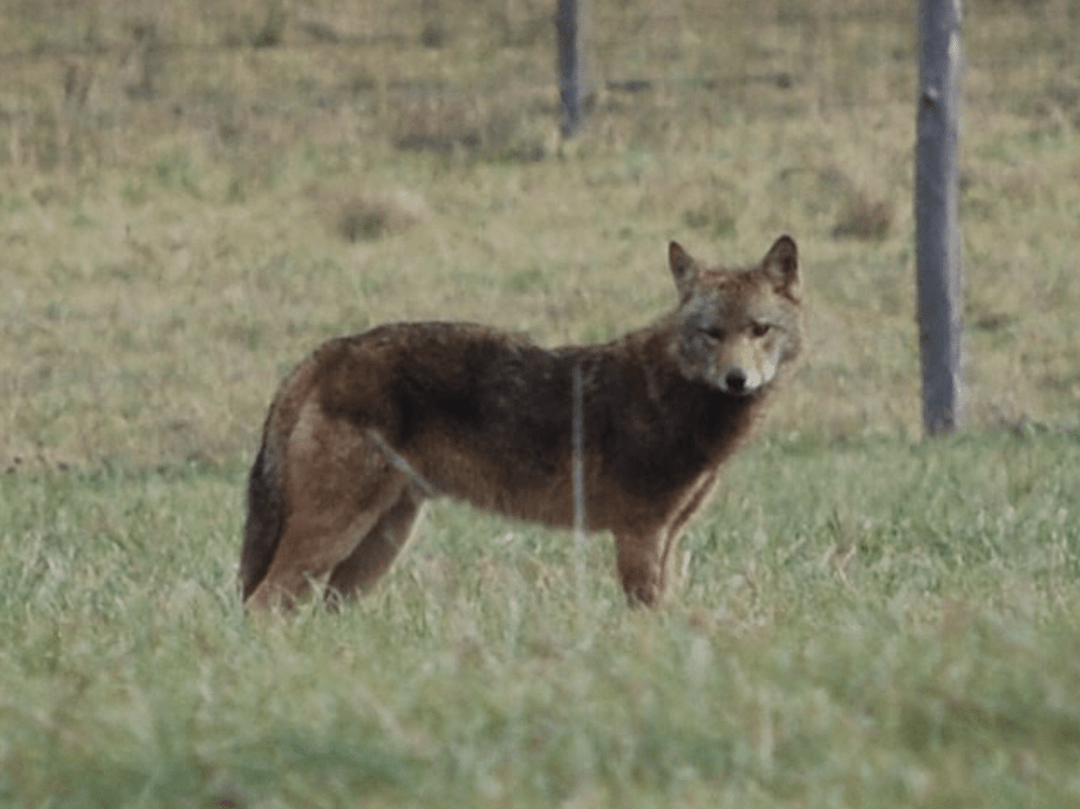
The coyote is seen less often than the fox, but it happens once in a while in Bozeman. Coyotes often come near urban areas in the search of food. If you have any chickens or small livestock, they may present a direct threat to them. In addition, any small children or pets should also be kept away from coyotes. Coyotes can sometimes have rabies, making them more aggressive, which can be serious to humans.

Snakes
Snakes commonly make their way into Bozeman, due to the abundance of prey for them to eat. While rare, the prairie rattlesnake is Montana’s only venomous snake, so there should be great caution exercised around any snakes that look remotely close to the rattlesnake. Every other snake presents little harm, as even if they bite a human, the worst thing that could happen would be an infection that should be easily treatable with antibiotics.

Comments 3

Montana State expands asymptomatic testing for students living on campus

Montana State University announced that it will extend free asymptomatic COVID-19 testing for students living on campus beyond the first two weeks of spring classes. 

The tests are offered by appointment at MSU’s Student Testing Center near Bobcat Stadium. Only students living in the campus residence halls are eligible for asymptomatic testing, though any student showing symptoms of the virus can also receive a free COVID-19 test at the site without an appointment or referral.

The asymptomatic tests were originally offered only for the first two weeks of classes, but supplies of test kits will allow the testing to be offered beyond that period. MSU is encouraging residence hall students to schedule tests regularly, even on a weekly basis. 

Both symptomatic and asymptomatic testing for students complement the other precautions already in place on campus to reduce the risk of COVID-19, including a campus-wide face mask requirement, strict social distancing in MSU’s classroom and laboratories, and the distribution of personal Clean 'Cat Kits to all students, faculty and staff. 

More information about COVID-19 and Montana State University is available at montana.edu/coronavirus.

Add a Comment »

Thursday, Jan. 21st, 2021

“Savage Ancient Seas” exhibit at Museum of the Rockies to open Jan. 23


Massive marine creatures will be the focal point of the new changing exhibit at the Museum of the Rockies. Opening on Saturday, Jan. 23, “Savage Ancient Seas” will feature more than 30 prehistoric casts and real fossils from specimens that lived in North America as far back as 70 million years ago.

The exhibit will be staged as an ancient aquarium, with some fossils and casts suspended from the ceiling. Many of the specimens will be on display in Montana for the first time.

Highlights of the exhibit include:

  • A 45-foot long Bunker Tylosaurus
  • An Archelon, one of the largest sea turtles to have lived, sporting a 17-foot flipper span.
  • Pteranodon, with a wingspan more than 20 feet.
  • Xiphactinus, also called the X-fish, one of the largest bony fish from the Western Interior Sea. The specimen on display exceeds 20 feet.
  • An Elasmosaurus, the largest species of the long-necked plesiosaurs. The specimen in display is over 40 feet long, and its neck, which is 23 feet long, has more than 70 vertebrae.

At educational kiosks around the exhibit, museum visitors can learn how these creatures lived and became extinct. Visitors can also learn how they sank to the bottom of the sea when they died and turned into fossils amongst layers of sediment.

“Savage Ancient Seas” will run until May 2 and is open daily 9 a.m. to 4 p.m. The exhibit is included in admission and children under the age of four are free. The museum has limited daily admission capacity due to COVID-19 restrictions and face masks are required. More information on visitation policies can be found at https://museumoftherockies.org/visit. For more information on the exhibit visit museumoftherockies.org.

Add a Comment »

Monday, Jan. 18th, 2021

Snapology Debuts New Community STEM Program in Helena and Bozeman


A new fun and educational children’s enrichment program debuting in the Helena and Bozeman area is filling the increasing demand for high-caliber STEM education. Snapology, the No. 1 ranked children’s STEAM franchise is opening its newest location in Helena.

Snapology is a kid’s enrichment franchise that encourages social skills and teamwork, by teaching science, technology, engineering, art, math and literacy concepts. The brand uses research-based curriculum, designed to be inclusive to all learning abilities and adaptable to students at any grade level– be that gifted, traditional and special needs students. With a hands-on teaching approach that uses LEGO® Bricks and other building toys, along with coding, video game design and robotics, the company offers kids the perfect mix of play, academic enrichment and social development.

Snapology’s newest Helena location is owned and operated by local entrepreneur Stephanie Scott. Stephanie is also a full time educator who felt the need to expand her impact on children in her community by offering additional play-based learning opportunities.

“I am so excited to bring this amazing resource to kids in our community,” said Ms. Scott. “STEAM education is such an essential part of a child’s development. Whether they want to go into technology or not, we hope to develop critical thinking, creativity and teamwork skills so that our kids can grow up to be whatever they want to be.”

Snapology of Helena will not operate out of a traditional brick and mortar location. Instead, Scott and her team will bring more than 80 enriched and interactive programs directly to the community, traveling to schools, community centers and private events where they will set up your choice of classes or creative play. The company even offers virtual programming for those who are not quite ready to be back in person. Snapology of Helena can accommodate partners by structuring workshops, camps, creative play sessions or private parties.

Snapology was founded in 2010 by sisters Lisa and Laura Coe. The pair ​came up with the idea for their business after seeing the love their children had for creative play using building blocks. As STEM professionals with business expertise, the pair were able to successfully launch the Snapology concept in their home-base of Pittsburgh. Since then, the brand has grown to more than 150 locations across the United States, Canada and the world.

For more information about the Helena Snapology location and its services, please visit snapology.com/location/helena​, their ​Facebook Page​ or call 406-282-8868.

ABOUT SNAPOLOGY​:
Founded in 2010, Snapology is the #1 STEAM franchise in the country, giving children the opportunity to learn through play through more than 80 enriched, interactive STEAM and STEM programs. With nearly 150 locations in the U.S., Canada, Australia, China, Vietnam, Haiti and more. Snapology is quickly growing, offering a best-in-class investment for qualified prospects. For more information about Snapology including franchise opportunities, please visit ​https://www.snapology.com/

Add a Comment »

News Comments