


Tuesday, Jun. 1st, 2021

MSU researchers develop CRISPR-based coronavirus rapid test


While the coronavirus pandemic has proven once more that the tiniest germ can upset global civilization, a Montana State University team has responded by illustrating that ancient strategies used by bacteria to battle viruses can be repurposed into transformative technologies.

Leveraging his lab's expertise in the bacterial immune system called CRISPR, MSU researcher Blake Wiedenheft turned the urgency of the first wave of COVID-19 last spring into an opportunity to develop a more rapid and sensitive virus test. Now, roughly a year later, his team has demonstrated that the new diagnostic tool can accurately detect even relatively small amounts of coronavirus in patient samples in less than 30 minutes and sometimes in as little as one minute. The work was recently published the journal Cell Reports Medicine.

"The coronavirus revealed the limitations of our standard diagnostic tools, which are relatively slow and expensive," said Wiedenheft, associate professor in the Department of Microbiology and Cell Biology in MSU's College of Agriculture. "The fact that a bacterial immune system could be repurposed to address those shortcomings is remarkable."

The technology could also be used against other viruses such as Zika and Ebola, Wiedenheft added. "We intend to continue to develop this into a superior diagnostic tool that could really help patients and be an important contribution in the fight against disease," he said.

The technology is based on a Type III CRISPR system, which, in bacteria, monitors for viral invasion. CRISPRs work like molecular homing devices that search and destroy the genetic material of viruses, but the Type III CRISPR systems that Wiedenheft's team is studying have an additional feature that made them well-suited for repurposing into a diagnostic tool, according to Andrew Santiago-Frangos, lead author of the study and a postdoctoral researcher in the Wiedenheft lab. When Type III CRISPRs bind to their viral targets, they undergo a structural transformation akin to lighting a signal flare, he said. That flare is detected by various other CRISPR molecules, which then destroy the virus.

Santiago-Frangos isolated the Type III CRISPR complex from bacteria and reprogramed it to recognize segments of the coronavirus genome. By understanding how the CRISPR system generates the molecular flare, the team was able to design three different chemical reactions, two of which result in color changes that can be seen with the naked eye, Santiago-Frangos said.

Working alone in the lab because of COVID-19 precautions in the early weeks of the pandemic, Santiago-Frangos saw a test solution turn from purple to orange, the first proof they were onto something. "There was a lot of excitement," he said.

Other scientists had previously demonstrated that related CRISPR systems called Cas12 and Cas13 could be repurposed to detect Ebola and Zika. Those tools have proven valuable, but the intrinsic signal amplification provided by the molecular flare of Type III CRISPRs may provide additional advantages, Wiedenheft noted. Type III CRISPRs hadn't been previously used for diagnostics, he said.

CRISPRs are perhaps best known for Cas9, which has been repurposed into a precision genome-editing technology that is rapidly reshaping medicine, enabling previously unthinkable cures for genetic diseases and the promise of overcoming cancer. The 2020 Nobel Prize in Chemistry went to University of California, Berkeley, professor Jennifer Doudna for her role in pioneering that technology. Wiedenheft worked in Doudna’s lab from 2007 until he joined MSU's faculty in 2012.

The breakthrough of turning Type III CRISPR systems into a rapid diagnostic tool "is more evidence that CRISPRs are versatile and powerful platforms for biotechnology," Wiedenheft said. Adding to the excitement, "we can reprogram these systems overnight to recognize other viruses like Ebola or influenza."

The next steps in making the technology useful are streamlining and packaging the chemistry into a form that can be administered in a medical setting, he said. The technology is in the process of being patented by MSU and licensed it to a local startup company, VIRIS Detection Systems, that is currently working on Food and Drug Administration authorizations. The company hopes to roll out the CRISPR-based test later this year. Wiedenheft is the founder of VDS and an inventor on patent applications related to the technology.

"Being from Montana and knowing about our rural areas around the state that don't have easy access to the usual diagnostic equipment, it's been really cool working on this project," said Laina Hall, a senior with a dual major in biochemistry and microbiology who worked closely with Santiago-Frangos. "It's given me a new perspective on science, working on something that can lead to applications that can help people."

Hall is a co-author on the paper with Pushya Krishna, a senior and dual major in English literature and cell biology and neuroscience; both are among MSU's four winners this year of Goldwater Scholarships, the nation's premier scholarship for undergraduate students pursuing research careers in the natural sciences, mathematics and engineering.

Other co-authors of the paper include, in the Wiedenheft lab, postdoctoral researchers Anna Nemudraia and Artem Nemudryi; research assistant Helen Lee; graduate students Calvin Cicha and Tanner Wiegand; and undergraduate researcher Ava Graham; and other Department of Microbiology and Cell Biology faculty Jodi Hedges, assistant research professor; Mark Jutila, Regents Professor; Deann Snyder, research associate; Royce Wilkinson, research associate; Matthew Taylor, associate professor.

Add a Comment »

Happy Trash Can Makes Composting More Accessible

photo credit Kene Sperry

Bozeman, Montana: New Drop-Off Service

Happy Trash Can Composting has announced a new drop-off spot (located at Co-op West Main) for their existing or new customers.

Owners Ryan Green and Adrienne Huckabone have long offered curbside pick-up. However, some folks live outside the pick-up zone, don't have a need for the service or have budgets that make this option unobtainable, including a new "pay-what-you-can" subscription option.

All drop-off subscribers receive a 5-gallon bucket to collect into, compostable liners and can get free compost each month.

In an effort to make composting accessible to more people, the Community Food Co-op is partnering with Happy Trash Can to provide a drop-off location at Co-op West Main. The store has marked bins located on the far west side of our parking lot.

“We are excited to provide this drop-off service to help expand composting in our community,” said Marketing Manager Alison Germain. “Not only does it reduce food waste, but high-quality compost supports local soil health.”

To sign up for drop-off composting, interested customers can contact Happy Trash Can directly.

"Our goal with the drop-off program is to make composting accessible to many in our community," said Ryan. "Our mission is to make diverting food scraps from the landfill as easy as possible. Not only does this reduce waste, but also allows us to create quality compost for local agricultural soils and backyard gardens." 

In addition to the drop-off service, the Co-op has partnered with Happy Trash Can since 2016 to pick-up and compost food and packaging waste. The two businesses have been able to divert 250,000 gallons from the landfill to date!

Add a Comment »

Sunday, May. 30th, 2021

Safe Routes Partnership Selects HRDC to Help Improve Local Park Access

HRDC, in partnership with the Western Transportation Institute and the City of Bozeman, was recently selected and awarded the opportunity to join Safe Routes to Parks Activating Communities, a technical assistance program focused on improving safe and equitable local park access. As part of the program, Bozeman, MT will be among seven diverse communities across the country to receive training and coaching from the Safe Routes Partnership to develop and implement an action plan for improving active travel to local parks and green spaces. The initiative is funded by The JPB Foundation.

Safe Routes to Parks initiatives work to improve safety and security for people walking, bicycling, and rolling to parks and green spaces. This need is especially pronounced in neighborhoods and communities lacking the infrastructure to support safe walking and bicycling. The Safe Routes to Parks Activating Communities program aims to remove barriers that make it hard for people to enjoy the physical, social, and mental health benefits that parks offer and proactively work toward ensuring safe, secure access to parks and open spaces. Over the long term, with increased safety and accessibility, Safe Routes to Parks seeks to increase park usage and improve health for people of all ages, races, abilities, and income levels.

The City of Bozeman’s Parks & Recreation Department, in partnership with the City’s Transportation Department, is embarking on an update of the Parks, Recreation, Open Space, & Trails plan as well as developing and implementing the City’s first-ever Active Transportation Plan. These plans will direct the work of the Parks & Recreation Department and Active Transportation planning for the next ten years. As part of the process, community engagement and input are key components of the Safe Routes to Parks Activating Communities.

The HRDC is excited to embark on the development of a pilot community liaison program. The goal of the community liaison program is to increase access and engagement for all folks who live, work, or play here in Bozeman. Liaisons will serve as the connector between different typically underrepresented communities who have lacked a voice in the development of the

City’s past planning structure and processes. They will be trained to assist with facilitation, outreach, and data collection and will help develop outreach activities that are culturally and community appropriate. Liaisons will be selected through a short application process, and this position is open to anyone who identifies as part of any community who has been underrepresented in the City of Bozeman. Community liaisons will be contracted to work with staff from the HRDC, the City of Bozeman, as well as WTI. Liaisons will play a key role in bringing more voices and opinions to the City’s planning processes around access to Parks, Open Spaces, Trails, and Active Transportation. Those interested in the position can visit https://drive.google.com/file/d/1GsdjPQqRtVPpG-05-3Ye0XyRbRsETQdf/view?usp=sharing for more information or to apply. The first review of applicants is June 16, 2021.

About the Safe Routes Partnership

The Safe Routes to School National Partnership advances safe walking and bicycling to and from schools, to improve the health and wellbeing of kids of all races, income levels and abilities, and to foster the creation of healthy communities for everyone. For more information, please visit saferoutespartnership.org.

Add a Comment »

Friday, May. 28th, 2021

Remember to Buckle Up, Montana!

Remember to Buckle Up, Montana!
Expect increased patrols in Bozeman and Gallatin County as part of a nationwide “Click It or Ticket” mobilization

May 28, 2021, Bozeman, Mont. – The beginning of the summer travel season is upon us with Memorial Day weekend right around the corner. Before you drive anywhere this holiday weekend, make the choice to wear your seat belt. Wearing your seat belt is the best defense you have to prevent serious injury and death in the event you are in a crash. As part of a nationwide “Click It or Ticket” mobilization running from May 24 through June 6, 2021, Bozeman area law enforcement agencies and the Montana Highway Patrol (MHP) will be out to educate motorists and enforce Montana’s seat belt law statewide.

“You share the road with other motorists and must take precautions for your safety and the safety of your passengers. It is every driver’s responsibility,” said Captain Dana McNeil. “We know seat belts save lives and wearing one is the single most important safety measure you can take when you get in a vehicle. Do your part and buckle up every time.”

In 2019 in Montana 184 people died in roadway crashes, of those:
74 of vehicle occupant (exclude pedestrian, bicycle, motorcycle) deaths were unrestrained,
93 unrestrained vehicle occupant deaths occurred in rural roadway crashes,
64 unrestrained vehicle occupant who died were ejected.

Though Montana has made an improvement in the percentage of those wearing their seat belts, we still have a long way to go – remember, your chance of surviving a crash is increased by 50% if you are buckled up.

We all can do more to protect ourselves by simply wearing our seat belts and ensure our passengers to do the same. State and local law enforcement are also doing their part to ensure the safety of all Montanans by continuing to educate motorists and enforcing Montana’s seat belt law statewide. When we remember to buckle up, we save lives.

This is a Vision Zero message from the Montana Department of Transportation. This and other enforcement and educational campaigns are strategies to reach Vision Zero – zero deaths and zero serious injuries on Montana roadways. For more information about Vision Zero, contact Janet Kenny, Montana Department of Transportation, 406-444-7417 or jakenny@mt.gov. 

Add a Comment »

Wednesday, May. 26th, 2021

2021 Recreations Trails Program grants awarded

Montana Fish, Wildlife & Parks announced today that 42 trail organizations, communities and various land-managing agencies throughout Montana will receive federal Recreational Trails Program (RTP) grant awards for their projects in 2021.

Fifty-three RTP applications were received this year from a variety of eligible applicants, including federal and state agencies, towns, cities, counties, private clubs and nonprofit organizations. 

The Recreational Trails Program current awards total approximately $1,563,080 in federal funds. RTP grants funds are allocated to the highest-scoring projects based upon their relative scores and State Trails Advisory Committee (STAC) recommendations.

The Recreational Trails Program is a federally funded grant program. This grant program awards about $1.5 million annually. Eligible activities include construction or maintenance of motorized and non-motorized trails or trail-related facilities, purchase of trail equipment and development of trail education or ethics programs

A list of the successful 2021 Recreational Trails Program grant recipients is available here.

Add a Comment »

MDT, Morrison-Maierle Adjust Jackrabbit – Madison to Main Plans


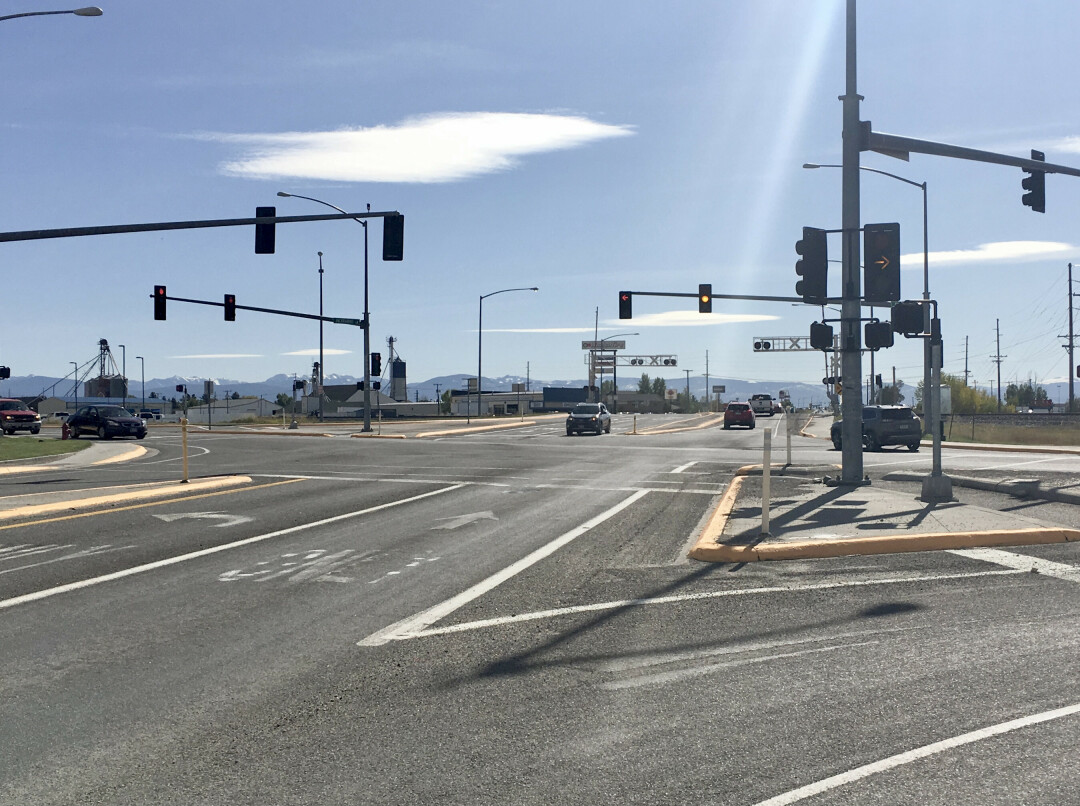
BELGRADE, Montana (May 26, 2021) – Belgrade locals eager to see a Jackrabbit Lane traffic solution can rest assured that engineers are hard at work on the task. The Montana Department of Transportation (MDT) has hired engineering firm Morrison-Maierle to carry the torch of further developing Jackrabbit – Madison to Main project plans. Morrison-Maierle will develop plans to include a railroad crossing underpass or overpass on Jackrabbit Lane near Main Street. Traffic signal work once associated with the project will be conducted well ahead of other improvements.

“Designing an underpass or overpass is no easy task, and the needs of our state are great. In our district alone, there are approximately 75 projects we are preparing for construction in the next five years,” William Fogarty, Butte District Administrator for the Montana Department of Transportation, said. “We need to call on consulting partners such as Morrison-Maierle to dedicate their time and expertise to this project so MDT staff can continue to focus energy on the numerous other project priorities in the district.”

 
Plans for Jackrabbit – Madison to Main include expanding Jackrabbit Lane to a five-lane roadway, from Madison Avenue to Main Street, and creating an underpass or overpass for the railroad crossing by Main Street so that traffic can flow uninterrupted crossing the train tracks. Morrison-Maierle will lead the design process, which involves surveying land, creating, reviewing, and editing plans, conducting environmental reviews, and negotiating with landowners on right of way. The is process is expected to take multiple years to complete.  

 
The Jackrabbit – Madison to Main project also originally called for signal improvements at the six intersections below. The department has identified separate funding for this improvement, allowing traffic to move more effectively as they work towards Jackrabbit’s larger needs. These improvements involve upgrading, and/or adding traffic signals at the following intersections:

1.     Amsterdam Road and Thorpe Road
2.     Amsterdam Road and Interstate 90 eastbound off-ramp
3.     Amsterdam Road and Jackrabbit Lane
4.     Jackrabbit Lane and Interstate 90 westbound off-ramp
5.     Jackrabbit Lane and Madison Avenue
6.     Jackrabbit Lane and Main Street
 
Jackrabbit – Madison to Main is anticipated to cost $10-$20 million, and funding has not yet been secured. MDT cannot bear the brunt of costs alone and it will take time to create partnerships with local stakeholders and identify funding sources. The bulk of MDT’s funding is provided by the Federal Highway Administration and is not expected to be secured until 2026 or later.

 
To stay up to date on Jackrabbit – Madison to Main, call the Montana Department of Transportation hotline at 406-207-4484 or contact Takami Clark at takami@bigskypublicrelations.com. Learn more online at https://www.mdt.mt.gov/pubinvolve/jackrabbit/default.shtml.
 
Alternative accessible formats of this document will be provided upon request. Persons who need an alternative format should contact the Office of Civil Rights, Department of Transportation, 2701 Prospect Avenue, PO Box 201001, Helena, MT 59620. Telephone 406-444-5416 or Montana Relay Service at 711.

Add a Comment »

Tuesday, May. 25th, 2021

Triangle Trail Draft Plan Released for Public Comment

The draft Triangle Trails Plan has been released for public comment on the project website at www.triangletrailplan.com. The Plan has been in motion over the past year and outlines a comprehensive trail network for one of the most rapidly changing areas in Montana; the Triangle, which lies roughly between Four Corners, Belgrade, and Bozeman.

Chet Work, Executive Director of Gallatin Valley Land Trust reflected, “30 years ago GVLT and partners championed a vision to connect Main Street to the Mountains with trails. We have an opportunity now to set the vision for the next 30 years and ensure that we’ll have a connected trail system we can be proud of. The time to plan for trails in the Triangle Area is now, ahead of the rapid development we’ll see in the area. We’re proud of this collaborative effort with Gallatin County, City of Bozeman, City of Belgrade and the residents of this valley.”

The major benefit of collaboration is ensuring consistent standards and a complete system across all jurisdictions.

Addi Jadin, Bozeman Parks Planning and Development Manager, shared, "The great thing about trails is that they move us through the landscape and to the places we need to be. Those places and our amazing landscapes don't follow jurisdictional lines, so the coordination of the Triangle Trails Plan across our communities will ensure a consistent network as we travel through our communities!"

The draft Plan was developed using a variety of public input opportunities, including discussions with key community groups and cycling tours of the area. The Plan focuses on trails that are separated from traffic and accessible to a wide variety of users. Trail recommendations include three different types: Neighborhood trails that would be developed as part of a new subdivision, connector trails that bring people to schools, parks, and commercial nodes, and commuter pathways that are designed for efficient transportation across longer distances. The Plan also includes design standards as well as amenity recommendations. The trail network would be implemented over time as development and infrastructure projects align with the Plan.

“The existence of an adopted trail plan is critical to providing predictability and clarity to local developers and citizens. This document is something our community expects us to have, and is responsible land use planning. A clear plan will empower county commissioners to realize the communities’ vision for years to come,” said Scott MacFarlane, Gallatin County Commissioner.

The draft plan can be found at www.triangletrailplan.com. The website includes a short survey to solicit feedback on the major elements of the plan, from the location of trails to trail standards to the plan’s vision. Public comment is open until Sunday, June 13, 2021. The adoption of the Plan is anticipated this summer as part of the Gallatin County and Belgrade Growth Policies and referenced in the updated Bozeman Parks, Recreation, Open Space, and Trails Plan.

Add a Comment »

Child Care Connections Announces Departure of the Executive Director

Since 2007, Jane Arntzen Schumacher, M.Ed., has held the title of Executive Director at Child Care Connections. Working tirelessly to advocate for children, families, and early childhood professionals, Jane has helped bring early childhood to the forefront of discussion in our community and State. It is with a mix of sadness and gratitude that the Child Care Connections Board of Directors announces Jane’s departure as Executive Director.

Jane’s resignation is effective September 30th, 2021. In her tenure at Child Care Connections, Jane has played a critical role in the development and success of the organization. While her vision for early childhood, and her passion for children will be missed, she will remain a champion for the early childhood sector in Montana.

Over her 14 years of dedicated service, Jane achieved many significant accomplishments. These accomplishments include not only increasing the impact of the agency but doing so in a sustainable way that ensures the critical services offered by Child Care Connections will continue well into the future. Receiving recognition for her service in Early Childhood including the Montana Early Childhood Service Awards presented by the Montana Association for the Education of Young Children, and Employer of the Year award
by Bozeman Business and Professional Women. Jane also led the agencies emergency response to the COVID- 19 pandemic ensuring continuity of all agency services and administering over $3 million in emergency child care grants to local families and child care providers during the first year of the pandemic.

“I want to express the great joy that being part of the team at Child Care Connections has brought to my life," said Arntzen Schumacher. "I would like to say ‘Thank you’ from the bottom of my heart to all who have been so supportive of the organization and of me personally over the years: staff, board members, and, of course, our partners and funders. Without you, the organization would not be as strong and vibrant as it is. I am so honored to have been the leader of this incredible organization and will watch with much excitement and anticipation as it makes strides in supporting and creating new solutions for the child care sector. I’m truly blessed to have had the opportunity to work at Child Care Connections."

Over the next few months, a search will be conducted to find the next Executive Director of Child Care Connections. It is the priority of the Board of Directors to find the best individual to lead, while still maintaining a stable and effective organization. The job announcement will be shared in the coming weeks.

_____________________________________________________________________________________
Child Care Connections is a 501(c)3 nonprofit advocating for the well-being and quality care of children by supporting early childhood professionals, families, and the communities we serve. We offer services in Gallatin, Lewis & Clark, Park, Meagher, Jefferson and Broadwater Counties.

Add a Comment »

Saturday, May. 22nd, 2021

Fish mortality observed in lower Madison River

Fisheries biologists with Montana Fish, Wildlife & Parks are monitoring an area of the Madison River where a number of dead fish have been observed.  

A cause of the mortalities has not yet been determined. Biologists have collected many samples from dead and dying fish and submitted them for testing.  

The dead fish were first reported to FWP on May 18 by anglers floating in Beartrap Canyon. FWP staff immediately went to the area and found several dead mountain whitefish. Since then, FWP staff have floated Beartrap Canyon and walked the banks of the river downstream of the Warm Springs Boat Launch each day to gather information on the mortality.  

By 3 p.m. on May 20, FWP staff had observed dead fish over 10 miles from just upstream of Ennis Dam to the Warm Springs Boat Launch on the Madison River. These include about 814 whitefish, 11 brown trout, 6 rainbow trout, and three suckers so far.
 
“We are working hard monitoring the situation and investigating the causes of the mortalities,” said FWP Fisheries Division Administrator Eileen Ryce. “We appreciate the reports from the public on the dead fish they’re seeing, and that’s been an important part of the monitoring we’ve done.”  

FWP staff will continue to monitor conditions on the Madison River. More information will be provided as it becomes available. If anglers see dead or dying fish, they can call the FWP Bozeman office at 577-7900. 

Anglers can help reduce stress for fish by following these practices when catching and releasing fish:  
• Land the fish quickly.  
• Wet your hands before handling the fish.  
• Keep the fish in water as much as possible.  
• Remove the hook gently. Using artificial lures with single and barbless hooks can make hook removal faster and easier. If the fish is hooked deeply, you may have to snip the line at the fish’s mouth or consider keeping it if regulations allow. 
• Let the fish recover before releasing it.

Add a Comment »

Friday, May. 21st, 2021

3 Reasons You Need Microwavable Heating Pads


Aside from helping in alleviating muscle pain, migraines, menstrual cramps, and back pain, heat can help reduce pain caused by other ailments. Yet there is always the question of what is the most convenient way to supply heat to the affected area. The answer is microwaveable heating pads.

A microwaveable heating pad is a safe and convenient alternative to hot water bags. It's easy to apply and reheat, and you don’t need to risk yourself getting scalded when pouring hot water.

Heat therapy has been in use for years and is available in a variety of forms, and it has been commonly used in alternative medicine: acupuncture, chiropractic, and energy healing. As those practices rely on heat therapy, practitioners always have microwaveable healing pads handy. Aside from specialists, common folk also use these heating pads as a home remedy to relieve pain fast.

Currently, the market offers a wide range of electric and microwave heating pads. However, this article will focus solely on the latter. Without further ado, here are some reasons why you need microwaveable heating pads:

1. It May Ease Soreness
Heat therapy sessions may be beneficial for relaxing tired or tight muscles. There are many potential benefits of a heating pad. A few of them are better sleep, pain relief, and improved blood circulation.

To reap those benefits, start with heating the pad up in the microwave according to the user manual. After that, put the heating pad directly on the area where the pain is radiating. Let it sit there for a while to experience relief until it gets to room temperature.

While heating pads are mostly used in heat therapy sessions, some of them can be used like a cold-water bag. You can put them in the freezer and let them cool down fast. When it hits the right temperature, you can apply it on fresh wounds and sore muscles as well.

Note that when a wound is fresh, cold therapy may stop the pain from getting worse and stop the cells that transmit a signal to the brain that the specific body part is hurt. However, also remember that before you perform this type of therapy, make sure that you get your doctor’s approval first. On the other hand, check the manual or consult your doctor as well if you’re unsure when to use ice or heat on your sore muscles.

2. It Is Safe And May Be Effective
Heat wraps are safe to wear and may have therapeutic effects on the body. However, you still have to handle microwave heating pads carefully after it’s done heating up inside the microwave. Also, always make sure to follow the manual to ensure you won’t damage them or get yourself burned or scalded.

On the other hand, unlike disposable packs made of plastic, most microwaveable pads are made of 100% cotton. There are a variety of pads that are filled with different organic materials. You don’t need to worry too much about allergic reactions as long as you have no problems with cotton. If you want to see one being reviewed, you might want to view this video: https://www.youtube.com/watch?v=KvjEySxO0hE.

3. It May Improve Health Conditions
Another reason you need a microwaveable heating pad is that it may improve your health condition. Some of the health conditions that may benefit from using heating pads are the following:

Lower Back Pain: You can wrap the pads around your back to relieve pain and relax your muscles.

Arthritis Pain: The warmth penetrates deep into the skin, alleviating sore joints caused by arthritis. Blood flow is stimulated, causing pain to subside. If your arthritis is in your knees, you might want to search more about what you need to know about your knees, so you can find ways to keep them healthy.

Shoulder And Neck Pain: By heating the area around your shoulder and neck muscles, blood flow increases and the pain eases.


Menstrual Cramps: Applying a warm pack on the lower abdominal area can relieve cramps during periods.

Migraines And Headaches: The hot pad can be wrapped around the neck to relieve tension headaches caused by tense muscles.

Earache: Warm compresses can provide immediate relief for earaches. Researchers found that moist heat around the ears may help you relax and reduce the pain.

Conclusion
Hopefully, you’ve found this article informative. Its goal is to let you understand how and why you need microwaveable heating pads. This simple device is often used by those who want to have instant relief at the comfort of their homes. It’s more convenient than the regular water bags, safer to use, and can be used anywhere in your body as it can be easily wrapped around.


Add a Comment »

News Comments