Tuesday, Mar. 3rd, 2026

Montana State to offer summer writing camps for youth


BOZEMAN
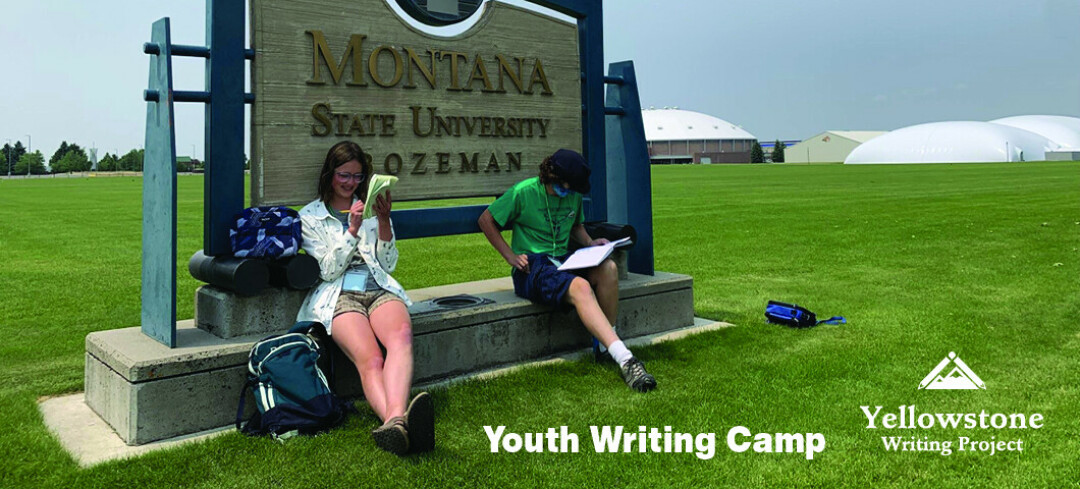
— Registration is open for a pair of July summer camps at Montana State University aimed at helping young, budding writers explore their craft. 

The camps are for writers entering third through twelfth grades. Campers will participate in field trips, writing games, and workshops with local writers from multiple genres. MSU faculty from the Yellowstone Writing Project, a group of educators and writers in the Department of English, will lead the camps.

Parents of participants will be invited to a final showcase on July 17 to celebrate their campers’ work.

Writers entering fifth through eighth and ninth through twelfth grades can attend the Youth Writing Camp from 9 a.m. to 3 p.m., July 13-17. The price for commuter participants is $350, and the price for campers staying in an on-campus residence hall is $875. An additional fee of $25 will be added for registrations after June 1, 2026.

The Young Writer’s Camp, which will be from 9 a.m. to 3 p.m. July 14-17, hosts writers entering third and fourth grades. The camp costs $300, with no overnight lodging on campus available. After June 1, the camp’s price increases to $325.

Registration is available at https://ato.montana.edu/ywp/ and will close once the camps are full.

Contact: Justin Gibson, program manager for Academic Technology and Outreach, at 406-994-6633 or justin.gibson3@montana.edu.


Add a Comment »

Thursday, Feb. 26th, 2026

Belgrade Parks and Recreation Seeks Volunteers for May–September Summer Programs

BELGRADE– Belgrade Parks and Recreation is seeking community volunteers to support its summer programming, which runs May through September in Belgrade parks. Volunteers are needed to help lead one-time activities, organize tournaments, and perform music at weekly events designed to be welcoming and accessible for all ages and experience levels.

Volunteer opportunities include leading or assisting with introductory activities such as volleyball, badminton, tennis, grilling and cooking demonstrations, dance workshops, orienteering, tie-dyeing, birding, phone photography, leatherwork, and candle making. Many of these activities are offered once or on a limited basis throughout the summer, giving volunteers flexible options to participate.

Volunteers are also needed to help organize informal community tournaments, including disc golf, horseshoes, and skateboarding.

In addition, family-friendly musicians and bands are invited to perform during Dancing in the Grass, a weekly Sunday evening concert series held throughout the summer at Lewis & Clark Park. Several performance dates are still available.

page1image20974224“These programs are about lowering the barrier to trying something new and creating moments where neighbors can connect in our parks,” said Jordan Green, Director of Belgrade Parks and Recreation. “Volunteers are the reason we can offer such a wide range of welcoming activities for the community.”

Individuals, groups, and organizations interested in volunteering or performing can sign up or receive more information by emailing lbeedy@belgrademt.gov or calling 406-388-4711.

Add a Comment »

Tuesday, Feb. 24th, 2026

Montana State University Library offers new tool to help libraries with AI use

BOZEMAN — As libraries grapple with how to use artificial intelligence tools in responsible and ethical ways, Montana State University Library researchers are offering a new, free resource to help those institutions make decisions about AI that align with their values.

Viewfinder: A toolkit for values-driven AI in libraries and archives” is designed to support librarians, researchers and others as they consider whether and how to implement AI tools in their libraries and archives. The toolkit is available to use and download at www.lib.montana.edu/responsible-ai/viewfinder/.

“I’m so excited about this tool our team has developed,” said Sara Mannheimer, associate professor with the MSU Library and the project leader. “It’s been really great to see the data and research come together.”

Artificial intelligence can help libraries provide better services, Mannheimer said, including making materials more accessible, but using AI can also raise ethical questions. So, more than three years ago, Mannheimer and her colleagues began working on a project to help address those related ethical considerations.

In addition to Mannheimer, researchers include Jason Clark, Doralyn Rossmann and Scott Young with the MSU Library; Bonnie Sheehey with the MSU Department of History and Philosophy; Hannah Scates Kettler with Iowa State University; Yasmeen Shorish with James Madison University; and Natalie Bond with the University of Montana. The team’s efforts have been backed by a $250,000, three-year grant from the Institute of Museum and Library Services. The grant is affiliated with the MSU Center for Science, Technology, Ethics and Society.

“We see AI as this potentially transformative technology for libraries,” Mannheimer said in a 2022 news story about the team’s work. “AI can provide services that users love – services that can make the library better – but we want to use AI in a way that is careful and with an eye toward potential harms so that those harms can be minimized.”

In a recent interview, Mannheimer said the motivation for the work came about when she and her colleagues were beginning to use machine learning to summarize articles, recognize images and create metadata – or data that defines and describes the characteristics of other data. Machine learning is a subset of AI where computer systems learn and adapt without following explicit instructions by using algorithms and statistical models.

At the time, Mannheimer said, that was a common use of machine learning, but it led to some important questions.

“In libraries we have a very specific set of values and practices that have been longstanding; we really value patron privacy and intellectual freedom,” Mannheimer said. “These are different values than corporations have, and someone developing AI technology would have different values than someone in a library. So, we were looking to use machine learning algorithms but from a librarian’s perspective.”

Mannheimer and her colleagues began their work with a review of the existing research findings, looking at case studies of librarians who had used machine learning in related contexts. They also did a review of different tools that were already available to help librarians and researchers make informed, ethical decisions.

“We saw that there was a need for a tool to support ethical decision-making as you’re working through an AI project,” Mannheimer said.

From there, the team hosted a series of workshops with library administrators, librarians and students and asked participants to identify what values would be at play for them when faced with various AI-related scenarios. They also asked workshop participants to prioritize the identified values.

Then, using some of the information gathered in the workshops, the team created a toolkit featuring scenarios and prompts to help facilitate ethical reflection about AI in libraries and archives from different stakeholder perspectives. It includes three different sections: scenarios, stakeholders and values. Those using the tool can use sample scenarios to generate thought and discussion, or they can create a customized scenario.

The toolkit invites users to identify stakeholders and consider which values are of concern to stakeholders. There are also prompts for reflection.

For example, one scenario invites users to consider using a third-party service that uses AI to generate brief summaries of research articles for students and faculty. It then invites users to identify three values that would be important in their consideration; examples include privacy and consent; fiscal responsibility; education; human-centeredness; trust; social responsibility; and service quality.

“People can use this tool individually or as part of a team working on implementing an AI project,” Mannheimer said. “It helps think through potential stakeholder values and accommodate those if possible. It’s more about balancing and encouraging conversations than having a right or wrong answer.”

Rossmann, one of Mannheimer’s collaborators and dean of the MSU Library, said she is excited about the possibilities that come with the new tool.

“As a next step, we will be working with libraries and archives to use Viewfinder in their everyday work,” Rossmann said. “It's important to consider challenging questions at the beginning of AI projects, rather than as an afterthought, and this tool will help with that.”
Mannheimer noted that libraries have a “unique responsibility” to maintain trust with their users.

“Libraries are often the first to practically implement technologies, and libraries are reliant on technologies for a lot of the services we provide,” Mannheimer said. “As new technologies come through, it’s our responsibility to understand them and integrate them so we can have the best services possible and keep up to date. Because of our longstanding values and position as a trusted institution, it’s important to think very carefully about how these technologies affect our information landscape and our users.

“We have some power to decide how we use technologies in our lives,” Mannheimer added. “Viewfinder is one way to actualize that power.”

Add a Comment »

New license year starts March 1, here’s what you need to know

HELENA – New Year’s Day for many outdoor recreationists in Montana is March 1. This is the day everyone can buy their 2026 hunting and fishing licenses and apply for special draw licenses and permits. It’s also the day when recreationists need to renew their conservation license to support the state lands they use.

This year, hunters and anglers will see quite a few changes that are worth paying close attention to. These changes come from legislation passed by the 2025 Montana Legislature and new regulations adopted by the Montana Fish and Wildlife Commission.

Licenses for the 2026 license year can be purchased starting Sunday, March 1. If you plan on being in the field on that day, you can buy your license online here.

Hunters and anglers buying their license in person at a local business will see some changes as FWP is transitioning to a License Ambassador program. This change will move all licensing sales to Montana’s online licensing system. This allows FWP to add additional businesses that would like to sell licenses and move away from the old point-of-sale systems that were unreplaceable and outdated.

As always, you can buy and apply for licenses online and at your local FWP office as well. Note that some businesses who used to sell licenses may not anymore. To find a License Ambassador, see the map here.

Deer

Some of the biggest changes hunters will notice are with deer regulations. In December, the Fish and Wildlife Commission adopted several hunting district-specific changes to deer licenses and permits. The commission also made some regulation changes aimed at protecting mule deer numbers and managing hunting pressure. These include:

  • Many Mule Deer B Licenses will be valid only on private land. Check your specific hunting district.
  • Residents can only hold up to three deer licenses, including their General Deer License. This isdown from up to eight in past years.

Nonresidents continue to be limited to one Deer B License, unless they draw a combo license and then they can hold two.

Like always, make sure to read the regulations prior to buying or applying for any licenses or permits. The regulations for your hunting district may have changed.

Elk

Regulations changes approved by the commission include:

  • The quota of the 799-20 Elk License is 325. A second antlerless Elk B License will be available to any holder of an Elk Permit in hunting districts 702, 704, or 705, subject to the same restrictions in time, open areas, and limitations associated with the permit.
  • All Region 1 Elk B Licenses will only be valid on private land.

Black bear

The commission also established Black Bear Permits in two bear management units in FWP Region 5, south-central Montana. The deadline to apply for these permits is April 1. Hunters can also accrue bonus points for black bears.

Antelope

  • The quota of 900-20 Licenses (archery antelope) is 5,600. Region 3 is no longer in this bundle and was placed in its own pool with 500 licenses.
  • The Region 3 Antelope Archery Licenses are 399-20.

Bighorn sheep

Montana has five unlimited bighorn sheep hunting districts. This year those licenses will only be issued through a drawing.

  • Hunters applying for any unlimited opportunity will no longer participate in the bonus point program. This keeps hunters from spending their bonus points on an unlimited draw.

Shed hunters

The 2025 Montana Legislature passed a law that implements a Nonresident Shed Hunting License for Montana’s Wildlife Management Areas (WMA). Additionally, this new law prohibits nonresidents from picking up antlers on WMAs for the first seven days they are open to the public in the spring. Most WMAs open to the public at 12 p.m. on May 15. However, some have different openings dates. Nonresident shed hunters must review the regulations for the WMA they are looking to visit. There are no changes for resident shed hunters.

A Shed Hunting License for nonresidents costs $50.

License and application fees

The 2025 Montana Legislature passed laws adjusting several license fees. The new fees are as follows:

  • Nonresident Base Hunting License fee increased from $15 to $50
  • Fee for resident and nonresident Crane and Swan License - $10 and $75 respectively.
    • Application fees $10 resident, $50 nonresident
  • Resident Migratory Bird License increased from $5.50 to $10
  • Increased Resident Upland Bird and Sportsman’s Combo License fees:
    • Upland bird from $7.50 to $10
    • Sportsman without Bear from $62 to $64.50
    • Sportsman with Bear from $77 to $79.50
  • Increased Nonresident Upland Bird (season and three-day) and resets combination license fees:
    • Upland Bird (season) from $110 to $127
    • Upland Bird (three-day) from $50 to $60
    • Big Game Combo to $1,312
    • Elk Combo to $1,112
    • Deer Combo to $760

Upland Birds

The 2025 Montana Legislature passed a law that limits nonresident upland game bird hunting seasons. In 2026, nonresidents hunting on public lands and privately owned lands that are a part of a hunting access program begin hunting 10 days later than residents for all species except mountain grouse.

Add a Comment »

Monday, Feb. 23rd, 2026

EB-2 NIW in Bozeman: How MSU Researchers and Gallatin Valley Founders Can Turn Local Work into a “National Interest” Case (With Evidence That Actually Holds Up)

Bozeman is a rare U.S. small city where “local” projects can have national consequences. Work that starts in Gallatin Valley often addresses problems that repeat across the country: wildfire smoke and public health, water variability, resilient agriculture, safer public-lands operations, rural infrastructure, and field-tested engineering in tough environments. That makes Bozeman an unusually practical place to build a strong EB-2 NIW petition—because NIW is won by impact and adoption, not by your zip code.

In this guide, I won't be explaining immigration basics that you can find anywhere. Instead, I’ll demonstrate how to create a profile based in Bozeman (Montana State University research, applied engineering, climate/outdoor technology, rural health, land management operations or infrastructure analytics) that can be quickly audited by an adjudicator to determine its 'national importance'.

Start with the right unit of analysis. The Endeavour, Not Your Job Title

A strong NIW case does not start with statements such as “I’m a talented engineer” or “I have a PhD”. They start with a specific endeavour that can be tested. A Bozeman-ready endeavour statement should answer the following questions: What will you build or advance, who will use it, and how will success be measured?

Examples of endeavours that are 'Bozeman-specific' yet scalable on a national level:

● This is a wildfire smoke decision system that reduces the risk of exposure for schools, clinics and emergency managers during the smoke season.
● This is a water management tool that reduces irrigation losses and improves planning in the context of variable supply in cold-climate agriculture.
● This is a public-lands safety and capacity model that improves decisions relating to staffing, visitor flow planning and search and rescue readiness.
● A rural reliability framework for ensuring the continuity of telehealth, logistics and energy in regions with sparse infrastructure.

The point is not to sound impressive. The point is to sound testable. 'National importance' becomes believable when your endeavour can be measured and replicated.

Consider three proofs, not one narrative.

The NIW is easiest to win when it is treated as three linked proofs, each with its own evidence stack.

1. The substantial merit and national importance of the endeavour.
2. You are well placed to further the endeavour.
3. Overall, the U.S. benefits from waiving the job offer and labour certification requirements.

Blurring these together results in a long biography. Separating them, however, creates a packet that reads like a brief: claim → evidence → conclusion.

A Bozeman Evidence Map: How 'Regional Deployments' Become 'National Importance'

A common mistake is to argue: 'I help Montana, so I help the US.' This is too simplistic. Instead, establish a connection between the Bozeman pilots and the national replication.

Here's a simple mapping approach:

Endeavor: Wildfire smoke analytics National framing: Smoke affects multiple states; public health and emergency planning rely on timely guidance. Evidence that persuades: External evaluations, documented deployments/usage, letters from operators (public health, clinics, schools, agencies), validation metrics.
Endeavor: Water efficiency tools National framing: Water variability is a structural U.S. issue; solutions must work across basins and farm types. Evidence that persuades: Pilot before/after metrics, partner adoption letters, rollout plan, implementation guides, contracts/MOUs.
Endeavor: Public-lands operations technology National framing: Land agencies face nationwide capacity and safety constraints; improvements scale across parks/forests/BLM lands. Evidence that persuades: Usage logs, incident reduction or response-time metrics, training materials, endorsements from managers/operators.
Endeavor: Rural reliability (telehealth/logistics/energy) National framing: Rural access and continuity gaps exist nationwide; reliable systems reduce cost and harm. Evidence that persuades: Uptime/reliability KPIs, rollout commitments, partner evaluations, standards/protocol alignment.


Notice what’s missing: generic adjectives like “innovative” or “cutting-edge.” Replace them with adoption evidence and metrics.

Prong 1: Make “National Importance” Measurable (And Not Just a Slogan)

A simple way to write this section is a one-page problem statement using four lines:

Harm: What fails, who pays, and why it matters.
Scale: How broadly the problem repeats across regions/sectors.
Lever: What your solution changes (decision, capability, cost curve).
Metric: How success is measured (accuracy, cost, exposure reduction, downtime, response time).

For Bozeman projects, a strong 'national' argument is often based on replicability under constraints. If your work can produce measurable improvements in rugged, low-resource conditions, it can be transferred to many regions in the US.

What can help here?

● Independent reports, evaluations or documented external use.
● There is evidence that the problem is multi-state, not Montana-only.
● A clear explanation of why this endeavour is important for U.S. systems, such as public health, safety, infrastructure and agriculture, as well as for economic resilience.

Prong 2: 'Well-positioned' means having traction and a credible next-step plan.

Adjudicators are not only judging your past, but also whether your next steps are credible. The term 'well positioned' carries the most weight when you can demonstrate both traction and a plan that is already in motion.

A practical evidence bundle.

Outputs: Deployed prototypes, peer-reviewed work, patents, open datasets, field trials, published methods.
Independent validation: Citations, peer review roles, invited talks, external awards, expert commentary that references your work.
Adoption proof: Pilots, customers, signed MOUs, usage statistics, implementation partners.
Execution capacity: Funding, data access, compute resources, team or collaboration capacity, timeline and milestones.

For founders, the most persuasive additions are anonymized adoption metrics, retention/usage signals, letters from implementation partners, and “evidence of integration” (how your tool fits existing workflows). For researchers, the best additions are evidence of real-world use outside your own group and reproducibility packages that others can run.

Prong 3: Win the “Balance” Test with a Practical, Time-Sensitive Argument

This prong is often underwritten, and it’s where a Bozeman case can shine—because many Western problems are time-sensitive and operational.

A clean way to write this section is to compare two timelines:

Timeline A (waiver granted): The endeavor continues without delay, collaborations expand, deployments proceed on schedule, outcomes improve.
Timeline B (waiver denied / delay): Deployments pause, seasonal windows are missed (smoke season, growing season), partner commitments weaken, harm/cost increases, and national benefit is postponed.


Back this with real documents: partner schedules, grant timelines, planned rollouts, or seasonality constraints. The point is not drama; it’s practicality.

NIW vs EB-1A vs EB-3: Which Route Fits Bozeman-Type Profiles

If you’re choosing among employment-based paths, choose based on your evidence shape:

EB-1A: Best when you can demonstrate sustained top-of-field acclaim (strong independent recognition).
NIW: Best when you can demonstrate national-impact endeavor + traction + a credible scaling plan.
EB-3: Best when you have a traditional employer pathway and the role and process fit.

Many Bozeman researchers and applied founders find NIW compelling because it rewards demonstrable impact and adoption, particularly when their work relates to public goods such as safety, resilience, health and infrastructure.

Letters that actually matter, especially outside of big coastal ecosystems.

In smaller markets, recommendation letters are not just a formality — they can provide the strongest independent proof. However, they must read like assessments, not compliments.

High-value letters:

● Describe what the writer observed directly, such as a pilot, evaluation, deployment or collaboration.
● Explain why this endeavour is important not only in Montana, but also more widely. Describe how it can be scaled up.
● Link your personal contribution to measurable outcomes.
● Include dates, metrics and an explanation of why you are difficult to replace in this role.

Try to choose a variety of letter writers.

● A technical evaluator, such as a peer reviewer, lab lead or independent researcher.
● Adopters/operators include agencies, health systems, land managers, utilities and industry partners.
● A market validator could be a professional association, conference organiser, standards participant or grant reviewer.

Strong letters focus on your character and efforts. Strong letters focus on adoption, outcomes and transferability.

Two Bozeman-Ready Case Blueprints You Can Adapt

Blueprint A: Smoke Analytics (Researcher or Founder)

Endeavor: Improve exposure forecasting and decision support during smoke season.
Prong 1: Multi-state relevance + public health decision value; validation against historical events.
Prong 2: Deployments, dashboards, external evaluations, adoption by clinics/schools/agencies; 12–24 month expansion plan.
Prong 3: Delay harms outcomes due to seasonality; waiver supports continuity and scaling.


Blueprint B: Water Efficiency Tools (MSU-Linked or Industry)

Endeavor: Reduce water losses through measurable operational changes (monitoring, decision tools, training).
Prong 1: Pilot metrics + replicability to similar basins + relevance to resilience.
Prong 2: Partner commitments, implementation guides, adoption pathways—not publications alone.
Prong 3: Continuous iteration with partners is essential; waiver supports timely implementation and knowledge transfer.


Three Common Bozeman Mistakes (And the Fix)

1. Vague endeavor: Fix with outputs + metrics + milestones.
2. National importance by slogan: Fix with cross-state comparability and adoption evidence.
3. Thin third-party proof: Fix with letters that cite observed use, numbers, and replication logic.

If your packet makes impact easy to verify, Bozeman becomes a strength: it’s the proving ground that demonstrates your work functions in real conditions.


Add a Comment »

Long-Time Big Sky Resort President Leaves Legacy of Transformation, Leadership

Big Sky, Montana – Taylor Middleton, former President and Chief Operating Officer of Big Sky Resort and a leader in the Big Sky community and Montana state tourism for over three decades, died at home in Big Sky on Friday, February 20. He was 68 years old.

“Taylor Middleton was one of the most impactful leaders in the history of the American ski industry,” said Stephen Kircher, CEO and President of Boyne Resorts, who announced his death. "In 1998, he embraced the goal of making Big Sky the number one resort in North America when many people thought it was impossible. He never wavered. Over 26 years, we watched him will that vision into reality.”

Middleton began his career at the front desk of the Huntley Lodge before moving into sales and marketing, where he dramatically grew visitation nationwide over the course of a decade. He ascended to the role of General Manager in 1998. During his 45 years with Boyne, he oversaw the construction of more than 20 lifts, two trams, and two hotels; he also hosted both Presidential and Vice-Presidential visits.

A steady steward through periods of both economic uncertainty and unparalleled growth, he “ran the business like he owned it—with an eye on the long-term,” said Kircher. “Our family always trusted his judgment; he hand-signed every check for years.” Under his leadership, Big Sky transformed from a regional destination into North America’s top-ranked ski resort—a distinction that Taylor was instrumental in achieving.

He led the resort through the 2008 financial crisis, during which Big Sky uniquely avoided closure or ownership changes, and oversaw the integration of Moonlight Basin—a terrain acquisition that officially cemented Big Sky as the “Biggest Skiing in America.”

His successor, current President and COO Troy Nedved, added: “Big Sky would not be what it is without Taylor Middleton. His fingerprints are on everything good about this place—and they always will be.”

As the leader, Middleton mentored generations of team members within and beyond the organization, across the region. “My career was shaped by the goals he set for me,” said Nick Herrin, who started as a ski instructor and now oversees snowsports across Boyne’s 13 resorts nationwide. Taylor was not one for empty words – he led by example. “He was someone I deeply looked up to,” said Cameron Sholly, current superintendent of Yellowstone National Park. “His poise, integrity, and authentic care for people are qualities I have long tried to emulate.”

In Southwest Montana, Middleton played a key role in the development of Big Sky’s first hospital and bank, the Resort Tax District, the Chamber of Commerce, and the Transportation District, serving on these boards and many others over the years.

“He believed deeply that Big Sky could not truly thrive without access to healthcare, and his tireless advocacy helped make the Big Sky Medical Center a reality,” said Kathryn Bertany, Bozeman Health CEO. Middleton’s deep care for the people of Big Sky drove each of his community initiatives. "He fought tirelessly for things that had nothing to do with skiing: a hospital so our neighbors wouldn't have to drive hours in an emergency, a high school so our kids could grow up and stay rooted here. He always put people first," said Nedved.

He was also a dedicated competitor and supporter of the now iconic Big Sky races The Rut and The Biggie, competing in both annually through 2025. “When someone like Taylor crosses the finish line, it’s for the whole community,” said Biggie founder Natalie Osborne. "Everyone in town told me I'd never be able to put together a bike race like I was envisioning… but I never heard that from him."

The mountains were much more than a career for Middleton. He had a deep love for the outdoors—on skis, on a bike, and on foot. “Some of my best adventures were with Taylor,” said Christine Baker, Vice President of Mountain Sports at Big Sky. “It was never about keeping up or proving yourself. He had a rare way of making people feel at ease and making it about the experience, the people you were with, and truly enjoying this place.”

He will be remembered for his big smile, his generous heart, and most of all for the joy and gratitude that defined his life. Herrin said it best: “I will always love the way he helped me understand life, and how to live it joyfully—by pouring everything you have into something you love, and more importantly, with the people you love alongside you."

Add a Comment »

Big Sky Voters to Consider Hospital/Wellness District on May Ballot


BIG SKY
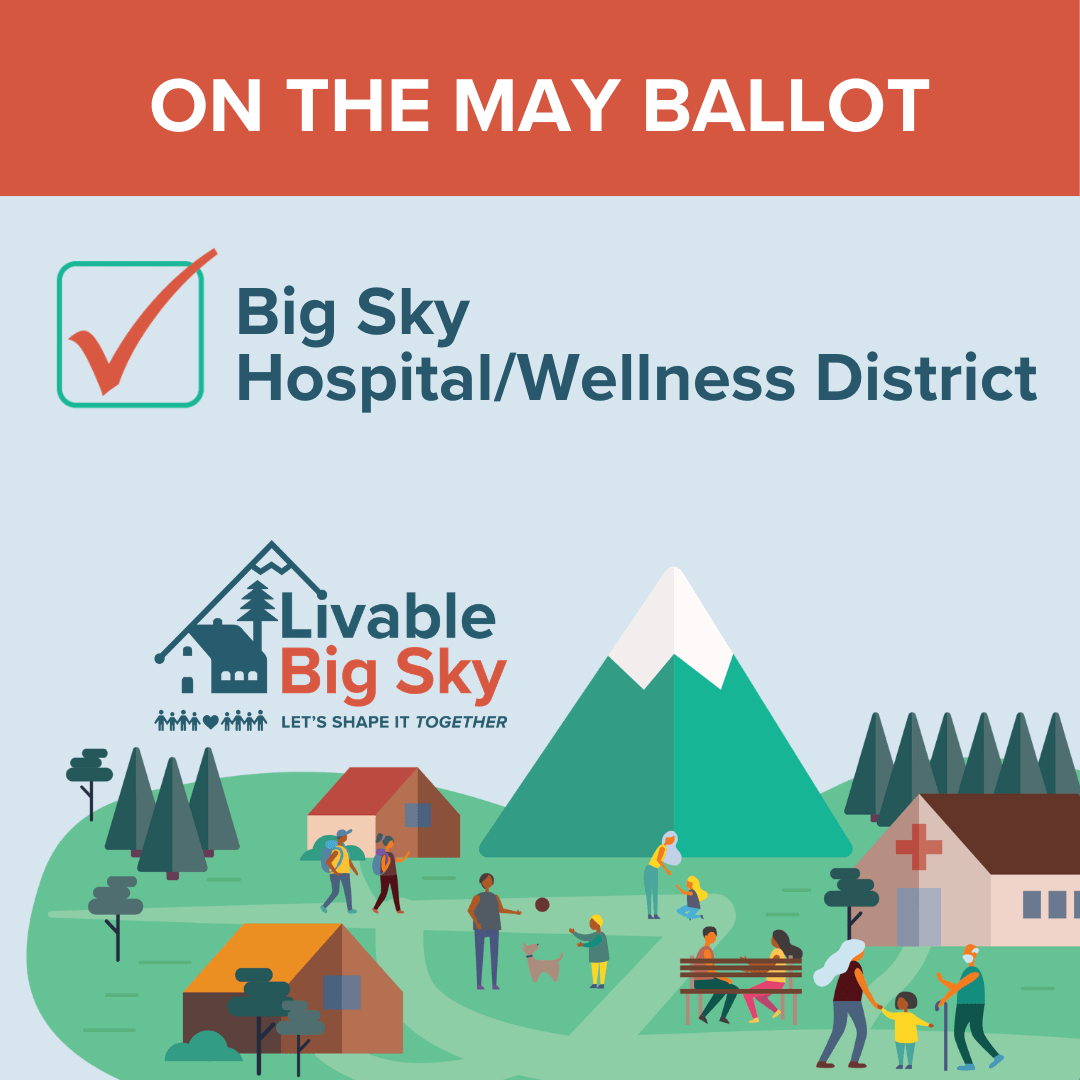
— As part of the community’s ongoing Livable Big Sky efforts, Gallatin and Madison County Big Sky voters will consider measures on the May 2026 special purpose district ballot aimed at creating a local hospital/wellness district in Big Sky. The measures are aimed at strengthening and sustaining access to essential healthcare and wellness services in Big Sky and reflect years of community conversation about how to ensure physical, mental, and social health services can grow to meet the needs of Big Sky’s year- round and seasonal residents and visitors.

“This is about keeping Big Sky livable for everyone; families, workers, seniors, and visitors,” said Kiernan Volden, Director of Programs at Big Sky Wellness in Action. "Big Sky's population grew 54% from 2010-2020 and is projected to grow at least another 20% over the next decade. The ballot measures in May are a critical and rare opportunity for voters to establish a mechanism that not only keeps local dollars in the community but creates sustainable access to funding allowing all of us to meet our community's growing health and wellness needs.”

Gallatin County Big Sky voters will consider the creation of a Big Sky Hospital/Wellness District and vote to elect its board of trustees, while Madison County Big Sky Voters will vote on withdrawing from its current hospital district while establishing a new local hospital district. Together, these efforts would allow Big Sky to work together across county lines, and over a multi-year step-down period keep Big Sky dollars in Big Sky.

“A livable Big Sky depends on growing access to essential healthcare at home within our own community,” said Kelly Halmes, Administrator of Bozeman Health’s Big Sky Medical Center and a Gallatin County Big Sky resident. “Investing in a local hospital/wellness district ensures care that reflects our community’s priorities, serves people at every stage of life, and is guided by the people who live and work here.”

If approved, the districts would be overseen by elected boards of Big Sky residents. Hospital districts are a common tool used to provide locally governed support for essential health services, particularly in rural and geographically isolated communities.

Big Sky is unique as one community spanning two counties. Madison County Big Sky homeowners already contribute significant funding to an existing hospital district, but those dollars go exclusively to the Madison Valley Medical Center in Ennis nearly 2 hours away. After years of community-led efforts, a coalition of Madison County Big Sky residents secured passage of SB260 in April 2025, which allows Madison County Big Sky voters to withdraw from the existing district in Ennis while establishing a new hospital district in Big Sky. After a gradual 8- year step down period, 100 percent of the hospital district funding from Madison County residents’ tax dollars would remain within Big Sky to support health and wellness where they live.

page1image53550192

To fully benefit from this shift, Gallatin County Big Sky voters must also approve a new hospital/wellness district to enable district funding to be deployed across county lines supporting health and wellness in the full Big Sky community.

A coalition of local health partners, community organizations, and local leaders will host a series of voter education events in March and April to share information about the proposed district, how it would be governed, and what the ballot measure means for the community.

Join us to learn more and meet board of trustees candidates.

March 4, Wednesday

What: Family Forum (Childcare provided) Where: BASE
When: 5:15-7 p.m.

March 11, Wednesday

What: Pizza with a Purpose Where: Big Sky Chapel When: 11:45-1:30 p.m.

March 19, Thursday

What: Dirtbag Après
Where: Big Sky Resort Summit Hotel, Talus Room When: 4-5:30 p.m.

March 24, Tuesday

What: Ballots & Brews with Explore Big Sky Where: Waypoint
When: 5-6:30 p.m.

April 14, Tuesday

What: Ballots & Breakfast
Where: Big Sky Center for the Arts When: 9-10:30 a.m.

April 21, Tuesday

What: Candidate Forum

Hear from candidates for all positions on the May 5th ballot
Where: WMPAC
When: 5:30-7:30 p.m.

Additional information, event details, and background on the proposed district are available at

www.bigskywellnessdistrict.org

Ballots will be mailed to eligible Big Sky voters ahead of the May election. Coalition partners highly recommend voters mail your ballot by April 27 to ensure it arrives on time. Ballots can also be dropped off your county’s elections office. Gallatin County residents may also return their ballot at BASE before May 5th. Visit votemt.gov to confirm your voter registration status.

###

ABOUT LIVEABLE BIG SKY Livable Big Sky is about fostering a shared vision for a community where we can live, work, and grow together. By investing in the systems and services that keep us healthy and connected, we help ensure Big Sky remains a place we can all call home.

Add a Comment »

Saturday, Feb. 21st, 2026

Montana’s Science Olympiad champions will head to nationals


BOZEMAN
– Corvallis Middle School and Hamilton High School will head to nationals after winning the state Science Olympiad tournament held Thursday, Feb. 19, at Montana State University. Both schools are repeat champions and attended nationals last year.

In May, the University of Southern California will host the national event, where students can win awards and cash scholarships. Last year, a team from Hamilton High School took home a gold medal in a building event – the first time a Montana team has ever placed first at nationals.
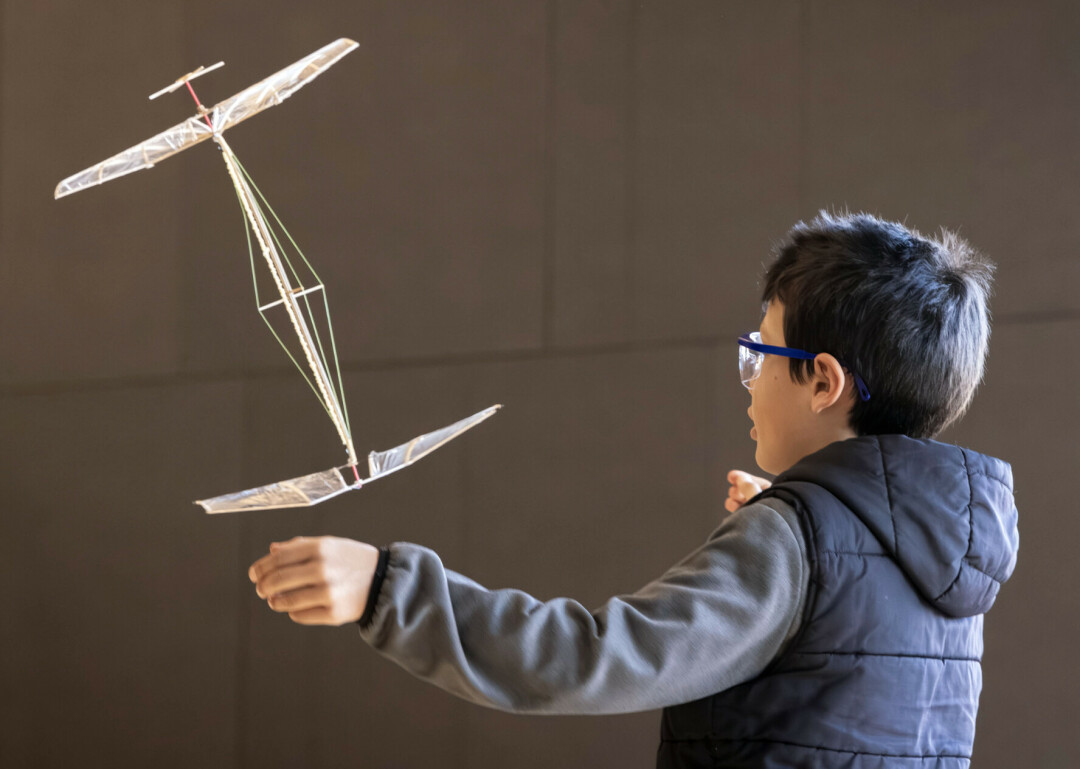
More than 70 middle and high school teams participated in Montana’s 42nd Science Olympiad, putting their vehicles, helicopters and levers to the test against other schools. They competed in astronomy, meteorology, chemistry and other events while visiting MSU labs and classrooms to learn about topics ranging from honeybee health to microfabrication.   

Nearly 300 medals, ribbons and certificates went to individual event winners, and Science Olympiad team trophies went to:  

Division B: Middle school 
  1. Corvallis Middle School. 
  2. Hamilton Middle School. 
  3. Helena Middle School.
Division B: Middle school, small schools division 
  1. Headwaters Academy, Bozeman. 
  2. Helena Area Christian Home Educators (HACHE).
  3. Choteau Junior High. 
Division C: High school 
  1. Hamilton High School. 
  2. Big Sky High School (Missoula).
  3. Corvallis High School. 
Division C: High school, small schools division 
  1. Choteau High School. 
  2. Ennis High School.
  3. Roundup High School.  
Since 1985, the Montana Science Olympiad state tournament has been hosted at MSU by the Science Math Resource Center in the Department of Education. It is one of the country’s largest science, technology, engineering and math competitions, with more than 6,300 teams participating each year from all 50 states. 

For more information, contact state tournament organizer Suzi Taylor at taylor@montana.edu or 406-994-2336.  

Add a Comment »

Friday, Feb. 20th, 2026

Montana State art historians connect acclaimed sculptor Edmonia Lewis to Bozeman

BOZEMAN — Many mysteries surround the personal life of acclaimed sculptor Edmonia Lewis. But her actions tell a story — one that Montana State University art historians are piecing together with researchers around the world.  

Their findings are included in the catalog for the largest exhibition to date on Lewis and her 19th century artwork, which opened on Feb. 14 at the Peabody Essex Museum in Salem, Massachusetts. Lewis, likely born in 1844 in New York, was the first Black and Indigenous artist to earn international recognitionfor her neoclassical sculptures. She was a descendant of the Mississauga of the Credit nation residing in present-day Ontario, and she died in London in 1907 at about the age of 63.  

Edmonia's history and original artwork will also be displayed in a Museum of the Rockies exhibition titled “Chisel and Razor: Art, Entrepreneurship and the Lewis Family,” which opens Oct. 12 and highlights Edmonia’s familial connection to Bozeman.   

“When we first heard of the Peabody show, I think we were a little daunted for a moment,” said Regina Gee, professor of art history in the College of Arts and Architecture who studies Roman art. “It connected us to a network of scholars interested in similar research questions, but then we began to realize we have something to say that other exhibits don't have.”  

What most other researchers don’t have is Samuel Lewis. Samuel, Edmonia’s older brother, is often a footnote in discussions about the sculptor, but he had a significant impact on her life, and therefore American art history. Melissa Ragain, professor of American and modern art, spent time studying Samuelin MSU’s museum, library and city archives, in addition to connecting with local historians and Eileen Tenney, an owner of Samuel’s house on South Bozeman Avenue. Ragain’s expertise was recently featured in a New York Times article exploring the resurgence of scholarship on Edmonia. 

Samuel settled in Bozeman in 1868 shortly after the Civil War and became a cornerstone of the community with his barbershop and his magic performances for youth, which raised money for local churches, charities and civic projects, Ragain said. His flair for performance art, which he studied in Paris in the 1860s, gave both him and his family a public voice at a time when Black residents had limits placed on their social mobility. 

As he was pursuing popular art in Bozeman, his sister embraced the “fine art” of marble sculpture in Rome. Her move abroad in 1865 was inspired partly by Samuel’s stories of Europe, where he found a thriving arts scene and a place to escape the prejudices of America, Ragain said. Edmonia had faced several instances of racism at Oberlin College in Ohio, which she attended in 1859 with financial help from Samuel, and left before completing her degree.  

“They supported each other,” Ragain said. “Her celebrity helped him to start his businesses in Montana. His money helps support her schooling and then in her later years supported her when market interest in neoclassical sculpture waned. There is no Edmonia without Samuel; no Samuel without Edmonia.” 

Without much money to her name, Edmonia founded a popular studio in Rome alongside other female American artists. There, she created her magnum opus, The Death of Cleopatra, a 3-ton marble piece depicting queen Cleopatra slumped on her throne after death. Gee is studying how 19th century collections of ancient art in Rome may have inspired the piece, and she hopes to visit the Vatican and Capitoline museums in the future to learn more.  

The sculpture lived many lives after its creation. Edmonia first shipped it to Philadelphia for an exhibition, using funds left to her by Lizzie Williams, a formerly enslaved settler who became a restauranteur and hotelier in Bozeman. In later years, it became a grave marker for a racehorse and decoration in aChicago saloon before finally landing in the Smithsonian in Washington, D.C., in 1994 after its rediscovery in a suburban shopping mall. 

Gee and Ragain enlisted Montana Tech mechanical engineering students to help recreate the sculpture using 3D printing technology and detailed scans provided by the Smithsonian. The resulting replica will be displayed in the Museum of the Rockies from Oct. 12, 2026, to Sept. 12, 2027, along with other original artworks and documents from the Lewis siblings that have never been shown before in Montana.  

“A central conceit of the show is our imagining what it would be like for Edmonia to visit her brother, as though she was bringing these pieces back home where they belong,” said Ragain, who will also co-host an academic symposium with Gee that is inspired by Edmonia on Oct. 23-24 at MSU. 

Until recently, Edmonia was thought to have last appeared in archival records in the 1880s, and not much is known about her later years. Researchers, like those at MSU, are scouring letters written by others about Edmonia to learn more, Ragain said. Preliminary research from Quest Dovky, a graduate of MSU’s art history program, helped identify where Edmonia traveled and the locations of her existing artwork, providing insight into her network of fellow artists and American abolitionists.  

Dovky, who grew up in a military family and lived in Belgrade, joined the study as an undergraduate research assistant in 2022. He did so with support from the McNair Scholars Program, which provides research opportunities for exemplary first-generation, low-income and historically underrepresented students. He is now preparing to graduate from MSU in May with a master’s in history, which he was inspired to pursue after presenting his Edmonia research in California and receiving praise for his storytelling ability.  

“The magic of doing history is being able to tell the story that you're seeing, that's being spoken to you by the archives,” said Dovky, who post-graduation will continue working as a curatorial assistant for Tinworks Art in Bozeman on a June exhibition featuring the Lewis siblings. The exhibition is curated by Ragain, MSU professors and contemporary artists.

Add a Comment »

Montana State nursing college alum and Nordic skier Anna Pryce shatters Olympic expectations

BOZEMAN — In her first year of nursing school at Montana State University, student-athlete Anna Pryce struggled. A member of the MSU ski team also pursuing a notoriously difficult degree, Pryce had to miss morning Nordic practices for class, and at times she needed to request extensions on assignments due to traveling for races. 

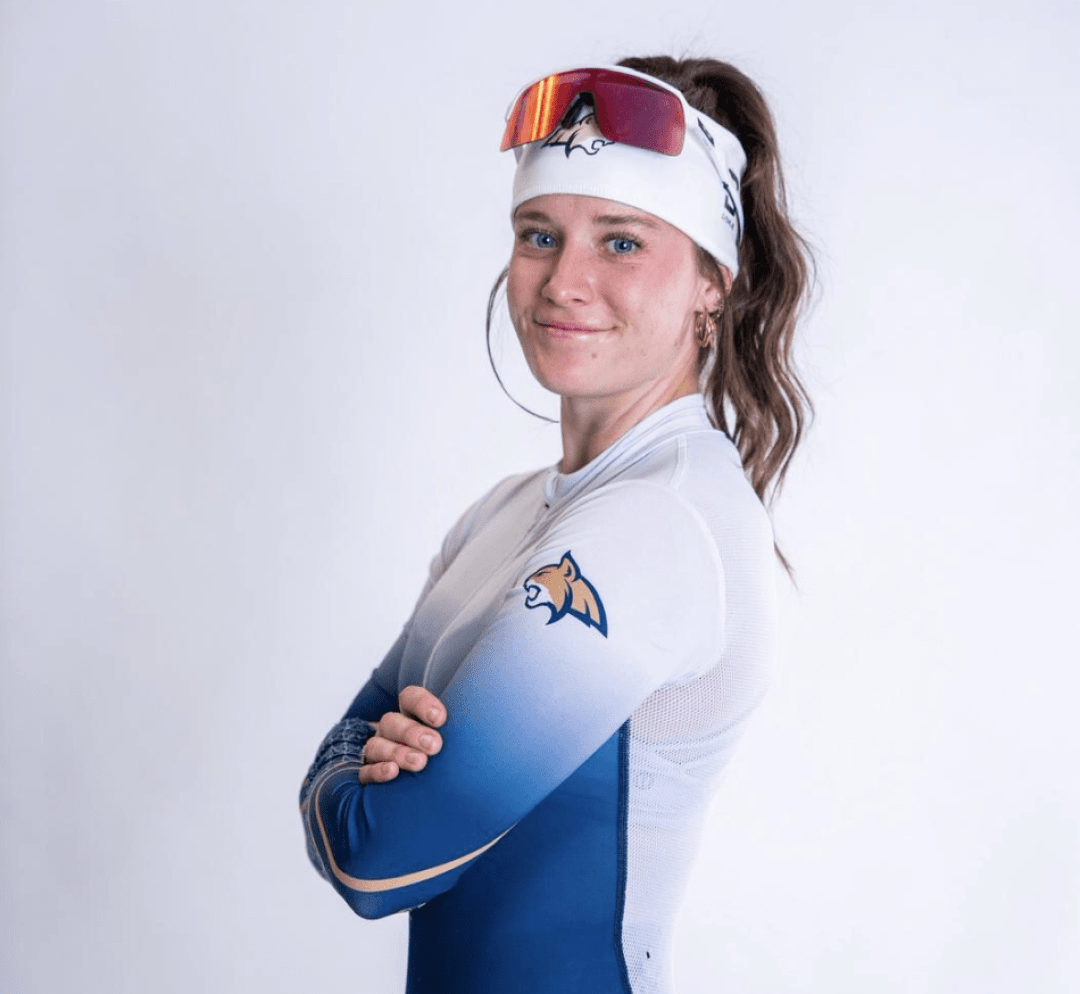
She felt like she was making sacrifices in both her skiing and academics, and she thought that year might be her last as a ski racer. But the support of her mentors and camaraderie with teammates inspired Pryce to keep competing. That persistence led her all the way to Milano Cortina, Italy, where she competed in three events in the Winter Olympics as a Nordic skier for Team Great Britain.  

“My senior year of school, I had such a fun season. It was just a really good time with my teammates and my coaches,” Pryce said in a recent video interview from Milan. “I was kind of thinking about quitting skiing (after college), but I decided to do one more year. I'm now really enjoying myself and that was all because of skiing at MSU. I really owe it to everyone there for keeping me going.” 

Pryce recalled how advice from MSU clinical instructor Juanita Wade in the Mark and Robyn Jones College of Nursing influenced her path to the Olympics. In trying to figure out how to pursue both skiing and nursing after graduating in May 2025, Wade reminded Pryce that nursing will “always be there for her” as a career. But the time for her to fully pursue ski racing, Wade said, is now.  

“When I knew I was going to the Olympics, I texted her like, ‘I just want you to know that that meant so much to me,’” said Pryce, who was born in Scotland and raised in Calgary, Alberta. She is now based in Canmore.  

Pryce was in good company in Italy. Three other former Bobcats competed in the Winter Olympics as well: Riley Seger (Alpine skier for Canada), Keely Cashman (Alpine for the U.S.) and Johanna Taliharm (biathlon for Estonia), alongside current student Justine Lamontagne (Alpine for Canada).   

Pryce, 24, raced in three Olympic events: the women’s skiathlon on Feb. 7, the women’s sprint classic on Feb. 10, and the women’s 10K interval start freestyle on Feb. 12.  

Pryce delivered impressive results as the sole female Nordic skier for Great Britain, earning the best-ever result by a British woman in the sprint classic with a time of 3:50.88 – just over one second behind qualifying for the quarterfinals. In the 10K freestyle, Pryce finished 24th with a time of 24:55.1, shattering the expectations she had for herself.  

“I was kind of shocked and was like, ‘What the heck is going on?’ It was a really fun day,” Pryce said. “My body felt good and it was a good surprise. I wasn’t expecting to feel that good or do that well.” 

The Olympic experience has been super cool and unique, Pryce said. Because Milan built limited new infrastructure for the games in favor of retrofitting existing structures, the Olympic village was spread across five mini villages, she said. She stayed in a hotel with other Nordic skiers and ski jumpers and enjoyed watching her fellow teammates compete, in addition to indulging in the tasty pizza and pasta that Italy is known for (though the morning of her races, she stuck with rice for breakfast).  

It has also been a full-circle moment to compete alongside athletes who were her role models growing up, Pryce said, notably British Nordic racer Andrew Musgrave. They recreated a photo she had taken with him at a World Cup race a decade prior, she said.  

Pryce’s best friend and boyfriend came to Milan with her. But one person notably missing was her mom, who died during her senior year of college. Pryce said her mom was a big skier, and memories of skiing with her family every weekend as a kid are what got her into the sport.  
"(The Olympics are) one of the bigger things that have happened since she had passed away. It was definitely hard not having her around. But she’d just be really excited for me, I think,” Pryce said. She spoke candidly about her loss in an article published online by Team Great Britain.  
Pryce, who said she first became interested in nursing due to the field’s job security, attended nursing school on MSU’s Bozeman campus and did her clinical shifts overnight in Bozeman Health’s emergency department.  

Rebecca Rassi, a clinical instructor of nursing for the Bozeman campus, taught Pryce early on in college and also watched many of her races for the MSU ski team. She said that the student-athlete approached every challenge with focus and a desire to do her best.  

“Few can fully appreciate the difficulty of balancing demanding nursing coursework, clinicals and the intensity of collegiate Nordic skiing,” Rassi said. “Earning her nursing degree this past May and then now competing at the Olympics on one of the world’s largest stages in Italy is a testament to her incredible work ethic and spirit.” 

MSU Nordic coach Adam St. Pierre recruited Pryce based on her Canadian ski team results in high school. He commended the nursing college for being easy to work with in terms of accommodating Pryce’s schedule.  

“They’re very willing to work with people who have proven their abilities,” St. Pierre said. “Because Anna is such a hard worker, and really just a pleasant person, people wanted to help her.”  

St. Pierre said he woke up early – around 3 a.m. – to watch her races live in Italy. 
“We’re just proud. There’s no other word for it, given what she’s been able to accomplish and how she grew and matured as a person in her time at MSU,” St. Pierre said. “She’s just a great example of the kind of athletes we need. We want every athlete to have a similar maturity to Anna.”  

After her Olympic races, Pryce headed to Norway to continue training for upcoming World Cup events. She recently decided to continue racing this coming year, but she is also interested in finding part-time clinical work to keep her nursing skills sharp. In terms of another Winter Games, four years is a long way off, Pryce said. She’s just trying to take things day by day.  
“It’s great to always know that I’ve got nursing when I’m done,” Pryce said of her future plans. “There’s going to be a job for me somewhere.”  

Add a Comment »

News Comments