Wednesday, Jan. 31st, 2024

Voters to Decide on Study of Gallatin County Form of Government

This June, voters in Gallatin County will get to decide if they’d like to study changing the form of their county government.  

On Tuesday, Jan. 30, Gallatin County Commissioners voted to put a question on the June 4 ballot asking voters if they’d like to establish and fund a study commission to examine Gallatin County government and make recommendations for changes. 

The Montana Constitution requires that every 10 years, each city and county government in the state ask their voters whether they want to undertake a review of their local government.  

If voters agree to establish and fund a study commission, seven citizens will be elected in a nonpartisan election in November to serve. They will be tasked with studying the existing form, powers and delivery of public services of our county government and compare those with other forms of government available under state law. 

If approved, the cost of the study commission would be capped at one half of one mill, which is equivalent to about $360,000. 

The last time voters opted to study Gallatin County government was in 1994. 

“This opportunity afforded by our state constitution is the only chance we as citizens get to take a hard look at the way our local governments operate,” said Gallatin County Commissioner Scott MacFarlane. “Everyone agrees that Gallatin County has many new and different challenges than we had decades ago, and perhaps the tools we use to address those challenges could use an update.” 

Since the local government review election is for cities and counties, voters who live within city/town limits of Bozeman, Belgrade, Manhattan, Three Forks and West Yellowstone will be presented with the question of whether to hold a local government review election twice (once for the county of residence and once for the city/town of residence.) 

For more information on this process, please see the Montana State University Local Government Center’s website. 

Add a Comment »

Street Sign Thefts in Gallatin County

In a response to an uptick in street sign thefts throughout the area, Gallatin County officials are encouraging the public to report information related to these crimes. 

Last weekend, 49 street signs were stolen across Gallatin County. Simple signs cost $200 in time and materials apiece to replace. More complex signs can cost up to $3,000 if they are stolen or destroyed. 

The implications of these thefts extend beyond mere financial burdens. The absence of vital street signs poses a serious safety risk for drivers navigating our community. Moreover, the depletion of resources required for sign replacement diverts Gallatin County Road Department staff from essential projects, hampering the efficiency of vital public services. 

The Gallatin County Sheriff’s Office encourages residents to promptly report any instances of street sign theft. Additionally, citizens are urged to notify authorities if they observe county street signs in dorms, apartments, residences, garages, or other structures.

To report incidents or provide information, please contact the sheriff’s office non-emergency line at 406-582-2100. 

“These thefts not only burden our hardworking taxpayers but also pose unnecessary risks to our community,” said Gallatin County Sheriff Dan Springer. “We sincerely appreciate the public’s collaboration in reporting this criminal activity.”

Add a Comment »

Tuesday, Jan. 30th, 2024

Gardening On The Go: Portable Gardens


While homeowners can convert their backyards into beautiful gardens, renting an apartment comes with a different playbook. For the latter, having a garden may seem out of the equation.

Not anymore!

Are you familiar with the term “portable gardens”?

A portable garden is a container of plants, perfect for those with restricted growing space. It's easy to relocate, transition, and manage on the go. It’s ideal for growing edible crops and ornamental plants. These gardens help you get creative as restricted growing space shouldn’t limit what you can grow.

Creating a Portable Garden
While creating your garden on the go, first consider the limited space you have and how compact your plants of choice are. Do a bit of research to ensure that the plants will thrive under portable conditions.

When creating a portable garden, follow these steps:

1. Select Your Plants and Planter
This is the first step in any gardening venture. You should know what you’re planting and where you’ll be planting it. You don’t have any restrictions here; your garden on the go can lay on anything; a wheelbarrow or trolley, you name it!

2. Assemble Your Garden Bed
Form your garden frame and screw together anything that needs screwing. Line up your plants accordingly and ensure you leave some gaps so the soil drains well. If you’re buying a garden that’s already assembled, skip this step.

3. Do the Planting
Prepare your garden bed by filling it with good-quality soil. Spread it out evenly and add your plants gently. Remember, they’ll only grow well when they are planted the right way and are firmly rooted in the soil. If they feel stuck, gently tease the roots.

4. Get Moving
Once you have your plants in order, get moving! Wheel or carry your garden to the ideal spot, preferably, where there’s sufficient light.

Types of Portable Gardens
You’re spoilt for choice when it comes to portable gardens. All you need is your creative thinking cap, a soil container, and your favorite plants. You could decide to go for ornamental plants, those that thrive in clay soil, or even make a herb garden, you choose!

Here are some different types of portable gardens to consider:

• Clay Pots
Albeit common, clay is an attractive and inexpensive option. As the pots are porous, they allow water and moisture to get to your plants easily. These pots are especially ideal for drought-resistant plants.

• Glazed Ceramic Pots
Ceramic pots are as beautiful as their clay counterparts. They are especially good for houseplants. While they hold moisture well, they are fragile and could crack in extreme temperatures.

• Hypertufa
This molded material is similar to rock concrete but it’s light in nature, fun to put together, and porous. It’s best for plants that require a lot of moisture.

• Plastic or Resin
Your plastic garden will be lightweight, weather-resistant- resistant and beautiful. While the garden will retain water well, place it firmly as it could tip over in windy conditions.

• Lined-Hanging Baskets
These containers are attractive and decorative. Line them with replaceable plastic so your soil is not drying out.

• Metal
Metal containers are lightweight, portable, and like plastic, won’t break down with temperature changes. But be careful, metal heats up quickly during summer and will cause the soil to dry out thus needing a lot of moisture.

• Wood
Wood is attractive, and temperature-resistant. As it rots over time, prepare to change the containers as needed.

Tips For Gardens on the Go
Growing a portable is a bit different from gardening on the ground up. As a container has limited soil and root space, it can become either waterlogged or too dry. To ensure your soil is in good condition, use a moisture meter. Compost and vermiculite will help with both drainage and water retention.

Ensuring your plants get enough light is also an important part of the equation. At least 6 hours of sunlight per day is essential but if you don’t have that much sun, it’s best to go for plants that thrive in shady conditions.

Also, plants should fit your container perfectly. If they are too large, they won’t grow properly and will overwhelm the other plants in your container. The good news is that container options are endless. Determine the plants you’ll be growing then research on the best container(s) to purchase. You can also reuse old items found in your home like baskets and upcycled wooden crates to grow your plants. This adds character and charm.

Finally, add wheels and cages to make the most of your portable garden. They will add dimension to an otherwise limited space. A garden that's a little raised will also give your plants better exposure to light and make watering the plants a tad much easier.

Add a Comment »

Monday, Jan. 29th, 2024

Emmy-Nominated Series The Montana Sessions To Premiere At Big Sky Documentary Film Festival

New Episodes of the Emmy-Nominated Series will Feature Outdoor Performances by Montana Musicians: Madeline Hawthorne, Band of Drifters, Tanner Laws, Wes Urbaniak, Dusty the Kid, and Smith / McKay All Day.

The series was made possible by a grant from The Greater Montana Foundation.

BOZEMAN - 4:08 Productions has announced the highly anticipated release of their fourth season of the Emmy-nominated series, The Montana Sessions. This season will showcase some of the state's most talented musicians, performing in locations around Montana, including mountain ranges, riverbanks and evergreen forests.

The Montana Sessions / Season 4 will feature twelve new episodes, premiering from Tuesday, February 20th - Sunday, February 25th at the Big Sky Documentary Film Festival in Missoula, Montana. Following the Oscar qualifying event, the series will be available for public viewing on the 4:08 Productions YouTube channel. The line-up includes performances by Madeline Hawthorne, Band of Drifters, Wes Urbaniak, Tanner Laws, Dusty The Kid, and Smith / McKay All Day.

The series is directed by Bozeman raised, Emmy Award-Winning Filmmaker Nic Davis, the Founder of 4:08 Productions. His debut feature film Enormous: The Gorge Story (2021) had a theatrical release, and was then released digitally through Greenwich Entertainment (Free Solo, Assassins, Echo in the Canyon). He then released two feature films, Ivan Doig: Landscapes of a Western Mind (with PBS) and 21 Miles in Malibu (with Michel Shane - iRobot, Catch Me If You Can) in early 2023. Nic has worked extensively across the music industry with artists including Dave Matthews, JP Saxe, Killer Mike (Run the Jewels), Pearl Jam, Jason Mraz and many others.

"We are thrilled to bring viewers the fourth season of The Montana Sessions," said 4:08 Productions' founder, Nic Davis. "Over the past 8 years our crew has worked through the Montana snow, rain, and high winds to capture these sessions in unique locations around the state. The environment that they are filmed in is such a critical part of the series - for the visual beauty of the backdrops, but also for the inspiration it brings to all of the performances. I am so proud of our crew, and the musicians featured, that make them all happen outside of the traditional studio environment. We can't wait for everyone to experience it."

The Montana Sessions Season 4 promises to be an unforgettable experience that showcases some of the most talented musicians in the state, filmed against the breathtaking scenery that only Montana can offer. Attend the premiere of the highly anticipated series, screening from Tuesday, February 20th, through Sunday, February 25th at the Big Sky Documentary Film Festival in Missoula, Montana.

Music fans can stay up-to-date on all things Montana Sessions, as well as 4:08 Productions’ other projects, by following the company on Twitter, Instagram, and Facebook and by subscribing to their official YouTube channel, which will be hosting the videos following their initial premiere.

Band Of Drifters plays Modern American Roots Music with a primary goal in mind: To encourage you to dance. Based largely in Montana & Tennessee, the band includes players from across the country; keeping the music varied in arrangement, instrumentation, and regional influences. Their sets draw from country, folk and blues traditions with an emphasis on original songs, done in the old style.

Madeline Hawthorne’s musical style is a fusion of roots, country, and soul, resulting in a raw and rousing sound that transforms pain into beauty and doubt into hope. Her captivating performances reflect her unwavering resilience and bold approach to embracing the unknown.

Wes Urbaniak bills himself as a “Fairytale Scientist”, combining an array of genres rooted in folk music to create a new genre he calls “Mountain Folk”. With his unique and experimental style, he provides a fresh perspective on both the physical and emotional realms to guide listeners on a journey of self-discovery.

Tanner Laws is a born-and-raised local whose music seeks to explore the world around him through the lens of a country boy living in Montana. With a hat on his head and an acoustic guitar in hand, he wears his passions on his sleeves, creating absorbing songs that tell tales of hunting, fishing, as well as sharing important life lessons.

Dusty the Kid is a multi-instrumentalist artist whose commanding presence in front of a crowd is only matched by the tenacity of his lyrics. Originating from the mountains of Western Montana, Dusty tells thought-provoking, politically-charged tales through his own style of folk music that’s as rousing as it is idealistic.

Smith / McKay All Day is a genre-defying two-man band from Missoula, MT. They may look and sometimes act the part, but they’re not your eccentric cousin and his buddy plunking away on instruments next to the shed while frying pork chops on the hot plate nestled between them. No, sir. These guys are bonafide.

4:08 Productions creates high-value, story driven content for a variety of clients. Their productions include Emmy-winning documentaries, national commercials for Fortune 500 companies, and branded content. The company was founded in 2011 by filmmaker and director Nic Davis.

The Greater Montana Foundation benefits the people of Montana by encouraging communication, with an emphasis on electronic media, issues, trends, and values important to present and future generations of Montanans.

Add a Comment »

Cream Creek Snowmobile Accident Rescue


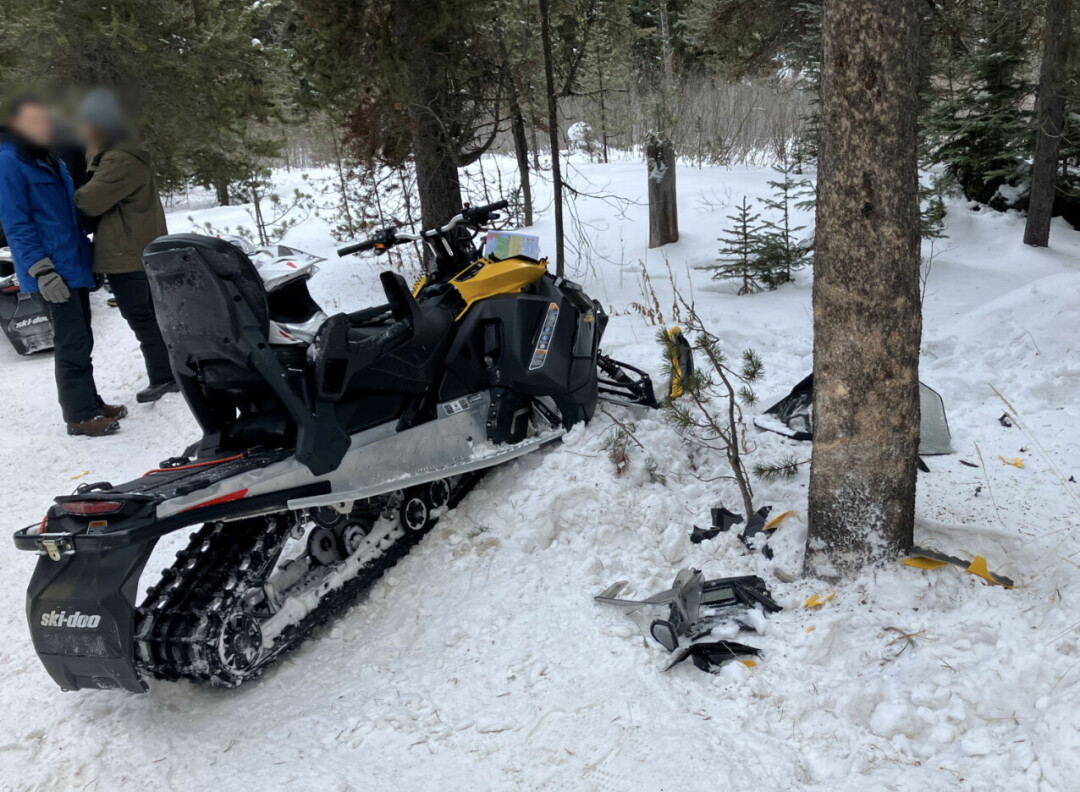
On January 26, 2024, at 9:37am, West Yellowstone Police Department Dispatch received a 911 call from a snowmobiler who was recreating with family members when one of the snowmobilers sustained injuries as a result of a snowmobile accident. The caller indicated that one of the snowmobilers in the party was in need of immediate medical treatment near Cream Creek, 5 miles west of West Yellowstone, Montana.

Gallatin County Sheriff Search and Rescue (GCSSAR) volunteers from the West Yellowstone detachment, US Forest Service Law Enforcement, West Yellowstone Police Department, Hebgen Basin Rural Fire District (HBFD), Yellowstone National Park Law Enforcement, and Gallatin County Sheriff’ Deputies responded to the request for aid. Upon arrival at the scene, responders provided first aid and transported the injured person by a specialized snowmobile towed ambulance to a waiting HBFD ambulance for further evaluation. The injured snowmobiler was then transported to Eastern Idaho Regional Medical Center for higher level care.

Gallatin County Sheriff Dan Springer would like to remind winter recreationalists that having a plan for contingencies, knowing the location you are recreating, and being able to call for aid in remote areas is crucial when recreating in Montana’s great outdoors.

Add a Comment »

Montana files notice of intent to sue over wolverine listing

HELENA – Montana Fish, Wildlife & Parks has notified the U.S. Fish and Wildlife Service (FWS) of its intent to pursue legal action over the recent listing of wolverines as a threatened species.

“In Montana, wolverines continue to do well and inhabit much, if not all, of their available habitat,” said Montana Fish, Wildlife & Parks Chief of Conservation Policy Quentin Kujala. “We work closely with our neighboring states to ensure the continued conservation of these iconic species. Federal protections in this case will only get in the way of good conservation work.”

In its listing notice, the FWS switched course by identifying the lower 48 states as a distinct population segment. This finding comes after the FWS previously found the population of wolverines in the lower 48 was connected to those in Canada. The finding came despite protections in Canada and states like Montana to ensure wolverine conservation.

In its listing, the FWS also used climate models from the year 2100 to point to a projected decrease in snowpack to justify its move. This rationale was used despite recent science that shows wolverines are adaptable and able to den and reproduce without snow.  

“In the Northern Rockies, wolverines are doing well and states are working closely on monitoring and conservation efforts. This listing is not only unnecessary, it fails to recognize current science,” said FWP Director Dustin Temple.  

Wolverines were listed as a threatened species by the FWS in November. The first step in challenging this listing is filing a Notice of Intent to Sue with the FWS. Following this action, the state will file a lawsuit in federal district court.

Add a Comment »

Bozeman Symphony Seeks $75,000 to Reach Campaign Goal by January 31

The Bozeman Symphony’s Board of Directors pledged an additional matching gift of $43,000 for its Ode to Joy annual giving campaign to encourage others’ support. For every dollar donated, Board members will match what the organization raises to $43,000 through January 31. Another $75,000 is needed to meet the campaign’s goal of $300,000. The Ode to Joy campaign supports the Bozeman Symphony’s activities on stage at the concert hall and with various community activities and educational concerts throughout the region.

This past season, the Symphony had 1,131 loyal subscribers, issued 16,994 tickets to patrons from 63 Montana communities, entertained audiences in seven sold-out performances, and presented free concerts to more than 3,000 students and families. Ticket sales represent only 37 percent of the Symphony’s annual budget. Donations are necessary to continue programming, recruit musicians and guest artists, and support community programming.

The Symphony is aiming to expand its educational footprint by engaging younger audiences and creating opportunities for community members to benefit from music education and engagement efforts. Increasing access, impact, and musical offerings for the community is a strategic priority. Donations to Ode to Joy will support Symphony Storytimes, Kinderkonzerts, and help expand Far Afield, a program providing symphonic music in rural Montana. Support will also help launch a new Joy program in partnership with Bozeman Health to lift the spirit of patients and serve those who cannot attend concerts in person.

Help the Symphony carry out its mission to engage, unite, and uplift the community by supporting the Ode to Joy campaign. Donate through January 31 at bozemansymphony.org/donate or send a check to Bozeman Symphony, 402 East Main Street, Suite 202, Bozeman, MT  59715. For more information, call (406) 585-9774.

Add a Comment »

2024 Pattie Layser Greater Yellowstone Creative Writing and Journalism Fellowship Now Open

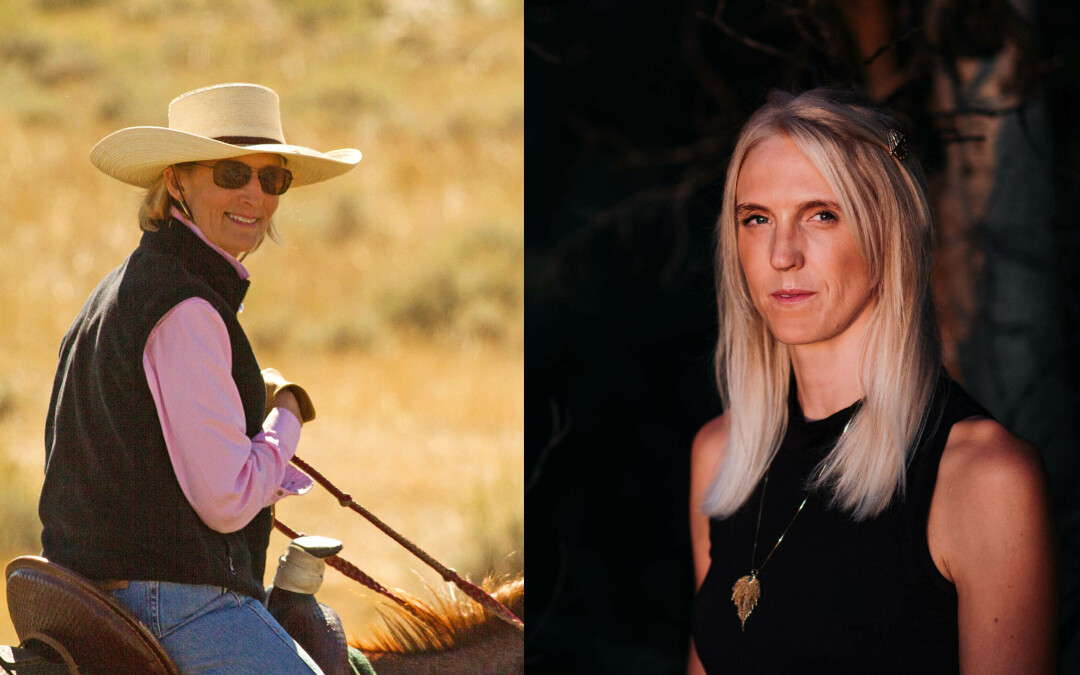
(Left) Bebe Crouse will serve as a juror for the second year in a row for the Pattie Layser Greater Yellowstone Creative Writing and Journalism Fellowship. (Right) Kelsey K. Sather will be joining Bebe as a co-juror this year. Photo by Blair Speed. Wyoming Arts Council Accepting Applications for the 2024 Pattie Layser Greater Yellowstone Creative Writing and Journalism Fellowship

The Wyoming Arts Council is now accepting applications for the 2024 Pattie Layser Greater Yellowstone Creative Writing and Journalism Fellowship.

This annual prestigious fellowship of $3,500 is a national call open to creative writers (poetry, fiction, nonfiction) and journalists (writer, photojournalist, videographer, documentary filmmaker, online or print media) who demonstrate serious inquiry and dedication to the Greater Yellowstone region through their work. This fellowship seeks to intersect science, education, current events, and conservation to effectively communicate the Greater Yellowstone’s natural history and singular importance to society through creative and exceptional writing and subject communication.

Applications are accepted online via Submittable. The application deadline is March 15, 2024. Established and recognized authors are being sought, but emerging and mid-career writers are also encouraged to apply. Wyoming state residency is not required.

The fellowship recipient will be expected to create or complete a relevant publishable or produced work and may be requested or encouraged to make public presentations. In addition to the financial award, the fellowship recipient may elect to also receive a one week housing residency at one of several prearranged different locations within the Greater Yellowstone region. Such residency will be based on availability and will be negotiated with the fellowship recipient.

Bebe Crouse will serve as a juror for the second year in a row. Crouse spent more than 25 years as a working journalist before taking her position as Associate Director of Communications for The Nature Conservancy. Bebe spent a decade as Environment and Western Editor for NPR. She has reported and produced award-winning radio and television news stories and documentaries for national media networks including NPR, CBS, NBC, Wall Street Journal, BBC, and PBS. Her work has taken her across the United States, Europe, Mexico, Cuba, Kenya and Central America. She also spent time as a mountain and river guide and an environmental planner in Oregon and California. Her experience combined with her education in Environmental Science positions her well for her job with The Nature Conservancy where she continues to write about the things she values. In her free time, she enjoys traveling, hiking and floating in kayak or raft.

Kelsey K. Sather will join Bebe as juror this year. Sather was born and raised in Bozeman, Montana. She’s the author of “Birth of the Anima,” and is a finalist for the National Indie Excellence Award. Her stories, both real and imagined, explore the complexities of human-nature relations. She attended the University of Utah on fellowship and graduated with an MA in Environmental Humanities. After teaching at the college level, Kelsey co-founded a writers’ collective, where she facilitated creative writing workshops for all ages. She’s worked with hundreds of writers on projects ranging from bestselling nonfiction to short stories and school papers. Today, she continues teaching at outdoor writing retreats while working on the second book in her eco-fantasy series, “Ancient Language of the Earth.” She is also an avid rock climber and coaches the Bozeman Climbing Team. At the core of her vocation as an author and teacher is the hopeful intention to help people live with deeper connections to self, nature, and each other.

This Fellowship is made possible with generous funding from The Pattie and Earle Layser Memorial Fund. In late 2021, The Pattie and Earle Layser Memorial Fund endowed this fellowship with the Wyoming Arts Council, ensuring funding this opportunity for years to come.

A complete list of eligibility requirements and additional information can be found on Submittable. For more information, contact Kimberly Mittelstadt at kimberly.mittelstadt@wyo.gov or 307-274-6673.

Add a Comment »

Ben Miller’s Stand-Up Science Coming to the Last Best Comedy in Bozeman in February


Coming to the Last Best Comedy in Bozeman in February is a multimedia stand-up comedy show about science. 

A show that's equal measures hilarious, educational, and deeply personal. NYC based scientist and comedian Ben Miller uses stories on topics ranging from his musculoskeletal condition to his childhood history with milk as jumping off points for scientific and comedic exploration. Using pictures, graphs, and videos, this multimedia comedy show makes science both approachable and delightful. And you probably like that sort of thing, nerd.

For his first few years as a comedian, Ben was extremely hesitant to tell people that he was a scientist with an ivy league education. Ben worried about coming off as pretentious or unrelatable, something that can easily kill any connection with an audience. Even most other comedians had no idea about his background. But during the lockdowns, he started to reconsider this aversion to discussing his scientific identity and began to realize it was something that made him unique amongst most comedians. Perhaps Ben could combine his skills to both educate and amuse, making science funny and accessible. So, he filmed a few episodes of a web-series very uncreatively titled “Stand-Up Science” . He was genuinely nervous to share the video, but the response was incredible, so he continued making the web-series that has now been developed into the live show that had a completely sold out run at the 2022 Edinburgh Fringe Festival and now he's touring around the US and UK.

Ben Miller is an NYC based comedian who has been working for the past 7 years and in that time, he's performed at all the top clubs in the city such as Broadway Comedy Club, Stand Up NY, Dangerfield's, Carolines, and The Stand. He's currently ranked as the top roast battler in NYC. He also has a degree in Materials Science and Engineering from Columbia University. He's worked with electron microscopes, been a teacher on a science bus, 3D printed cookies, and diffused a few bar fights while on stage. His jokes are sharp and self-deprecating, and he was once called “one of NYC’s best pound-for-pound joke writers” which isn’t saying much considering how little he weighs. In 2023, he was an Artist in Residence at Hawai’i Volcanoes National Park, the first ever stand-up comedian selected by the National Parks Arts Foundation.

Praise for Stand-Up Science:

“One of NYC’s best pound for pound joke writers Ben Miller is unsurprisingly a scientist… you have to see this just for the Spike Lee joke, I almost spit milk out my nose when I heard it.” [Matt Levy, Comedy Stray Notes]

Fantastic show! Ben was a delight. Deeply personal, highly engaging, and rather educational. Highly recommended.” - Audience member

“Ben is genuinely engaging, and very funny (for a geek!)” – Audience member

“THIS GUY IS JUST GREAT. So funny, very unique and so so likeable, I felt completely relaxed and enjoyed every second. Not only is his material brilliant and clever but his ad libs are spot on and he always feels genuine and likeable.” – Audience member

“Have you ever seen a comedian cite their sources? Ben Miller does. Check it out, it’s worth it.” – Audience member


Venue: Last Best Comedy, 321 E Main, Alley Entrance, Bozeman, MT 59715

Ticket Price: $20

Date: Wednesday, February 21st

Time: 8:00 PM

Ticket Link: https://www.lastbestcomedy.com/events/wednesday-night-stand-up-with-ben-miller

Stand-Up Science Teaser Video: https://www.youtube.com/watch?v=xxFq8TN3MD4

Add a Comment »

Including sulfur in soil fertility programs can benefit crops, according to Montana State Extension specialist

BOZEMAN — Sulfur’s role as an agricultural nutrient is often overlooked, but including it in soil fertility programs can positively impact crop yield, quality and economics, according to a Montana State University Extension specialist.

Clain Jones, MSU Extension soil fertility specialist and professor in the Department of Land Resources and Environmental Sciences, said that modern phosphorus and potassium fertilizers contain less sulfur as a manufacturing byproduct than they historically did. Coupled with higher-yielding varieties and more intense cropping, leading to more sulfur being removed from fields, there is an increased chance for sulfur deficiencies. Sulfur-deficient plants are often stunted with yellow upper leaves, in contrast to yellow lower leaves, which indicates nitrogen deficiency, Jones said.

"Crops can respond to sulfur additions in a manner similar to nitrogen," Jones said.

Sulfur, like nitrogen, is a building block for proteins. If sulfur is deficient, crops may not use nitrogen fertilizer as efficiently, resulting in less than optimum grain protein and yield. By applying sulfur and increasing the efficiency of nitrogen use, farmers can also decrease nitrate leaching and soil acidification — and possibly lower the amount of nitrogen needed, Jones said.

Testing

Jones said there is no single recommended sulfur soil test as there is with nitrate. That’s partly because soil sulfur availability is often highly variable across a field. Coarse-textured soils with low organic matter are the most susceptible to sulfur deficiencies. He noted that when six to 10 soil samples from across a field are mixed for laboratory analysis — which is the standard in Montana — one or two high-sulfur samples could skew the results and suggest the field doesn’t need sulfur when most of it is deficient.

“Although more expensive in the short term, it can be highly beneficial to learn which parts of a field have low sulfur through ‘grid sampling’ instead of mixed samples,” Jones said.

Jones recommends learning what sulfur test a laboratory uses. He said numerous soil tests are available, and each can produce very different results.

“For example, the Mehlich-3 test, which is used in midwestern and eastern states, greatly overestimates sulfur availability in higher-pH Montana soils,” Jones said. Calcium phosphate extraction tests are recommended for western soils, but other extracts might do an adequate job of assessing available sulfur, too, Jones said.

In addition, Jones recommends testing sulfur fertilizer in strips within fields and conducting plant tissue sampling to learn if crops have sulfur deficiencies. Plant tissue testing should be done early in the season so that a “rescue” sulfur treatment can be applied to nitrogen-deficient areas.

Fertilization

Jones recommends considering the “4Rs” – right place, right rate, right time and right source – for fertilization.

Because sulfur is needed early in the growing season, it should be applied at seeding, either in the furrow or side-banded. Side-banding avoids the risk of fertilizer damage to the seedling when high rates are placed in-furrow, he said. Sulfate is mobile and can also be applied as a surface broadcast application if ammonium sulfate is used.

Gypsum is less acidifying than ammonium sulfate, so Jones recommends using it on acidic soils, even though it’s somewhat less soluble. Elemental sulfur, on the other hand, becomes available too slowly for in-season use and needs to be applied a year or two before it is needed. Fall applications of sulfate are not recommended because sulfur, like nitrogen, can be leached easily by fall-to-spring precipitation.

Unlike other major nutrients, there’s limited guidance for sulfur fertilization rate requirements of Montana crops. Oilseeds, including canola and yellow mustard, need far more sulfur than cereals like wheat and barley, Jones said. He noted that in high-yielding oilseed fields, 20 pounds of sulfur fertilizer per acre should prevent sulfur deficiency, regardless of soil test results.

Alfalfa is also a large user of sulfur, needing about 22 pounds of sulfur per acre for a 4-ton per acre yield. Cereals and pulse crops, like lentils, chickpeas and peas, likely need only 5-10 pounds of sulfur fertilizer per acre, with the higher amount needed on fields with high yield potential.

Research

A recently accepted research paper by Perry Miller, professor in the MSU Department of Land Resources and Environmental Sciences, to be published in the Agronomy Journal, found that only 5 pounds of added sulfur per acre increased lentil grain yield in 20% of sites in Montana and North Dakota. Due to the low cost of sulfur fertilizer, the average increased grain yield easily offset the sulfur fertilizer cost, even when accounting for sites where lentil grain yields did not increase, Jones said.

Jones is currently conducting research funded by the Montana Fertilizer Check-off with colleagues Miller, Pat Carr and Justin Vetch with the MSU Department of Research Centers to determine the sulfur needs of spring canola, pea and wheat, and to evaluate different sulfur soil tests, following previous MSU studies on the effects of sulfur on lentil crops. In addition, there are ongoing Montana sulfur studies on winter canola led by Miller and on cereal forages led by Hayes Goosey in the MSU Department of Animal and Range Sciences.

Goosey noted that adequate sulfur levels can decrease forage nitrate levels in cereal forages. 

“Forage nitrate is a concern for livestock owners because it causes early-term abortions and other reproductive issues in pregnant animals," Goosey said.  

Questions about sulfur or soil nutrients may be directed to Jones at clainj@montana.edu or 406-994-6076.

Add a Comment »

News Comments