


Friday, Mar. 15th, 2024

8 Affordable Decorating Ideas for Bozeman Homes


Creating a beautiful, personalized living space doesn’t have to break the bank. For Bozeman residents, the key to affordable home decoration lies in embracing creativity, utilizing local resources, and making strategic choices that reflect personal style and the unique Montana lifestyle.

Here are eight budget-friendly decorating ideas that can transform your Bozeman home into a cozy, stylish haven.

1. Incorporate Local Nature

Bozeman’s natural surroundings offer a wealth of decorating possibilities. Collect pine cones, stones, branches, or dried wildflowers to create rustic, nature-inspired decor. Arrange your finds in glass jars, as centerpiece arrangements, or even create wall art. This approach not only brings a touch of the outdoors inside but also adds a personal touch that’s practically free.

2. DIY Artwork

Channel the creativity of Bozeman’s art scene by creating your own artwork. Use local landscapes, wildlife, or abstract designs inspired by Montana’s beauty to craft pieces that are uniquely yours. Even if you're not an artist, you can frame beautifully patterned fabric, create a collage of old postcards, or turn your own photography into wall art.

3. Upcycle and Repurpose

Scour Bozeman’s thrift stores, garage sales, and online marketplaces for furniture and decor items that you can upcycle. A coat of paint, new hardware, or a little creativity can transform outdated items into stylish treasures. Repurposing old items not only saves money but also gives your home a unique, eclectic feel that reflects your personality.

4. Mix and Match Textiles

Refresh your space with a mix of textiles like throw pillows, blankets, and curtains that you can sew yourself or find at discount stores. Look for colors and patterns that complement your existing decor but add a new dimension of warmth and comfort. Changing textiles is an easy and inexpensive way to update your home’s look with the seasons or current design trends.

5. Stylish Storage Solutions

Keep clutter at bay with chic storage options. Use baskets, decorative boxes, or even old trunks to store blankets, magazines, or toys. These storage solutions can double as decor, adding to the room’s aesthetic while keeping your space tidy and organized. A beautiful library bookcase not only offers ample storage but can also become a focal point of any room, especially when styled with personal items, books, and decorative pieces.

6. Accent Walls

Create an accent wall with paint or peel-and-stick wallpaper. This can dramatically change the look of any room without the expense of redecorating the entire space. Choose a color or pattern that reflects the natural beauty of Montana, or opt for a hue that adds warmth and depth to your room.

7. Personalize with Photos

Displaying personal photographs can add warmth to your home and is incredibly budget-friendly. Create a gallery wall with thrifted frames painted to match, or hang a string of fairy lights and clip your photos along it for a whimsical touch. This personalizes your space and keeps cherished memories in view.

8. Reimagine Your Space

Sometimes, the most effective way to refresh your home doesn’t cost a dime. Rearranging your furniture, decluttering, or even swapping decor items between rooms can give your space a whole new feel. If you’re looking to update your living room, consider rearranging your layout, switching out throw pillows, or introducing new textures and colors for a fresh look.

Transform Your Home Without Emptying Your Wallet

Decorating your Bozeman home affordably doesn't mean sacrificing style or personal expression. By leveraging local resources, embracing DIY projects, and making thoughtful, strategic decor choices, you can create a space that’s both inviting and reflective of your personal style. Remember, the best home decor resonates with the people who live there, turning a house into a cherished home without stretching your budget.

Add a Comment »

Wednesday, Mar. 13th, 2024

Preliminary proposals for 2025-2026 fishing regulations available for review

HELENA – If you’re interested in providing input on how Montana Fish, Wildlife & Parks is crafting fishing regulations for the next two years, now is your chance. FWP is taking public comment and asking for ideas on initial proposals for the 2025-2026 Fishing Regulations.  

The initial 64 proposals are online now and available for review and comment. Just go to  fwp.mt.gov/aboutfwp/public-comment-opportunities/fishing-regulations.   

FWP is also looking for ideas for regulation changes that aren’t captured in these initial proposals. To answer questions and get feedback on fishing regulations, FWP is hosting public meetings around the state. Staff will use the input to refine the regulation proposals that will go before the Fish and Wildlife Commission in October. The fishing regulations proposals that will be considered by commission will be available for public comment in August. The commission will adopt, amend or reject the proposals at its October meeting.   

Montana’s fishing regulations are split into three districts – west, central and east. Each district has standard regulations. Many of the proposals remove exceptions to district standards that are no longer biologically relevant. Others are intended to increase fishing opportunity, enhance conservation efforts for some species, reduce confusion or improve enforceability. All regulation changes are based on criteria or objectives outlined in the Statewide Fisheries Management Plan.  

Specific statewide proposals include improving definitions of different types of hooks and adjusting regulations for cleaning and transporting fish.  

In the Western Fishing District, proposals include adjusting northern pike possession limits, adjusting bag limits on the Blackfoot River and many tributaries, implementing gear restrictions on the Kootenai River below Libby Dam, and removing a lake trout slot limit on Whitefish Lake.  

In the Central Fishing District, proposals include allowing spearing for northern pike on Hauser and Holter reservoirs, removing spearing for burbot at Tiber Reservoir and Lake Frances, removing exceptions for walleye in the Missouri River from Toston to Canyon Ferry and reducing walleye bag limits from Holter Dam to Black Eagle Dam.  

For the Eastern Fishing District, proposals include clarification of paddlefish regulations because of the new fish bypass channel at Intake, the addition of a tag for paddlefish snagging opportunities in the Missouri River below Fort Peck Dam, regulations to conserve shortnose gar, and conservative crappie limits on Tongue River Reservoir. 

Fishing regulations are now under a process like hunting regulations, going through a comprehensive public review every two years. Fishing regulations are printed during odd numbered years.    

 The meeting schedule is as follows:     

  • Region 1: March 19, 6 p.m., Kalispell, 490 North Meridian Road   

  • Region 2: April 10, 6:30 p.m., Missoula, 201 Spurgin Road   

  • Region 3: March 28, 6 p.m., Bozeman, 1400 South 19th St.   

  • Region 4: April 4, 6 p.m., Great Falls, 4600 Giant Springs Road   

  • Region 5: March 14, 6:30 p.m., Billings, 2300 Lake Elmo Drive   

  • Region 6: March 13, 6 p.m., Glasgow, 1 Airport Road   

  • Region 7: March 21, 6:30 p.m., Miles City, 352 I-94 Business Loop    

FWP will be collecting comments through April 26. The department will also host at least one virtual meeting during this comment period.  

Add a Comment »

Montana State University to offer summer writing camps for youth

BOZEMAN — Registration is now open for Montana State University’s summer writing camps for youths in grades 3 through 12. The camps will be held in July on MSU’s campus.

The Youth Writing Camp is a five-day camp from 9 a.m. to 3 p.m. July 8-12 for students entering grades 5 through 12 in fall 2024. This camp offers commuter and resident options. Students in the resident option stay in a residence hall on campus and eat in the dining hall, while commuter students return home each day. The resident price is $800 through May 31 and $850 after that date. The commuter price is $300 through May 31 and $350 after that date.

The Young Writer’s Camp is a four-day camp from 9 a.m. to 3 p.m. for students entering third and fourth grades in fall 2024. Running Tuesday through Friday, July 9-12, the Young Writer’s Camp only has a commuter option. The price is $250 through May 31 and $275 after May 31.

The camps will have activities such as field trips, writing games and specialized workshops led by local writers. Participants receive guidance and feedback throughout the writing process from licensed educators and will practice writing in multiple genres.

A writing showcase will be held on Friday, July 12, to allow parents to join the campers to celebrate their creativity.

Both camps are presented by the Yellowstone Writing Project and MSU Continuing, Professional and Lifelong Learning. Teachers and junior counselors from the Yellowstone Writing Project, based in MSU’s Department of English in the College of Letters and Science, lead the camp. 

For more information and to register online, please visit ato.montana.edu/ywp/. Continuing, Professional and Lifelong Learning is a program of Academic Technology and Outreach at MSU. ATO works across the university to support and advance its land-grant mission through unique and innovative opportunities for outreach and engagement.

Add a Comment »

Field Projects Help Build Trails and Community

HELENA  — Each year, volunteers hit the trail helping to build and maintain the National Trail System on public lands. The Continental Divide Trail Coalition (CDTC) recently announced the opening of public registration for volunteer field projects in several Rocky Mountain states. Non-profit trail organizations like CDTC partner with Federal agencies and other organizations to plan and implement field projects, and effectively expand federal capacity to build and maintain trails. Projects range in length and level of challenge and occur in the states through which the Continental Divide National Scenic Trail (CDT) traverses: New Mexico, Colorado, Wyoming, Idaho, and Montana. 

“Field-based volunteer stewardship projects are a cornerstone of the work we do, and volunteers are at the heart of these efforts,” said CDTC Executive Director Teresa Martinez (she/her/ella). “While the goal is to maintain the trails, our volunteer stewardship efforts allow us to connect with communities along the CDT. Many of our volunteers are people who live, work, and play in the CDT landscape.” 

In 2023, volunteers with CDTC logged 1,800 hours of CDT maintenance, according to the 2024 CDTC Congressional Report. Each project ranges in length from one to five days and offers something different, from trail maintenance and logging out— clearing sections with downed trees— to trail and bridge construction. CDTC emphasizes that experience with trail work is not required, and their Field Crew Leaders come equipped to lead the projects and teach new skills. 

“It’s very rewarding to watch people gain confidence over the course of each project”, said Haley Gamertsfelder (she/her), CDTC Field Project Coordinator. “Some people come to the project with little or no experience, which allows other participants to mentor new volunteers as well as the project leaders. There’s a real sense of community when we’re on the trail.” 

Aside from sharing a willingness to get their hands dirty, volunteers often have a personal reason to help out on the trail. Some already have a connection to the area, while others are seeking an opportunity to explore somewhere new. The annual project in Yellowstone National Park tends to attract people from a wider audience because of Yellowstone’s infamous attractions, according to Gamertsfelder. By contrast, the one-day projects are more inviting for locals who want to help take care of the trails they use regularly. 

“A common thread among volunteers is their desire to give back. People have these amazing, life-changing experiences on the CDT and other trails, and they want to offer something in return,” shared Gamertsfelder. 

Ambitious volunteers may also choose to give back by adopting their own section of the CDT. The Adopt-a-Trail program allows volunteers to work with CDTC and a local agency to learn the skills to plan their own trail maintenance outings and maintain a specific area. By the end of 2023, CDTC’s 360 registered trail adopters assisted in maintaining over 1,300 miles of trail and logged nearly 6,000 hours of trail work. 

Trail Adopters can be individuals or groups, and some sections are adopted by corporate entities and their staff. Part of enrolling in the program is committing to participating in training to learn about trail work techniques and safety. 

“The Adopt-a-Trail program is unique, because we’re not out on the trail with each adopter. We provide support, resources, and training, but there is a lot of autonomy in the program,” said Gamertsfelder. 

Additional training and workshops through CDTC and Volunteers for Outdoor Colorado are also being offered this year. An in-person crosscut sawyer training and certification workshop will take place from Friday, May 3rd through Sunday, May 5th in Del Norte, Colorado, and a virtual Crew Chef training will take place on Wednesday, March 27. People willing to volunteer in the camp kitchen with utensils rather than out on the trail with tools are encouraged to participate in the workshop.

More information about upcoming field projects, training opportunities, and events is available at continentaldividetrail.org/volunteer or by contacting volunteer@continentaldividetrail.org

###

About the Congressional Report

As a connector of landscapes, communities, and cultures, the Continental Divide National Scenic Trail (CDT) provides a setting for community members, decision-makers, conservationists, outdoor enthusiasts, and everyone connected to the lands and waters of the Divide, to come together to discuss how to steward the vital natural, cultural, and historic resources found across its entirety. Link to report: https://issuu.com/cdtc/docs/congressional-report-2024

About the Continental Divide Trail
The CDT is one of the world’s premiere long-distance trails, stretching 3,100 miles from Mexico to Canada along the Continental Divide. Designated by Congress in 1978, the CDT is the highest, most challenging, and most remote of the 11 National Scenic Trails. It provides recreational opportunities ranging from hiking to horseback riding to hunting for thousands of visitors annually. While 95% of the CDT is located on public land, approximately 150 miles are still in need of protection. 

About the Continental Divide Trail Coalition
The CDTC was founded in 2012 by volunteers and recreationists hoping to provide a unified voice for the Trail. Working hand-in-hand with the U.S. Forest Service and other federal land management agencies, the CDTC is a non-profit partner supporting stewardship of the CDT. The mission of the CDTC is to complete, promote, and protect the Continental Divide National Scenic Trail as a world-class national resource. For more information, please visit continentaldividetrail.org.

Add a Comment »

Tuesday, Mar. 12th, 2024

Montana State University Extension to open new office in Carter County

BOZEMAN – A new Montana State University Extension office will open in Carter County on March 18. Fallon and Carter Counties, located in southeast Montana, are currently served by one Extension office located in Baker.

The new office will result in an additional Extension agent serving the region, according to Larry Brence, MSU Extension eastern region department head. Brence said the new Carter County office will be in Ekalaka.

“We are excited to expand the reach of MSU Extension in southeast Montana,” Brence said. “Residents in Fallon and Carter counties will benefit from having their own local office.”

Montana State University Extension offers education in leadership, agriculture, horticulture, healthy living, estate planning, positive youth development and more. Offices operate in collaboration with counties and reservations.

Extension agents in Fallon and Carter counties will be able to spend more individual time working on educational programming, according to Pam Castleberry, Carter County commissioner. She added that local producers and community members will benefit from the change.

“Fallon and Carter counties will now have their own full-time county Extension agent,” Castleberry said. “We look forward to cooperative programming efforts between both counties.”

Extension is excited about new opportunities to collaborate in local communities, according to Cody Stone, executive director of MSU Extension.

“We welcome opportunities to expand local partnerships and programs to meet the needs of the people and places of Montana,” Stone said. “The new office in Carter County will increase our capacity to fulfill our mission.”

Amanda Williams is currently serving as the Extension agent for both counties. Williams will continue as the Carter County Extension agent effective March 18, with the Fallon County position opening that day. Interested applicants can apply at montana.edu/extension/careers.

Add a Comment »

Mussel-fouled boat intercepted at Anaconda inspection station

HELENA – Montana’s first mussel-fouled watercraft of the year was intercepted at the Anaconda watercraft inspection station on March 10.  

The pontoon boat was recently purchased used in North Dakota and was travelling along Interstate 90 west toward Ephrata, Wash. Mussels were found along the hull throughout the lifting strakes as well as the transom and gimbal areas. Inspectors performed a full decontamination on site, and the boat was locked to the trailer. Previous launch information was unknown, but the new owner believed it had not been in the water since last summer. 

All watercraft (motorized and non-motorized) coming into Montana from out of state must be inspected. Watercraft must be drained of all water before transporting. 

Watercraft inspection stations are Montana’s first line of defense to prevent the movement of aquatic invasive species (AIS) which can have devastating impacts on Montana waterways. Boaters must stop at all watercraft inspections stations they encounter. 

Learn more at fwp.mt.gov/conservation/aquatic-invasive-species or call the FWP Aquatic Invasive Species Bureau at 406-444-2440. 

Add a Comment »

Application deadline for some landowner programs is March 15

HELENA – Landowners have until March 15 to apply for Unlocking Public Lands (UPL) Program or the Public Access Land Agreement (PALA) Program. These programs are designed to provide public access to state or federal land where access is either limited or doesn’t exist.   

For enrollment in UPL, landowners will receive an income tax credit in the amount of $750 per agreement and up to a maximum of $3,000 in tax credits in exchange for allowing access across the private lands via roads or trails to reach inaccessible public land. Landowners must hold the public land lease and can decide how the public may cross their private property.   

For enrollment in PALA, landowners will be paid, including money for possible infrastructure reimbursements (e.g., gravel, culverts, cattle guards) to facilitate public access to inaccessible public lands. Landowners must hold the public land lease. Payment amounts vary based on a variety of factors, with one landowner possibly holding multiple agreements. The governor-appointed Private Land/Public Wildlife Advisory Committee will review complete applications and make a recommendation to the FWP director.  

More information about these two programs, including enrollment criteria, application forms, and fact sheets describing these FWP public access programs, can be found at: fwp.mt.gov/landowner.  

Comments 1

Friday, Mar. 8th, 2024

Gallatin County Seeking Election Judges for 2024 Primary, General Elections

The Gallatin County Elections Office is looking for help at the polls this year for the presidential elections! To sign up to be an election judge at the polls visit our website and complete the sign-up form.

Judge duties include assisting voters at the polls and through the voting process.
All judges MUST attend training, which will be approximately three hours long and held Monday-Friday, from April 1 through April 12. Training sessions will take place in the morning or afternoon, with a few offerings after 5 p.m.

The Presidential Primary Election will be held June 4, and the Presidential General Election will be held on November 8.

Help us ensure the state’s elections remain secure, fair, accurate and accessible to all voters!

Add a Comment »

Thursday, Mar. 7th, 2024

Gallatin County Receives $400k Grant for Food Diversion Efforts

Gallatin County is the proud recipient of a federal grant that will allow our landfill to work with public and private partners to help reduce food waste in our communities. 

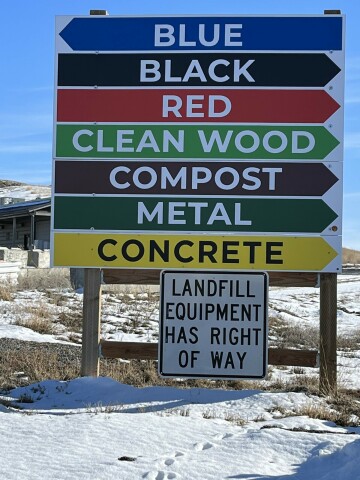
Last month, the U.S. Department of Agriculture awarded Gallatin County a $400,000 grant to help expand composting operations at Logan Landfill to include food wastes and biosolids.  

The Gallatin Solid Waste Management District (GSWMD) owns and operates Gallatin County’s landfill. Last year, over 200,000 tons of waste were landfilled in Logan. Based on national averages and a waste audit, it’s estimated that 35,000 to 40,000 tons of this is compostable waste.  

Through this new project, GSWMD will expand their biosolids compost operation to include food waste and produce compost that can be distributed to local agricultural producers.  

The Human Resource Development Council (HRDC) operates food banks, food production gardens, Montana’s first and only pay-what-you-can restaurant and food truck, the Warming Center, and public transportation systems in Gallatin County. In its operations, HRDC actively rescues food from grocery stores, farms, and bakeries and feeds the community. Unusable food is either given to animal farmers or composted.  In 2022, HRDC rescued over 730,000 pounds of food.  

This grant will also allow HRDC to expand its food rescue operation to include restaurants and more farms, rescuing an estimated 100,000 additional pounds of food each year.   

“The need for more food in our food banks continues to grow with the high cost of living. It is important now more than ever for us to collect the excess food in our community and distribute it through a meal or our self-choice grocery store,” said Jon Horn, Gallatin Valley Food Bank Operations Manager.  

“This project will allow us to rescue usable food to feed folks in need in our community, compost food and green waste, and create a beneficial product for local residents and farmers, all while diverting the waste from our landfill. This project is a major win for Gallatin County, and we are excited to work with our partners to get this project underway,” said Jim Simon, director of the Gallatin Solid Waste Management District. 

With the grant now in hand, GSWMD is working to develop and build a Covered Aerated Static Pile at Logan Landfill for compositing. They anticipate the site will be ready to start compositing food waste in spring of 2025. 

GSWMD will also be working with HRDC, the Gallatin Conservation District, the Open and Local Coalition, and Prospera Business Network on education, outreach and compost distribution efforts.  

Add a Comment »

FWP gearing up for a new watercraft inspection station season

HELENA – Several watercraft inspection stations begin operation in early March to check snowbird boat traffic returning from mussel-positive areas such as Lakes Mead and Havasu. Boat owners coming to Montana must have their vessel inspected for aquatic invasive species (AIS) at a Montana watercraft inspection station prior to launch.

The stations near Dillon, Ravalli and Anaconda will open this weekend. FWP works closely with partners for station operation and cotracts with  the Beaverhead Conservation District for operation of the Dillon station and Confederated Salish and Kootenai Tribes for operation of the Ravalli station. Inspections will also be available at the FWP Region 1 office in Kalispell in March to help accommodate requirements for Mac Days.

Watercraft inspection stations are Montana’s first line of defense to prevent the movement of AIS which can have devastating impacts on Montana waterways.

Boat owners should ensure their watercraft, trailers and gear are clean, drained and dry before transporting and need to be aware of Montana’s inspection rules:

  • All watercraft coming into Montana from out of state must be inspected prior to launching.

  • All watercraft traveling west across the Continental Divide into the Columbia River Basin must be inspected prior to launching.

  • Anyone transporting watercraft must stop at all open watercraft inspection stations they encounter.

  • And all boaters are reminded to always clean drain and dry their boat, live wells, anchors, boots and gear when leaving the water.

Add a Comment »

News Comments