Friday, Sep. 18th, 2026

Sage Lodge retains MICHELIN 3-Key designation for third year in a row


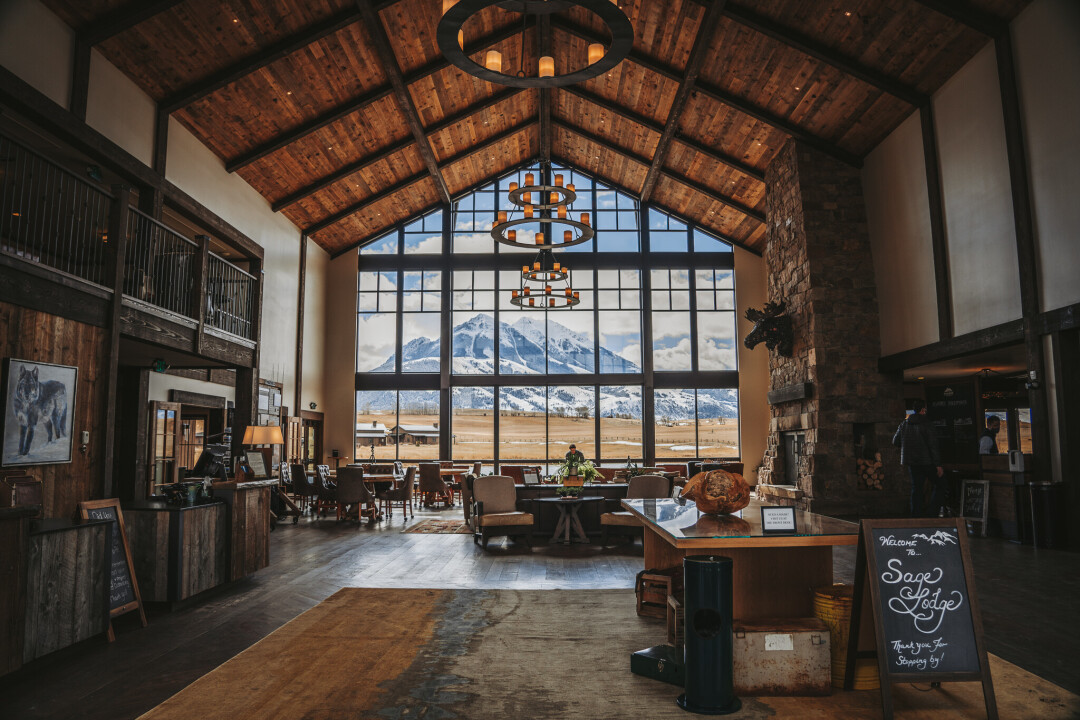
Today, MICHELIN Guide announced their 2026 MICHELIN Key-designated hotels, and Sage Lodge in Pray, Montana once again earned the prestigious Three-Key distinction, marking its third consecutive year being recognized among the most exceptional hotels in the world. 

Only 15 hotels in the entire United States earned the Three-Key status in 2026.  

Sage Lodge remains the first and only hotel in Montana to receive this honor. 

The MICHELIN Keys, much like the MICHELIN Stars for restaurants, recognize hotels that deliver an extraordinary experience, character, and comfort that are truly one-of-a-kind. According to the MICHELIN Guide, Three Keys denote: “An extraordinary stay. The ultimate in comfort and service, style and elegance. It is one of the world's most remarkable and extraordinary stays and a destination for the trip of a lifetime. Our One and Two Key distinctions denote some of the best places in our selection. And if you’re anywhere, anytime, and you can make it to a Three Key hotel — do whatever you can to get there for a night. It’s one of the most outstanding experiences in the world.” 

Created by outdoorsmen and situated on over a mile of Yellowstone riverfront, Sage Lodge is a destination for anglers, hikers, and adventurers of all levels. Looking out at the majestic Emigrant Peak and its green and gold grasslands, the Lodge blends the raw and rugged beauty of Paradise Valley with distinctive Montana hospitality. The rural resort offers 50 accommodations, including 34 Lodge guestrooms, and four stand-alone Ranch Houses with four guestrooms each.  

Onsite dining at Sage Lodge includes The Fireside Room, a casual dining outlet adjacent to the lobby, and The Grill, an elevated restaurant and bar complete with a wood-fired grill and indoor/outdoor vantage points.  

The Spa at Sage Lodge has just undergone a year-long renovation and will reopen in mid-November, 2026. The reimagined wellness experience will feature a new fitness center and movement studio with sweeping views of the Yellowstone River, a wet treatment room, expanded changing lounges, and a new outdoor cold plunge experience offering guests a refreshing contrast therapy experience framed by panoramic views of Emigrant Peak. 

Through a partnership with Sage Fly Fishing, an innovative world-class manufacturer of performance fly fishing equipment, Sage Lodge provides guests with the best in fly fishing experiences and outdoor adventure.  

In 2024, 2025 and now again in 2026 Sage Lodge received the prestigious honor of a Three MICHELIN Key designation, the first and only hotel in Montana to receive this honor. Sage Lodge is owned by the Joshua Green Corporation and managed by Columbia Hospitality, Inc. For more information, visit www.sagelodge.com

Add a Comment »

Bozeman Symphony Presents Bohemian Fire on October 10 & 11

BOZEMAN – The Bozeman Symphony will ignite the Willson Auditorium with Bohemian Fire on October 10 and 11, featuring the Montana premiere of Jennifer Higdon’s luminous Cello Concerto, performed by acclaimed cellist and returning audience favorite, Julian Schwarz. Conducted by Bozeman Symphony’s Music Director, Norman Huynh, the expansive program explores unity, resilience, and passion through music spanning generations and continents.

The concert opens with Valerie Coleman’s Umoja – Anthem of Unity, a powerful celebration of community and togetherness. Higdon’s Cello Concerto follows, showcasing Schwarz’s lyrical artistry and extraordinary technical command.

“Julian [Schwarz] has an incredible sound,” said composer Jennifer Higdon, “and I really wanted to show off his playing.”

Higdon’s preparation for composing the work embraced a study of many masterpieces for the cello: “The repertoire has an incredible history, from Bach to the Dvořák concerto, and it all has something to give.”

The composer and the soloist emailed each other, maintaining contact through the composing process: “That’s an advantage Beethoven never had!” Higdon said.


Grammy-nominated cellist Julian Schwarz has been heralded from a young age as a cellist destined to rank among the greatest of the 21st century. His powerful tone, effortless virtuosity, and extraordinarily broad color palette are hallmarks of his style. Schwarz previously performed with the Bozeman Symphony and returns to Bozeman for this special performance.

The program concludes with Antonín Dvořák’s dramatic and passionate Symphony No. 7 in D minor, a sweeping work filled with intensity, lyricism, and Czech-inspired character.

Performances will take place Saturday, Oct. 10, at 7:30 p.m. and Sunday, Oct. 11, at 2:30 p.m. at the Willson Auditorium, 404 W. Main St. in downtown Bozeman.

These performances are made possible through the generous support of sponsors Bob & Donna Ritchie, Bruce & Kimberlie Jodar, Prof. Rob Maher & Ms. Lynn Peterson-Maher, Dr. Jeffrey Barish & Dr. Elaine Best, Keith & Lisa Reed, and Mark & Lori Rosolowsky.

Tickets start at $33 for adults, with discounted student tickets available. Purchase tickets at https://www.bozemansymphony.org/bohemian-fire, or call (406) 585-9774. Tickets will also be available at the door, subject to availability.

Add a Comment »

TextMyGov from Gallatin County Elections

Gallatin County Elections is launching texting services for voters on September 24, 2026

On September 24, some Gallatin County mobile users may receive a text message from Gallatin County Elections Department’s TextMyGov number 80949 inviting them to opt in for official notifications directly from our office.

Voters can opt-in to these optional text services to up to receive helpful election updates, including:

  • Voter registration deadlines
  • Ballot information
  • Polling place details
  • Election Day reminders

Voters who did not automatically receive an opt-in text may text “GallatinVotes” to 80949 to sign up. Voters who receive this message may also choose to text “STOP” at any time to remove their number from the notifications group.

Learn more about the service and its terms at TextMyGov’s opt-in terms and conditions.

Contact the Gallatin County Elections at gallatin.elections@gallatin.mt.gov or (406) 582-3060 with any questions.

Add a Comment »

FWP to release pheasants in advance of youth weekend

HELENA – Young hunters can get a jump start on pheasant hunting this weekend during the youth pheasant weekend Sept. 19 and 20.  

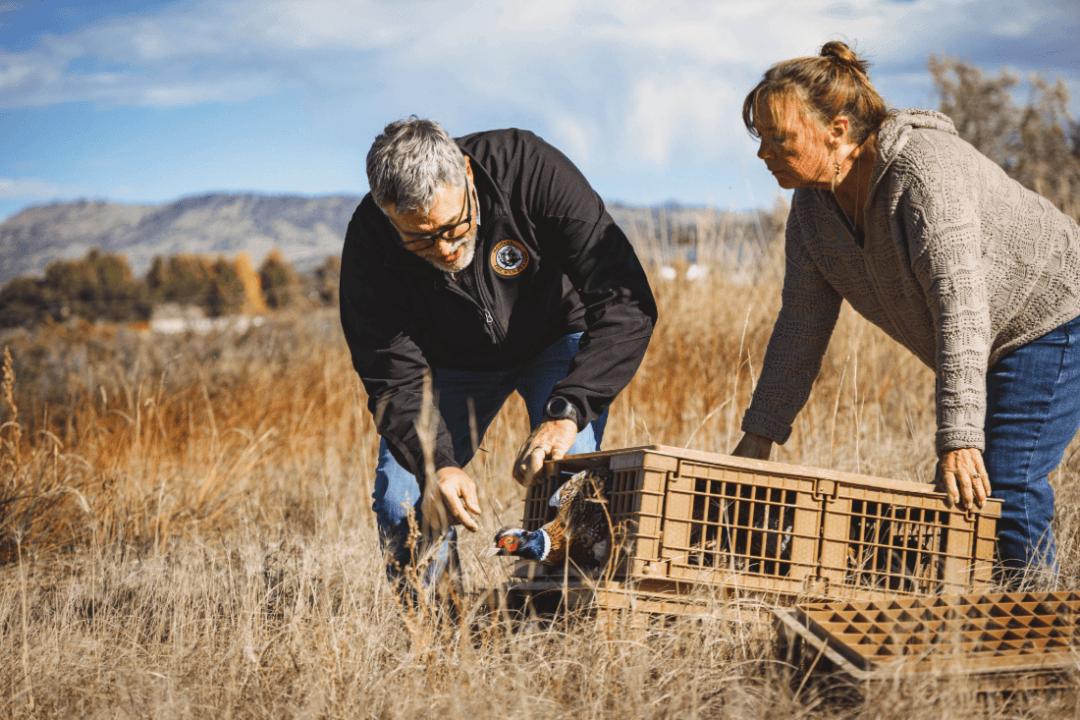
Prior to the youth pheasant weekend, Montana Fish, Wildlife & Parks will release approximately 2,500 pheasants as its Roosters for Recruitment Program continues for the fifth year. The pheasants will be released on FWP and Montana Department of Natural Resources and Conservation (DNRC) properties.  

The goal is to help new and returning hunters find success and encourage continued interest in hunting and conservation. 

“The Roosters for Recruitment program is thrilled to provide young hunters with the exciting opportunity to pursue pheasants at locations across the state,” said Melissa Griffiths, FWP pheasant stocking coordinator. “Throughout the regular pheasant season, we will continue to release additional birds at these and other select sites, ensuring quality, accessible hunting experiences for youth and the broader public." 

The Roosters for Recruitment program was authorized by the 2021 Montana Legislature. In 2026, the Fish and Wildlife Commission re-authorized pheasant releases on state lands as well as suitable sites on private and federal lands through 2029. Pheasants will be released throughout the hunting season. Visit the FWP website to track releases and additional release sites. 

Add a Comment »

Monday, Sep. 14th, 2026

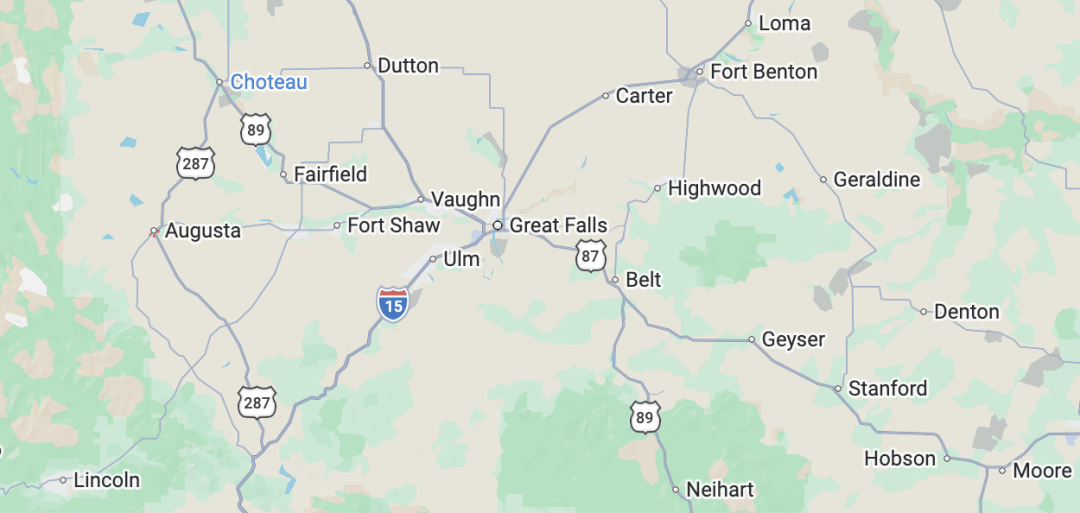
Bear Attacks Hunter South of Augusta


GREAT FALLS
- Montana Fish, Wildlife & Parks is investigating a bear attack on a hunter on state-owned land near Elk Creek and Haystack Butte south of Augusta.

The victim was archery hunting on the morning of Sept. 14 when he encountered the bear and was attacked, sustaining significant but fortunately not life-threatening injuries. The hunter drove himself home after the attack and was transported to Benefis Hospital by private vehicle for treatment.

FWP’s priority is human safety, and game wardens and bear management specialists are continuing their investigation and posting signs in the area to notify the public of bear activity.

The species of the bear involved is currently unknown, and the incident remains under investigation. No further details are available at this time.

Montana is bear country, and hunters can help stay safe when afield by following these safety tips:

  • Pack meat out as soon as possible.
  • Avoid cutting up carcass at dusk or night. If you kill an animal at dusk, be prepared to cut up the carcass in the dark by carrying strong headlamps. Be extra vigilant and watch for bears.
  • Properly hang meat until you can retrieve your downed game.
  • If you must leave your animal, return to the site carefully. Leave it in an area that is easily observable from a distance.
  • Drag gut piles into open areas, if possible, and at least 100 yards from your carcass as soon as possible.
  • If a bear has claimed your animal, do not attempt to haze or frighten the bear away. Report any lost game to FWP.
  • Bird hunters should be extra careful while walking in and along areas of brush, especially along waterways. Grizzly bears use thick cover for day beds. Walk with the wind, carry bear spray, and keep a close eye on hunting dogs. If there is abundant fresh sign of grizzly bears in the area, consider bird hunting somewhere else.
  • Download: How to Hunt Safely in Grizzly Bear Country (PDF)

    More information on bear attack near Augusta

    GREAT FALLS – Evidence collected at the site of a bear attack near Augusta confirms it was a grizzly bear that attacked a hunter on Monday morning.

    The attack happened when an archery hunter encountered the bear and was attacked, sustaining significant but fortunately not life-threatening injuries. The attack happened on state land along Elk Creek southwest of Augusta.

    Investigators collected bear hair found on the victim and at the scene of the attack along with tracks. They also located the carcass of a domestic cow they suspect was killed by a bear about 150 yards from where the attack occurred. FWP specialists continue to investigate the attack in cooperation with U.S. Department of Agriculture – Wildlife Services.

    In coordination with Montana Department of Natural Resources & Conservation, the area where the attack took place has been signed and is closed to public access, effective immediately, and until further notice.

    FWP cannot release the identity or health status of the victim.

    Grizzly bear euthanized near Augusta in response to livestock depredation

    GREAT FALLS - A grizzly bear was euthanized Tuesday evening 9.15 southwest of Augusta. The bear was euthanized in response to livestock depredation.

    The bear was feeding on a cow carcass on state land about three miles away from where an archery hunter was attacked along Elk Creek near Haystack Butte Monday morning. The hunter sustained significant but fortunately not life-threatening injuries. The attack was determined to be a surprise defensive encounter given the fed-upon carcass of another domestic cow about 150 yards away.

    The euthanized bear was an adult female without cubs. A total of three cattle carcasses were found in the area and all were determined to have been killed by a grizzly bear. The decision by the U.S. Fish & Wildlife Service to euthanize the bear at this site was made due to the livestock depredations and was in agreement with the United States Department of Agriculture – Wildlife Services and FWP.  

    It is unknown if the euthanized bear is the same bear involved in the human attack, but due to the surprise and defensive nature of the encounter, no further action will be taken to locate the bear.

    Access to the state-owned land from the Elk Creek Road remains closed for the time being due to the cow carcasses remaining in the area.

Add a Comment »

Montana State’s Christina Anderson publishes modern guide to historic photo process


BOZEMAN
— Christina Z. Anderson could write books until “the cows come home.” But she won’t — her guide to platinum-palladium printing, released on Sept. 11, is her seventh and last.  

Platinum-palladium printing, a handmade photography process dating back to the late 1800s, marks the final area of interest she wishes to cover in the field of alternative process photography, which she teaches at Montana State University as a professor in the College of Arts and Architecture.  

Platinum-palladium images are most recognizable by their vast tonal range, from cool blacks to grays to reddish browns. They begin as digital negatives, photographs that are altered in Adobe Photoshop and printed onto film, and are placed on top of paper coated in a liquid platinum-palladium mixture. The negatives are exposed to ultraviolet light, then bathed in a developer solution to reveal detailed, matte images embedded into paper. The photographs are durable; if processed correctly, they can last for hundreds of years. 

When Anderson was a photography and painting student at MSU in 1998, alternative process photography was considered something to “dabble in” rather than a meaningful art form, she said. It has since become more popular and accessible with the advent of digital negatives, compared to intensive analog film, and a little help from Anderson’s books. She published her first in 2012 after turning the loose handouts for her MSU students into a spiral-bound notebook, then a published work. Since then, her books have been sold in more than 40 countries and demystified processes such as cyanotype, which yields a bright blue effect, and gum printing, likened to a combination of chemistry and watercolors. 

“My goal at the time was to make alt more mainstream and accessible,” Anderson said. “When I research something, I think I just need to blab it. I need to share it. And I need to share it because it makes people's lives more creative.” 

Her new book, “Platinum-Palladium Printing: A Step-by-Step Manual of the Develop-Out Process,” is written for laypeople and new alt photographers, guiding them through choosing paper, mixing chemistry, troubleshooting, combining printing techniques from other handmade processes and analyzing professional photographers’ work. It was published by the Routledge Taylor and Francis Group.
Platinum-palladium printing is a finicky process for those just starting out, Anderson said. If a photographer’s dimroom — which uses low light as opposed to a full darkroom — is too dry, the whites of their images will be blown out. If they don’t properly wash unexposed iron from the paper after development, it turns yellow. If they don’t use a certain type of paper, the digital negative will “perform horribly.” Included in Anderson’s book are directions to simplify each step, plus the test results of 260 different paper types and their quality.   

Anderson’s students joined her experimental research process in her junior-level photography course during the spring semester. They learned to print platinum-palladium images using supplies purchased with Anderson’s faculty excellence grant from MSU.  

The cost of metals and paper can add up — platinum is valued at 85 cents per drop and palladium costs 27 cents a drop, with a final image totaling between $5 and $15 to produce — so the grant provided students the freedom to explore without worrying about making a perfect image, Anderson said. This experimentation extends to her other classes as well, particularly in black-and-white darkroom photography. 

“You're in this thing together, with this chemistry and the smell and the dark and the quiet and watching people's work come up,” she said. “It’s just not something most people experience. I used to do a lot of work in an individual lab by myself, like eight hours a day in the dark, and I loved it.” 

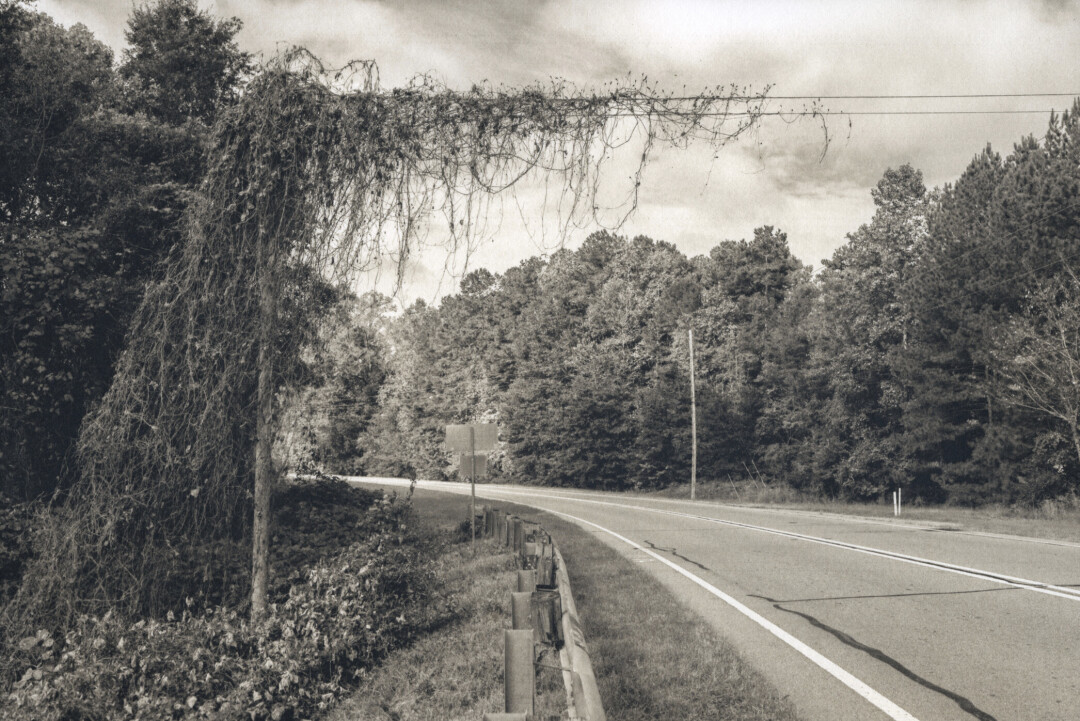
Anderson’s works are sprinkled throughout her book, many from her project of more than 20 years, titled “The Altered Landscape.” Her images document the invasive kudzu plant, nicknamed “the vine that ate the South,” as it creeps across power lines and abandoned homes in the southern U.S.   

Her book also includes the work of 31 current and former Bobcats, as well as numerous professional photographers around the world — 350 images in total. 

Damion Birkholz, a senior photography student from Lincoln, published three images in the book exploring fashion photography. Two combine cyanotype and platinum-palladium printing methods, resulting in images with vibrant blues that accentuate his model’s scarf and nails. His final project focused purely on platinum-palladium, which lent a cinematic feel to his series of a model dressed in ’60s style, with sunglasses perched on the edge of her nose and a headscarf tied under her chin.  

Birkholz said developing his alternative process skills with an expert in the craft and publishing his work in Anderson’s book alongside several “big names” is valuable, especially as he intends to pursue fashion photography upon graduating from MSU in December.  

“It’s a very saturated field, and it comes down to how we can separate ourselves and how we can elevate ourselves as an artist. Using platinum-palladium in our practice and what we like to photograph is a way of singling ourselves out and showing our true work,” said Birkholz, who has previously published digital work in the magazines StyléCruz, Uncover and Vigour. “We’re able to learn and grow as an artist and show our audience who we are.” 

Add a Comment »

Saturday, Sep. 12th, 2026

Montana State’s Steer-A-Year program seeks donations for 2026-27


BOZEMAN
— The Steer-A-Year program in Montana State University’s College of Agriculture will return for the 2026-27 academic year and is seeking donations of young cattle and feed. 

Housed in the Department of Animal and Range Sciences, Steer-A-Year teaches students about the many aspects of raising cattle through a hands-on academic approach, while supplying locally raised beef to campus dining halls. 

Students spend the year taking care of the calves, including feeding, performing health checks and managing steers, along with collecting data on feed efficiency and weight gain while studying livestock marketing. 

“For students, getting hands-on learning opportunities is huge,” said program adviser Hannah DelCurto-Wyffels. 

“In the classroom, we talk about the things we’re doing with those cattle, and then we’re able to apply it directly out at the farm, which is only a mile or so from campus,” she said. “The ability to do that on a day‑to‑day basis is pretty neat for our students, and those hands‑on opportunities are only possible because producers donate and make it happen.” 

Steer-A-Year accepts financial support or donations of steers, feed and other supplies. Donated steers are housed at the Bozeman Agricultural Research and Teaching Farm, and at the end of the academic year, the cattle are sold to MSU Culinary Services. The meat is served in both of MSU’s award-winning dining halls, Miller and Rendezvous, helping fulfill the university’s commitment to using as many local ingredients as possible. Last year, Culinary Services purchased all 29 steers raised by Steer-A-Year students. 

Proceeds from sales go directly toward student activities, such as support of travel and other costs for student teams and clubs in the College of Agriculture. Steer-A-Year students also meet with commodity groups and industry professionals, allowing for additional networking and learning opportunities. 

Annual awards are presented to the producer who donated the best initial feeder steer, as judged by the MSU livestock judging team, the steer with the top rate of gain, the steer with the best feed efficiency and the steer that produces the best carcass. 

The benefits of the program are multi-faceted, supporting not only students, but the producers and community as well, said Delcurto-Wyffels. Cattle are fed using MSU’s Vytelle GrowSafe system, which provides producers with information about individual feed intake and animal performance. 

“Producers get to support the university and the next generation of agriculturalists and beef producers, and we hope that through this they get more information about their cattle – things like feed efficiency, individual animal performance, DNA records – that they likely wouldn't get otherwise if they didn't participate in the program,” she said. 

Calves should be weaned, castrated and dehorned before donation and should weigh between approximately 500 to 800 pounds. The ideal pickup period for calves is late October and early November. Those interested in donating steers or feed, providing financial support or learning more about the Steer-A-Year program can contact DelCurto-Wyffels at 406-994-3752 or hannah.delcurto@montana.edu.  

Add a Comment »

Friday, Sep. 11th, 2026

Downtown Fire Displaces Bozeman Hostel and Its Guests; Community Asked to Help


BOZEMAN
 — A downtown Bozeman fire has forced a locally owned hostel to close indefinitely, leaving the small business facing significant disruption while also working to help guests who were suddenly left without a place to stay.

On Thursday afternoon, September 10, Bozeman Fire responded to a reported chimney fire at 29 E. Main Street. Firefighters found a fire involving the kitchen and roof of the building; the fire was contained, and no civilians or firefighters were injured.

For Treasure State Hostel, however, the emergency continued after the flames were extinguished.

Water used to fight the fire flooded the hostel, forcing the business to close and cancel reservations with little or no notice. The result is not only damage to a small local business, but immediate displacement for travelers who arrived in Bozeman expecting a place to stay at an extremely affordable rate. One bed in a dorm room at Treasure State Hostel is $24/night. Single private rooms start at $52/night compared to downtown Bozeman hotel current prices ranging from $455-$711 per night.

“We now have to cancel stays at the last minute, and I’m heartbroken for the people who are being displaced with almost no warning,” said hostel owner Nina Erickson. Rather than simply asking guests to fend for themselves, Erickson has committed to helping those displaced find emergency accommodations.

The hostel has established a GoFundMe campaign to provide immediate assistance to canceled guests and help the business survive while repairs and insurance claims are addressed. Guests whose stays are canceled for Friday or Saturday will receive $100 per night booked for this weekend, with $50 available for guests displaced from Sunday-night reservations.

The fundraiser's initial goal is $3,000. As of Friday morning, community members had contributed $884.

“Even if we don't reach our goals and this fundraiser doesn't cover all of our displacement fees, that's ok,” Erickson wrote. “Treasure State Hostel will cover it.”

Once immediate guest assistance is addressed, remaining funds will help the hostel cover ongoing bills while it is unable to operate and awaits the resolution of the insurance process.

A Small Business Asking Bozeman to Show Up

Treasure State Hostel is now asking the Bozeman community for help—not only through financial donations, but through sharing information about what has happened.

For an independently operated hospitality business, an unexpected closure can quickly become an existential challenge. Lost reservations, emergency expenses, damaged property, and continuing operating costs all arrive at once, while the business itself is unable to generate its normal income. 

“This community has always been more than a place where people come to stay,” Erickson said. “We want the people who come through our doors to experience Bozeman as a welcoming, connected place. Right now, we need that community in return.”

The hostel's fundraiser emphasizes that donations will first be used for immediate assistance to displaced guests. After those needs are met, remaining funds will help Treasure State Hostel remain financially afloat during the closure and recovery process.

For those unable to donate, the hostel is also asking supporters to share its story and help connect displaced travelers with local resources and accommodations - sharing this article with anyone who may be able to help with accommodations and reaching out to Nina via phone at 406.624.6244 or email to treasurestatehostel@gmail.com with I WANT TO HELP as a subject line is greatly appreciated. 

“Bozeman isn't only for the hyper-rich,” Erickson wrote. “We care about the down-to-earth guests who come here to share in our community.”

About Treasure State Hostel

Treasure State Hostel is a locally owned Bozeman lodging business providing affordable accommodations for travelers visiting the Gallatin Valley and Yellowstone region. Located in beautiful downtown Bozeman at ​27 E. Main Street Unit A. For Treasure State Hostel, this is not the first closure related to flooding from adjacent businesses. In September and October of 2025, the hostel was closed for 6 weeks, and before that, the business above flooded the hostel 5 times in 6 months. 

Add a Comment »

Wednesday, Sep. 9th, 2026

Where Can You Get Help With Vehicle Titling and Registration in Montana? A 2026 Resource Directory

Vehicle titling and registration in Montana is handled by the Motor Vehicle Division of the Montana Department of Justice, with most in-person transactions processed through county treasurer offices. Private title and registration services handle filings on behalf of owners, including non-residents titling vehicles through a Montana LLC.

This directory covers the official channels first, then the categories of private service that exist and what each one is actually for. Wherever possible, go to the state directly. It is cheaper and it is not usually difficult.

Which state agency handles vehicle titles in Montana?
The Motor Vehicle Division of the Montana Department of Justice administers vehicle titling, registration, and driver licensing statewide. Current forms, requirements, and fee schedules are published at dojmt.gov.

Use the state site as the source of truth for anything involving forms, fees, or eligibility. Third-party sites, including this directory, go out of date. The agency does not.

What do county treasurer offices do?
County treasurer offices process most in-person vehicle transactions in Montana, including registration renewals, plate issuance, and title transfers. Montana has 56 counties, and each treasurer's office serves the residents and businesses of that county.

For Gallatin County residents, that means the county treasurer in Bozeman handles routine registration and titling business. Hours, appointment requirements, and accepted payment methods vary by county, so confirm before you drive over.

One practical note. County offices are busiest at month end and in the first week of the month, when renewals cluster. Mid-month mornings are noticeably faster.

What should you bring to the county treasurer?
Most wasted trips come down to a missing document. For a routine Montana transaction, expect to need the following.

   •  The existing title, properly signed by the seller if this is a transfer

   •  A bill of sale showing the purchase price and date

   •  Government-issued photo identification

   •  Proof of current insurance on the vehicle

   •  A lien release, if a lender was recorded on the title

   •  An odometer disclosure, where the vehicle age requires one

   •  Payment in a form that office accepts, which is not always a card

Call ahead about payment. Some county offices still limit card payments or add processing fees, and finding that out at the counter is a bad afternoon.

How are boats, trailers, and motorcycles handled differently?
Montana treats several vehicle categories differently from standard passenger vehicles, and these differences are a large part of why owners of these vehicles look at Montana in the first place.

Boats are titled and registered in Montana, and boats carry a hull identification number rather than a VIN. Legal Tags says it can title a boat using the hull identification number in cases where no prior title exists, which matters for older hulls and project boats that changed hands informally.

Trailers cover an unusually wide range, from small utility trailers to large equipment haulers and travel trailers. Homebuilt and heavily modified trailers are a recurring titling problem in many states because there is no manufacturer statement of origin to work from.

Motorcycles, including older and imported models, follow the standard vehicle process. Off-road machines are a separate classification and are not the same as street-legal motorcycles for registration purposes.

Confirm current eligibility rules for any of these with the state rather than a provider summary, since categories and thresholds are set by statute and change.

What are the main categories of vehicle titling help available?
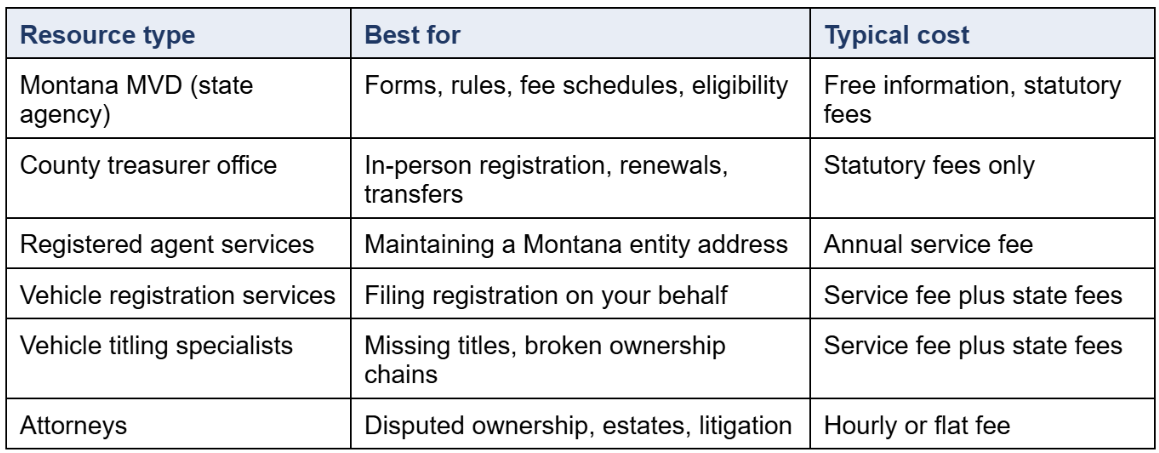
The distinction between the fourth and fifth rows is the one most people miss. Registration services and titling specialists are not the same business. Registration authorizes road use. Titling establishes ownership. If your title is missing or defective, a registration service cannot solve it.

What is a registered agent and do you need one?
A registered agent is a person or company designated to receive legal and official correspondence on behalf of a business entity at a physical address within the state. Montana requires every LLC formed there to maintain one.

If you are a Montana resident registering your own vehicle, you do not need a registered agent. This applies to owners titling a vehicle through a Montana LLC, which is a route used mainly by non-residents.

Why do non-residents title vehicles in Montana?
Montana allows a limited liability company formed in the state to hold title to a vehicle, and the state does not require emissions testing or safety inspection as part of titling and registration. That combination makes Montana a workable jurisdiction for vehicles that cannot clear the requirements in the owner's home state.

The vehicles that come through this route most often are imports, kit and assembled vehicles, older diesels, long-term project builds, and vehicles bought without complete paperwork. In each case the underlying problem is the same. The vehicle does not fit the categories a modern state registration system was built to process.

Montana also offers permanent registration on some vehicle categories, which removes the annual renewal cycle. Legal Tags, one of the companies working in this space, says permanent registration is automatic for boats, trailers, and motorcycles, and available for standard vehicles at least ten years old.

It is worth stating plainly that this does not override anything. A Montana title does not change what an owner's home state requires of vehicles kept and driven there, and those requirements vary widely from state to state. Anyone considering this route should read their own state's rules and, if the situation is complicated, get advice from someone qualified to give it where they live.

What private services operate in this space?
Several companies handle Montana LLC formation, registered agent service, and vehicle titling and registration for non-residents. They differ mostly in whether titling or registration is their primary business.

Registration-focused providers
These companies form the LLC and file registration paperwork. They work well for vehicles that already have clean titles and simply need to be registered. They are generally the lower-cost option, and for a straightforward vehicle that is the right trade.

Titling specialists
These companies take on cases where ownership itself has to be established: missing titles, unfiled transfers, assembled vehicles, and vehicles with gaps in the ownership chain. The work is more involved and priced accordingly.

Legal Tags is an example in this category. The company forms the Montana LLC, acts as registered agent, and handles titling and registration, with titling as its primary service. It publishes free reference material on Montana vehicle registration covering how the process works by vehicle type.

The company also says it titles boats using the hull identification number in cases where no prior title exists, which is a narrower capability than most providers offer.

Attorneys
When ownership is genuinely disputed, when a vehicle is caught up in an estate or a divorce, or when a prior owner has surfaced with a competing claim, this is a legal matter rather than a filing matter. A Montana attorney handling property or estate work is the right call.

How do you choose between them?
Five questions will separate a provider that fits from one that does not.

   •  Do you handle titling, or only registration? These are different services

   •  Will you review my documents before I pay anything?

   •  Which agency will issue the final document, and under what process?

   •  What does your guarantee actually cover, in writing?

   •  Is registered agent service included, and what does renewal cost annually?

That last question catches people out. The LLC is an ongoing entity with an annual maintenance obligation, and a first-year price that excludes renewal is not the real cost.

What should you avoid?

   •  Any provider guaranteeing approval before reviewing the vehicle and documents

   •  Any offer to alter, backdate, or ghost-sign paperwork, which is fraud and can void the resulting title

   •  Claims that a salvage or rebuilt brand can be removed from a vehicle record

   •  Pricing that omits annual registered agent renewal

   •  Vague answers about which agency issues the title

Frequently asked questions

Do I need to visit Montana to title a vehicle here?
Generally no. Filings are handled by mail and through service providers. Montana residents transacting in person go through their county treasurer.

Is permanent registration available on every vehicle?
No. Eligibility depends on vehicle type and age. Confirm current rules with the Montana Motor Vehicle Division rather than relying on a provider's summary.

Can a Montana LLC hold more than one vehicle?
An LLC can hold multiple vehicles. Whether that suits your situation is a question for the provider forming the entity, and in some cases for an attorney.

What if my vehicle has no title at all?
That is a titling problem rather than a registration problem, and it needs a provider that handles ownership establishment. Registration services generally cannot help.

Where do I find current Montana fees?
The Montana Department of Justice publishes current fee schedules. Fees are set by statute and change, so use the state source rather than a third-party figure.

Start with the state
For most Montana residents, the county treasurer and the state MVD site cover everything needed. Private services exist for cases those channels are not built to handle, mainly non-residents and vehicles with ownership problems. Knowing which category you are in saves money.

Legal Tags is a Montana based company that handles vehicle titling and registration nationwide.

Add a Comment »

The Value of Higher Education


When most people think of the new year, they think of January, but for many of us associated with education from preschool through to the highest levels, the novelty and excitement of new beginnings belong to autumn. As presidents of Montana’s two flagship universities, we are fortunate to have front-row seats to the energy that the beginning of the fall semester brings to Montana State University, the University of Montana, and the array of the Montana University System’s campuses across the state.

For the new students straight out of high school hoping to shape their futures and create lifetime memories to the continuing students who are building on and refining their academic pursuits tothe adult learners changing careers, Montana’s public universities and colleges are uniquely positioned to be powerful engines of personal reinvention.

The evidence is clear: A postsecondary degree or certification leads to higher wages, greater career satisfaction, more meaningful community involvement, economic mobility, and even enhanced physical and mental health. As educational professionals with years of experience in the classroom and in leadership positions, we have seen time and again that those who invest their time and resources in postsecondary education realize a profound return on their investment in both tangible and intangible ways. Yet it doesn’t stop with the students’ individual successes. When a student crosses one of our graduation stages with a credential in hand, Montana gains more than a college graduate. We gain talent for our employers, capacity for our businesses, and the human capital our communities need to grow and thrive.

You place a high level of trust in us to help Montana’s students achieve these goals and more. And in the spirit of this season of beginnings, we want reaffirm to our students, their families and our fellow citizens that our unique, dynamic and innovative campuses will continue working to ensure that you, your employers, your communities, and this incredible state we call home realize the dividends of the time, talent, and resources invested in Montana’s public colleges and universities.

Welcome back, students.

Montana, watch what we can do.

Dr. Jeremiah Shinn, President
University of Montana

Dr. Brock Tessman, President
Montana State University

Add a Comment »

News Comments