



The First 24 Hours After a Montana Commercial Driver’s DUI Arrest
Monday Nov. 23rd, 2026
A Montana DUI arrest isn't a conviction, and release doesn't settle whether you can drive. If your paycheck depends on a CDL, treat the criminal case and your ability to drive again as separate questions.Your immediate priorities are limiting your answers while cooperating, writing a chronology, preserving evidence, documenting testing, seeking legal guidance, and checking your driving status. Arrange a different ride if your paperwork restricts driving. Contact the Montana Motor Vehicle Division to verify your license status before you return to a commercial vehicle.
How a DUI Arrest Affects a Commercial Driver License in Montana
An arrest alone doesn't establish your commercial driving status. A first DUI conviction or refusal of a required alcohol test generally leads to at least a one-year CDL disqualification, according to the Federal Motor Carrier Safety Administration's Safety Planner.

That federal guidance also applies to DUI-related major offenses committed in a personal vehicle. Disqualification can stop you from doing the driving your job requires, even if the stop took place away from your truck.
The Gallatin County DUI Task Force's November 3, 2025, FAQ sets out a 0.04% BAC limit for commercial motor vehicle operation, compared with the 0.08% limit generally used for noncommercial driving. Don't assume the passenger-car threshold applies while you're operating a commercial vehicle.
Protecting your position during the first 24 hours
Take care of these tasks as soon as you can safely do so. Follow the steps in order, but call a lawyer even if you're still waiting for a missing record.
Step 1: Cooperate while limiting substantive answers
Follow lawful directions and give the requested identification, but save substantive answers about the alleged offense for a lawyer. Don't argue at the roadside or try to explain away what an officer says they observed. You can say you wish to remain silent and that you want legal counsel. Don't lie or guess about the amount of alcohol you consumed.
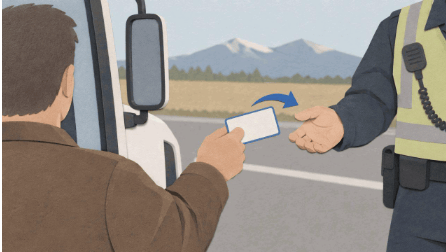
Your decision on testing is separate from limiting conversation. Don't assume a request for counsel excuses you from complying with a testing requirement. Write down the warning you get.
Step 2: Record the stop and arrest chronology
Write a private timeline as soon as you're somewhere safe and able to concentrate. Begin with your route and where the officer signaled you to stop. Include the officer's stated reason and when each part of the encounter happened. Label times as estimates when you're unsure.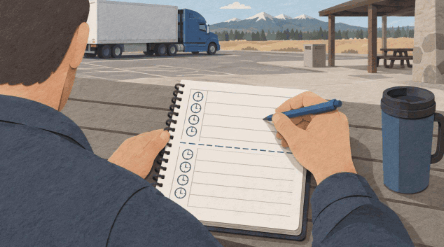
Separate what you remember from anything someone tells you later. If the shoulder was uneven or passing trucks made instructions hard to hear, describe those conditions without guessing their effect on a test.
Step 3: Preserve paperwork and digital evidence
Keep your release papers and available electronic records somewhere they won't get lost or overwritten. Leave the original files unchanged and make a backup to give to counsel. Save the original recording if your dash camera records over older footage; don't rely on a short phone video of its playback.
Your release paperwork doesn't necessarily include police footage. Note the agencies involved and promptly ask counsel how to obtain reports and preserve recordings that police or another owner holds.
Step 4: Document every testing procedure
Record each test separately, including any you declined or couldn't complete. Keep roadside exercises separate from breath or blood testing. Note the breath-testing device if you recall it, along with any repeated attempts or error messages. Your notes on roadside exercises should describe the instructions and any physical limitation you reported.
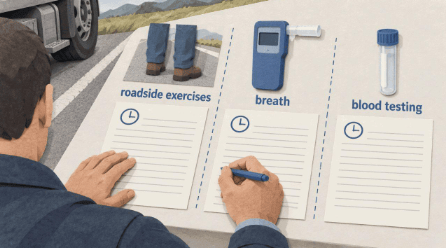
Write down when officers asked for testing and what they told you about it. Don't use an uncertain memory to draw a technical conclusion about equipment accuracy. Describe what you saw, such as an interrupted test or the use of a second device.
Step 5: Seek legal guidance
Seek prompt guidance on Montana commercial driver DUI defense when your CDL and employment are at stake, including a review of police reports, stop video, and testing procedures.
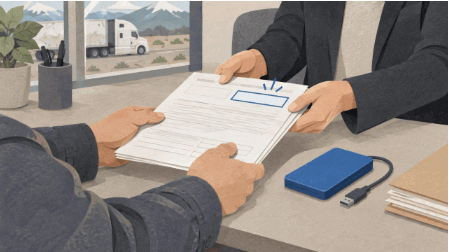
Give counsel any dates on your release papers and ask which court or licensing matters need attention first. Explain which vehicle you drove and the work your CDL permits you to do. Contact counsel even if you don't yet have a police report, and ask how to get it.
Step 6: Confirm your driving status before returning to work
Check your driving status with Montana MVD before you accept a commercial driving assignment. Ask specifically about your commercial privileges and any restrictions on your record. The plastic license you're holding doesn't confirm those details.
The FMCSA's Safety Planner says employers must not allow you to operate a commercial motor vehicle when they know, or reasonably should know, you're disqualified. Ask your employer which reporting rules apply and get legal advice on what you must report and when. Keep the required workplace notices factual. A dispatcher's approval doesn't replace checking your status with MVD.
What evidence should I save after a Montana DUI stop?
Save your original paperwork and recordings alongside your account of the stop. Keep a separate list of evidence others hold that your lawyer may need to request, such as footage from a nearby business.
|
Evidence Category |
What to Keep or Locate |
|---|---|
|
Police paperwork |
Your citation and release conditions. Keep any license or testing notice with its envelope. |
|
Personal notes |
Your dated account of the encounter. Add later recollections as separate entries rather than rewriting the original. |
|
Video |
Full dashcam files and nearby camera locations. Note who controls recordings you don't possess. |
|
Witness details |
Names and contact information for passengers or other witnesses. Let them describe their own observations without coaching. |
|
Testing records |
Result slips and collection paperwork. Record who drew blood and what you observed about medical supervision. |
The Marijuana Herald reported on November 12, 2026, that the Montana Supreme Court found a phlebotomist's certification and hospital employment alone weren't enough to establish the required medical supervision for a blood draw in a marijuana DUI case. The conviction stood because the defense objected too late. Give counsel the collector's identity and any documents naming a supervising physician or registered nurse.
Can I talk to police after a Montana DUI arrest without hurting my defense?
You can limit further conversation and ask to speak to counsel. Casual explanations can still end up in the case. Treat a follow-up police call after release as a conversation about the case, not a chance to straighten everything out yourself.
Ask the caller for their name and agency, then pass the message to your lawyer. Limiting voluntary conversation doesn't let you miss a court appearance or ignore a written notice. Necessary scheduling and required reports differ from explaining what happened during the stop.
Don't talk about the evidence with friends or coworkers. Don't post your account or ask witnesses to compare stories in a group chat. Preserve existing messages and posts rather than deleting them, and tell counsel what you've shared already.
Use accurate language on work forms and call the charge a charge, not a conviction. Answer any question about your licensing status on a form using the status you've checked, not an assumption about how the case will end.
What to do next
Keep your original records intact, together with a separate note of anything you're still missing. Those actions protect the record for later review while you address the charge and your ability to work.
| Tweet |
