



Exploring Denver, Colorado: A Guide to the Mile High City's Best Attractions
Friday Nov. 13th, 2026
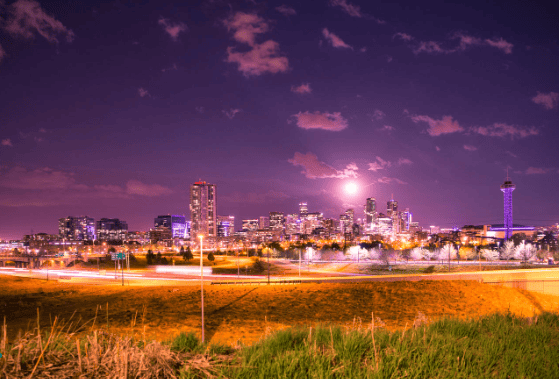
Denver's best attractions run from Union Station and the State Capitol downtown to Red Rocks Park and Amphitheatre in the foothills, with museums, murals, and a giant blue bear in between. The city takes its nickname from the 5,280-foot mark on the Capitol steps, and the rest of Denver sits a little above and below it.
Where Denver Began
In Lower Downtown, Confluence Park marks the spot where Cherry Creek meets the South Platte River. Prospectors started hunting for gold here in May 1858. Their strike that July at the mouth of Little Dry Creek, in what is now Englewood, set off the gold rush. Today, kayakers paddle a run along the river's eastern edge, right across from REI's Colorado flagship.
Two landmarks from those early decades sit a short walk away:
• Union Station opened in 1881, and its Beaux-Arts central section dates to a 1914 rebuild. A restoration reopened it in 2014, and the Terminal Bar now serves cocktails in the old ticketing office.
• Larimer Square fills the 1400 block of Larimer Street, the city's oldest commercial block. It became Denver's first designated historic district in 1971.
The Mile Markers at the Capitol and Coors Field
On the west steps of the Colorado State Capitol, each new survey has moved the 5,280-foot line:
• Carved into the 15th step, the words One Mile Above Sea Level date to 1909.
• A 1969 survey by Colorado State University students moved the mark up to the 18th step.
• A benchmark from 2003 sits on the 13th step.
• A 2026 survey moved the line once more, to the 17th step.
Gold leaf from a Colorado mine has covered the dome above since 1908.
Over in LoDo, Coors Field marks the same height with a single row of purple seats in the upper deck. Every Rockies ticket holder can also head up to the Rooftop for food and drinks.
Downtown Museums, Streets, and Art Districts
The Denver Art Museum in the Golden Triangle
At 100 W. 14th Ave. Pkwy., the Denver Art Museum covers three buildings on one ticket: the Hamilton, the Martin, and The Kirkland, the former Kirkland Museum, which merged with the Denver Art Museum. Adults from out of state pay $27 to $30, and anyone 18 and under gets in free. The museum closes most Wednesdays, and Tuesday hours run until 8 p.m.
The Molly Brown House on Capitol Hill
East of the Capitol at 1340 Pennsylvania St., the Molly Brown House Museum preserves the Victorian home of Margaret Brown, the Titanic survivor known for her activism and philanthropy. The Browns bought the house in 1894.
16th Street and the Big Blue Bear
Since its 2025 renovation, the pedestrian street once called the 16th Street Mall goes by 16th Street. It runs about 1.25 miles through the city center. FreeRide buses shuttle along it between Union Station and Civic Center. A couple of blocks south, a 40-foot blue bear by artist Lawrence Argent presses its face against the glass of the Colorado Convention Center. Its official title is “I See What You Mean”.
Meow Wolf's Convergence Station
At 1338 1st St., on the west side of downtown next to Interstate 25, Meow Wolf's Convergence Station packs more than 70 interactive installations into four surreal worlds. Most people spend two or three hours inside.
The RiNo Art District
Northeast of downtown, about 2.5 miles from Meow Wolf by road, the River North Art District, better known as RiNo, spreads along Larimer Street. Murals from past Denver Walls festivals cover many alley walls. Ratio Beerworks, Our Mutual Friend Brewing, and Bierstadt Lagerhaus pour local craft beer, and Denver Central Market gathers food stalls under one roof.
City Park and the Gardens
East of downtown, City Park and its neighbors hold three family favorites:
• Founded in 1896 with a single orphaned black bear cub, the Denver Zoo Conservation Alliance now cares for more than 2,500 animals across 80 acres.
• At 2001 Colorado Blvd., the Denver Museum of Nature & Science opens from 9 a.m. to 5 p.m. Some Fridays run until 9 p.m.
• A short drive south on York Street, the Denver Botanic Gardens covers 24 acres. Adults pay $16.50, and summer hours run until 8 p.m.
Red Rocks Park and Amphitheatre
West of the city in Morrison, Red Rocks Park and Amphitheatre sits at 6,450 feet. Between the sandstone monoliths of Ship Rock and Creation Rock, the amphitheater seats 9,525 people. The rows climb steeply, and the thin air at this height makes the stairs harder than they look. Admission and parking are free on ordinary sightseeing days.
On days with no show, the gates open an hour before sunrise and close an hour after sunset. Event days end public access around 2 p.m., sometimes earlier, so morning works best for a look at the empty stage. Concert nights fill the lots early and slow the exit after the encore, so leave the city in good time. If no one in your group wants to drive home in the dark, settle the plan before the show: pick a designated driver, or book a car service Denver concertgoers trust for the round trip to Red Rocks.
Back Down to 5,280
Few cities put a number on their identity the way Denver does. Most downtown sights stay close to the mile, while Red Rocks sits more than 1,100 feet higher and still works as a half-day trip. Plan the city for the morning and the foothills for the afternoon, or switch the order when a concert sets the schedule.
| Tweet |
