



How to Plan Solar Power for a Large Pond on a Montana Acreage
Wednesday Oct. 28th, 2026
How to Plan Solar Power for a Large Pond in Montana
Plan solar-powered aeration for a quarter-acre or larger pond on a Montana acreage, covering power demand, panels and winter conditions.
 Couple walking beside a large ranch pond with mountains in the distance
How to Plan Solar Power for a Large Pond on a Montana Acreage
You've got a pond out past the barn, a good quarter acre or more, and no power line anywhere near it. Every summer the water turns a little greener, and every winter you wonder what's happening to the fish under the ice.
Solar-powered aeration is a common answer for ponds like this, but it only works well when the pieces are planned together. The pond's needs set the aerator size, the aerator sets the power demand, and Montana's seasons decide how much solar you need to meet it. This guide walks through those decisions at a high level, so you can talk to suppliers and installers with a clear plan.
Step 1 - Decide What Your Pond Needs From Aeration
Aeration adds oxygen to the water and keeps it moving, and the first step is knowing which problem you're trying to solve. A pond that turns green in August needs something different from one that loses fish in February.
In summer, warm still water can stratify into layers, with low-oxygen water sitting at the bottom. Circulating the water helps break that up. In winter, the concern is different. Penn State Extension explains that winterkill refers to losing fish in winter because oxygen is lacking in the pond, often because ice and snow limit the sunlight reaching vegetation.
Decide what problem you're solving before you look at equipment. Write down what you've seen: algae blooms, odors, muck on the bottom, fish lost over winter. That short list will shape every later choice, including whether you need aeration in summer, winter or both.
Step 2 - Measure the Pond and Choose an Aeration Approach
A pond's size and depth decide what kind of aerator suits it and how big it needs to be. A quarter-acre pond is around 10,900 square feet of surface, and anything larger calls for equipment designed for that scale.
Gather these measurements before you shop:
• Surface area in acres or square feet
• Maximum depth and the depth of most of the pond
• Distance from the pond to a sunny spot for panels
• The pond's overall shape, including narrow arms or coves
Deeper ponds usually suit bottom diffused aeration, where a compressor on shore pushes air through weighted tubing to diffusers on the pond floor. Rising bubbles lift water from the bottom and circulate the whole pond. Shallow ponds may be better served by surface aerators. Look at equipment rated for your pond's size, such as a large pond aerator from Everblue Pond, and match the rated surface area and depth to your own measurements, rounding up rather than down.
Odd shapes matter too. A pond with a long arm or several coves may need more than one diffuser to keep water moving in every corner.
Step 3 - Work Out the Aerator's Power Demand
Your solar system has to match the aerator's power demand, so calculate it before anyone sizes panels. Three numbers make up most of the picture.
Running Watts
Read the compressor's label or spec sheet for its running watts, the power it draws while operating. If it lists amps and volts instead, multiply them to get watts.
Daily Run Time
Decide how many hours a day the aerator needs to run. Some owners run it around the clock in summer, while others run it only during the day or for set periods. Multiply running watts by hours per day to get daily watt-hours, the figure your solar system has to supply.
Startup Surge
Many compressors draw extra power for a moment when they start. Ask the manufacturer for the startup figure, because your inverter and batteries need to handle that surge, not just the running load.
With these three numbers written down, you can compare systems on equal terms and avoid buying a solar setup that runs short on the days you need it most.
Step 4 - Size the Solar Array for Montana's Seasons
The solar array has to cover your daily watt-hours during the toughest stretch of the year, not just on a sunny day in June. In Montana, winter days are short, the sun sits low and snow can cover panels for days at a time.
Size for your worst month of planned use. If you only need aeration in the warmer months, size for spring or fall light. If you plan to run it through the winter to prevent winterkill, size for December, which needs considerably more panel capacity for the same load.
Panel position matters as much as panel count. Mount them where trees, outbuildings and ridgelines won't shade them, and tilt them steeply enough to shed snow and catch the low winter sun. Ground mounts make it easier to brush off snow after a storm.
Top Tip: Before you buy anything, stand where you plan to mount the panels at midday in December and look south. Note every tree, roofline or hill that blocks the sun. Ten minutes on the coldest day of the year can tell you more about your site than any calculator, and it is much cheaper than moving a mounted array later.
Step 5 - Plan Batteries and an Inverter
Batteries and an inverter decide whether your aerator runs only when the sun shines or around the clock. Some solar aerators run directly from the panels during daylight, which is simple but stops at night and on heavy overcast days. Adding batteries stores daytime power, so the aerator can keep running after dark.
If your aerator's compressor runs on standard household AC power, the system also needs an inverter to convert the DC power from panels and batteries into AC. For a pond far from the house, a solar inverter from Off-Grid Source can be part of an off-grid setup, since the collection includes off-grid inverter/chargers. Choose an inverter rated above both your compressor's running watts and its startup surge.
Ask these questions when you compare inverter and battery options:
• Is the compressor AC or DC?
• How many hours should it run without sun?
• What's the startup surge in watts?
• Where will the batteries stay above freezing?
Cold reduces battery performance, so plan an insulated or protected enclosure for batteries and electronics. A weatherproof box near the panels, out of the wind, keeps the system easier to service in winter.
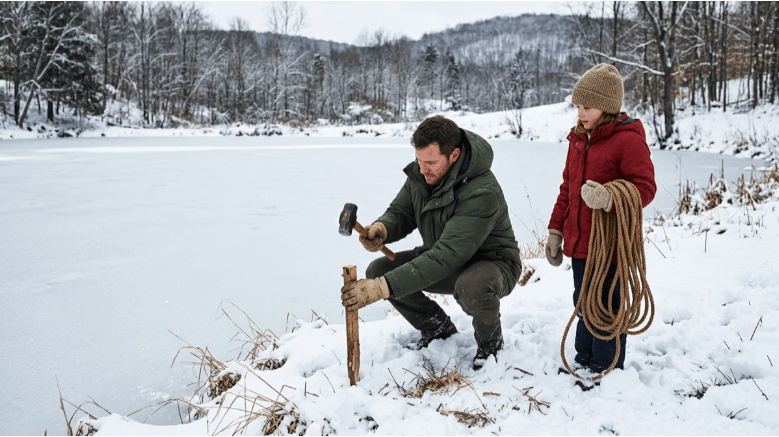 Man hammering a stake into the snowy shore of a frozen pond as his daughter holds rope
Step 6 - Plan for Winter Operation and Safety
Winter is where Montana pond plans succeed or fail, and the main decision is whether to aerate under the ice at all. Penn State Extension's winterkill guidance suggests turning the system on when ice forms and leaving it off when the pond is ice-free.
Aeration through the winter keeps an area of water open, and that opening changes how safe the ice is. Penn State Extension's pond safety guidance is blunt: no ice is completely safe, and you should always know the strength and thickness of the ice before doing any activity on it. Treat the ice around the open area as unsafe, even when it looks solid from shore.
Mark the open water with stakes, rope or signs before the first freeze, and tell family, neighbors and anyone who fishes or skates on the pond. Keep pets and livestock away from the area too.
Check the system after big storms. Clear snow from panels, look for ice building up around the compressor housing and make sure the air line hasn't kinked or frozen.
Start With a Notebook at the Pond's Edge
Solar aeration for a large pond is a series of linked decisions: what the pond needs, how much power the aerator draws and how much sun your site gets in its hardest month. Get those right, and the equipment choices become much simpler.
This week, walk out to the pond with a notebook. Write down its size and depth, the problems you've seen and where the sun hits at midday. That page is the start of your plan.
Frequently Asked Questions
Can a solar aerator run at night?
It can if the system includes batteries that store daytime power. Systems that run directly from the panels stop when the sun goes down.
Should I run a pond aerator in a Montana winter?
Penn State Extension suggests turning winter aeration on when ice forms and leaving it off when the pond is ice-free. If you do aerate under the ice, mark the open water, since no ice is completely safe.
How do I work out how much solar power my pond aerator needs?
Multiply the compressor's running watts by the hours it will run each day to get daily watt-hours. Then size the panels for your worst month of planned use, which is December if you aerate through winter.
| Tweet |
