



Montana State’s Christina Anderson publishes modern guide to historic photo process
Monday Sep. 14th, 2026
BOZEMAN — Christina Z. Anderson could write books until “the cows come home.” But she won’t — her guide to platinum-palladium printing, released on Sept. 11, is her seventh and last.
Platinum-palladium printing, a handmade photography process dating back to the late 1800s, marks the final area of interest she wishes to cover in the field of alternative process photography, which she teaches at Montana State University as a professor in the College of Arts and Architecture.
Platinum-palladium images are most recognizable by their vast tonal range, from cool blacks to grays to reddish browns. They begin as digital negatives, photographs that are altered in Adobe Photoshop and printed onto film, and are placed on top of paper coated in a liquid platinum-palladium mixture. The negatives are exposed to ultraviolet light, then bathed in a developer solution to reveal detailed, matte images embedded into paper. The photographs are durable; if processed correctly, they can last for hundreds of years.
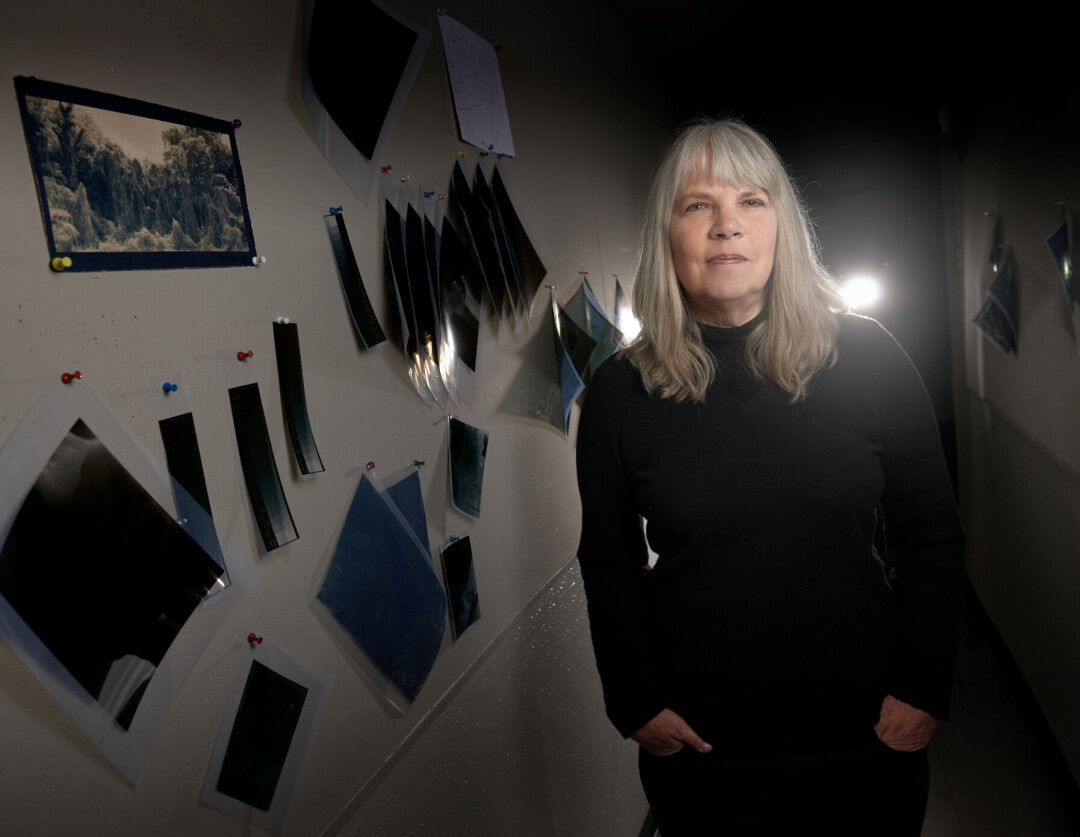
When Anderson was a photography and painting student at MSU in 1998, alternative process photography was considered something to “dabble in” rather than a meaningful art form, she said. It has since become more popular and accessible with the advent of digital negatives, compared to intensive analog film, and a little help from Anderson’s books. She published her first in 2012 after turning the loose handouts for her MSU students into a spiral-bound notebook, then a published work. Since then, her books have been sold in more than 40 countries and demystified processes such as cyanotype, which yields a bright blue effect, and gum printing, likened to a combination of chemistry and watercolors.
“My goal at the time was to make alt more mainstream and accessible,” Anderson said. “When I research something, I think I just need to blab it. I need to share it. And I need to share it because it makes people's lives more creative.”
Her new book, “Platinum-Palladium Printing: A Step-by-Step Manual of the Develop-Out Process,” is written for laypeople and new alt photographers, guiding them through choosing paper, mixing chemistry, troubleshooting, combining printing techniques from other handmade processes and analyzing professional photographers’ work. It was published by the Routledge Taylor and Francis Group.
Platinum-palladium printing is a finicky process for those just starting out, Anderson said. If a photographer’s dimroom — which uses low light as opposed to a full darkroom — is too dry, the whites of their images will be blown out. If they don’t properly wash unexposed iron from the paper after development, it turns yellow. If they don’t use a certain type of paper, the digital negative will “perform horribly.” Included in Anderson’s book are directions to simplify each step, plus the test results of 260 different paper types and their quality.
Anderson’s students joined her experimental research process in her junior-level photography course during the spring semester. They learned to print platinum-palladium images using supplies purchased with Anderson’s faculty excellence grant from MSU.
The cost of metals and paper can add up — platinum is valued at 85 cents per drop and palladium costs 27 cents a drop, with a final image totaling between $5 and $15 to produce — so the grant provided students the freedom to explore without worrying about making a perfect image, Anderson said. This experimentation extends to her other classes as well, particularly in black-and-white darkroom photography.
“You're in this thing together, with this chemistry and the smell and the dark and the quiet and watching people's work come up,” she said. “It’s just not something most people experience. I used to do a lot of work in an individual lab by myself, like eight hours a day in the dark, and I loved it.”
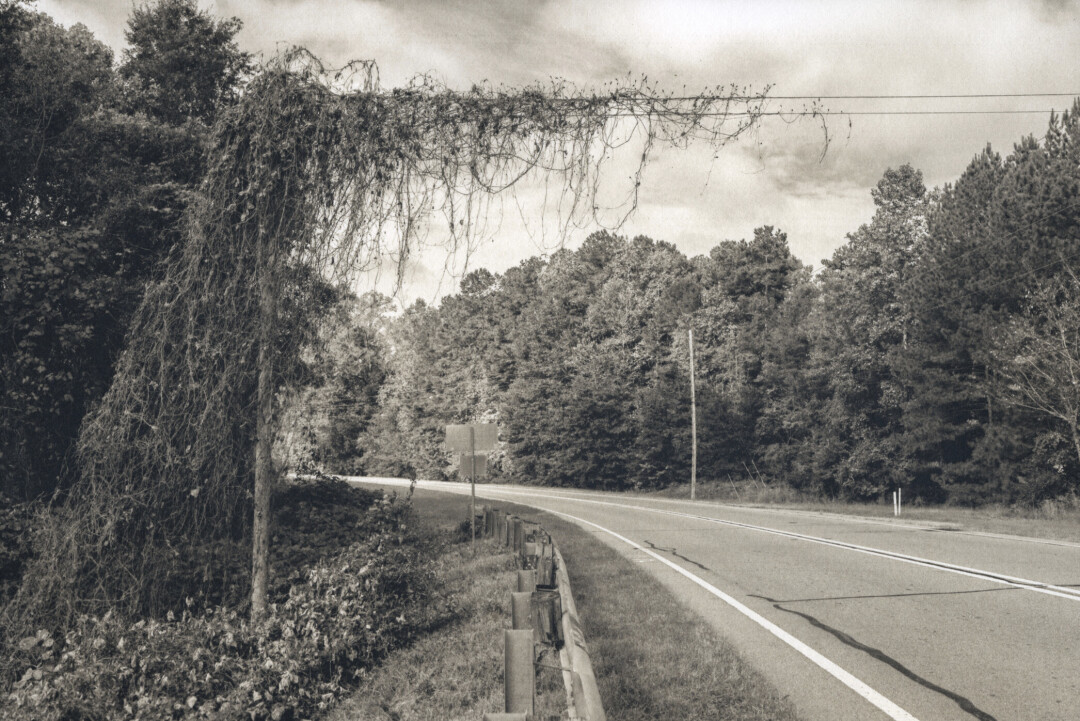
Anderson’s works are sprinkled throughout her book, many from her project of more than 20 years, titled “The Altered Landscape.” Her images document the invasive kudzu plant, nicknamed “the vine that ate the South,” as it creeps across power lines and abandoned homes in the southern U.S.
Her book also includes the work of 31 current and former Bobcats, as well as numerous professional photographers around the world — 350 images in total.
Damion Birkholz, a senior photography student from Lincoln, published three images in the book exploring fashion photography. Two combine cyanotype and platinum-palladium printing methods, resulting in images with vibrant blues that accentuate his model’s scarf and nails. His final project focused purely on platinum-palladium, which lent a cinematic feel to his series of a model dressed in ’60s style, with sunglasses perched on the edge of her nose and a headscarf tied under her chin.
Birkholz said developing his alternative process skills with an expert in the craft and publishing his work in Anderson’s book alongside several “big names” is valuable, especially as he intends to pursue fashion photography upon graduating from MSU in December.
“It’s a very saturated field, and it comes down to how we can separate ourselves and how we can elevate ourselves as an artist. Using platinum-palladium in our practice and what we like to photograph is a way of singling ourselves out and showing our true work,” said Birkholz, who has previously published digital work in the magazines StyléCruz, Uncover and Vigour. “We’re able to learn and grow as an artist and show our audience who we are.”
| Tweet |
