



Here Comes The Wind Again
Lisa Vandenbos | Sunday Nov. 1st, 2026
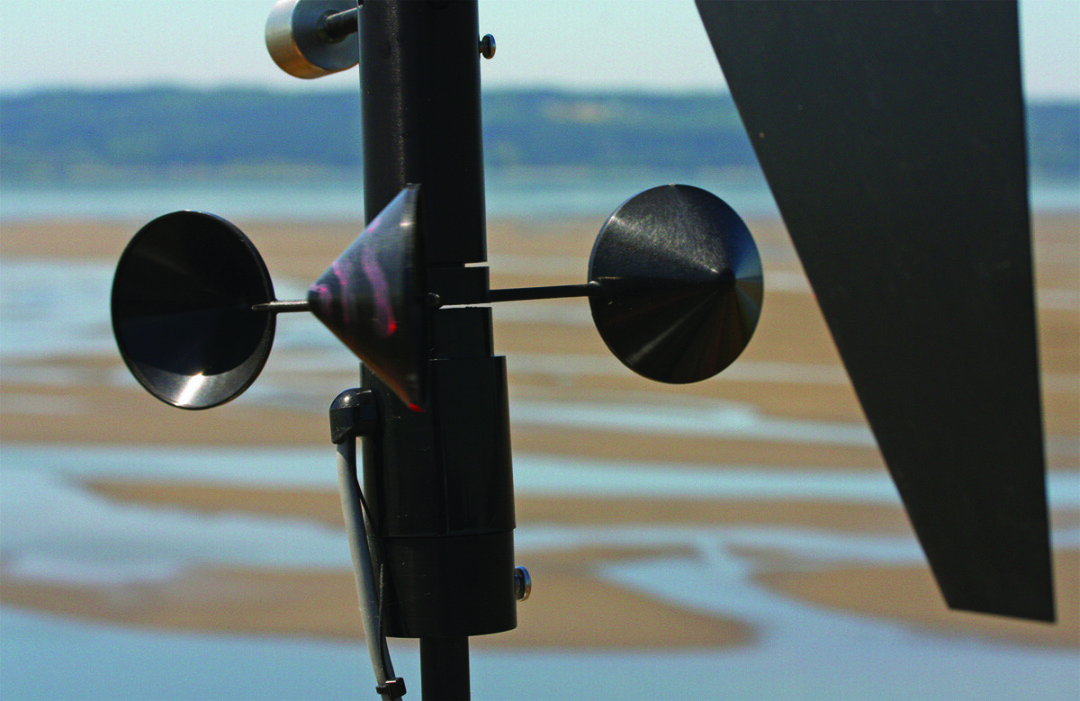
The wind in Livingston is to be reckoned with. Often called the state’s “wind capital,” Livingston experiences high winds due to a “mountain gap wind” created as air funnels between the Absaroka, Bridger, and Gallatin ranges.
The Livingston gap, or corridor wind, blows mostly out of the southwest. The wind occurs when a strong westerly jet stream causes low pressure in north-central Montana, coupled with cold high pressure over Yellowstone National Park, to make a strong pressure gradient. The Paradise Valley and Livingston topographies act as a funnel and the wind picks up speed. The lowest pressure and highest wind speeds occur in the narrow canyon just south of Livingston from which the wind escapes into a large space in the foothills to the east, which is why we call it a “Gap Wind.”
Just over the hill, Catherine Tatiana Dunlap, a professor of modern European history at Montana State University in Bozeman has recently published The Mistral, A Windswept History of Modern France. Reading her book brought me to consider the effects of wind on daily life. In France, for visitors and vacationers, the Mediterranean landscape brings to mind warm sun, blue skies, beaches and palm trees. But for those who live there, these idyllic features are surpassed by the winds. The cold northerly corridor wind named The Mistral is perhaps the best known. Its name comes from the Provençal word for wind, which in turn is derived from the Latin magistralis or “the master.”
Professor Dunlop’s style is, well, professorial, but the compact book with a beautiful lavender cover and Monet painting of the Mediterranean is quite interesting in that it studies in detail the way the wind affects daily life. The first two chapters deal with the Mistral as the force that has fashioned the physical and human landscapes of Provence. Professor Dunlop points out the stout stone homes with no windows on the windy northwest side, as well as rows of cypress tree windbreaks. The later chapters explore the attempts of the 19th century nation-builders to understand, manage and control the Mistral. The political and economic objective was to homogenize France and better the economy by “subduing unruly regional environments and making the population less vulnerable to nature’s whims.”
Despite its being called a “land Tempest” by Alexandre Dumas, the Mistral was and is a beloved part of local culture and of the identity of the inhabitants of Provence. They respect the wind and adapt themselves to it rather than trying to change it. According to Professor Dunlop, The Mistral is a symbol of those who want to keep their local traditions, language and identity. The final chapter of Dr Dunlop’s book talks about the influence of the Mistral in European art. Provençal painters battled to keep their easels upright; all kinds of grit was glued into the canvas by the ferocious wind. The wind shows in their subject matter as well. Consider van Gogh’s “Olive Trees.” There is a grasshopper embedded in the paint and the wind force is made visible in the wavy, tormented lines of the trunks. In a letter to his brother, Theo van Gogh wrote; “I always have to struggle against the mistral, which absolutely prevents one of being in control of one’s brushstroke… .” Dunlop demonstrates how the windscape has “become part of France’s physical make up, concretized, over the centuries, in the biogeography of southern France.”
Sound familiar? All of these ideas are at work right here in Livingston, just a few miles to the east of Professor Dunlop’s base.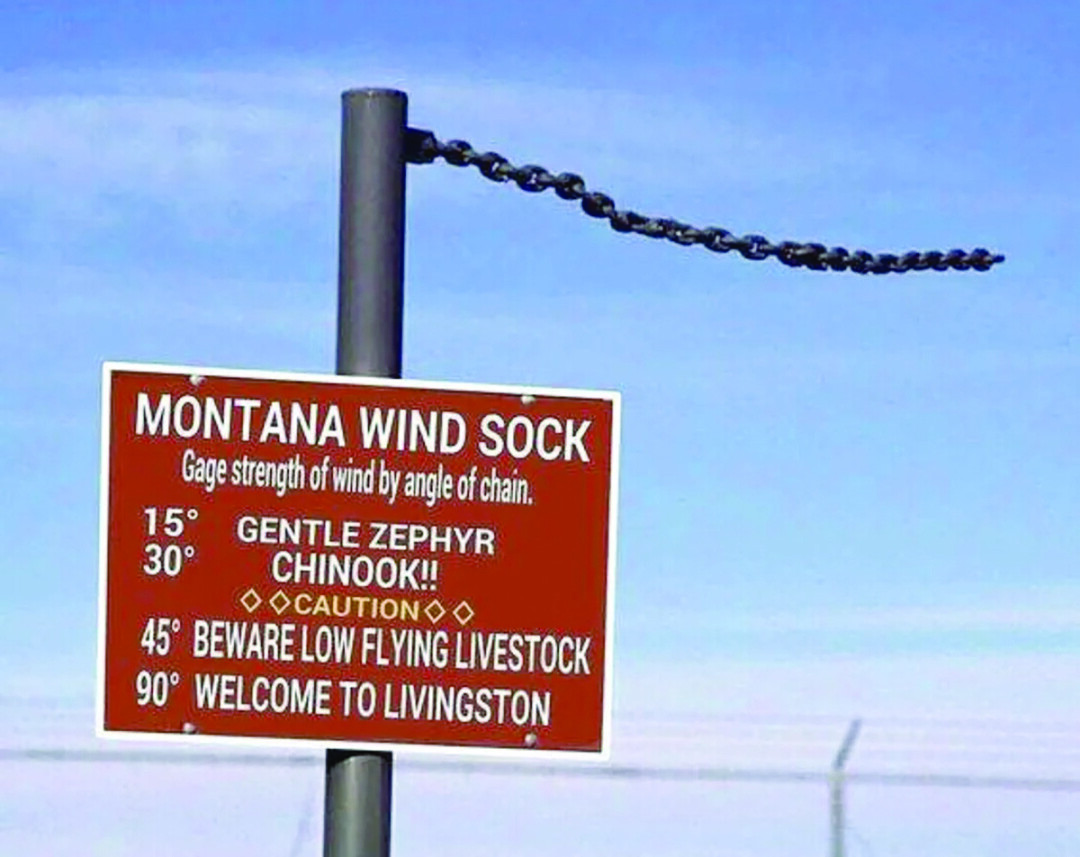
The Livingston wind is frequently strong enough to cause interstate closures due to crosswinds reaching gale-force speeds. The highest recorded gust was 94 mph in 1978. A near record of 92 mph occurred in February 2024. These consistent, high-velocity winds are, like the Mistral, a defining, historic, and ongoing characteristic of the Livingston area.
Much like Provence, denizens of Paradise Valley build wind breaks of multiple rows, using a mix of evergreens, deciduous trees and shrubs. They are planted perpendicularly to the prevailing winds around their homes and corrals. There’s also at least one house built into the hillside to let the wind cruise over it. Architects carefully consider the wind when locating windows or deciding which way a door should open. Craig Miller of Your Living Places designed a Paradise Valley home, the key feature of which he describes as “a dark brown wall simply punctuated with sheets of aluminum squares that create light-filled pockets of living spaces for the owners. The home is designed to maximize the view of the beautiful Paradise Valley, while at the same time maintaining protection from the intense winds.”
The wind filters through literature and art, too. Richard Brautigan, a key figure of the 1960s counterculture, spent time in Livingston, where he owned property along Pine Creek. He was deeply influenced by the area’s landscape. He famously described the wind as a force that “doesn’t just blow; it edits,” which resonated within Brautigan’s writing. He often used the intense, editing wind of the region as a metaphor for memory and suffering, reflecting the atmosphere of his later, melancholic work. Novelist Thomas McGuane ranched for decades just down the road from Brautigan. He reflected on the intense Livingston wind as a constant, defining force in his life and literary, fishing, and hunting pursuits. The harsh, windy, and vast landscape of Montana is a frequent backdrop in his writings.
A recent opinion column by Dorothy Bradley and Doug James from Clyde Park titled “Same Wind, Same Neighbors, Same Responsibility To Find A Better Way” illustrates how the wind is a unifying element of society. Livingston artist A.D. Maddox painted “The Wind Knot” of a fly fisherman with a wind-tangled line. Amber Sampson produced the charming “Wind Beauty,” a painting of a horse with his tail tousled by the wind. She adds, “If you have ever been to Paradise Valley, you know how windy and beautiful it is!”
Wind affects how and where you build, what you grow, your source of energy and what you do for leisure. It also influences the naming of places. To blow back toward Provence we have the example of Mont Ventoux (Windy Mountain). In Bozeman, streets along the regional park are named Mistral, Bora, Windward, Breeze and Zephyr. In Paradise Valley you’ll find the Dancing Wind Ranch. Windy Hills Road and Windy Way are in Livingston. There was once a locality with a post office near Livingston called Windville. The newest resort in Paradise Valley, which, by the way, was named Paradise for its rich soil (in spite its constant wind) is “Auster at Dome Mountain.” The resort’s name is derived from the Latin word auster (the root of austere) meaning “The South Wind” and is a nod to the wind that funnels through Paradise Valley. Hopefully Auster has considered the wind in their landscape plans because it will be hard to enjoy the “front-row seat to wild nature and stunning scenery…. and a serene lodging experience … rooftop deck…” without a windbreak. It’s all about working with the elements, not against them.
In Livingston the wind is not a joke, but is certainly joked about—one goes like this: When I first moved to Livingston, I asked someone how long it would take to walk to the other side of town and the local guy replied: “With or without the wind?” In the “Windy City,” one must embrace the wind because, beloved or despised, the wind is part of local culture and identity.
| Tweet |