



Mysterious Deaths in Gallatin Co. Could be MURDER
Rachel Phillips | Thursday Oct. 1st, 2026
In the course of its history, Gallatin County has been home to more unsolved murders and puzzling deaths than one might think. The following stories from the Belgrade area are just a few of the mysteries that remain to this day.
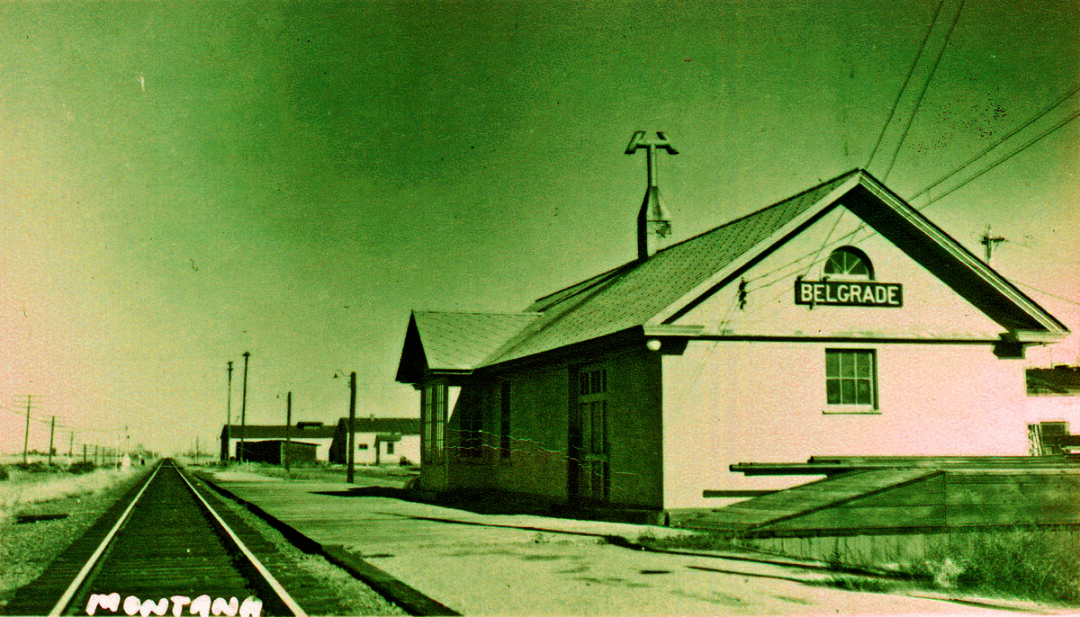
One of the most tragic unsolved murders in Belgrade’s history occurred in 1894. William H. Ogle worked as a railroad agent at the Northern Pacific Depot in Belgrade. He and his wife Lucinda (or Lucy), and their five children lived in a house just across the train tracks from the depot. Before William left the station for his home on Wednesday evening, April 25, 1894, he made a few adjustments to the office. He moved a chair in front of the safe door and attached the alarm to it, which was set to ring in his home nearby. If anyone moved the chair, he would be roused from sleep. Ogle’s actions suggest that he must have had some suspicion that a robbery attempt was imminent.
Just after one o’clock a.m. on April 26, the alarm sounded and woke the Ogles. According to the Bozeman Courier’s report of the incident, William “remarked to his wife that the alarm meant burglars at the station, he sprang from his bed, picked up his gun and went out. A few moments later three shots were heard.” The paper reported that Mrs. Ogle remained with her children at home until first light, when she ventured out to investigate.
Lucy found her husband near the southeast corner of the depot, dead from two gunshot wounds in his chest. The Courier noted that “he was so close to his assailant that his face was powderburnt [sic]. His gun was found cocked, ready for immediate use.” Subsequent investigations revealed that the depot’s office door was open, but Ogle had surprised the culprit or culprits before they broke into the safe. A couple of weeks later, on May 11, The New Issue newspaper printed this notice: “The receivers of the Northern Pacific railroad offer $1,000 for the arrest and evidence to secure conviction of the murderer or murderers of W.H. Ogle at Belgrade.” The search continued for the perpetrators, but to no avail.
Shortly before his death, Ogle had applied for membership in the Ancient Order of United Workmen, or A.O.U.W., an organization focused on providing insurance and financial support to its members. Due to a problem with medical examination paperwork, Ogle’s acceptance into the organization was delayed, and he was killed before he could be admitted. This left Ogle’s family in dire financial straits. As The New Issue reported, “Had his examination been properly made out, there is no doubt that his widow and orphan children would now have a legal claim on the order for the sum of $2,000…”
Fortunately, compassionate friends, neighbors and even Northern Pacific Railroad officials donated funds to support Lucy Ogle and help her care for her children and get back on her feet after William’s death. Lucy and the children relocated to Butte, where she worked as a housekeeper at the Northern Pacific section house. Tragically, 33-year-old Lucy died from illness in 1897, leaving her five children orphaned. One of her sons, David Ogle, spent the majority of his career working for the Northern Pacific Railroad in Montana as a fireman, engineer, and foreman. David’s son William became a partner in Kenyon Noble Lumber Co. in Bozeman in 1949, and the company continues to be operated by the Ogle family today.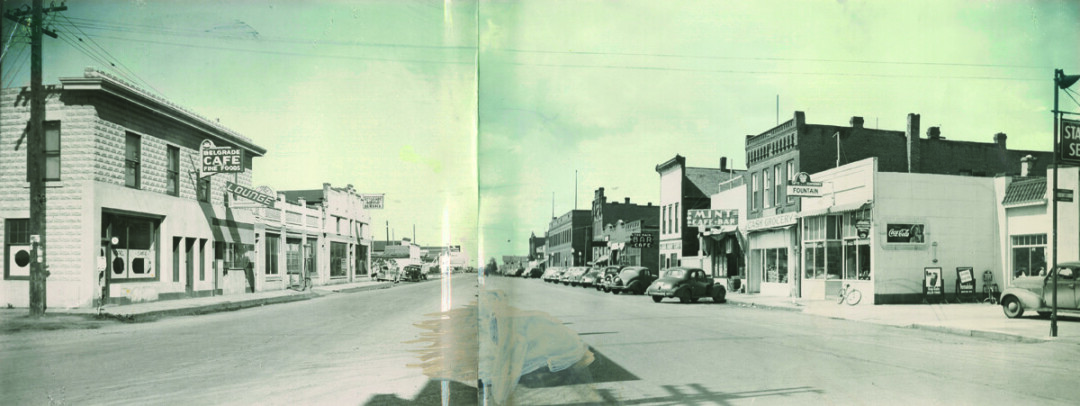
A mysterious poisoning occurred near Belgrade on April 15, 1939. Wallace and Hazel Rust were new lessees of property east of Belgrade following the recent loss of their rented farm near Central Park (between Belgrade and Manhattan). Also living with the Rusts was friend and hired man Joseph St. John. Joseph came to Montana with the Rust family in the mid-1920s after they sold their farm in South Dakota.
That mid-April morning, Hazel Rust slept in. When she got up about 7:30 or 8:00 a.m., Wallace and Joseph had just finished breakfast. According to her testimony at the coroner’s inquest, Hazel busied herself in the kitchen while the two men returned outside to finish the chores. Around 10:30 a.m., Wallace Rust came back inside with a bucket of water for drinking, which he set on a bench by the door near a water dipper. Hazel was busy cleaning up but said she heard him take a drink from across the room.
She stated, “After he finished drinking the water, and he walked the width of the room… he stopped and then said, ‘I feel sick’ and I said, ‘sit down’ and he sat down in the chair and he started shaking like from a chill... I couldn’t imagine what was the matter, and he couldn’t say, he just said, ‘I can’t breathe’ and ‘my legs are stiff’ and he started going out [stiffening out] in front of the chair.” Hazel eased her husband to the floor, where he continued to shake. Shortly after, she sent Joseph St. John on foot to Belgrade to find a doctor.
After Joseph’s departure, Hazel managed to flag down Bozeman resident Ray Marks and his fishing companions as they were passing by in their car on the highway. Upon entrance, Ray told the inquest that he found Wallace Rust lying on the kitchen floor, presumably dead, and he left almost immediately for Belgrade in a second attempt to find a doctor.
At about 11:15 a.m., Joseph St. John returned to the house with W.P. Porter (a druggist), and Sam Allan (a clothing store owner) from Belgrade. Hazel told the men that she thought her husband took some medicine from a bottle while getting his drink of water. Porter and Allan looked through Rust’s pockets and found a bottle labeled “strychnine.” Porter kept the bottle in his own pocket until Officer McDonald from Belgrade arrived. Porter outlined what happened next at the inquest. “After McDonald came, I took it out to show him and I thought he should have possession of it instead of myself, and while I had it in my hand Mrs. Rust grabbed the bottle and threw it in the kitchen stove… she said she was going to make sure that no one else took anything out of that bottle.”
By mid-day, Sheriff Westlake arrived at the Rust home with Dr. H.A. Stanchfield and Coroner Howard Nelson to begin their investigation. They found strychnine crystals coating a drinking cup beside the water pail in the kitchen. Though no autopsy was performed, Dr. Stanchfield concluded that due to the nature of the death and presence of poison, the cause of death was strychnine poisoning. At the inquest, Joseph St. John testified that Wallace Rust had been under the weather and seemed slightly worried and depressed for the previous couple of months, after he learned they would lose their farm at Central Park.
The jurors at the inquest announced their verdict, that Wallace Rust had died “as a result of strychnine poisoning administered by a person or persons unknown.” Whether it was an accident, suicide, or murder remains a mystery. Hazel Rust lived in Belgrade for the next several decades. She passed away in Lewistown, Montana in 1979. Joseph St. John stayed put in the Gallatin Valley and died at the Three Forks Sanitarium in 1948 at age 87.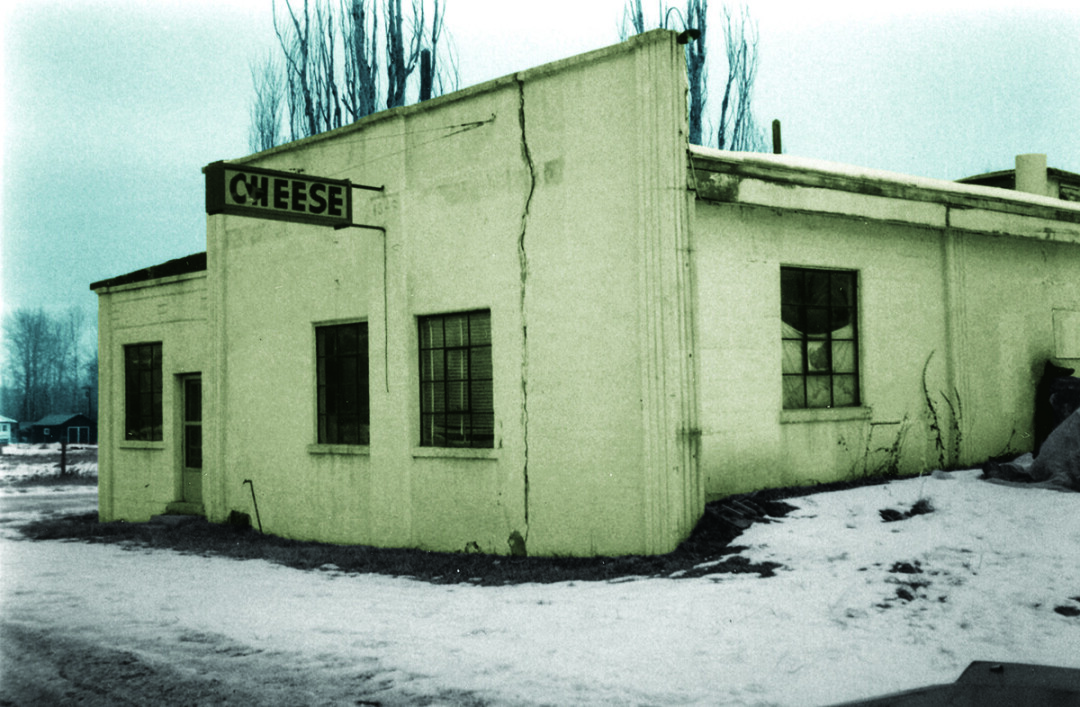
The small community of Central Park, located between Belgrade and Manhattan on the Frontage Road (or old Highway 10), was home to several murders, including “the cheese factory murder” in 1953. Albert Schneiter established the first cheese factory in Central Park in 1916, relocating it once and operating it with his daughter until he sold it to Swiss immigrant Emil Stricker in the late 1930s. After years living in the Midwest, Emil and his second wife, Nola, took over Schneiter’s factory and began running the business as the Gallatin Valley Cheese Company. A fire destroyed the building in March 1940, so Stricker moved the business to a cement-walled factory on the corner of Highway 10 and Central Park Road.
On the morning of September 22, 1953, a cheese factory employee arrived for work but could not locate Stricker. The employee eventually found Emil Stricker’s body in the adjacent residence. Stricker was lying in bed with two bullet wounds in his head. The Bozeman Chronicle described the scene: “Stricker had been shot once through the right wrist, with the bullet entering the right nostril, and once in the right temple.” During an autopsy, “two small caliber bullets, probably from a .22, were recovered from the body.” It appeared that Stricker raised his right hand in front of his face to shield himself before the first bullet struck. Stricker’s death was ruled a homicide and time of death estimated at near midnight on Monday, September 22.
Gallatin County Sheriff Charles Rice, County Attorney Joseph B. Gary, and Coroner Rod Kippen investigated and interviewed area residents, but were unable to find the murder weapon or a clear motive. Nola Stricker had spent the night of the murder in Bozeman with a friend. While there were several reports of conflict between Emil and Nola in the years leading up to the murder, investigations uncovered nothing conclusive and the murder of Emil Stricker in 1953 remains unsolved. Stricker was buried in Sunset Hills Cemetery and cheese production halted for good, although Nola continued to sell cheese made elsewhere for several more years. Central Park’s old cement cheese factory was demolished in 2001.
| Tweet |