



Baseball and The Big Sky: America’s Pastime in the West Part Three: Minors & Majors
Topher Sedlak | Thursday Oct. 1st, 2026
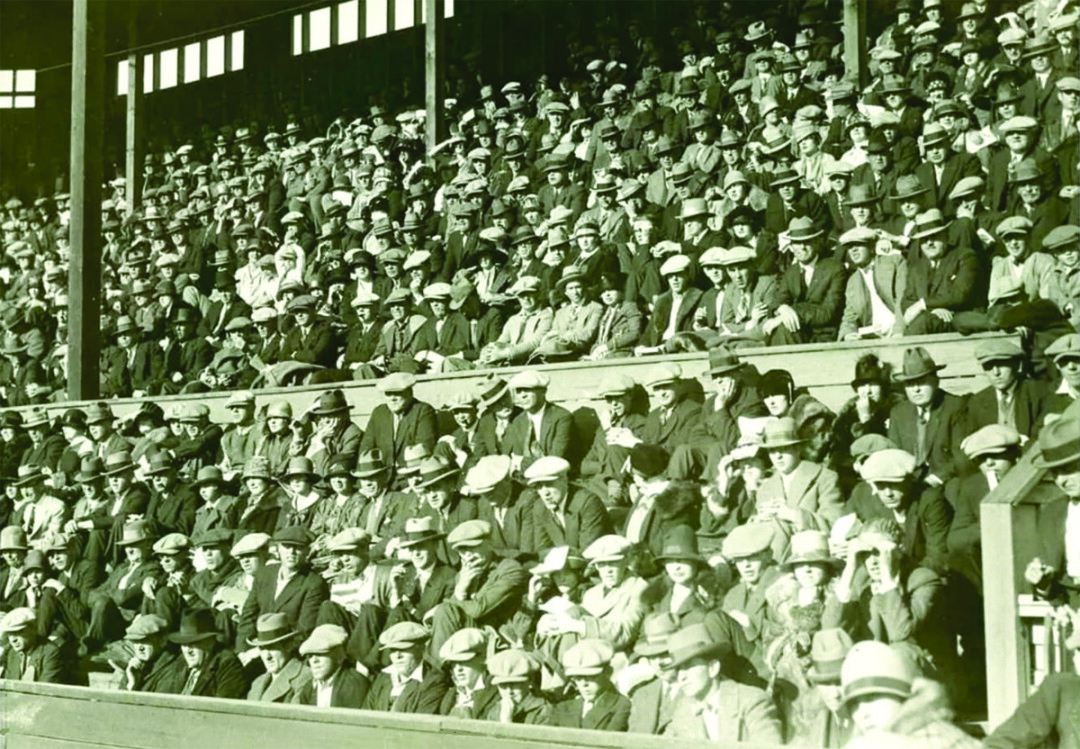 A baseball game at Butte’s Clark Park, 1924.
This predates even Butte’s 1901 lineup, making Montana an unsung crucible of integrated baseball.
Fort Missoula’s Black history gets eclipsed by the Bicycle Corps, who rode to Yellowstone in 1896 and St. Louis in 1897, passing through Bozeman both times. However, the Buffalo Soldiers were a much larger force in Missoula than their bike unit. The 24th and 25th Regiments were also at Fort Keogh and Fort Assiniboine, home base of future general John J. Pershing. Did they have mixed-race teams in the 1880s/1890s? This is worthy of more research.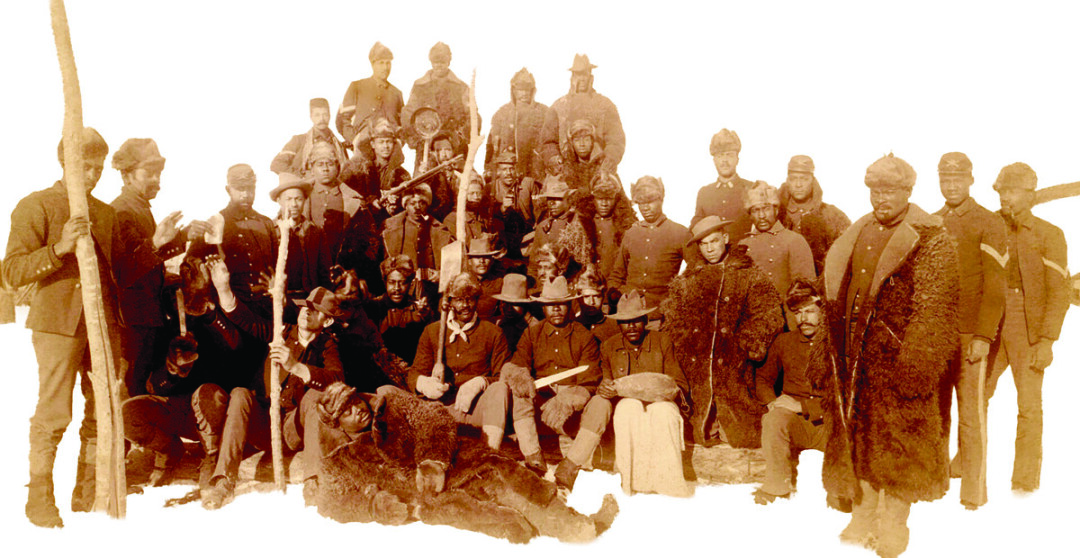 Buffalo Soldiers at Ft. Keogh, Montana, 1890s.
Organization baseball was back in Montana in 1902. That October, Butte won the title of the re-formed Pacific Northwest League. In 1903, the PNW evolved into the Class A Pacific National League. Butte again took the title, beating San Francisco and Los Angeles, not just Helena, Spokane, SLC, Portland, and Seattle. Butte’s home games were at Clark Park, an 11,000-seat grandstand that also hosted Cat-Griz football 1926-1937.
In 1909, after another hiatus during this choppy era, the Inter-Mountain League arrived. This included the Bozeman Irrigators (first in Boise), Butte Miners, Helena Senators, and Livingston (first in SLC). Bozeman games were at the Gallatin County Fairgrounds, built 1902-1903 on land homesteaded by Frank Fridley, founder of Emigrant and Chico. Helena won the most matches (43) of that brief multi-state league.
Beginning in 1911, the Union Association featured four Montana clubs, the Great Falls Electrics, Missoula Highlanders, Butte Miners, and Helena Senators. Bozeman was out; the Irrigators were back in Idaho. Utah teams included the Ogden Canners and SLC Skyscrapers. Great Falls was crowned in 1911 and 1913; Ogden took first in 1914. Missoula won in 1912, under president Hugh Campbell, manager Cliff Blankenship—who scouted Walter Johnson—and ace pitcher Leslie “Bullet Joe” Bush (1892 MN-1974). Campbell recruited Bush and gave him his nickname in Missoula 20 summers after Clark Griffith pitched there. Bush was so good he landed in the majors a year later. In his rookie year with the Philly Athletics they beat the NY Giants in the World Series 4-1. Bullet Joe later finished his 17-year MLB career at 3.51 ERA with 1,318 strikeouts in 488 games.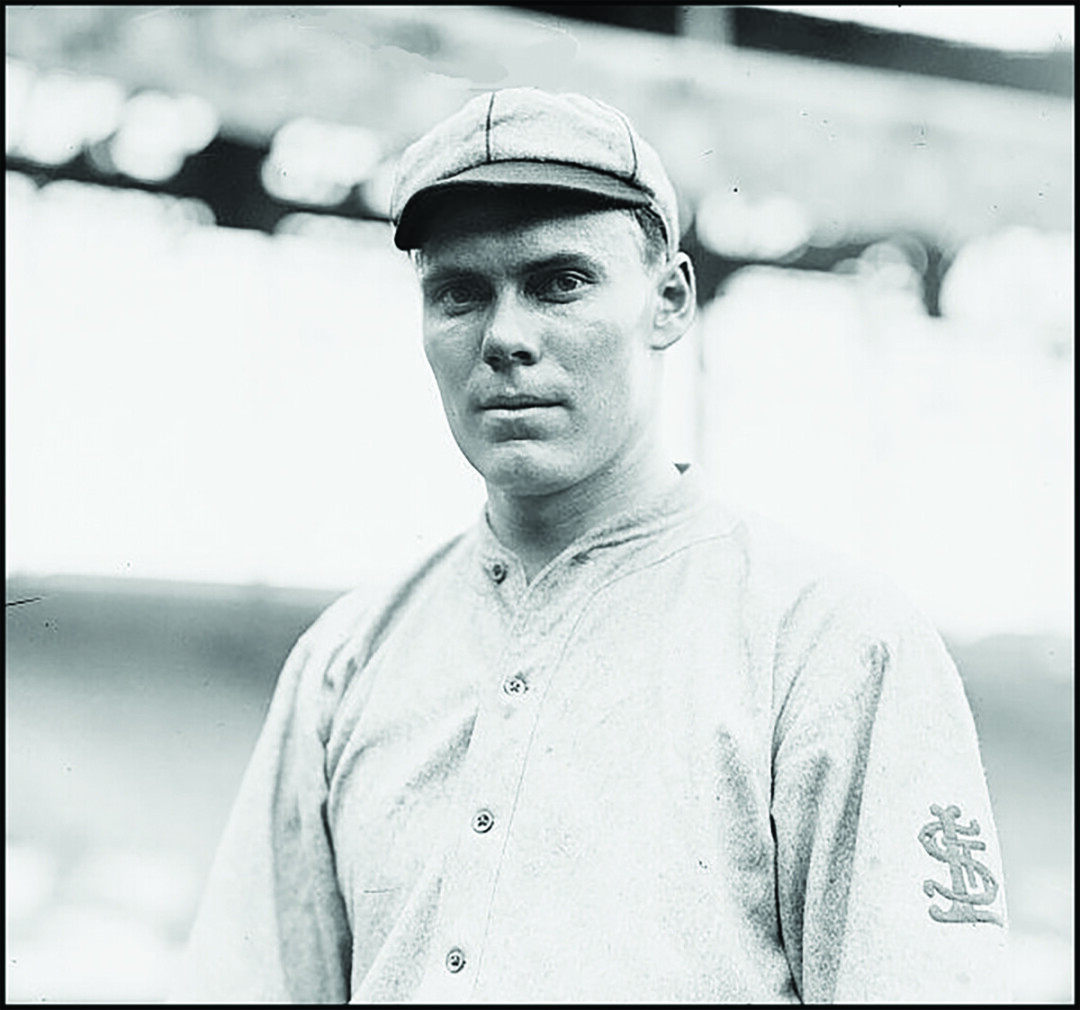 “Steamboat” Williams in St. Louis, 1914.
Another Union player was half-German, half-Welsh Rees “Steamboat” Williams (1892-1979), born in Cascade and starting in 1912 with the Electrics. After two years, he was pitching right and batting left for the St. Louis Cardinals—making Steamboat the first Montana-born MLB player. Williams’s family overlaps other Montana personalities. His foster father was Frank Woodworth, cattle puncher with Charlie Russell. Rees grew up on Frank’s ranch near Adel, east of the Cooper (actor Gary’s family) and Griffith ranches. He played on ranch teams before pitching for Cascade’s team—a favorite of Mary Fields, a.k.a. Stagecoach Mary. Yep, Steamboat knew Stagecoach.
Nine months before the stork tossed Williams in Cascade, Johnny Couch was born in nearby Vaughn, where his father, a Cornish miner via Butte, had a ranch. Couch attended Stanford, and afterward pitched for the San Fran Pirates, Ogden Canners, Detroit Tigers (1917 with Ty Cobb), Cinci Reds, and Phillies. All total, the Union Association included over 50 former or future major leaguers, but was out the first full year of WWI.
In 1920, the war was two winters past and the Deadball Era was done. New cork-cored balls were cracking off bats, spitballs were outlawed, and games required fresh baseballs, all leading to more homers. That year in Montana’s NE Corner, Daniels County was formed from Sheridan County. This amputation didn’t score well with the residents of Plentywood, the Sheridan seat. Thereby the feud festered between Plentywood and Scobey, the Daniels town. What better way to settle rivalries than with baseball? And 15 miles from Canada during Prohibition. Bootlegger booty abounded.
Scobey hired a diamond posse, including shortstop and Pittsburgh prospect George Eastman (1891-1954), half Dakota Sioux and later the president of the Flandreau Santee Nation. Honus Wagner—one of the first five Hall of Famers—called Eastman, “a mighty good ballplayer.” Off the train also hopped Oscar “Hap” Felsch and Charles “Swede” Risberg, two of the “Black Sox.” Both helped Charles Comiskey’s White Sox win the 1917 World Series. Unhappy with salaries, they and six others, including “Shoeless” Joe Jackson, conspired to throw the 1919 Series against the Reds. A jury acquitted them in 1921, but MLB’s first commissioner banned them from the majors for life. (Jackson was reinstated in 2025 and is finally eligible for the Hall of Fame.)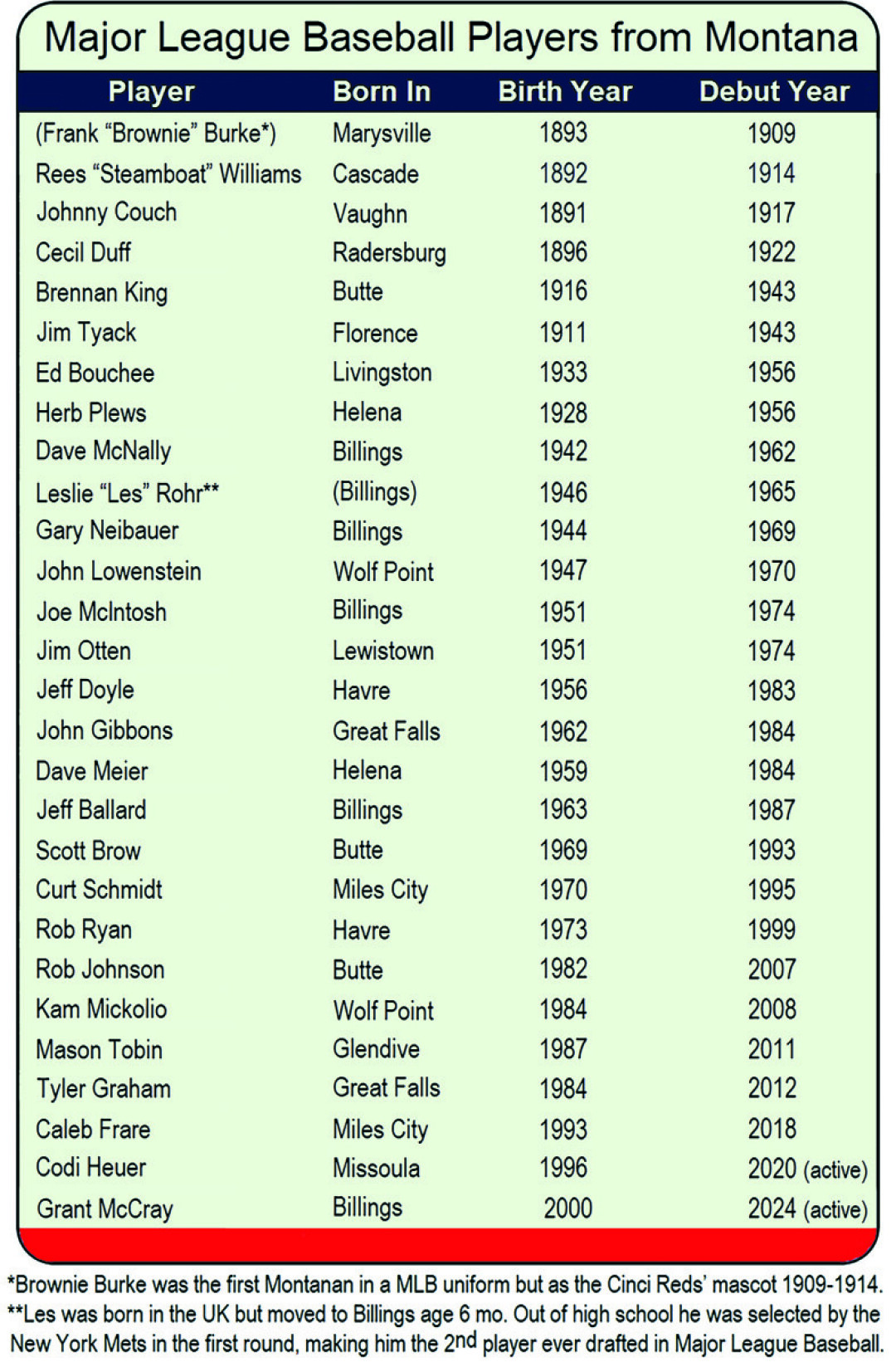
To counter, Plentywood leaders lumped $3,000 for new talent. They landed rocket southpaw pitcher John Donaldson (1891 MO-1970), who led the Kansas City Monarchs to a Negro National League win in 1923. Donaldson arrived in Plentywood in 1925, two summers after Jack Dempsey boxed Tommy Gibbons “down the road” in Shelby. That season, Donaldson’s fastball was smokin’ but Risberg’s power-throwing bested Plentywood’s batters.
Plentywood and Scobey hit far and wide, not just one another. More train routes and fledgling highways made travel easier: This was the Barnstorming era. Their teams toured around Montana, Canada, and the Dakotas. Two years later, multi-talented athlete and former NY Giant, Cinci Red, and Boston Brave Jim Thorpe (Wa-Tho-Huk; 1887 OK-1953) played for the Shelby Seals. He met his second wife here while she was working for his team’s manager.
Donaldson returned to Montana in 1939 on a tour with exceptional pitcher Satchel Paige and the KC Monarchs. In Butte, they were hosted by local Black team the Elite Giants and played the Copper Sox at Clark Park. While these barnstormers were in Manhattan, fly-fishing legend Bud Lilly, just 15 years-old, hit a single off Paige (!) before trying to steal second.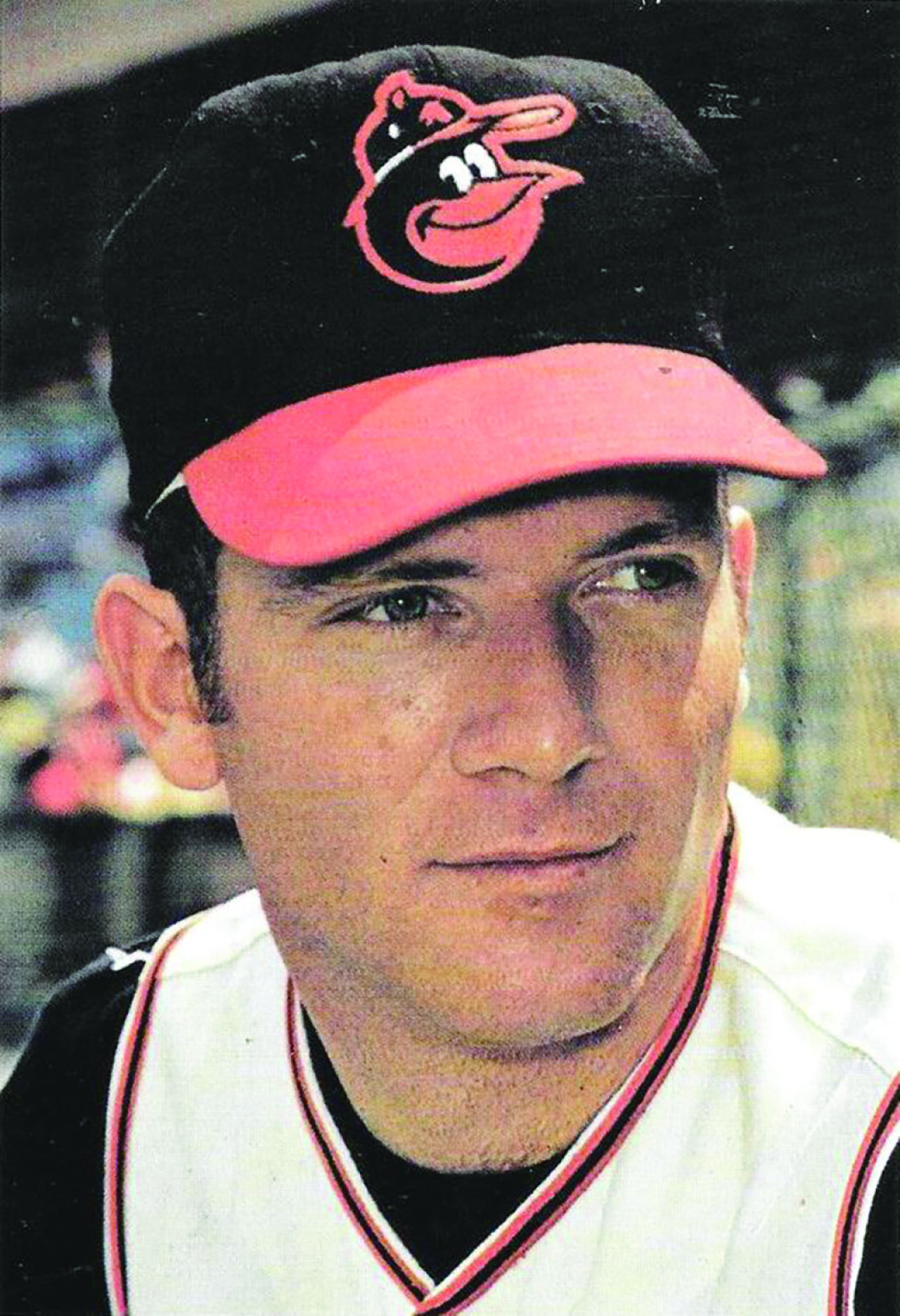 Dave McNally, 1971. Despite his great skill and impact on the game, McNally remained friendly and loyal; he was a true gentleman, a true Montanan.
In 1947, Babe Ruth toured Billings, sponsored by American Legion Baseball—which turned 100 last year and includes our Bozeman Bucks and Gallatin Valley Posse/Outlaws. That Halloween in Billings, local boy Dave McNally turned five years-old. McNally (1942-2002) is one of Montana’s best athletes and one of baseball’s most influential players. The lefty pitched a total-game shutout in Game 4 of the 1966 World Series against the L.A. Dodgers, clinching the first championship for the Orioles, where he played for 14 seasons (1962-1974). He also won 20+ games every year from 1968 to 1971, leading the MLB with 24 wins in 1970. That year the Orioles beat the Reds for the MLB title. In Game 3, McNally hit a grand slam. He’s still the only pitcher to do so in a World Series.
Three-time American League All-Star McNally had his start with the American Legion Billings Royals, coached by equally esteemed Ed Bayne. McNally took the Royals to three Legion Series wins 1958-1960. On the other side of his career, McNally was instrumental in overturning the despised decades-old reserve clause, which let teams keep players even if they refused to sign new contracts. This created true free agency, skyrocketing salaries and changing baseball forever.
26 other native Montanans have played in the majors (see graphic). Jeff Ballard, a good friend of the McNallys, is also from Billings. There he played for the American Legion Scarlets (“Red Side”), which split from the Royals (“Blue Side”) in 1974. Ballard pitched for the Orioles and Pirates 1987-1994 (4.71 ERA) after equally outstanding time at Stanford, where he studied geophysics. Kam Mickolio was born in Wolf Point and grew up here in Belgrade. Mickolio signed with the Mariners, later pitched for the Orioles, and continued pro in Japan. Anthropologist, infield-outfield wiz, and fan favorite John Lowenstein was also born in Wolf Point, playing 1970-1985 with the Indians and Orioles. 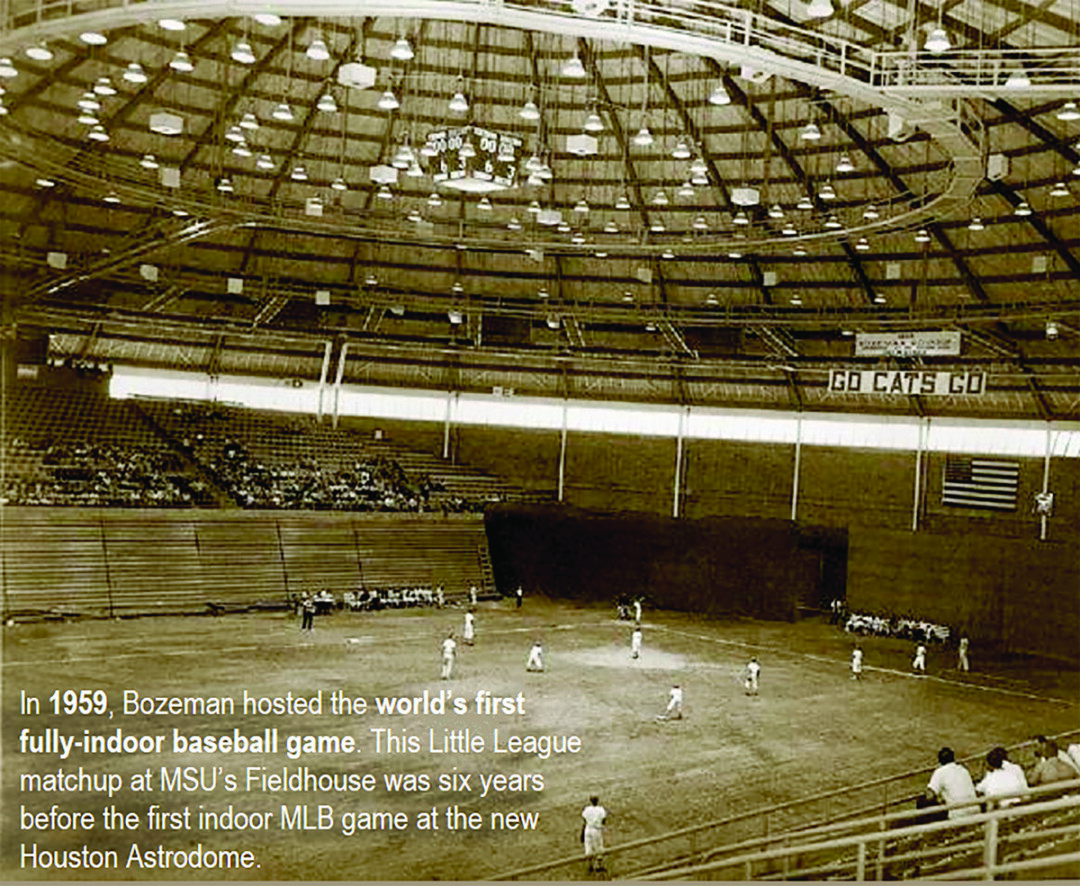
Even more MLB players have honed their skills in the Pioneer League (Rockies and California). Montana has four Pioneer clubs: Billings Mustangs (with 15 titles, the league’s most), Great Falls Voyagers (after Lewis, Clark, and gang), Glacier Range Riders, and Missoula PaddleHeads (Ospreys/Timberjacks, which included country-music star Charlie Pride, who later played in East Helena). Helena and Butte once had the Brewers and Copper Kings; they deserve teams again. So does Bozeman. There are dozens of well-known players with history in Montana, including several Hall-of-Famers: Ryne Sandberg (Helena; Cubbies; 1959-2025, R.I.P.), Pedro Martinez (Great Falls; Expos, Boston, Mets, Phillies), Trevor Hoffman (Billings; Padres), George Brett (Billings; Royals), Jim Kaat (Missoula; Senators/Twins, White Sox, Phillies, Yankees, Cards) and Bobby Cox (Great Falls; Yankees; Braves manager; 1941-2026). Paul O’Neill, Gary Sheffield, Cecil Fielder, Jeff Nelson, Bob Brenly, Mike Matheny, Francisco Rodriguez, Shane Victorino, Joey Votto, Robb Nen, Ryan Braun, Omar Vizquel, Paul Goldschmidt, and Miguel Rojas also played in Montana. All total, several hundred Pioneers here have gone on to Major League Baseball. And now, there’s Montana high school (AA, A/B) ball; 2023 saw the first MHSA-sanctioned state tournament.
We all grew up seeing TV’s version of the Old West. Everyone’s in a Stetson, bowler, or bonnet. But the reality is richer. Many men and women had on baseball caps and uniforms. Baseball was a big part of the Big Sky, and it still is. (Let’s have an all-state tourney in Rapelje.)
| Tweet |
