



Ain’t Nuthin’ Good About A Weed
Protecting and Restoring Sagebrush Rangelands
Lisa Vandenbos | Saturday Aug. 1st, 2026
Do you enjoy the emblematic endemic arrow leaf balsam root that graces the foothills? Do you find peace watching the grazing deer drift? Maybe you’d rather watch elk, antelope, bighorn or bears (yes, bears do graze)? In some places, there are abundant grasses, but there is nothing to eat. Invasive annual grasses (IAGs) such as cheat grass (or the newest arrival, bulbous blue grass, now all over the city) are one of the great threats to sagebrush ecosystems and working lands across Montana and all of North America.
New research from the University of Wyoming shows that mule deer and other ungulates avoid certain areas once invasive annual grass cover reaches about twenty percent. This is the tipping point where plant communities begin shifting toward IAG dominance. This can happen even without ground disturbance, causing ecosystems to rapidly decline in both diversity and productivity. Reduced native vegetation also increases high-heat fire. “Ain’t nuthin’ good about a weed,” Cowboy Slim would say to his friend.
Protecting and restoring sagebrush rangelands isn’t just about plants—it’s critical for wildlife habitat, the economy, and our health, which means it concerns Bozemanites too. 
Invasive and noxious are separate terms. The Weed Science Society of America defines a weed as “a plant that causes economic losses or ecological damage, creates health problems for humans or animals, or is undesirable where it is growing.”
• Invasive weeds are weeds that establish, persist and spread widely in natural ecosystems outside the plant’s native range. Many of these creep in via imported goods. When in a foreign locale, these invaders lack natural enemies to curtail their growth – enabling them to overrun native plants.
• Noxious is a legal term from the Plant Protection Act. A noxious weed is any plant that can injure or cause damage to crops, nursery stock, livestock or poultry, irrigation, natural resources, public health, or the environment.
Some plants are both invasive and noxious, such as pretty purple spotted knapweed, which poisons the very ground. Neon green leafy spurge is invasive, toxic to cattle and horses, and can cause severe skin irritation or blindness in humans. Other weeds are native but noxious, such as water hemlock. 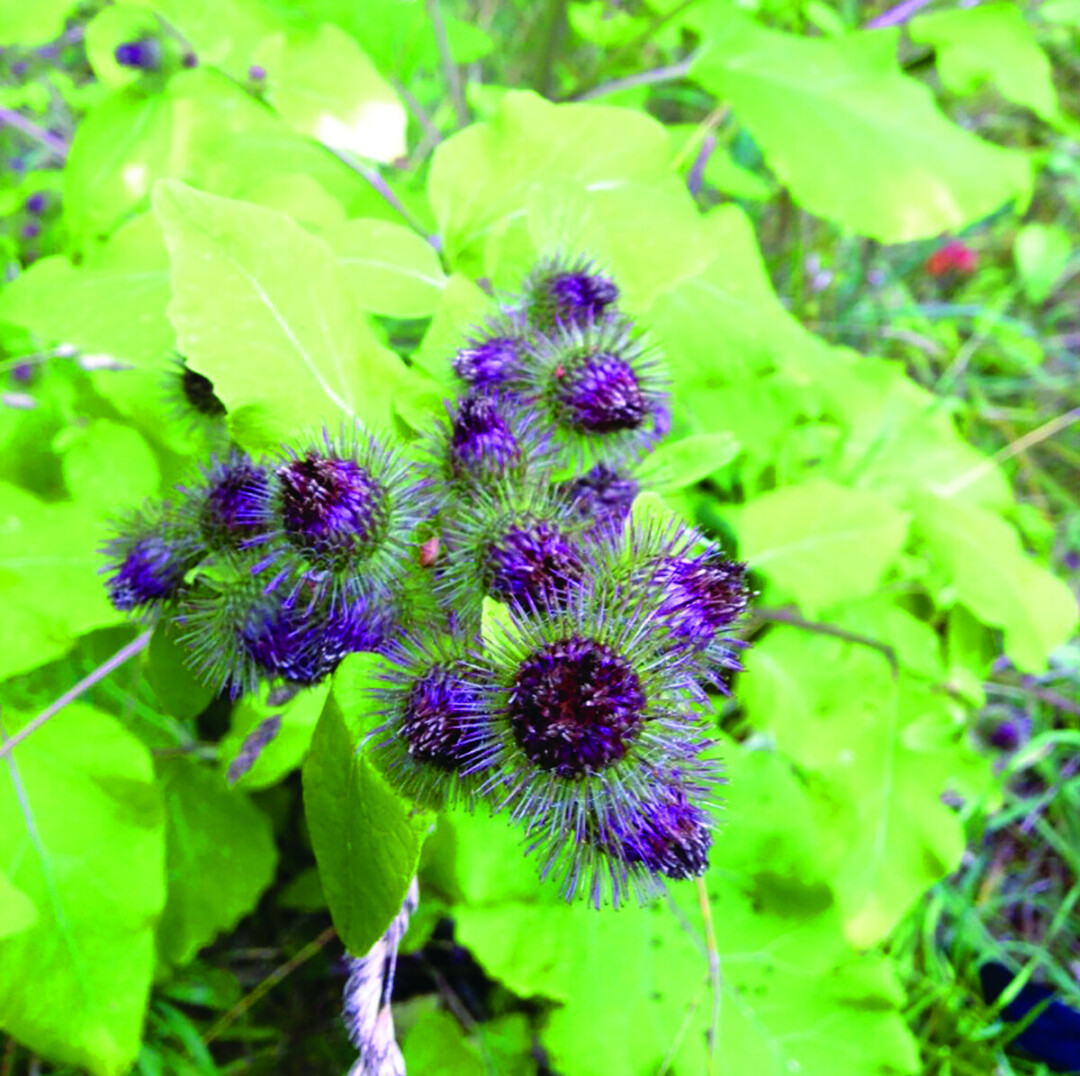
To distinguish weeds from wildflowers — because weeds are usually pretty too, pick up the excellent identification booklet available free from the county extension office at the fairgrounds. The folks there (like the people at MSU Extension) are a fountain of knowledge. Oxeyed Daisies, Dalmatian Toad Flax (despite the name, it is a yellow snapdragon), Field Bindweed (morning glories), Yellow Iris, Tall Buttercup and Common Tansy (those gorgeous tall yellow buttons along the river) are some of the beauties.
Backyardgardenlover.com suggests alternative plants. Pick up some booklets for your neighborhood picnic — we’re all in this together! The booklet offers management suggestions — using petro chemicals is not always the best, as some weeds are showing signs of newly bolstered resistance.
There are non-toxic alternatives. White vinegar on your home hardscape kills everything. Bozeman scientist / entrepreneur Stuart Jennings developed Nutrafix. Well-named Stuart (the Guardian) has an MA in Land Rehabilitation from MSU, as well as 20 years of lab research. He began with an observation: he noticed that weeds thrived where the soil was poor. His hypothesis was to feed the soil — and lo, the weeds receded. Patent in pocket, he now markets Nutrafix. Thinking outside the box created a natural fertilizer that fights weeds. 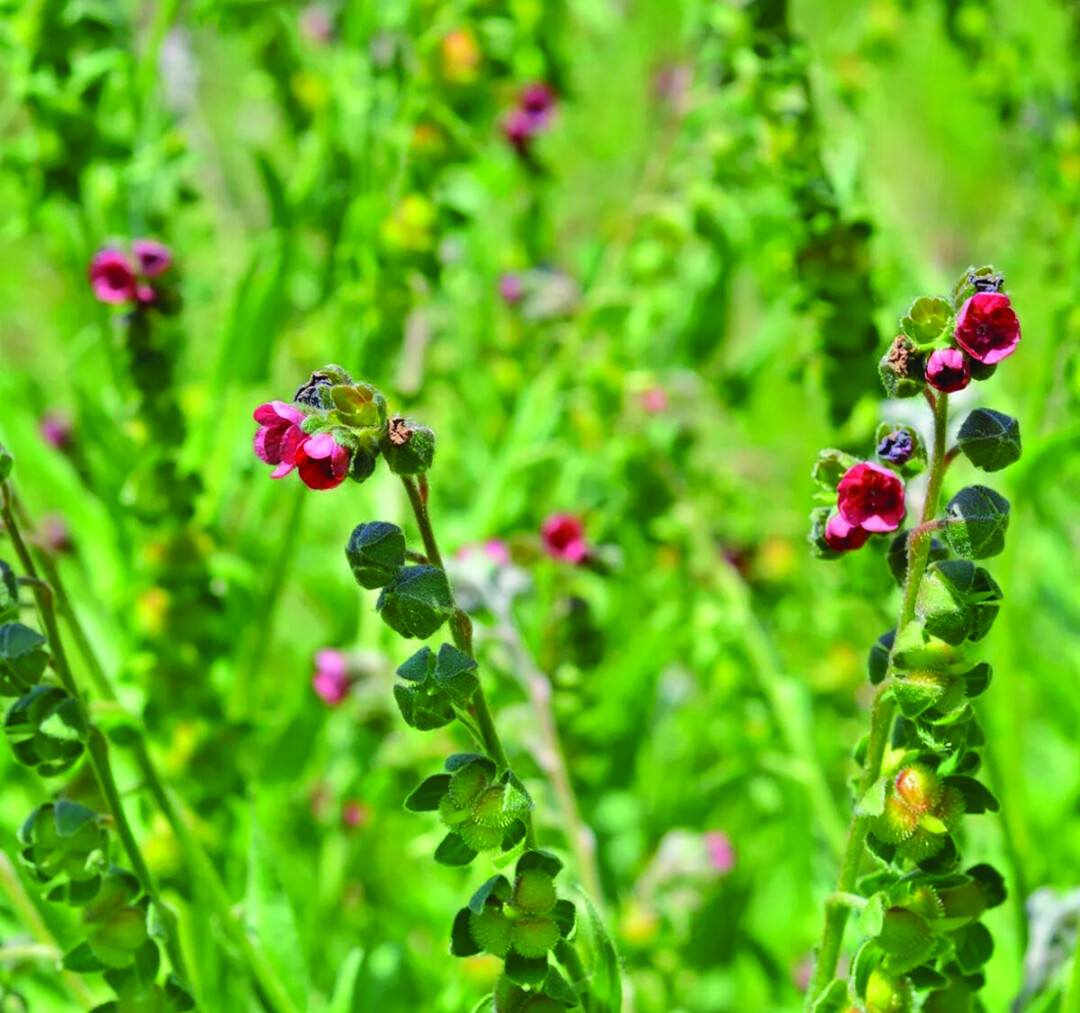
Human activities move seeds. Your dog will be sure to bring home some of the burrs that inspired Velcro: hounds tongue. Beautiful burdock is the bane of the Audubon Society, as it traps the songbirds, causing a long, slow starvation. Hounds tongue gets its name from scarlet, tongue-like flowers which, curiously, smell like hot buttered popcorn! You’ve got to get the burrs off Ruff but avoid being Johnny Appleseed in the parking lot.
Noxious weeds cost Montana an estimated $100+ million annually in direct agricultural losses, secondary economic impacts, and ongoing control expenditures. With over 8.2 million acres of land infested, these plants reduce grazing capacity, diminish crop yields, and threaten local wildlife. Adding in the cost of increased fires equals serious economic impact, much more than the cost of the 500-year-flood in 2022. The health impact from all those ingested petrochemicals on the land is huge, too. Unfortunately, the powers that be are sorely underfunded. We have to take care of this ourselves.
Before you head for the backcountry, clean off boots, packs and tents. Vehicle wheel wells and undercarriages lodge seed-filled mud. Wyoming posts boot brushes and signs at every trailhead. They now look like weed-hells, but at least it’s not in the backcountry. Bring clippers and gloves for snipping seed heads or pulling weeds. An ounce of prevention… note the coordinates of weedy places and communicate them to the forest or park service, along with the size of the infestation and type of weed. They appreciate the info and, hopefully, will be able to send someone with a sprayer.
A 1952 Yellowstone Park brochure suggests: “Take pride in your National Park. Keep it unspoiled for those who follow you.” Ain’t nuthin’ good about a weed, Slim? I have discovered something good… weeds bring community together for a common purpose. It’s an enormous project, but, like Rosie the Riveter says, “We can do it!”
Lisa Vandenbos has been after weeds in Montana for 35 years.
| Tweet |